


5 Historical Coincidences That Blow Our Minds

  • Abe Lincoln and JFK
Abe Lincoln and JFK
Credits: Buyenlarge/ Archive photos (left), Bachrach/ Archive Photos (right) via Getty Images
Author Kerry Hinton

February 27, 2024

Love it?

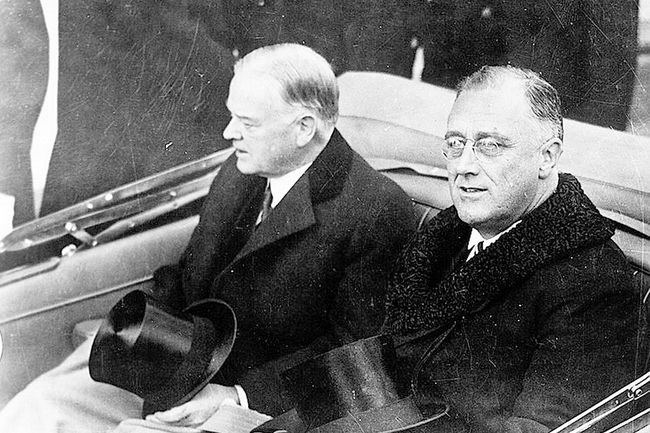
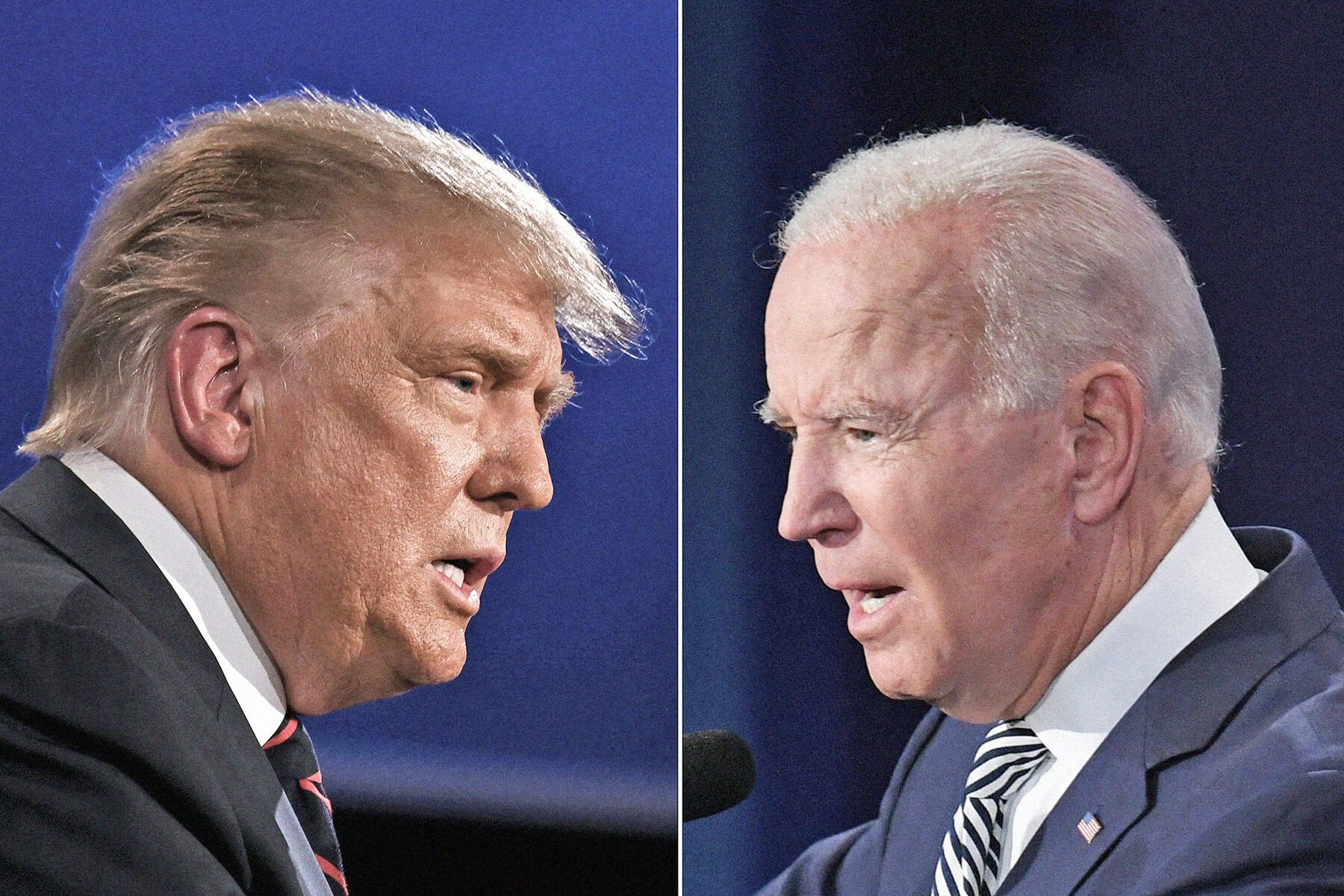
Call coincidence what you’d like: luck, karma, fate, or just random happenstance. In any case, when similar events occur, it’s fascinating and, sometimes, downright eerie. Some coincidences have so many layers that they take on a second role in the form of conspiracy theory or prophecy. Coincidences, by nature, require zero planning; all we need to do is wait for them to happen. Here’s a look back at five strange coincidences throughout history.

Credits: Kean Collection/ Archive Photos (left), Hulton Archive (right) via Getty Images

John Adams and Thomas Jefferson Died on the Exact Same Day

It’s unlikely enough that two of America’s Founding Fathers would die on the very same day, but this story gets even stranger. First, these two political rivals died within hours of each other. Even weirder? The date of their passing was July 4, 1826 — 50 years to the day after the Declaration of Independence was adopted. John Adams and Thomas Jefferson weren’t the same age when they died, though — Adams was 90 and Jefferson was 83. There are multiple theories on why this happened, and sheer coincidence is certainly one. To add another eerie layer, founding father James Monroe also died on the Fourth of July, five years later.

You may also like

The Most Powerful Women Rulers in History

  • Elizabeth I of England
Elizabeth I of England
Credit: DEA / G. DAGLI ORTI/ De Agostini via Getty Images
Author Tony Dunnell

February 27, 2024

Love it?

Due to the incomplete nature of our historical records, it’s impossible to say when the first female ruler came to power. Some might point to Kubaba, a tavern keeper who supposedly ascended to the throne of Sumer — one of the largest civilizations in ancient Mesopotamia — around 2400 BCE. If the story is true, it would make her arguably the first documented female ruler in human history — but chances are it’s a myth. There’s more evidence to back the claim of Sobekneferu, who reigned as a full pharaoh in ancient Egypt from around 1760 to 1756 BCE. But was she truly the first female ruler of a significant civilization, or did someone come before? The answer remains lost to history. 

What we do know is that many women throughout recorded history have come to rule even while living in cultures long dominated by men. And some of these women achieved a level of power rarely matched, despite the disadvantages they experienced in their patriarchal societies. Here are some of the most powerful women rulers in history, from the Pharaoh Hatshepsut to Queen Elizabeth I. 

Credit: Bettmann via Getty Images

Hatshepsut

Hatshepsut first came to power in 1479 BCE as the regent for her stepson (and nephew) Thutmose III, who had inherited the throne at the age of 2. For almost seven years, Hatshepsut was a fairly conventional regent. But then, she took the unprecedented step of assuming both the title and powers of a true pharaoh, and began ruling Egypt alongside Thutmose III. To further assert her authority, she had herself portrayed in formal portraits as a man, with a muscular male body, traditional kingly regalia, and a false beard. She became one of the first truly powerful female rulers known to history. Her reign brought about a period of economic prosperity and general peace, and she was one of the most prolific builders in the history of ancient Egypt. 

You may also like

How the Brill Building Changed Pop Music

  • Brill Building at 1619 Broadway
Brill Building at 1619 Broadway
Credit: Graphic House/ Archive Photos via Getty Images
Author Kerry Hinton

February 22, 2024

Love it?

The Brill Building isn’t just an art deco structure in midtown Manhattan — it’s also the name of a musical genre. Throughout the early and mid-1960s, the “Brill Building sound” became synonymous with groundbreaking pop music. The heyday of the Brill Building era was short-lived, but in one six-year span, the songwriters, arrangers, musicians, and producers behind this sound contributed to hundreds of Billboard Hot 100 hits, including “Stand By Me” (Ben E. King, 1962), “One Fine Day” (the Chiffons, 1963), and “Be My Baby” (the Ronettes, 1963).

Located at 1619 Broadway in New York City, the Brill Building was a hub of songwriters, record labels, and recording studios, all under one roof. It built on the tradition of the “Tin Pan Alley” district before it — a concentration of music publishers and studios in a strip of Manhattan that dominated the music industry in the big-band era. But while their downtown predecessors were mainly concerned with the profits produced by pumping out sheet music for radio hits, the writers and producers at the Brill Building were also on a mission of artistic idealism. Their compositions drew inspiration from classical music, Latin music, traditional Black gospel, and rhythm and blues to create songs that appealed to an audience already hungry for the new sound of rock ’n’ roll. The assembled talent was a once-in-a-generation roster of songwriters, including Burt Bacharach and Hal David, Gerry Goffin and Carole King, and Neil Diamond. Together, they produced sophisticated songs that were directly aimed at a new, youthful generation and a powerful rising subculture: teenagers.

By the mid-’60s, an increasing number of artists — such as the Beatles and Bob Dylan — began composing and playing their own material, making the songwriter-for-hire less of a necessity. As Dylan wrote in 1985, “Tin Pan Alley is gone. I put an end to it. People can record their own songs now.” This may be true, but the creators behind the Brill Building sound helped make the ascent of these singer-songwriters possible. Here are five ways the Brill Building shaped popular music in the 20th century.

Credit: Michael Ochs Archives via Getty Images

It Pioneered “Assembly-Line Pop”

The Brill Building employed a model of vertical integration that supervised every phase of a song’s life cycle, from production to distribution, all under one roof. The 11 floors of 1619 Broadway and a few surrounding buildings became a one-stop shop where a songwriter could pen a would-be hit, sell it to a publisher, find a band, and cut a demo. Songs could even be played for radio promoters in the building to garner airplay. This new type of streamlined hitmaking — often called “assembly line pop” — gave publishers and producers a huge pool of material to choose from and encouraged creative collaboration, merging art and commerce in a new way.

You may also like

History’s Most Surprising Vice President Picks

  • Truman’s presidential oath
Truman’s presidential oath
Credit: Library of Congress/ Corbis Historical via Getty Images
Author Mark DeJoy

February 22, 2024

Love it?

Despite being only one degree away from the presidency, the Vice President of the United States has long been viewed as an inauspicious position. John Adams called it “the most insignificant office that ever the invention of man contrived or his imagination conceived.” And when Theodore Roosevelt had a noisy chandelier removed from the White House, he ordered, “Take it to the office of the Vice President. He doesn’t have anything to do. It will keep him awake.”

But the Vice President is one step of succession away from the Oval Office, and that simple fact lends weight to the selection. That weight can, in turn, make for some surprising results. These are some of the more unexpected U.S. Vice Presidents to take office.

Credit: Donaldson Collection/ Michael Ochs Archives via Getty Images

Theodore Roosevelt as William McKinley’s VP

In 1899, in the months leading up to William McKinley’s 1900 reelection campaign, Vice President Garret Hobart began suffering from symptoms of a severe heart condition, including fainting spells. Though Republican Senator Mark Hanna tried to assure the public that “nothing but death or an earthquake can stop the re-nomination of Vice President Hobart,” the former seemed to be exactly the concern. Unfortunately, Hobart’s health worsened, and he died on November 21, 1899. And McKinley found himself unexpectedly looking for a running mate for reelection.

At the time, Theodore Roosevelt was serving his first year as governor of New York, and immediately emphasized a slate of reforms that put him at odds with the establishment in his own party. Republican Party bosses realized that they could effectively remove “that damned cowboy” (as Hanna referred to Roosevelt) from New York politics by nominating him as McKinley’s running mate. Roosevelt realized the political exile the vice presidency would entail, and argued against his nomination. Hanna, for his part, was vehemently opposed to the idea of Roosevelt as Vice President, at one point pleading, “Don’t any of you realize that there’s only one life between that madman and the presidency?”    

The strangely aligned Roosevelt and Hanna were both unable to stem the tide, and the tally at the 1900 Republican National Convention concluded with 929 of a possible 930 votes in favor of Roosevelt as Vice President. The count was not unanimous only because there was one delegate who abstained from voting: Theodore Roosevelt himself. There was no choice but to accept the nomination, and party boss Thomas Platt quipped that he would attend McKinley’s second inauguration just “to see Theodore take the veil.” But Hanna’s warning would prove prescient just one year later, when McKinley was shot and killed, and Roosevelt assumed the presidency. 

You may also like

Historical Figures You Didn’t Realize Were Friends 

  • JFK with Frank Sinatra
JFK with Frank Sinatra
Credit: Consolidated News Pictures/ Archive Photos via Getty Images
Author Tony Dunnell

February 22, 2024

Love it?

Muhammad Ali once said, “Friendship is the hardest thing in the world to explain. It’s not something you learn in school. But if you haven’t learned the meaning of friendship, you really haven’t learned anything.” Like Ali and his own best pal, photographer   Howard Bingham, some friendships in history have been formed by figures with wildly different backgrounds and career choices. The following friendships are as surprising as they were genuine — though they were not all long-lasting. From Mark Twain and Nikola Tesla to Hunter S. Thompson and Pat Buchanan, here are five unlikely bonds between notable figures you never knew were friends. 

Credit: PhotoQuest/ Archive Photos (Left), ullstein bild Dtl/ ullstein bild (right) via Getty Images

Mark Twain and Nikola Tesla

A friendship between the famed writer Mark Twain and inventor Nikola Tesla might, on the surface, seem unlikely. And yet, before the two met, they already shared some significant interests. Tesla had once been bedridden for nine months with a severe bout of cholera, during which time he read some of Twain’s earlier works. He later described them as “unlike anything I had ever read before and so captivating as to make me utterly forget my hopeless state.” Twain, meanwhile, was fascinated by technological innovations and, in particular, electricity. When the two men eventually met in the 1890s, they became friends and spent a lot of time together in Tesla’s lab and elsewhere. One famous account tells of Twain’s participation in an experiment involving an electromechanical oscillator, which Tesla believed might be therapeutic. But when Twain sat on the vibrating plate, it served as something of a laxative, forcing the acclaimed author to run for the bathroom. 

You may also like

5 Current Fashion Trends Inspired by History

  • Old fashion atelier
Old fashion atelier
Credit: Molteni Motta/ Universal Images Group via Getty Images
Author Kristina Wright

February 14, 2024

Love it?

Fashion is a dynamic, ever-changing cultural phenomenon, often reflecting the cultural zeitgeist of the moment. But sometimes, the latest trends are inspired by looking backward — at the past. Pivotal moments in history have often influenced the way we think about self-expression and the clothing styles we choose to wear. From World War I fighter pilots to Irish fishermen, the historical events and figures that have shaped society have also shaped fashion through the years. Here are five contemporary fashion trends that connect the past and the present. These chic styles showcase the cyclical nature of fashion while reminding us, as William Faulkner said, “The past is never dead. It’s not even past.”

Credit: Bettmann via Getty Images

The Trench Coat

The trench coat got its name from the trench warfare of World War I, but the style itself evolved from the rubberized cotton outerwear worn almost a century earlier. Known as “macks,” after their inventor, Charles Macintosh, these garments were weatherproof but smelly and prone to melting in the sun. The style evolved as designers created more breathable waterproof fabrics, and by World War I, the trench coat was a staple of the British military officer’s uniform.  

Over the past century, the utilitarian trench coat has morphed into a popular fashion piece available in a variety of colors and fabrics for both men and women. The traditional trench coat falls to the knee or below, but in more recent years a new trend has popped up: the cropped trench coat. Maintaining the look and structure of the classic, this new, shorter style can be worn fitted or oversized and layered over other casual pieces.

You may also like

What 6 Major State Capitals Looked Like 100 Years Ago

  • Nashville street in 1933
Nashville street in 1933
Chronicle/ Alamy Stock Photo
Author Mark DeJoy

February 14, 2024

Love it?

One hundred years is a long time in the life of a city. New technologies emerge and wane, people come and go, cultural factors ebb and flow. But not all cities change at the same rate; some stay comparatively similar to their older incarnations, while others become drastically different. Here’s a glimpse at what a few iconic state capitals looked like a century ago.

Credit: Buyenlarge/ Archive Photos via Getty Images

Atlanta, Georgia

Atlanta was named after the Western and Atlantic Railroad, for which it was a terminus. In the early 20th century, the city was well established as a major railway hub, and the downtown was built around its first train station. Hotels were concentrated in an area near the station (called, fittingly, Hotel Row) in order to serve train travelers, and by the 1920s, masonry high-rises created the city’s skyline.

Like many cities during this period, Atlanta was beginning to expand its roads in order to accommodate increasing numbers of cars. In the 1920s, the city built three major viaducts to allow traffic to bypass the high number of railroad crossings. The Central Avenue, Pryor Street, and Spring Street (later renamed Ted Turner Drive) viaducts not only improved vehicle safety, but also led to development outside the city’s downtown core. 

You may also like

We Tried Writing With a Quill, and Here’s What We Learned

  • Writing with a quill pen
Writing with a quill pen
Kristina Wright
Author Kristina Wright

February 13, 2024

Love it?

The use of quill pens dates back to the sixth century CE, when the feathers of large birds — primarily geese, turkeys, swans, and even crows — replaced the reed pens that had been used previously. Though it’s an obsolete writing utensil today, the quill pen remains a symbol of education, literature, and artistic expression. Many important historical documents were written using quill and ink, from the Magna Carta to the Declaration of Independence, and white quills are still laid out every day the U.S. Supreme Court is in session. 

In pop culture, the Harry Potter series has helped generate interest in the old-fashioned writing instrument, and Taylor Swift, noting the influences of Charlotte Brontë and period films, has referred to some of her music as “Quill Pen Songs.” “If my lyrics sound like a letter written by Emily Dickinson’s great-grandmother while sewing a lace curtain, that’s me writing in the quill genre,” she explained at the Nashville Songwriter Awards in 2022.

So what is it actually like to write with the quill pens of yore? To answer that question, I turned to the internet for authentic supplies and expert advice, and set out scribbling. Here’s what I learned from the experience.

Photo credit: Kristina Wright

First, What Is a Quill?

A traditional quill pen consists of a feather that has been trimmed to around 9 inches long, had its shaft stripped of barbs, and had the inside and outside of the hollow barrel cleaned of membrane and wax. The quill is then dried, typically by curing it in sand, and the tip is shaped into a nib with a channel split (cut) to hold the ink.

The earliest fluid inks were carbon-based black inks that are believed to have originated in China around 2700 BCE. Iron gallotannate (iron gall) ink eventually replaced carbon and became the primary ink used with quill pens from the Middle Ages until the beginning of the 20th century. Iron gall ink is a permanent, deep purple-black or blue-black ink that darkens as it oxidizes, and is made from iron salts and gallotannic acids from organic sources (such as trees and vegetables). The Codex Sinaiticus, written in the fourth century CE and containing the earliest surviving manuscript of the Christian Bible, is one of the oldest known texts written with iron gall ink. 

You may also like

The Oldest Written Languages in the World

  • Ancient cuneiform
Ancient cuneiform
Couperfield/ Shutterstock
Author Bennett Kleinman

February 13, 2024

Love it?

Linguists estimate that human speech sounds first developed tens of thousands of years ago. MIT linguistics professor Shigeru Miyagawa proposes that verbal language may have been used in social situations around 100,000 years ago, while linguist George Poulos, author of On the Origins of Human Speech and Language, suggests human speech developed around 70,000 years ago. But these early languages were likely never recorded by hand, and it was only around 5,000 years ago that the first known written languages first began to take shape.

Ancient civilizations in regions around the world began to develop complex written language systems starting at least as early as 3200 BCE. While it’s difficult to pin down the exact origin of these languages given the limited archaeological evidence available, historians generally agree on a few early cultures that pioneered the use of written communication.

Photo credit: ASAAD NIAZI/ AFP via Getty Images

Sumerian

From roughly 4100 BCE to 1750 BCE, the ancient Sumerian civilization thrived across southern Mesopotamia (modern-day Iraq). The Sumerians developed the world’s oldest known writing system, cuneiform, which consisted of wedge-shaped characters carved into stone tablets. The script was later used to denote the spoken Sumerian language, in lieu of any sort of alphabet. The language started as an entirely logographic script, and evolved into a phonetic syllabic system to convey more conversational thought. The oldest known example of Sumerian writing first appeared in a group of administrative and educational texts dating to around 3200 BCE. Around 2500 BCE, the Sumerians produced the first known literature from any ancient civilization: religious works such as the Kesh Temple Hymn that focused less on real-world issues and more on mythological concepts. 

The now-extinct Sumerian language consisted of four vowel sounds (a, i, e, u) as well as 16 consonant sounds (b, d, g, ŋ, h, k, l, m, n, p, r, s, ś, š, t, z), and was one of the first known uses of grammatical concepts such as prefixes, infixes, and suffixes. By the year 2000 BCE, the language had faded to the point where it was no longer spoken, as new civilizations and languages emerged throughout the region. It enjoyed a brief resurgence for literary and liturgical purposes between 2000 BCE and 1500 BCE, but was mainly studied by scribes thereafter.

You may also like

A Brief History of the Pantone Color of the Year

  • Pantone color swatches
Pantone color swatches
Taylor Heery/ Unsplash
Author Anne T. Donahue

February 13, 2024

Love it?

In 1962, Lawrence Herbert founded Pantone to solve a problem he noticed while working at a commercial printing company: There was no standard language to describe different shades of color. The printer he worked for specialized in color charts for the cosmetics and fashion industries, but there was no easy way to match the specific hues that designers needed. For instance, the printer created color swatches for customers to use to match their skin tones with pantyhose, yet ink manufacturers defined shades such as beige and cream differently. Recognizing the need for a universal language of color, Herbert set out to create a graphic standards system that could be used for color matching worldwide. 

Photo credit: Mika Baumeister/ Unsplash

The Pantone Matching System Is Born

Herbert drew on his chemistry background to hand-mix his own combinations of color tones, developing a series of shades that were each given a unique name — descriptors such as “Greenery” or “Tangerine Tango” — and a number (15-4020, 19-1664, and so on). The result was the Pantone Matching System, which was presented as a book of swatches that fanned out to showcase a rainbow of standardized colors. A name and number combination would consistently yield the same results because each color tone contained an exact ink formula. By the 1970s, Pantone had sold more than 100,000 swatch books and expanded into the industrial, plastics, and fashion markets. The Pantone process was digitized in the 1980s, and the Pantone Color Institute was founded in 1986 to educate designers about color, the way it’s described, and, in more recent years, the psychology that helps determine the Pantone Color of the Year.

You may also like