



6 Surprising Facts About Attila and the Huns

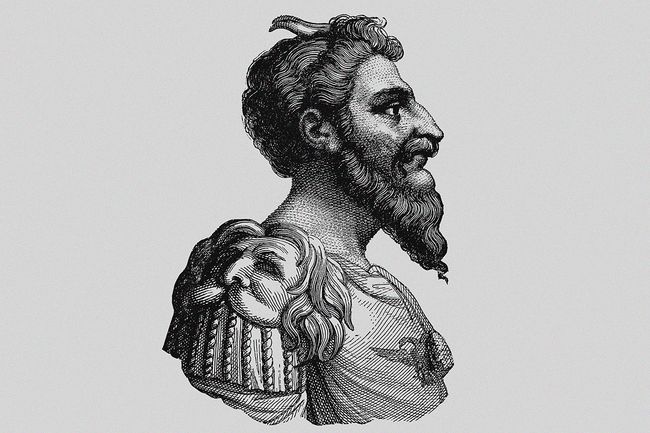
  • Illustration of Attila the Hun
Illustration of Attila the Hun
Photo credit: bauhaus1000/ DigitalVision Vectors via Getty Images
Author Michael Nordine

June 18, 2026

Love it?

More than 1,500 years after his death, Attila the Hun remains one of the most fear-inducing figures in history. He and his nomadic empire spent decades terrorizing and conquering Europe on horseback, so much so that he’s still remembered all across the continent — sometimes with reverence, sometimes with hatred. But many details of his life are unclear, and some that have been reliably recorded aren’t as widely known as the apocryphal legends about him. Here are five such facts about Attila and his empire.

Photo credit: Tuul & Bruno Morandi/ The Image Bank via Getty Images

No One Knows Where the Huns Came From

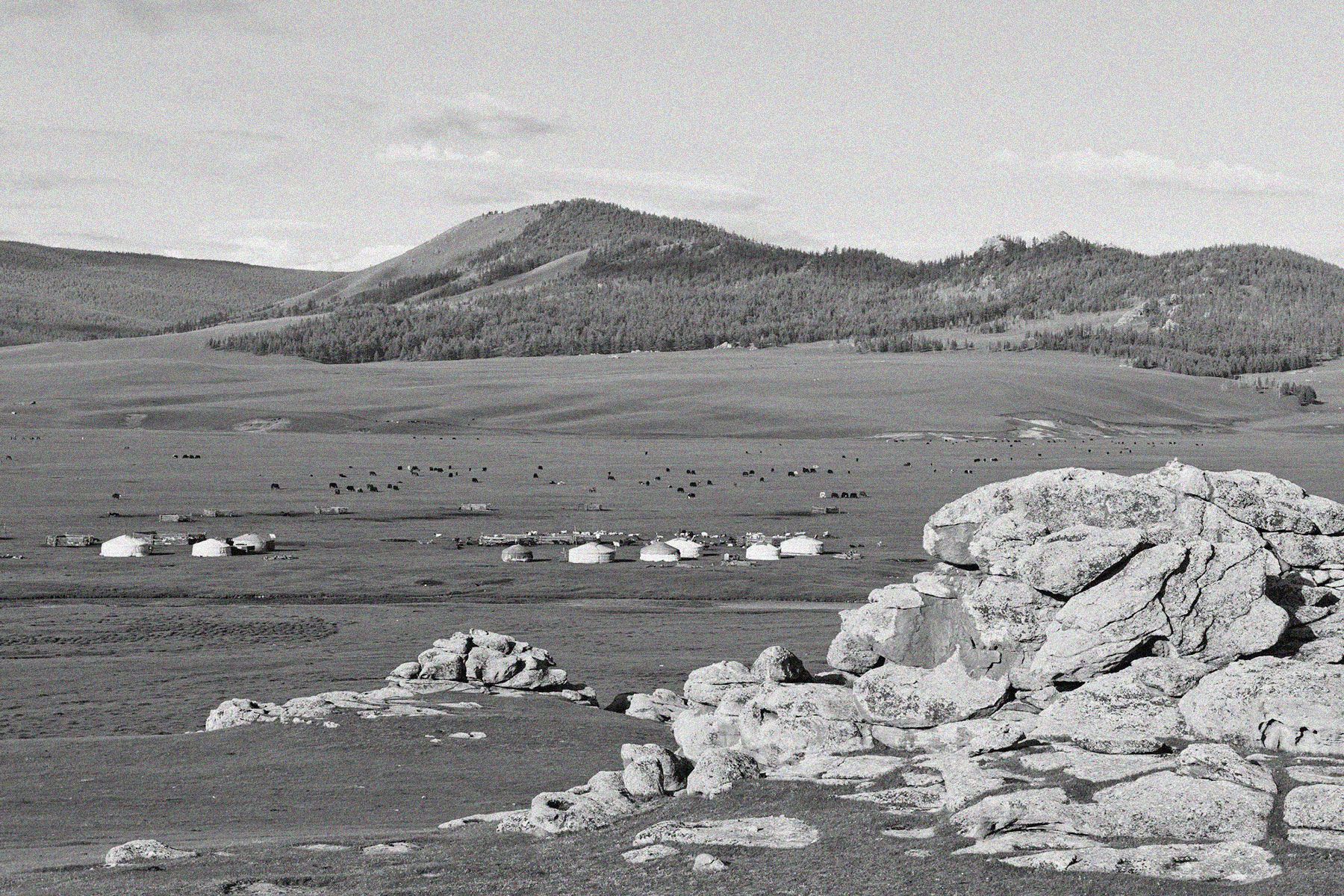
The Huns were among the most feared people in the world, as well as some of the least understood. That’s exemplified by the fact that the tribe’s precise origins remain unknown to this day. They were nomads, after all, and while one popular theory posits that their roots can be traced back to the Xiongnu people of ancient Mongolia, it’s impossible to confirm. Even the etymology of the Huns’ name is disputed, with some historians ascribing it to the old Turkic word for “ferocious”; others thinking it comes from the Persian term hūnarā, meaning “skilled”; and others still of the belief that it’s derived from the Ongi River in Mongolia, which could possibly have been the Huns’ ancestral homeland.

You may also like

Why Is a Week 7 Days?

  • Ancient astronomers
Ancient astronomers
Credit: © Universal History Archive—Universal Images Group/Getty Images
Author Kristina Wright

June 10, 2026

Love it?

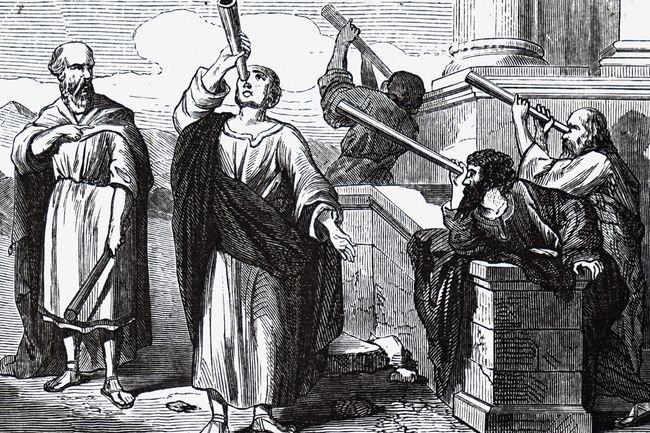
The seven-day week is so deeply baked into modern life that it feels almost inevitable. Workdays, weekends, school schedules, streaming release dates — nearly everything runs on the same seven-day rhythm. But there’s nothing especially natural about a week. Unlike a year, a month, or a day, it doesn’t neatly correspond to a major astronomical event. 

While a year is tied to Earth’s orbit around the sun, a month is roughly one full cycle of moon phases, and a day is one rotation of Earth on its axis, the length of a week isn’t cut and dry. So why is it seven days instead of, say, five, eight, or 12?

You may also like

What Everyday Life Was Like in Ancient Rome

  • Ancient Romans gambling
Ancient Romans gambling
Hulton Archive via Getty Images
Author Adam Levine

June 7, 2026

Love it?

Ancient Roman history is usually dominated by larger-than-life rulers such as Julius Caesar and eloquent senators such as Cicero. However, these men led an empire of millions of everyday citizens who were usually less concerned with conquering the world than they were with putting bread on the table and simply enjoying life. A look at the lives of typical Roman citizens reveals a culture that in many fundamental ways is not so different from ours; the ancient Romans worked, played, socialized, and expressed themselves — albeit often quite rudely. Here are six facts that offer a glimpse of what it was like to be an average citizen in one of the world’s largest and most influential empires.

Photo credit: INTERFOTO / Alamy Stock Photo

No Matter Where You Went, You Could Always Find a Public Bath

The Romans were masterful architects of public baths, called thermae. These were complex facilities with elaborate heating systems where Romans from all walks of life came together to relax, socialize, and of course, get clean. Bathing in the Roman thermae wasn’t just a simple dip in the water — there was a whole process involved. A visitor would begin by doing some light exercise followed by a hot bath, then a warm bath, and then a cold bath; they could also spend time in a steam room or get a massage. Public baths were a central part of Roman culture, and some citizens even considered them a symbol of Roman identity. In fact, baths were such an essential component of daily life that they were built in nearly every part of the Roman Empire, even in its most remote regions. Roman thermae could be found as far north as the British Isles and as far south as Egypt.

Photo credit: Werner Forman/ Universal Images Group via Getty Images

The Empire’s Cities Were Filled With Graffiti

Archaeological evidence from well-preserved ancient Roman cities such as Pompeii and Herculaneum reveals that, much like people in modern society, the denizens of ancient Rome liked to express themselves through some good old-fashioned graffiti. Since the ancient Romans lived a few millennia before the invention of spray paint, they had to make do by scratching and carving their designs and messages into plaster surfaces around the empire’s cities. Graffiti carved by everyday Romans can be found on the walls of bars, public baths, and other places where people commonly went to socialize. Ancient Roman street art ranged from simple drawings of stick figures and animals to colorful, R-rated jokes and insults. While some of the more famous Romans, such as emperors and statesmen, were commemorated through huge monuments and stately statues, graffiti was often a common person’s best shot at leaving their mark on the world, and many ancient graffiti artists included their names in the messages they left, to be remembered by future generations — even if it was just for a rude boast or scatological joke.

You may also like

What Ancient Romans Used Instead of Toilet Paper

  • Roman latrine, second century
Roman latrine, second century
Credit: © Heritage Images—Hulton Fine Art Collection/Getty Images
Author Tony Dunnell

June 4, 2026

Love it?

The ancient Romans rank among history’s greatest engineers. They built aqueducts that carried fresh water across many miles, roads that are still visible 2,000 years later, and sewage systems that helped keep the city clean. Having borrowed and improved upon techniques from the Greeks and the Etruscans, the Romans became the most sophisticated builders of their time. 

That said, any admiration you might have for Roman ingenuity could be tested when you learn what historians think they used instead of toilet paper. Here we take a perilous dive into the world of Roman public latrines, and what our ancient ancestors used in lieu of modern TP.

Credit: © Image courtesy of D. Herdemerten, Wikimedia Commons

Meet the Sponge Brush

The oldest known recorded use of paper for bathroom hygiene purposes dates back to China in the sixth century CE. But for most of recorded history, people around the world used whatever they could find, whether it be rags, grass, moss, or even corncobs. And when some kind of material wasn’t available, people could just wash with water, either from a bucket or a natural source such as a river or stream.   The Romans, however, came up with a different solution — and it didn’t involve anything as prosaic as rags or paper. 

According to many historians, the Romans’ answer to the rear hygiene question was the tersorium, also known by the Greek-derived term xylospongium. This was basically a sponge on a stick. They attached a sea sponge from the Mediterranean to the end of a wooden rod, similar to the back-washers sold in drugstores today. 

It’s not a terrible idea — the sponge is absorbent and the rod gives extra reach. But here’s where things get a little sticky: The tersorium may have been for communal use. 

Not everyone in Rome would have carried around their own sponge on a stick — so public latrines at bathhouses and other public spaces (the Colosseum, for example) would have had a shared tersorium that was rinsed between uses, normally by placing it into the channel of water that ran through the latrine, and perhaps also by dipping it into a bucket of water with added salt or vinegar. 

You may also like

5 Facts About the World’s Oldest Countries

  • The Pyramid of Djoser
The Pyramid of Djoser
DEA / CHOMON-PERINO/ De Agostini via Getty Images
Author Bennett Kleinman

May 31, 2026

Love it?

While some modern countries are little more than a decade old, others boast a rich history dating back thousands of years. Long before nations such as Iran and Egypt became the independent states we know them as today, early governments were formed by ancient civilizations in those regions, laying the foundation for thousands of years of expansion and development.

It can be a challenge to determine the exact age of any given country, but based on the current archaeological data, there are several nations in the Middle East and Asia that consistently rank among the oldest in human history. Here are five facts about some of the world’s oldest countries.

Photo credit: DEA / CHOMON-PERINO/ De Agostini via Getty Images

The First Architect Known by Name Lived in Ancient Egypt

Though the Great Pyramids of Giza are the most famous ancient Egyptian landmarks, the region is home to an even older structure. The Pyramid of Djoser — built in the mid-27th century BCE — predates the Great Pyramids by roughly a century, and was designed by a man named Imhotep, who is considered to be one of human civilization’s first architects. Imhotep not only conceived of this groundbreaking pyramidal structure, but also gets credit for using columns before anyone else and revolutionizing the use of stone in building construction. He also offered vast contributions to the world of medicine, writing texts describing the early diagnosis and treatment of many ailments. In 525 BCE, centuries after his death, Imhotep even rose to the status of full deity, being dubbed the Egyptian god of science, medicine, and architecture.

Photo credit: Pictures from History/ Universal Images Group via Getty Images

Two Vietnamese Sisters Led a Successful Revolt Against China

According to Vietnamese legend, the origins of Vietnam date back to around the year 2879 BCE, which marked the beginning of the Hồng Bàng dynasty — the first recorded dynasty in the nation’s history. For millennia, the Vietnamese people ruled over their own territory, which was invaded by members of China’s Han dynasty in 111 BCE. After a century of Chinese control, two women rose up to push back against their Chinese invaders, earning the status of national heroes in the process. The Trưng sisters — Trưng Trắc and Trưng Nhị — mobilized locals in an effort to avenge the death of the former’s husband, who had been executed by Chinese forces without trial. This newly formed army consisted of around 80,000 soldiers and 36 female generals. The forces rebelled against the Chinese in the year 39 CE, successfully driving the invaders out of the country. Though the sisters’ reign over the region was brief, as China recaptured the territory in 43 CE, the legend of their exploits and tragic fate only grew from there. Temples were dedicated in their honor throughout Vietnam, as people prayed to them for rain in times of drought. They remain important figures in Vietnamese history two millennia later.

You may also like

What Did Ancient People Do With Their Trash?

  • Trash collectors, Paris, 1908
Trash collectors, Paris, 1908
Credit: © Jacques Boyer—Roger Viollet/Getty Images
Author Bess Lovejoy

April 16, 2026

Love it?

Long before curbside pickup and neatly labeled recycling bins, humans faced a familiar problem: what to do with their garbage. The answers, across ancient civilizations, were both varied and inventive — albeit often far messier than modern systems. People tossed refuse into alleyways, built their cities on top of it, and sometimes folded it back into daily life. In many cases, what we would call “garbage” wasn’t even seen as waste at all, but as a resource waiting to be reused. Here’s a closer look at how ancient societies dealt with their trash.

Credit: © DeAgostini/Getty Images

We Built This City on … Garbage?

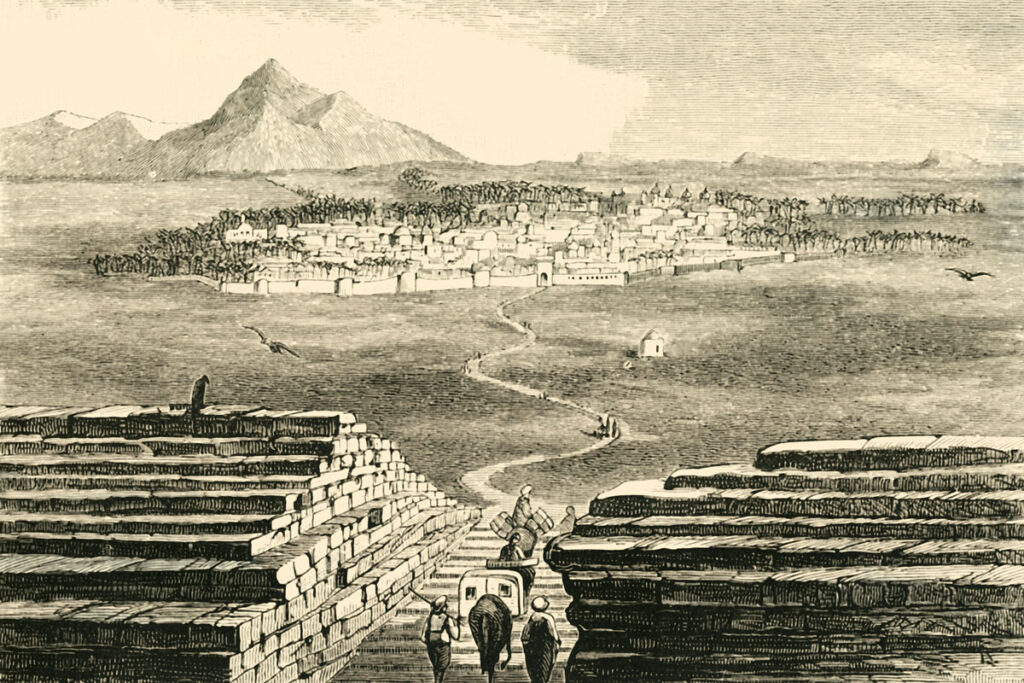
One of the most common solutions wasn’t really a solution at all: throwing trash right outside the home. In Sumerian cities in Mesopotamia around 2500 BCE, residents routinely dumped waste into alleyways. Municipal workers spread ash and sand over the mess to tamp it down, but the buildup was inevitable. Over time, layers of garbage, ash, and dirt raised street levels so much that people had to add steps down into their homes.

This kind of accumulation was widespread in the ancient world. Early cities often dealt with refuse simply by piling it up nearby, creating thick layers of debris. The result is the deep, stratified tells (artificial mounds) or middens (concentrated trash deposits) that mark many ancient settlements around the globe.

Sometimes trash actually became part of how early cities constructed themselves. At Çatalhöyük, a Neolithic settlement (abandoned 7,000 years ago) in modern-day Turkey, trash such as food scraps, ash, broken tools, and even human waste was discarded into the gaps between buildings. Over centuries, those deposits filled in the spaces, fused structures together, and created a dense, rising mound. Residents quite literally lived atop the refuse of earlier generations. In this way, garbage didn’t just accumulate — it transformed the landscape itself. As anthropologist Sarah Hill wrote, “Çatalhöyük today is not only one of the earliest known cities; it is also one of the world’s oldest landfills.” 

You may also like

What Was Stonehenge’s Actual Purpose?

  • Stonehenge, Wiltshire, England
Stonehenge, Wiltshire, England
Credit: Heritage Images/ Hulton Archive via Getty Images
Author Tony Dunnell

January 13, 2026

Love it?

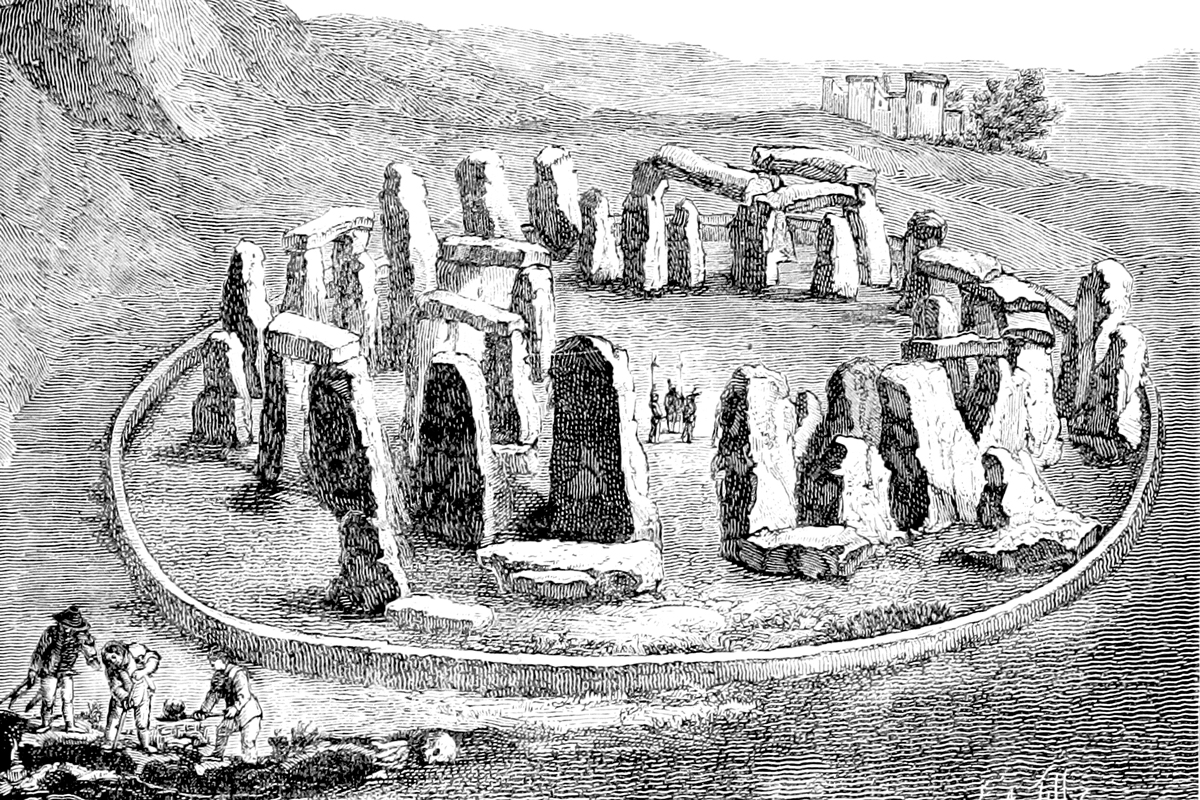
For thousands of years, Stonehenge has stood on England’s Salisbury Plain, shrouded in mist and mystery, its massive stones arranged in circles that continue to puzzle archaeologists and visitors alike. Built around 4,500 years ago — around the same time as the Sphinx and the Great Pyramid of Giza in Egypt — this historic monument has inspired many theories as to its purpose. Was it an ancient observatory? A burial ground? Or something else entirely? 

As Stonehenge was built by a Neolithic culture that left no written records, little is known for sure about its origins. The first significant surveys and excavations of the monument were made by English antiquarians John Aubrey and William Stukeley in the late 1600s, and it was they who first suggested the Druids as the most likely engineers — a myth that stuck (and is widely repeated even today), despite Stonehenge predating the Druids by more than a thousand years. People have studied the site ever since and further discoveries are still being made, expanding our knowledge regarding who exactly may have built Stonehenge and why. And recent research suggests its purpose was more complex than anyone imagined. 

Credit: robertharding/ Alamy Stock Photo 

An Astronomical Calendar

The idea of Stonehenge as an astronomical observatory has been around for a long time. As far back as the late 18th century, the antiquarian and polymath James Douglas concluded that the monument must have been an ancient solar temple due to its alignment with the midsummer sunrise. The theory of Stonehenge as some kind of Neolithic calendar gained traction from there, prompting many similar studies, including research in the 1960s when computers were used to make more precise calculations. 

Archaeological studies have proved that solstitial alignment was almost certainly a consideration of the people who built Stonehenge. It appears, however, that marking the summer solstice was not the priority. Due to the form and layout of Stonehenge, many archaeologists now believe that midwinter was the more important marker — which makes sense given that winter was the most challenging time of year for ancient agricultural communities.

You may also like

This Ancient Civilization Was More Advanced Than Rome

  • Map of Indus Valley civilization
Map of Indus Valley civilization
Credit: Dorling Kindersley/ Dorling Kindersley RF via Getty Images
Author Timothy Ott

November 26, 2025

Love it?

Few history buffs need to be reminded of the accomplishments of the Roman Empire, which contributed lasting innovations in construction, publishing, law, and many other fields. Far lesser known and understood, however, is the Indus Valley civilization that sprung up around the Indus River and its adjacent waterways in modern-day Pakistan and eventually stretched into parts of modern-day India and Afghanistan. 

The Indus Valley’s peak years lasted from approximately 2600 BCE to 1900 BCE, around the same time that cities in Mesopotamia and Egypt were thriving. At the height of the civilization, the Indus people enjoyed advancements that not only surpassed those of their contemporaries but also rivaled — and in many cases outshone — the advancements that arrived more than a millennium later in ancient Rome.

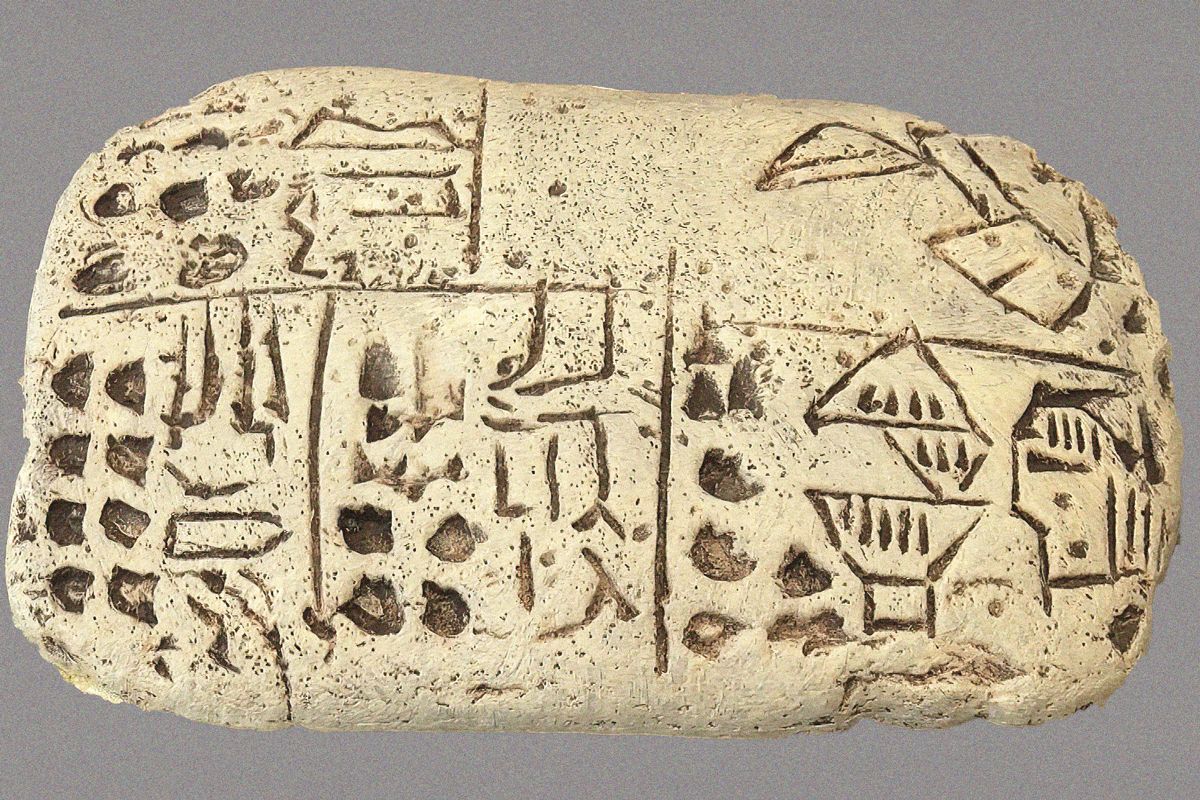
One major drawback to studying the Indus Valley civilization is that, unlike the cuneiform script of Mesopotamia and the hieroglyphics used by the Egyptians, the Indus people’s distinct system of writing has yet to be deciphered. But while that has prevented historians from gaining significant insight into the minds of these ancient denizens, archaeological discoveries have provided plenty of evidence for their advanced thinking.

Credit: G R Talpur/ iStock via Getty Images Plus 

Organized City Planning

Unlike the chaotic pathways of Mesopotamia, the streets of Indus Valley cities were established in a grid system oriented along the north-south and east-west axes, intersecting roads at right angles to one another, which allowed for an orderly flow in population centers that hosted upwards of 35,000 residents.

Main thoroughfares could reach 30 feet wide to allow for the passage of carts, while the entrances of houses were stationed off narrower alleyways, away from the busy streets. Most homes received water furnished by a private well and were typically positioned around a central courtyard to provide an area for light and ventilation.
The cities themselves were built on massive stone platforms, in some cases covering more than 80,000 square feet, to remain above the floods of the Indus River. One of the largest cities, Mohenjo-daro, is famed for its Great Bath measuring nearly 900 square feet; the ruins of this ancient hub are now a UNESCO World Heritage Site. And the Lothal archaeological site, another ancient city, features a basin around 700 feet long and 100 feet wide that is believed to be the world’s first dockyard.

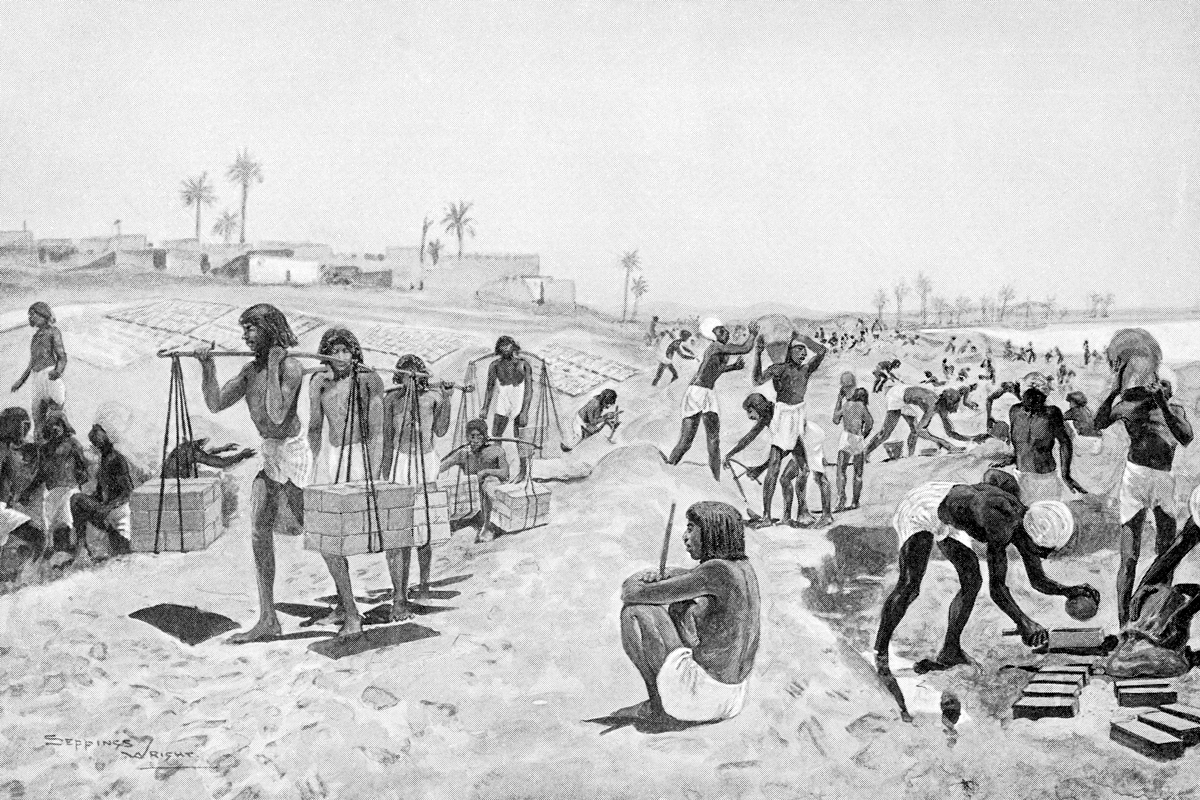
Underlying all this construction was a system of measurement that followed carefully delineated ratios and led to the creation of oven-baked bricks of identical size. This, in turn, led to standard sizes for streets and buildings that could be found across urban centers throughout the Indus Valley.

Cities in the Roman Empire — which began in 27 BCE, more than a thousand years after the Indus Valley’s decline — were also renowned for adhering to a grid system, known as centuriation, and for a well-planned layout that placed forums and amphitheaters at the intersection of major thoroughfares. Yet Rome itself was not so carefully organized, with its collection of narrow, winding streets that emerged amid the hilly, swampy terrain of the original settlement. These conditions proved problematic as the city swelled to more than a million residents by the imperial period, with many Romans packed into multistory apartment buildings known as insulae that were susceptible to fires.

You may also like

What Did People Do Before Shampoo?

  • Washing lice out of hair, 1497
Washing lice out of hair, 1497
Credit: Science & Society Picture Library/ SSPL via Getty Images
Author Nicole Villeneuve

November 13, 2025

Love it?

Shampoo as we know it today is less than a century old, but the act of hair-washing stretches back thousands of years. So what did people do before sudsing up in the shower?

A clue can be taken from the word “shampoo” itself. It comes from the Hindi champo, meaning “to massage, press, or knead” — indicative of some of the early hair-cleansing practices, even if it was just with plain old water. Only later did the term come to describe what we now think of as washing our hair. Here’s a look at how people kept their locks shiny before modern shampoo.

Credit: The History Collection/ Alamy Stock Photo 

Ancient Cleansers

Around 4,000 years ago in the Indus Valley (modern-day Pakistan and northwest India), washes formulated specifically for hair began to emerge. Soapberries — fruit from the sapindus tree — were boiled with dried Indian gooseberries, also known as amla, to make a gentle cleansing solution. The soapberries produced a lather, while the amla’s fatty acids and vitamin C helped nourish tresses. Centuries later, the Yao people in southern China had a similar tradition, washing their famously long hair with rice water, a custom that continues today.
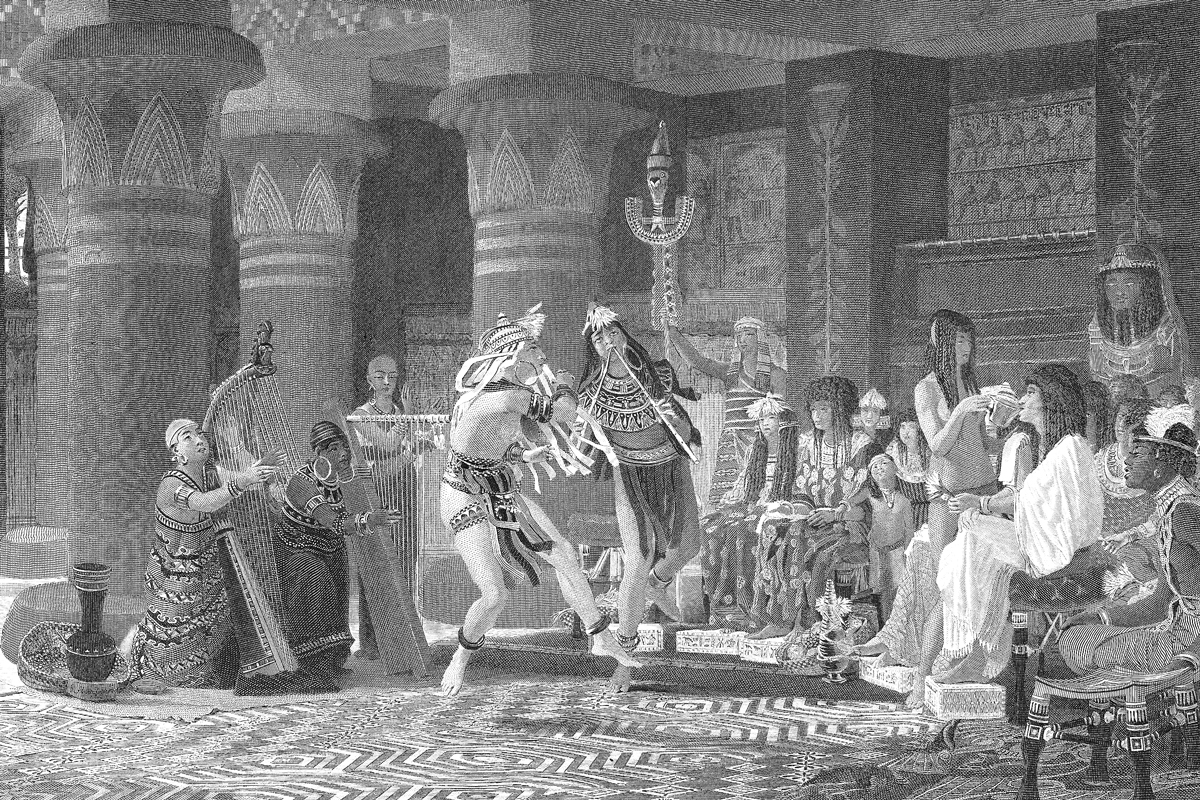
Rudimentary soaps made from animal fats and plant ashes were common in ancient Mesopotamia, Egypt, Greece, and Rome, although it’s unclear if these harsh concoctions were used for personal hygiene or for other cleaning such as laundry. Indeed, Romans typically maintained their hair simply by combing it and applying oils. Hair-washing wasn’t a regular habit, but rather a ritual one: Plutarch described women washing their hair before accessorizing it with flowers for the festival of Nemoralia in honor of the Roman goddess Diana.

In Egypt, soapwort plants were used to wash hair. These plants contain natural compounds known as saponins that create a mild lather when crushed. Animal fats were added for conditioning, citrus juices helped clean, and fragrant oils made it all smell good. Across the Atlantic, many Indigenous peoples in North America also used plants with saponins, such as yucca. The roots were peeled and ground into a sudsy pulp, then mixed with water to wash both hair and skin.
You may also like

Does the Thumbs-Up Sign Come From Gladiator Fights? 

  • Thumbs-up gesture
Thumbs-up gesture
Credit: H. Armstrong Roberts/ClassicStock/ Archive Photos via Getty Images
Author Tony Dunnell

August 5, 2025

Love it?

The thumbs-up sign is one of the most instantly and universally recognized symbols of approval in modern Western culture. This ubiquitous gesture appears in everyday acknowledgments between friends and colleagues, in emojis across social media, and in numerous TV shows and movies, with famous fictional proponents including “The Fonz,” Borat, and Arnold Schwarzenegger’s T-800 in Terminator 2: Judgment Day.

Despite this popularity, a fair amount of confusion and misinformation surrounds the origin of the thumbs-up sign. Most notably, many people believe the gesture has its origins in ancient Roman gladiator fights, where spectators supposedly used a thumbs-up to spare defeated fighters and a thumbs-down to condemn them to death. This narrative has been reinforced by popular culture — particularly the 2000 Academy Award-winning movie Gladiator. The historical reality, however, is not nearly as clear cut as Hollywood would have us believe. 

Credit: Bettmann via Getty Images 

The Problem With Pollice Verso

It’s true that there’s a link between thumb gestures and gladiator fights in ancient Rome, but we don’t know exactly how the gesture was used. At the heart of the historical debate is the Latin phrase pollice verso, meaning “with a turned thumb.” This phrase appears in ancient Roman literature, including in connection with gladiatorial contests, but its exact meaning remains unclear to historians. We don’t know whether pollice verso referred to a thumb being turned up, turned down, held horizontally, or concealed inside the hand to indicate positive or negative opinions — or, in the arena, to signal whether a gladiator was spared or killed. 

The ambiguity of ancient sources has allowed later interpreters to project their own meaning onto the gesture. The most significant example of this in the modern era is Jean-Léon Gérôme’s 1872 painting “Pollice Verso.” The painting brilliantly captures the power and drama of a gladiatorial contest, with one gladiator standing above his fallen opponent, who, lying stricken on the ground, raises two fingers to plead for mercy. In the stands of the Colosseum, Roman spectators, including an animated group of vestal virgins, signal death for the defeated gladiator with a thumbs-down gesture. The painting greatly popularized the idea that a thumbs-up signaled life, and a thumbs-down signaled death for a defeated gladiator.

It didn’t take long, however, for scholars to highlight the painting’s lack of a solid historical foundation in its portrayal of the gladiatorial contest. In 1879, a 26-page pamphlet titled Pollice Verso: To the Lovers of Truth in Classic Art, This Is Most Respectfully Addressed presented evidence against the historical accuracy of the thumb gestures in Gérôme’s painting.

You may also like