




Why Do We Mostly Eat Chicken Eggs?
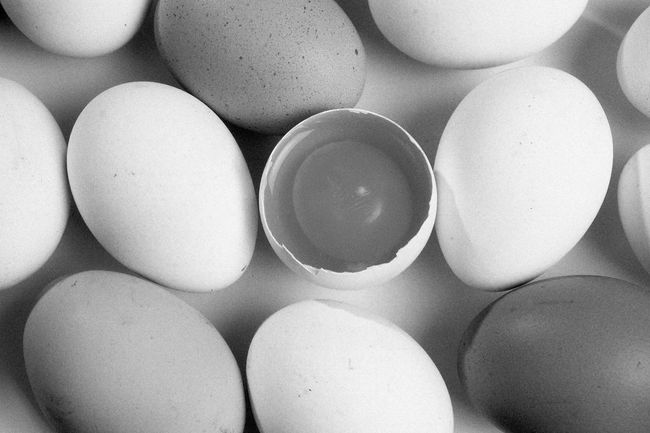
When we say we’re buying eggs at the grocery store or having eggs for breakfast, we’re almost always talking about one specific kind: chicken eggs. The average American eats more than 270 chicken eggs each year, making them one of the most common foods in the modern diet. They’re so familiar that it’s easy to forget they represent just one option.
Chickens aren’t the only birds that lay edible eggs. Ducks, geese, quail, turkeys, and even ostriches produce eggs that people eat regularly in parts of the world, albeit on a much smaller scale. So why do chickens dominate the global egg market?
Eggs Were Always on the Menu
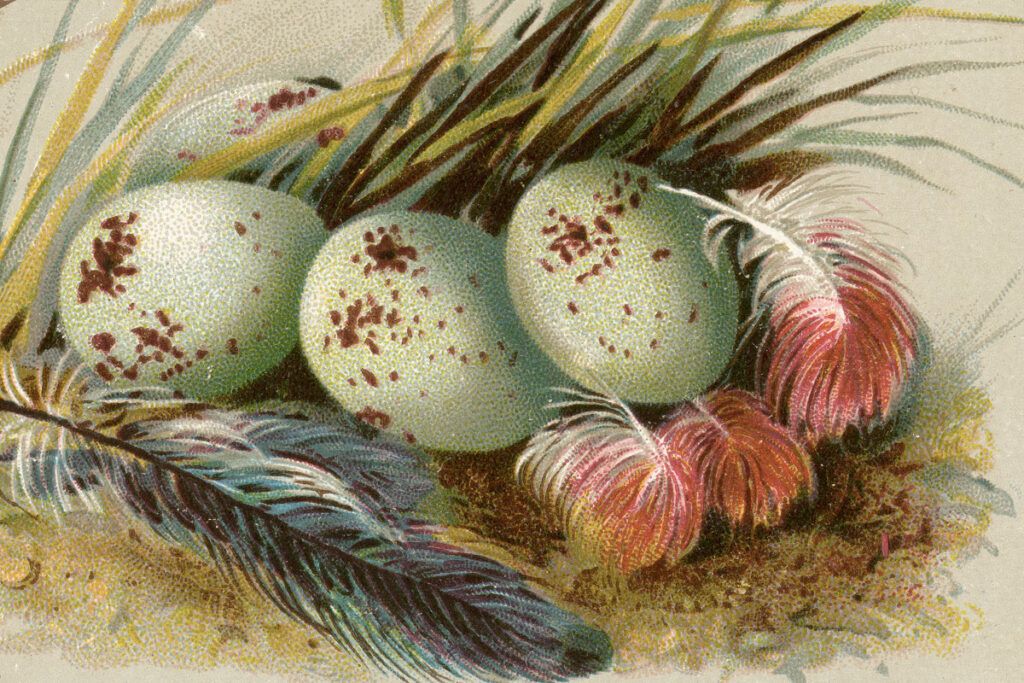
For most of human history, people weren’t especially selective about where their eggs came from. Ancient Romans consumed eggs from ducks, geese, partridges, pheasants, and even peacocks, while coastal communities around the world harvested eggs from nesting seabirds such as gulls, puffins, murres, and terns. If an egg was nutritious, accessible, and safe to collect, it usually ended up on the menu.
That diversity hasn’t entirely disappeared. Duck eggs remain popular throughout much of Asia, particularly in Chinese and Vietnamese cuisine, where they are valued for their richer flavor and larger yolks. Quail eggs appear in dishes across Europe, Latin America, and East Asia, while goose eggs are still enjoyed seasonally in parts of Northern and Eastern Europe.
For thousands of years, people generally ate whatever eggs were locally available, but the rise of the chicken gradually changed that equation. And, compared with almost every other domesticated bird, chickens have an unusually favorable combination of traits for large-scale egg production.
More from our network






Why Chickens Stood Out
Humans first domesticated chickens at least 3,500 years ago from wild red junglefowl in Southeast Asia. Many researchers believe those junglefowl were initially attracted to early rice and millet fields, where spilled grain and insects created an easy food source near human settlements. Over time, that close association evolved into domestication. Archaeological evidence suggests chickens spread westward through trade routes into India, the Middle East, Europe, and eventually Africa, long before reaching the Americas with European explorers.
Selective breeding transformed the species dramatically. Wild junglefowl typically lay only around 10 to 15 eggs per year during a short breeding season, primarily in spring. But over centuries, farmers consistently favored birds that laid eggs more frequently, matured earlier, and tolerated living near humans. The result was a gradual but dramatic increase in productivity.
By the early 20th century, advances in genetics, nutrition, and animal husbandry accelerated that process even further. Annual egg production per hen in the United States rose dramatically over the following decades as farmers bred birds specifically for productivity and efficiency. Other domesticated birds never received the same level of investment or specialization for egg production, leaving chickens with an enormous head start before industrial farming even began.
The Economics of Eggs
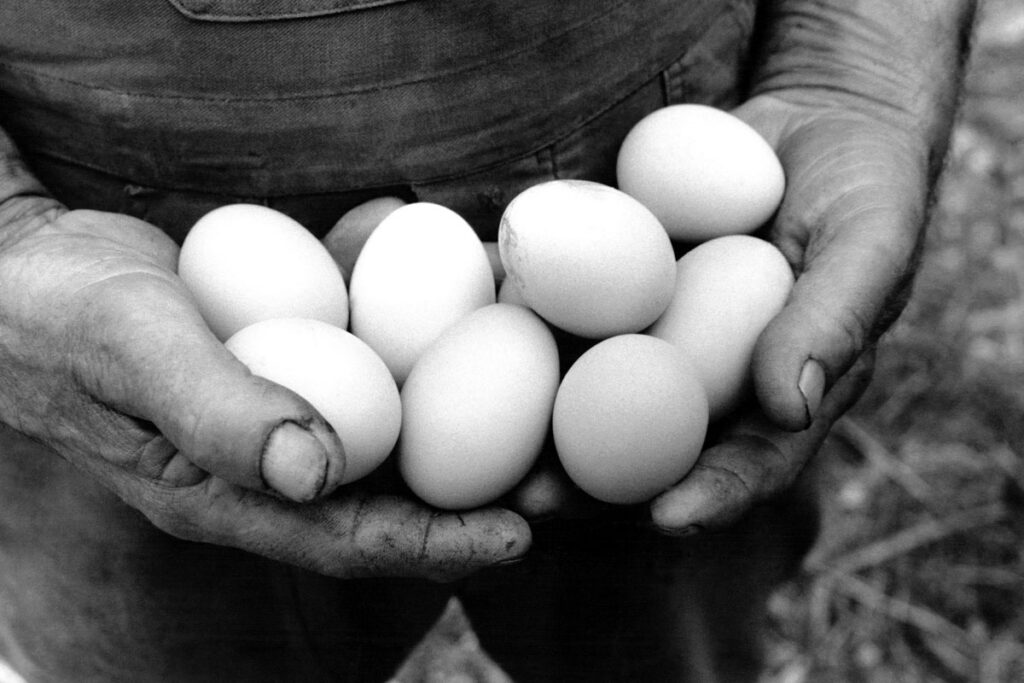
Modern laying hens are extraordinarily productive animals, with commercial breeds commonly producing around 280 to 320 eggs per year. By comparison, geese typically lay only around 30 to 50 eggs annually and turkeys generally produce between 70 and 100 eggs a year. Ducks come closest to competing with chickens in productivity, but even they usually require more feed, more water, and more space to maintain consistent laying rates.
Chicken eggs also occupy a useful middle ground in size. Quail eggs are so small that it takes four or five to equal a single chicken egg, while goose eggs are often two to three times larger and less practical for everyday cooking and baking.
Meanwhile, chickens are relatively inexpensive to raise. They adapt well to a wide range of climates, require less space and feed than larger birds, and mature quickly, with many hens beginning to lay at around 5 months of age. From a farmer’s perspective, chickens deliver an unusually high number of eggs for relatively modest inputs — a combination that few other domesticated birds can match.
The Supermarket Standard
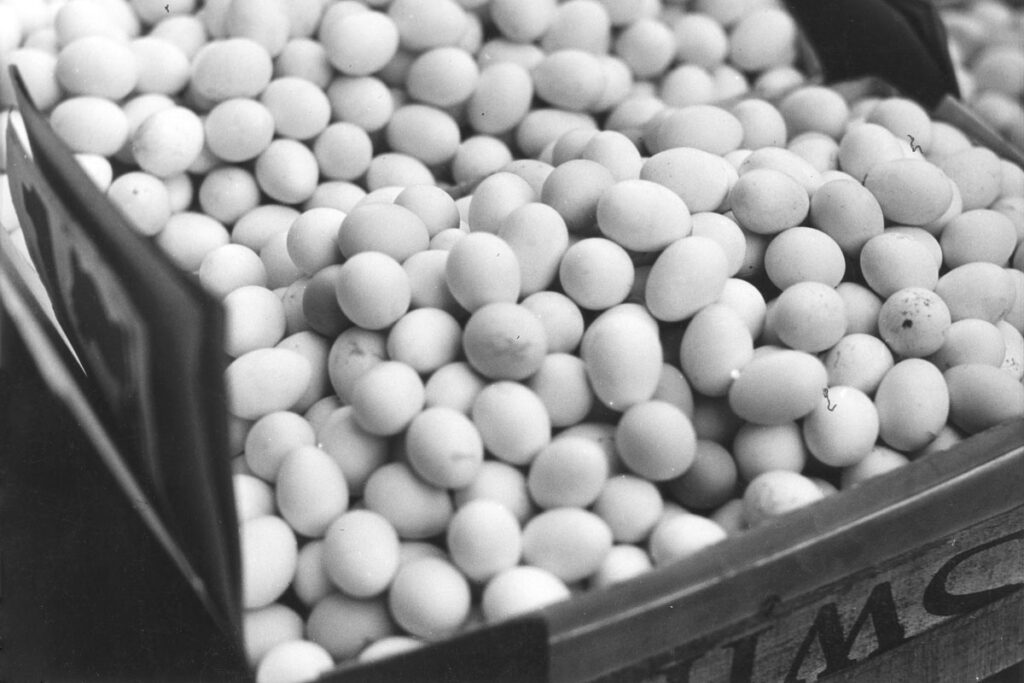
By the early 20th century, the chicken had become the dominant commercial egg-laying bird across much of the industrialized world. The rise of supermarkets and large-scale food distribution only reinforced that advantage. Retailers favored products that could be graded, packaged, shipped long distances, and sold with consistent expectations about size, appearance, and shelf life. Chicken eggs were particularly well suited to that system.
Recipes standardized around chicken eggs as well. Cookbooks, commercial bakeries, and food manufacturers all assumed a particular egg size and a predictable balance of yolk and white. Other eggs could certainly be substituted, but they often required adjustments that made them less convenient for large-scale production and recipes.
Alternative eggs never disappeared. Duck eggs remain popular for baking, quail eggs appear in cuisines around the world, and goose eggs are still enjoyed seasonally in some regions. But for everyday breakfasts, omelets, and baking projects, chicken eggs became the default, so much so that they’re practically synonymous with eating “eggs” today.


