




Why Do We Propose on One Knee?
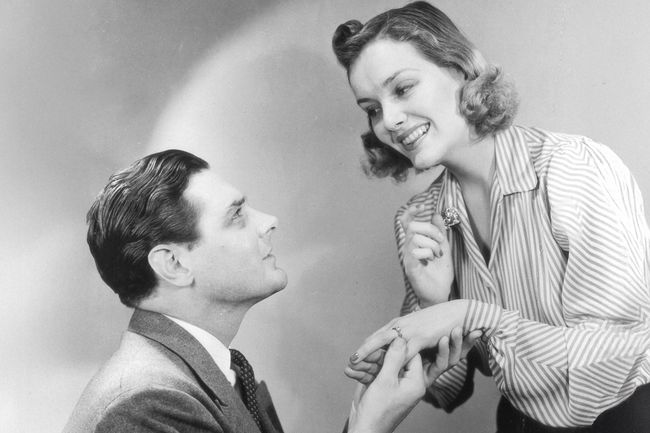
Few moments in a person’s life are as emotional — and possibly as nerve-racking — as a marriage proposal. These proposals tend to be instantly recognizable, with a suitor dropping to one knee, ring in hand, to ask perhaps the most important question of their life: “Will you marry me?”
It’s a tradition observed across much of the Western world, and one depicted in countless paintings, photos, films, and social media posts. But where does the customary kneeling gesture come from? We could, after all, be doing all manner of actions: standing with our arms out wide, bowing theatrically, or spinning on our heads in an act of wild virility. Let’s journey back through the centuries to find out when kneeling first became a common act, and how it attached itself to the art of proposing marriage.
Bending the Knee
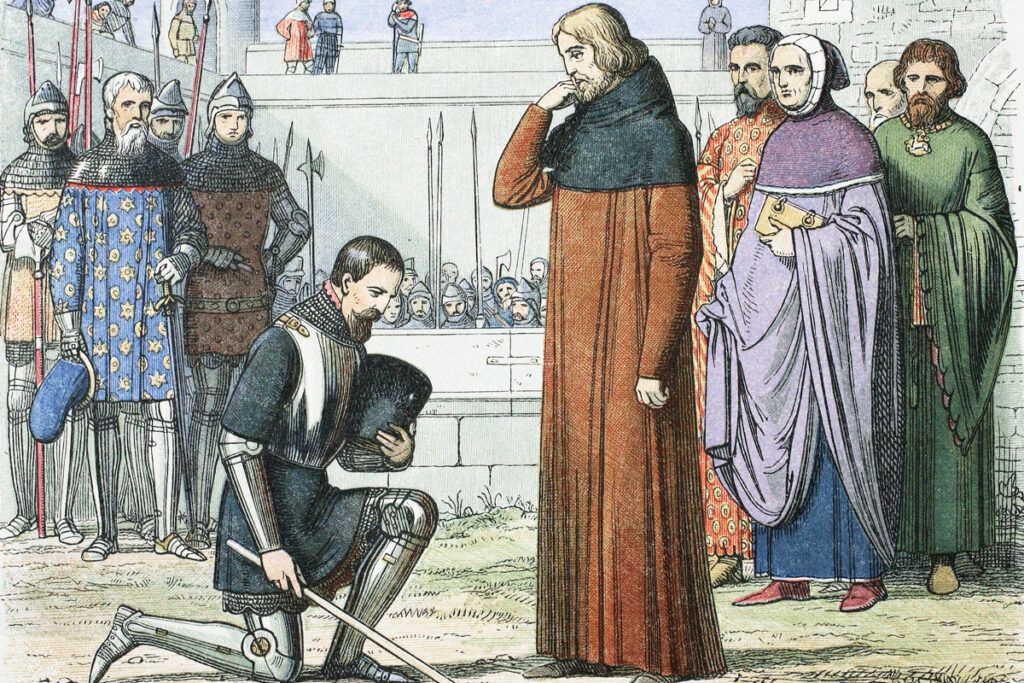
To understand the act of kneeling before someone, whether with amorous intentions or otherwise, we first need to look at the history of genuflection. The verb “genuflect” comes from the Latin genūflectĕre, in which genū means “knee” and flectĕre “to bend.” And bending the knee was popular long before Game of Thrones introduced the expression to a modern audience.
It’s impossible to say exactly when it became commonplace, but we know that Alexander the Great adopted the Persian custom of proskynesis (genuflection) as part of his court etiquette sometime around 327 BCE. In other words, kneeling has been a custom for a very long time, as a way to show deference to someone — typically a person of higher status.
Fast-forward to medieval Europe: By the Middle Ages, kneeling had become a deeply meaningful act embedded in both the social and religious customs of everyday life. Genuflecting was a well-established practice in the Catholic faith, in which people would kneel to pray, specifically on the right knee. This practice continues today: According to the General Instruction of the Roman Missal, a governing document published in 1969, “a genuflection, made by bending the right knee to the ground, signifies adoration, and therefore it is reserved for the Most Blessed Sacrament.”
Knights and vassals also kneeled before lords, kings, and queens as a formal gesture of loyalty, obedience, and submission. Typically, a person would kneel on the left knee while swearing loyalty or service to a monarch, noble, or anyone of superior rank; the right knee was reserved for religious genuflection. The main exception to this custom was (and still is) the tradition of British knighting ceremonies, in which the knight-elect kneels on their right knee in front of the king or queen to receive their knighthood.
More from our network





Courtly Love
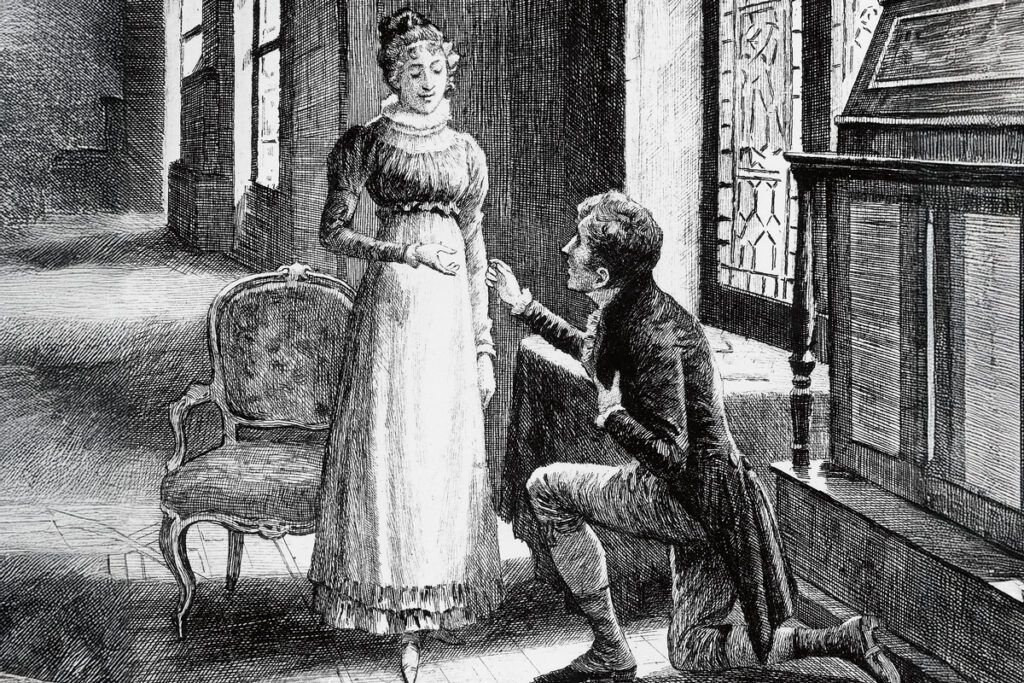
The practice of kneeling was not confined to religious and feudal ceremony in medieval Europe. Knights and noblemen also knelt before noblewomen as part of the tradition of courtly love, a cultural phenomenon in which a man would pledge his admiration and service to a lady. It was all a bit confusing back then, as the man might already have been married — often as the result of a business deal or strategic alliance. Sometimes, a new courtly commitment to a woman was serious but strictly platonic.
Nonetheless, the male admirer would dedicate himself fully to the noblewoman, kneeling before her in a gesture signifying love, loyalty, and service. By lowering himself physically to one knee (the left), the nobleman was elevating the woman above him, placing her in a position of honor.
Medieval men didn’t necessarily propose marriage this way, but the act of kneeling before a woman to show respect and love became a custom in its own right. The ritual slowly filtered down from the nobility to the common people, shedding its feudal connotations and taking on a more romantic meaning.
The Role of Silent Films
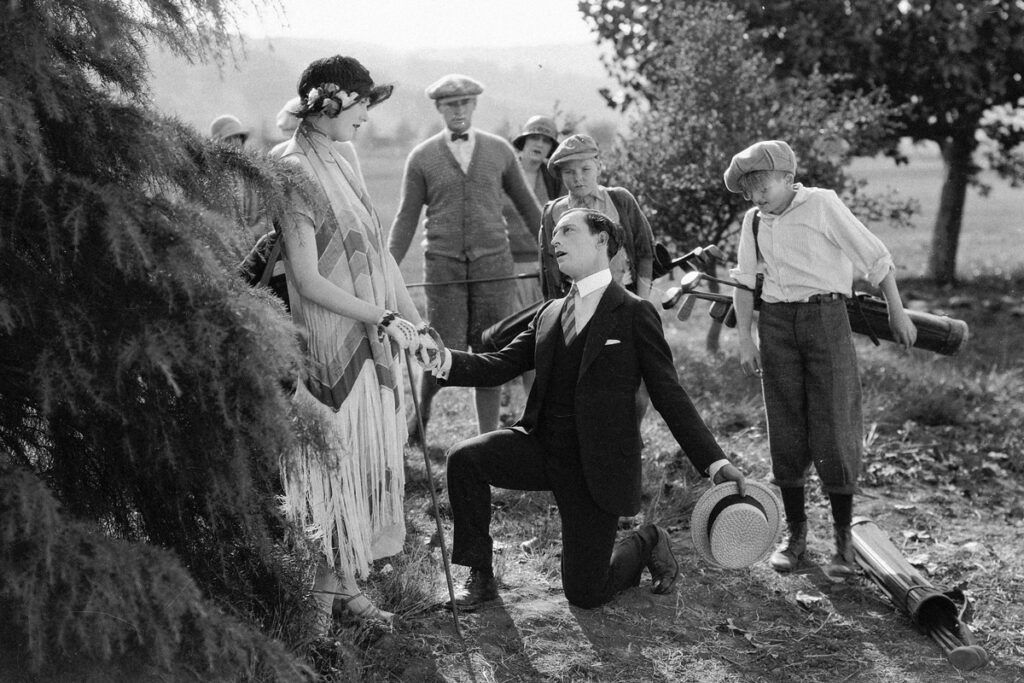
While getting down on one knee to propose marriage has its roots in the courts and castles of medieval Europe, it didn’t become a custom in the Middle Ages or the centuries that followed (the majority of proposals up until the modern era were more like business transactions between families rather than romantic propositions). The practice only became a common part of marriage proposals hundreds of years later — in the cinemas of the silent movie era. According to author and university professor Paullett Golden, kneeling to propose marriage is largely a modern convention that began in the U.S.: “One of the first places we see bended knee proposals,” Golden writes, “is in the silent films of the 1920s.”
In these movies, having a suitor bend the knee to propose marriage was a clear way to visually represent what was happening, rather than having two actors stare at each other with captions explaining that a proposal was taking place. The gesture was already familiar to the audience due to its widely known historical context, so it was a simple and dramatic way to show a romantic marriage proposal with no audible dialogue. This visual convention was repeated so often, and proved so effective, that it gradually crossed over from fiction into real life.
Having begun as a gesture of religious devotion, feudal fealty, and courtly love, bending the knee therefore became a standard element of the marriage proposal thanks in large part to Hollywood. According to tradition, a person proposing marriage should get down on their left knee — a relic of the medieval custom. But most people today don’t make this particular historic distinction when gearing up to pop the question.


