


Why Is a Workweek 5 Days? 

  • Cotton mill workers, circa 1908
Cotton mill workers, circa 1908
Credit: Universal History Archive/ Universal Images Group via Getty Images
Author Nicole Villeneuve

March 13, 2025

Love it?

Many Americans structure their lives around a simple schedule: five days of work followed by two days off for leisure, chores, and, if they’re lucky, rest. But the concept of a standard Monday through Friday workweek is a relatively recent development, shaped by decades of activism, industrial shifts, and, eventually, government intervention. 

What many of us take for granted today as a normal part of life was once a hard-fought cause. The five-day workweek as we know it emerged gradually from a long — and often contentious — battle for fairer labor rights. Let’s take a look at how it all began.

Credit: Bettmann via Getty Images 

Industrial Labor Meant Long Hours

For much of human history, labor was dictated by necessity rather than a fixed schedule. Farmers worked according to the seasons, and artisans and merchants worked at their own pace and set their own hours. That all changed with the Industrial Revolution. By the mid-19th century, this sweeping cultural transformation was in full swing, and factory work had replaced farming as the dominant form of labor in the U.S. 

Workers in manufacturing and other industrial sectors often clocked 60-plus hours a week across six or seven days; shifts averaged 10 to 12 hours per day but often stretched up to 16 hours, even for children. Conditions were harsh and often unsafe. The Industrial Revolution may have transformed economies, but it also pushed workers to their limits.

You may also like

What Was ‘Torpedo Juice’ in World War II?

  • Soldiers sharing a drink
Soldiers sharing a drink
Credit: Bettmann via Getty Images
Author Mark DeJoy

March 13, 2025

Love it?

World War II-era military speak was full of colorful slang terms. For instance, a can of milk was known as an “armored cow.” Prunes, often sent to prisoners as part of Red Cross parcels, were called “Army strawberries.” A cup of coffee? That was “battery acid.” And then there was “torpedo juice,” a term that might seem like slang, but was the actual name of a drink consumed by soldiers. 

Torpedo juice, sometimes referred to by the lesser-known moniker Torpedo Tessie, was a highly alcoholic cocktail with a surprisingly literal name. Torpedoes of the era were fueled by 180-proof ethanol, a very potent variant of essentially the same neutral grain alcohol found in beer, wine, and spirits. Because liquor wasn’t otherwise accessible, soldiers would drain a bit of the fuel from a torpedo and mix it with fruit juice. As World War II veteran and former torpedo operator Jim Nerison told the Anchorage Daily News, “The torpedo wasn’t going to use it all anyway, so we kind of tapped off a little bit of it.” 

Credit: Fox Photos/ Hulton Archive via Getty Images 

The resulting drink could be a dangerously strong highball. After all, 180-proof equates to 90% alcohol by volume. Most base spirits (that is, the liquors that cocktails are commonly made from, such as vodka, whiskey, and so on) average between 40% and 45% alcohol by volume, so using the same amount of torpedo fuel would result in a drink that was at least twice as potent as one made with a conventional liquor. The most popular fruit juice for mixing the drink was pineapple juice, though citrus juices (mainly orange, lemon, or grapefruit) were sometimes substituted. There wasn’t an exact recipe, but the mix ratio has been reported as somewhere between 1 part torpedo fuel to 3 parts fruit juice, and 2 parts torpedo fuel to 3 parts fruit juice — not very much dilution!

Eventually, the U.S. Navy caught on to the practice and sought to prevent its rank and file from drinking weapons fuel. Torpedo fuel began to be formulated with an additive called Pink Lady, a blend of toxic methanol along with red dye to provide a visual warning. Later, the fuel was formulated with less harmful but still unpleasant Croton oil. Neither of these poisonous formulas did much to curtail the making of torpedo juice, as soldiers found ways to distill the fuel and remove the toxins. During a 1964 Pearl Harbor reunion, a veteran (who wished to remain anonymous) described his process to the Omaha World-Tribune: “I had an in with the bake shop. We’d strain the juice from the torpedo through at least six loaves of bread to take out the oil and other impurities. Then I’d boil it and distill it through some copper tubing… We’d get a half cup… to a gallon of juice that way.”

You may also like

The Best Historical Movies for History Buffs

  • Kirk Douglas in “Spartacus,” 1960
Kirk Douglas in “Spartacus,” 1960
Credit: ullstein bild Dtl./ ullstein bild via Getty Images
Author Michael Nordine

March 6, 2025

Love it?

Just as we’ll never run out of history to study, nor will we run out of historical movies to watch anytime soon. Filmmakers have always looked to the past for inspiration, with period pieces and historical dramas enduring as one of the medium’s most popular genres. Read on to discover some of the best historical movies ever made.

Credit: Allstar Picture Library Limited./ Alamy Stock Photo

If You’re in a Countercultural Mood

Though it began in the late 1960s with movies such as The Graduate and Drugstore Cowboy, the New Hollywood movement was at its peak in the 1970s. That’s when filmmakers including Francis Ford Coppola, Terrence Malick, Martin Scorsese, and John Cassavetes came into their own and studios allowed directors unprecedented control over their productions. The result was a slew of all-timers: The Godfather, Days of Heaven, A Woman Under the Influence, The Deer Hunter, Alien, Taxi Driver, Jaws, 3 Women, Star Wars, Eraserhead, and Killer of Sheep, just to name a few.

Read more: 7 Essential Films From the 1970s

You may also like

5 Surprising Facts About St. Patrick’s Day

  • St. Patrick
St. Patrick
Credit: Chronicle/ Alamy Stock Photo
Author Kristina Wright

March 6, 2025

Love it?

St. Patrick’s Day, celebrated on March 17 each year, is known for its parades, shamrocks, and a whole lot of green. It’s a day when people around the world embrace Irish culture — whether they have Irish heritage or not. But behind all the revelry, St. Patrick’s Day has a deep and fascinating history that goes far beyond the modern celebrations. Some of the traditions we associate with March 17th aren’t as old as you’d think, while others have surprising historical roots. Here are five intriguing facts about St. Patrick’s Day that might just change the way you see this beloved holiday.

Credit: traveler1116/ DigitalVision Vectors via Getty Images 

Pubs Were Closed on St. Patrick’s Day 

Long before it became a worldwide celebration filled with traditional food, music, and pints of Guinness, St. Patrick’s Day was a quiet and solemn religious feast day in Ireland. For centuries, March 17 was dedicated to honoring St. Patrick’s role in bringing Christianity to Ireland, and the day was primarily observed through prayer, church services, and reflection. In fact, until the 1970s, Irish law required pubs to close on March 17 to preserve the day’s religious significance.

It wasn’t until later in the 20th century that the holiday evolved into a more public and festive occasion. As Ireland sought to promote its culture and boost tourism, St. Patrick’s Day’s celebratory aspects became more prominent. Today, while the religious roots remain, St. Patrick’s Day is as much a celebration of Irish heritage and national pride as it is a tribute to the country’s patron saint.

You may also like

5 Things You Never Knew About the $2 Bill

  • Collage of $2 bills
Collage of $2 bills
Credit: Hanson/ Adobe Stock
Author Timothy Ott

March 6, 2025

Love it?

Without question, the $2 bill is the black sheep of the U.S. currency family. Despite being a small enough denomination to fairly easily acquire, the “Tom” — nicknamed for its portrait of Thomas Jefferson — rarely surfaces in day-to-day transactions. In fact, many folks erroneously believe the $2 note to be out of circulation, with some cashiers even refusing to accept these unfamiliar bills.

Make no mistake, the $2 bill is very real and remains in regular circulation, albeit at a smaller volume compared to commonly found denominations such as $1s and $20s. But while the Tom lacks the everyday presence of the others, it also sports a more intriguing backstory than its brethren bills. Here are five fun facts about the not-so-terrible $2.

Credit: Art-Studio/ Alamy Stock Photo

Six Types of $2 Bills Have Appeared Since 1862

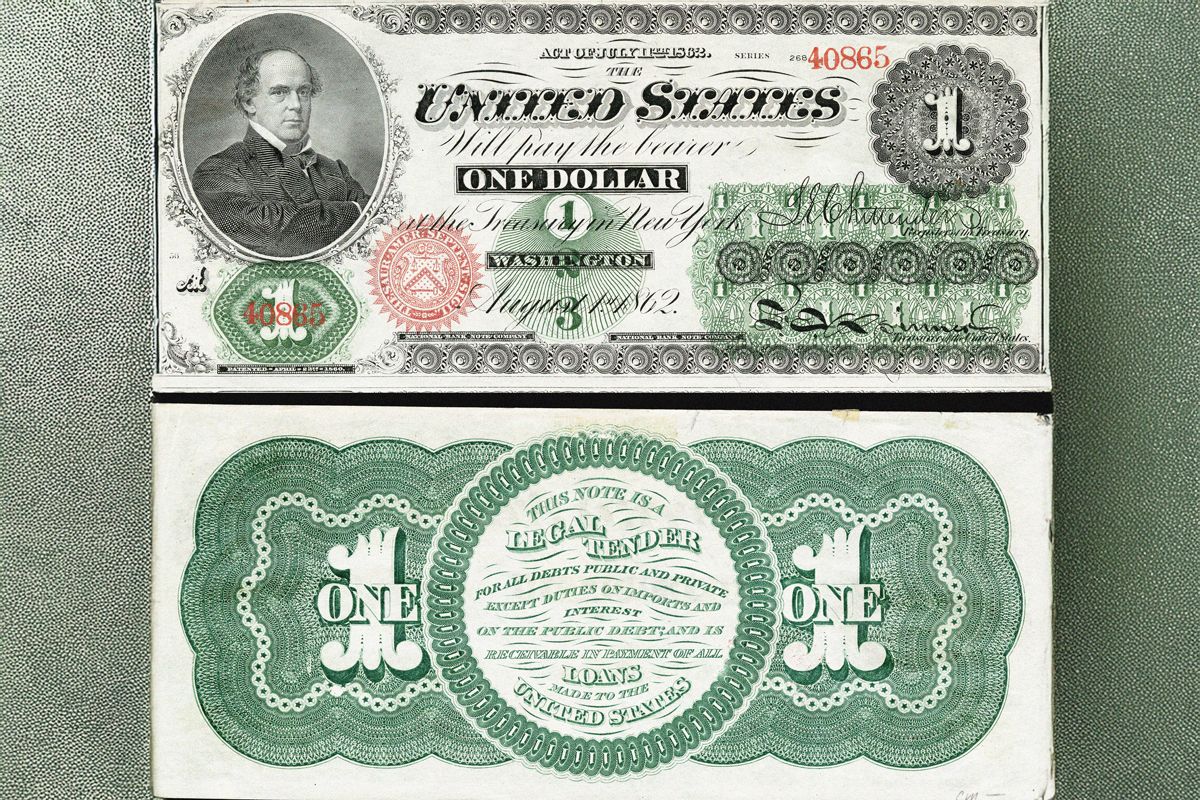
Not counting the $2 denominations that appeared with the Continental Currency notes that funded the American Revolution, there have been six categories of $2 bills issued by the U.S. federal government. These are: United States Notes, which initially featured Alexander Hamilton in 1862 before switching to Jefferson seven years later; National Bank Notes, which circulated during the Reconstruction years and are known as the “Lazy Deuce” for their horizontal digits; Silver Certificates, which featured a series of elaborate vignettes during their mid-1880s to mid-1920s run; Treasury Coin Notes, which featured Union General James B. McPherson and were only printed in the 1890s; Federal Reserve Bank Notes, which displayed the USS New York battleship and received an even briefer run after World War I; and Federal Reserve Notes, which appeared in 1976 to celebrate the United States bicentennial after the $2 bill had been discontinued for a decade due to its low usage.

You may also like

What Was the First Submarine Journey? 

  • Early French submarine
Early French submarine
Credit: Chris Hellier/ Alamy Stock Photo
Author Tony Dunnell

March 6, 2025

Love it?

Submarines have come a long way in the last century. During World War I, their effectiveness became truly apparent, with German U-boats sinking more than 5,000 Allied ships, forever changing the nature of war at sea. Since then, submarine technology has advanced greatly, and today they perform a wide variety of tasks in our seas and oceans. 

Civilian submarines engage in exploration, marine science, salvage operations, and the construction and maintenance of underwater infrastructure. In the military arena, meanwhile, submarines prowl the oceans undetected, capable in some cases of staying submerged for months at a time. Military submarines offer a range of capabilities, whether it’s reconnaissance, the covert insertion of special forces, silently attacking enemy surface ships, or — in the case of the most advanced nuclear submarines — strategic nuclear deterrence. 

The use of submarines, however, predates World War I by longer than we might imagine. For many centuries, inventors and visionaries have conceived of vessels capable of moving underwater. These early ideas, ranging from theoretical designs to actual working prototypes, represent crucial steps in maritime technology. Here, we look at three submarine journeys that represent firsts of their kind, from the ancient world to the first use of a submarine in combat. 

Credit: Classic Image/ Alamy Stock Photo

Alexander the Great’s Legendary Submarine

It’s hard to say with certainty when the first submarine journey occurred, partly because of how, exactly, we define a submarine. If simply defined as a submersible craft used for warfare, it could be argued that the earliest documented case dates all the way back to Alexander the Great. According to Aristotle’s work Problemata, Alexander, or at least his divers, descended into the depths during the siege of Tyre in 332 BCE, possibly to destroy the city’s underwater defenses. Written works and paintings over the years have told legendary stories of Alexander exploring the sea in what could be described as a diving bell, bathysphere, or rudimentary submarine. But like many tales involving Alexander the Great, the story has been embellished over the centuries.
You may also like

The U.S. Presidents’ Favorite Books

  • Old books on a shelf
Old books on a shelf
Credit: Cesare Ferrari/ iStock via Getty Images Plus
Author Tony Dunnell

March 6, 2025

Love it?

In 1771, George Washington wrote, “I conceive a knowledge of books is the basis upon which other knowledge is to be built.” He was the first of many United States presidents who appreciated books and valued the power of reading. Throughout American history, presidents have found solace, inspiration, and intellectual stimulation in the pages of books both classic and contemporary, from famed historical works to novels that reveal the nature of the human experience. 

Not all presidents, of course, have been voracious readers, but in large part the leaders of the United States have furthered their knowledge with books. Here are some of the U.S. presidents’ favorite reads. 

Credit: Photo 12/ Universal Images Group via Getty Images 

George Washington

Washington collected more than 1,200 publications over the course of his lifetime, and it’s hard to say for sure which book he valued the most. We know he read classics of fiction such as Don Quixote and The Life and Opinions of Tristram Shandy, as well as books about politics, warfare, and other practical matters. 

One subject particularly close to the first president’s heart was agriculture. When asked to make an educated guess about Washington’s favorite book, historian Kevin Butterfield, executive director of the Fred W. Smith National Library for the Study of George Washington, named the English translation of Henri Louis Duhamel du Monceau’s Éléments d’agriculture (variously translated as The Elements of Agriculture or A Practical Treatise of Husbandry). 

You may also like

How the Hundred Days Offensive Ended World War I

  • British troops in Cambrai, France
British troops in Cambrai, France
Credit: Historical Images Archive/ Alamy Stock Photo
Author Timothy Ott

February 27, 2025

Love it?

For many people, the enduring image of World War I is that of infantry troops bunkered down in a trench somewhere along the hazy battlefield of the war’s Western Front. Indeed, while stagnant trench warfare was the norm for a large chunk of the conflict in Europe, it was the transition to a mobile phase of the war in 1918 that brought about its fairly sudden conclusion, with the success of a rapidly moving offensive across late summer and early autumn that year. Here’s a look at how the Hundred Days Offensive ensured victory for the Allied forces.

Credit: ullstein bild Dtl./ ullstein bild via Getty Images 

The German Spring Offensive Failed To End the War

Following Russia’s exit from the war in late 1917, German General Erich Ludendorff funneled troops to the Western Front for what became known as the Spring Offensives. Beginning with Operation Michael on March 21, 1918, the German army launched four major attacks by mid-June that brought it within 55 miles of Paris but failed to deliver a knockout blow.

The Germans struck again near the French city of Reims on July 15, commencing the Second Battle of the Marne. However, they were unable to split the French army as intended, and instead were driven back when the Allies launched a counterattack three days later.

At a conference of Allied leaders on July 24, Supreme Allied Commander Ferdinand Foch outlined plans for a rapid-fire series of strikes against the exhausted and stretched-out German army. These attacks formed what later became known as the Hundred Days Offensive. 

You may also like

5 Astonishing Facts About the Berlin Airlift

  • Berlin Airlift, 1948
Berlin Airlift, 1948
Credit: Bettmann via Getty Images
Author Tony Dunnell

February 26, 2025

Love it?

The Berlin Airlift, one of the most remarkable humanitarian and logistical operations in history, was a product of the brewing Cold War tensions in the aftermath of World War II. Germany was divided into four zones of occupation: three controlled by each of the Western Allied powers (the United States, the United Kingdom, and France) and a fourth controlled by the Soviet Union. The German capital city, Berlin, which lay inside the Soviet zone, was itself divided into four zones of occupation between the Western Allies and the Soviets. 

It was almost inevitable, then, that war-ravaged Berlin would become a focal point of the burgeoning Cold War. Tensions reached a peak in March 1948, when the Allied powers decided to unite their occupation zones into a single economic unit and introduced a new currency, the Deutsche Mark, in West Germany.

The Soviets were not impressed. Joseph Stalin wanted Germany to remain weak and unthreatening, serving as a buffer between the Soviet Union and the West. He did not want to see the Allies help Germany rebuild its economy, nor did he want the U.S. supplying goods to Germany in what would be a sure sign to the communists that America’s capitalist economy was flourishing. 

So, on June 24, the Soviets cut off all land access to West Berlin — which was located far within Soviet-controlled East Germany — in what became known as the Berlin Blockade. In response, the Allies launched the Berlin Airlift, ferrying supplies into the capital city by plane. Here are five facts about that historic feat, from the incredible logistics involved to the heartwarming efforts of the “candy bomber.” 

Credit: Roger Goodwin/ Alamy Stock Photo

West Berlin Needed At Least 4,500 Tons of Supplies Daily 

With the land blockade in place, the only way the Allies could access Berlin was via three narrow, 20-mile-wide air corridors over East Germany into West Berlin. Allied planners calculated that in order to keep the more than 2 million inhabitants of West Berlin alive, the city required a minimum of 4,500 tons of supplies daily, including 1,534 tons of food and 3,475 tons of coal for electricity and heating. Without supplies, West Berlin only had enough food for 36 days, after which the citizens would begin to starve.

Many people, including the Soviets, thought supplying the city would be an impossible task, forcing the Allies to abandon West Berlin and leave it under communist control. But the Allies were undeterred. The airlift went ahead, and by the autumn of 1948, the Allies were delivering more than 5,000 tons of food, coal, and other supplies every day — a figure that grew to 8,893 tons per day by the end of April 1949. 

You may also like

Why Do Actors Sound So Different in Old Movies?

  • Orson Welles in “Citizen Kane”
Orson Welles in “Citizen Kane”
Credit: Apic/ Moviepix
Author Michael Nordine

February 20, 2025

Love it?

Despite their differences, the United States and England have a lot in common. A “special relationship” has bound the countries together since at least 1946, when Winston Churchill coined the phrase after the Allied victory in World War II. For evidence of the similarities, one need look no further than the movies of that era. Actors such as Cary Grant, Katharine Hepburn, and other luminaries of Hollywood’s golden age — which peaked in the 1930s and ’40s — spoke in a way that was common at the time but now seems a relic of the age. 

Technology was a factor: Sound recording wasn’t as advanced as it is today, with companies such as Western Electric promising “noiseless recording” that might not sound fully noiseless to 21st-century ears. And many actors of the era began their careers on the stage and had been trained to deliver lines in a way that likewise sounds old-fashioned. Most distinctive of all, however, was the accent. It sounded like a fusion of American English and British English, hence its name: the transatlantic accent.

Credit: Archive Photos/ Moviepix via Getty Images

Also known as the mid-Atlantic accent, this affected manner of speech wasn’t actually a cinematic invention. It has its roots in the Northeastern U.S. elite accent, which can be traced back to wealthy New Englanders of the late 19th century. That accent is itself based on Received Pronunciation (RP) — often considered the “standard” British accent and also known as the Queen’s English, Oxford English, or BBC English. As such, the transatlantic voice is closer to accents in New York, Boston, or Philadelphia than those heard in Chicago, Dallas, or Los Angeles. 

Americans who were taught to adopt this accent, often in elocution class at private schools, were told it was the “proper” way to speak, and because it sounded formal it became common among actors taking on serious roles — first onstage and then on-screen. Here is an example of the accent in The Philadelphia Story, a classic among classics, starring Grant and Hepburn:

A few of the accent’s trademarks can be heard in that scene, namely the dropped “r” sounds (“mothah” rather than “mother), also known as a non-rhotic accent; an emphasis on the hard “t” (“writah” rather than “writer”); and stretching certain vowels (“dance” becomes “dahnce”), which is called a short-a split

The transatlantic accent is also associated with the kind of back-and-forth, rapid-fire delivery often seen in screwball comedies such as His Girl Friday, starring Grant alongside Rosalind Russell. Another practitioner was Orson Welles, who used it in arguably the most acclaimed film of all time: Citizen Kane, the masterpiece he co-wrote, produced, directed, and starred in as the title character. Beginning in the 1930s, actors working within the Hollywood studio system were actively encouraged to do likewise.

You may also like