


Surprising Facts About Every U.S. President

  • Lyndon B. Johnson’s Amphicar
Lyndon B. Johnson’s Amphicar
Credit: Pictorial Press Ltd/ Alamy Stock Photo
Author Tony Dunnell

September 18, 2025

Love it?

Since the establishment of the office in 1789, 45 people have served in 47 presidencies. Each president has brought their own brand of political discourse to the role, and historians tend to remember these leaders primarily for their major historical achievements and policy decisions. 

But behind the presidents’ political legacies lie plenty of lesser-known details we don’t hear about as often, whether it’s a past life as an executioner, a penchant for skinny-dipping, or a fierce dislike of broccoli. Here is a surprising fact about every U.S. president. 

Credit: Photo 12/ Universal Images Group via Getty Images 

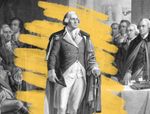
George Washington 

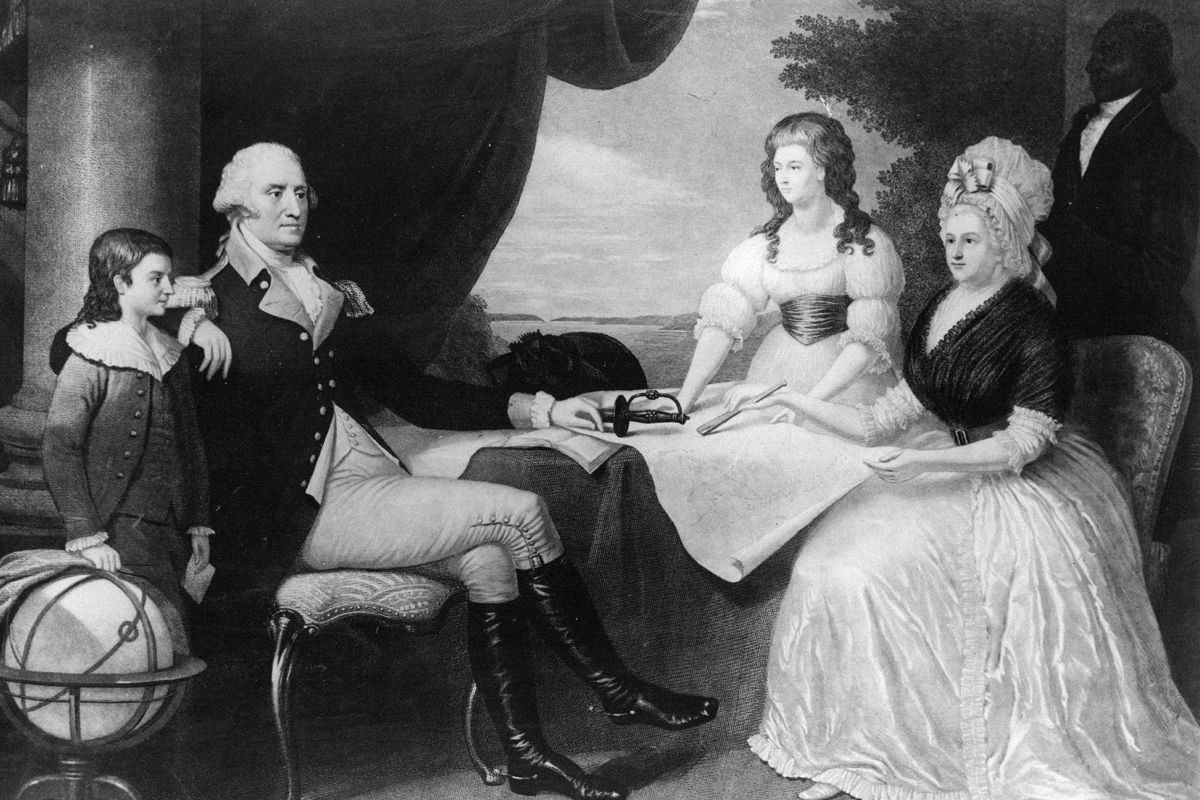
George Washington’s second inaugural address, delivered on March 4, 1793, was the shortest ever at less than two minutes long and only 135 words. (The average length of an inaugural address is 2,350 words.) 

John Adams

John Adams was the first U.S. president to inhabit the White House. He moved into the unfinished and largely unfurnished residence in November 1800, with only six rooms completed. 

You may also like

5 Life Lessons From Albert Einstein

  • Albert Einstein portrait
Albert Einstein portrait
Credit: IanDagnall Computing/ Alamy Stock Photo
Author Nicole Villeneuve

September 18, 2025

Love it?

Most people know Albert Einstein as the face of genius, but there was much more to this famous figure than his groundbreaking work in physics. The German-born, Nobel Prize-winning scientist was curious, compassionate, and principled, and he thought deeply about what it means to live a purposeful, ethical life. These weren’t just abstract ideas — they were guiding principles that informed much of what he did and spoke about. Here, distilled from the many nuggets of wisdom Einstein shared over his 76 years, are five life lessons we can all take to heart.

Credit: ullstein bild Dtl. via Getty Images 

Imagination Is the Key

When asked about the process behind his scientific discoveries in a 1929 interview, Einstein credited a perhaps surprising trait: imagination. “Imagination is more important than knowledge,” he told The Saturday Evening Post. “For knowledge is limited, whereas imagination encircles the entire world.” 

Einstein’s famous thought experiments — including picturing himself racing alongside a beam of light when he was 16 years old — showed that visualizing the impossible could help unlock new scientific truths. Other pursuits also gave his imagination room to meander. Playing violin often helped him work through complex problems, and sailing, which he loved but did not exactly excel at, gave him time to let his quiet mind wander. 

For Einstein, imagination wasn’t an escape from science but a key component to his breakthroughs. Facts played an important role, certainly, but it was all that daydreaming that first led him into the unknown. 

You may also like

Why Do We Eat Cake on Our Birthday?

  • Birthday party, circa 1897
Birthday party, circa 1897
Credit: Museum of the City of New York/ Archive Photos via Getty Images
Author Bess Lovejoy

September 17, 2025

Love it?

Few traditions feel as universal as gathering around a frosted cake, lighting candles, and singing “Happy Birthday.” While the ritual seems timeless, the story of why we eat cake on our birthdays stretches back thousands of years — winding through ancient temples, Roman banquets, German children’s parties, and American kitchens.

Credit: Anton Dobrea/ Alamy Stock Photo 

Cakes as Sacred Offerings

The word “cake” comes from the Old Norse kaka, but cakes in the ancient world looked quite different from today’s airy, sugar-laden desserts. Early cakes were dense, breadlike creations sweetened with honey, enriched with eggs or cheese, and flavored with nuts, seeds, or dried fruits such as raisins or figs. Archaeological and textual evidence shows that cakes were baked in Mesopotamia more than 4,000 years ago, and the Roman writer Cato described cakes wrapped in leaves and served at weddings and fertility rites.

But cakes weren’t just food — they were often sacred offerings. The Greeks presented honey cakes and cheesecakes to their gods, sometimes decorated with candles. One common offering to Artemis, goddess of the moon and the hunt, was the amphiphon, a round cheesecake topped with glowing candles meant to mimic the moon. Romans, too, baked cakes for religious purposes, including the libum, a mixture of cheese, flour, and egg baked on bay leaves as an offering to household gods. In these early forms, cakes linked the human and divine, symbolizing gratitude, fertility, or cosmic cycles.

You may also like

7 Everyday Products That Came Out of WWI

  • German soldiers, 1914
German soldiers, 1914
Credit: Heritage Image Partnership Ltd/ Alamy Stock Photo
Author Tony Dunnell

September 17, 2025

Love it?

World War I lasted four long years, and the unprecedented scale of the conflict demanded rapid innovation and resourcefulness. The brutal war of attrition, characterized by trench warfare, created many problems to be solved, from the desperate need to treat wounded soldiers to the challenge of feeding armies and maintaining communications across vast distances. 

The pressures of wartime necessity sparked a wave of creativity that led to the development of numerous technologies and products — some of which went on to become staples in our everyday lives. Here are seven products that came out of World War I that we largely take for granted today. 

Credit: Craig F. Walker/ Denver Post via Getty Images 

Wristwatches

Before the First World War, wristwatches were worn almost exclusively by women as fashion accessories. Most men used pocket watches, which had been around since 1700, but these were impractical for trench warfare. During World War I, wristwatches grew in popularity, initially among the officer classes. New watch designs emerged that were larger, stronger, and often featured luminous dials for ease of reading in low-light conditions — vital for coordinating attacks and artillery barrages. 

Rank-and-file soldiers from Britain saw their officers wearing wristwatches, and soon started buying their own. By the time the United States entered the war a year before it ended, troops were being issued wristwatches as part of their gear. These new accessories not only were practical, but also became a symbol of courage and bravery, helping establish wristwatches as a mainstream product after the war. 

You may also like

7 Popular 1950s Items You Never See Anymore

  • Kids reading 3D comics, 1953
Kids reading 3D comics, 1953
Credit: Bettmann via Getty Images
Author Kristina Wright

September 11, 2025

Love it?

Seventy years ago, Elvis was shaking up the airwaves, Lucille Ball had Americans laughing in their living rooms, and Presidents Harry Truman and Dwight D. Eisenhower were charting very different visions for a postwar United States. The space race was just beginning to heat up and prosperity fueled a culture of optimism for many. It was a decade of technological innovation and imagination, with a flood of brand-new gadgets, fashions, and conveniences promising to make everyday life sleeker, faster, and more modern than ever before.

Of course, not everything from the 1950s stood the test of time. Many of the common items that once defined the era have quietly slipped into obscurity, nudged aside by modern technology, shifting tastes, or changing lifestyles. Let’s take a trip down memory lane and revisit some of the most iconic items of the 1950s — things that once felt essential or cutting-edge, but today are charming relics of a very different time.

Credit: Bettmann via Getty Images 

Rotary Phone

The rotary dial telephone became widely used in homes starting in the 1920s, but it wasn’t until the 1950s that it truly became a fixture of everyday American life. Postwar prosperity and suburban growth meant that more and more families could afford a phone, and by the mid-1950s, two-thirds of U.S. households had at least one telephone.

Using a rotary phone was a slow process: You placed your finger in the hole corresponding to the number you were dialing and rotated the dial clockwise until it hit the metal stop, released it to let it return to its original position, and repeated the move for each digit in the phone number. The Bell System introduced touch-tone dialing in 1963, which eventually made rotary phones obsolete. Though they’ve vanished from daily use, the distinct clicking and spinning of a rotary dial remains one of the most iconic sounds of midcentury life.

You may also like

6 Retro Photos From Hollywood’s Golden Age

  • Marilyn Monroe dancing, 1954
Marilyn Monroe dancing, 1954
Credit: Bettmann via Getty Images
Author Timothy Ott

September 11, 2025

Love it?

Spanning from roughly the 1920s to the early ’60s, Hollywood’s golden age begat some of film’s most glamorous stars, classic quotes, and enduring scenes. Indeed, this era of moviemaking from the greater Los Angeles area was a time when the very idea of “Hollywood” as an idealized alternate reality was crystalized in the public consciousness.

While we now know that life wasn’t always so rosy behind the red carpet photo shoots and studio gates, that concept of old, glamorous Hollywood retains a strong emotional pull as a place where dreams were realized. Here’s a look at six photos that capture some of the defining faces, events, and achievements of the era.

Credit: Album/ Alamy Stock Photo 

King Kong Movie Poster

Promotional posters have been around since the inception of the motion picture industry, with full-color prints noting the leading men, women, and, in this case, creatures to be seen in the project being highlighted. King Kong (1933), of course, was a landmark film of its era, thanks in part to production techniques that included the pioneering usage of stop-motion photography and creation of an original score. 

While the movie’s promotional material effectively showcased the terrible power of its titular monster without being particularly groundbreaking, American film posters soon exhibited more innovative styles of collage and minimalism. And unlike the largely anonymous artists of the early 20th century, illustrators such as Bill Gold and Saul Bass enjoyed acclaim for their work in this particular field during the golden age of Hollywood.

You may also like

The History of 6 Legendary White House Rooms

  • FDR in the Oval Office, 1934
FDR in the Oval Office, 1934
Credit: Universal History Archive/ Universal Images Group via Getty Images
Author Paul Chang

September 9, 2025

Love it?

Constructed between 1792 and 1800, the White House has been home to every U.S. president except the first: Though George Washington oversaw construction of the building, he never actually lived in it. But the White House’s 132 rooms and 18 acres are more than just a residence — the Pennsylvania Avenue mansion is a symbol of power that occupies a singular place in American history and popular culture. Here’s a closer look at six White House rooms where America’s presidents have lived, worked, and even played.

Credit: Consolidated News Pictures/ Archive Photos via Getty Images 

Oval Office

Despite being the most famous room in the White House, the Oval Office was not part of the original building. In fact, the White House lacked a dedicated presidential office until Theodore Roosevelt constructed a “temporary” executive office building in 1902, known today as the West Wing. It contained the first presidential office — a rectangular room now known as the Roosevelt Room. 

It was Roosevelt’s successor, William Howard Taft, who made the West Wing a permanent feature of the White House, holding a competition to select an architect to oversee its renovation and enlargement. The winning architect, Nathan C. Wyeth, doubled the West Wing’s size and constructed the Oval Office in its center. Wyeth’s vision for an office fit for the president took inspiration from another famous room in the White House: the Blue Room, which was also an oval shape due to George Washington’s aesthetic preferences. The Oval Office’s last major renovation took place in 1934 under Franklin D. Roosevelt, who moved the room to its current location in the southeast corner of the White House, overlooking the Rose Garden.

You may also like

The Most Accurate War Movies of All Time

  • Scene from “Saving Private Ryan”
Scene from “Saving Private Ryan”
Credit: AJ Pics/ Alamy Stock Photo
Author Michael Nordine

September 5, 2025

Love it?

Even if you favor entertainment over education when it comes to cinema, you probably care at least a little about historical accuracy when watching historical dramas. A little creative license never hurt anyone, but attention to detail adds an authenticity that makes the viewing experience feel richer. That’s especially true of war movies, which attract two overlapping sets of people sometimes known for being persnickety: history buffs and cinephiles. If you belong to either camp, you’ll want to watch these five war movies known for their historical accuracy.

Credit: John Springer Collection/ Corbis Historical via Getty Images 

From Here to Eternity (1953)

Though most war movies are praised or criticized for how accurately they portray the battlefield, Fred Zinnemann’s Best Picture winner has been noted for capturing another aspect of military life: the U.S. armed forces’ “obsession” with sports, which reached its zenith during World War II. 

From Here to Eternity is mainly about the months leading up to the attack on Pearl Harbor, but one of its most significant subplots involves a regimental boxing team, which were common during World War II. (Its most famous scene, however, has nothing to do with either — and you’ve almost certainly seen it even if you’ve never seen the actual movie.) Soldiers were encouraged to pursue athletics to raise morale, with baseball and football also proving popular — not least for the way they contrasted with the preferred sports of the Axis.

You may also like

Unlocked: A Brief History of Keys

  • Lock and key in France, 1950
Lock and key in France, 1950
Credit: Gaston Paris/ Roger Viollet via Getty Images
Author Timothy Ott

September 4, 2025

Love it?

Well before there was a need to enter individual units of an apartment building or secure clothes inside a gym locker, people sought to keep thieving hands away from their stores of grain or precious jewels. As a result, locks and keys have been around for a large chunk of recorded history. 

While both have undergone numerous alterations in accordance with ever-updating technologies, the story of keys is perhaps more personal to the human experience as the portable component that has accompanied us on our journeys over the years. Here’s a look at how these pronged keepsakes have changed since they first surfaced in the ancient world.

Credit: Science & Society Picture Library/ SSPL via Getty Images 

The First Keys

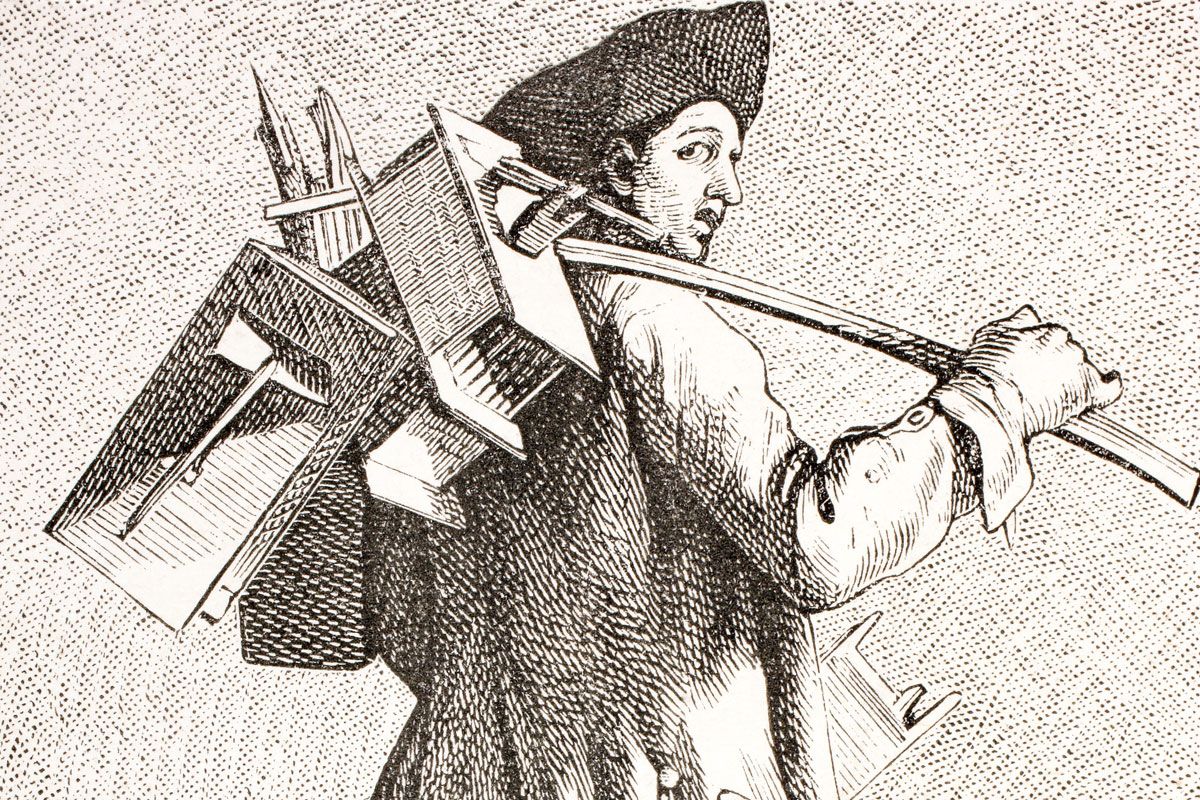
According to Eric Monk’s Keys: Their History and Collection, the oldest known lock is a wooden specimen unearthed from the ruins of the Palace of Sargon in Dur-Sharrukin (modern-day Khorsabad), near the Assyrian capital of Nineveh. As a similar version was found displayed on frescoes at the Karnak temple complex in Egypt, this style of “Egyptian lock” is believed to be in the neighborhood of 4,000 years old.
This early form of security entailed sliding a wooden board through a slot across a door, with movable pins above the slot dropping through corresponding holes in the board to keep it bolted in place. The key for this type of lock was another long piece of wood, sometimes measuring more than 2 feet, with pegs on the end to push the pins back through the holes and allow the board to be released from the bolting position. While these locks were originally fitted to the outside of a door, a hole cut next to the lock enabled a person to reach through and operate the lock from the inside.

You may also like

The Oldest Dances in the World

  • Gene Kelly in “Summer Stock”
Gene Kelly in “Summer Stock”
Credit: Bettmann via Getty Images
Author Timothy Ott

September 3, 2025

Love it?

As Gene Kelly noted in the classic 1952 musical Singin in the Rain, sometimes people just gotta dance. Whether it’s an impromptu shaking of the hips or a complex routine dashed off by a professional like Kelly, dancing is a gift available to people of any skill level who feel inspired to move their limbs to a beat. And although many of us prefer to display our rhythmic limitations in private, dancing is unquestionably a social activity, and has been from time immemorial.

While most traditional dances seem old-fashioned to us nowadays, many well-known forms, including the polka, foxtrot, and waltz, are relatively modern creations from the past one to two centuries. Other dances, however, are far older, with roots that hearken back to the world’s formative civilizations.

Determining which dance forms are the oldest is an inexact science, since many morphed and were incorporated into other styles as they shimmied across cultures and eras. Nevertheless, here’s a look at some of the oldest dances in human history.

Credit: Heritage Images/ Hulton Fine Art Collection via Getty Images 

Grass Dance and Other Indigenous Rituals

Some Indigenous cultures today proudly display moves learned from their ancestors to celebrate deities and mark the cycles of life. Although their traditions date back thousands of years, potentially making them the oldest dances known to humans, the preponderance of oral storytelling over written records in these cultures renders it impossible to determine just how old these dances are.

Native Americans, who first set foot in North America as many as 23,000 years ago, are known in part for the array of dances performed in communal powwow gatherings. One of the older examples is the grass dance, said to have originated with the Omaha people in the Northern Plains, in which performers stomp their feet and twirl to the thumping beat of a drum.

The Aboriginal people of Australia, with a history that dates back some 75,000 years, also have a communal gathering known as a corroboree, a ceremonial combination of dancing, singing, and narration to relate the origin stories of the Dreamtime (Aboriginal mythology). Their dances include the Warren Jarra, which entails the continuous motion of pivoting bent legs inward and outward, and the Ngukum, with participants waving leaves to simulate fending off mosquitoes.

You may also like