



What Is the World’s Oldest Name?

  • Ancient city of Uruk
Ancient city of Uruk
Credit: robertharding/ Alamy Stock Photo
Author Mark DeJoy

September 25, 2024

Love it?

Based on the way trends shift over time, you can often guess how old someone is by their name. Elmer, Willard, Fred, and Harold are currently the male names with the oldest median ages, so men with those names today will generally be older; for women, the names with the oldest median ages are Gertrude, Mildred, and Opal. These, of course, are all still in use today. But what is the oldest known name of all time, period? 

The answer to that question can be found on a collection of tablets from the ancient Mesopotamian city of Uruk (in modern-day Iraq), which date back to approximately 3100 to 3000 BCE, more than 5,000 years ago. The text inscribed on the tablets describes transactions from the ancient Sumerian Temple of Inanna, as well as the name of the person who recorded the transactions: Kushim.

You may also like

When Did People Start Using Last Names?

  • “Surname” line on a printed form
“Surname” line on a printed form
Credit: Zoltan Fabian/ Shutterstock
Author Kristina Wright

August 15, 2024

Love it?

There were around 6.3 million different surnames, also known as family names or last names, reported in the 2010 U.S. census, and there are millions more worldwide. Some, of course, are more popular than others: More than 106 million people have the last name Wang (a Mandarin term for “prince” or “king”), making it the most common surname in the world. And if you live in the U.S., there’s a pretty good chance you know someone with the last name Smith, Johnson, Williams, Brown, or Jones — the five most common surnames in the country.

As populations grew, surnames began as a way to differentiate between people with the same first name, for both legal and social purposes. Having more than one name helped identify which John owned a specific parcel of land or which Robert had a son who was getting married. Over time, they became important to an individual’s identity and heritage, particularly as people began to emigrate from their homelands. Today, etymologists and genealogists continue to research the origins of last names as a way of gaining insight into how people and societies have developed personal and collective identities. Here’s what we know about how this naming convention came to be.

Credit: Pictures from History/ Universal Images Group via Getty Images

Surnames First Emerged in China

The concept of surnames dates back thousands of years, with the earliest examples found in China as early as the third millennium BCE. (Some of those names, such as Zhong, also written as Chung, are still used today.) Genealogists believe that matrilineal surnames were used in China until the Shang dynasty (1600-1046 BCE), when there was a shift to using patrilineal names.

Other ancient societies, including Greece and Rome, had their own systems of assigning names based on family and clan associations. The ancient Romans assigned three-part personal names (tria nomina) that included a praenomen (given name), nomen (clan name), and cognomen (family name), indicating the importance of lineage and family connections even in early Western cultures.

You may also like

Why Is ‘Red Tape’ Associated With Bureaucracy?

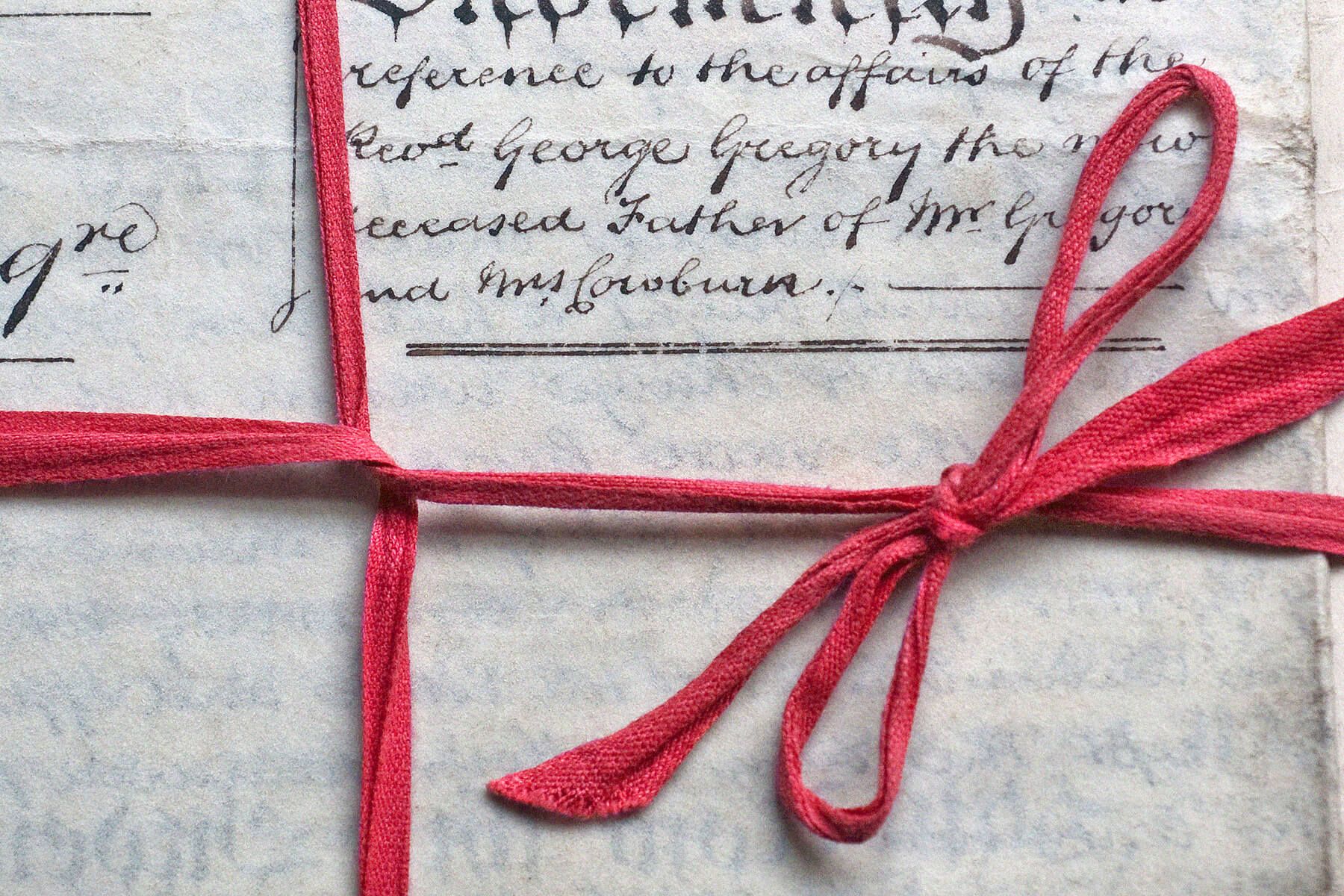
  • Documents with red ribbon
Documents with red ribbon
Credit: andrew payne / Alamy Stock Photo
Author Kristina Wright

August 1, 2024

Love it?

The English word “bureaucracy” originated in the early 19th century, referring to an administrative system where decisions were made by a group of nonelected officials. Today, the term can refer to the regulatory system of any public or private institution, including corporations, organizations, and governments. And in a society where laws are upheld based on a set of established standards and practices, keeping everything running smoothly can require an almost mind-boggling array of rules and regulations. 

Such an excessive amount of official systems and processes is often referred to as “red tape.” But how and when exactly did that colorful term become associated with bureaucracy? 
Credit: andrew payne / Alamy Stock Photo 

Red Tape Was Used To Bind Official Documents

The use of red tape to bind documents has been noted for centuries, but its exact origins remain murky. The practice may date as far back as the 11th century, to the red, ribbonlike cloth that English clerks used to secure official documents. For hundreds of years, correspondence was tied with tape and the ends were sealed with melted wax, so that the contents couldn’t be read by anyone other than the intended recipient. The only way to access the documents was to cut the seal, which around the 18th century led to the common idiom “cutting through the red tape.” 

Some historians suggest the use of red tape for binding government records may have started later, during King Charles V’s reign over Spain in the 16th century, when important documents were secured with red tape to distinguish them from other papers. The color red has long signified royalty and wealth, and red dyes such as kermes and cochineal produced a deep scarlet that were favored by the rich and powerful. Considering the high cost these dyes at the time, it’s unlikely that red ribbon was used for anything other than the most important official documents, at least initially.

Although red tape bindings had already been around for some time, the first written reference in English to the words “red tape” appeared in 1658, in an advertisement in the Publick Intelligencer describing a lost “little bundle of Papers tied with a red Tape.” By the end of the 17th century, the tradition of using red tape to secure official documents had crossed the Atlantic and become standard practice in the American colonies as well. In 1696, a law was passed that stated records of public land boundaries in the colony of Maryland were required to be “seal’d with his Excellency’s Seal of Arms, on a Red Cross with Red Tape.” Other important government documents, including the Stamp Act of 1765, were also secured with red tape.

You may also like

The Meaning Behind 9 Famous Middle Initials

  • Ursula K. Le Guin
Ursula K. Le Guin
via Getty Images
Author Bennett Kleinman

July 18, 2024

Love it?

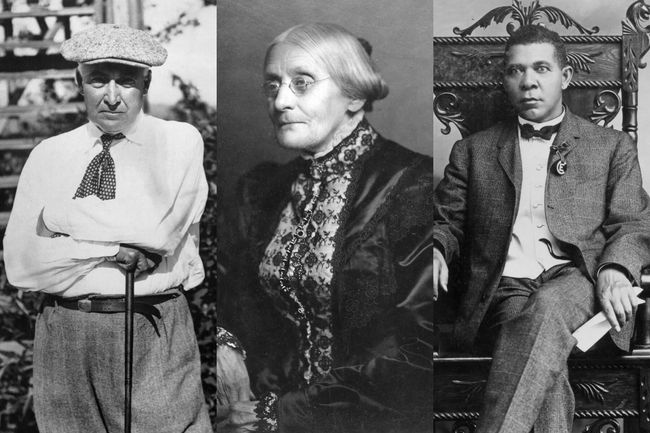
Styling your name to include a middle initial is far less common now than when it first became widely popular in the 19th century. As the U.S. saw a massive population boom, many people began using their middle initial to help distinguish themselves from other people with similar names. Throughout the 19th century and into the 20th century, abbreviating your middle name was popular among everyone from presidents to activists. Today, it’s hard to imagine John Rockefeller’s name without the “D” or Susan Anthony without the “B,” but at the same time, many people aren’t sure what those letters actually stand for. Here’s the meaning behind some of history’s most famous but mysterious middle initials.

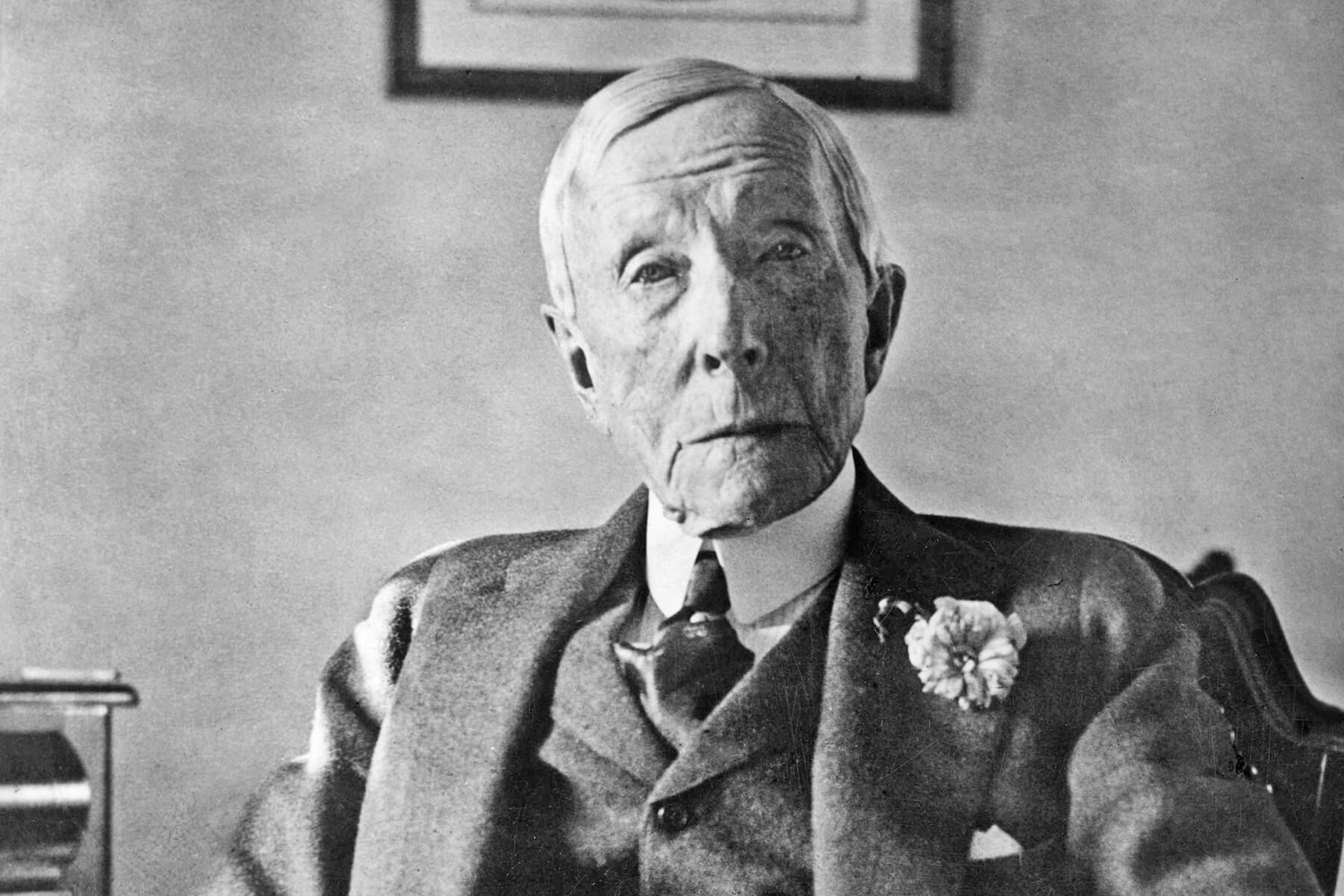
Credit: General Photographic Agency/ Hulton Archive via Getty Images

John D. Rockefeller

Business magnate John D. Rockefeller’s name has long been associated with wealth, as he’s considered by some metrics to be the richest person in U.S. history. His last name came from his father, businessman and notorious con artist William Rockefeller Sr., but his middle initial stands for Davison, the maiden name of his mother, Eliza. The Davisons were Baptists of Scotch Irish descent who lived on a farm in central New York, near where William did business. Eliza and William married in 1837 and named their first son John Davison Rockefeller. As the young Rockefeller rose to prominence, he styled his name with the middle initial “D,” as was the fashion at the time. He later named his own son John Davison Rockefeller Jr. — a tradition that continued in future generations.

You may also like

Why Is the Letter ‘X’ Used for a Kiss?

  • “XOXO” on note card
“XOXO” on note card
Credit: triocean/ iStock
Author Nicole Villeneuve

June 6, 2024

Love it?

The letter “X” has ambiguous linguistic roots, and has carried various meanings in different contexts. “X” marks the spot of buried treasure on a map, represents a variable in mathematics, or can be used to select a choice on a ballot. Nowadays, it’s also commonly used as a symbol of affection and endearment — especially when it’s paired with “O” to form “XO,” signifying kisses and hugs. But how exactly did “X” come to represent a kiss, and when did that originate?

You may also like

Why Do We Say ‘Bless You’ When Someone Sneezes?

  • Man about to sneeze
Man about to sneeze
Credit: Mirrorpix via Getty Images
Author Kristina Wright

May 22, 2024

Love it?

Sternutation, the medical term for sneezing, is a sudden, forceful, involuntary burst of air through the nose and mouth. It can be triggered by irritants in the nose or throat, environmental allergies, or viral upper respiratory infections. Some people even experience photic sneezing, which is sneezing in response to bright light, such as sunlight. The condition is formally known as autosomal dominant compelling helio ophthalmic outburst syndrome. That’s right, ACHOO syndrome.

Regardless of the reason for a sneeze, the polite response is commonly “bless you” or “God bless you.” Unlike with other bodily functions, particularly the closely associated cough, it is considered poor manners to let a sneeze go unanswered. Saying “bless you” is such an expected social custom that not saying it can lead to an awkward and uncomfortable silence, which might explain why a singular sneeze can garner several blessings from people nearby. The question is, why exactly is the phrase “bless you” the standard response to a sneeze?

Credit: UniversalImagesGroup via Getty Images

A Prayer To Protect the Soul

For most of history, and before the advent of modern medicine in the late 19th century, life could be brutally brief. Globally, the average life expectancy of a newborn in 1900 was just 32 years. By 2021, the number had more than doubled to 71 years. Death took many forms, but infectious diseases, including bubonic plague and influenza, could wipe out entire communities in a matter of months. So any outward sign of illness, such as sneezing, was reason for concern — and in turn, prayer.

You may also like

6 Things You Didn’t Know About the Rosetta Stone

  • The Rosetta Stone
The Rosetta Stone
Credit: Kean Collection/ Archive Photos via Getty Images
Author Rachel Gresh

March 27, 2024

Love it?

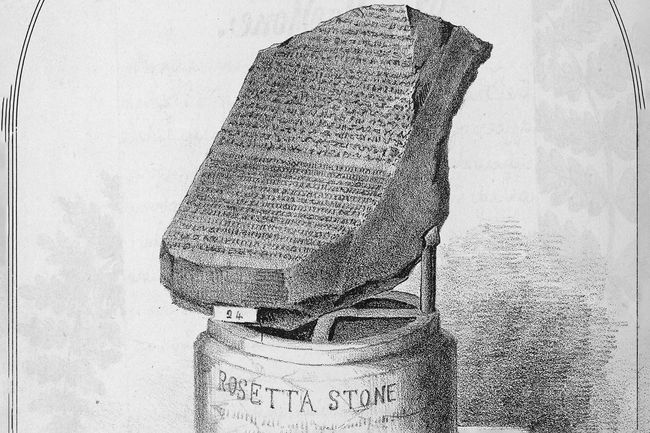
The Rosetta Stone, an ancient artifact discovered in Rosetta, Egypt, in 1799, was the key to unlocking the centuries-old mystery of Egyptian hieroglyphics. The black granite stone is a “stela” — a large standing slab used by ancient civilizations as a marker, typically for dedications or commemorations — inscribed with a text known as the “Decree of Memphis.” The text is, frankly, somewhat dull: It outlines the achievements of Ptolemy V Epiphanes, who ruled Egypt from 205 to 180 BCE. However, it’s not the subject of the stone but the script itself that is important. 

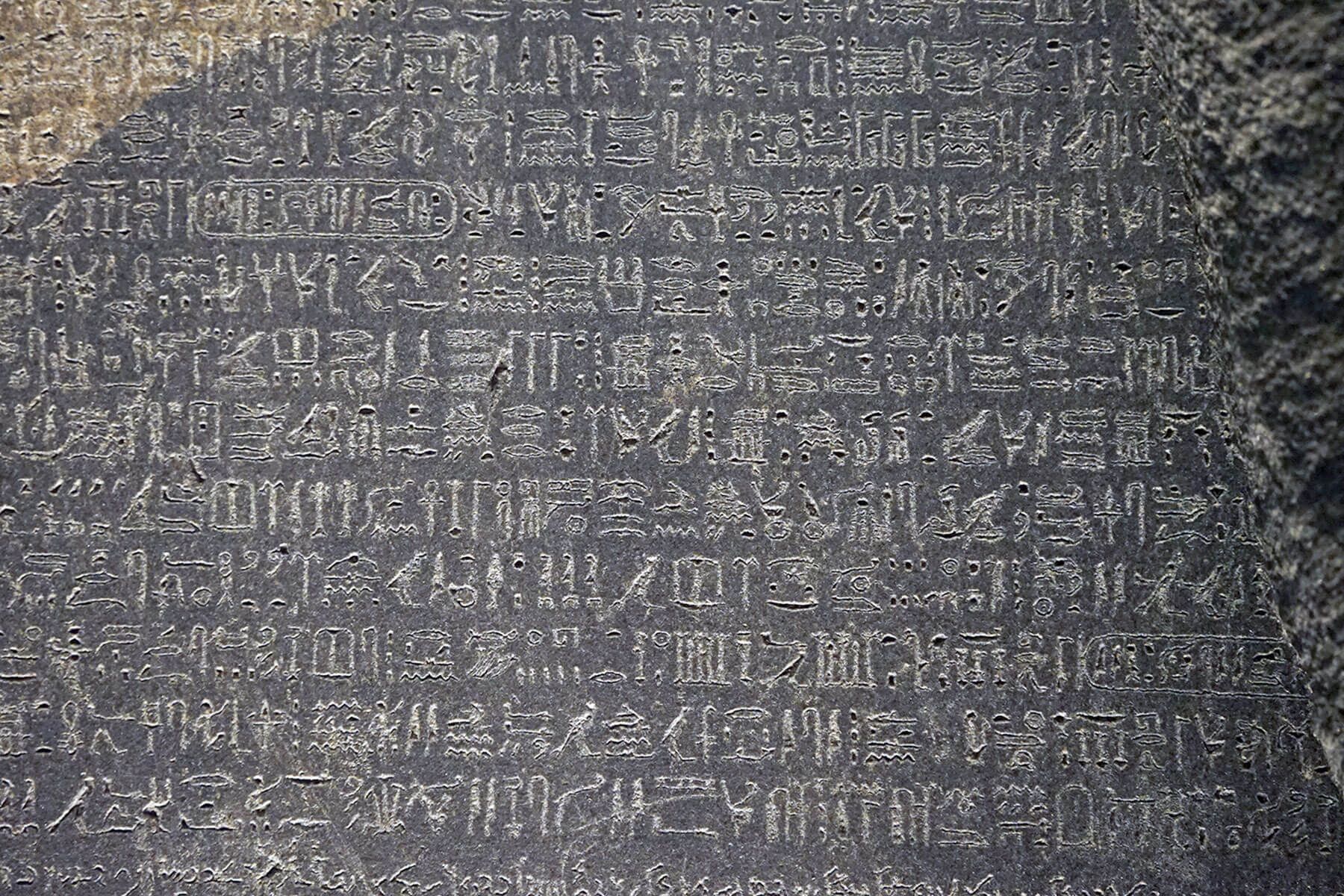
The text is written in both Egyptian hieroglyphs and ancient Greek script. Because the ancient Greek and modern Greek languages are so similar, the Greek inscription served as the starting point for translating the Rosetta Stone. Using the Greek script, researchers translated the language of ancient Egypt for the first time in history. However, there is much more to this story than a simple translation. Shrouded in mystery and nearly destroyed by several wars, the Rosetta Stone has fascinated historians for centuries. Here are six surprising facts about this important discovery.

Credit: Universal History Archive/ Universal Images Group via Getty Images

The Stone Features Two Forms of Egyptian Writing

It’s widely known that the Rosetta Stone features text written in both Egyptian hieroglyphics and the ancient Greek alphabet,  allowing scholars to decipher the previously mysterious ancient symbols. However, the stone isn’t a bilingual message — it’s trilingual. The third script on the stone is Egyptian demotic, a cursive form of Egyptian hieroglyphics that was also undeciphered before the discovery of the Rosetta Stone. It was used in ancient Egypt from the early seventh century BCE until the fifth century CE for business and literary purposes. By the time of the Ptolemaic period (304 to 30 BCE), rulers of Egypt were of Greco-Macedonian descent (following Alexander the Great’s conquest of the region). Around this time, Egyptian demotic and hieroglyphics began to decline in favor of the Greek writing system, which is why all three scripts were etched on the stone.

You may also like

Why There Are So Many French Words in English

  • French lesson on chalkboard
French lesson on chalkboard
Credit: Stephen Rees/ Shutterstock
Author Nicole Villeneuve

March 12, 2024

Love it?

English is one of the most predominant languages in the world, spoken by about 400 million people as their native tongue and by more than a billion others as a second language. Shaped by various linguistic influences over many centuries, English traces all the way back to the Proto-Indo-European language, which linguists believe originated in Eurasia around 4500 to 2500 BCE. It evolved into the Old English spoken by the Germanic tribes of Northern Europe, and transformed after the Norman Conquest of England — one of the most significant turning points in the evolution of the English language. While the Germanic languages remain foundational elements of English, the French influence is surprisingly strong. Here’s how so many French words found their way into the modern English language — making French one of the easiest languages for an English speaker to learn on platforms such as Babbel.

Credit: Heritage Images/ Hulton Fine Art Collection via Getty Images

The Norman Conquest

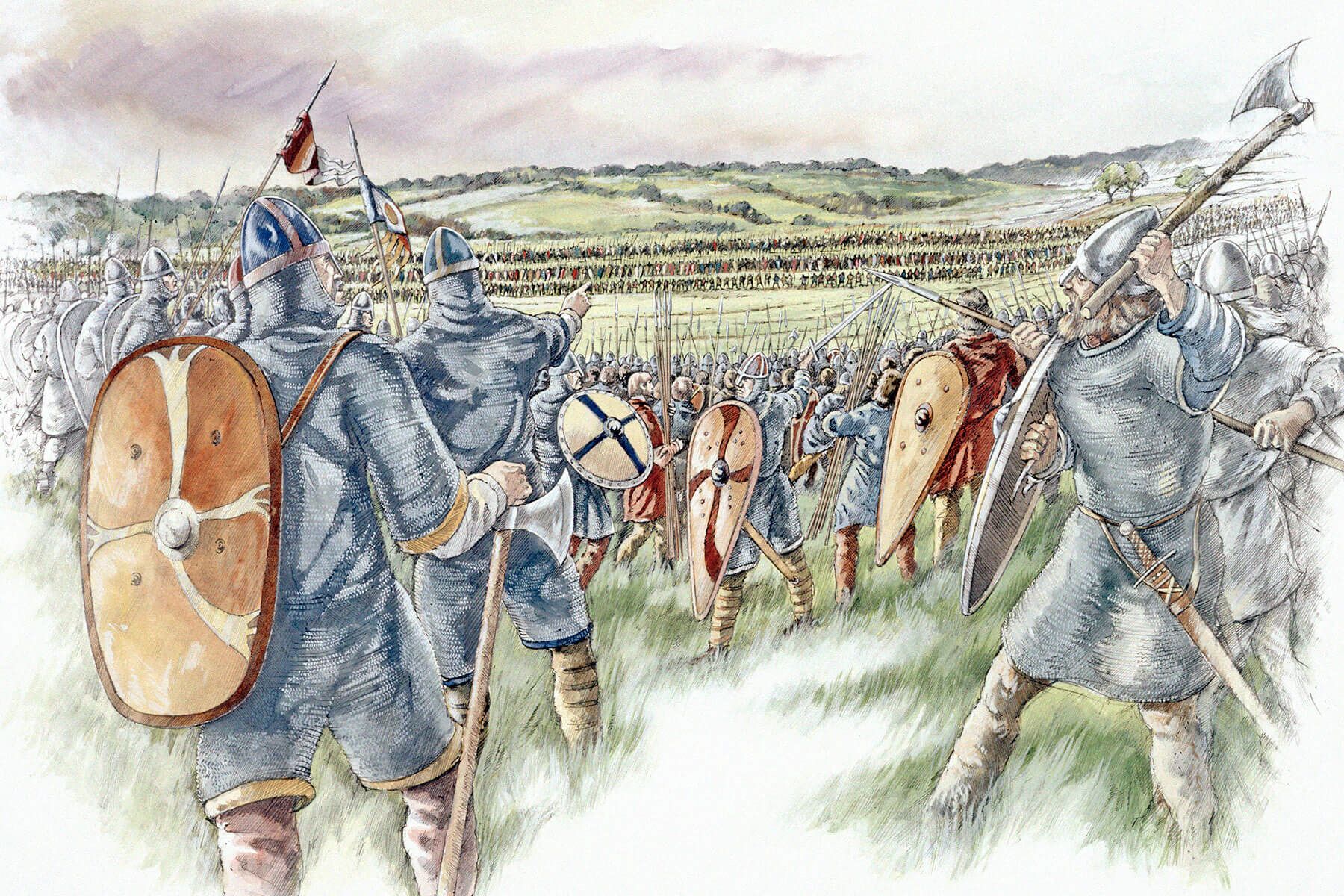
On October 14, 1066, William I of Normandy — known to history as William the Conqueror — invaded and defeated England in the Battle of Hastings. The Normans introduced a new ruling class; William was crowned king of England on December 25, 1066, and Norman nobility replaced King Harold II’s Anglo-Saxon aristocracy. The takeover marked the beginning of Norman rule and a major shift in English society — including its language. 

The Normans, who were of Viking descent but had settled in the Normandy region of France, spoke Old Norman (a dialect of Old French), which largely derived from Latin. Following William’s conquest, and for the next 300 years, Old French — at that point known in England as Anglo-Norman — became the primary language spoken by English monarchs, elites, and government officials. Latin was also used, typically by the church and intellectuals, and it served as the primary language of written record. English, however, remained the primary language of everyday people, and over time, it started to become infused with the language of their rulers.

You may also like

The Most Intriguing Egyptian Hieroglyphs

  • Egyptian hieroglyphs
Egyptian hieroglyphs
Credit: Fedor Selivanov/ Shutterstock
Author Mark DeJoy

March 7, 2024

Love it?

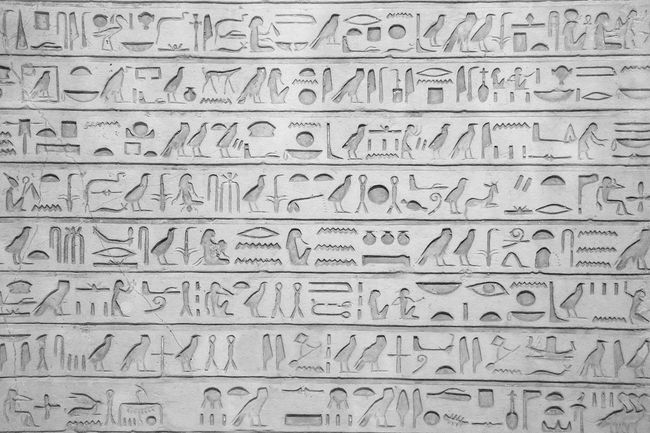
Ancient Egyptian hieroglyphics have long captured the imaginations of scholars and casual observers alike, and efforts to translate them date back to the ninth century CE. Yet hieroglyphics remained mostly indecipherable until the discovery of the Rosetta Stone in 1799. Early progress was made by English polymath Thomas Young in the 1810s, and French linguist Jean-François Champollion completed a breakthrough translation that he presented in Paris on September 27, 1822. 

The accuracy of Champollion’s translation was a watershed moment that enabled a greater understanding of hieroglyphs, leading to deeper and wider-ranging study. In 1927, English Egyptologist Alan Gardiner published the reference work Egyptian Grammar, which included an appendix compiling the major hieroglyphs and their meanings, known as Gardiner’s Sign List, a reference standard still used today.

You don’t need to have a complete understanding of exactly how hieroglyphs function amid the rules of grammar in order to find them fascinating, though. Many symbols represent items that in turn provide glimpses into life in ancient Egypt and its advanced state as a civilization. The following hieroglyphs do just that — and we’ll use the names and reference points from Gardiner’s list to help illuminate them.

Y6: Board Game Piece

The hieroglyph numbered Y6 in Gardiner’s Sign List is a simple pointed oblong shape that isn’t especially visually compelling. But it represents a board game piece (in Gardiner’s text, a “draughtman” for a “draught board”), and there’s something undeniably intriguing about a hieroglyph that proves board games existed thousands of years ago. The piece depicted in this hieroglyph was either for a game called senet net hab (usually referred to as senet), or for a game called twenty squares. 

Senet was a spiritually significant game, as “senet net hab” translates to “game of passing through.” The game is thought to represent the progression from life to the afterlife. Queen Nefertari’s tomb contains a painting depicting her playing senet against an invisible opponent; King Tutankhamun was buried with at least five senet boards.

You may also like

The Oldest Written Languages in the World

  • Ancient cuneiform
Ancient cuneiform
Couperfield/ Shutterstock
Author Bennett Kleinman

February 13, 2024

Love it?

Linguists estimate that human speech sounds first developed tens of thousands of years ago. MIT linguistics professor Shigeru Miyagawa proposes that verbal language may have been used in social situations around 100,000 years ago, while linguist George Poulos, author of On the Origins of Human Speech and Language, suggests human speech developed around 70,000 years ago. But these early languages were likely never recorded by hand, and it was only around 5,000 years ago that the first known written languages first began to take shape.

Ancient civilizations in regions around the world began to develop complex written language systems starting at least as early as 3200 BCE. While it’s difficult to pin down the exact origin of these languages given the limited archaeological evidence available, historians generally agree on a few early cultures that pioneered the use of written communication.

Photo credit: ASAAD NIAZI/ AFP via Getty Images

Sumerian

From roughly 4100 BCE to 1750 BCE, the ancient Sumerian civilization thrived across southern Mesopotamia (modern-day Iraq). The Sumerians developed the world’s oldest known writing system, cuneiform, which consisted of wedge-shaped characters carved into stone tablets. The script was later used to denote the spoken Sumerian language, in lieu of any sort of alphabet. The language started as an entirely logographic script, and evolved into a phonetic syllabic system to convey more conversational thought. The oldest known example of Sumerian writing first appeared in a group of administrative and educational texts dating to around 3200 BCE. Around 2500 BCE, the Sumerians produced the first known literature from any ancient civilization: religious works such as the Kesh Temple Hymn that focused less on real-world issues and more on mythological concepts. 

The now-extinct Sumerian language consisted of four vowel sounds (a, i, e, u) as well as 16 consonant sounds (b, d, g, ŋ, h, k, l, m, n, p, r, s, ś, š, t, z), and was one of the first known uses of grammatical concepts such as prefixes, infixes, and suffixes. By the year 2000 BCE, the language had faded to the point where it was no longer spoken, as new civilizations and languages emerged throughout the region. It enjoyed a brief resurgence for literary and liturgical purposes between 2000 BCE and 1500 BCE, but was mainly studied by scribes thereafter.

You may also like