


When Did Early Americans Stop Sounding British?

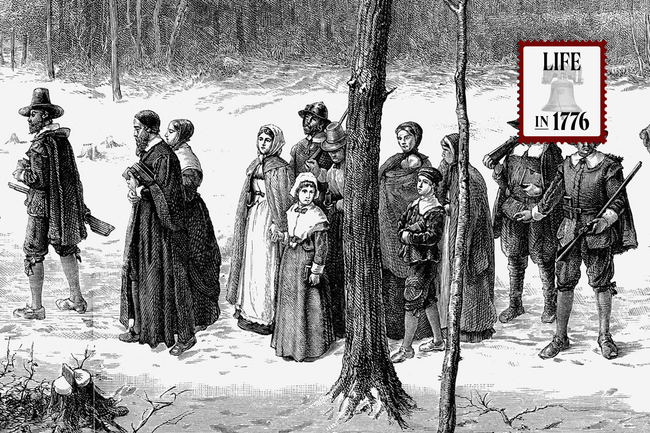
  • Pilgrims walking to church, 1620
Pilgrims walking to church, 1620
Credit: © Ann Ronan Pictures—Print Collector/Getty Images
Author Tony Dunnell

April 23, 2026

Love it?

In the 17th century, the population of the American colonies was largely British, and English — while certainly not the only tongue spoken — became the predominant language throughout what is now the eastern U.S. 

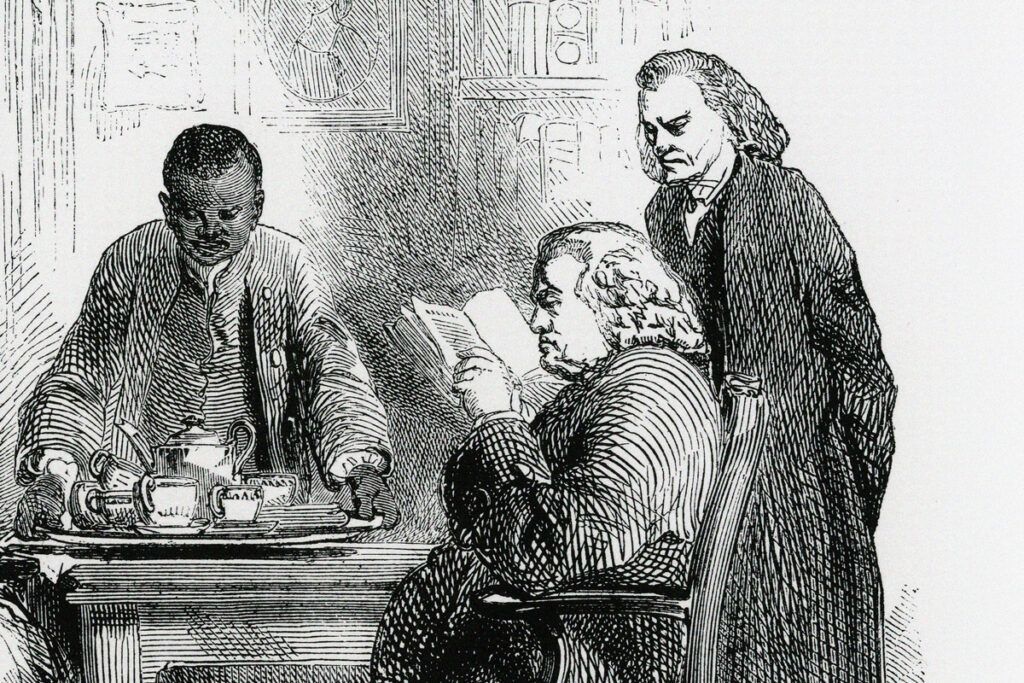
It raises the question: Did early Americans speak with a British accent? And did the likes of George Washington, Benjamin Franklin, and Abigail Adams sound like King George III, William Wordsworth, and Jane Austen? 

The answer is almost certainly no — but why? Here’s a look at when British and American accents began to diverge, resulting in distinct ways of speaking on either side of the Atlantic. 

Credit: © Bettmann Archive/Getty Images 

American English Is Born

Britain has always been, and still is, extraordinarily rich in accents, despite being about the same size as the state of Oregon. You only have to travel a few hours for the accent and often the dialect to change in very notable ways. Back in colonial times, as now, someone from London sounded quite different from a person from Yorkshire, Devon, or Liverpool — and accents were even more distinct among England, Scotland, Wales, and Ireland. 

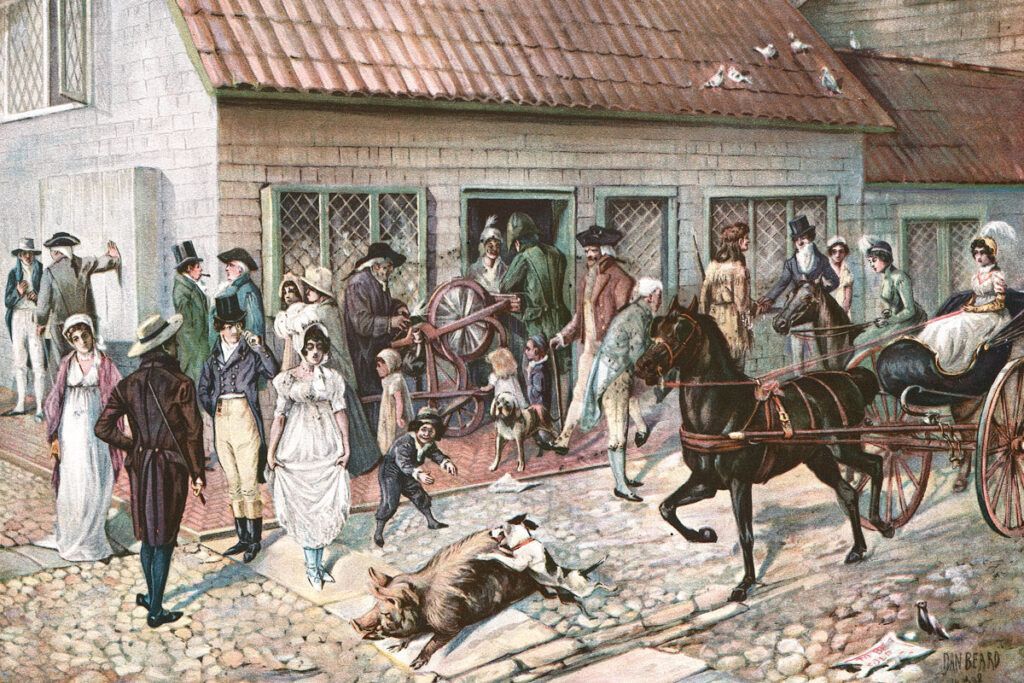
But as soon as settlers from different regions of Britain began landing in the American colonies and started mixing with each other more than they did back in Britain, something known as dialect leveling began to take place. Dialect leveling is a phenomenon that occurs when a variety of different ways of speaking come into contact with one another, and the features that are most common — including accent and pronunciation — tend to overtake others. The outcome is a leveling or smoothing out of differences, eliminating distinct regional or social linguistic elements and creating a more standardized form. 

In America, the process was quick. Within a generation, Americans born in settlements such as Jamestown in the early 1600s were already speaking differently than their parents. And it wasn’t only the British mixing with one another. These early colonists came into contact with other European settlers speaking Dutch, Swedish, French, and Spanish, as well as Indigenous languages and, later, the languages of enslaved Africans — all of which contributed to the creation of early American English.

You may also like

7 Last Names That Used To Be Insults

  • Swineherd with herd of pigs
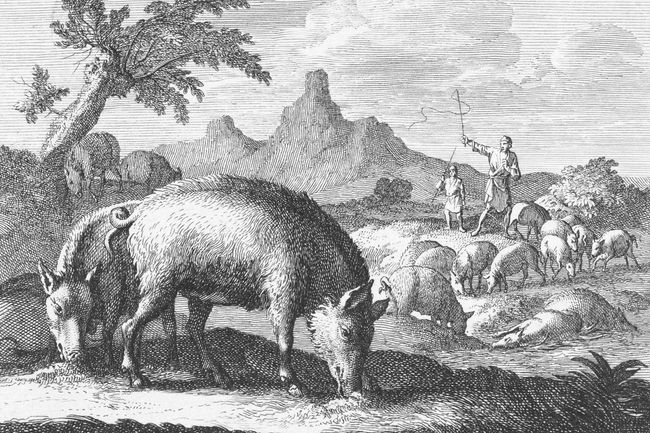
Swineherd with herd of pigs
Credit: © Sepia Times—Universal Images Group/Getty Images
Author Tony Dunnell

March 26, 2026

Love it?

Long before surnames became fixed family identifiers, they were simply descriptive labels, often based on a person’s trade (Smith, Miller); residence or nearby topographical features (York, Wood); father’s name (Donaldson, Johnson); or personal characteristics (Little, Short, Swift). Eventually, these descriptors became surnames, many of which still exist today. 

But not all of these monikers were benign or flattering. Some were assigned by uncaring neighbors, tax collectors, or local officials who needed a way to tell people apart — and the names they chose were not always kind. Nonetheless, the labels calcified into family names, passed down from parent to child. Over the centuries, the surnames lost their original meaning and any unfavorable significance was largely forgotten. Which brings us to today — and the millions of people who carry surnames that were once less than flattering, possibly without realizing the original meaning. 

Credit: © swen_stroop/stock.adobe.com

Campbell

Campbell is one of the most widespread Scottish surnames, carried by hundreds of thousands of people worldwide. It began, however, as a rather unkind physical observation. The name derives from the Gaelic word cam (meaning “crooked” or “deformed”) and beul (“mouth”) — used as a nickname for a person with a bent or misshapen mouth. According to the Clan Campbell Society in North America, the nickname may have first been applied to Dugald of Lochawe in the 12th century, as he apparently talked out of one side of his mouth (perhaps due to a medical condition known as torticollis). Dugald was held in high regard, so his ancestors took his nickname as their clan surname, which was then passed down through history until the present day. 

You may also like

The Origin of 7 Surprising Nicknames

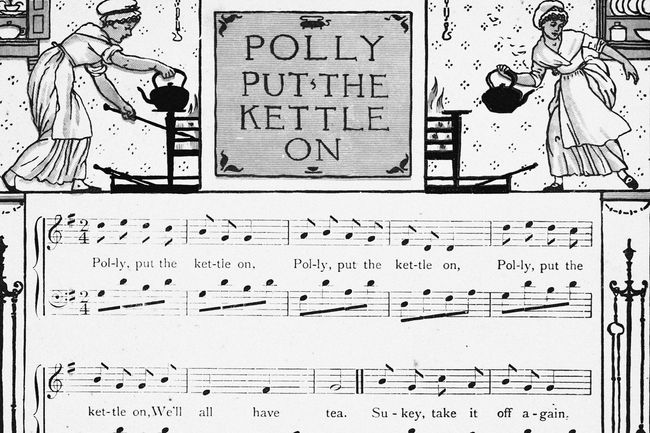
  • “Polly Put the Kettle On” sheet music
“Polly Put the Kettle On” sheet music
Credit: ilbusca/ DigitalVision Vectors via Getty Images
Author Bess Lovejoy

February 5, 2026

Love it?

Some of the most familiar nicknames in the English language seem to have little in common with the names they’re supposedly short for. How did Chuck become short for Charles, for instance? And why do some Margarets go by Peggy? Many of these curious nicknames carry centuries of linguistic history. Some emerged from playful medieval rhymes, others from sound shifts in everyday speech, and still others from migration, mishearing, or sheer convenience.

The word “nickname itself also has a somewhat surprising origin, making it a perfect example of how these terms evolve. It comes from the Middle English ekename, meaning “also-name” or “additional name,” built on the Old English word eaca, meaning “an increase.” An ekename was literally an extra name added to the one a person already had. By about the 15th century, saying “an ekename” aloud became “a neke name,” which eventually led to its familiar form: “nickname.” 

The word “nickname” has nothing to do with the name Nicholas or the word “nick” — it’s a linguistic accident that stuck, like many nicknames themselves.

Credit: 14031857/ iStock via Getty Images Plus 

Peggy for Margaret

At first glance, Peggy seems like a bizarre detour from Margaret — a name that already comes with a slate of more intuitive nicknames, from Meg to Maggie to Margo. But Peggy follows a classic medieval pattern: rhyming nicknames.

In Middle English, Margaret was commonly shortened to Meg or Mog. From there, medieval English speakers — famous for inventing playful, rhymed pet names that switched up the first letters of a name — spun off new versions. Playing with “m” and “r” names was especially common. Meg became Peg, and Meggy became Peggy. 

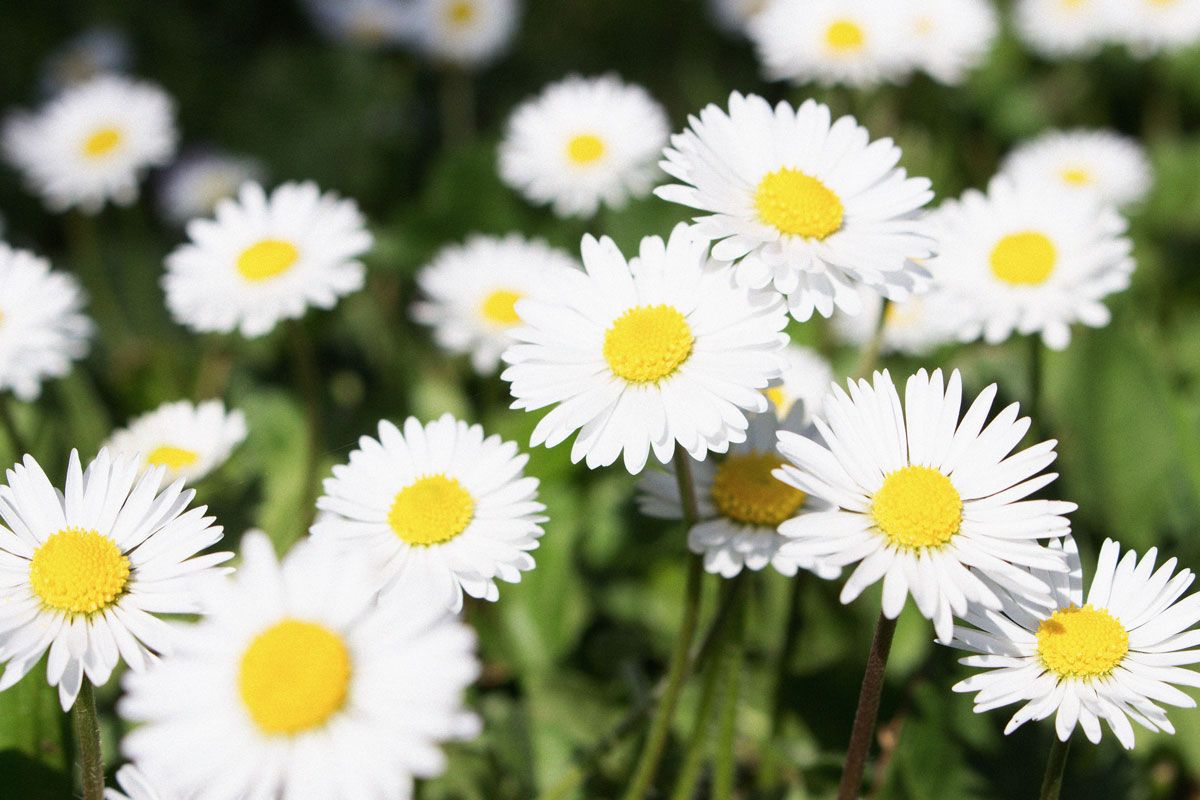
Peggy isn’t the only unexpected nickname Margaret picked up. Educated English speakers in the early modern era also used Daisy, inspired by the French name Marguerite, which means “daisy.” And in an era when families routinely reused the same handful of given names, these nickname detours made practical sense; they were useful for telling one Margaret from another. Luckily for all the Peggys, theirs was a far more charming nickname than one of the era’s less-fortunate options: Some Margarets were called Maggot.

You may also like

7 Common Last Names That Are Linked to Nobility

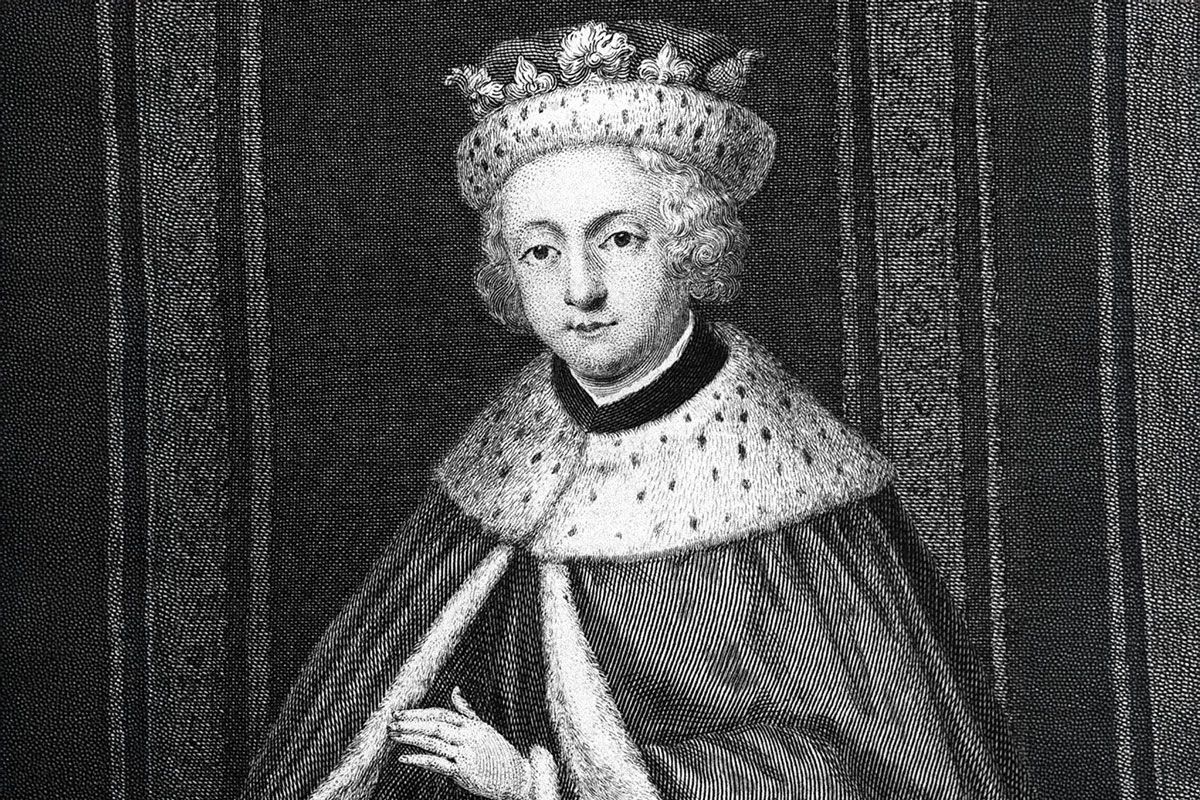
  • King Edward IV
King Edward IV
Credit: Classic Image/ Alamy Stock Photo
Author Tony Dunnell

September 23, 2025

Love it?

Have you ever wondered if your last name might have royal connections? Whether, through the centuries, your surname has traveled through the noble bloodlines of ancient empires and medieval kingdoms? Today, with genealogy websites and online surname databases, it’s easier than ever to trace a name’s history. But while millions of people around the world might be carrying monikers that once graced the halls of power, they often do so without realizing any potentially regal heritage. 

Sometimes, the connection might seem obvious — if your last name is Tudor, Windsor, Habsburg, or Plantagenet, it’s not unreasonable to consider a royal connection. But those aren’t the only surnames with links to the kings and queens of yore. Here are seven common last names in the U.S. that may suggest a royal — or at least noble — lineage. 

Credit: PA Images/ Alamy Stock Photo 

York

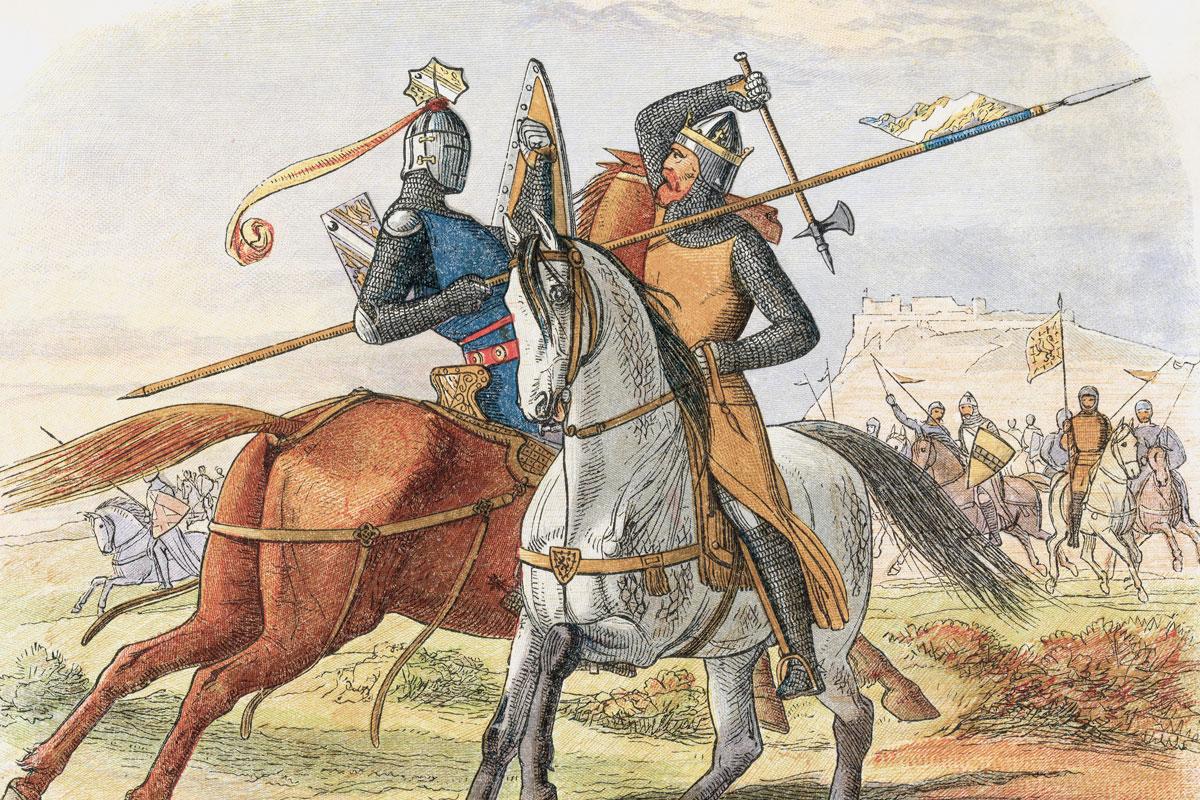
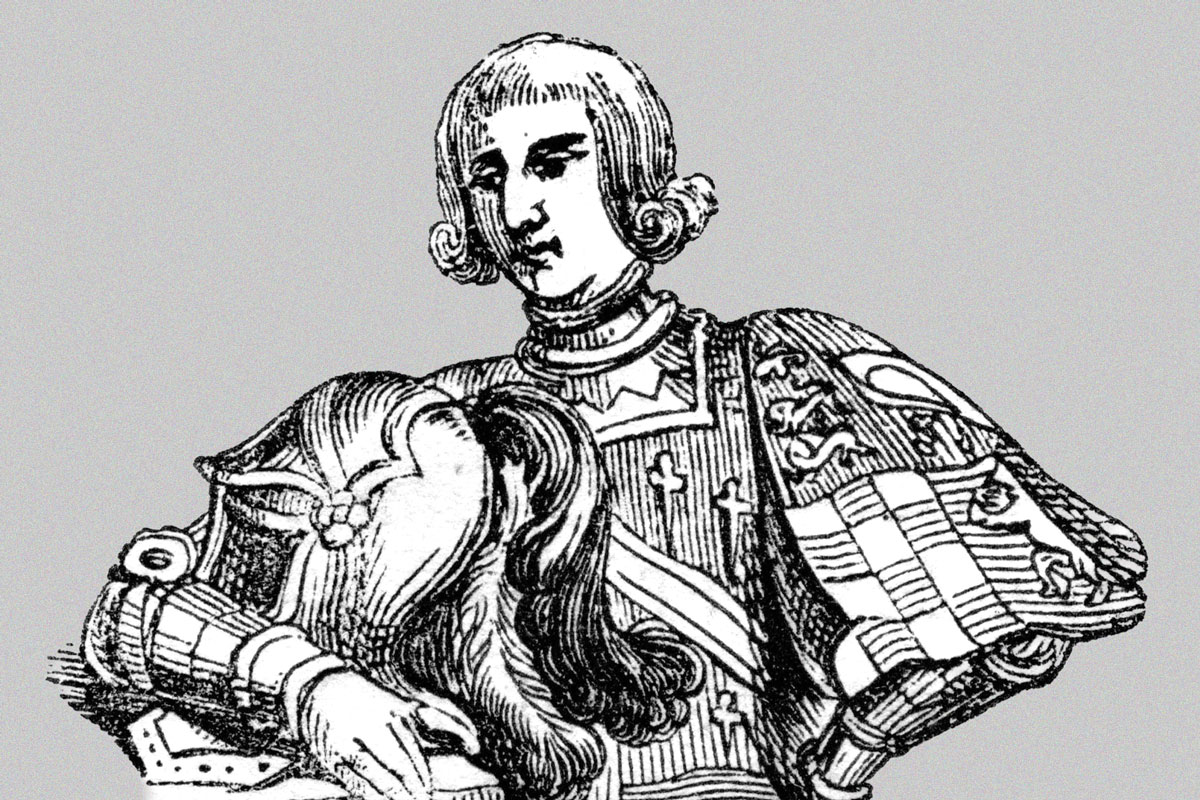
The name York is of Anglo-Saxon origin, and it’s a relatively common last name in the United States. It comes from the historic county of Yorkshire in northern England, which in turn gave its name to the House of York, a royal dynasty that provided three kings of England in the 15th century. The house was a cadet branch (a junior line of a noble, royal, or otherwise powerful family) of the House of Plantagenet. The House of Lancaster was also a cadet branch of the Plantagenets, and the two houses fought against each other in the Wars of the Roses. Lancaster is a moderately common surname in the United States. 

You may also like

Why Do We Have Middle Names? 
  • Birth certificate
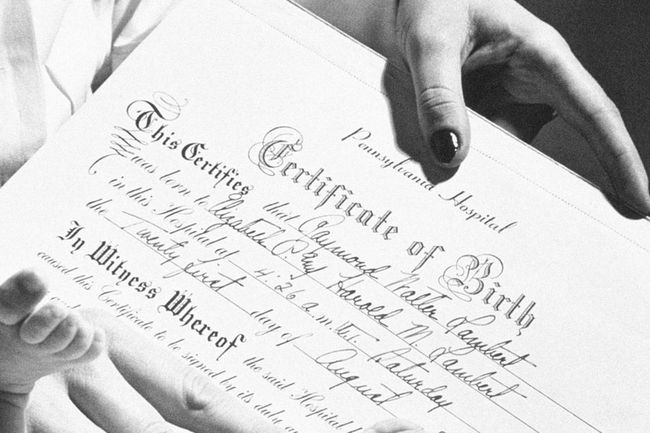
Birth certificate
Credit: Harold M. Lambert/ Archive Photos via Getty Images
Author Tony Dunnell

July 29, 2025

Love it?

Middle names are a strange concept. They often lie silent and unused, only to emerge when we fill out official forms and documents, providing an extra piece of proof as to who we are, despite our near-total disregard for the name in our daily lives. In the U.S., a majority of people have a middle name, but only around 4% of people are referred to by it. And, according to a poll by The Atlantic, only about 22% of Americans think they know the middle names of at least half of their friends or acquaintances. 

A valid question therefore arises: Why do we have middle names? What’s the point, and who got us started with this seemingly superfluous naming process? Here, we take a look back through history to see when and why middle names emerged, and how they became commonplace. 
Credit: Heritage Images/ Hulton Archive via Getty Images 

The Emergence of Middle Names

Though historians don’t know exactly when middle names originated, we do know the ancient Romans used a naming system that, at times, involved what can be considered a middle name. Some Romans, especially members of the aristocracy, used a three-part naming system called tria nomina, consisting of a praenomen (personal name), nomen (family name), and cognomen (additional identifier). But the nomen, while having the same placement as a middle name, had a different function — as a family identifier, similar to modern surnames — so it’s not a clear precursor to the middle names we use today. 
Instead, we have to fast-forward to medieval Europe. According to historian Stephen Wilson in The Means of Naming: A Social History, the custom of giving middle names emerged (or possibly reemerged) in Italy around the late 13th century. The naming practice became common among the Italian elite, who saw the middle name as extra real estate for honoring saints, family members, or political allies — offering a perceived spiritual or social boost. 

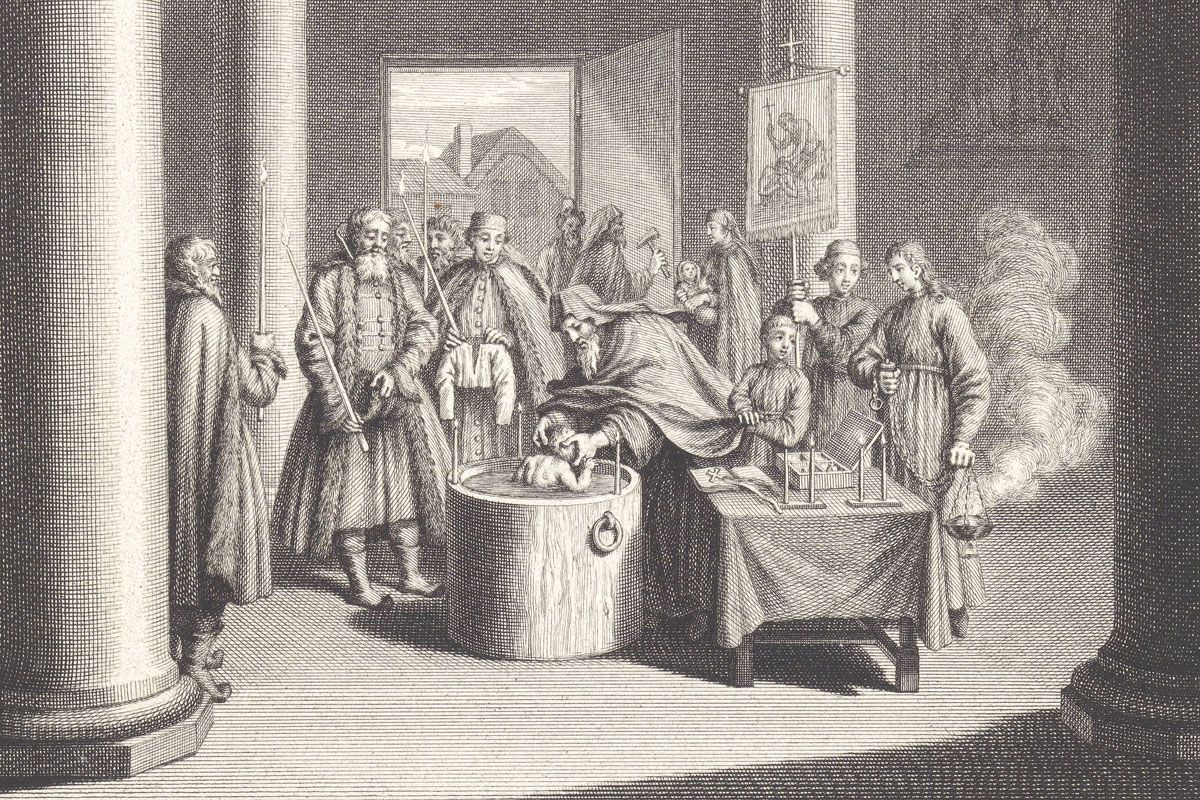
The trend caught on, and by the Renaissance era it was increasingly common for wealthy families across Europe to include middle names during baptisms. From there, it filtered down through the social classes to become commonplace among rich and poor alike. In France, for example, more than half of all boys were given just a first name during the first decade of the 19th century. In the last decade of that century, less than a third had only a first name, while 46% had one middle name and 23% had two. By that time, middle names were common in Europe and had also traveled to the United States, helping cement their position as a standard part of Western naming practices. 

You may also like

Why Do We Call Them ‘Ivy League’ Schools?

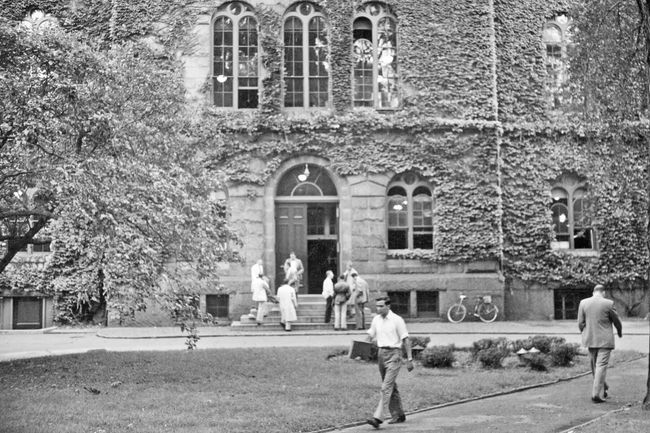
  • Harvard University campus
Harvard University campus
Credit: Lawrence Thornton/ Archive Photos via Getty Images
Author Kristina Wright

June 30, 2025

Love it?

“Ivy League” is a term that evokes images of the hallowed vine-covered walls of some of the most elite educational institutions in the world. The Northeastern United States is home to the eight private research colleges and universities that make up the  Ivy League, including Brown University in Providence, Rhode Island; Columbia University in New York City; Cornell University in Ithaca, New York; Dartmouth College in Hanover, New Hampshire; Harvard University in Cambridge, Massachusetts; University of Pennsylvania in Philadelphia, Pennsylvania; Princeton University in Princeton, New Jersey; and Yale University in New Haven, Connecticut. 

Of this group of exclusive schools, all but Cornell University, which was founded in 1865, are also colonial colleges — the nine institutions of higher education that were chartered before the United States was founded. The other two colonial colleges, Rutgers University in New Jersey and the College of William & Mary in Virginia, are public universities, which excludes them from the Ivy League.

Everyone has an idea of what having an Ivy League education means, but what, exactly, is the origin of the name itself? Here’s how this group of prestigious institutions came to be called the Ivy League.

You may also like

We Tried To Write an Entire Article in Middle English

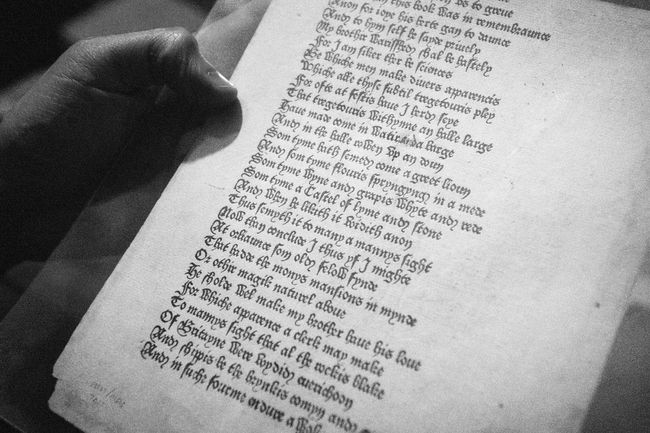
  • Page from “The Canterbury Tales”
Page from “The Canterbury Tales”
Credit: ZUMA Press, Inc./ Alamy Stock Photo
Author Nicole Villeneuve

June 19, 2025

Love it?

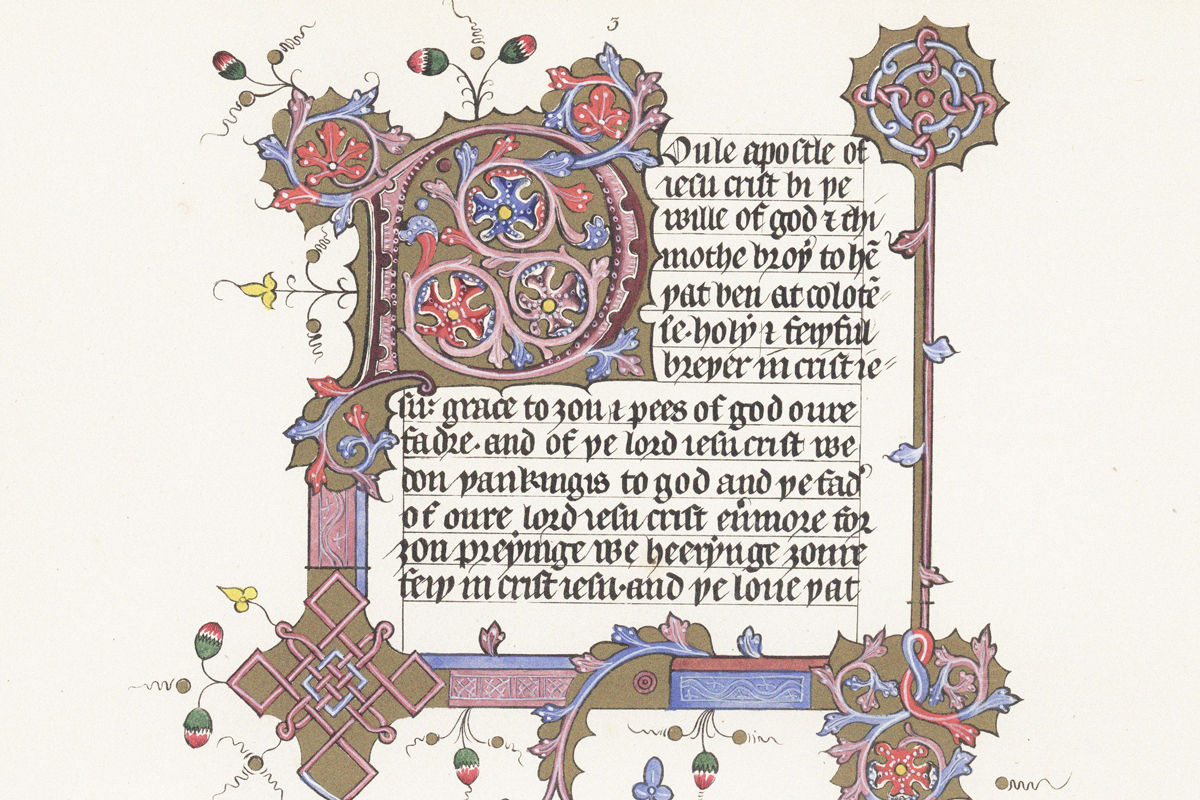
When William of Normandy invaded England in 1066, it began a transformation of the Old English language. The Norman conquerors replaced the Anglo-Saxon ruling class, bringing with them their Anglo-Norman language, which was based on Old French. Over time, the two languages blended. Old English grammar became simpler, and the English vocabulary expanded with the addition of French words. The result was a new stage of the English language: Middle English, spoken around 1100 to 1500.

During this time, Geoffrey Chaucer wrote The Canterbury Tales, one of the most famous examples of Middle English literature. Chaucer’s writing — and the English language in general — was not uniform at this time. Spellings varied and were often phonetic, and pronunciation differed by region; Chaucer often used whichever version of a word fit his rhyme. 

There were some differences between the Middle English alphabet and our modern alphabet. Middle English included letters such as “þ” (known as thorn) for the “th” sound, and some other letters — such as “u” and “v” or “i” and “j” — were interchangeable. There were also some common words we no longer use. Middle English used “thou” for informal speech and “ye” as a formal or plural form, both of which were replaced by “you.” And third-person verbs ended in “eth” or “th” (such as “goeth”), which was later simplified to “s.” During the Great Vowel Shift, which occurred between 1350 and 1600, the pronunciation of many words also changed. For example, in Middle English, “sheep” sounded more like “shape,” and “bite” sounded like “beet.” 

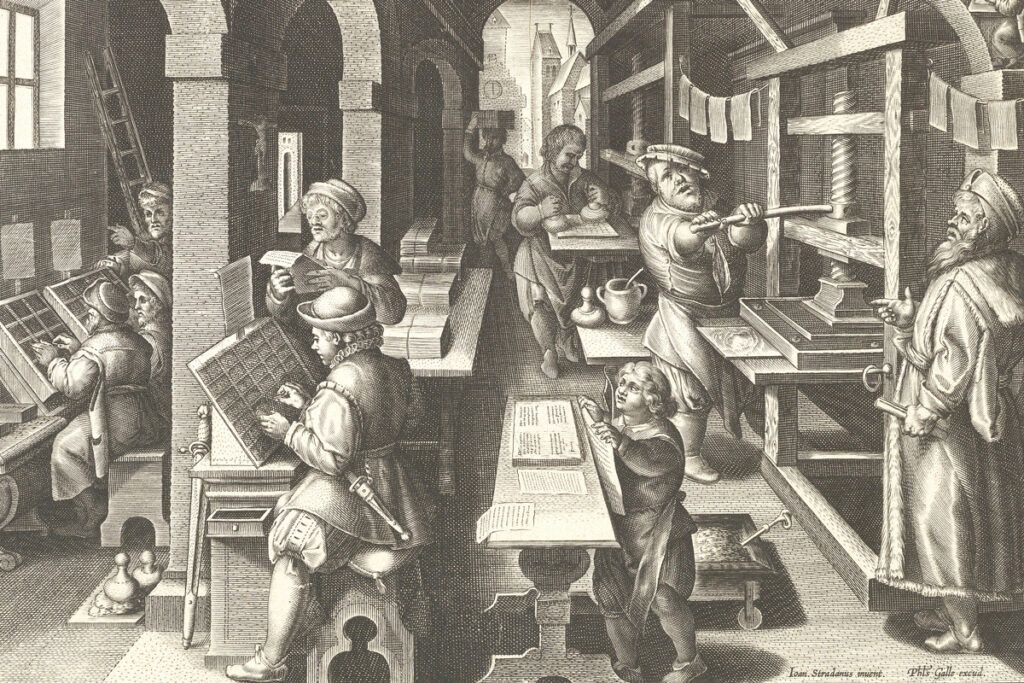
Another major shift occurred when the printing press was introduced to England in 1476, marking the start of a new stage of the language, known as Modern English. As printed books became more widespread, spelling and grammar became more consistent, and English began to take its current form.

You may also like

Why Do We Call It ‘History’?

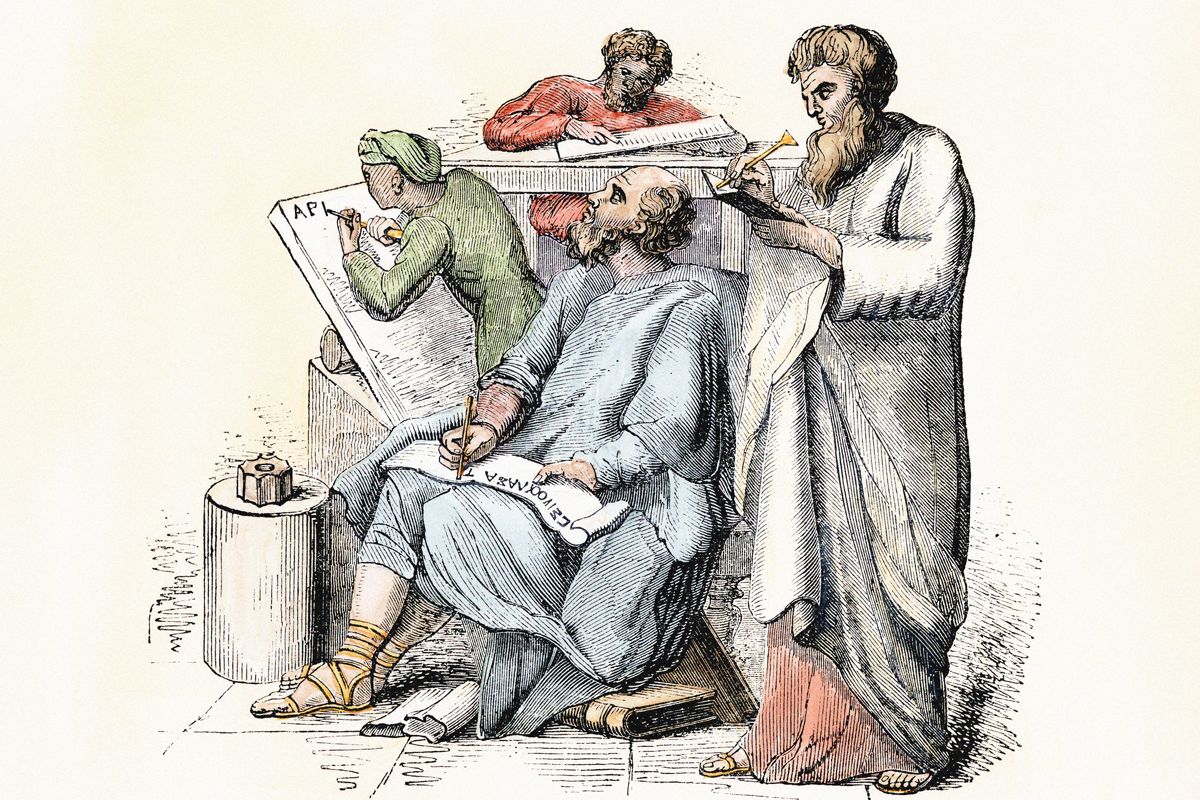
  • Ancient Greek historian
Ancient Greek historian
Credit: The History Collection/ Alamy Stock Photo
Author Bess Lovejoy

June 18, 2025

Love it?

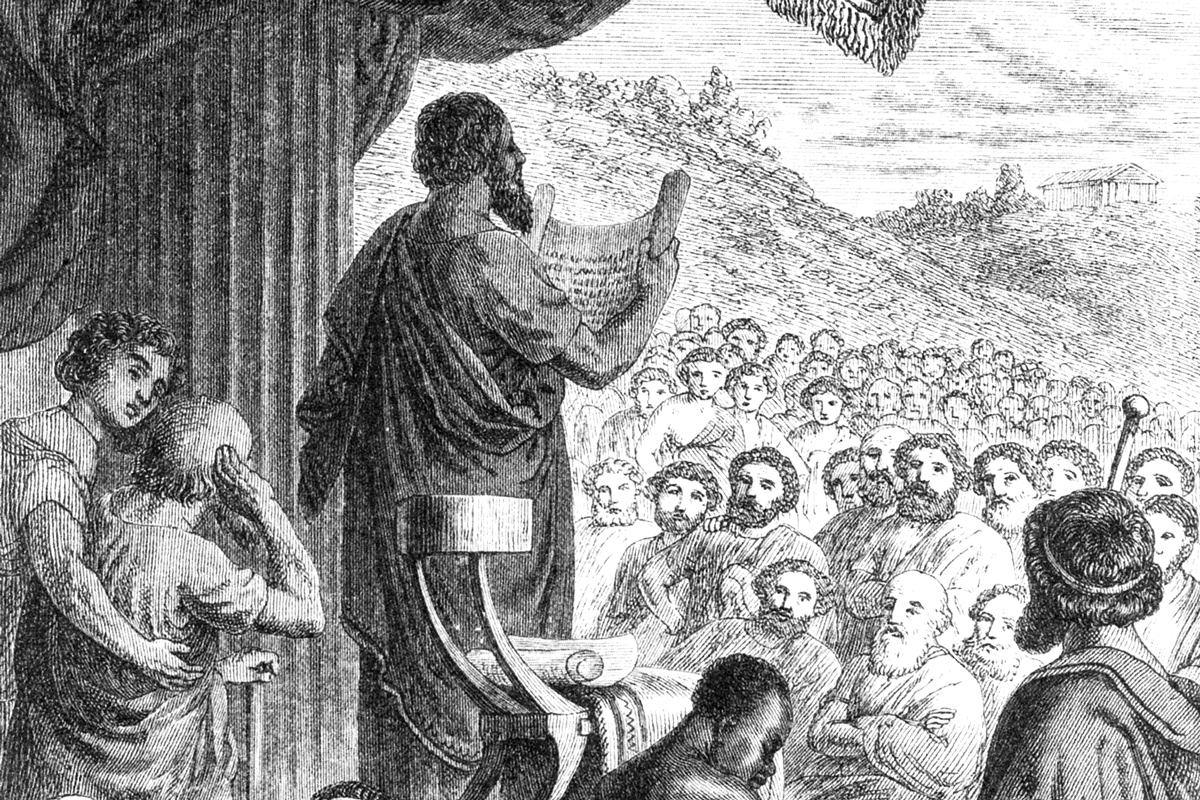
The modern English word “history” comes partly from the Latin historia and partly from the French storie (or estoire), but those terms both trace their roots back to the same place. Not coincidentally, that place is one of the bedrocks of Western civilization: ancient Greece.

Credit: North Wind Picture Archives/ Alamy Stock Photo

Going back about as far as we can, the word “history” can be traced to the ancient Greek verb οἶδα (heda), meaning “to know.” From there, the Greek ἵστωρ (histōr) arose, which had a variety of meanings depending on the context. As a noun, it could mean “wise man,” “judge,” “witness,” or simply “one who knows.” As an adjective, it meant “knowing” or “learned.”

The Greek word historia evolved from that histōr root. It originally meant “a learning or knowing by inquiry,” “an account of one’s inquiries,” or simply “inquiry” or “narrative.” That word was borrowed into Latin (also as historia), where it meant “narrative of past events, account, tale, story.” Interestingly, although historia was borrowed from Latin into Old English as stær (or ster or steor) to mean “history, narrative, story,” our modern English word “story” comes from the French storie or estoire

You may also like

What Your Last Name Says About Your History

  • Magnifying glass on ancient map
Magnifying glass on ancient map
Credit: Andrey Burmakin/ Shutterstock
Author Kristina Wright

October 24, 2024

Love it?

Last names, also known as surnames, can be more than just family identifiers — they can be gateways to understanding more about our ancestral history, cultural heritage, and even ancient migration patterns. The practice of using last names began as populations expanded and it became necessary to distinguish individuals with the same first names. The origins of these surnames are often tied to geographical regions, occupations, or even personal traits — think “Hill,” “Baker,” or “Armstrong.” In the United States, where the population is a diverse mix of cultures, surnames also carry with them the marks of migration, colonization, and assimilation.

Whether a last name suggests our ethnic heritage, an occupational trade, a geographical region, or the influences of colonization and religion, the identifiers we carry with us can reveal intriguing stories about our past and connect us to a broader story of human movement and settlement. With around 31 million surnames in the world, here are just a few ways that our last names tell us who we are.

Credit: Print Collector/ Hulton Archive via Getty Images 

Viking Migration Affected Naming Traditions

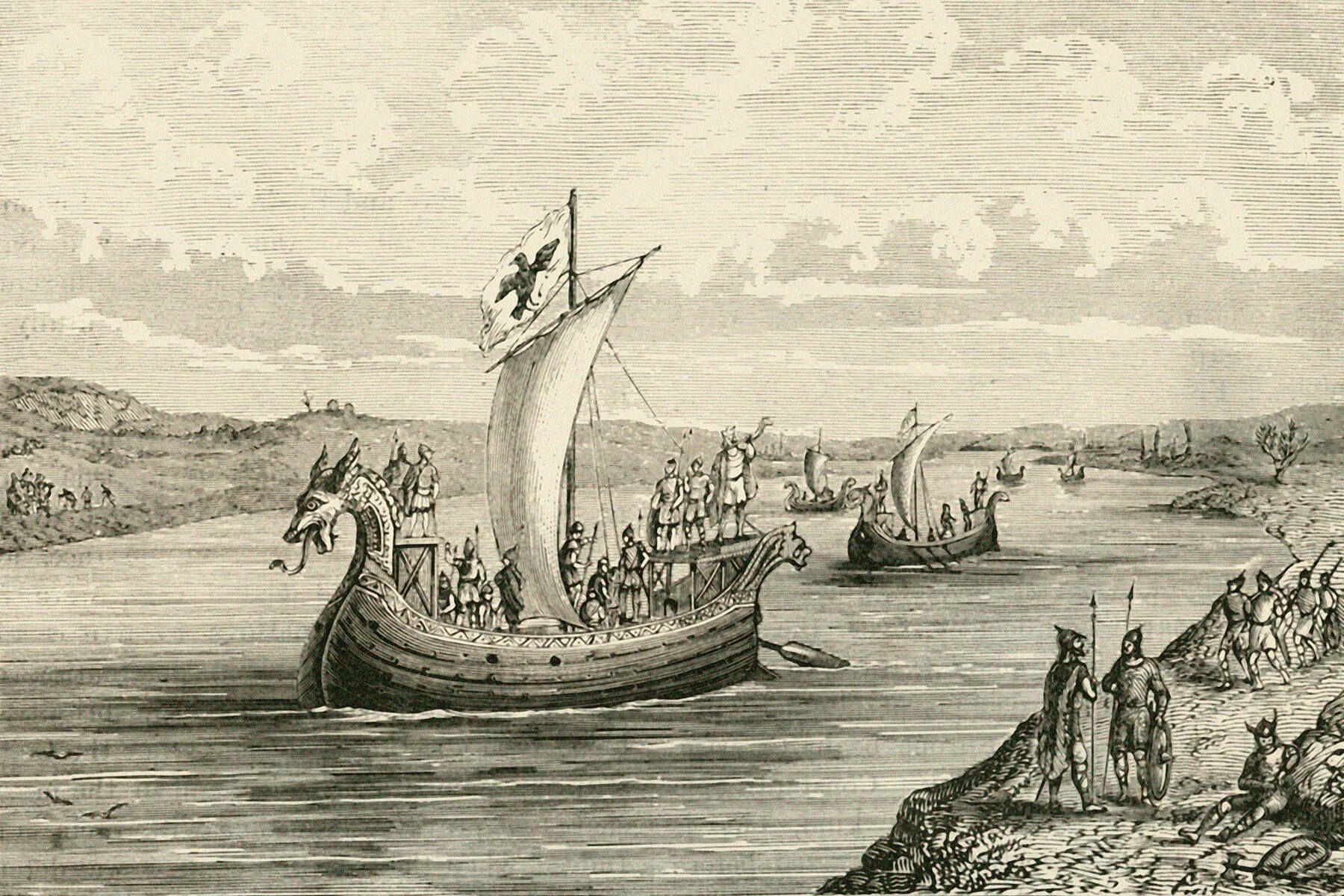
The Viking Age marks the period of time when seafaring Norse people raided and colonized their way through Northern Europe, from the end of the eighth century CE until the Norman Conquest in 1066. The influence of the Vikings can still be seen in the surnames of people with Scandinavian, English, Irish, and Scottish ancestry. Names ending in “-son” or “-sen,” such as Davidson or Andersen, are likely to have Viking roots in Scandinavian or Norse heritage, derived from the practice of using “son of” to identify a man’s father. For example, Andersen means “son of Anders,” a popular Scandinavian first name. Other surnames of Old Norse descent include Carlson, Ericsson, Rogerson, Gundersen, Olsen, and Iverson.

Viking migrations, raids, and settlements spread Viking naming conventions as well as the Old Norse language across regions that are now part of modern-day England, Ireland, and Scotland. Regions such as Yorkshire in northern England and parts of Ireland were significantly influenced by Viking settlers, a fact still visible in the surnames common in these areas, such as Holmes, a Viking word meaning “a small island”; McAuliff, meaning “son of Olaf”; and Higgins, which comes from an Irish word that means “Viking.” 

Similarly, Doyle, from the Irish Ó Dubhghaill, means a “descendant of Dubhghaill,” coming from the Old Gaelic dubh, meaning “dark” or “black” and ghaill, meaning “foreigner” or “stranger,” which was how the first Vikings in Ireland were described. Other Viking names with the same meaning include the Irish surname Mcdowell and the Scottish surname Mcdougall, both of which are anglicized forms of Mac Dubhghaill, meaning “son of Dubhghaill.”

You may also like

Did George Washington Have a British Accent?

  • Statue of George Washington
Statue of George Washington
Credit: Epics/ Hulton Archive via Getty Images
Author Mark DeJoy

October 24, 2024

Love it?

In 1584, the first English colony in North America was founded in what is now North Carolina. And though the 117 settlers who comprised the Roanoke Colony mysteriously disappeared three years later, ensuing waves of settlements established England’s presence on the continent for generations to come. By 1770, the total population of Great Britain’s 13 colonies in America was approximately 1.5 million. It raises the question: Since much of the population of the fledgling U.S. descended from Brits, would the American speech pattern at the time have sounded British? Could someone like George Washington, one of the most famous early Americans, have had a British accent?

Credit: Interim Archives/ Archive Photos via Getty Images

Since Washington lived in an era that predates sound recordings, we don’t have a simple answer to that question in the form of audio records of the founding father’s voice. But we can determine some possibilities by piecing together factors from Washington’s life that would have impacted the way he spoke. 

Washington was born in 1732 in Westmoreland County, Virginia, and spent most of his childhood near Fredericksburg. His father, Augustine Washington, and mother, Mary Ball Washington, were also born in Virginia. Indeed, George Washington’s lineage in the colony went back two more generations — it was his great-grandfather John Washington who set sail from England and established the family in Virginia. So America’s first president wasn’t from a family of recent British settlers; he was three generations removed, and the household he grew up in wouldn’t have necessarily spoken an accent that was common in England at the time.                                                                                                                    

You may also like