



What 6 Common Jobs Paid a Century Ago
In the 1920s, the United States experienced a period of economic prosperity and social change. The so-called Roaring ’20s were a decade of great optimism — World War I was over and the second Industrial Revolution had turned the U.S. into a global economic powerhouse. More Americans were living in cities than ever before, the majority of households had electricity, and productivity was booming.
For some, the Jazz Age was indeed a prosperous and jubilant era. But not everyone benefited from the surging economy. There was still a massive gap between rich and poor, and much of the nation’s newfound wealth ended up in the hands of the already wealthy — a third of all income was earned by just 5% of people. For many working Americans, the decade was defined by long hours, modest pay, and no safety net, with 60% of the population living just below the poverty line.
The majority of Americans earned a wage that was just enough to get by. According to the Gilder Lehrman Institute, the average annual income was $1,303 in 1924, or the equivalent of $24,870 today. (While IRS tax documentation from the same year placed the average income at $3,481 (about $66,400 today), that figure represents only people who actually filed taxes, which was required only for those earning above a certain threshold.) Let’s travel back to the 1920s and take a look at what six common jobs actually paid during these boom years.
Farmers
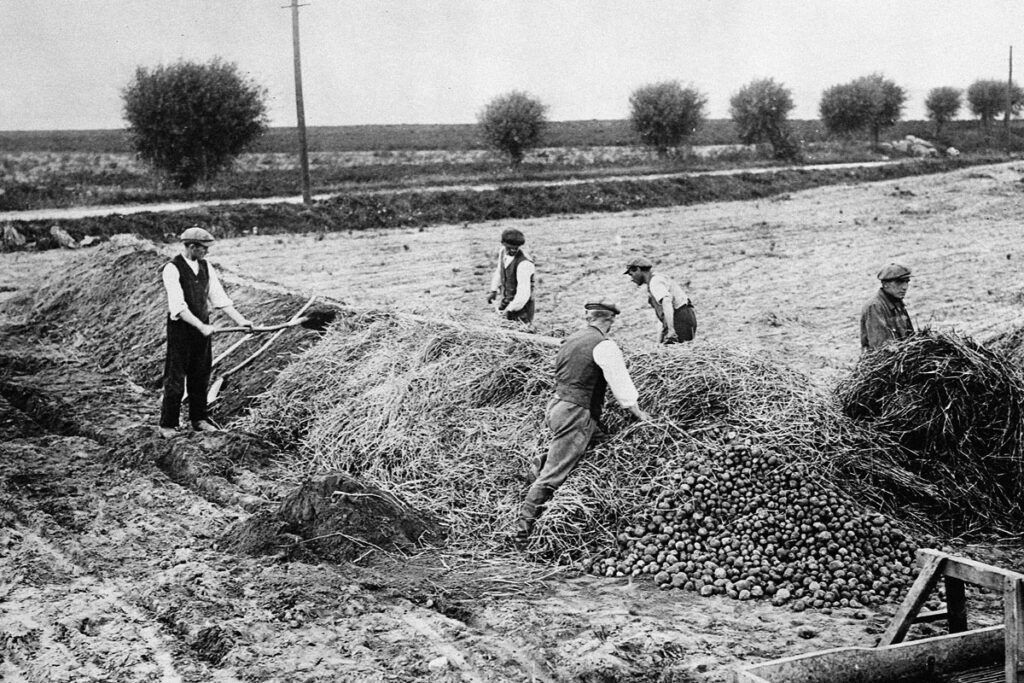
American farmers were prosperous during World War I due to the massive demand for food exports to Europe. But in the 1920s, they suddenly found themselves among the worst off in the country. While cities boomed, agriculture was mired in a prolonged depression following the collapse of commodity prices after the war. Farm owners struggled to sell their produce, profits dropped dramatically, and many found themselves in debt — some 600,000 Americans lost their farms in 1924.
By 1928, half of all American farmers were living in poverty. These struggles are reflected in the salaries of hired farm workers, who earned about $700 a year on average in 1920 (a little less than $12,000 today), before wages fell sharply during the ensuing years, ultimately dropping to around $535 by 1929 (around $10,400 today) — not a great wage, but still almost double that of a farm laborer in the 1930s during the Great Depression.
More from our network






Schoolteacher
Teacher salaries varied significantly depending on the region and whether a school or college was in a rural or urban area. But generally speaking, teachers were not paid very well in the early 20th century. It was one of the few professional occupations open to women in the 1920s, but pay was modest for both sexes. Elementary school teachers in smaller cities earned at the low end of the range, while high school teachers and those in larger urban districts could earn somewhat more. Typical annual salaries ranged from $1,000 to around $2,500 (about $16,500 to $41,000 today), but a teacher in a large, prestigious school in New York, for example, could earn $3,700 (around $60,000 today).

Physician
In the 1920s, the medical profession grew in influence and prestige as medical standards and demand increased — along with the cost of medical care. Doctors therefore sat near the top of the income hierarchy, often earning several times the national average. In 1929, the average income of all civilian physicians, including interns, residents, and fellows, was $5,304 (around $102,000 today). General practitioners in small towns earned at the lower end, while specialists and urban physicians could earn considerably more. At the highest echelons of the medical profession, a physician could earn a gross income of $9,000 per year (about $174,000 in today’s earnings) — far more than the average worker in 1920s America.

Nurse
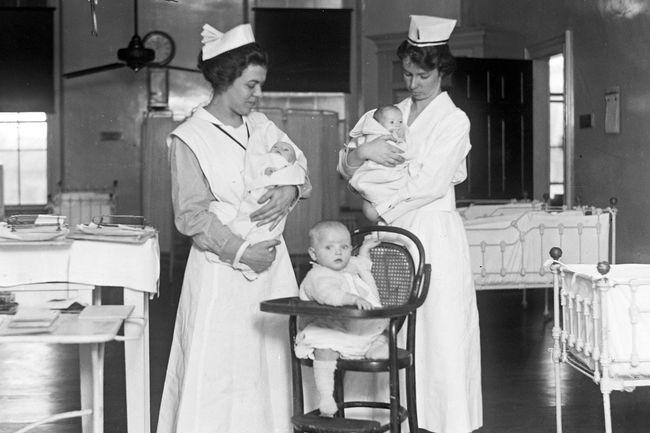
Nursing was an almost exclusively female profession in the 1920s, which meant it was systematically underpaid relative to its demands and responsibilities, due to gender discrimination. According to reports from 1927, the average salary for a public health nurse was $1,720 (around $32,000 today), while institutional nurses earned $2,079. In many cases, especially for student nurses (who would have earned well below the aforementioned salaries), the hours were incredibly long, with nurses often on duty for 20 to 24 hours straight.

Police Officer
Police officers were solidly working-class earners in the 1920s, with pay varying by city size. In 1924, a congressional report recommended that the salaries of police officers in Washington, D.C., should range from $1,500 to $5,200 per year (around $29,000 to $100,000 today). At the lower end were regular officers, while majors and superintendents earned the big bucks. (The report notes similar salaries for members of the fire department.) By comparison, the four officers working at the Lawrence Police Department in Kansas were paid around $1,000 a year in 1920 (about $16,000 today). The job offered more stability than farm or factory work, but it was far more dangerous, especially in larger cities.

Miner
Mining was one of the most dangerous jobs in America, but the pay didn’t reflect the risks involved. In 1925, John L. Lewis, the international president of the United Mine Workers of America, commented on an article that incorrectly claimed that anthracite (hard coal) miners earned an average of $1,936 a year. Setting the record straight, Lewis pointed out that of 45,678 men employed at anthracite mines, almost half earned less than $1,000, with many earning less than $800 (equivalent to about $15,000 a year today). For such perilous work, it was quite a meager wage.


