




What Did Explorers Eat on Long Voyages?
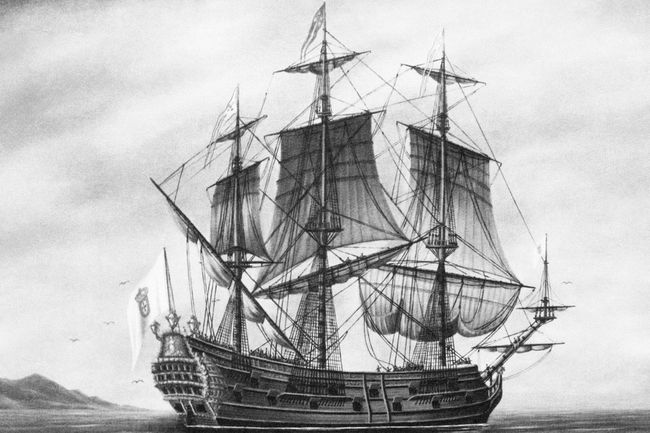
During Europe’s golden age of exploration — from roughly the 1400s through the 1700s — long voyages over land and sea were fraught with danger. Potential threats lay around every corner and across every sea — harsh landscapes, raging oceans, and clashes with Indigenous inhabitants were just some of the problems faced. And then there were the fundamentals of survival, none more important than what to eat.
For sailors at sea and overland expeditions pushing through unmapped wilderness, the question of food was one not of comfort but of staying alive. A lack of food meant starvation and sickness, and often a catastrophic end to even the most meticulously planned expedition. But what exactly did explorers eat on these long journeys? Here we look at some of the common food supplies carried — or harvested — during this era.
Hardtack
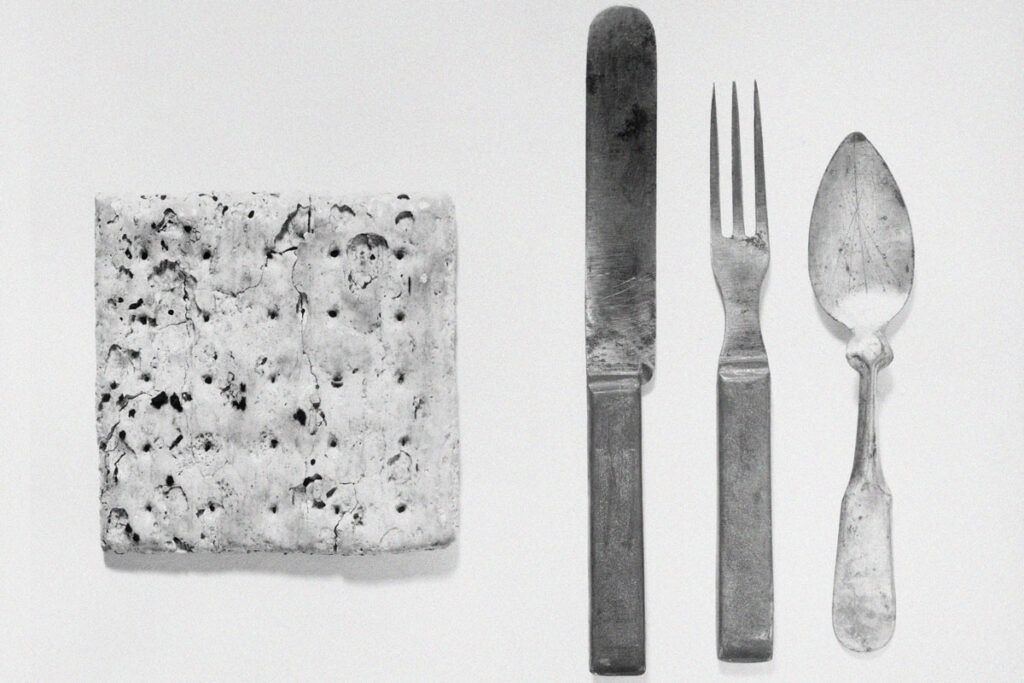
If there was one food that defined the age of exploration for sailors, it was hardtack (also known as ship’s biscuit), a dense, unleavened biscuit made from nothing but flour, water, and occasionally salt, baked until every trace of moisture was driven from it. It wasn’t particularly popular — the result was something closer to a building material than a food — but it kept stomachs from rumbling and people alive.
When properly stored and kept dry, the rock-solid, tasteless biscuits had an almost endless shelf life, making the food vital in an age before canned goods. Hardtack became a part of the standard daily rations for sailors and explorers, who typically soaked the biscuit in water, beer, or broth to make it soft enough to chew. But hardtack could go moldy when damp and was prone to insect infestation — most sailors would tap or dunk their hardtack to scare out any lingering weevils.
More from our network





Salt Meat and Preserved Fish
Biscuits alone wouldn’t keep sailors fit and healthy on a voyage lasting weeks or months. Having sources of protein was vital, and these were stocked on board in advance in preserved form. Salted beef and pork (known as salt tack) were a fundamental part of a sailor’s diet, as was salted fish — typically cod, favored due to its low oil content, which made for easier preservation. Salt preservation was one of the few reliable food technologies of the era, capable of keeping meat edible for months. Meat and fish were heavily salted and packed in wooden barrels before departure, and were essential for the success of any voyage.

Livestock
Not all the meat stored for voyages was preserved. When space allowed, and especially for longer expeditions, ships carried livestock in the form of pigs, goats, chickens, and sometimes cattle, which were loaded aboard to be slaughtered and eaten as the journey progressed.
The English ship the Golden Hind, on which navigator Francis Drake completed his circumnavigation of the globe between 1577 and 1580, carried livestock that was butchered throughout the voyage, with chickens providing eggs for as long as they could be kept alive. In general, however, livestock didn’t fare well on ocean voyages, and sailors would soon find themselves falling back on salted meat and hardtack.

Butter and Cheese
Salted butter and cheese, both of which were ideal for long journeys, made hardtack more palatable and provided a much-needed contrast to all the preserved meat. During English explorer Martin Frobisher’s expedition in the 1570s, which sought the Northwest Passage for trade purposes, each sailor had a daily food allowance that included a quarter pound of butter and half a pound of cheese, to go with their pound of hardtack. Later, in 1677, Samuel Pepys, then secretary to the British Admiralty, included cheese and butter in his list of provisions for every sailor in the navy.

Beer
Keeping stores of fresh water was one of the most logistically challenging elements of any long voyage. Even when stored in sealed barrels, water went stagnant quickly, developing algae, insects, and a foul taste within weeks. The solution was beer. This was a low-strength brew in which the alcohol acted as a mild preservative, keeping the liquid drinkable for far longer than water. Beer is also rich in vitamins, particularly B vitamins, as well as carbohydrates, both of which were needed to supplement a sailor’s diet. A sailor’s ration, including for those serving in the British navy, often included 1 gallon of beer each day.

Fresh Fruit and Veggies
Many sea expeditions set sail carrying fresh fruit and vegetables — but these supplies didn’t last long. While dried peas and beans could keep for extended periods of time stored in barrels, fresh produce such as apples, pears, onions, garlic, and citrus fruits would often perish within weeks. The lack of fresh produce took a terrible toll. From the 15th to 17th centuries, more sailors lost their lives to scurvy — caused by a dietary deficiency in vitamin C — than to war, storms, shipwrecks, or any other diseases combined. It wasn’t until 1753 that Scottish naval surgeon James Lind definitively proved that scurvy could be cured and prevented by consuming the juice of oranges, limes, and lemons, after which citrus juices (often mixed with a little alcohol to prevent spoiling) became a vital part of a ship’s supplies.

Indigenous Foods
Explorers setting out on overland expeditions faced different but equally serious food challenges. Sometimes, however, they had a far wider array of potential solutions than those available during sea voyages. For example, Spanish conquistadors pushing through the Americas in the 16th century depended heavily on what they could extract — voluntarily or otherwise — from the Indigenous populations they encountered. Hernán Cortés and his men survived portions of their Mexican campaign on maize, beans, and whatever could be seized or traded from local communities.
Other overland expeditions had fewer options, and in some cases relied heavily on pemmican, a concentrated mixture of dried meat (often bison) and fat traditionally prepared by Indigenous peoples in North America. In 1793, when Scottish explorer Alexander Mackenzie became the first European explorer to cross North America north of Mexico, he relied on pemmican as the core provision of his overland push, supplemented by whatever his party could hunt and fish along the route. Pemmican was arguably the most sophisticated long-distance food technology of the age, being calorie-dense, lightweight, and stable for months — the original energy bar.


