



The Hidden History of Everyday Gestures
Over the course of a single day, you might talk to several people — but you’re also communicating in nonverbal ways you probably don’t even notice. There are small, habitual movements that we all slip into conversations almost automatically, without giving much thought to where they came from or why we use them.
Even though they feel natural, most of these everyday motions have surprisingly long and interesting histories, gradually leading to the meanings we recognize today. Some trace back thousands of years, while others became widespread only in recent decades, spreading through travel or mass media. Here are five familiar examples of how we connect without words.
Thumbs-Up
Today, the thumbs-up gesture is widely recognized as a sign of approval, agreement, or reassurance that things are all good. It appears in everyday conversation, digital communication, and professional settings as a quick signal of affirmation.
A popular belief links the gesture to ancient Rome, where crowds supposedly used thumbs-up or thumbs-down to decide the fate of defeated gladiators. However, historians generally agree this interpretation is likely incorrect or oversimplified, though we may never know for sure.
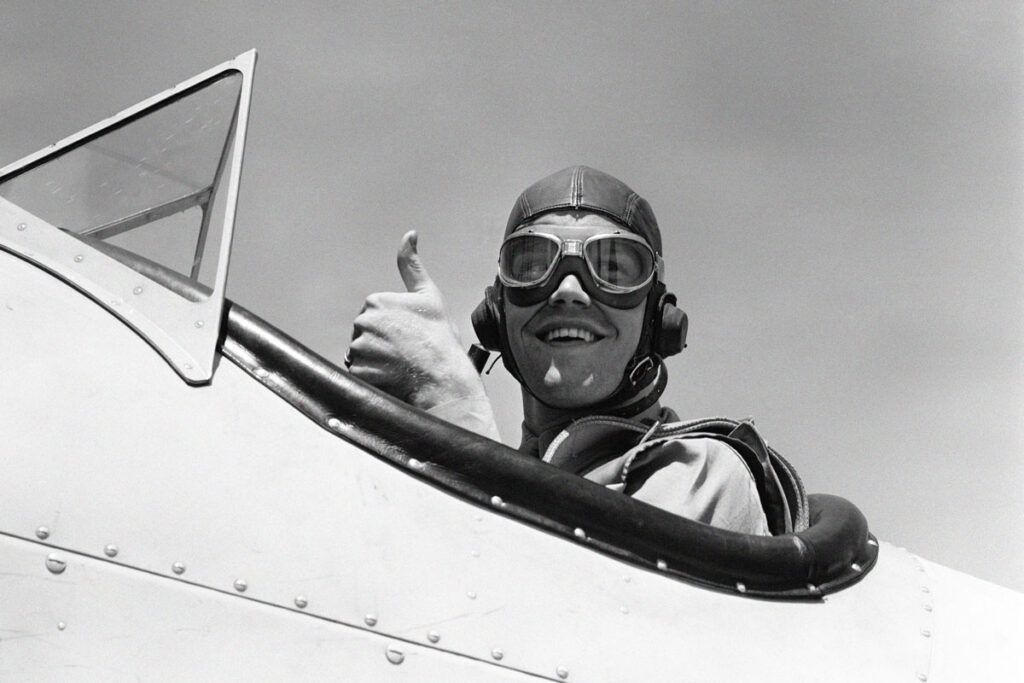
The modern meaning of thumbs-up developed much later. t started to appear as a sign of approval in English-speaking countries by the early 20th century, and it became especially widespread during World War I and World War II, when Allied pilots used it to mean “ready” or “all set.” From there, the gesture spread globally through media, technology, and popular culture, becoming one of the most recognized hand signals today (though it is considered rude in some cultures abroad).
More from our network





Peace Sign
The peace sign — formed by raising the index and middle fingers in a “V” shape — is a casual greeting used today to signal acknowledgment and friendliness, but its meaning has shifted significantly over time.
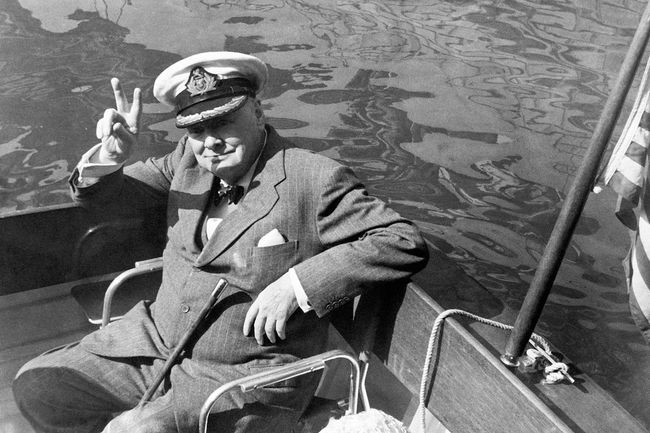
The gesture first gained widespread recognition during World War II, when British Prime Minister Winston Churchill popularized the “V” sign as a symbol for “victory” in the fight against Nazi Germany. The gesture became part of a broader Allied campaign, reinforced by media and propaganda, and was widely understood to represent resilience and triumph.
In the 1960s, the same gesture was reinterpreted during anti-war movements, especially in the United States in response to the Vietnam War. Activists adopted the “V” sign as a call for peace rather than as a support for military victory, reflecting a broader cultural shift toward nonviolence. Because the symbol was already widely recognized, it was easily repurposed, helping it spread quickly through protest movements as a symbol for peace.

Waving Hello or Goodbye
Waving a hand to greet someone or say goodbye feels instinctive today, and while the origins of this social gesture are hard to trace, many researchers believe it may have developed from early signals of peaceful intent.
Anthropologists and body language scholars suggest that raising an open hand could have served as a way to show that a person was unarmed. Displaying an empty palm — clearly visible to others — would have helped communicate that no weapon was being held, making it safer to approach strangers.
Over time, this practical signal likely evolved into a social greeting. The side-to-side motion associated with modern waving may have emerged as a way to attract attention or increase visibility, especially from a distance. Today, waving is used around the world as a friendly motion, though its form and frequency can differ across cultures.

Shaking Hands
The handshake is one of the most widely recognized gestures in professional and social settings, used to greet others, mark agreements, and signal mutual respect.
Historical evidence suggests the gesture dates back thousands of years. Depictions from ancient Greece — including reliefs and funerary art from the fifth century BCE — show individuals clasping hands in what is often interpreted as a symbol of trust, agreement, or equality. Like other open-hand gestures, the handshake may have originated as a practical way to demonstrate peaceful intent.
From the 17th to the 19th centuries, handshakes became increasingly formalized in Europe. While the gesture itself predates this period — appearing in ancient Greek, Roman, and Mesopotamian cultures — the modern handshake as a common greeting and symbol of agreement spread more widely across the European continent, where etiquette and social norms codified their use in diplomatic, commercial, and social interactions.
Today, handshakes remain common worldwide, though customs vary, with grip strength, duration, frequency, and accompanying gestures differing across regions and cultures. In some societies, handshakes are lighter or combined with a bow, while in others they are firmer and more prolonged.

Shrugging
A shrug — lifting both shoulders, often with palms turned upward — is a common nonverbal gesture used to signal uncertainty, lack of knowledge, indifference, or resignation. People often pair it with phrases such as “I don’t know” or “Who knows?” to reinforce the meaning.
The gesture works because it visually reinforces the idea that the person has no answer or firm stance to offer. As a purely nonverbal gesture, the shrug can be understood across many languages, but it’s most common in Western cultures, where it clearly signals uncertainty or indifference. While the precise historical origin of the shrug is hard to trace, the word itself comes from Middle English schruggen (“to draw together” or “to shrink”), which originally described the physical act of raising the shoulders.
Scholars also note that elements of the shrug — shoulder lifting, palms facing up, and raised eyebrows — appear across many cultures as signals of uncertainty or detachment. Few gestures capture one of the most human feelings of all as clearly as a shrug: the silent acknowledgement that, sometimes, we simply don’t know.


