



The Oldest Written Languages in the World

Linguists estimate that human speech sounds first developed tens of thousands of years ago. MIT linguistics professor Shigeru Miyagawa proposes that verbal language may have been used in social situations around 100,000 years ago, while linguist George Poulos, author of On the Origins of Human Speech and Language, suggests human speech developed around 70,000 years ago. But these early languages were likely never recorded by hand, and it was only around 5,000 years ago that the first known written languages first began to take shape.
Ancient civilizations in regions around the world began to develop complex written language systems starting at least as early as 3200 BCE. While it’s difficult to pin down the exact origin of these languages given the limited archaeological evidence available, historians generally agree on a few early cultures that pioneered the use of written communication.
Sumerian
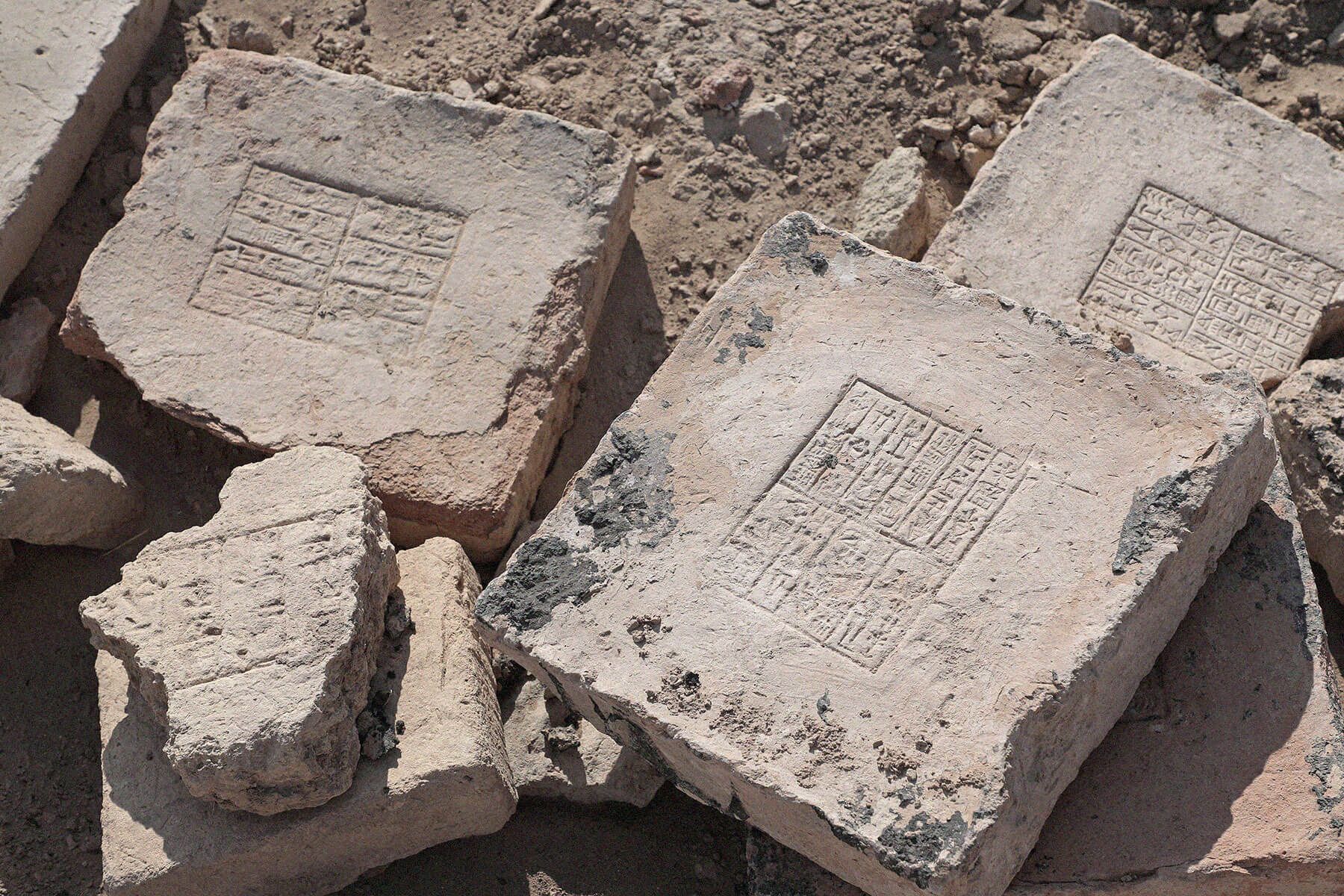
From roughly 4100 BCE to 1750 BCE, the ancient Sumerian civilization thrived across southern Mesopotamia (modern-day Iraq). The Sumerians developed the world’s oldest known writing system, cuneiform, which consisted of wedge-shaped characters carved into stone tablets. The script was later used to denote the spoken Sumerian language, in lieu of any sort of alphabet. The language started as an entirely logographic script, and evolved into a phonetic syllabic system to convey more conversational thought. The oldest known example of Sumerian writing first appeared in a group of administrative and educational texts dating to around 3200 BCE. Around 2500 BCE, the Sumerians produced the first known literature from any ancient civilization: religious works such as the Kesh Temple Hymn that focused less on real-world issues and more on mythological concepts.
The now-extinct Sumerian language consisted of four vowel sounds (a, i, e, u) as well as 16 consonant sounds (b, d, g, ŋ, h, k, l, m, n, p, r, s, ś, š, t, z), and was one of the first known uses of grammatical concepts such as prefixes, infixes, and suffixes. By the year 2000 BCE, the language had faded to the point where it was no longer spoken, as new civilizations and languages emerged throughout the region. It enjoyed a brief resurgence for literary and liturgical purposes between 2000 BCE and 1500 BCE, but was mainly studied by scribes thereafter.
More from our network






Egyptian
The earliest written language in Egypt dates back to roughly 3200 BCE, when the ancient hieroglyphic script was developed. This symbol-based writing system contained three types of signs: logograms denoting words, phonograms representing sounds, and determinatives to help clarify the meaning of a word. When the system was first created, there were more than a thousand hieroglyphs in use, though that number eventually shrank to roughly 700 symbols. Hieroglyphs were often carved into the walls of burial chambers, etched into clay pottery, or written on papyrus, an early predecessor to paper.
The earliest hieroglyphs lacked any sort of obvious grammar or complex sentence structure, but that changed with the emergence of the Old Egyptian language sometime before 3000 BCE.As the verbal language became more complex, the hieroglyphic script evolved to incorporate symbols for individual letters (though Old Egyptian lacked any sort of obvious, traditional written alphabet).
Writers began producing fascinating works such as the Pyramid Texts, a collection of funerary hymns and prayers that date to around 2500 BCE and are the oldest known example of Egyptian literature. In 2000 BCE, a new stage of the language known as Middle Egyptian emerged, introducing a script called “hieratic” that was essentially a collection of cursive versions of hieroglyphs that could be written more quickly and were used in less formal settings.

Akkadian
Akkadian is a now-extinct language that was spoken by the Babylonians and Assyrians of Mesopotamia (in parts of modern-day Iraq and Syria) from roughly 2800 BCE until 500 CE. Around 2350 BCE, Akkadian speakers adapted a cuneiform writing script from the neighboring Sumerian language, borrowing many Sumerian words and logograms. This written Akkadian script was used for a wide variety of matters ranging from legal documents to personal correspondence. The writing system contained roughly 600 word and syllable signs, and also included 28 sounds that were broken down into 20 consonants and eight vowels. Nouns were segmented into masculine and feminine genders, making Akkadian one of the first languages to use this grammatical construct..
What makes Akkadian particularly special is that it was the language used to compose two important historical texts. The first of these is the Code of Hammurabi, a series of 282 rules that established laws and punishments for members of Babylonian society, and served as a pioneering text in the world of criminal justice. The Epic of Gilgamesh was also written in Akkadian; this early work of literature describes the great hero Gilgamesh, and was inscribed into 12 incomplete tablets that were uncovered in the mid-19th century.

Tamil
Tamil is a member of the Dravidian language family, which includes several languages spoken throughout India, Pakistan, and Sri Lanka. Tamil is the oldest of the bunch, though its exact date of origin is widely disputed. There’s a debate among researchers over a Tamil literary work known as the Tolkāppiyam, which some experts believe is up to 7,000 years old. This text mentions several gods that are identified as Hindu deities, and contains thousands of poems spread out across eight anthologies. However, others view the text to be much more recent, and archaeologists can only confidently date Tamil to the fifth century BCE, despite the possibility of a much earlier origin.
Tamil is unique for a number of linguistic reasons. To start, there are a variety of ways to speak it, depending on if you’re communicating colloquially or formally. This system didn’t emerge overnight, however, and likely wasn’t the case when Tamil was initially developed. When it comes to the Tamil alphabet, many consonant sounds are made by curling the tip of the tongue toward the roof of the mouth, producing a tone that’s quite unique to Tamil. While many other ancient languages have since died off, Tamil remains spoken by nearly 90 million people today, and is an official language of both Sri Lanka and Singapore.

Eblaite
In 1964, cuneiform tablets were uncovered near Aleppo, Syria, that provided substantial documentation of a language known as Eblaite. This language is believed to have originated in the ancient city of Ebla (in modern-day Syria) sometime between 2500 BCE and 2250 BCE. Its time as a popular language was rather brief, as the language waned in the wake of the destruction of the Eblaite kingdom around 2240 BCE. But during that short time, the Eblaite language spread far and wide, and was spoken by people as far north as the Hittite Empire (modern-day Turkey) and all the way down to Egypt.
There remains an ongoing debate among scholars as to whether Eblaite was similar to East Semitic languages such as Akkadian, or West Semitic languages such as ancient Aramaic and modern Hebrew. What we do know is that Eblaite speakers used a cuneiform writing system that incorporated many Sumerian-inspired logograms. Researchers believe that Eblaite was largely spoken by government officials and highly educated citizens of Ebla.

Pama-Nyungan
Pama-Nyungan isn’t a single language, but rather a grouping of 306 individual languages spoken by Aboriginal peoples in Australia. There’s some archaeological evidence to suggest that Pama-Nyungan first developed around 6,000 years ago in the region that includes the modern Australian state of Queensland. Initially, researchers were baffled by how the language group came to dominate the entire continent, though some theories suggest that Pama-Nyungan spread rapidly during the mid-Holocene — a warming era that occurred after the most recent ice age (around 120,000 to 11,500 years ago). Only around 20 to 50 Pama-Nyungan languages are still spoken today, as many went extinct after Europeans arrived on the continent in the 17th century.
Despite the large number of Pama-Nyungan subdivisions, many share similar linguistic characteristics. Generally, the Pama-Nyungan languages feature words that begin with a single consonant and end in a vowel (either i, a, or u), though there are exceptions. Over time, the languages became significantly more complex than their basic hunter-gatherer origins. Pama-Nyungan languages developed verbs that were altered depending on their tense, nouns adjusted for case, and other grammatical features seen in modern-day Aboriginal languages such as Tiwi, Walmatjari, and Warlpiri.

Elamite
Elamite is an extinct language that was spoken in the kingdom of Elam between 2600 BCE and 330 BCE. Elam was located in modern-day Iran, and its language was largely unrelated to those spoken in nearby civilizations. The oldest evidence of the Elamite language is a treaty between the King Hita of Elam and the King Naram-Sin of the Akkadian Empire, dating to somewhere between 2275 and 2250 BCE. This historical text is considered to be among the first known treaties signed between two separate kingdoms.
The Elamite language maintained its popularity for more than two millennia, though its use began to wane around the fifth century BCE. Elam was conquered in the sixth century BCE, becoming part of the Achaemenid (later Persian) Empire, and the language evolved rapidly to incorporate elements from Old Persian. Many Old Persian loanwords were adopted by Elamite speakers, and nouns were divided into two categories for the first time: animate and inanimate. Elamite faded into extinction shortly thereafter, as Persian influence grew stronger throughout the region.
There are many other ancient languages that developed throughout the world thousands of years ago, though archaeologists don’t know the exact time frame due to a lack of surviving texts. For instance, many modern Germanic languages — such as German, Dutch, English, Danish, Norwegian, and Swedish — descended from a Proto-Indo-European language that’s believed to have been spoken as far back as 4500 BCE. Several modern Chinese languages also emerged from a single linguistic ancestor known as Archaic Chinese, archaeological evidence of which dates back to around 1250 BCE. Italic is another ancient language group, first spoken on the Italian Peninsula during the first millennium BCE; it eventually evolved into modern Romantic languages such as Italian, Spanish, French, and Portuguese.
Whether it’s the Germanic or Romance languages you’re interested in, Babbel can transform your language-learning journey. Become a confident speaker in just three weeks with Babbel's quick and engaging 10-minute lessons.