


Credit: David Lees/ The Chronical Collection via Getty Images
Author Tony Dunnell
August 15, 2024
Love it?83
In 356 BCE, in the city of Pella, the ancient capital of Macedonia, a baby boy was born to the king of Macedon, Philip II, and his fourth wife, Olympias. Philip celebrated the arrival of his first son and future heir, but not even the proud king could have imagined how far the boy, Alexander, would go.
King Philip II had already overseen the reformation of the Macedonian army, with the establishment of the phalanx infantry formation (a dense line of soldiers standing shoulder to shoulder) and the brutally effective use of long sarissa pikes and siege engines. But it was Alexander, who succeeded to the throne at just 20 years old following his father’s assassination, who took this fearsome force to a whole new level. He engaged in military campaigns against the Greeks and then the Persians, and in little over a decade had conquered most of the known world — all before his sudden death at age 32.
Here are six facts about Alexander III of Macedon, more commonly known as Alexander the Great, a man widely considered the greatest and most successful military commander in history.
Credit: Stock Montage/ Archive Photos via Getty Images
Aristotle Was Alexander’s Teacher
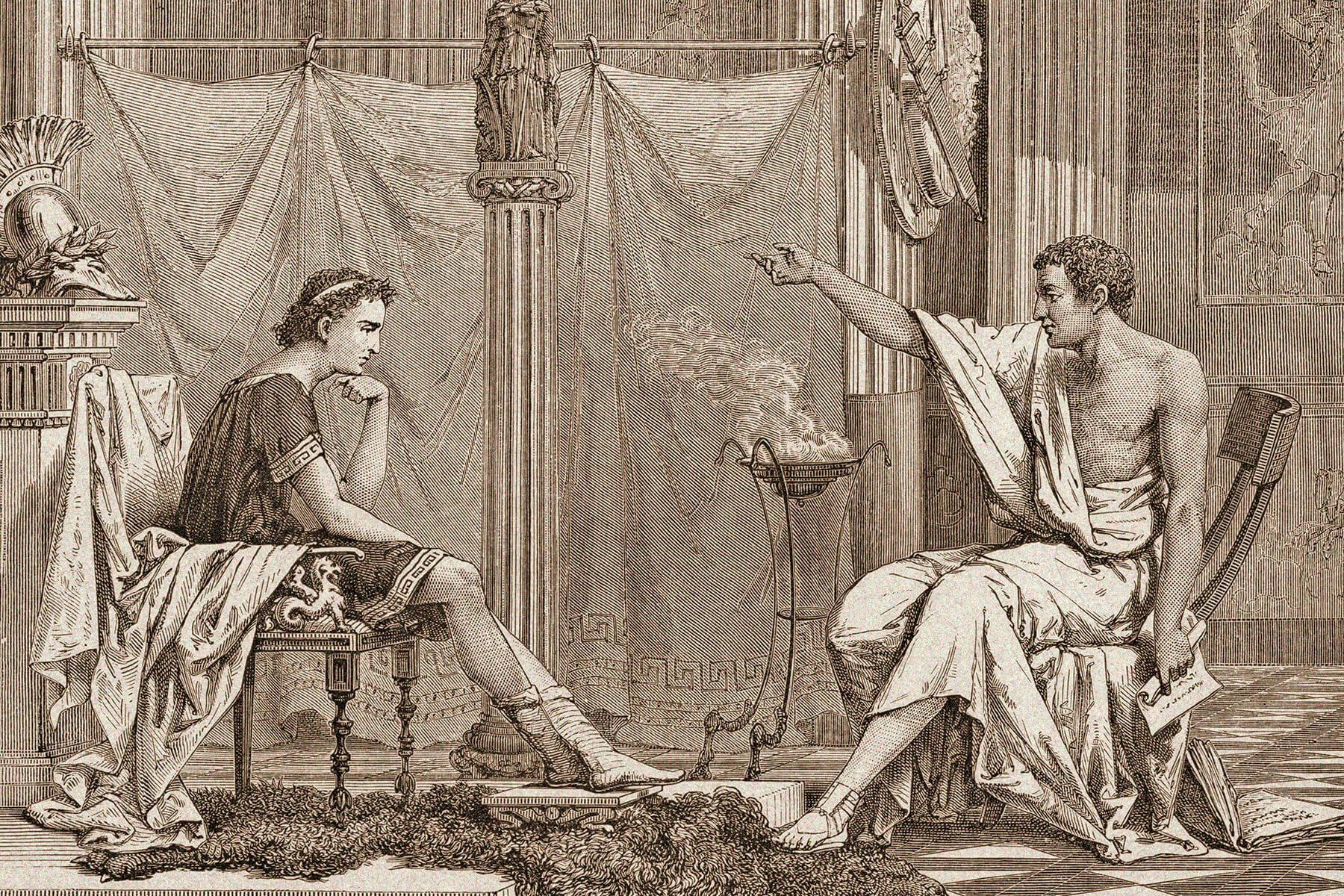
As the son of royalty and heir to the throne, Alexander was expected to receive a fine and princely education. But Alexander’s schooling went above and beyond: His teacher was none other than Aristotle, one of the greatest philosophers who ever lived. The famed scholar was summoned by King Philip II around 343 BCE, when Alexander was 13 years old. Aristotle tutored Alexander on a wide range of subjects, including philosophy, ethics, science, and the arts, in an attempt to create an enlightened monarch who would rule in a fair and just manner — something arguably lost on Alexander in later years, as his military leadership increasingly veered toward megalomania.
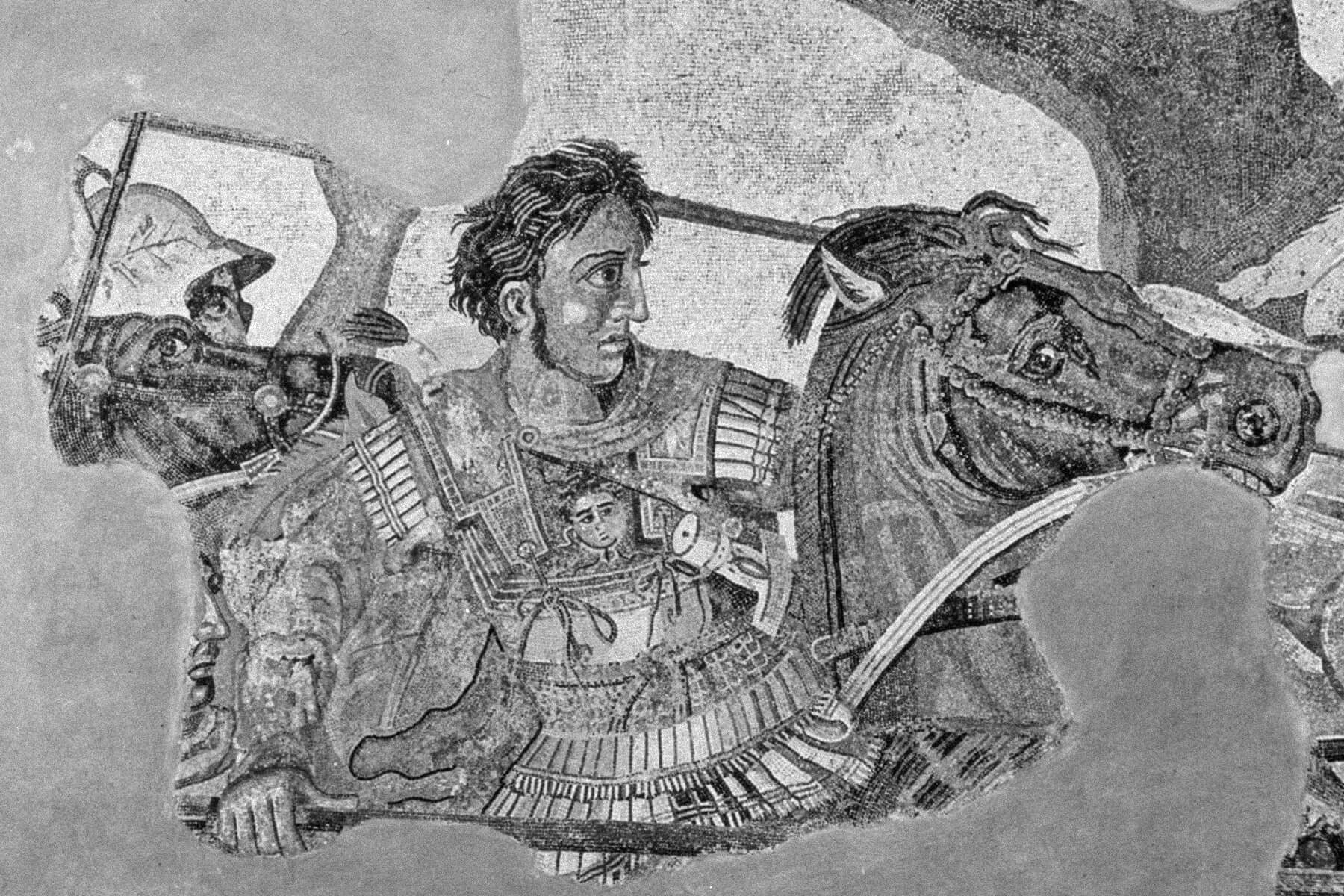
Alexander succeeded to the throne in 336 BCE, and soon went to war, spending most of his reign engaged in lengthy military campaigns throughout Western Asia, Central Asia, parts of South Asia, and Egypt. Incredibly, Alexander was never defeated in battle, despite often being outnumbered. He won at least 20 major battles against significant military powers, including the Greek city-states, Egypt, and Persia. Not only was Alexander a masterful tactician and general, but he also inspired extreme loyalty among his soldiers, who refused his orders only once during the so-called Hyphasis Mutiny, when his exhausted men refused to march further into the Indian subcontinent.
Advertisement
Advertisement
Credit: PHAS/ Universal Images Group via Getty Images
Alexander Founded Many Cities
During his reign, Alexander the Great conquered the Greek city-states and the mighty Persian Empire. In doing so, he created an empire that spanned three continents and covered about 2 million square miles. According to the ancient Greek philosopher Plutarch, Alexander also founded more than 70 cities, though modern historians place the number between 10 and 20. Many of these he named after himself, including Alexandria Troas in Turkey, Alexandria Arachosia and Alexandria Ariana in what is now Afghanistan, and, most notably, Alexandria, which is the second largest city in Egypt today.
Bucephalus is one of the most famous horses from classical antiquity. According to Plutarch, the horse was given as a gift to Alexander's father, Philip II. But the animal was aggressive and unmanageable, and wouldn’t allow anyone to mount him. Seeing this, Alexander, just a boy at the time, asked permission to tame the horse, saying, “What an excellent horse do they lose, for want of address and boldness to manage him!” His elders laughed at him, but Alexander proved them wrong, managing to ride and ultimately tame the wild creature. Bucephalus became Alexander’s mount of choice and was with him throughout his campaigns. He held the horse in such high regard that he even named a city — Bucephala in modern-day Pakistan — in honor of his faithful steed.
Advertisement
Advertisement
Credit: Heritage Images/ Hulton Fine Art Collection via Getty Images
Alexander Took Huge Risks With His Own Life
One of the reasons Alexander inspired such devotion and sacrifice in his soldiers was his willingness to charge into battle on the front lines beside them. This, however, was a huge risk, and Alexander came close to death more than once. At the Battle of Granicus in 334 BCE, for example, Alexander was seconds away from receiving a fatal blow from a Persian soldier, only to be saved in the last moment by one of his companions, Cleitus the Black. Later, during the Indian campaign, Alexander received his most severe wound when an enemy arrow pierced his lung. Word soon spread that he had died, but Alexander survived. When he had fully recovered, he presented himself to his awaiting troops, to the cheers and even tears of his soldiers.
The death of Alexander the Great remains one of history’s greatest mysteries. We know that Alexander, at the age of 32, fell ill during a days-long period of festivities, collapsing and complaining of a searing pain in his back. An intense fever followed, and he died 12 days later. From that moment up until the present day, the exact cause of his death has been a topic of much debate. Numerous theories have been proposed, including alcoholic liver disease, malaria, typhoid fever, and assassination by strychnine poisoning. While we might never know the truth about Alexander’s death, we could one day solve one of archaeology’s other great mysteries: the location of his tomb. Numerous theories exist regarding the tomb’s location, placing it anywhere from Egypt to Greece. It’s possible it was destroyed and will never be found — but that won’t stop archaeologists from searching for the final resting place of history’s greatest general.
In an era dominated by high-tech home gyms and viral workout videos, the pursuit of physical fitness may seem like a distinctly modern preoccupation. But physical activity has long been an integral part of daily life. From ancient philosophers sculpted by rigorous training to intellectuals who advocated for the importance of diet and exercise as part of a holistic approach to well-being, history is filled with people who placed a premium on their physical fitness.
Here are five renowned historical figures who aren’t typically remembered for their athleticism, but whose commitment to exercise profoundly influenced their lives. The paths they took to stay physically fit varied widely, reflecting the diverse approaches people have taken to fitness throughout history.
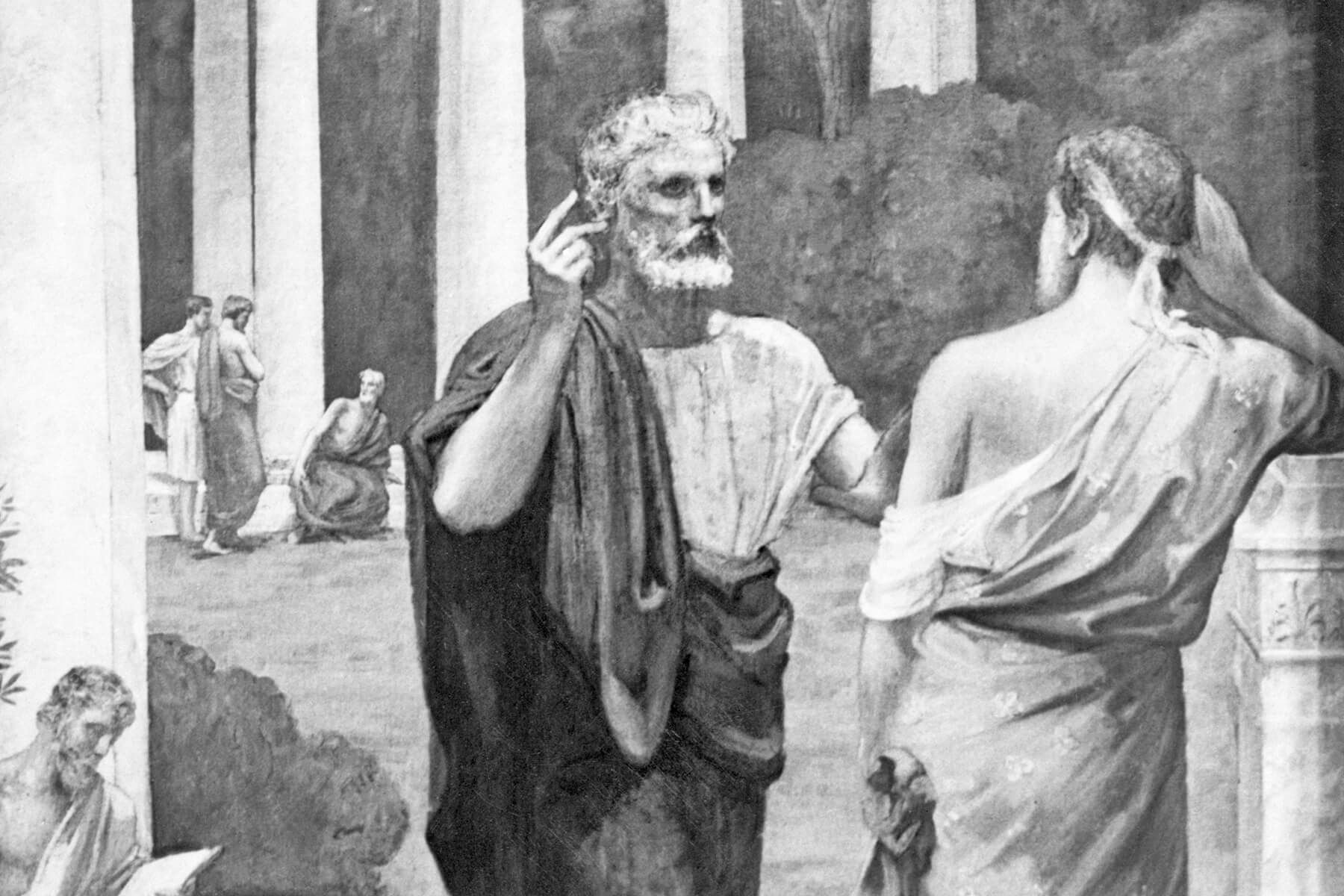
Plato, one of the three ancient Greek philosophers (along with Socrates and Aristotle) attributed with building the philosophical foundation of Western culture, was educated in both mental and physical pursuits. Like other Athenian boys, Plato was trained in a variety of physical activities, including gymnastics, wrestling, archery, boxing, and riding. His given name was Aristocles, but it may have been his broad-shouldered physique that earned him the name Plato, from “platos,” the Greek word for “broad.” Before turning to philosophy, Plato put his physicality to use as a skilled wrestler competing in the Isthmian Games, an event similar to the ancient Greek Olympics. “Lack of activity destroys the condition of every human being,” he wrote, “while movement and methodical physical exercise save it and preserve it.”
Credit: Fine Art/ Corbis Historical via Getty Images
Leonardo da Vinci (1452-1519)
Leonardo da Vinci not only is recognized as one of the great artists of the Renaissance era, but also represents the archetype of the multitalented “Renaissance man.” Best known for his paintings, including the enigmatic “Mona Lisa” and the iconic “Last Supper,” Leonardo was fascinated with the human form, an interest that can be found throughout his artistic and scientific work. His belief that the human body represented a microcosm of the universe is reflected in his oft-reproduced “Vitruvian Man” sketches, which depict what he believed to be the ideal male body. In his own lifetime, Leonardo was known for his athleticism and strength, and his superior physical fitness can be attributed to a number of athletic pursuits, including fencing, riding, and swimming.
As a pioneer for women’s rights in the late 18th century, Mary Wollstonecraft was concerned about women strengthening their bodies as well as their intellect. She saw physical exercise as a means of empowerment and liberation from societal constraints and believed that physical activity not only strengthened the body but also cultivated mental fortitude and independence. “The woman who strengthens her body and exercises her mind will, by managing her family and practicing various virtues, become the friend, and not the humble dependent on her husband,” she wrote in her 1792 treatise A Vindication of the Rights of Woman. Wollstonecraft incorporated rigorous physical activity into her own life, which included taking long walks and horseback riding through the countryside.
Credit: George Rinhart/ Corbis Historical via Getty Image
Theodore Roosevelt (1858-1919)
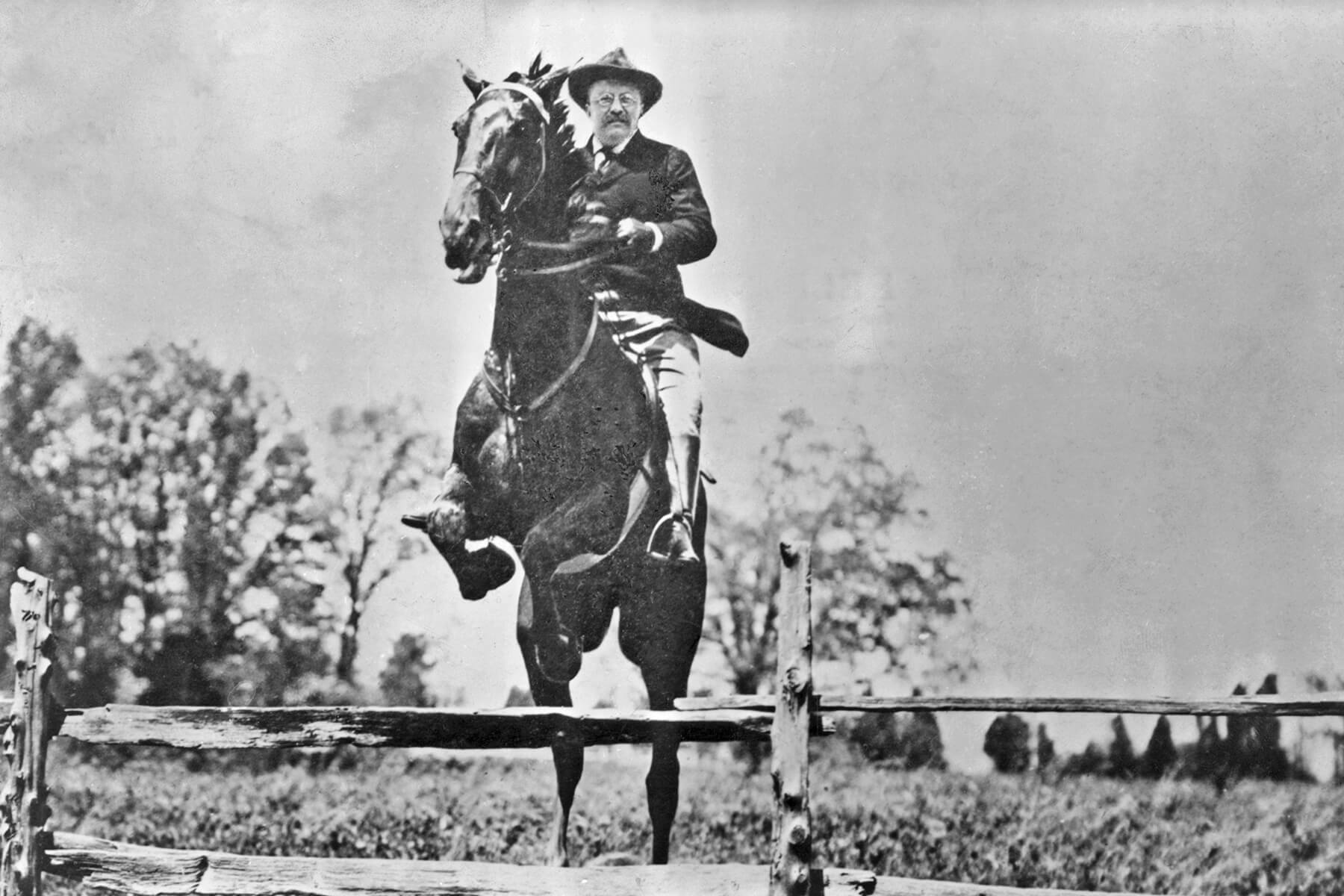
After a childhood plagued by severe asthma,President Theodore Roosevelt, known for being an outdoorsman and conservationist, pushed himself physically to maintain his health and build his physical strength and stamina. To that end, he pursued a number of challenging activities, including horseback riding, boxing, climbing, polo, swimming, tennis, and martial arts such as jiujitsu and judo. In fact, Roosevelt’s interest in martial arts led him to become the first American to earn a brown belt in judo. During his years in the White House, Roosevelt even had a boxing ring where he could train or spar with professional boxers, such as John L. Sullivan.
Harry Houdini’s name is synonymous with magic. The enigmatic illusionist’s awe-inspiring ability to escape from seemingly impossible situations captivated audiences, but behind his feats of illusion was a rigorous dedication to staying in peak physical condition. Before he became a world-famous magician, Houdini transformed himself physically through weight lifting, swimming, running, and boxing. As a magician, his training regimen included cold water plunges as well as exercises to enhance his dexterity, flexibility, strength, and breath control, enabling him to contort his body, navigate confined spaces, and hold his breath for more than three minutes.
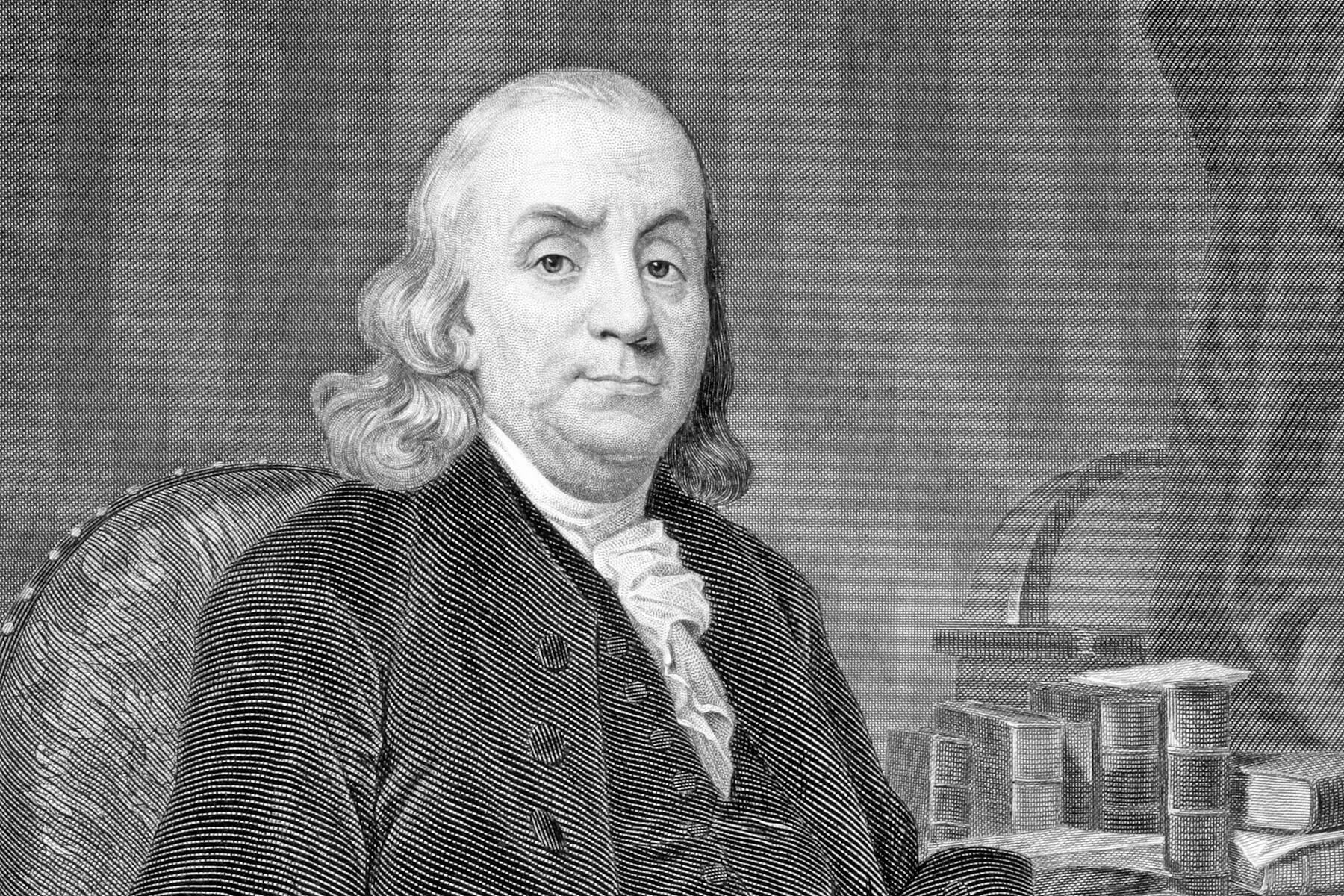
Most of us are familiar with Benjamin Franklin’s scientific inventions, and his role as one of the United States’ foremost Founding Fathers. But his ingenuity extended far beyond his most defining accomplishments; Franklin, it seems, was a visionary without limits. For instance, did you know his rustic clothing inspired European copycats? Or that he was instrumental in understanding the Gulf Stream? These lesser-known facets of Franklin’s legacy underscore the breadth of his intellect and the enduring impact of his innovations. Here are five fascinating ways Franklin’s forward-thinking approach made him one of the most fascinating figures in American history.
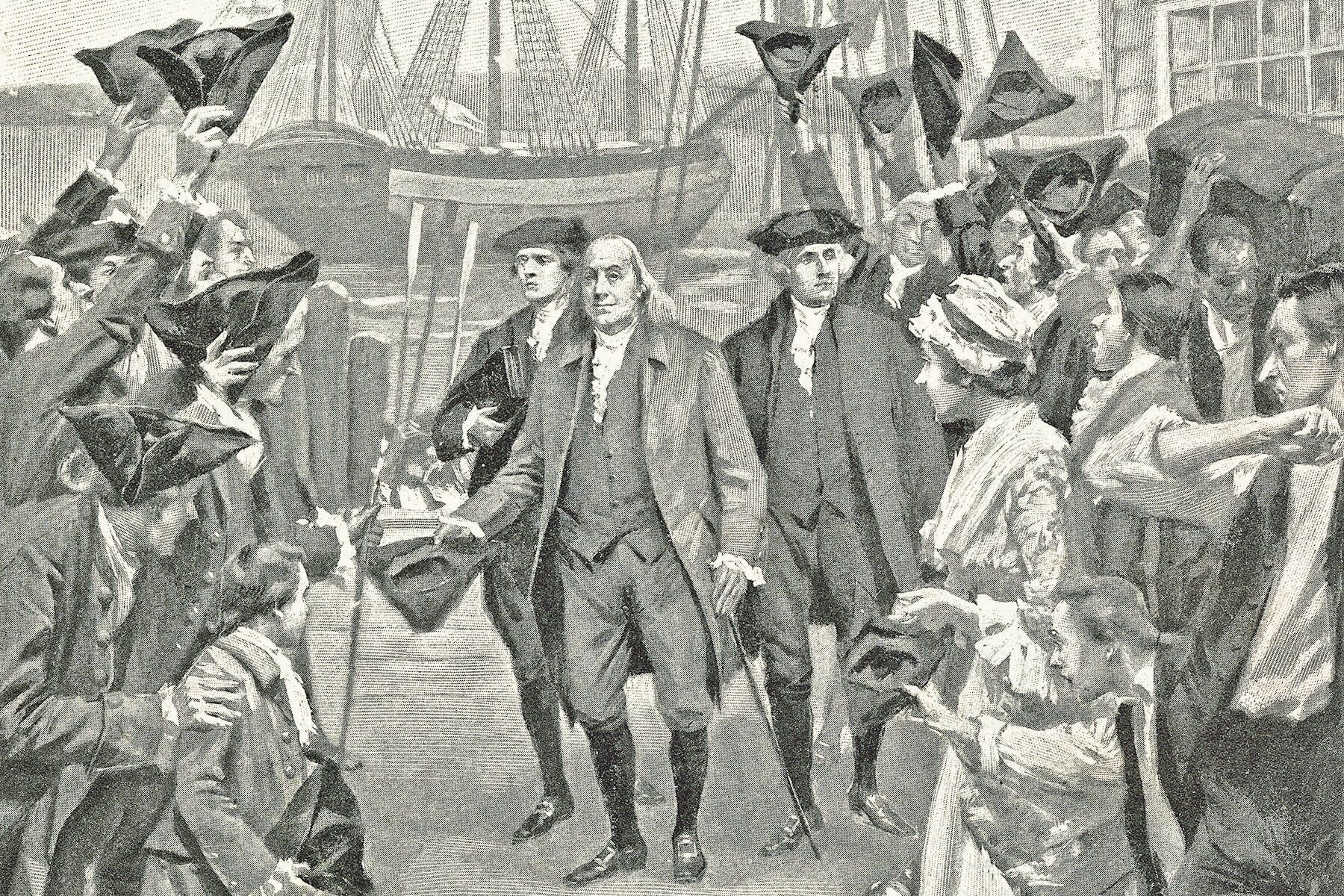
In late 1776, early in the Revolutionary War, Franklin sailed from Philadelphia to France on a diplomatic mission. Although he was ultimately there to secure French support for American independence, he also became somewhat of a style icon. Unlike many of his contemporaries who favored the popular powdered wig of the time, Franklin wore his natural hair unstyled. His clothing was similarly unfussy: Plain suits, a walking stick, and fur hats were his signature sartorial items.
This deliberately simple and very Americana choice of attire, coupled with Franklin’s global reputation, endeared him to the French, and even influenced French fashion. Some women began wearing wigs made to look like his fur cap, a style known as the “coiffure a la Franklin,” and his image appeared in portraits and on medallions and other jewelry. In 1779, Franklin wrote to his daughter about just how popular he had become. “The numbers sold are incredible,” he wrote. “The pictures, busts, and prints, (of which copies upon copies are spread every where) have made your father’s face as well known as that of the moon.”
He Started America’s First Volunteer Fire Department
Many rural communities rely on volunteer fire departments, and their origin is thanks to Franklin’s civic-mindedness. In 1736, he founded the first volunteer fire department of its kind in the U.S., the Union Fire Company in Philadelphia. Unlike Boston’s Mutual Fire Societies, Franklin’s department, sometimes called the “Bucket Brigade,” served the entire community and not just members. The brigade had approximately 30 volunteers to start, fulfilling various roles such as water management, property protection, and training. When attending a fire, each member brought leather buckets to carry water and linen sacks to attempt to save belongings.
Volunteer fire departments aren’t the only enduring and important public service attributed to Franklin, either. In 1731, he established the Library Company of Philadelphia, the first successful public lending library in America, and in 1751, he played a pivotal role in the establishment of Pennsylvania Hospital, one of the first hospitals in the country.
He Invented an Instrument That Was Beloved by Beethoven
Franklin was quite musical, too. Not only did he play instruments such as the guitar and the harp, but in the 1760s, he even invented an instrument of his own. The “glass armonica” consisted of glass bowls of varying sizes, arranged concentrically to eliminate the need for water and mounted on a rounded rod. The rod was moved by a foot pedal, and the glass bowls were played by rubbing one's fingers along their edges. It was meant to produce tones similar to “singing” glasses, something Franklin had seen while living in England.
Following its first public performance in 1762, the armonica became a hit. Marie Antoinette took lessons, Thomas Jefferson was a fan, and Ludwig van Beethoven and Wolfgang Amadeus Mozart both composed music for the novel instrument. Despite its initial popularity, the armonica fell out of favor by the 1820s, due in part to its purported negative effects on mental health — attributed at first to the instrument’s ethereal tones, but later thought to be due to lead poisoning from the paint applied to the bowls. Today, the armonica is used by some niche musicians, a second life that would surely please Franklin, who said the instrument had brought him “the most personal satisfaction.”
Credit: Culture Club/ Hulton Archive via Getty Images
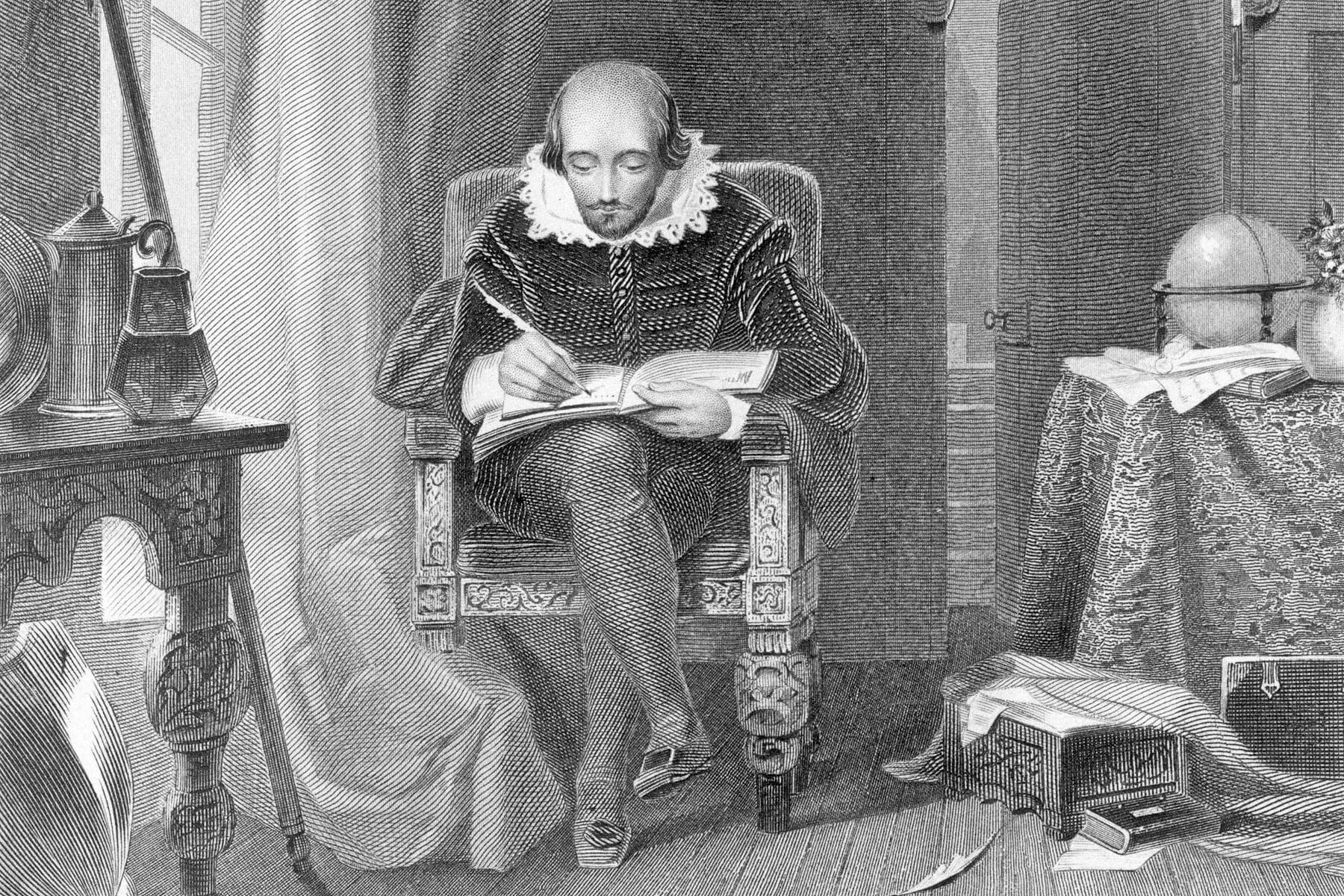
His First Pseudonym Was “Mrs. Silence Dogood”
Franklin was a prolific writer, famously contributing words to the Declaration of Independence and the United States Constitution. But his first prose was published when was just a teenager — and it was done so under the pen name "Mrs. Silence Dogood." He used the name to get published in his brother’s newspaper, TheNew-England Courant, without his brother’s knowledge. Disguising himself as a middle-aged widow, Franklin penned a series of witty and satirical essays that quickly gained popularity with readers.
He penned 14 essays under the pseudonym, one of just many he would use in his life. Some of the others were Polly Baker, a character Franklin used to point out double standards among men and women under the law; the Busy-Body, an American Weekly Mercury character who dabbled in lighthearted societal gossip and relationship talk; and perhaps Franklin’s most famous pseudonym, Richard Saunders, of Poor Richard's Almanack, which was first published in 1732 and lasted for 26 annual editions.
The Gulf Stream is a major ocean current that brings warm water from the Gulf of Mexico into the Atlantic Ocean, significantly influencing weather patterns. Spanish explorer Juan Ponce de León first observed the current in 1513, but it wasn’t until the late 18th century that Franklin became the first to chart out the path of the Gulf Stream on a map.
While serving in London as deputy postmaster general for the American colonies, Franklin noticed a difference in sailing times between westbound and eastbound ships. He consulted his cousin Timothy Folger, a Nantucket whaler with deep knowledge of the area, who provided his insights into the powerful current. Together, Franklin and Folger charted the waters, and published their findings on a map in 1768, the first known physical depiction of what they termed the “Gulph Stream.” The map was distributed to Franklin’s mail ships, and the knowledge served as the basis of future Gulf study by the United States Coast Survey.
Advertisement
Advertisement
Famous Historical Figures You Didn’t Know Were Related
Credit: Bettmann via Getty Images ; Heritage Images/ Hulton Archive via Getty Images
Author Rachel Gresh
March 21, 2024
Love it?50
Some family trees seem primed for the history books, from the Medicis and Habsburgs to the Rockefellers and Kennedys. These historical relations prove that family does indeed matter. Take for instance the two father-son duos that became U.S. Presidents: John Adams and John Quincy Adams, and George H.W. Bush and George W. Bush. There’s also Queen Victoria of England’s many grandchildren to consider. These famous cousins — among them King George V of Britain, Kaiser Wilhelm II of Germany, and Tsar Nicholas II of Russia (by marriage to Victoria’s granddaughter Alexandra) — went on to rule much of Europe.
Other famous family connections aren’t as obvious, such as the relationship between the real-life inspiration for Dracula and Queen Elizabeth II, or the distant connection between two trailblazing women, Amelia Earhart and Laura Ingalls Wilder. Here are five of the most surprising family ties in history.
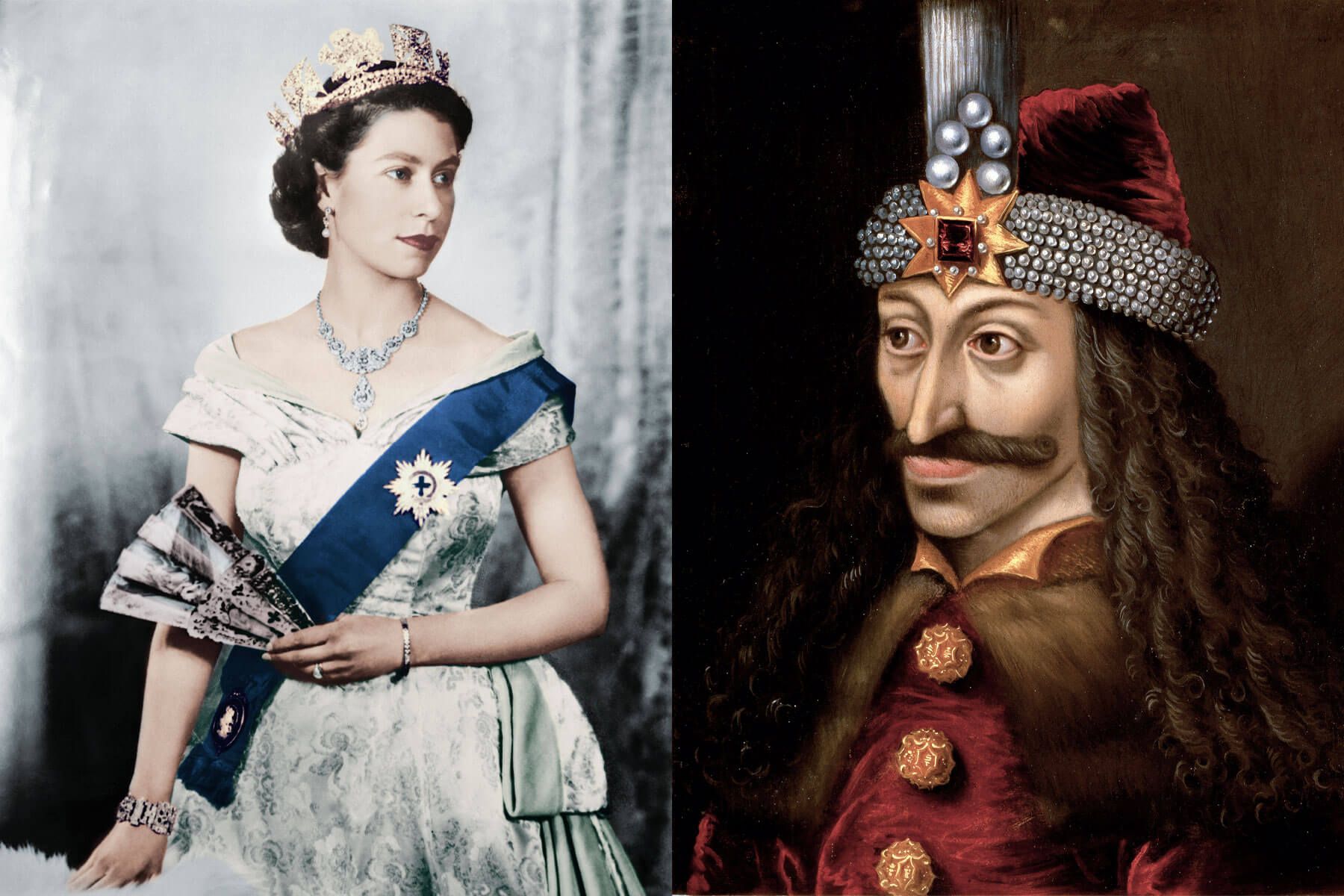
One of Europe’s most mild-tempered monarchs was distantly related to none other than Vlad III, more commonly known as Vlad the Impaler, a ruthless 15th-century Romanian prince who likely inspired Bram Stoker’s Dracula. The relation comes from Queen Elizabeth II’s grandmother Mary of Teck (a princess from Germany’s Württemberg dynasty), who was the wife of England’s King George V. Mary of Teck was a descendant of the merciless Romanian ruler, who had a reputation for executing many of his subjects. The surprising connection between Vlad III and the British royal family has also been acknowledged by Queen Elizabeth II’s son King Charles III, who owns a home in Transylvania (where Vlad once ruled) and is involved in conservation efforts to save the region’s forests.
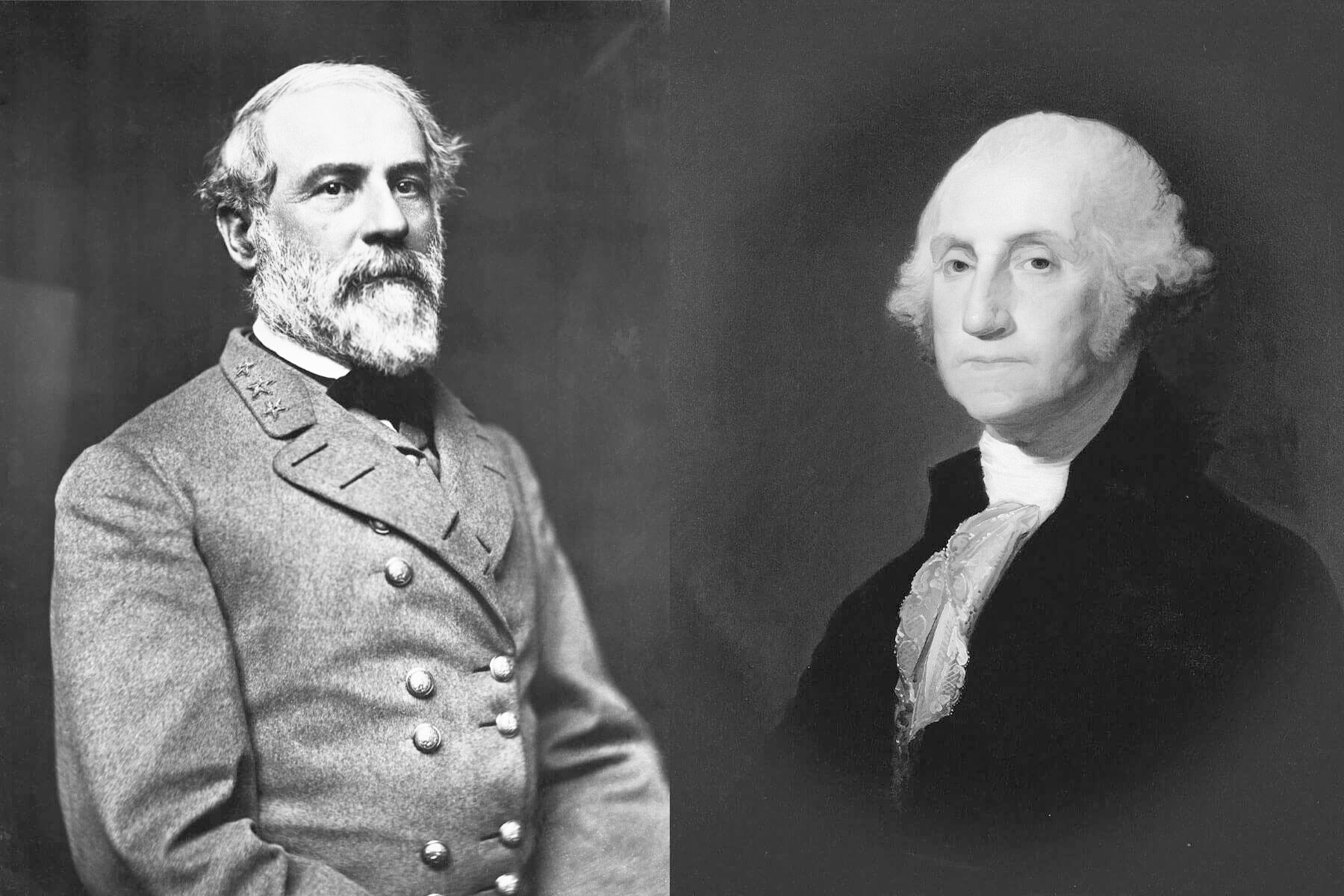
These two Americans were born in Virginia’s Westmoreland County 75 years apart (in 1732 and 1807, respectively), and served as senior generals in two of America’s most influential wars — the Revolutionary War and Civil War. Confederate General Robert E. Lee married Mary Anna Randolph Custis, the daughter of Martha Washington’s grandson (from her first marriage). This means he was also related, by marriage, to the first President of the United States, George Washington. And the unlikely connection between the two figures doesn’t stop there. After the Civil War, Lee became president of Washington and Lee University in Lexington, Virginia, which was named after both men.
Aviation pioneer Amelia Earhart and acclaimed author Laura Ingalls Wilder are both renowned figures of the 20th century. They’re also distant relatives. Amelia Earhart is remembered as the first female pilot to complete a solo flight across the Atlantic Ocean. Further proving that adventure runs in her bloodline, Earhart is a descendant of Mayflower passenger Richard Warren, and Wilder is descended from the same man. Though the relation is distant (possibly eighth cousins once removed), there are some undeniable similarities between the two women. Both are from Kansas, the setting of part of Wilder’s most famous book, Little House on the Prairie, and Wilder published her first book, Little House in the Big Woods, in 1932, the same year that Earhart made her famous transatlantic flight.
Two of the most famous female monarchs in history were first cousins once removed — despite the fact that they never met, and one ordered to have the other executed. Mary, Queen of Scots, was the daughter of King James V of Scotland and his French wife, Mary of Guise. Her great-uncle was King Henry VIII of England, the father of Queen Elizabeth I (whose mother was Anne Boleyn). Mary and Elizabeth shared the same royal grandparents, King Henry VII and Elizabeth of York, but the cousins were forced to be enemies due to years of violent wars over the English and Scottish thrones. After decades of keeping Mary imprisoned for fear that she would overtake England, Elizabeth ordered the execution of her cousin at Fotheringhay Castle in 1587.
Advertisement
Advertisement
Credit: MPI/ Archive Photos via Getty Images ; Bettmann via Getty Images
Presidents James Madison and Zachary Taylor
The fourth President of the United States, James Madison, and the 12th President, Zachary Taylor, were second cousins. They share a great-grandfather, Colonel James Taylor of Virginia. The two politicians were alive at the same time and were known to correspond occasionally. Madison, one of the Founding Fathers, created the framework for the U.S. Constitution and also had a hand in initiating the War of 1812 against Great Britain. Taylor was a member of the Whig Party and died 16 months into office in 1850. He was a captain in the War of 1812 and later became one of the top generals in the Mexican-American War. In 1849, while serving as President, Taylor held a funeral in Washington, D.C., to honor his late cousin’s wife, Dolley Madison.
Credit: Stock Montage/ Archive Photos via Getty ; Archive Photos via Getty Images
Conquistadors Hernán Cortés and Francisco Pizarro
Francisco Pizarro and Hernán Cortés were 16th-century Spanish conquistadors known for colonizing much of Peru and Mexico, respectively. They were also distant cousins. The family connection was through Cortés’ maternal grandmother, Leonor Pizarro, who was related to Pizarro’s ancestors. The duo didn’t work together but traveled to Central and South America around the same time. Pizarro conquered the Inca Empire and founded the city of Lima, Peru, while Cortés overthrew the Aztec Empire and took control of Mexico for the Spanish crown. Pizarro was killed in his palace in Lima in 1541 by rival conquistador Diego de Almagro. Cortés wished to return to Mexico before his death, but he died in 1547 in Seville, Spain, disgraced after being accused of poisoning the colonial governor, Luis Ponce de León.
This talented mother-daughter duo is credited with writing some of the most celebrated works in English literature, though their styles and subjects are very different. Mary Wollstonecraft was an early feminist who penned 1792’s A Vindication of the Rights of Woman, a scathing review of gender inequalities, which argued that young girls should receive the same education as boys. It is among the first prominent feminist works, and Wollstonecraft is regarded as one of the founders of feminist philosophy. Her daughter, who was also named Mary Wollstonecraft and became Mary Shelley upon her marriage to poet Percy Shelley, became a famous writer in her own right. But Shelley took a different path than her mother, gravitating toward fiction. She published her most famous novel, Frankenstein; or, The Modern Prometheus, in 1818. Like her mother, Shelley was considered a trailblazer in her writing discipline, and Frankenstein is regarded as one of the first science fiction novels.
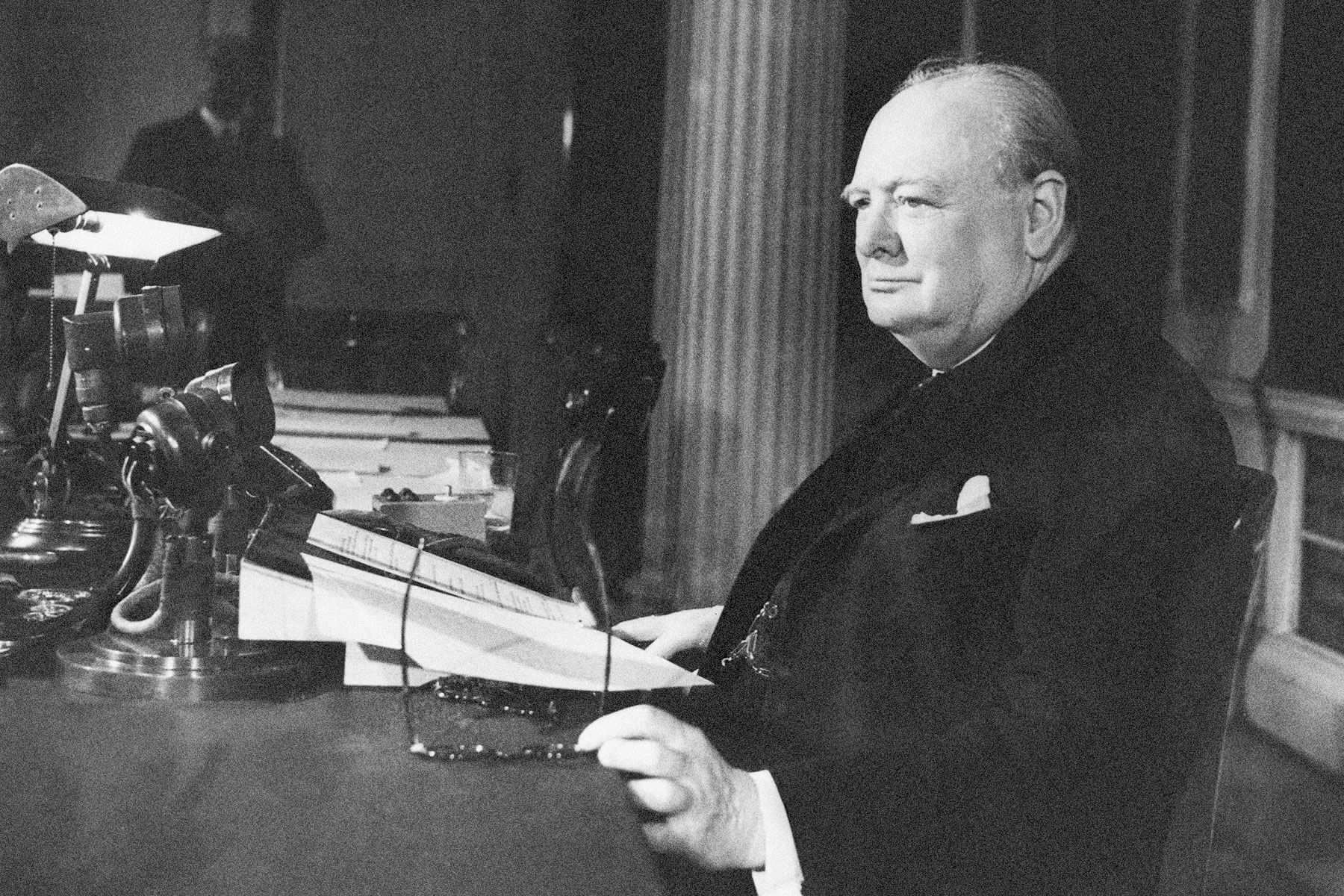
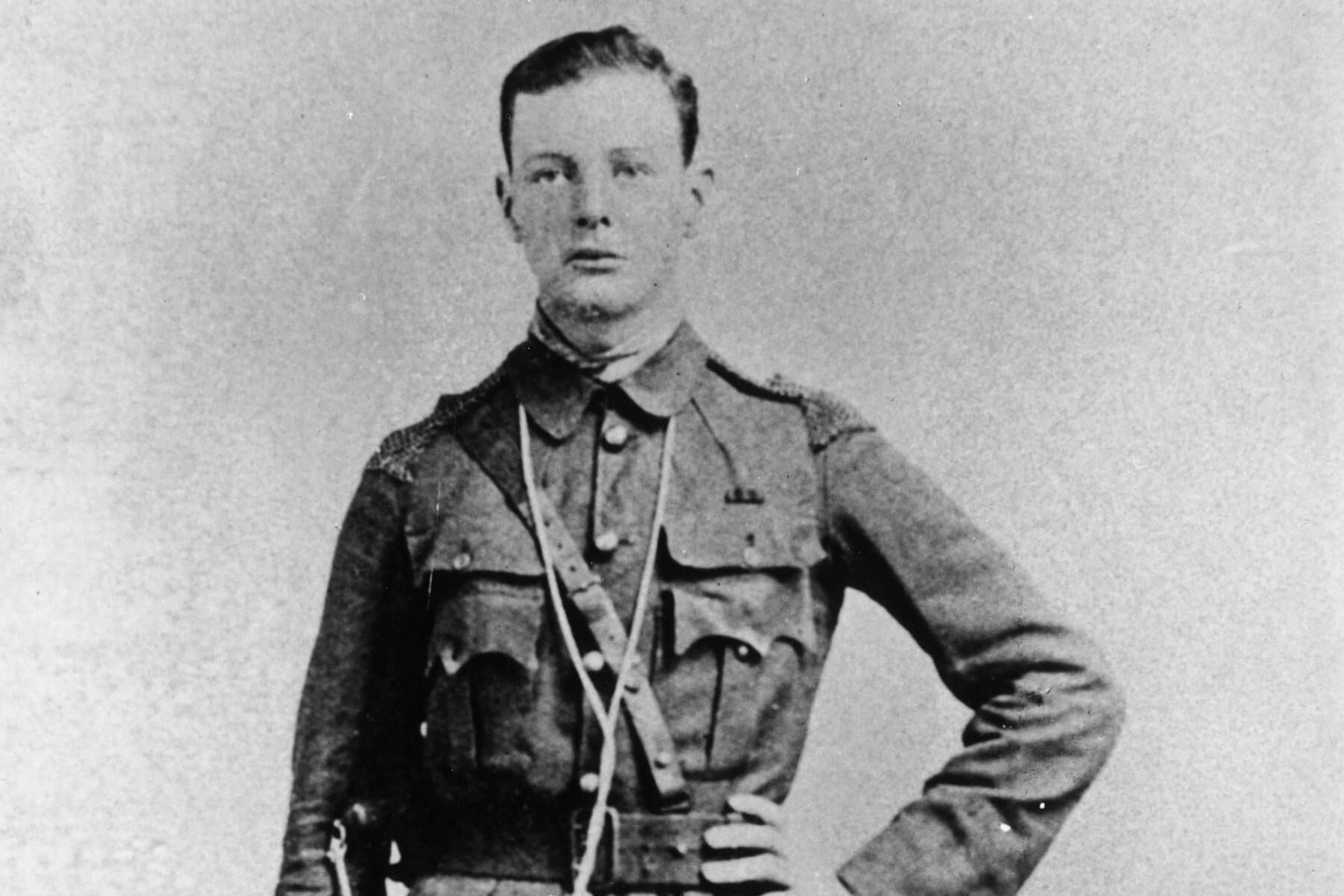
Winston Churchill is widely regarded as one of the greatest leaders of the 20th century, especially for his role in guiding Britain and the Allies to victory in World War II. Born in 1874 to an aristocratic family that included his prominent politician father, Lord Randolph Churchill, and American socialite mother, Jennie Jerome, Churchill spent his childhood largely in the care of a nanny and in boarding school, where he struggled to keep up academically. At age 18, he enrolled in the Royal Military College, a major achievement for the young boy who had an early interest in the military and also saw it as a distinct path into politics. After a four-year stint serving as both a soldier and war correspondent around the world, Churchill resigned from the army in 1899 to focus on his career as a writer and politician.
Churchill went on to hold a variety of political positions in both the Liberal and Conservative parties, including first lord of the admiralty, chancellor of the exchequer, secretary of state for war, and, of course, prime minister of the United Kingdom. He also became a prolific and celebrated writer and a renowned orator, whose powerful speeches, such as his famous “We shall fight on the beaches” address, inspired both his country and people around the world. Churchill was known for his eloquence, courage, wit, and vision, but he wasn’t without his faults, and his controversial views on imperialism, race, and social reform remain an equally entrenched part of his legacy. Churchill died in 1965 at the age of 90, remaining to some one of the greatest Brits of all time.
Photo credit: Keystone/ Hulton Archive via Getty Images
Churchill Did a Stint as a War Correspondent
Churchill struggled through his school years in nearly every subject, history and English being the exceptions. His father steered him away from academics and toward a military career, where it took Churchill three attempts to get into the Royal Military College at Sandhurst (now the Royal Military Academy Sandhurst). In 1895, he joined the 4th Queen’s Own Hussars cavalry unit, and made his first army trip to Cuba — but not for combat. Churchill took a short leave to report on the Cuban War of Independence for London’s Daily Graphic. In 1896, his regiment was deployed to India, where he served as both a soldier and a journalist; his dispatches were later compiled into The Story of the Malakand Field Force, his first of many published nonfiction works. His journalism even led Churchill to a notable moment in his young career. While covering the Boer War in South Africa for The Morning Post, he and members of the British army were captured and taken to a prisoner-of-war camp. He escaped by scaling a wall in the dark of night, returning a hero.
Photo credit: WPA Pool/ Getty Images Entertainment via Getty Images
He Was Awarded the Nobel Prize in Literature in 1953
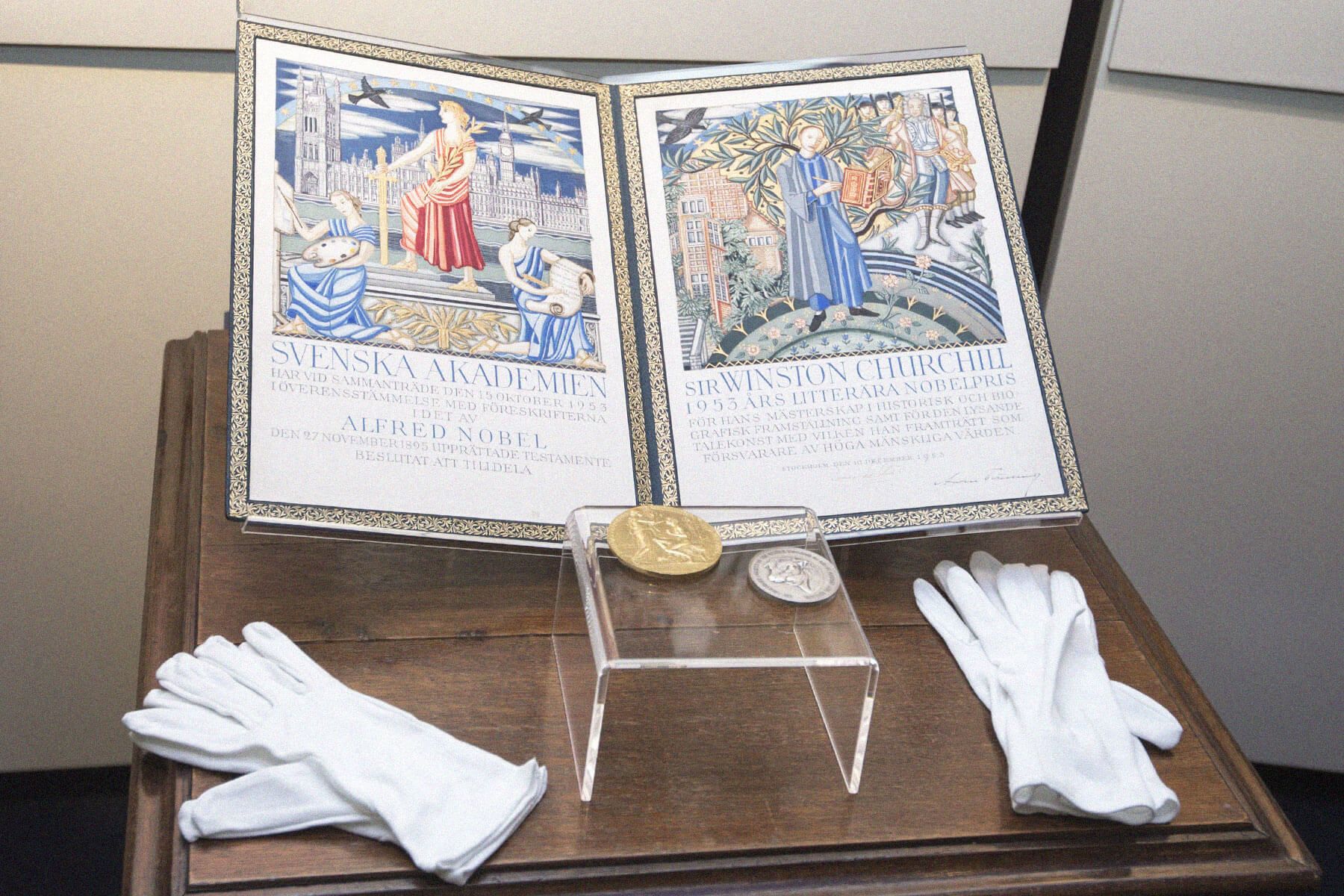
Churchill’s war reporting marked the beginning of an esteemed literary career. His first major work following his war dispatch collections was a 1906 biography of his father, titled Lord Randolph Churchill; he also wrote a four-volume biography of his ancestor, the Duke of Marlborough. Churchill’s most famous works, however, are his histories of the two world wars, which he both witnessed and shaped. The World Crisis covers the First World War and its aftermath, while The Second World War, throughout six volumes, details the global conflict that made him a legendary leader. Churchill also published several collections of speeches and essays, as well as a book on his hobby of painting, Painting as a Pastime. In 1953, his work earned him the Nobel Prize in literature, awarded “for his mastery of historical and biographical description as well as for brilliant oratory in defending exalted human values.” As high an honor as it was, it’s believed that what Churchill truly wanted was the Nobel Peace Prize.
He Was the First Official Honorary Citizen of the United States
On April 9, 1963, President John F. Kennedy declared Churchill an honorary citizen of the United States, making the former British prime minister the first person to officially have the distinction. “In the dark days and darker nights when England stood alone… he mobilized the English language and sent it into battle,” Kennedy said of Churchill during the ceremony. “The incandescent quality of his words illuminated the courage of his countrymen… By adding his name to our rolls, we mean to honor him — but his acceptance honors us far more.”
Despite the surety of Kennedy’s words at the time, granting Churchill the title was an arduous process. American journalist Kay Halle had pushed for the honor as early as 1957, but a debate dragged on, and Kennedy eventually informed Halle in 1962 that such a move would be unconstitutional (he proposed naming a Navy ship after Churchill instead). Some progress was made later that year, but the matter languished in legislative limbo. In early 1963, with concerns about the aging politician’s health, the U.S. Senate passed a resolution making the distinction constitutional, and just seven days later, Churchill’s honorary citizenship ceremony took place.
He Was the First British Prime Minister to Top the Pop Music Charts
Churchill’s life and career was rife with accolades, but one of his more unusual accomplishments was being the first British prime minister to earn a spot on the pop music charts — not once, but twice. The first time was in 1965, shortly after his death, when a recording of his speeches called The Voice Of reached No. 6 on the Official U.K. Albums Chart. The second Top 10 hit came in 2010, when the Central Band of the Royal Air Force released an album called Reach for the Skies, commemorating the 70th anniversary of the Battle of Britain. The album featured some of Churchill's World War II speeches set to music, and it sat on the charts alongside contemporary acts including Mumford and Sons, KT Tunstall, and the Killers frontman Brandon Flowers.
Advertisement
Advertisement
Photo credit: Reg Speller/ Hulton Archive via Getty Images
He Served as Prime Minister Two Separate Times
Despite proving himself to be a popular prime minister who led his country to victory during World War II, Churchill was defeated in the 1945 general election by the Labor Party leader Clement Attlee. The Labor Party at the time was strongly influenced by the Beveridge Report, a 1942 government document that outlined the need for greater social support for Brits following the war, including an emphasis on social security, affordable housing, and health care. In contrast, Churchill’s Conservatives focused on lowering taxes and maintaining defense spending. The need for social reform weighed on the minds of voters, and they gave the Labor Party a landslide victory at the polls. Six years later, however, after the party failed to fully deliver on promises of radical social and economic change, Churchill was voted back into office. Just shy of his 77th birthday at the time, the leader had already begun to experience strokes, and suffered several more during his second run as PM. On April 5, 1955, the 80-year-old Churchill finally retired.
Photo credit: Chris Ware/ Hulton Archive via Getty Images
He Was a Member of a Bricklayer’s Union
Churchill famously wore many hats, including politician, writer, painter, master orator — and bricklayer. He could often be found building walls for his garden and he constructed a cottage for his daughters at his Chartwell estate in Kent. He once described the physical labor as a “delightful” contrast to his intellectual work, committing to putting down “200 bricks and 2,000 words a day.” In 1928, a photo of Churchill working at his property appeared in the press; his skills were criticized by some, but encouraged by James Lane, the mayor of Battersea and the organizer of the local chapter of the Amalgamated Union of Building Trade Workers (AUBTW). Lane invited Churchill to join, and after some initial hesitation, on October 10, 1928, Churchill was inducted into the union. His membership card read: “Winston S. Churchill, Westerham, Kent. Occupation, bricklayer.”
Advertisement
Advertisement
Photo credit: Keystone/ Hulton Archive via Getty Images
The First Known Use of “OMG” Was in a Letter to Churchill
The now-ubiquitous “OMG,” an abbreviation meaning “Oh my God,” started popping up in text messages and online chats in the 1990s and early 2000s, but the first known use of the term was actually in a letter to Winston Churchill during World War I. Sent by retired British navy Admiral John Arbuthnot Fisher, the letter was in reaction to newspaper reports at the time, as Fisher criticized Britain's WWI strategies. At the end of his letter, Fisher snarkily wrote, “I hear that a new order of knighthood is on the tapis” (meaning “on the table”). “O.M.G. — Oh! My God! Shower it on the Admiralty!!” The retired admiral in all his sarcasm was already in his 70s at the time, but his quip laid the groundwork for an entire youth linguistic revolution.
Advertisement
Advertisement
5 Facts About the Infamous Crime Duo Bonnie and Clyde
American Stock Archive/ Archive Photos via Getty Images
Author Kristina Wright
August 2, 2023
Love it?94
In January 1930, Clyde Barrow and Bonnie Parker met at a friend’s house in Dallas, Texas, and, as the legend goes, it was love at first sight. Their budding courtship was disrupted when Clyde was jailed a month later in Waco, but at Clyde’s request, Bonnie smuggled a gun into the jail, allowing Clyde and two other convicts to escape. It was a temporary freedom, however, as Clyde was soon captured in Ohio and extradited to Texas, serving almost two years in prison before being paroled in February 1932. Bonnie and Clyde were reunited soon after, and Bonnie became part of the Barrow Gang, which included several of Clyde’s friends, his brother Buck, and Buck’s wife, Blanche.
The news stories of Bonnie and Clyde’s criminal adventures captivated a downtrodden nation at the height of the Great Depression. Their outlaw antics and unlikely love story helped turn the gangster and his moll into folk heroes akin to Robin Hood and Maid Marian or Romeo and Juliet. But it wasn’t meant to last. After an increasingly violent crime spree that stretched almost two years, the pair was ambushed and killed by law enforcement in Louisiana in 1934. Their deaths made headlines across the nation, and thousands of people attended their funerals.
Over the years, the exploits of Bonnie and Clyde became synonymous with a kind of romantic lawlessness usually reserved for tales of the Wild West. Here are five surprising facts about one of the most infamous crime duos in American history.
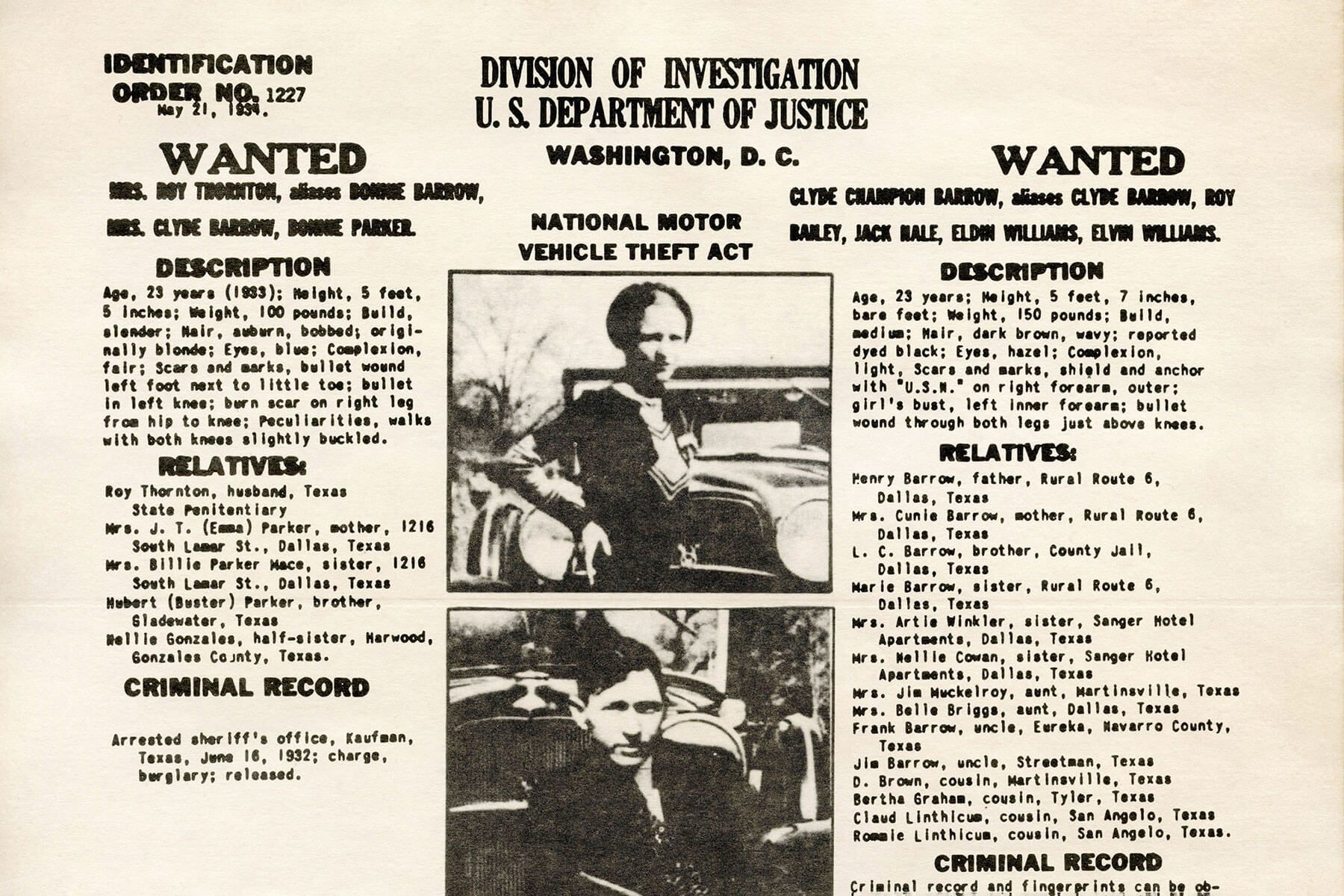
Bonnie and Clyde were partners in crime who became immortalized in myth and legend — but they were never married, because Bonnie already had a husband. In 1926, just a few days before she turned 16, Bonnie Parker married her high school sweetheart, Roy Thornton. Their marriage was tumultuous and Thornton was often absent or in trouble with the law. The couple separated numerous times, and Bonnie’s mother Emma recommended divorce, but Bonnie refused. Though she was identified as “Mrs. Roy Thornton” in wanted posters and was still wearing her wedding ring when she was killed, Bonnie personally reverted to her maiden name, and her tombstone reads “Bonnie Parker.” Thornton, who was in prison for robbery when he learned of Bonnie’s death, said, “I’m glad they went out like they did. It’s much better than being caught.” Thornton was shot and killed three years later during an attempted prison break.
Their Own Photos Contributed to Their Notoriety as Outlaws
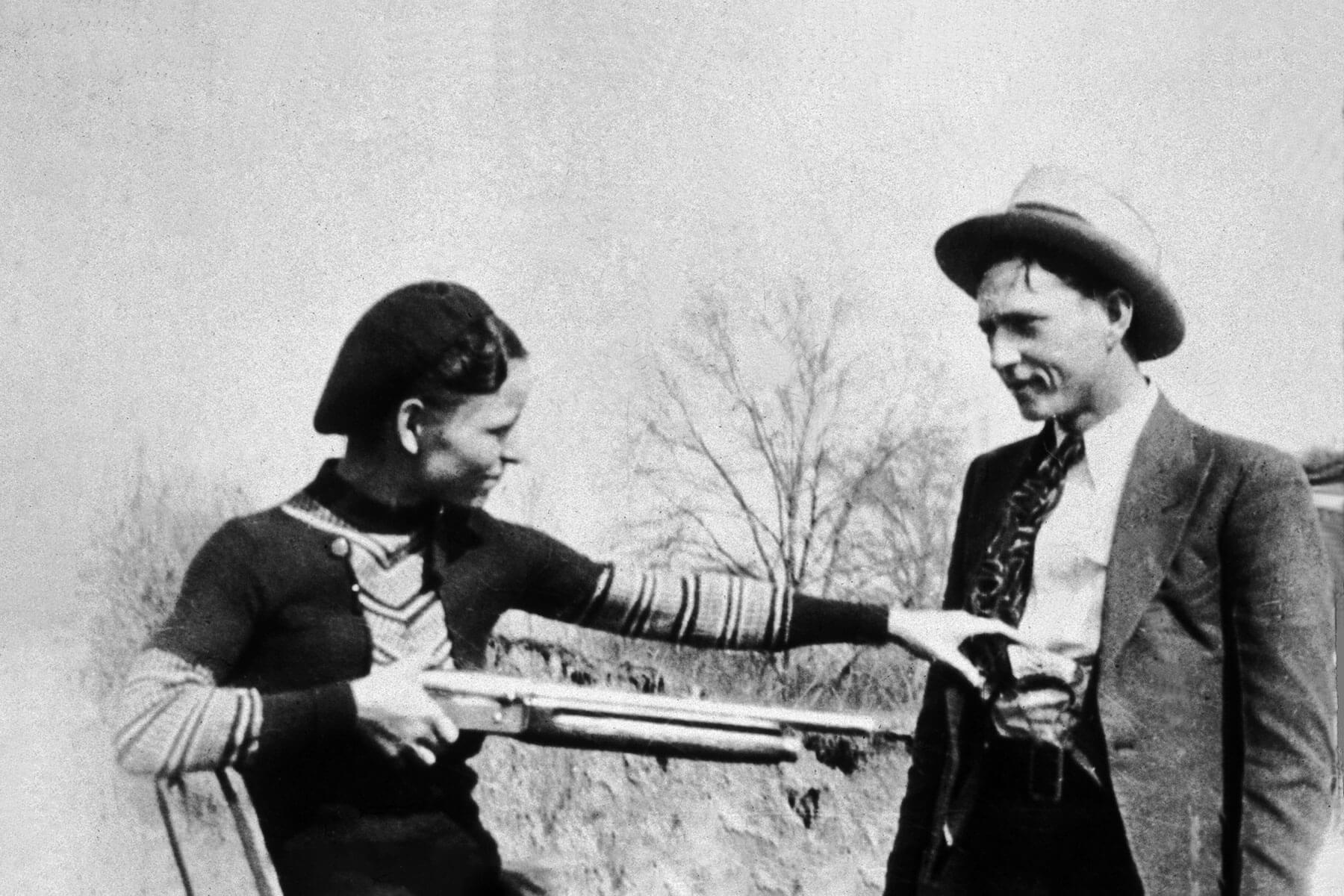
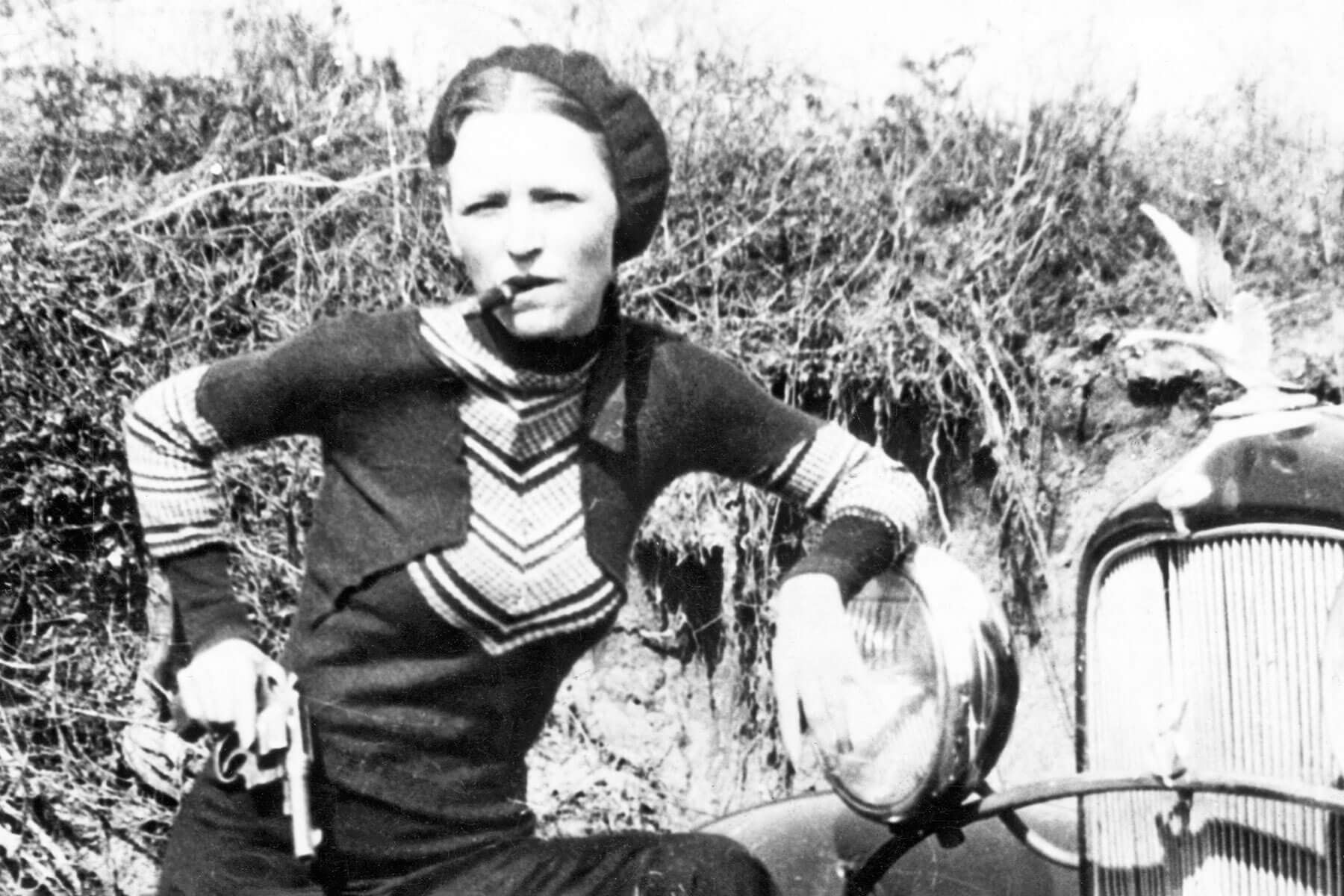
When law enforcement raided a Barrow Gang hideout in Joplin, Missouri, officers recovered a camera and undeveloped film. The prints were developed and a few of the shots of Bonnie and Clyde ran in newspapers and tabloids. In one, Bonnie pointed a rifle at Clyde; in another, she had a cigar in her mouth and was holding a revolver. The images contributed to the couple’s notoriety, leading newspapers to describe Bonnie as a “cigar-smoking gun-moll.” But Bonnie’s cigar was just a prop borrowed from another member of the gang. “Tell them I don’t smoke cigars,” she later told a police officer they’d taken hostage and released, when he asked what she wanted the press to know. As for the guns she posed with, there’s no evidence that Bonnie ever killed, or even fired at, anyone. The FBI describes Bonnie’s criminal association with Clyde this way: “Though she probably never fired a shot, she was his willing accomplice.”
Photo credit: Hulton Archive/ Archive Photos via Getty Images
They Both Wrote Poetry About Their Life of Crime
In 2019, a collection of written material connected to Bonnie and Clyde was auctioned, including several poems attributed to the couple. Before dropping out of school to marry Thornton, Bonnie showed academic promise and enjoyed writing poetry. Even when she joined the Barrow Gang, she continued to pen poems. In a final visit with her family less than two weeks before she and Clyde were killed in Louisiana, Bonnie gave a copy of her poem “The Story of Bonnie and Clyde” to her mother. In the final lines of her poem, Bonnie acknowledged their inevitable end: “Some day they’ll go down together / And they’ll bury them side by side / To few it’ll be grief, to the law a relief / But it’s death for Bonnie and Clyde.” In a poem attributed to Clyde, he wrote, “Bonnie’s just written a poem / The Story of Bonnie and Clyde. / So I will try my hand at poetry / with her riding by my side.” He ended the poem acknowledging that Bonnie was the better writer but, like her, he seemed resigned to their deadly fate.
One of the reasons Bonnie and Clyde were able to elude police for so long was that they were constantly on the run. With law enforcement pursuing them across the Midwest and Southwest — in Arkansas, Illinois, Iowa, Louisiana, Missouri, Oklahoma, Kansas, and Texas — the couple resorted to setting up camp in rural areas and sleeping in cars they had stolen. Once there was enough evidence to pursue federal interstate auto theft charges, the FBI became involved in the chase, and it was only a matter of time before the infamous duo was caught. Today, the stolen car in which Bonnie and Clyde died is on display outside Las Vegas. Visitors to Primm Valley Casino Resorts can see the bullet-riddled 1934 V8 Ford sedan as well as the shirt Clyde was wearing when he was killed. The casino is believed to have paid $250,000 for the car in 1988.
The 1967 Film Was a Hit, But It’s More Myth Than Truth
Following Bonnie and Clyde’s highly publicized deaths on May 23, 1934, their funerals were held on different days and they were buried in different cemeteries, despite Bonnie’s wishes. Their story was told, and retold, by family members and strangers, but for the most part it was just another tragic tale relegated to the annals of true crime history. The 1967 film Bonnie and Clyde, starring Faye Dunaway and Warren Beatty, changed that forever, resurrecting Bonnie and Clyde’s legend for the counterculture generation of the 1960s. The film portrayed the couple as glamorous, reckless gangsters who would rather die than surrender. However, Bonnie and Clyde biographer Jeff Guinn said the silver screen portrayal was “less than 5% historically accurate,” glossing over the grim reality of two young lovers from impoverished backgrounds who felt they had nothing left to lose. Despite the inaccuracies, Bonnie and Clyde became a seminal film of the New Hollywood era, hailed by film critic Roger Ebert as “a milestone in the history of American movies.”
There are few individuals in European history as influential as Napoleon Bonaparte. The historic leader is remembered for his iconic bicorn hat, his allegedly short stature (a bit unfairly, since he was actually of average height for his time), and his singular military skill. During his lifetime, Napoleon went from a student in a French military academy to the ruler of an empire that spanned nearly all of continental Europe. By the time he was finally defeated in 1815, his series of conquests, known as the Napoleonic Wars, had changed the European continent forever. Here are seven facts about Napoleon Bonaparte that offer a small glimpse into his spectacular rise and fall.
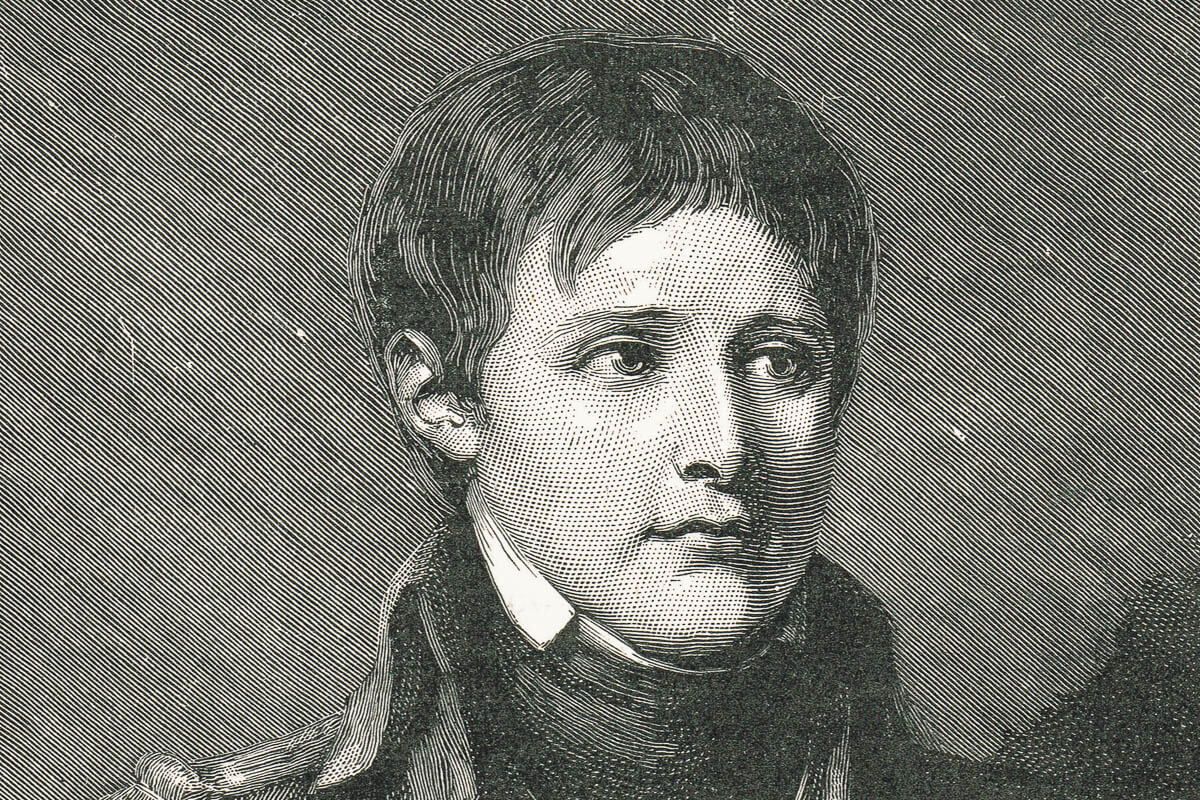
Despite the central role Napoleon played in the history of France, he didn’t start learning to speak French until he was 9 years old. Napoleon was born on the Mediterranean island of Corsica, where most people spoke a regional dialect of Italian, and this was the language he grew up speaking. He spoke with a Corsican accent throughout his life, and even after he became emperor of France, this accent continued to mark him as a foreigner on the French mainland and served as a reminder of his Mediterranean origins.
The Rosetta Stone Was Discovered by One of His Soldiers
The Rosetta Stone is one of the greatest discoveries in the history of archaeology, proving crucial to the translation of Egyptian hieroglyphs. Yet it was discovered not by a scientist or researcher, but by a soldier in Napoleon’s army, officer Pierre-François Xavier Bouchard. In 1799, Napoleon was a young general and rising military star attempting to conquer Egypt (and in so doing, disrupt British trade routes in the Middle East and threaten British possessions in India). Napoleon’s troops uncovered the Rosetta Stone while preparing for battle in Alexandria, and the general had the stone transported to Cairo for study. The Rosetta Stone remained there until 1801, when Napoleon’s forces in Egypt were defeated by the British and the artifact was transported to the British Museum in London, where it remains to this day.
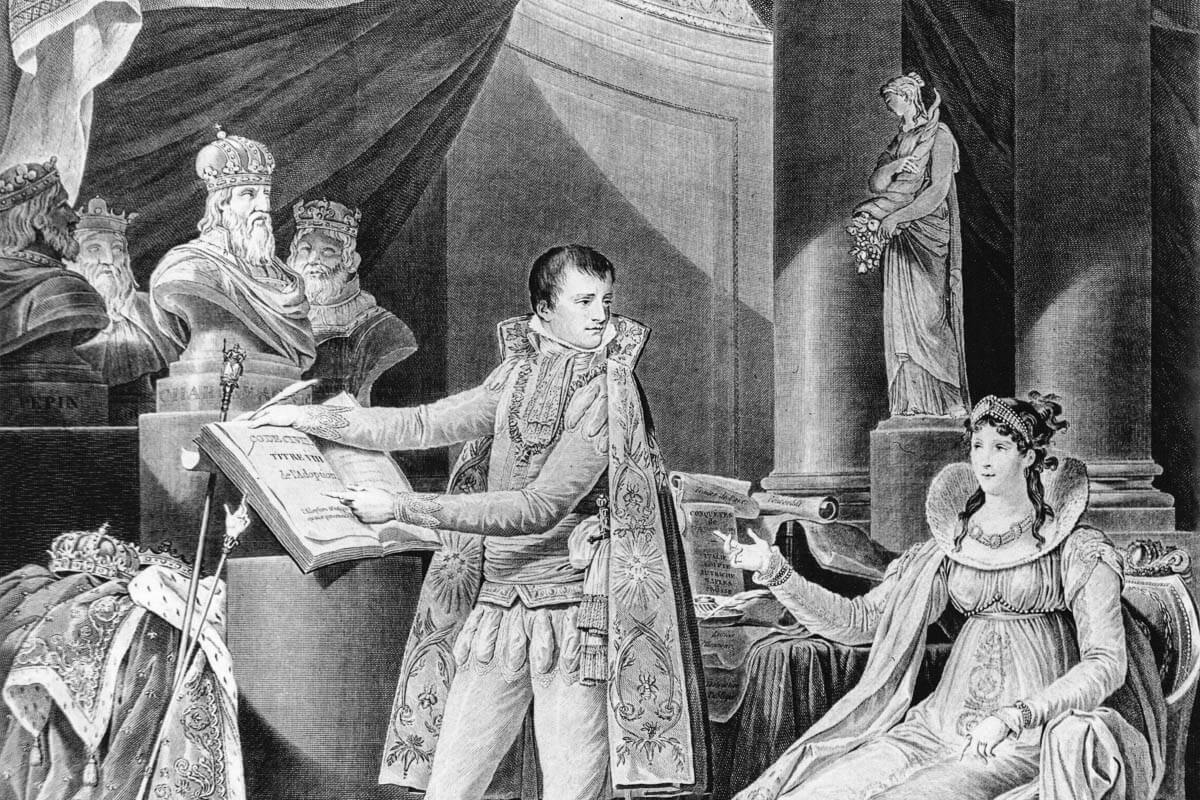
As Napoleon’s hold over France grew, the leader began to introduce new ways of governing the people under his control. One method involved introducing a standardized set of laws known as the Napoleonic Code, which were enforced both in France and in every new territory the general conquered. The laws outlined in the code addressed nearly all aspects of life, from individual rights to property law to marriage and divorce. The Napoleonic Code was extremely influential, and several countries, including Belgium, Luxembourg, and Monaco, still use it in some form today.
Shortly after declaring himself emperor of France, Napoleon pulled one of the biggest power moves in the history of art collecting: He had the “Mona Lisa” moved to his private bedchambers for his own personal viewing pleasure. Napoleon was enchanted by the enigmatic woman depicted in Leonardo da Vinci’s masterpiece (he referred to her as “Madame Lisa” and the “Sphinx of the Occident”), and this new arrangement allowed him to contemplate her mysterious beauty for as long as he wanted. The “Mona Lisa” hung in Napoleon’s bedroom for four years, until it was transferred to the Grand Gallery of the Louvre Museum in 1804.
Napoleon had a rocky relationship with the Vatican throughout his reign, and on two different occasions, tensions between the general and the papacy got so severe that Napoleon felt compelled to kidnap the pope. The first incident occurred in 1798, when Napoleon was still a young commander in the French army and had captured Pope Pius VI in order to help defend France against a Vatican-supported European coalition opposed to the French Revolution. Napoleon’s forces invaded Italy, and Pope Pius VI was taken by force to France, where he died a prisoner 18 months later. Napoleon returned to his pope-snatching ways in 1809, when he ordered French forces to kidnap Pius VI’s successor, Pope Pius VII, from his home in Rome and smuggle him out of the city. The kidnapping was the culmination of long-escalating political tensions, and the pope remained Napoleon’s prisoner until the emperor was forced to abdicate the throne in 1814.
Advertisement
Advertisement
Photo credit: Heritage Images/ Hulton Fine Art Collection via Getty Images
He Went From Ruling Europe to Ruling an Island of Only 12,000 People
After his catastrophic failed invasion of Russia, Napoleon was forced to abdicate his throne as the self-proclaimed emperor of France. In 1814, he was exiled to the small island of Elba off the coast of Tuscany. Though Napoleon was granted control over the Principality of Elba, going from the leader of the sprawling French Empire to the leader of Elba was a significant demotion. In 1811, Napoleon’s empire had encompassed practically the whole European continent, while Elba was an 86-square-mile island with some 12,000 residents. In 1812, Napoleon had commanded an army of 600,000 men, while his military forces on Elba consisted of fewer than 1,000 soldiers and a navy with only one ship. Apparently, Napoleon wasn’t too concerned about this decrease in fighting power; just 300 days into his exile, he escaped from Elba with his reduced army to reclaim his throne in France.
He Was Exiled Two Different Times to Two Different Islands
The first time Napoleon surrendered, he was banished to Elba. When the emperor surrendered a second time, after escaping from Elba in 1815 and once again plunging Europe into war, his enemies decided that he had to be banished to an island that was much farther away. After being defeated at the Battle of Waterloo, Napoleon was exiled to St. Helena, which was 1,200 miles from the nearest mainland, on the western coast of Africa. The total isolation of the island, along with his declining health, guaranteed that Napoleon would never return to Europe again, and he remained on St. Helena until his death in 1821.
Photo credit: Universal History Archive / Universal Images Group Editorial via Getty Images
Author Bennett Kleinman
June 12, 2023
Love it?119
Of all of history’s greatest leaders, few if any have held as much power and influence as the mighty Mongol ruler Genghis Khan. As founder of the Mongol Empire, Genghis laid waste to all who stood in his way en route to controlling a large swath of Asia during the early 13th century. Though Genghis was undeniably ruthless in his conquests, he was also a cunning tactician whose skills made him wildly effective in his imperialist efforts.
Genghis Khan lived from 1162 until 1227, rising from the ranks of relative obscurity to unify a once-scattered Steppe region in modern Mongolia and other parts of Central Asia. At the height of his power, no man was more feared or revered than Genghis, whose success as a conqueror led to one of the largest empires in history. Genghis Khan’s impact on global history is undeniable, and there’s much to be discussed about his life. Here are five facts about the infamous leader of the Mongols.
Photo credit: Culture Club / Hulton Archive via Getty Images
Genghis Khan’s Birth Name Was Temüjin
Though he’s best known as Genghis Khan, that name was actually bestowed on the Mongol leader later in life. At birth, he was known as Temüjin, derived from the Turkic wordtemür, meaning “iron.” The name was an apt descriptor of the boy who would grow up to become a brutal warrior after being forced into a leadership role at a young age. After Temüjin’s father was poisoned when Temüjin was around 10 years old, the family was abandoned by their clan, forcing the boy to look after his mother and siblings. He showcased leadership skills from an early age, and spent the ensuing years conquering countless nomadic Steppe tribes. As recognition for his efforts, Mongol nobles gave him the name Chinggis Khan — Genghis Khan in the Western spelling — a title that roughly translates to “Universal Ruler.”
Photo credit: Christophel Fine Art / Universal Images Group Editorial via Getty Images
He Was Tolerant of Many Different Religions
Genghis Khan was an undeniably vicious ruler with little regard for human life, as he brutally massacred an estimated 40 million people in the name of expanding his empire, often inflicting harsh punishments on any that stood in his way. But Genghis Khan was also an early and unlikely proponent of religious tolerance. Though he himself practiced a type of shamanism focused around sky spirits of local folk legend, Genghis left the Christians, Buddhists, Muslims, and other people he conquered to worship in relative peace. Part of the reason for this was to earn the support of each new tribe that he subjugated: Allowing them to maintain their faith lessened the chances that they would fight back or revolt. Genghis even welcomed those with differing beliefs into his family, as his sons married women who followed the Nestorian sect of Christianity. According to some accounts, he also consulted Taoist leader Qiu Chuji later in life, openly debating the topics of morality and philosophy.
His Mongol Empire Is the Largest Contiguous Land Empire in History
The record for the largest contiguous land empire in history goes to the Mongols (though the British Empire was larger if you include overseas territories, reaching its apex in 1919). Genghis Khan founded the Mongol Empire in 1206, and by the middle of that century it grew to encompass 9.15 million square miles of land — equal to 16% of Earth’s total landmass. While this peak was achieved a few decades after Genghis Khan’s death in 1227, its expansion wouldn’t have been possible without Genghis’ imperial efforts during the early part of the 13th century. Under his reign, the Mongol Empire extended through China all the way to the Korean Peninsula in the east, and as far as the Middle East in the west. After Genghis’ death, the Mongols pushed even farther westward, conquering land as far as Eastern Europe.
0.5% of Modern-Day Males Are Related to Genghis Khan
While Genghis Khan conquered land far and wide, his scope reached even further across the globe through his genetic lineage. During his lifetime, Genghis fathered children with six wives and an even larger number of concubines, beginning with his first marriage to a woman named Börte. With Börte, Genghis had five daughters and four sons — Jochi, Chagatai, Ögedei, and Tolui — and there were many more children to come. While it’s impossible to note just how many children Genghis sired, a 2003 study posited that Genghis Khan’s DNA could be found in 8% of Asian men along the Y-chromosome, a number large enough to account for 0.5% of the world’s total male population.
Nobody Knows What He Looked Like, How He Died, or Where He’s Buried
Though there are many modern-day depictions of Genghis Khan, artists were strictly prohibited from capturing his likeness during his lifetime. This meant no portraits, sculptures, coinage, or anything else could be created with the khan’s image, lest the artist risk the ire of their brutal emperor. It wasn’t until after Genghis’ death that people began to reproduce his likeness, though each culture portrayed the late ruler in a different way. Chinese artists painted Genghis as an elderly man with a wispy beard, Persian artists portrayed him as a sultan atop a throne, and Europeans drew a more menacing Genghis as an uncouth barbarian.
The mysteries surrounding Genghis Khan extend to his death and burial as well. The cause of his death remains unclear, as some rumors suggest he died of bubonic plague, whereas others believe it was due to blood loss or a fall. After his death — however it occurred — Genghis Khan was buried in an unmarked grave. In order to ensure this spot remained a mystery, 1,000 soldiers rode horses over the area to remove any trace of the gravesite. This act was so successful that even to this day, archaeological efforts have yet to uncover Genghis Khan’s final resting place.
Advertisement
Advertisement
Another History Pick for You
Today in History
Get a daily dose of history’s most fascinating headlines — straight from Britannica’s editors.