Thank you for confirming your email! Welcome to the community.
Archives: Facts
Custom post type for facts
Until 1956, French children attending school were served wine with their lunch.
Credit: adoc-photos/ Corbis Historical via Getty Images
AuthorMichael Nordine
January 21, 2025
Love it?61
Lest you doubt France’s commitment to wine, know this: Until 1956, French schoolchildren were served it during lunch. Even the ban that came into effect that year applied only to enfants under the age of 14, and alcohol wasn’t banned from schools entirely until 1981. Photos and videos of the practice can still be found, most of which are remarkable for how casual they are — as though choosing between red and white was as normal for a second grader as deciding between plain and chocolate milk.
That’s probably because it was. Wine has been an integral part of French culture for more than 2,000 years, and you don’t have to be a sommelier to know that France is widely considered the best wine-producing country in the world. And though consumption has been consistently dropping in the country as younger generations across the globe have opted to drink less than their parents and grandparents, wine is still a staple of daily life.
Though hardly synonymous with wine in the same way France is, Armenia has been producing it longer than any other country, as far as archaeologists know. The oldest-known winery was discovered in an Armenian cave in 2007, and dates back 6,100 years. A wine press, cups, withered grapes, and vessels used for fermentation and storage were all unearthed at the Areni-1 cave complex, as the site is known, which is also where the oldest known leather shoe was discovered. Today, the country’s best-known alcoholic export is brandy, which is produced by distilling wine and has a higher alcohol by volume (ABV) content.
Advertisement
Advertisement
Teddy Roosevelt tried to change American spelling.
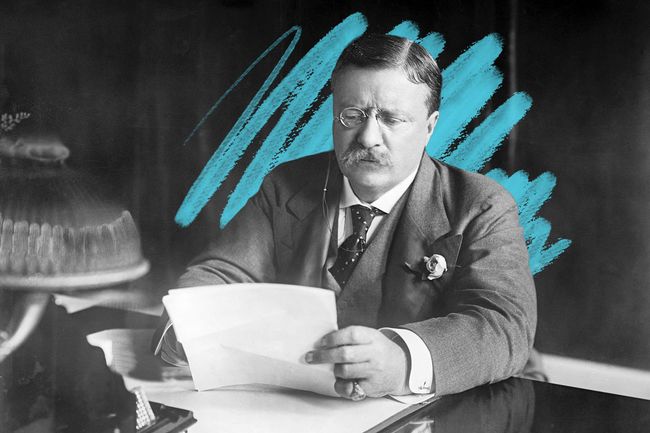
In 1906, President Theodore Roosevelt found himself at the center of an unexpectedly fierce national debate. The issue wasn’t war, trust-busting, or foreign policy — it was spelling.
That year, Roosevelt endorsed a movement to simplify hundreds of English words, hoping to make the language easier to learn and more efficient to print. Instead, he touched off a backlash that far exceeded the modest scope of his proposal.
The effort began with the Simplified Spelling Board, a group funded by steel magnate Andrew Carnegie. The board argued that English spelling was unnecessarily complicated and filled with silent letters, outdated spellings, Britishisms, and inconsistencies that made the language harder to learn. Its members included prominent writers, educators, and scholars (such as Mark Twain and the philosopher William James), and they proposed simpler versions of 300 words. Under their system, “although” became “altho,” “through” became “thru,” and “fixed” became “fixt.”
Roosevelt was convinced. Without consulting Congress, in August 1906 he ordered the Government Printing Office to use the board’s preferred spellings in documents issued by the executive branch. The reaction was immediate. Newspapers mocked the reforms, critics accused Roosevelt of overstepping his authority, and even British commentators joined the chorus of complaints. Some British writers jokingly asked whether the president was going to start spelling his last name “Ruzvelt.”
But the controversy quickly became as much about presidential power as it was about spelling. Congress objected to Roosevelt’s attempt to dictate language rules, and in December 1906 the House of Representatives voted to withhold funding for the printing of any government publications that didn’t follow conventional spellings. The next day, Roosevelt officially abandoned his effort, just four months after it began.
In the end, only a small number of government documents ever used the simplified spellings. But the episode became a memorable chapter in the long history of attempts to make English a little easier to read, write, and learn.
Roosevelt’s spelling reform was a political disaster, but some of the changes championed by reformers eventually became standard American English anyway. Words such aslabor, draft, jail, check, and clue all replaced older spellings — such as labour, draught, gaol, cheque, and clew — that were once common (and remain common in the U.K.). In fact, many members of the Simplified Spelling Board argued that they weren’t trying to invent new spellings so much as speed up changes that were already happening naturally. In that sense, Roosevelt may have been ahead of his time. However, other suggestions by the board seem less likely to catch on — we probably won’t be spelling “kissed” as “kist” any time soon.
Advertisement
Advertisement
The oldest shoes in the world were found in Oregon.
Credit: Gina Kelly/ Alamy Stock Photo
AuthorSarah Anne Lloyd
January 16, 2025
Love it?42
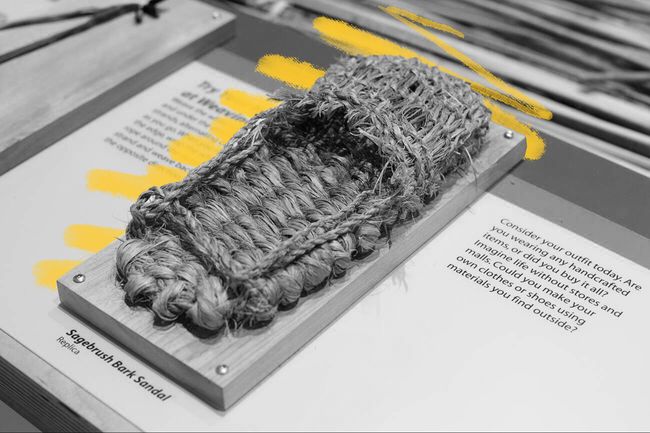
Human beings first arrived in the Americas more than 20,000 years ago, long after the earliest dated cave paintings, musical instruments, and sewing needles. North America is, however, home to the oldest known pair of shoes, unearthed in central Oregon in the 1930s and dating back more than 10,000 years. But don’t worry, this doesn’t mean the earliest Americans made the chilly journey across the Bering Strait barefoot — these sandals are just the earliest surviving shoes that we know about.
Researchers found the footwear in Fort Rock Cave, located in the northern Great Basin area, preserved in ash from the eruption of Mount Mazama roughly 7,700 years ago. Around 100 pairs were present, including some in kids’ sizes, and most were well worn; some were caked with mud, and one had even been singed by sparks from a fire.
Like other sandals found around the Great Basin area, the Fort Rock shoes were made from sagebrush and covered the toes. But they had a distinct weaving style, with just five thick warps along the sole that were split into smaller cords for a thinner toe flap. They were secured to the feet with cords that tied around the ankle. This style faded out around 9,300 years ago, when it was replaced by different weaving styles that were still being used thousands of years later by Klamath and Modoc tribes, who are Indigenous to the area.
Preserving a large shoe collection was one of Mount Mazama’s lesser impacts. When the volcano erupted 7,700 years ago — one of the largest eruptions on Earth in the last 12,000 years — its magma chamber emptied and the volcano collapsed. It left a giant caldera, or volcanic crater, in its place — similar to how Yellowstone National Park was created. Smaller eruptions continued for the next 750 years, but over time, the caldera filled with water and became Crater Lake, now a national park in Oregon, which eventually became deep enough to hide any volcanic activity.
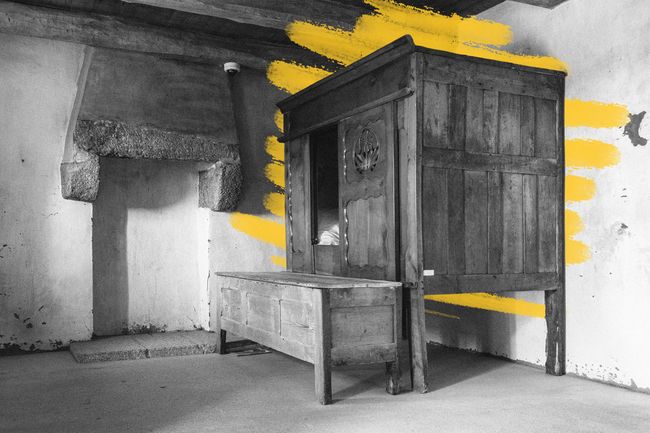
Sleeping in a cupboard sounds more like a punishment than a good night’s rest. But in parts of Europe in the medieval and early modern era, people often slept on beds inside wooden cupboards.
Built right into house frames or crafted as freestanding pieces of furniture, these boxes didn’t look like modern beds so much as wardrobes: The cupboard stood upright like a wardrobe, often with elaborate carving details on the outside. Inside, the sleeping space inside was a horizontal bed enclosed by wooden walls and doors or curtains that could close up at night.
Box beds (or closet beds) were quite practical for the time. The average house in the Middle Ages was smaller than today, with just one or two rooms serving as both living and sleeping spaces for families, so having the option of even a small amount of privacy was valued. Even more importantly, homes could often be quite cold, and enclosing the bed helped trap body heat. Many box beds measured around 5.5 feet long — about as long as a modern queen-sized bed is wide — and were wide enough to fit at least two people, so they would sometimes be shared by more than one family member.
The furniture piece began to fade out of use in the 19th century amid rising concerns about hygiene and air quality, improved indoor heating, and the increasing popularity of bed frames. Closet beds eventually became a symbol of rural poverty and an old-fashioned way of living, and by the mid-20th century, they were no longer used.
Queen Elizabeth I once refused to go to bed for days.
In March 1603, as Queen Elizabeth I was ill and in the final days of her life, the monarch refused to go to bed. Accounts from attendants describe the queen standing in her Richmond Palace chamber for upwards of 15 hours. After eventually getting worn out, she moved to the floor. There, she reportedly remained seated or lying on cushions, largely withdrawn and silent while her courtiers waited for the end. Eventually, after several days of this, Elizabeth was persuaded to lie down in her bed, and she died shortly after, on March 24, 1603.
Advertisement
Advertisement
John Steinbeck’s dog ate the first draft of ‘Of Mice and Men.’
Credit: Ntguilty/ Shutterstock
AuthorTimothy Ott
January 7, 2025
Love it?39
By the spring of 1936, life was clearly on the upswing for John Steinbeck. As described in Jay Parini’s biography, the commercial success of his 1935 novel Tortilla Flat had produced newfound financial comfort for the author and his wife, Carol, and with it they were building a new home in an isolated stretch of wilderness outside Los Gatos, California. Meanwhile, Steinbeck was knee-deep in another work, tentatively titled Something That Happened, that was originally meant as a children’s story but was turning into an experimental piece that could be absorbed from the page or performed on stage.
And then, a “minor tragedy stalked,” Steinbeck wrote in a letter to his literary agent on May 27, 1936. “My setter pup [Toby], left alone one night, made confetti of about half of my ms. [manuscript] book. Two months work to do over again. … There was no other draft.” Yet whatever anguish the author initially felt over seeing his months of hard work reduced to shreds had clearly tempered by the time he sat down to write the letter. “I was pretty mad but the poor little fellow may have been acting critically,” Steinbeck continued. “I didn’t want to ruin a good dog for a ms. I’m not sure is good at all. He only got an ordinary spanking with his punishment flyswatter. But there’s the work to do over from the start.”
Fortunately, Toby’s drastic edits proved but a temporary obstacle in the gestating story’s path to completion. Inspired by his new surroundings, which included a study crafted to his liking, Steinbeck restarted his tale of codependent migrant workers George and Lennie and furiously plowed through revisions until submitting what became Of Mice and Men to his editors in August. And while Steinbeck initially had modest hopes for his completed novella, Of Mice and Men became another critical and commercial hit upon publication in February 1937, ensuring that its now-famous author, his wife, and especially Toby could enjoy nothing but the finest dining options in the days to come.
Another of Steinbeck’s dogs featured prominently in one of the author’s last books.
Nearly a quarter-century after Toby made a mess of the Of Mice and Men manuscript, Steinbeck took his French poodle, Charley, for a three-month tour of the U.S. in a pickup truck fitted with a camper top. Ostensibly there to provide companionship for long, anonymous stretches of highway, the poodle instead became a prominent figure in Steinbeck’s 1962 travelogue Travels With Charley: In Search of America. Avoiding the urge to feast on his owner’s letters that formed the basis of the book, Charley lived up to his end of the bargain both as a sidekick and instigator of events, including his bouts with prostatitis that prompted the need to seek out veterinary care. While Travels With Charley later invited controversy for Steinbeck’s alleged fudging of many details, the titular canine’s ever-steady presence throughout its pages helped give its ailing and aging author one final bestselling book.
Advertisement
Advertisement
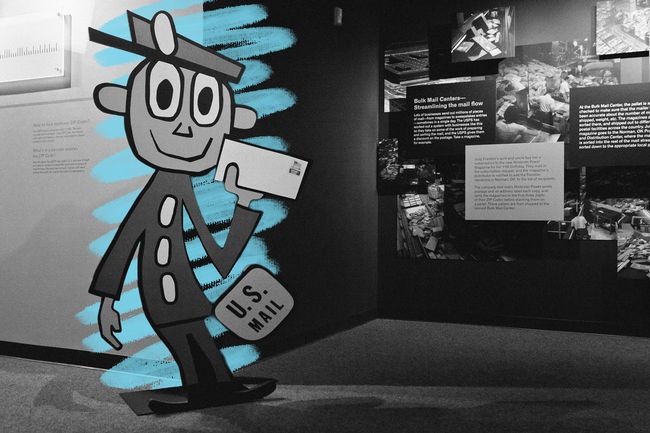
ZIP codes needed a cartoon mascot to convince people to use them.
Today, most Americans can rattle off their ZIP code without a second thought. But when the five-digit system debuted in 1963, many people weren’t thrilled about adding yet another string of numbers to their lives.
The ZIP code — short for “Zone Improvement Plan” — was created to help the Post Office Department handle a growing flood of mail. Between 1943 and 1962, annual mail volume doubled, while suburban growth made delivery routes increasingly complex. The new five-digit codes allowed mail to be sorted by machines, speeding letters through the postal system far more efficiently than older methods.
Postal officials worried, however, that the public would resist the change. Americans were already adapting to telephone area codes and growing reliance on Social Security numbers. Some had grumbled that ZIP codes would make life more complicated, while a few even complained that assigning people numbers felt vaguely un-American.
To make the new system seem friendlier, the Post Office Department turned to an unlikely spokesman: a cheerful cartoon mail carrier named Mr. ZIP. The character was originally created in the 1950s for a Chase Manhattan Bank mail-by-bank campaign. After the campaign ended, the design eventually made its way to the Post Office, which renamed the character, made a few tweaks, and put him at the center of a massive national publicity effort. He was introduced to postmasters at a convention in October 1962; each postmaster present was photographed hugging Mr. ZIP.
Shortly after, Mr. ZIP was everywhere. He appeared in newspaper and magazine ads, in television and radio spots, on mail trucks, and on the uniforms of postal employees. Post offices displayed life-size cardboard cutouts of the smiling mascot, some equipped with push-button recordings that explained the importance of using ZIP codes. Communities featured him in parades, fairs, and local events, while schoolchildren learned about the system through Mr. ZIP-themed educational materials.
The campaign worked. By the 1970s, ZIP code use had become nearly universal, helping pave the way for the highly automated mail system Americans rely on today. Before he was retired in the 1980s, Mr. ZIP became one of the most recognizable advertising mascots of the mid-20th century — a cartoon character who helped persuade a nation to embrace five little digits.
As Mr. ZIP became a familiar figure, some communities decided he needed a female counterpart. Local post offices around the country held “Miss ZIP” beauty contests at banquets and dances. In Tucson, Arizona, for example, a local woman named Doe Stella posed with Mr. ZIP after winning the title; in Miami, a post office named 19-year-old Janet Swanson its official “ZIP Girl.” The contests generated favorable publicity and helped transform a postal modernization campaign into a community event.
The idea eventually moved beyond local promotions. In 1969, the Post Office Department launched a “Miss ZIP” program at selected large post offices, stationing female employees in lobbies to help customers navigate the increasingly modern mail system. Wearing distinctive “Miss ZIP” sashes, they answered questions, offered mailing advice, and sold stamps — giving the friendly, human touch that postal officials hoped would encourage Americans to embrace the ZIP code era.
Advertisement
Advertisement
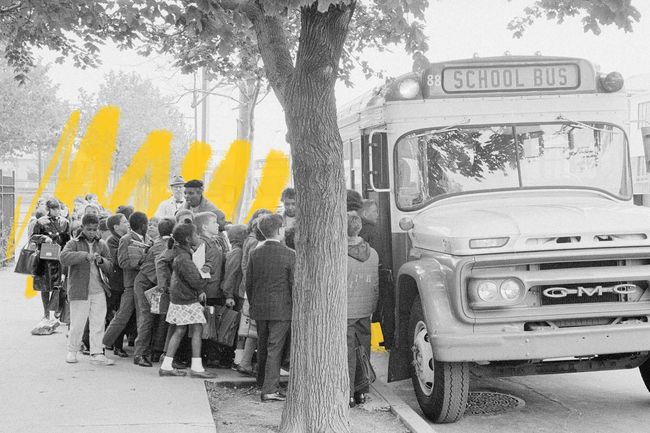
In 1960, more than a third of the U.S. population was under 18.
Credit: World of Triss/ Alamy Stock Photo
AuthorSarah Anne Lloyd
January 7, 2025
Love it?53
During the 1930s and early 1940s, many Americans held off on starting families because of the economic insecurity of the Great Depression and uncertainty of World War II. But the prosperous postwar era led to an increase of births between 1946 and 1964 that gave the baby boomer generation its nickname. Over this 19-year period, the booming birth rate helped the U.S. population grow by more than 50%. The country’s demographic makeup shifted so rapidly that by 1960, there were 64.2 million Americans under age 18, out of 180 million overall — a whopping 36% of the population. For context, in 2022, an estimated 22.4% of the U.S. population was under 18.
General fertility rates in the baby boom era peaked in 1957 at 122.9 live births for every 1,000 women aged 15 to 44 — that’s 4.3 million babies that year alone. The general fertility rate took a nosedive throughout the 1960s as the birth control pill became more widely available and women entered the workforce at much higher rates. By 1970, the general fertility rate was 87.9, and the much smaller Generation X was well underway.
The baby boomer generation didn’t reproduce at the same rapid clip as their parents, but because there were so many of them, they still produced a lot of offspring. Indeed, 1990 — the year all those 1957 babies turned 33 — was another banner year for births, with 4.2 million millennials entering the world, despite a general fertility rate of just 70.9.
The 1960 census didn’t just count a whole lot of kids — it also saw nearly as large an increase in older Americans. Between 1950 and 1960, the over-65 population grew 35%. These elders had also been born during a time of high fertility rates, but they were living much longer than the generations before them. While birth rates eventually dropped, the United States’ share of senior citizens only continued to grow. In 1960, despite the increase, just 9% of the U.S. population was over 65; in 2020, it was 16.5%.
Advertisement
Advertisement
The only WWII enemy-caused deaths in the continental U.S. were at a picnic in Oregon.
Elsie Mitchell had baked a chocolate cake for the picnic that day on May 5, 1945. The young pastor’s wife, five months pregnant with her first child, accompanied her husband and five children from their congregation as they set off for a sunny day of eating and fishing on Gearhart Mountain near Bly, Oregon.
As the Reverend Archie Mitchell parked and unloaded the car that morning, the children raced off toward Leonard Creek, Elsie trailing behind them. One of the children noticed a large, mysterious, gray object near the water. She called to Elsie and the other children, who soon gathered around. A child went to pick up the object — and a massive explosion shook the forest.
Elsie Mitchell became the only adult victim of an enemy attack on the U.S. mainland during World War II. All five children also perished. The cause was Japanese balloon bombs, also known as fu-go. Made of mulberry paper and filled with hydrogen, these balloons were set aloft in the jet stream of the Pacific toward the end of the war, between November 1944 and April 1945. Each balloon carried multiple bombs, designed to kill, start forest fires, and sow panic.
Although there had been earlier sightings of the balloon bombs, the U.S. government asked the media not to report on them in order to avoid panic and to persuade the Japanese that their efforts had been fruitless. The latter strategy worked: Japan had actually canceled the program a month before the Oregon deaths, convinced their program had failed. Of course, by then, hundreds, if not thousands, of the balloons had made it to the mainland.
When the Mitchell party tragedy was announced in the local media, no precise cause of death was given. U.S. officials didn’t fully lift the information blackout on the bombs until the following month, when it became evident that the public needed to be warned. All told, 361 balloon bombs were eventually found in the U.S., Canada, and Mexico, and while some did explode, the damage was minimal. (They never did start any forest fires — apparently the Japanese underestimated just how rainy the forests of the Pacific Northwest actually are.) Today, a stone-and-bronze monument marks the spot, about 13 miles northeast of Bly, where the only mainland deaths of World War II occurred.
The story of the balloon bomb incident didn’t end with the war.
Over the decades, the memorial site near Bly has become a place of reconciliation as well as remembrance. In 1976, Sakyo Adachi, a Japanese meteorologist who helped develop the balloon bomb program, visited the monument and placed a wreath there in memory of the victims. Japanese schoolchildren later sent six cherry trees — one for each person killed in the explosion — as a gesture of condolence and peace. Those trees were formally dedicated during a rededication ceremony at the site in 1995.
Advertisement
Advertisement
Divers recently found a long-lost shipwreck that sank in a hit-and-run.
Credit: Gannet77/ iStock
AuthorNicole Villeneuve
June 26, 2026
Love it?66
More than 160 years after vanishing beneath the waves of the Atlantic, the wreck of French steamship Le Lyonnais was discovered off the coast of Massachusetts. The ship’s demise in November 1856 was a bit out of the ordinary. Le Lyonnais didn’t topple in a storm or suffer an epic wreck — it sank as a result of a hit-and-run.
Le Lyonnais was sailing from the U.S. to France when it collided with the U.S. sailing ship Adriatic. The Adriatic suffered only minor damage and sailed on, heading for port in Gloucester, Massachusetts, for repairs. The crew of the Adriatic reportedly thought Le Lyonnais was fine to carry on as well, but the French ship was not so fortunate: The hull was punctured, and despite the crew’s efforts to patch the breach, the situation grew worse. Three days later, Le Lyonnais succumbed to the damage and sank. Of the steamship’s 132 passengers, only 18 survived.
Though the fate of Le Lyonnais was known, the exact location of its wreckage remained a mystery until recently. In August 2024, a shipwreck hunting and salvaging team discovered the vessel about 200 miles from New Bedford, Massachusetts. They knew they’d found the right ship thanks to a few key details including the horizontal steam engine and iron hull plates. Most crucially, the engine’s cylinder measured 57 inches — a perfect match with the ship’s records. According to Jennifer Sellitti, a member of the crew that found the ship and the author of The Adriatic Affair: A Maritime Hit-and-Run off the Coast of Nantucket, Adriatic Captain John Durham later had his ship apprehended by French authorities and was put on trial. But even with the international attention, the sinking of Le Lyonnais was all but forgotten after the onset of the American Civil War.
A California chicken farmer once discovered a $400 million shipwreck.
Mel Fisher followed a winding path to becoming one of history’s most profitable treasure hunters. After spending his childhood and university years in Indiana, followed by a stint with the U.S. Army, Fisher ended up in California, where he worked on his parents’ chicken ranch. It was there that he indulged in a longtime passion, opening his first dive shop in a feed shed on the ranch. By the 1960s, Fisher was immersed in the world of shipwreck hunting and had become fixated on finding the Nuestra Señora de Atocha, a Spanish treasure galleon that sank off the Florida Keys in 1622. In 1985, it paid off: Fisher’s team found the long-lost ship, and its gold, silver, jewels, and other artifacts, worth about $400 million, were intact. The Atocha treasure made Fisher a millionaire — and led to law reform. In 1987, Congress passed the Abandoned Shipwreck Act, giving states ownership of shipwrecks found within 3 miles of their coastlines.
Advertisement
Advertisement
The first official U.S. coin told people to ‘mind your business.’
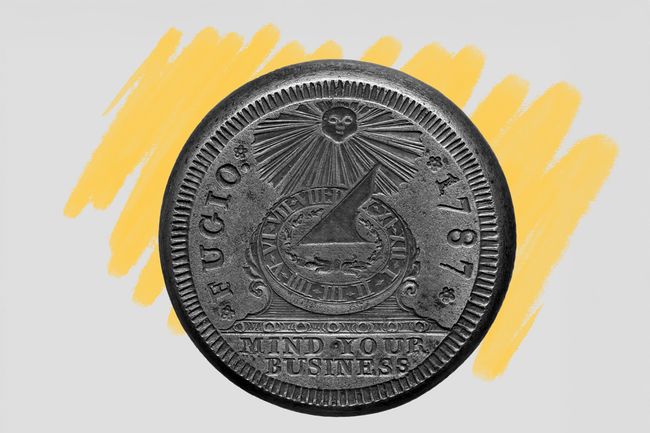
There are many ways to display your patriotism on the Fourth of July, one of which is to “mind your business.” That, at least, is what the first official U.S. coin, minted in 1787, had written on the obverse (front side).
Inspired by a design from Benjamin Franklin, it was known as the Fugio cent because it featured that Latin word (which means “I fly”) next to a sundial. Below the image was the phrase “Mind your business.” Taken together, the message has been interpreted to mean “Time flies, so mind your business.”
That bluntness is echoed in another early American motto: “Live free or die,” which traces back to a letter written by General John Stark in 1809 and was later adopted as New Hampshire’s state motto.
The reverse side of the Fugio cent was comparatively mild and featured the phrase “We are one” surrounded by 13 chain links representing the original colonial states; it wasn’t until the next year that “E pluribus unum” was first printed on U.S. currency.
The Fugio cent, for its part, didn’t last long in circulation. The coin was lightweight, which people apparently didn’t enjoy the feel of.
The highest denomination of U.S. currency in circulation is $100, but America used to print much more valuable bills. The Bureau of Engraving printed $500, $1,000, $5,000, and $10,000 bills until July 14, 1969, when the Department of the Treasury and the Federal Reserve System announced that these bills would be discontinued due to lack of use. For a brief period between December 18, 1934, and January 9, 1935, the bureau even issued a $100,000 Gold Certificate. That note featured a portrait of Woodrow Wilson and was used only by Federal Reserve Banks against an equal amount of gold bullion held by the Treasury. Because they weren’t intended for public use, the certificates never entered circulation.
Advertisement
Advertisement
Another History Pick for You
Today in History
Get a daily dose of history’s most fascinating headlines — straight from Britannica’s editors.