5 Things You Never Knew About the Macy’s Thanksgiving Day Parade
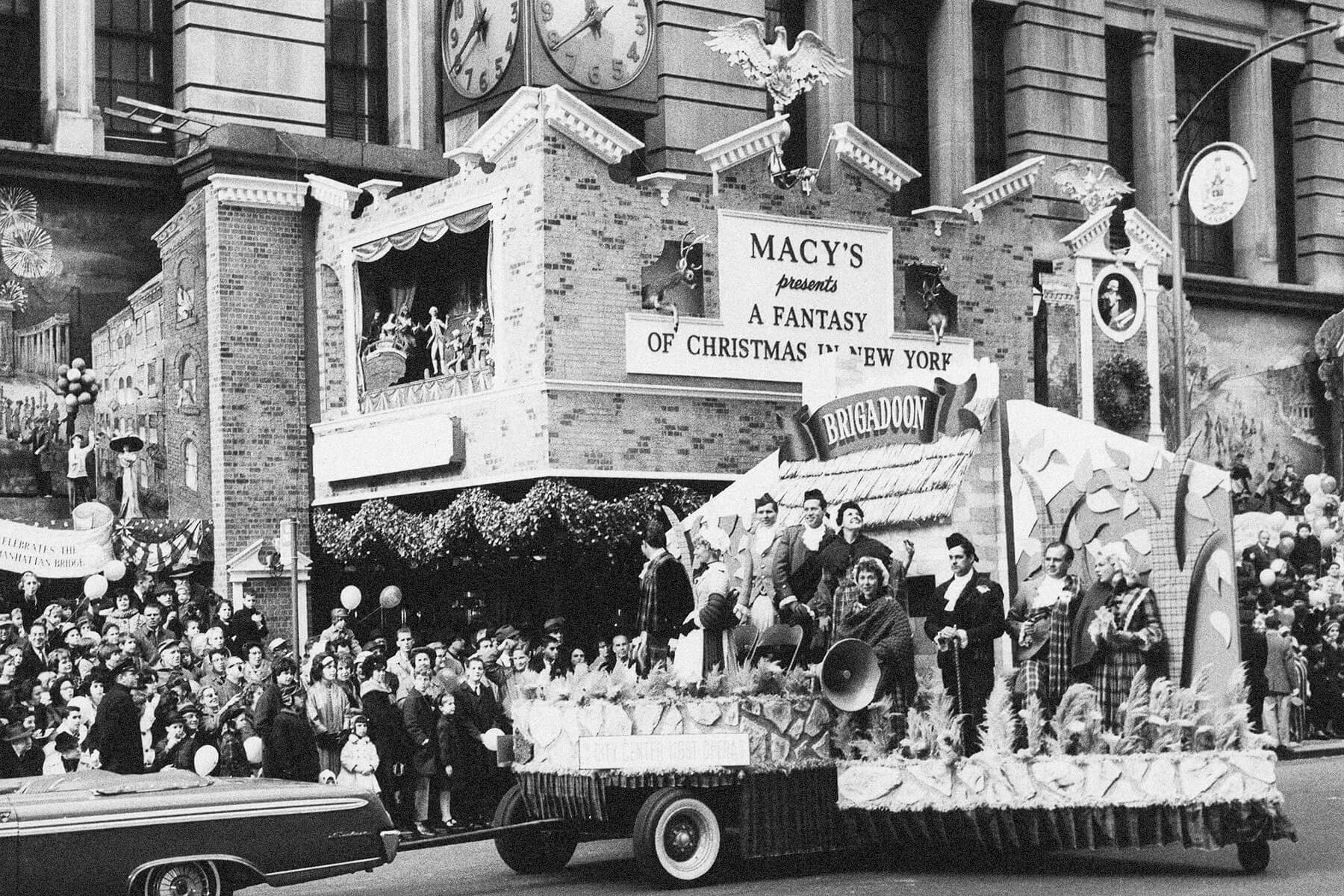
  • Macy’s Day Parade float
Macy’s Day Parade float
Archive Photos via Getty Images
Author Nicole Villeneuve

November 15, 2023

Love it?

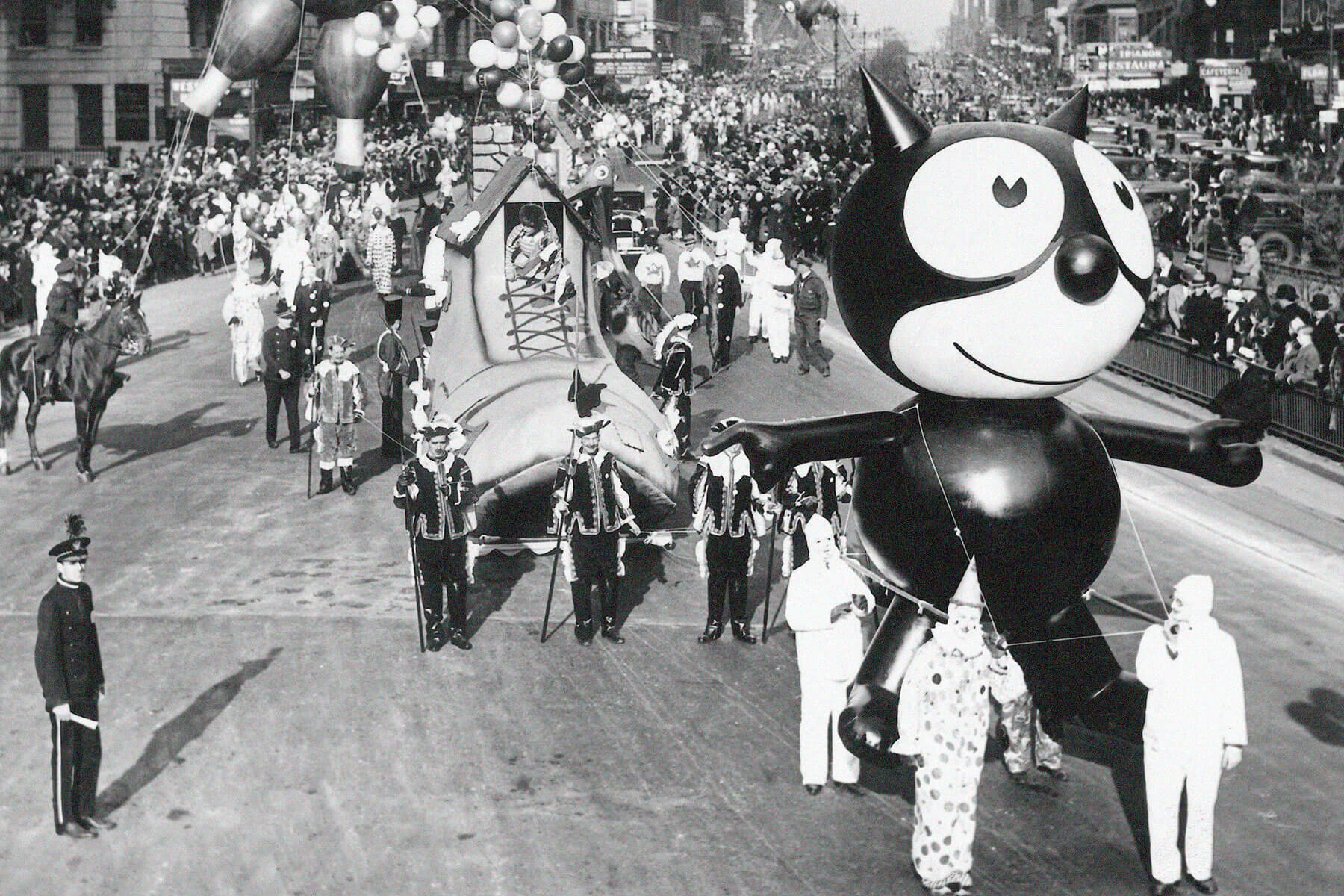
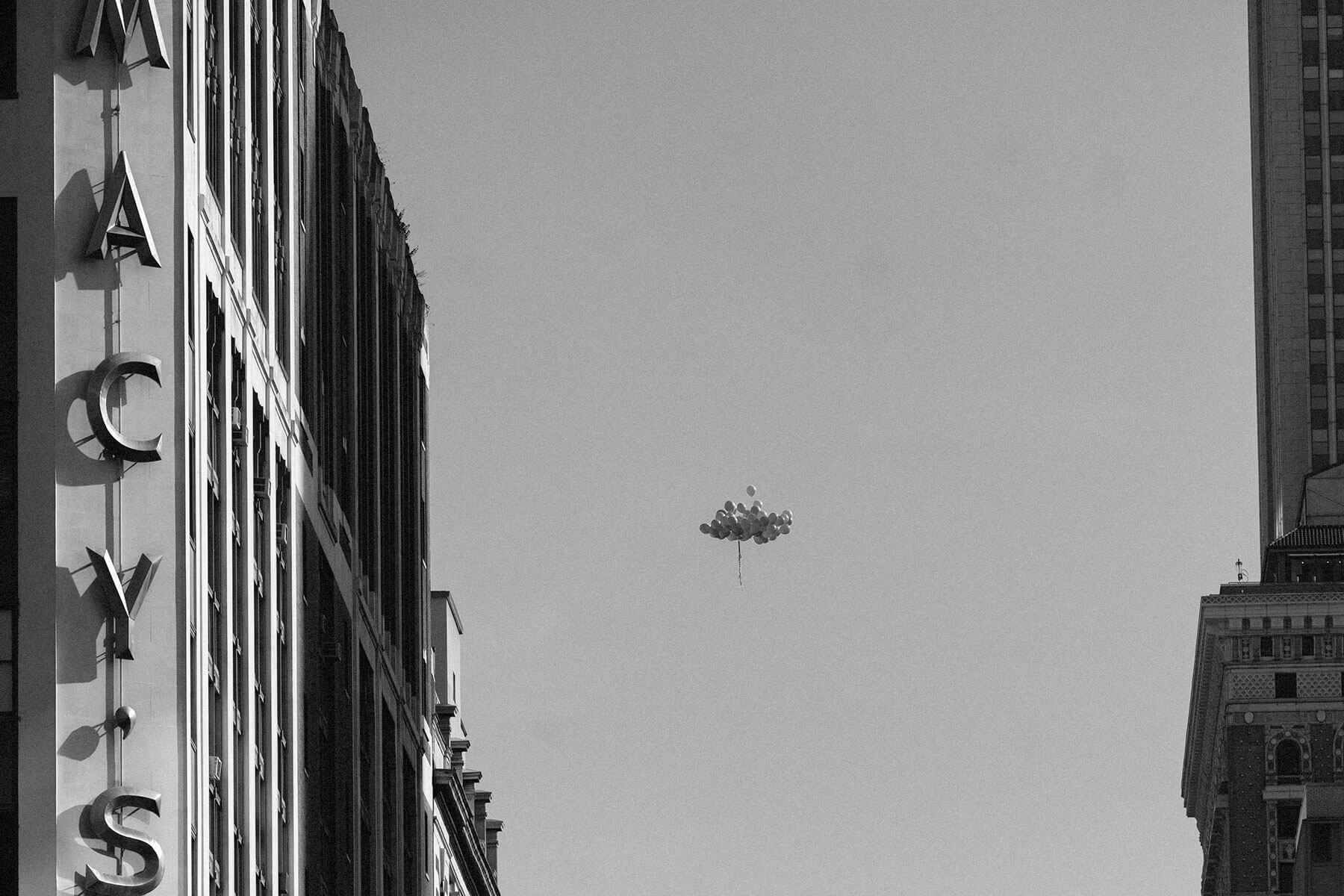
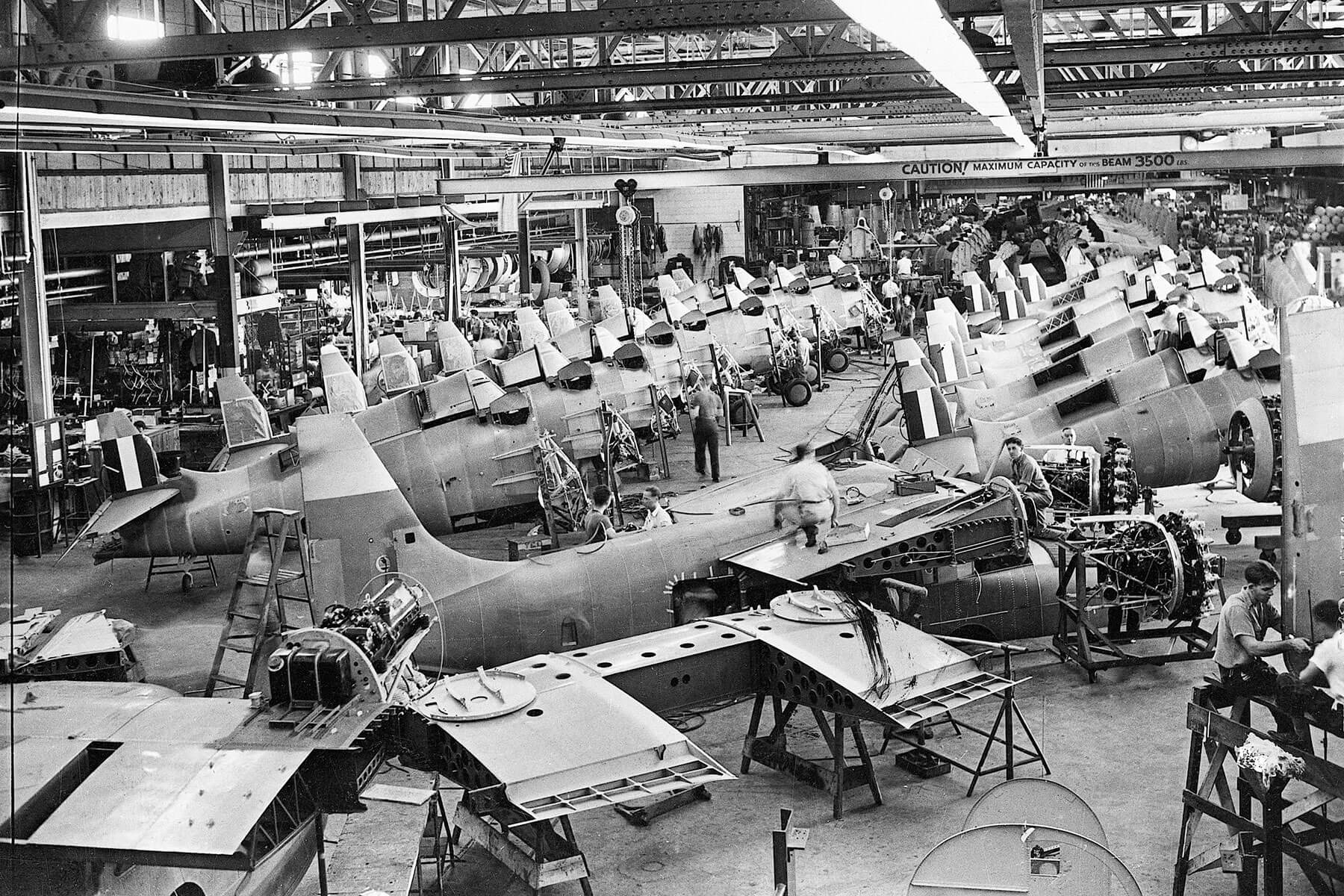
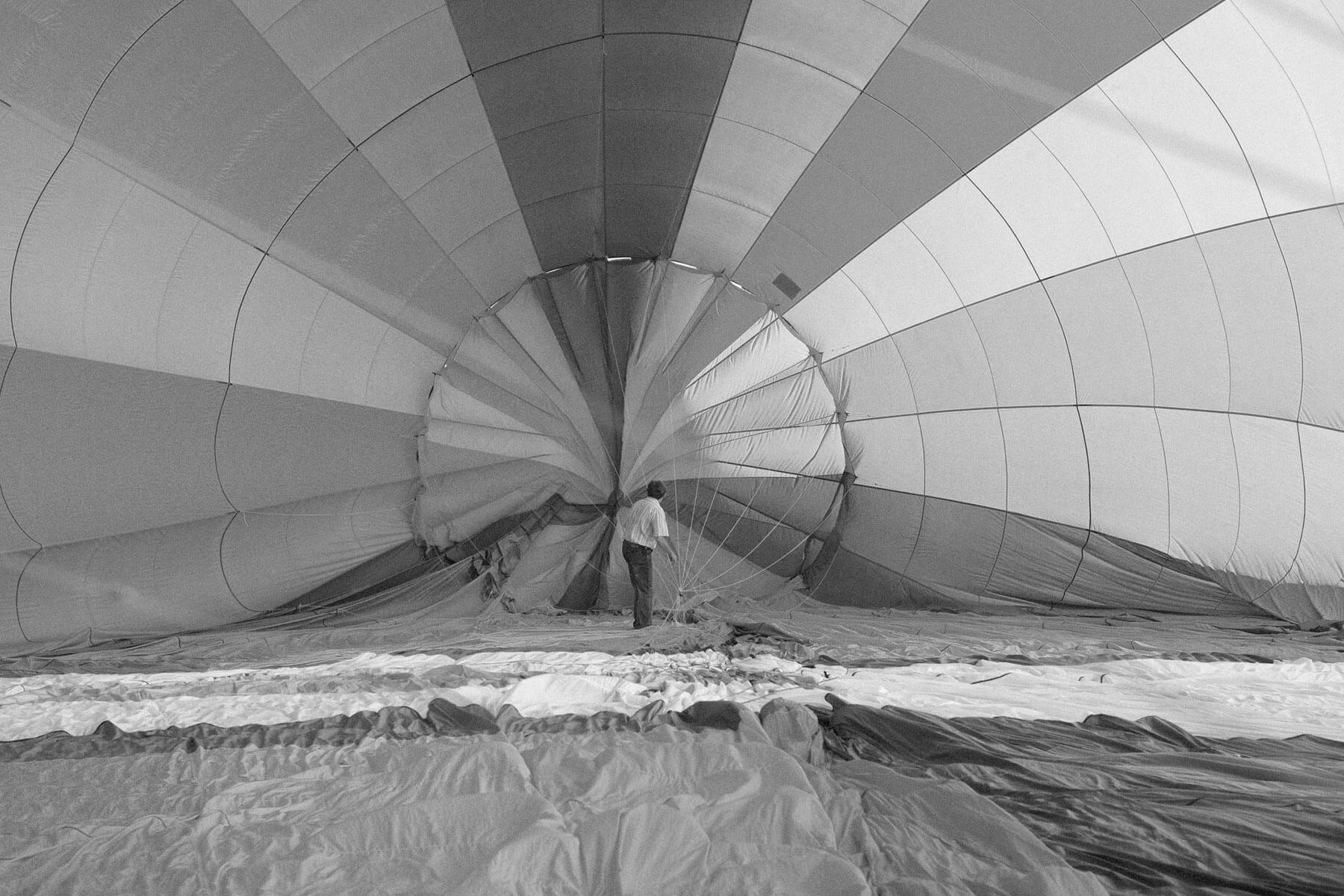
The Macy’s Thanksgiving Day Parade began in 1924, and has since become an essential kickoff to the holiday season in the United States. The parade, organized by the retail giant Macy’s, is renowned for its massive character balloons; for most of the event’s existence, these balloons have taken on a life of their own. Some iconic balloon characters such as Snoopy and Pikachu have appeared in different variations every year for decades, while others have come and gone. Each year, the procession draws millions of spectators in person and tens of millions more watching at home. It’s a spectacle that has grown to be an integral part not just of the holidays, but of American culture. Here are five facts you might not know about the parade, from its Christmas origins, to its role in the war effort, to just how long it takes to inflate one of those famous balloons.
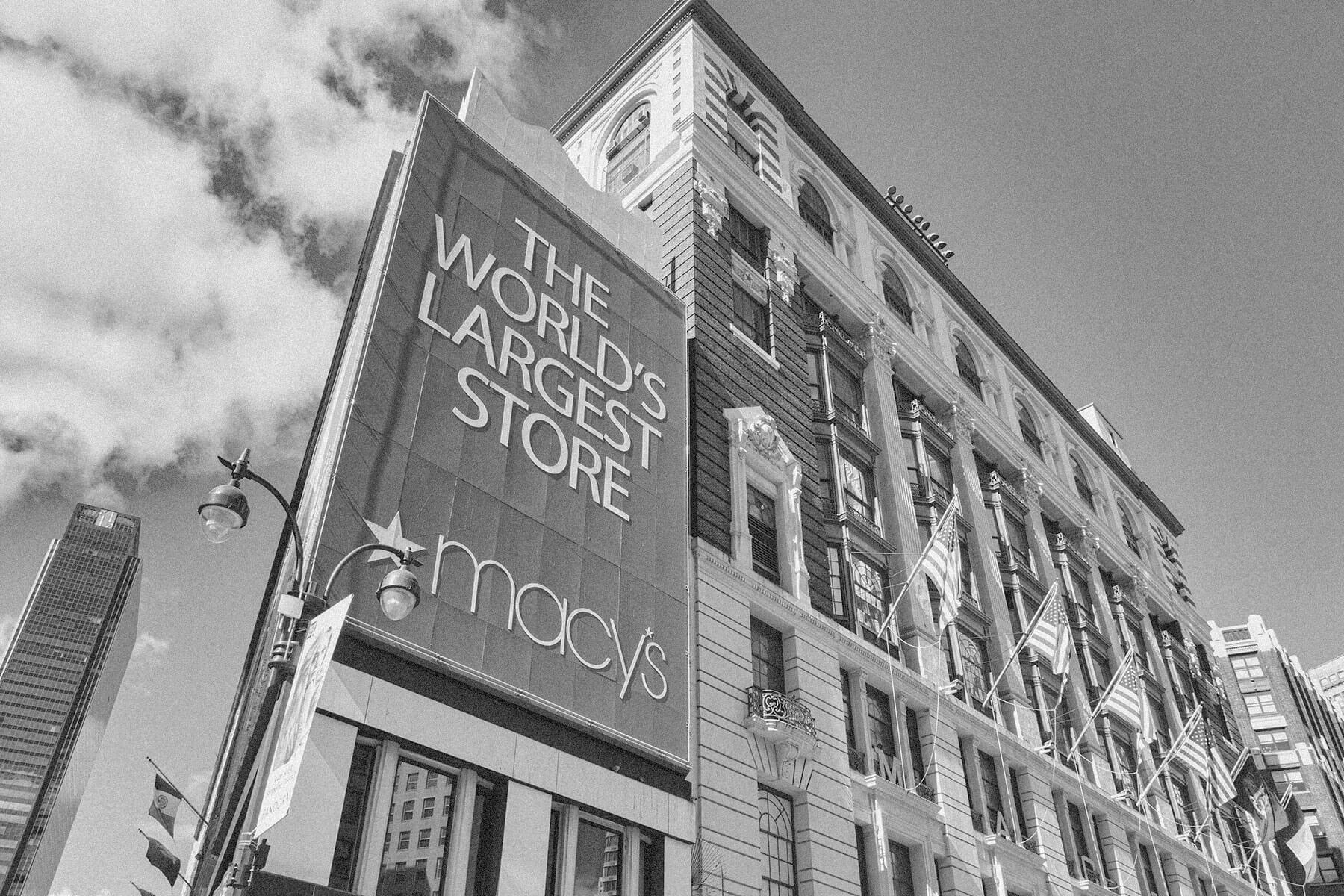
Photo credit: Education Images/ Universal Images Group via Getty Images

It Was Originally Known as the Macy’s Christmas Parade

In 1924, Macy’s flagship New York City department store completed a major renovation that made it the largest store in the world. To entice people into its more than 1 million square feet of shopping space at the start of the busy holiday season, the retailer planned a parade for Thanksgiving morning. This first parade, which took place on November 27, was called the Macy’s Christmas Parade.

The inaugural Macy’s Christmas Parade spanned 6 miles and featured live animals from the Central Park Zoo, including bears, elephants, monkeys, and more. Store employees didn’t just march in the parade: A lot of them were immigrants from Europe and helped to plan it, wanting to incorporate elements of their traditional holiday festivities. The parade’s famous balloons weren’t around yet, but floats that year featured Mother Goose favorites Little Miss Muffet and Little Red Riding Hood, made to match the store’s holiday window display. The final float featured Santa on his sleigh, a tradition that remains today — even though the celebration was advertised as the Macy’s Thanksgiving Day Parade starting in 1935.

You may also like
We Cooked Some Dishes From the First Thanksgiving

  • Thanksgiving food spread
Thanksgiving food spread
Images courtesy of Bennett Kleinman
Author Bennett Kleinman

November 14, 2023

Love it?

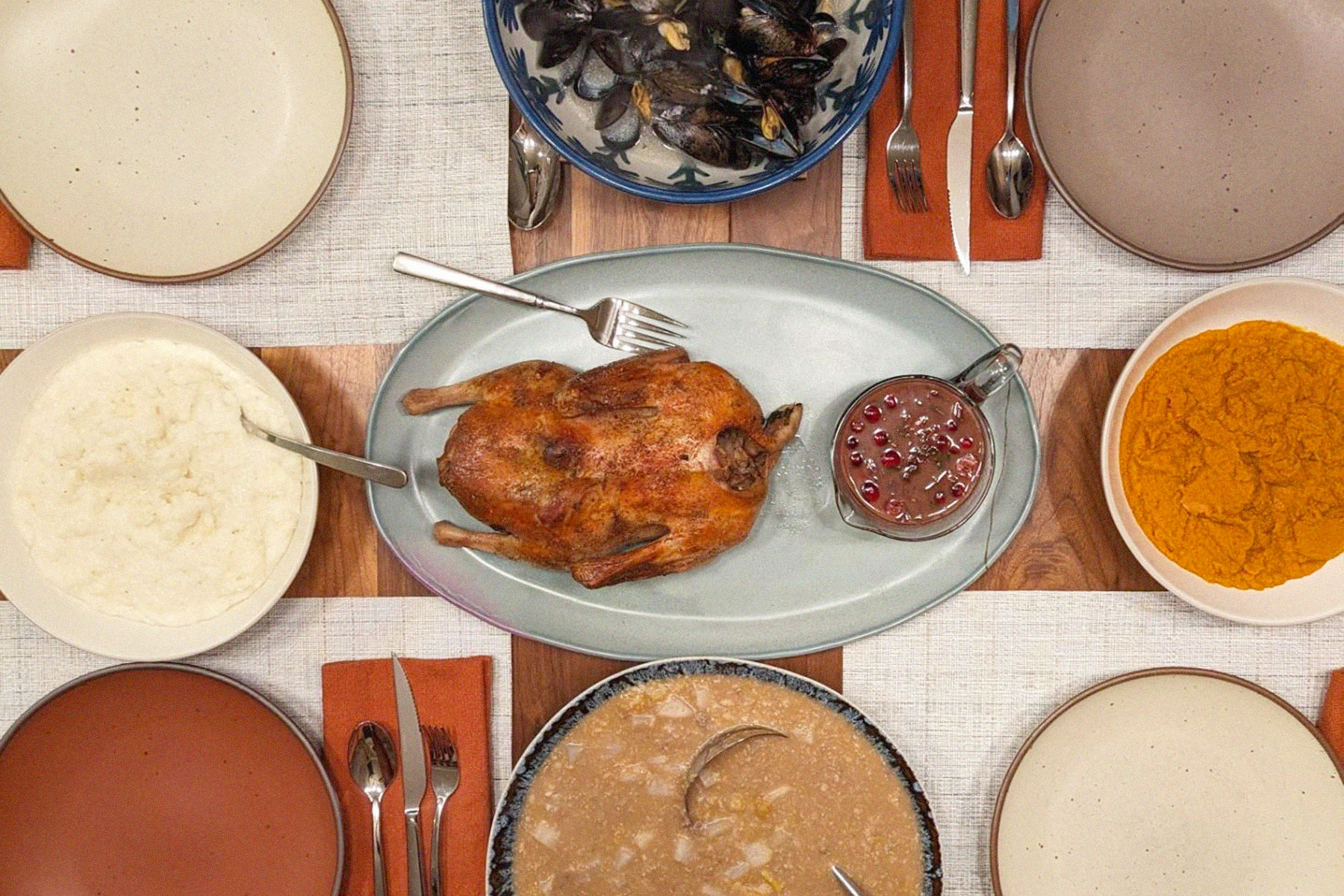
In the fall of 1621, a group of Pilgrims and Wampanoag gathered in Plymouth, Massachusetts, for a harvest feast. This event celebrated the Pilgrims’ first successful corn harvest, a skill they had been taught by an Indigenous guide named Squanto, who helped the European settlers survive in the unfamiliar territory. The feast lasted for three days and occurred sometime between September 21 and November 11. The meal they shared is now considered to be the first Thanksgiving dinner, though the complicated legacy of this inaugural event can’t be ignored. 

The Thanksgiving holiday today celebrates a myth of unity and friendship between Indigenous peoples and European colonists, but the reality is much more complex. While the Wampanoag did help Puritan settlers upon their arrival in 1620 and 1621, European colonists went on to massacre and displace millions of Indigenous people in the decades that followed. It’s a dark chapter in the nation’s history that we’ve only recently begun to reckon with, even as we celebrate gratitude and togetherness each Thanksgiving.

Another common myth associated with this holiday is the food itself. Today, more than 400 years later, dishes such as turkey and mashed potatoes are synonymous with Thanksgiving. But many of the modern holiday staples are more recent inventions. The first Thanksgiving dinner was notably different from today’s traditions, at least according to the scant historical accounts we have of the gathering, namely a letter from diplomat Edward Winslow and a letter penned by William Bradford, the governor of Plymouth Colony. 

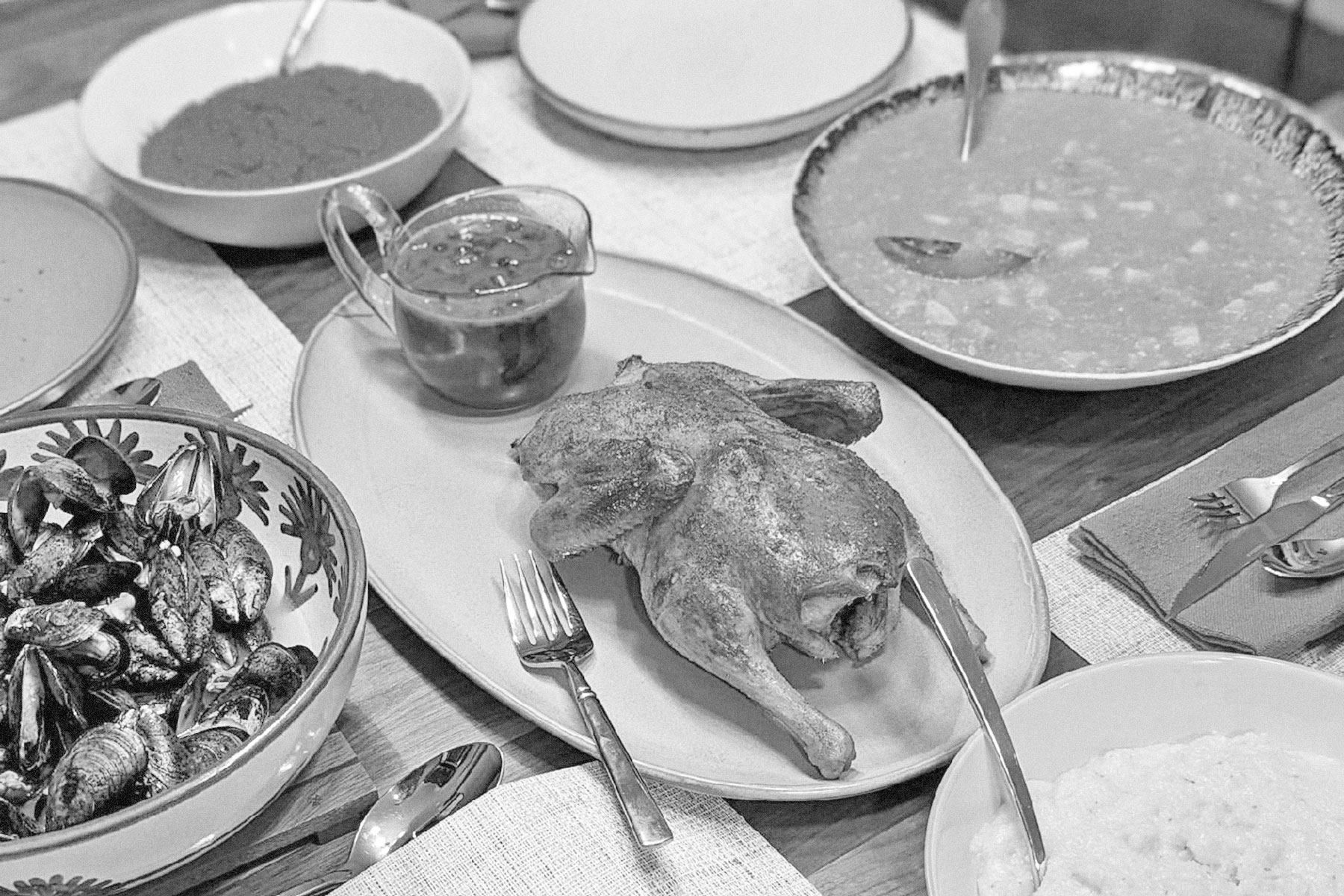
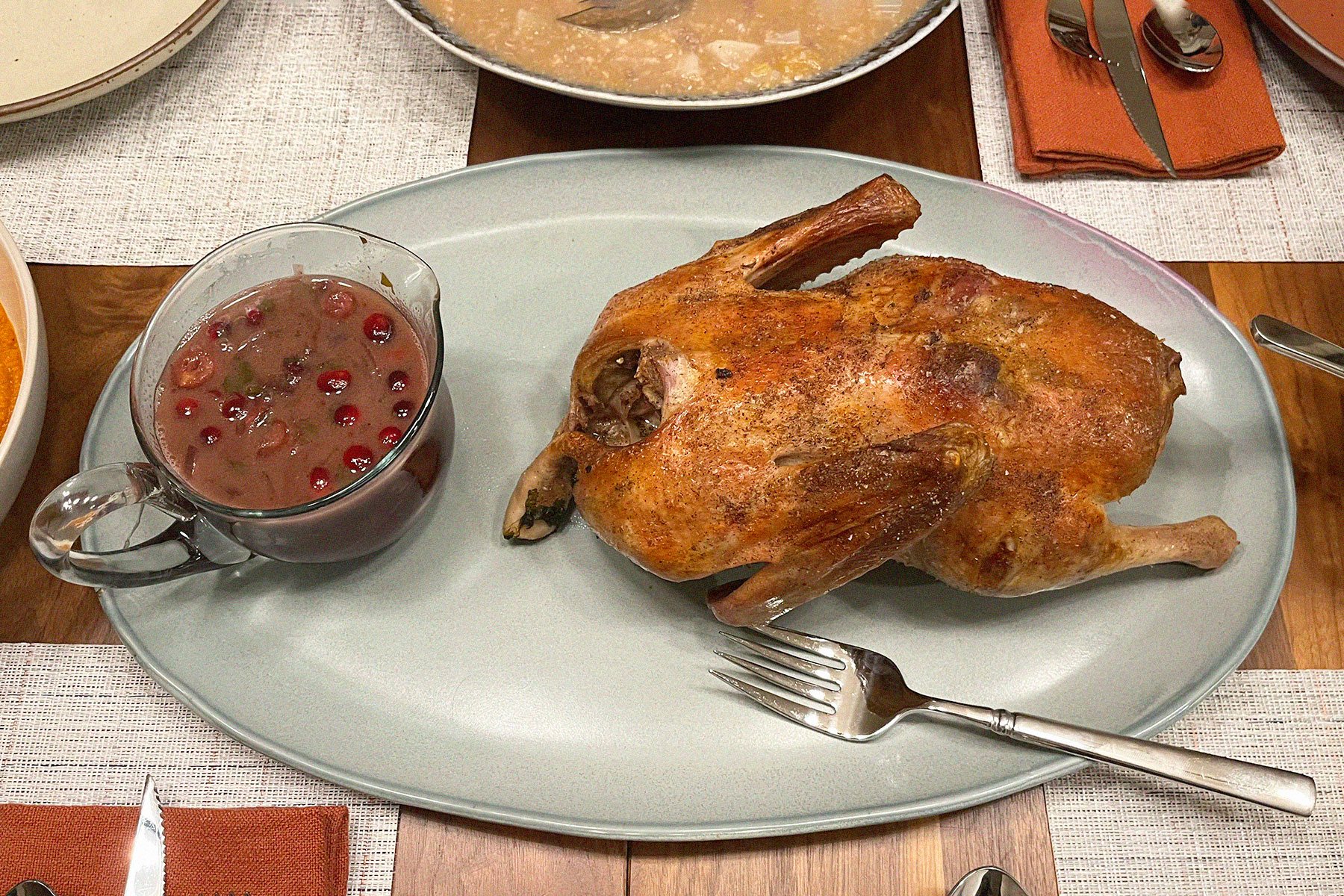
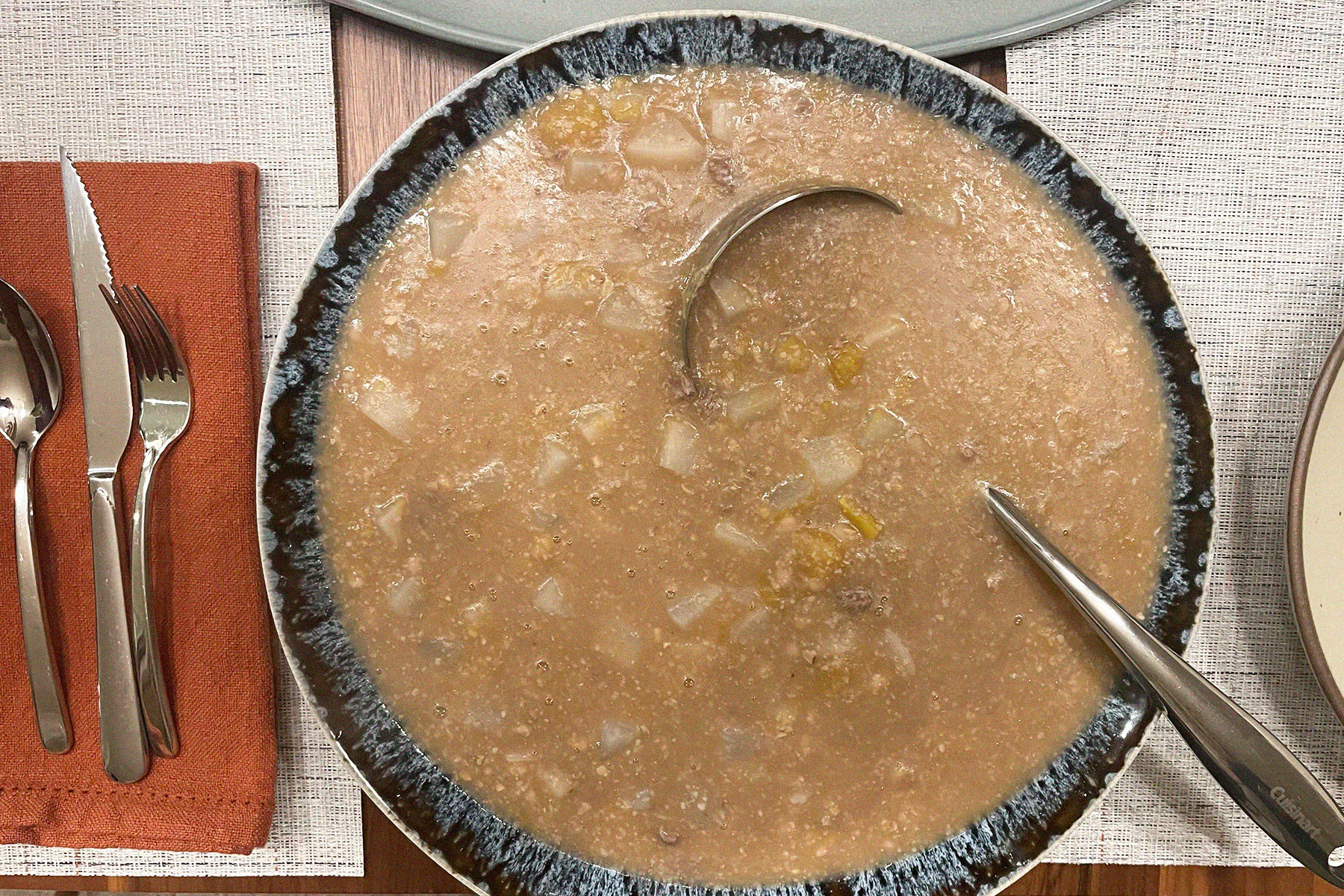
While it’s difficult to know what exactly was eaten at the first Thanksgiving, it’s possible to piece together a menu based on these accounts and the crops that were available around Plymouth at the time. With that in mind, I, along with several friends, set out to recreate some of the dishes that were likely served at the first Thanksgiving feast.

You may also like

The Most Bizarre Elections in U.S. History

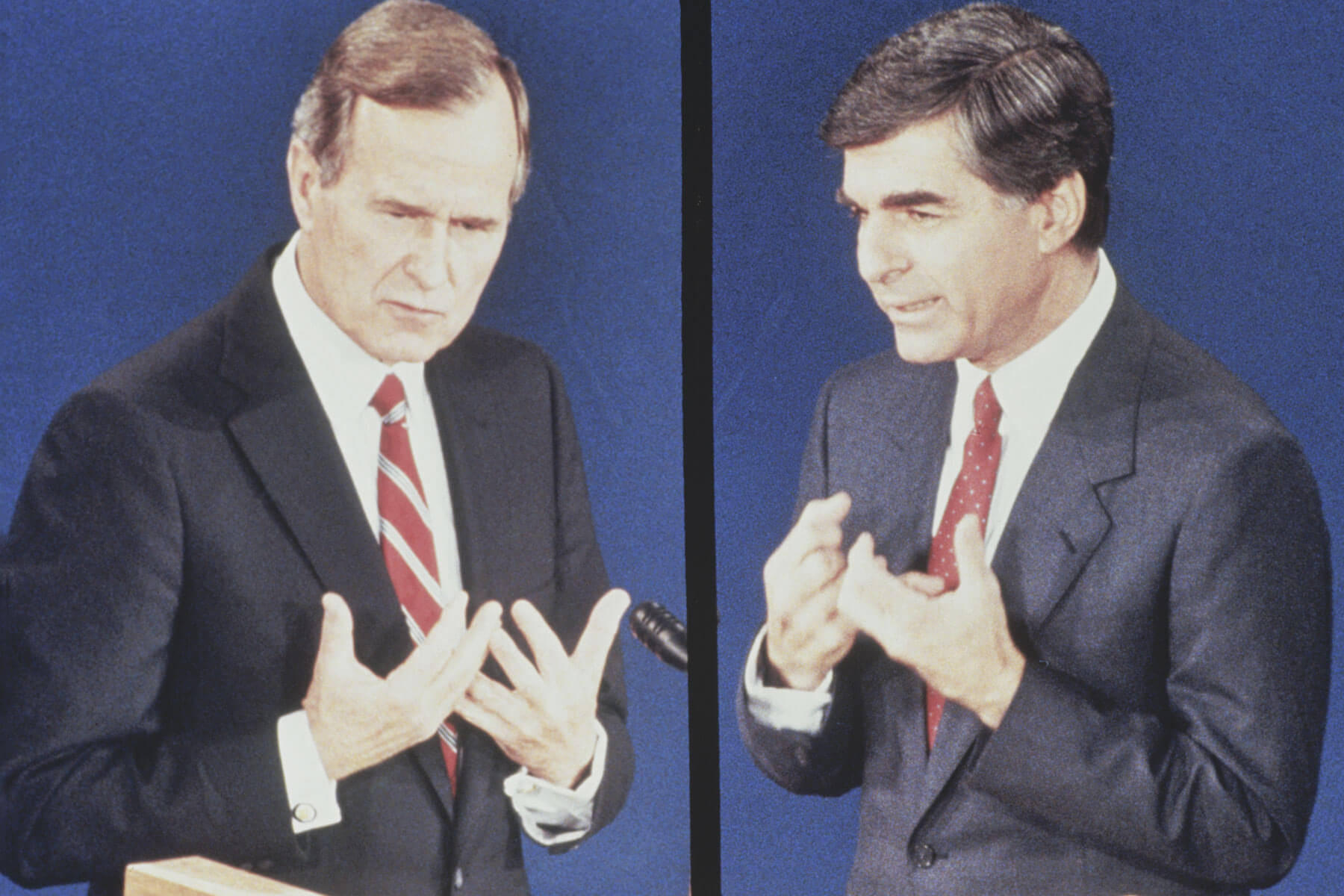
  • George Bush & Michael Dukakis
George Bush & Michael Dukakis
Steve Liss/ The Chronicle Collection via Getty Images
Author Mark DeJoy

November 9, 2023

Love it?

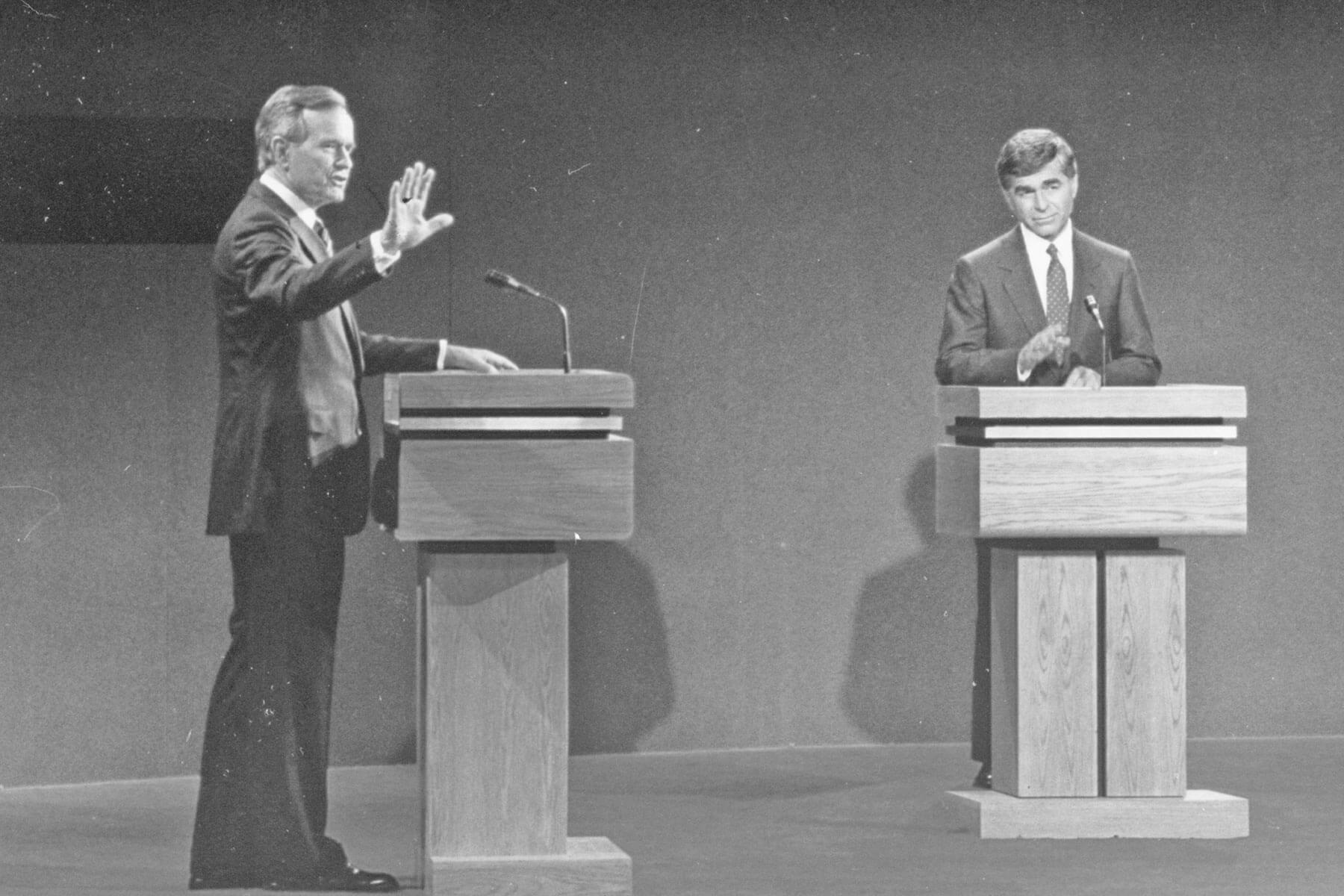
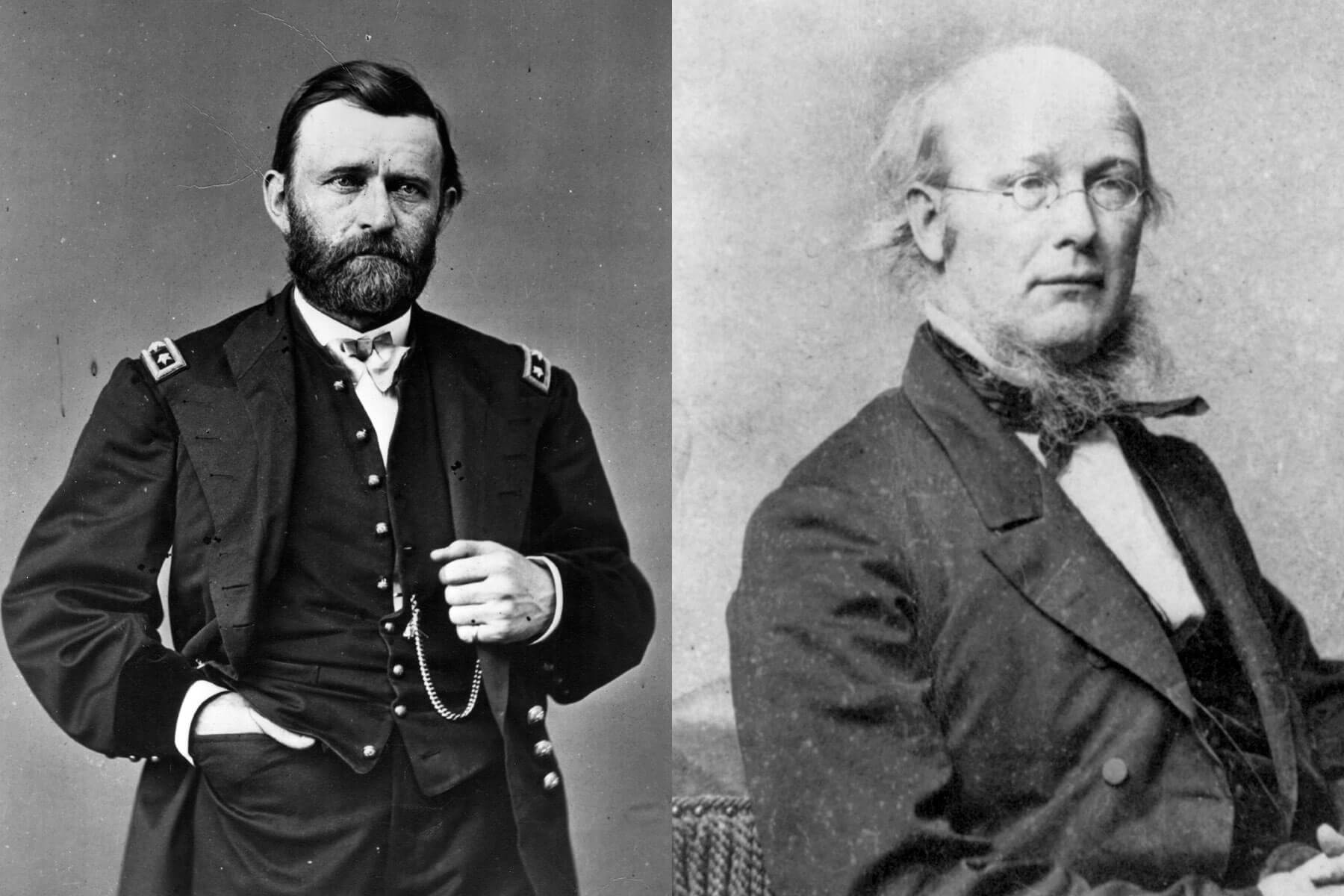
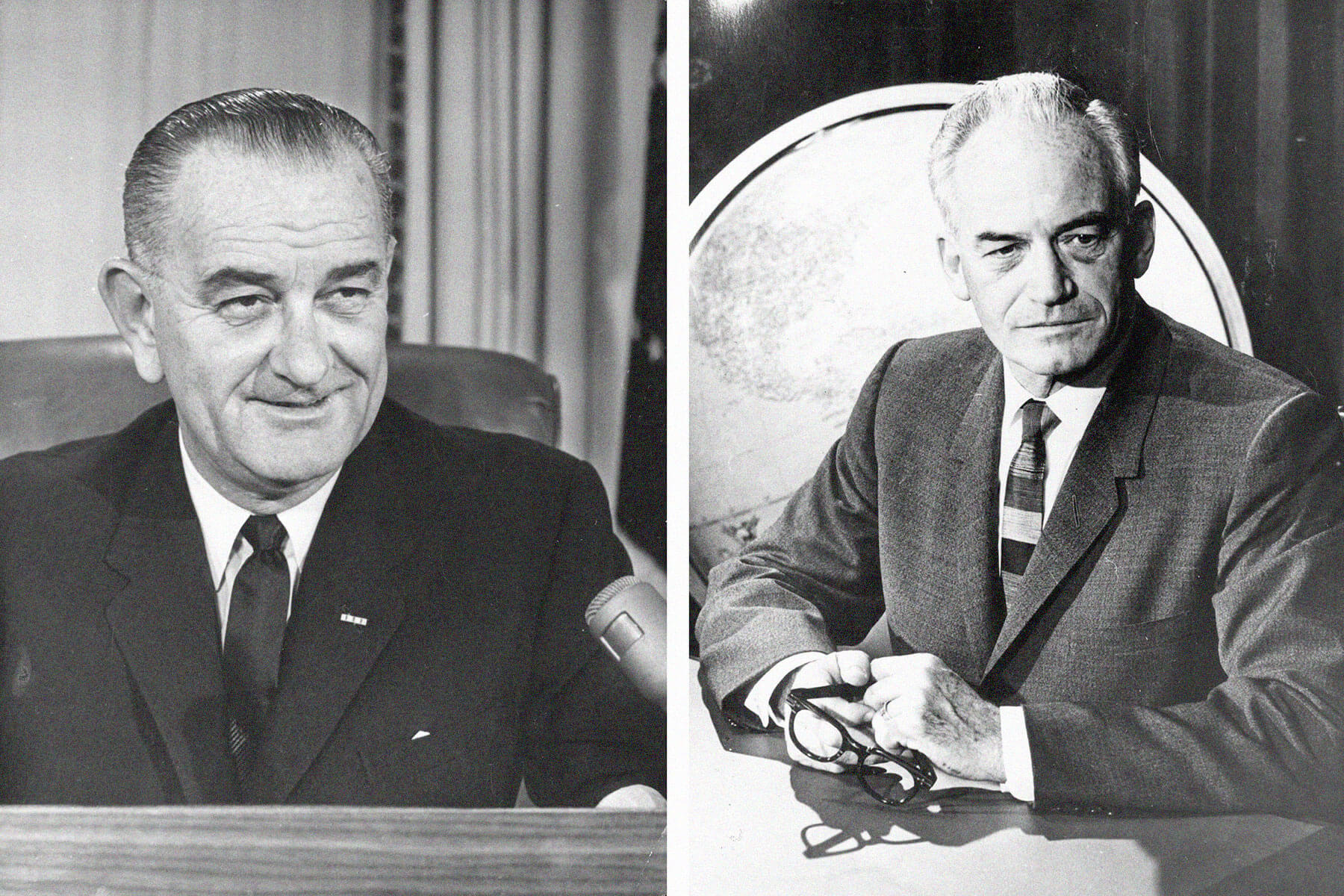
The first line of the preamble to the U.S. Constitution contains the oft-referenced statement of purpose, “to form a more perfect union.” Presidential elections have served as a significant (if not the most significant) part of the process behind that intention, as a quadrennial evaluation of the not-yet-perfect union’s direction. As with any growth process though, there’s bound to be some, well, awkward phases — and the United States certainly has had them. Entire political parties have come and gone, constitutional amendments have been necessitated, and there’s been all manner of outright oddity throughout the history of U.S. presidential elections. Here are some of the most bizarre moments.
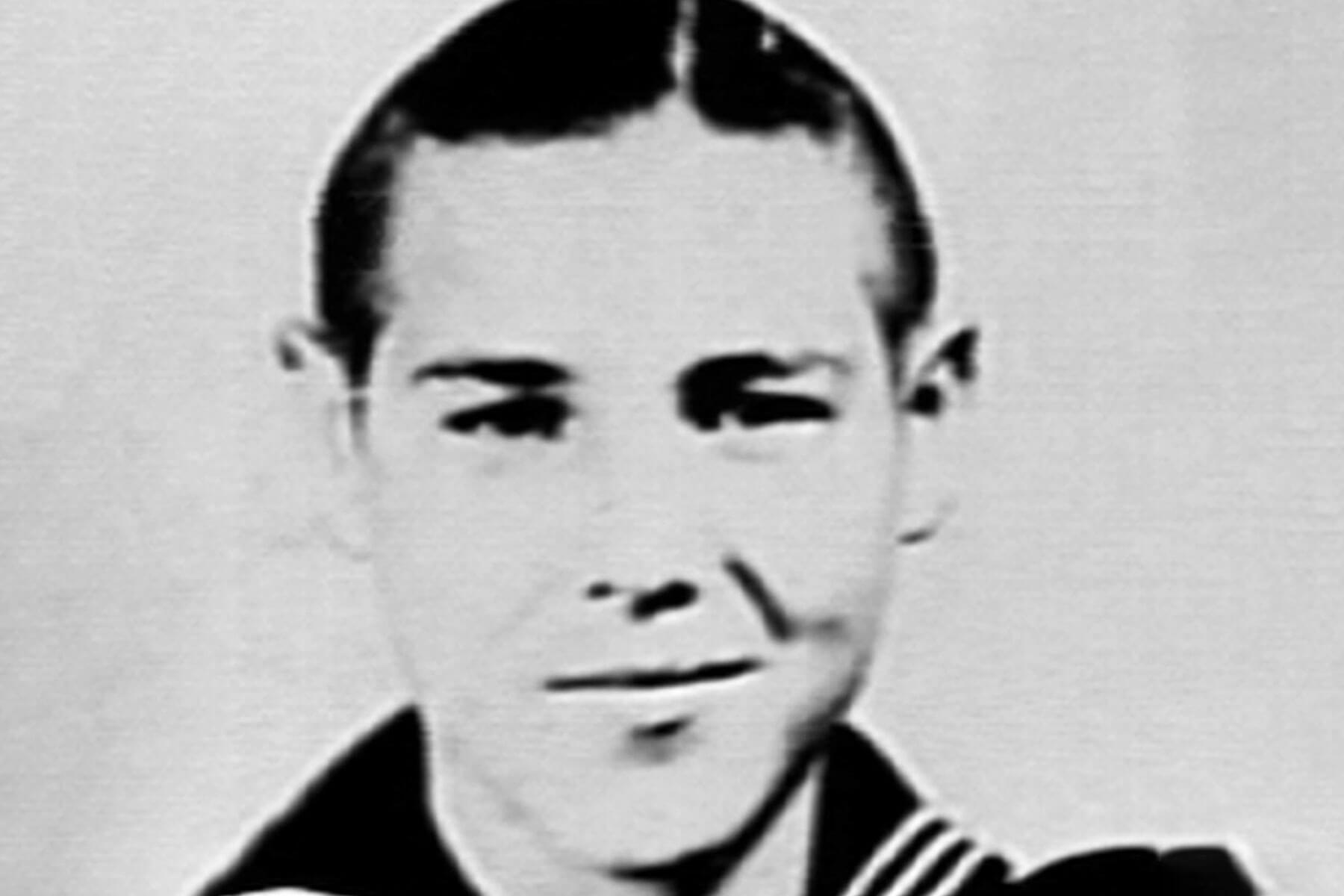
Photo credit: Hulton Archive via Getty Images

1800: John Adams vs. Thomas Jefferson

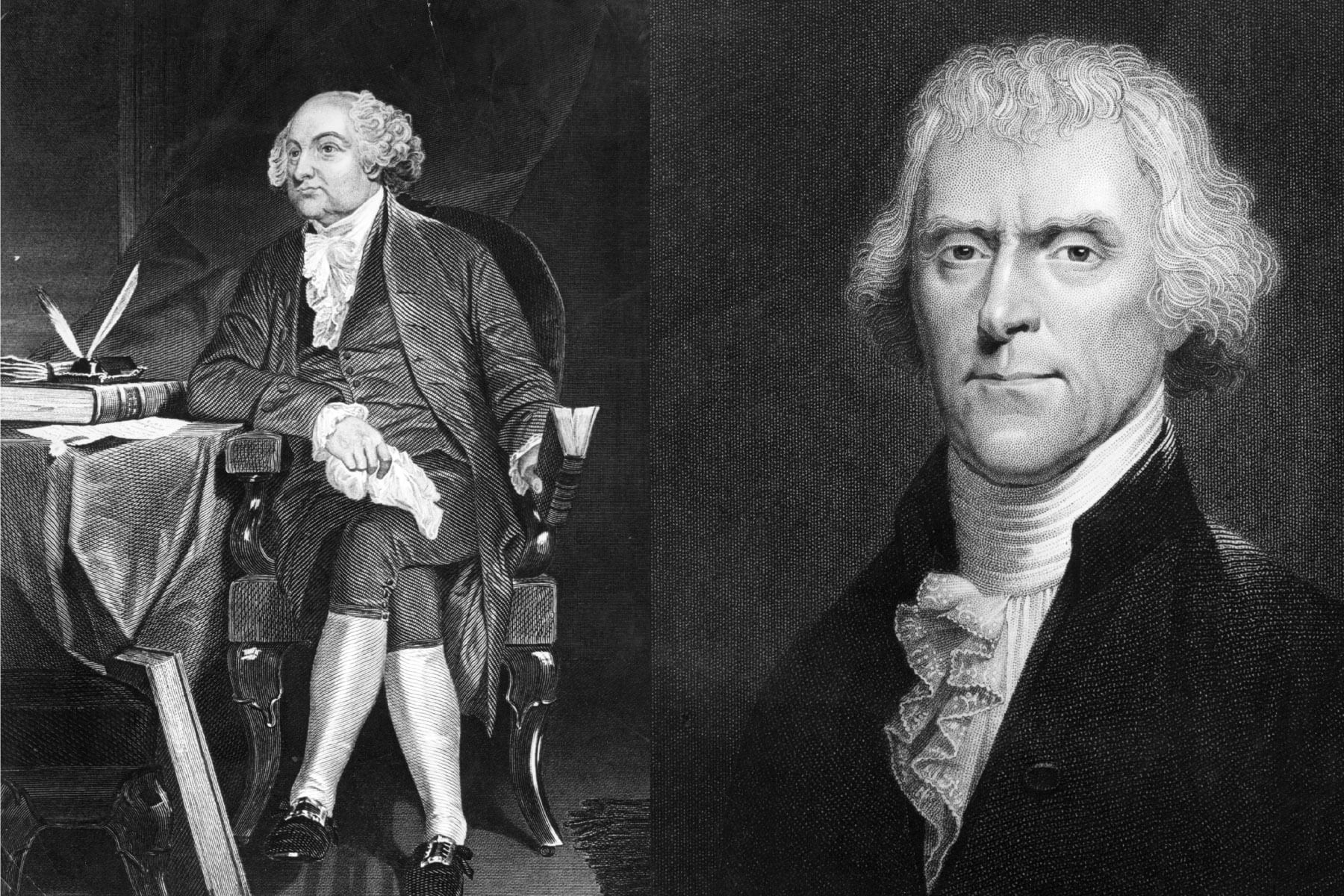
If anything proves that partisan politics and electoral machinations are nearly as old as the United States itself, it’s the election of 1800, when Federalist Party incumbent President John Adams sought reelection against Democrat-Republican Vice President Thomas Jefferson. The already-bizarre premise of opposing parties holding the presidency and vice presidency was made possible at the time by a law stipulating that the presidential candidate who earned the second-most number of electoral votes became Vice President. In the election of 1796, Jefferson lost the presidency to Adams by only three votes, and the 1800 election was a rematch between the political rivals.

That time, with another narrow margin likely, both parties turned toward influencing electors, whose votes decided the winning candidate in states where there was not yet a popular vote. Jefferson wrote of his intent to sway electors in New York, Pennsylvania, and New Jersey in a letter to James Madison. Federalist Senator Charles Carroll accused Jefferson and his supporters of also attempting to use “arts and lies” to manipulate votes in Federalist-leaning Maryland. From there, the accusations, well, escalated. Jefferson-supporting pamphleteer James Callendar claimed that John Adams was a hermaphrodite. Federalist newspapers accused Jefferson of maintaining a harem at Monticello.

When the votes were finally cast, the election ended in a tie between Jefferson and… his intended running mate, Aaron Burr. How? Each elector had two votes to cast, but there was no distinction at the time between a vote for President versus a vote for Vice President. Casting one vote for Jefferson and one vote for Burr was in effect a vote for each as President. The Constitution called for resolving this tie between the Democrat-Republican candidates with a vote in the House of Representatives, which was controlled by, you guessed it, the Federalist Party.

The task at hand was to vote on who, between Jefferson and Burr, would be President, but the Federalists saw an opportunity to seize power, either by delaying the proceedings past the end of Adams’ term, or attempting to invalidate enough votes to give Adams the majority. Others advocated for supporting Burr. Between February 11 and February 16, 35 rounds of voting took place, each ending in deadlock. Finally, after much lobbying by Alexander Hamilton against Burr, the 36th ballot resulted in Jefferson being appointed President. In the wake of the turbulent election, the 12th Amendment was ratified in order to prevent a repeat ordeal in 1804.

Photo credit: Kean Collection/ Archive Photos via Getty Images

1840: William Henry Harrison vs. Martin Van Buren

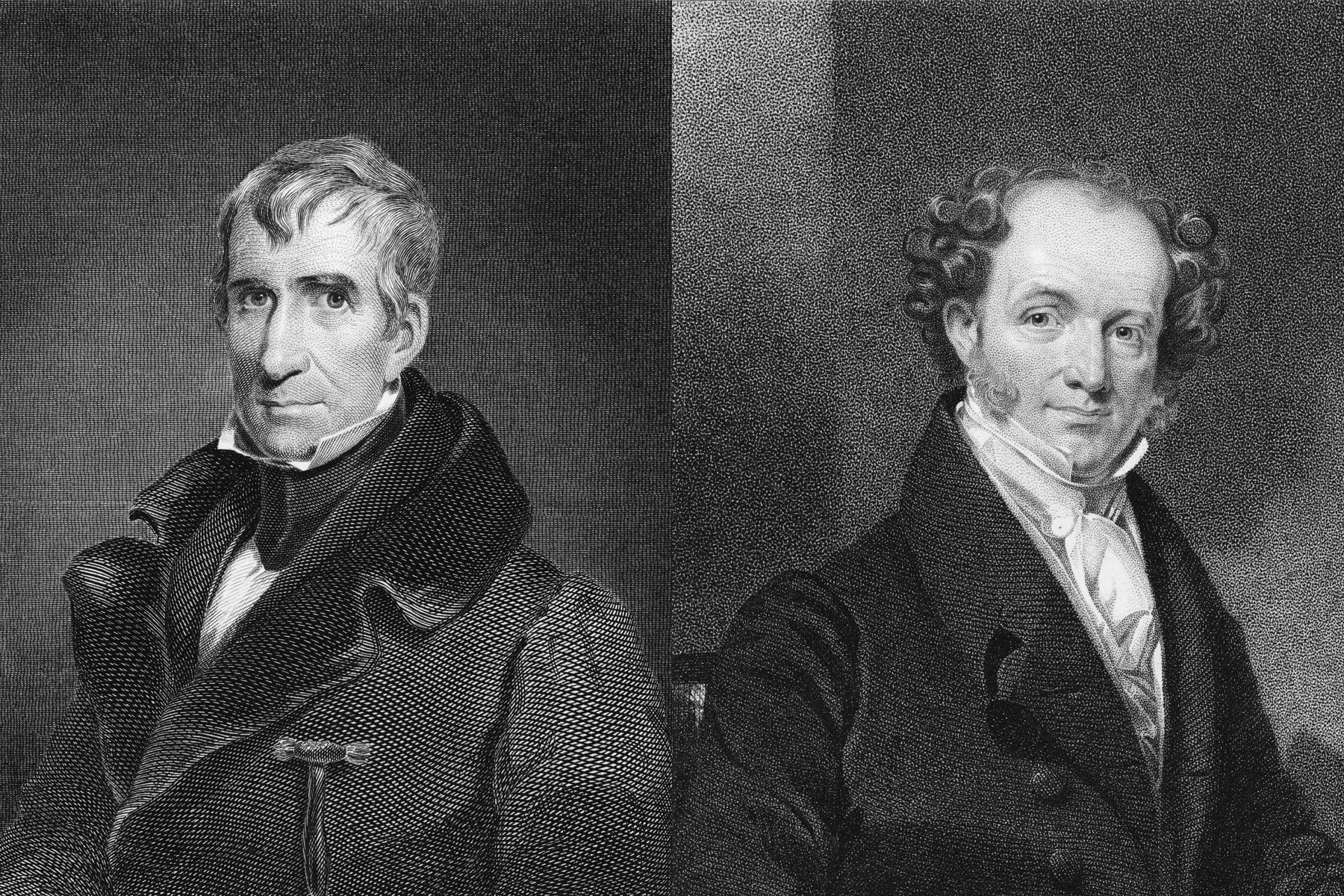
If William Henry Harrison is known today, it’s for the obscurity of his mere 31 days in office. But the campaign leading to his presidency was a rollicking and often rowdy phenomenon that sparked a voter turnout of more than 80%, an increase of nearly 23 percentage points from the previous election. 

The election pitted Harrison and running mate John Tyler of the upstart Whig Party against incumbent Democratic President Martin Van Buren during a period of economic strife caused by the Panic of 1837. Harrison’s campaign played off of his military fame for his victory at the Battle of Tippecanoe, with the slogan “Tippecanoe and Tyler Too.” It also attacked Van Buren with accusations of living in aristocratic luxury. The Van Buren campaign and its supporters countered by painting the 67-year-old Harrison as too elderly and frail for the presidency. An editorial in the Baltimore Republican mocked Harrison with the line, “Give him a barrel of hard cider, and settle a pension on him… he will sit the remainder of his days in his log cabin by the side of the fire and study moral philosophy!” 

The Whigs, however, embraced the hard cider and log cabin imagery, and built the rest of the campaign around it. They leaned into the association with the “everyman,” and organized cider- and whiskey-fueled mass rallies. There were songs, stump speeches, and all manner of bric-à-brac emblazoned with cider kegs and log cabins. There were also the 10- to 12-foot slogan-covered balls Whigs would roll down the streets while chanting in support of the candidates. It all led to Harrison shellacking Van Buren in the election, albeit not quite as might be expected: The lopsided victory was in the Electoral College, 234 to 60, but the popular vote margin was only about 150,000 votes. No need to pity Van Buren, though. He later remarked, “The two happiest days of my life were those of my entrance upon the office and my surrender of it.” 

You may also like

Why Are People Never Smiling in Old Photographs?

  • Americans pose in a photo
Americans pose in a photo
Transcendental Graphics/ Archive Photos via Getty Images
Author Kristina Wright

November 9, 2023

Love it?

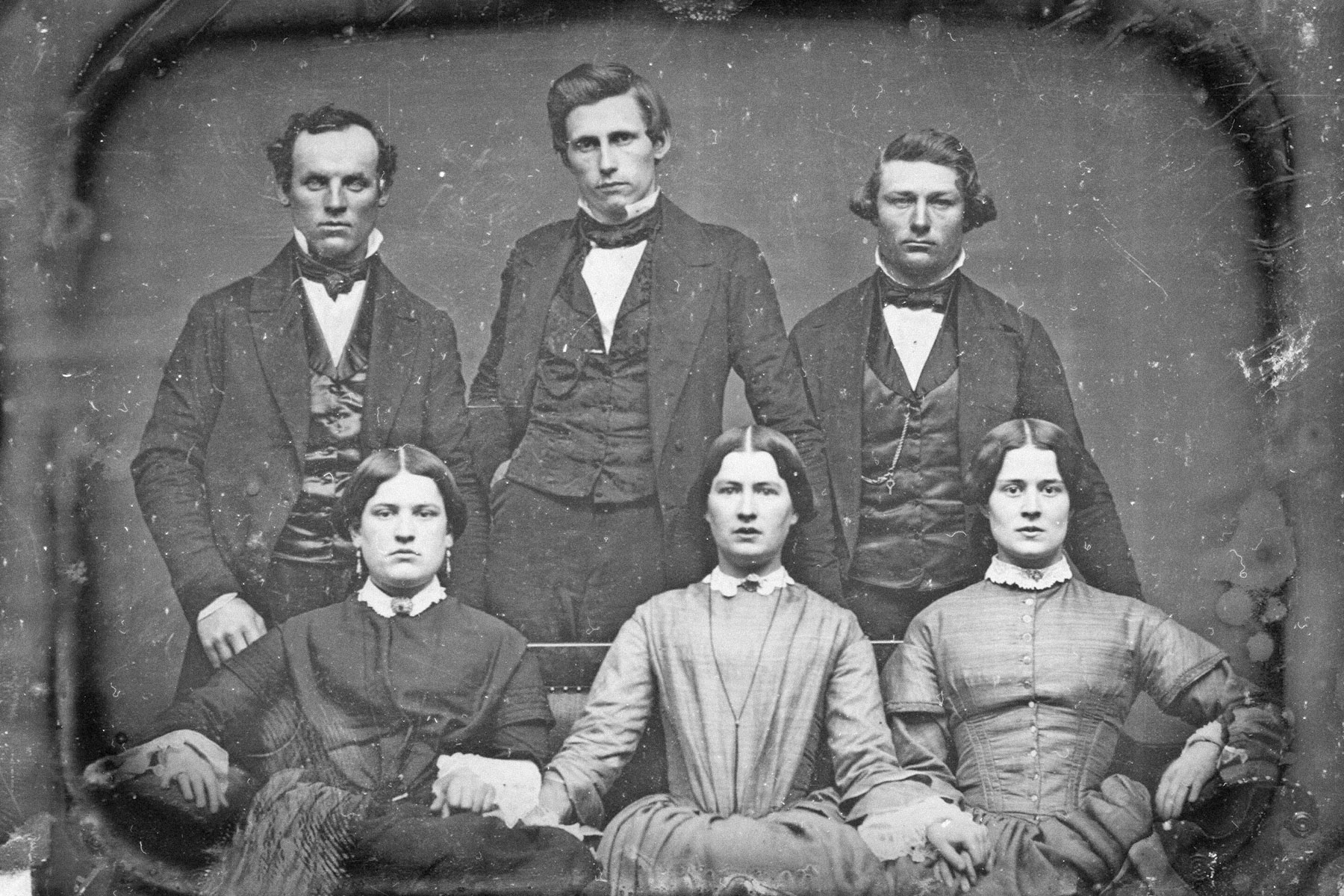
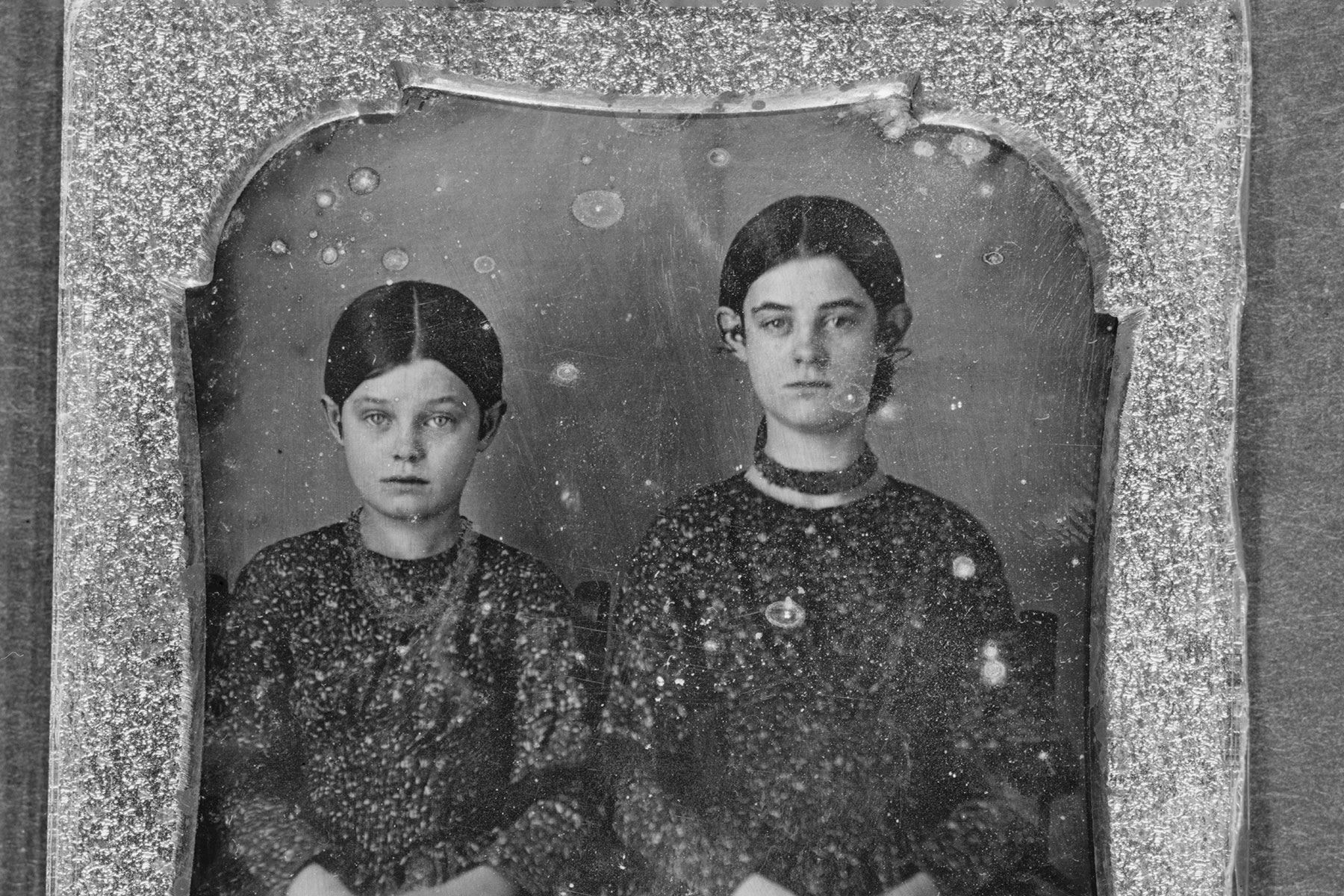
First developed in the late 1820s, photography combined art and science into one medium capable of capturing an image in the moment. The innovation transformed recorded history into something that could be documented in pictures as well as text. As the technology advanced, the medium exploded in popularity, making it possible for families to create snapshots of memories for future generations to appreciate. These early photographic portraits transport us back in time, painting a picture of a different way of life: Families were larger, clothes were bulkier, and postures were noticeably stiff and formal. But perhaps the most conspicuous difference of all is that no one ever seemed to smile.

The somber expressions preserved in early photographs might lead us to assume that past generations led austere and joyless lives. However, the lack of joviality in these snapshots can be attributed to several other factors. Here’s the truth behind those stern expressions in old photos.

Photo credit: Science & Society Picture Library via Getty Images

Long Exposure Times

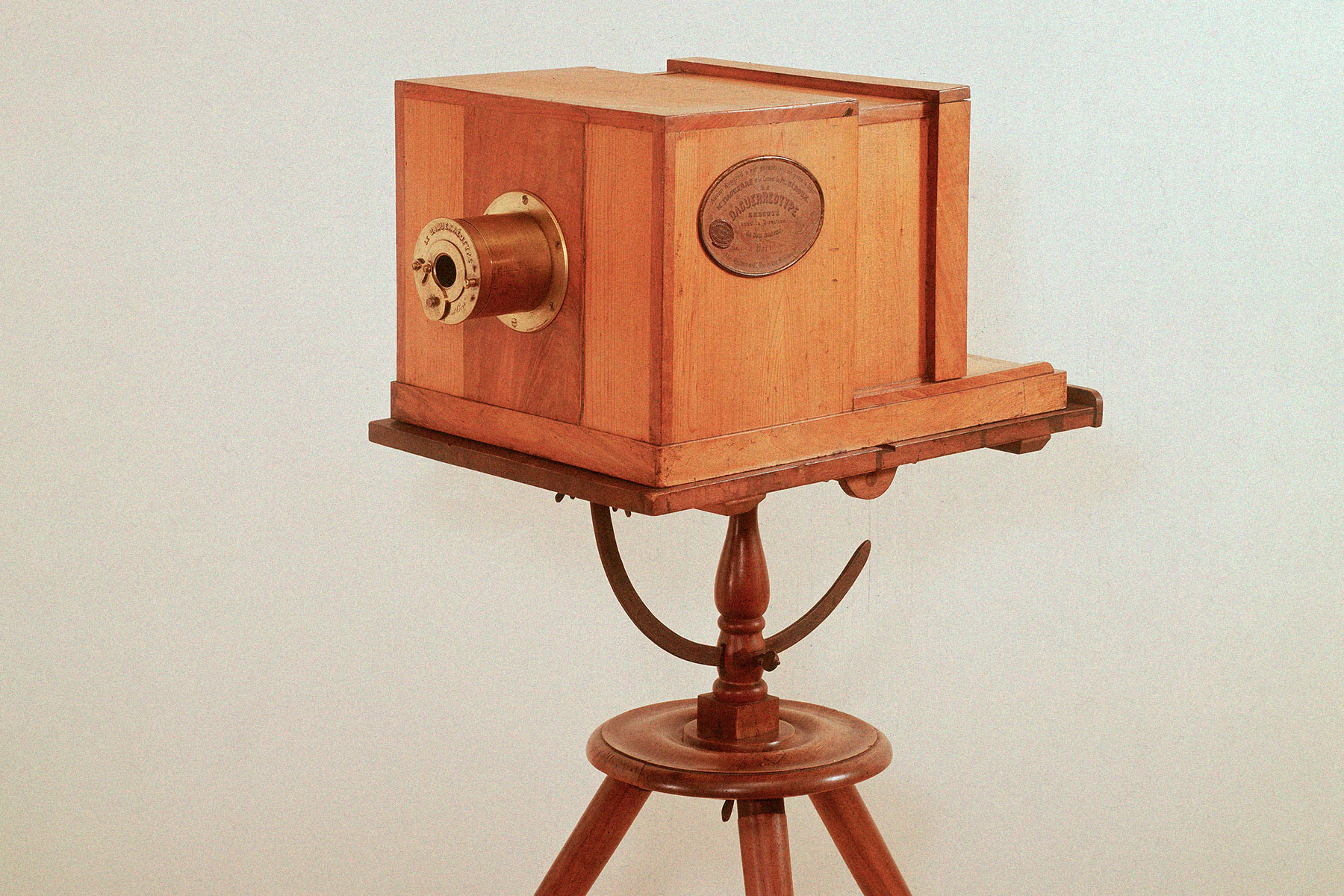
In the earliest days of photography, the lengthy exposure periods made it impractical to photograph people. For instance, French inventor Nicéphore Niépce’s 1826 “View from the Window at Le Gras,” credited as the oldest surviving photograph, required an exposure time of eight hours. It was more than a decade before Louis Daguerre’s 1839 invention of the daguerreotype made portrait photography practical. But even then, it was a relatively slow and meticulous process that required the subject to remain still for as long as 20 minutes

By the early 1840s, photographic technology had advanced further, and the daguerreotype images that once required a 20-minute exposure needed only 20 seconds to process. Still, even modern photo subjects understand the difficulty of maintaining an open-mouthed smile for any amount of time. It only takes a few moments for a candid smile to turn into something more like an awkward grimace. And anyone who has dealt with a restless child can attest that more than a few seconds of remaining motionless is a formidable challenge. To minimize movement and guarantee a sharp image, children were sometimes put into restraints for the length of a photo shoot. 

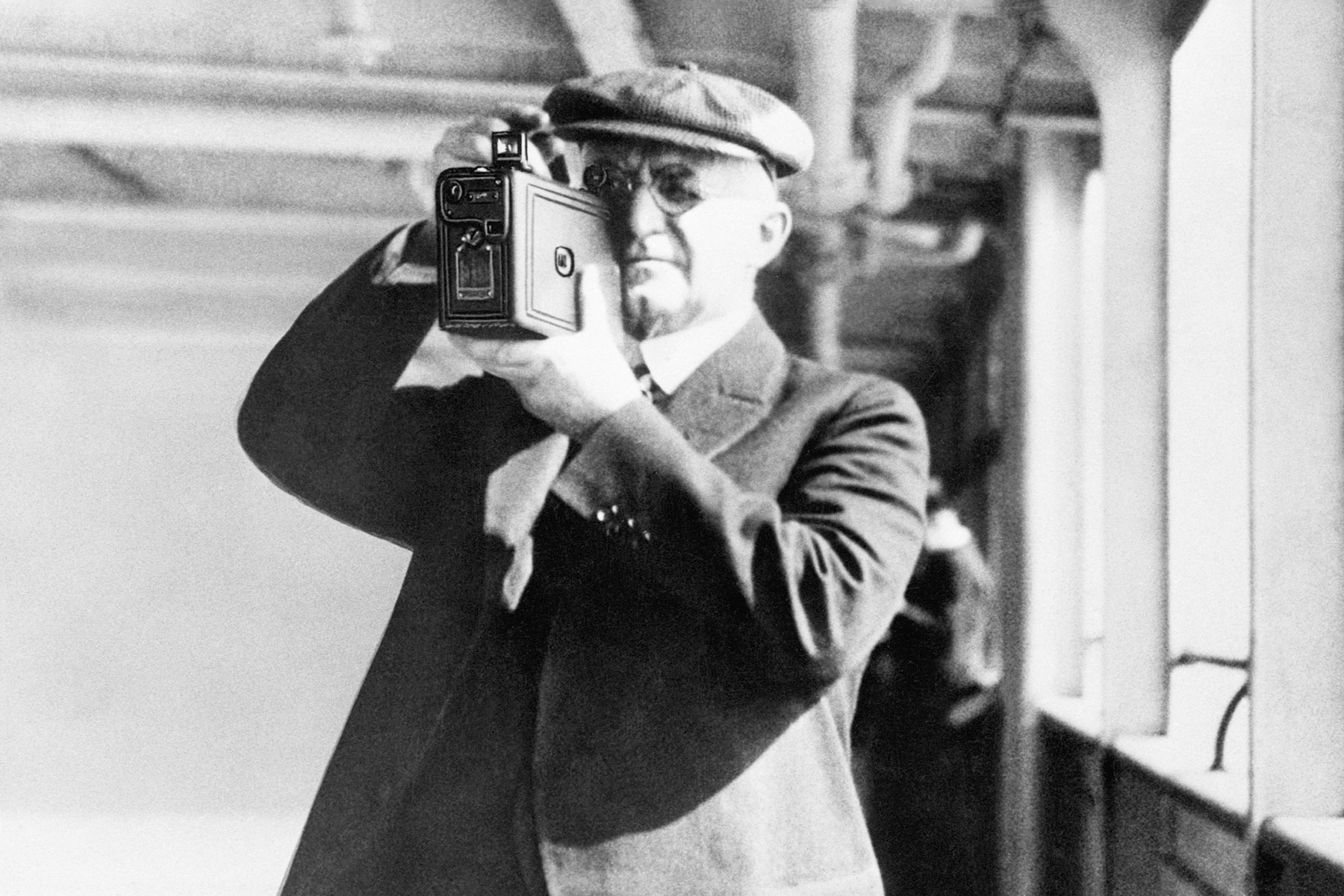
Additionally, until the 20th century, the expense of photographic equipment and the toxic and dangerous chemicals needed to process film meant that most photographs were taken by professional photographers working out of studios or traveling with their equipment. A photography session was a time-consuming and pricey undertaking; it cost the average person as much as three or more months’ salary, and a person might only be photographed a few times in their life. The requirement for stillness, combined with the novelty and cost of posing for a professional photographer, created an atmosphere where it was simply easier to maintain a neutral or serious expression. But even once the technology existed to capture more relaxed expressions, it was a long time before smiling in photos became the norm.

Photo credit: UniversalImagesGroup via Getty Images

Early Photographers Imitated Portrait Artists 

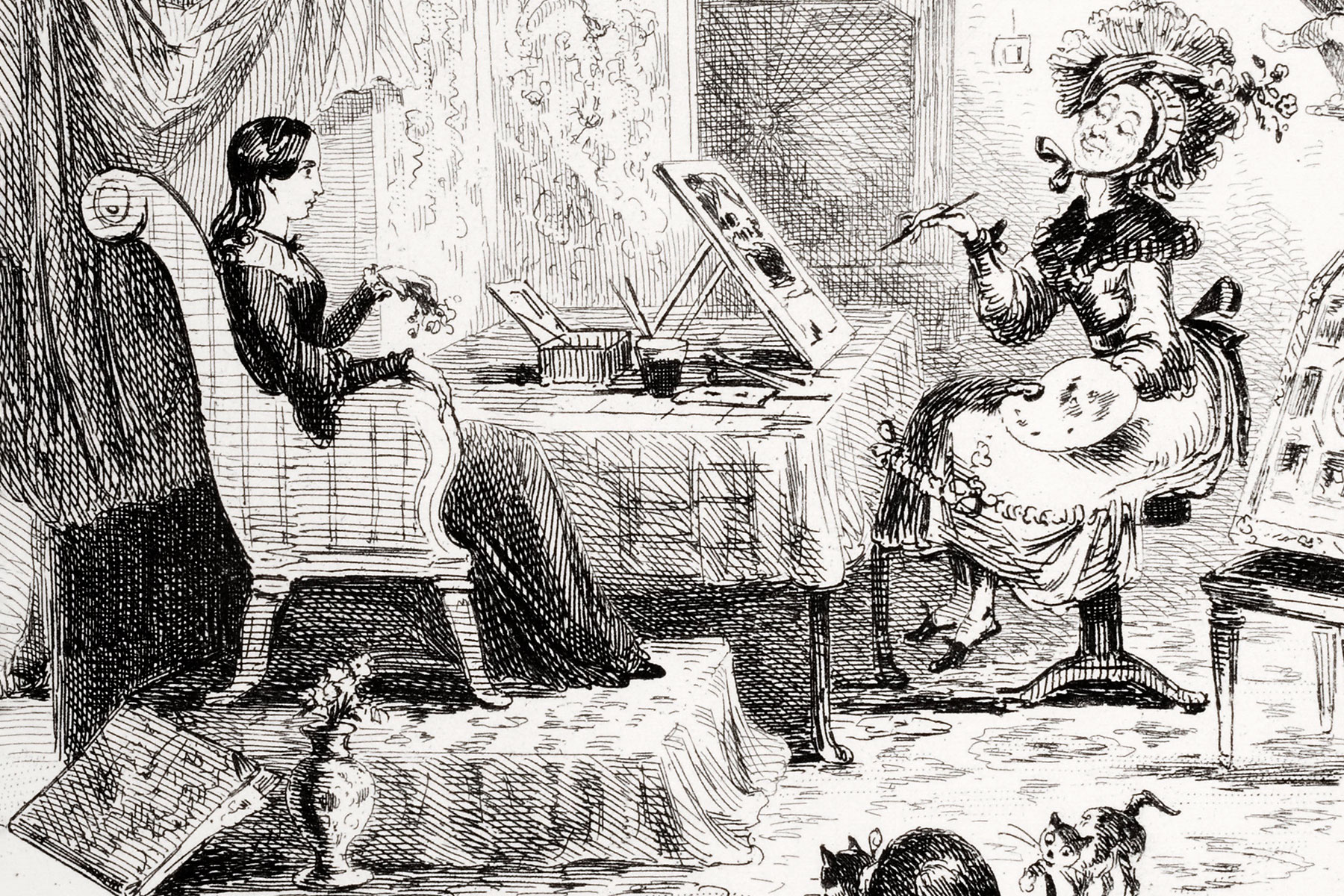
Though technological limitations are frequently cited as the reason for the solemn expressions in old photographs, it wasn’t the only reason our ancestors so often appeared solemn in front of the camera. One notable feature shared by artist portraits from the 17th and 18th centuries and photographs from the early 19th century is the presence of stoic, enigmatic expressions on the subjects’ faces. As portrait artist Miss La Creevy observes in Charles Dickens’ novel Nicholas Nickleby, only two types of expressions existed in portraiture: “the serious and the smirk.”

Before photography, a painted portrait was the only way to preserve someone’s image for posterity. Having your portrait painted was an activity associated with wealth and social status, and accordingly, the art form had its own rules and expectations. This formal portraiture proved to be a big influence on early photographers, who featured their subjects in ways that represented their social status, occupation, or other interests. The social mores associated with painted portraits carried over into photographic portraiture, and smiling was discouraged.

You may also like

6 Inventions Often Credited to the Wrong Person

  • Telescope, circa 1620
Telescope, circa 1620
Hulton Archive via Getty Images
Author Tony Dunnell

November 9, 2023

Love it?

There’s nothing more frustrating than working your socks off only to see someone else get all the credit for your efforts. Spare a thought, then, for the minds behind some of history’s most significant innovations, who, despite months, years, or in some cases lifetimes of work, find someone else’s name ignominiously attached to their invention. 

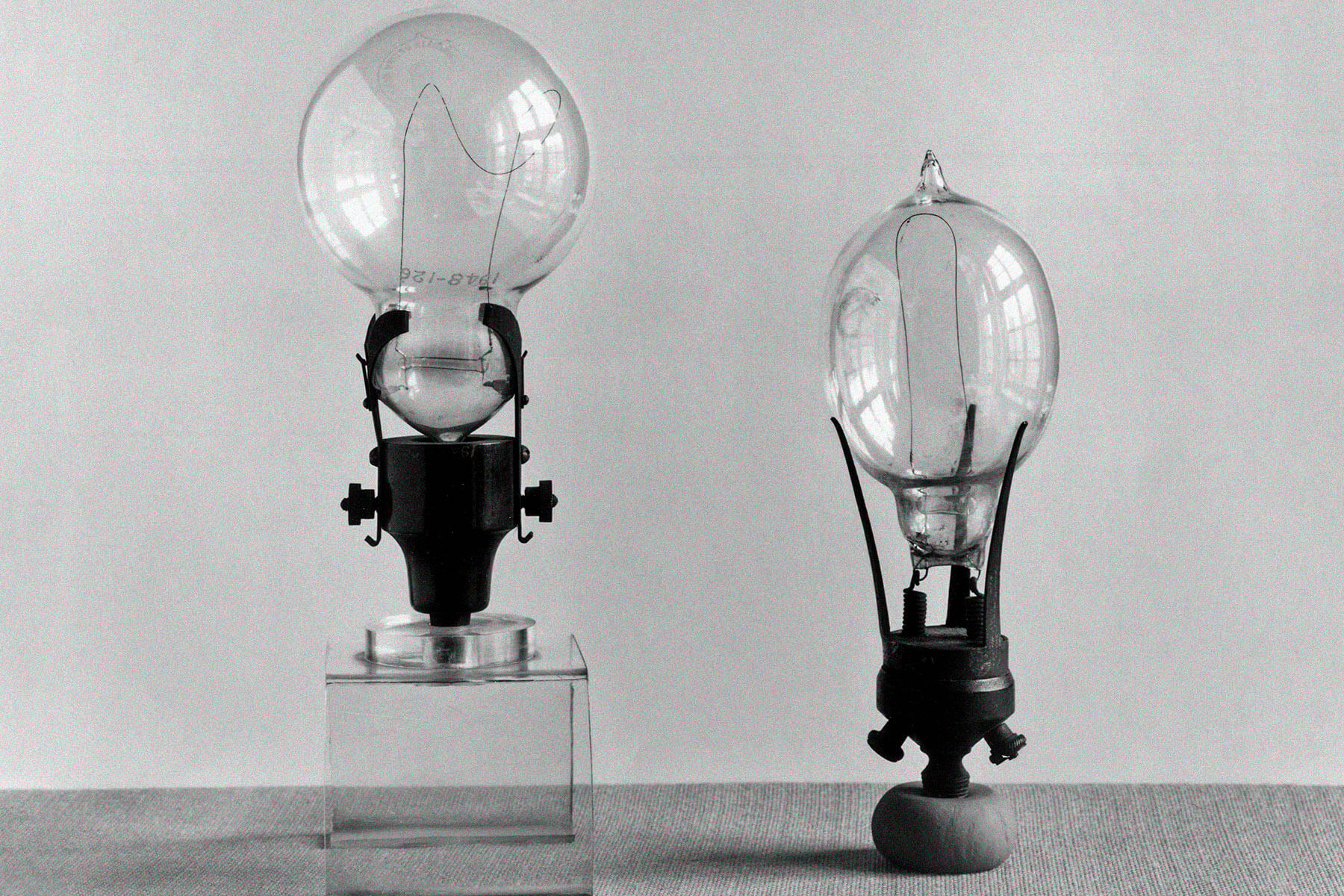
Sometimes inventions are miscredited in the public consciousness simply because a more famous name becomes associated with the creation. For example, Thomas Edison and Henry Ford — two of modern history’s most well-known innovators — are often credited with things they didn’t actually invent, through no fault of their own. Then there are the more insidious misattributions. In some instances, an idea has been copied or outright stolen, robbing the true inventor of their glory; in others, a more senior or prominent member of a team is given credit despite not coming up with the original idea. See, for example, the Matilda effect, in which notable discoveries made by women have often been misattributed to the men they worked with. 

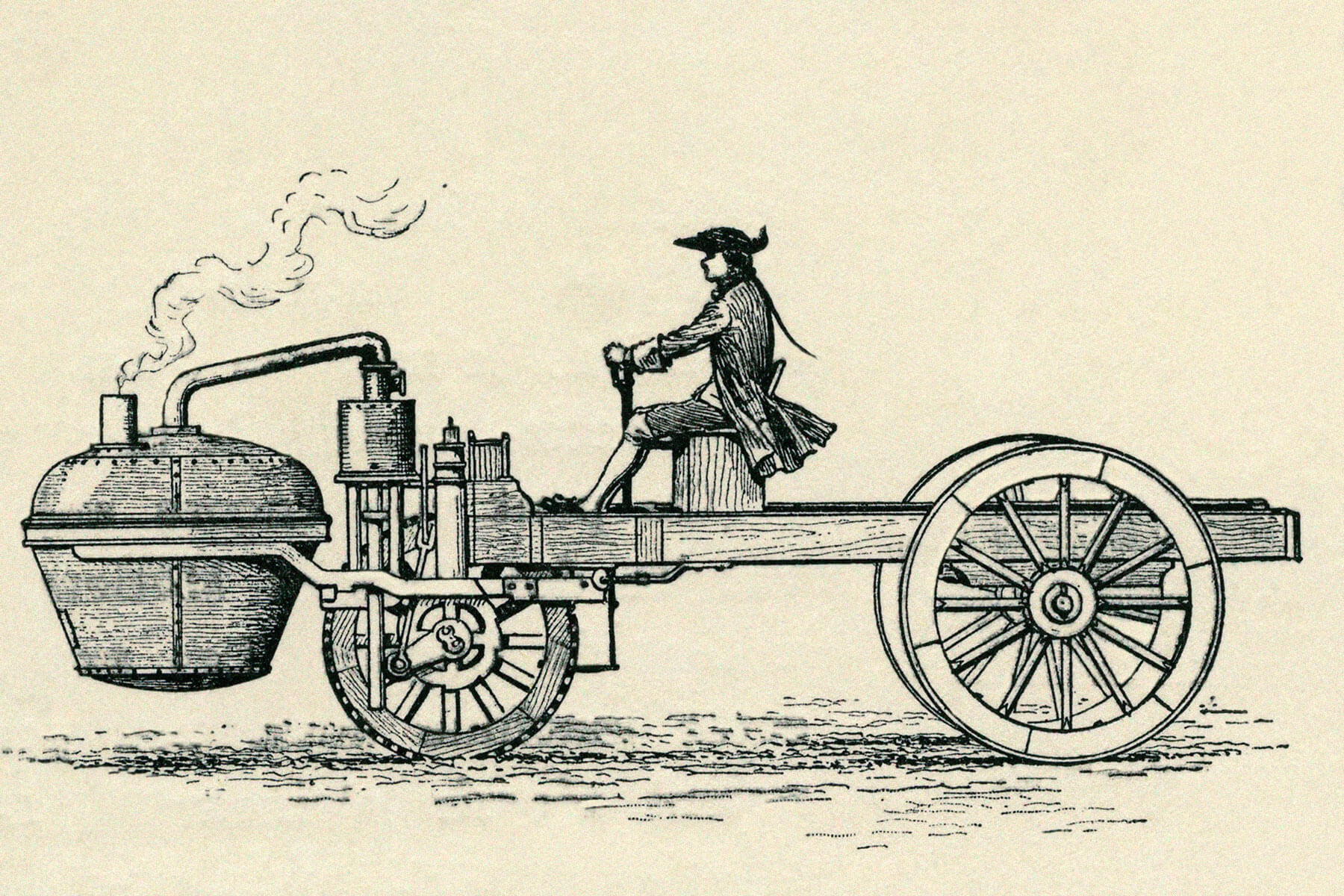
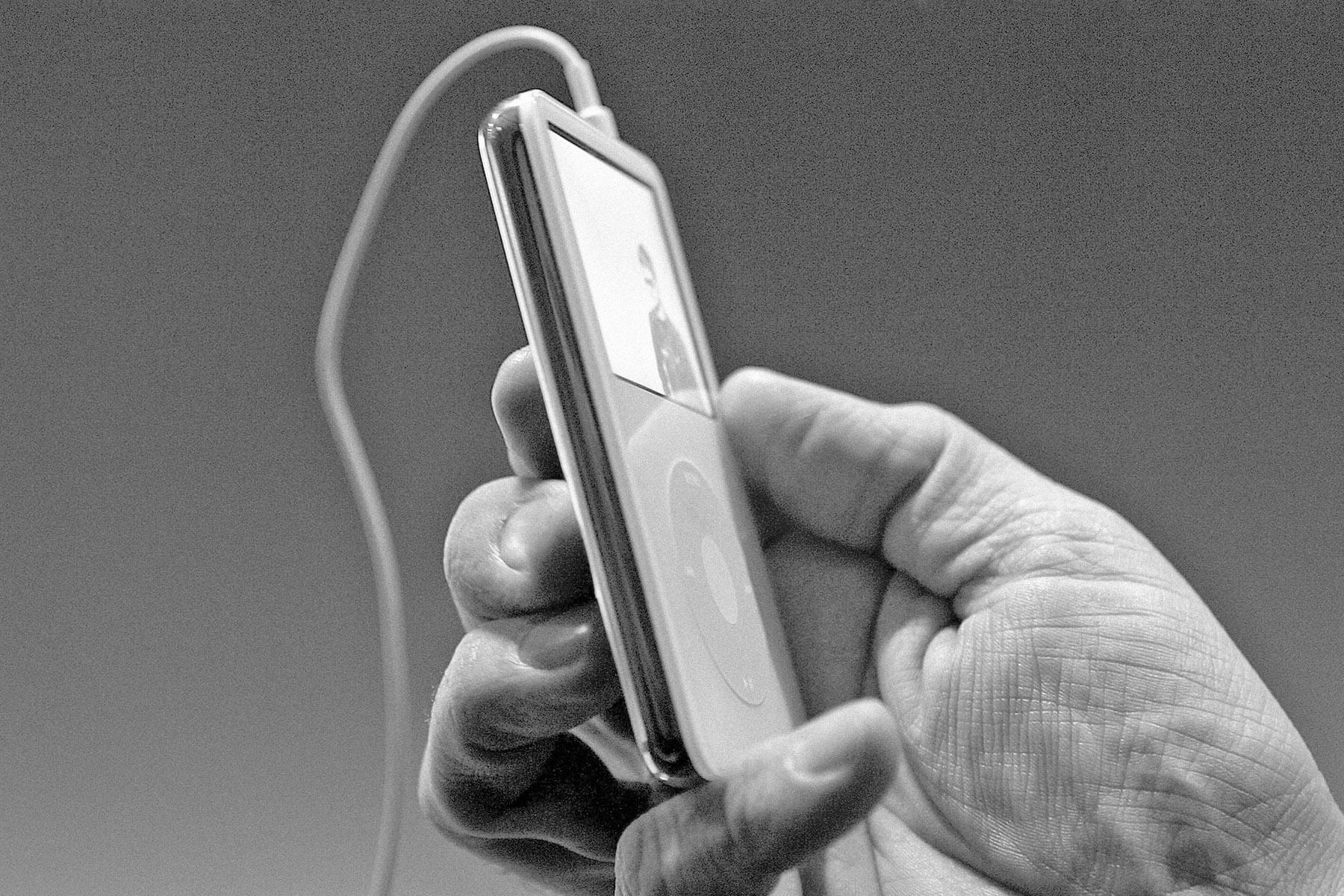
Here are some notable inventions in history that are frequently credited to the wrong person, from the flush toilet to the iPod. 

Photo credit: FLHC SP2/ Alamy Stock Photo

The Flush Toilet

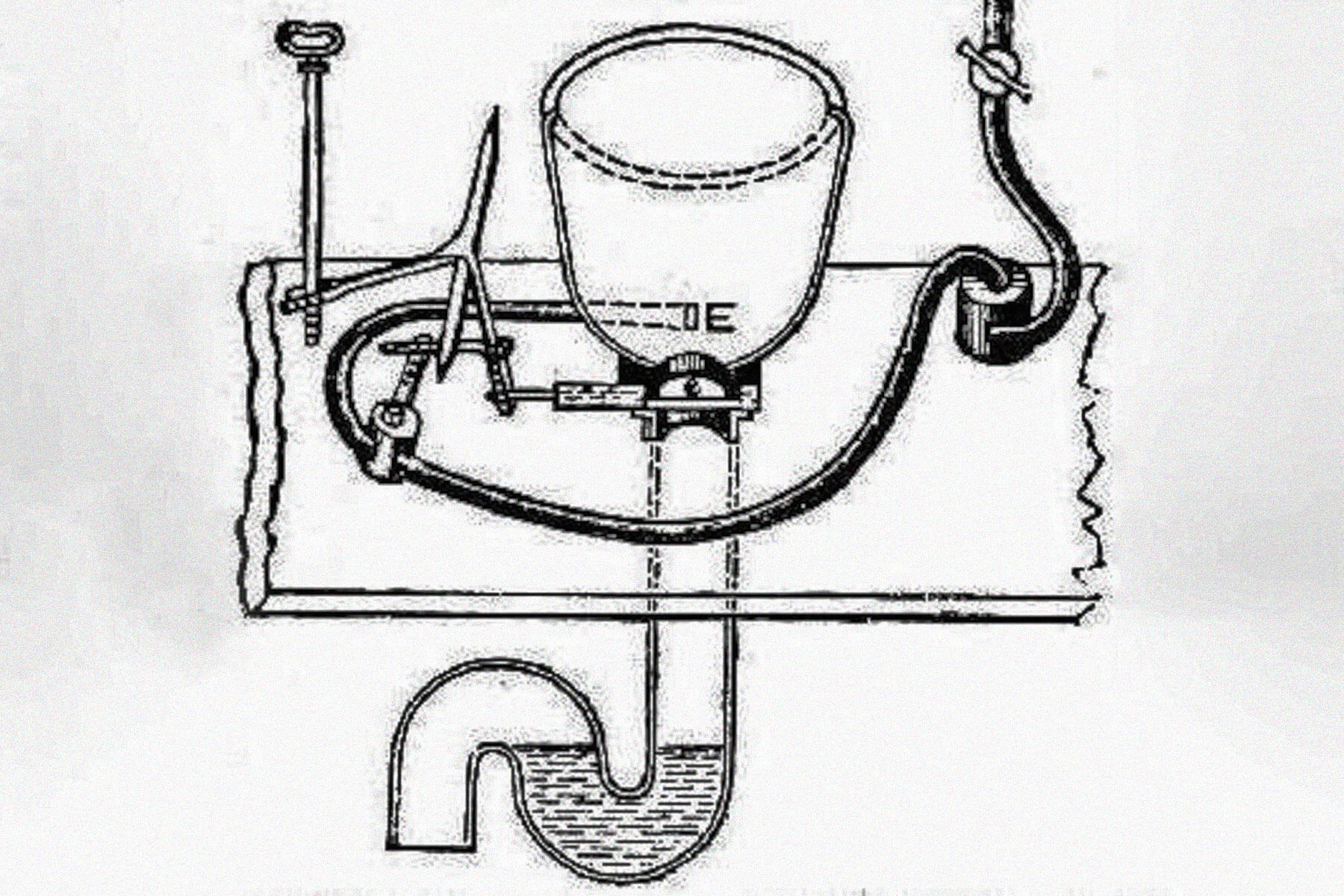
No name in the history of toilets is more famous than that of plumber Thomas Crapper, partly because his name appeared on the once-ubiquitous Crapper brand of toilets, and partly because Crapper is a humorously appropriate name for a toilet (the slang word “crap” existed before Thomas Crapper). Crapper, however, did not invent the flushing device with which he is so associated. He did patent the U-bend and floating ballcock — key components of the modern toilet — in the late 1880s, but he never held a patent for the flush toilet. Much earlier, in 1596, John Harington, an English courtier and the godson of Queen Elizabeth I, described what can be considered the first flush toilet, which involved a 2-foot-deep bowl and a massive 7.5 gallons of water per flush. (Only two working models were made, one in Haringon’s own home and one in Queen Elizabeth’s palace.) The first patent for a flushable toilet was granted to the Scottish inventor Alexander Cumming in 1775. 

Photo credit: Bettmann via Getty Images

The Telescope 

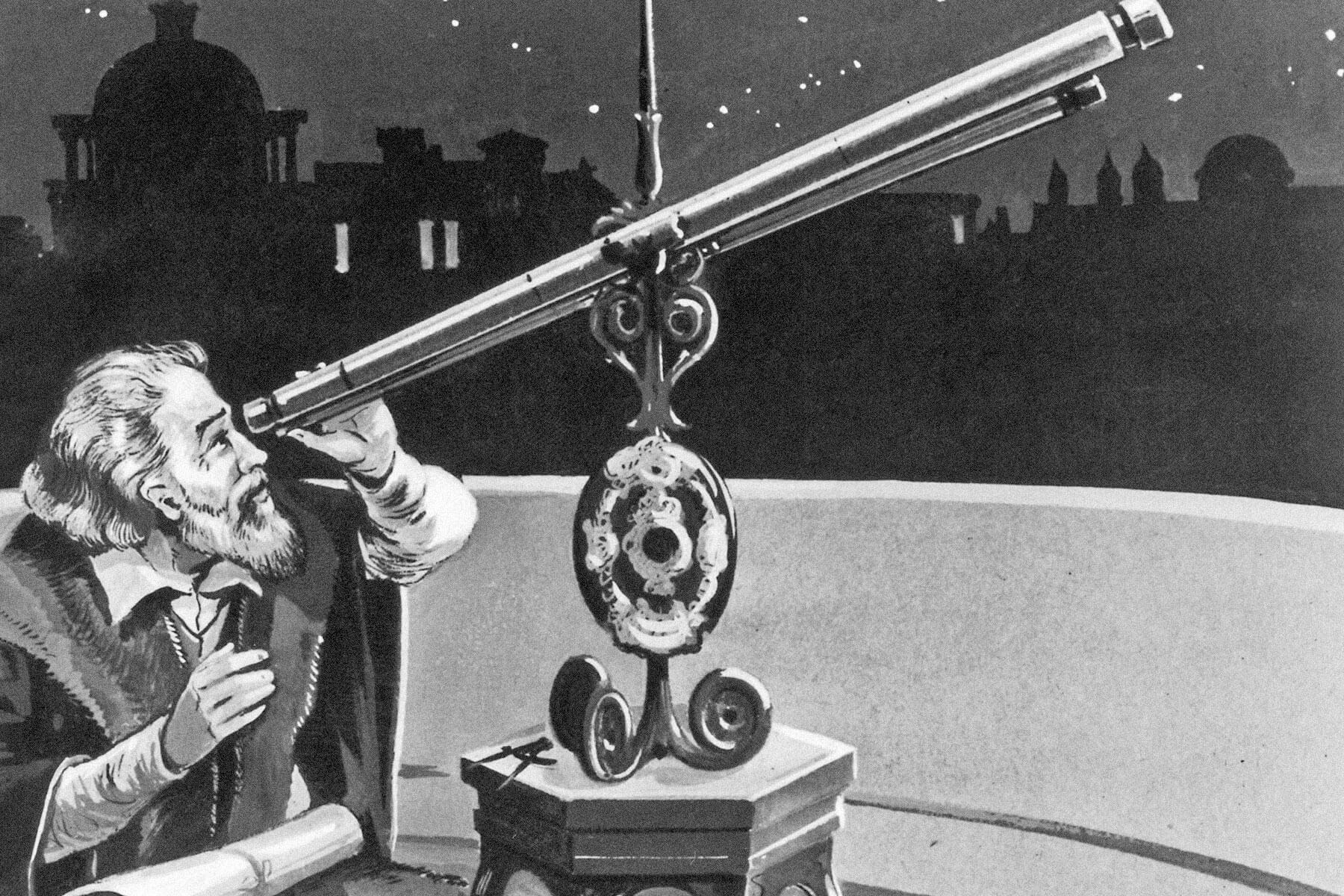
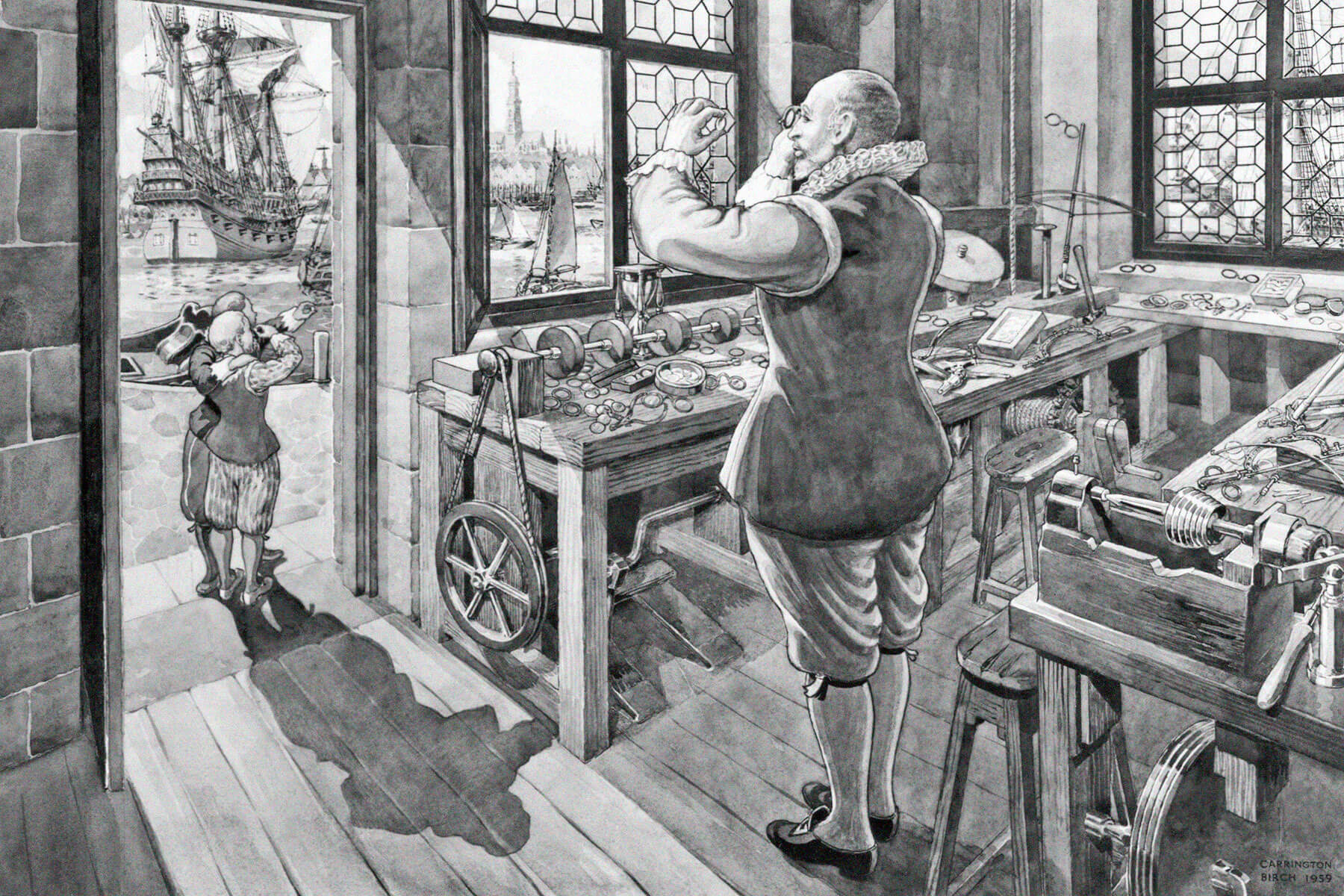
The Italian polymath Galileo Galilei is often credited with inventing the telescope, and it’s easy to see why. He gave birth to modern astronomy with his telescope-assisted discoveries about our moon, the moons of Jupiter, and other celestial bodies. Galileo made his first telescope in 1609 after hearing about the “perspective glasses” being made in the Netherlands. But the first person to apply for a patent for a telescope was Dutch eyeglass-maker Hans Lippershey in 1608, a year before Galileo. His telescope could magnify objects only three times, but it was nonetheless a landmark in the history of optics. (By comparison, by the end of 1609, Galileo had developed a telescope that magnified objects 20 times.) Whether Lippershey should be credited as the inventor of the telescope remains an open debate, as it is entirely possible that others created similar devices before he filed his patent. 

You may also like

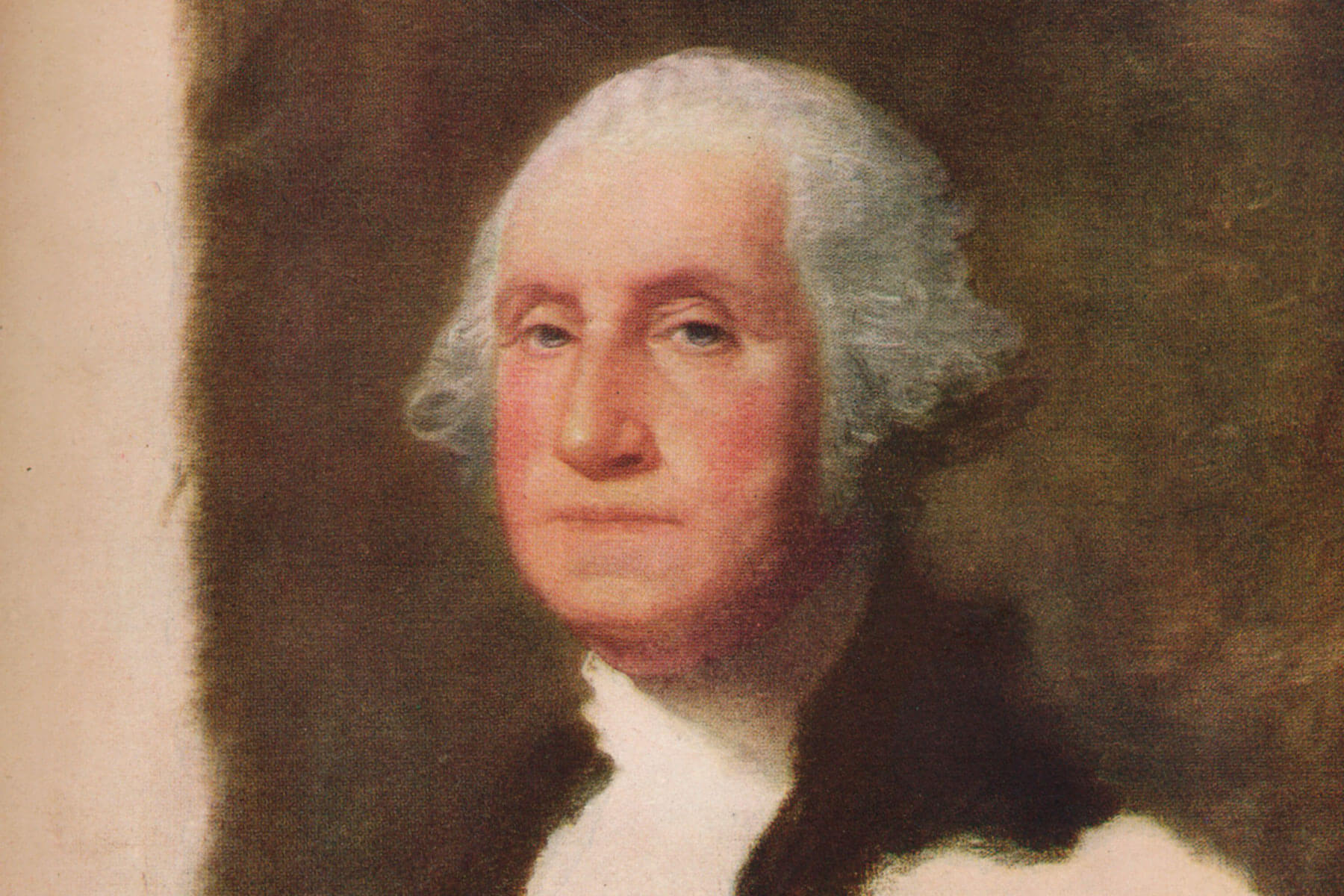
6 Myths and Misconceptions About George Washington

  • General George Washington
General George Washington
Credit: Everett Collection/ Shutterstock
Author Rachel Gresh

November 9, 2023

Love it?

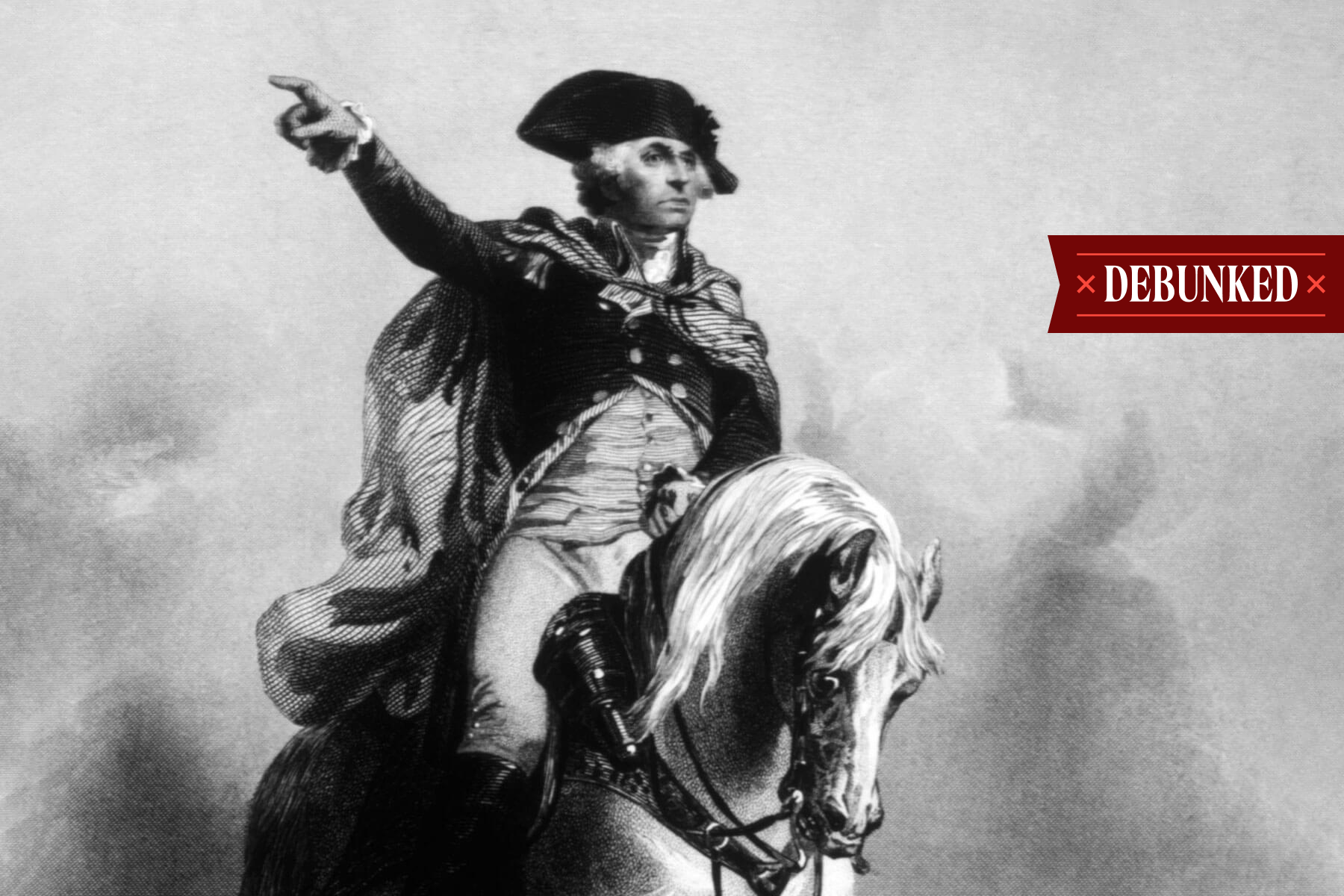
George Washington undoubtedly led an extraordinary life, which makes it hard to separate legend from reality. He was the only U.S. President to be unanimously elected to office, despite having no formal schooling past the age of 15, and he remains one of the most famous military leaders in United States history. Common depictions of Washington include a young Virginian boy chopping down cherry trees and, later, a dignified statesman proudly posing in a powdered wig. But some of the best-known aspects of the former President’s life aren’t historically accurate. Here are six common myths about the famous founding father. 

Photo credit: Bettmann via Getty Images

Myth: Washington Chopped Down His Father’s Cherry Tree

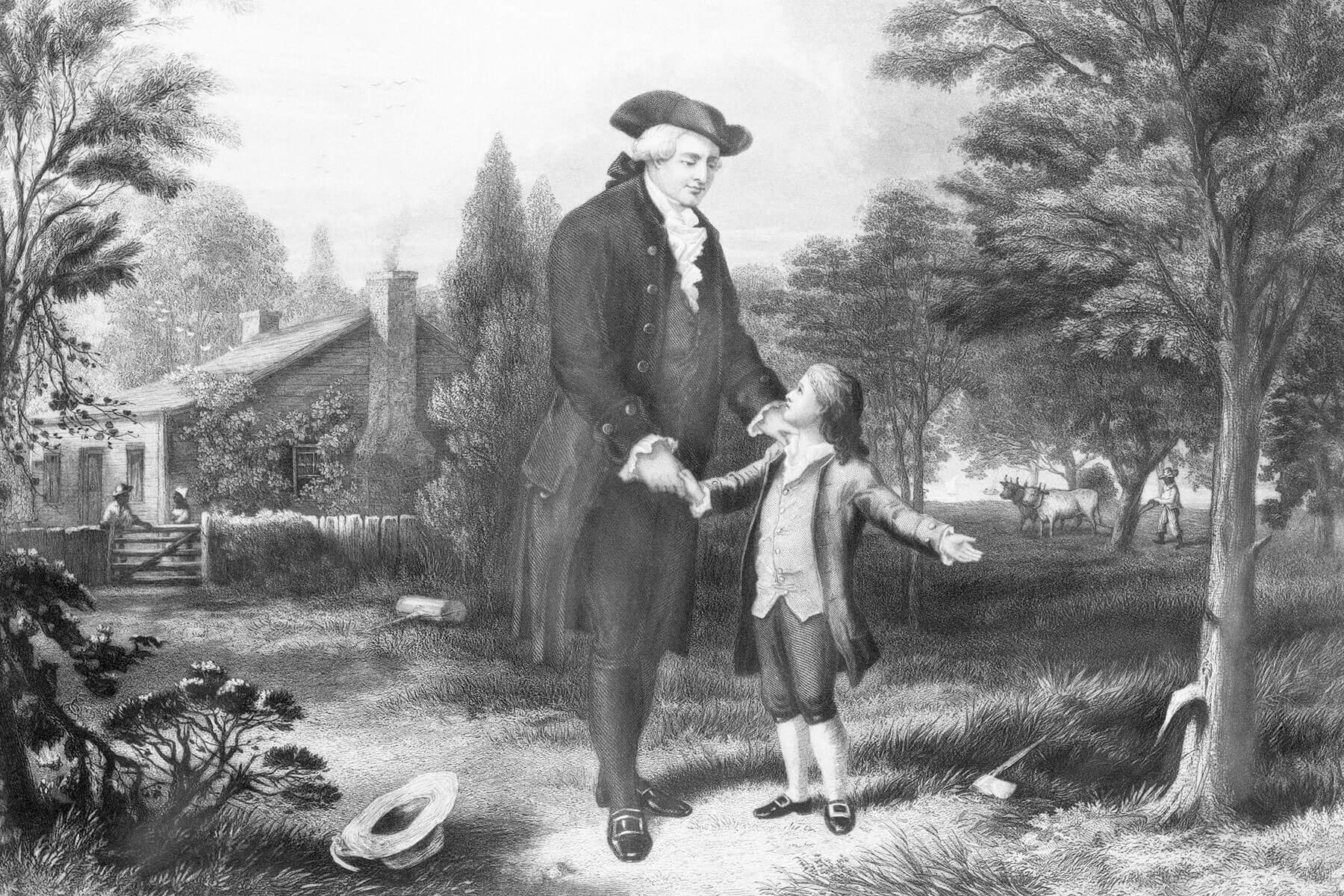
Washington telling his father, “I cannot tell a lie… I did cut it with my hatchet,” is coincidentally one of the biggest lies about this larger-than-life figure. Legend says that George Washington received a hatchet as a gift when he was 6 years old, and  took the ax to one of his father’s beloved cherry trees. During the subsequent confrontation with his father, he came clean, unable to tell a lie. The encounter was recreated in artist John C. McRae’s 1867 engraving “Father, I Can Not Tell a Lie: I Cut the Tree.” There’s just one problem: None of this ever happened. The famous legend was devised by biographer Mason Locke Weems in the 1806 edition of his book “The Life of Washington.” Published shortly after Washington’s death, the book immortalized the founding father as a national hero with a steadfast moral compass despite his faults, including the ownership of hundreds of enslaved people at his Mount Vernon estate.

Photo credit: MPI/ Archive Photos via Getty Images

Myth: He Was the First President to Live in the White House

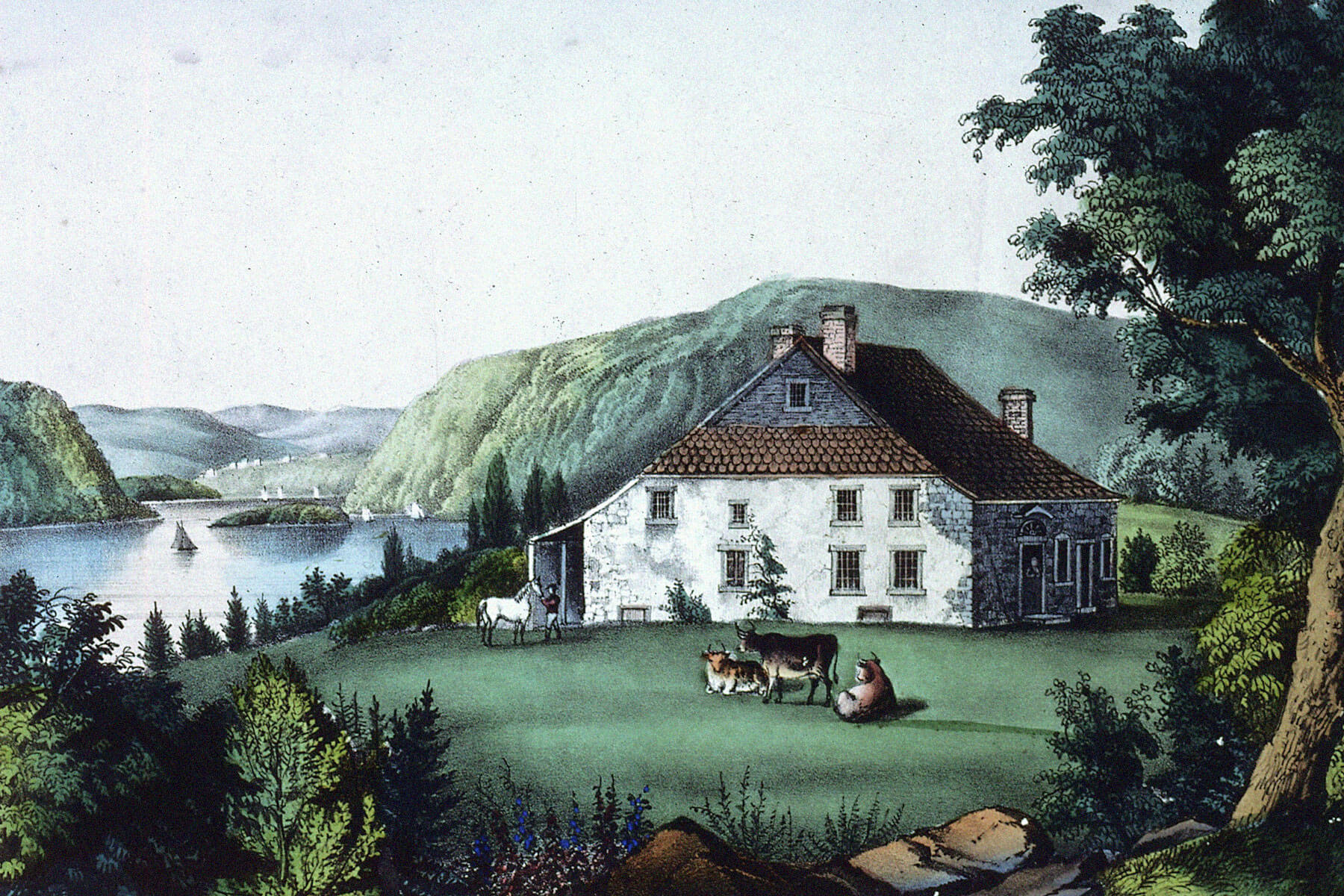
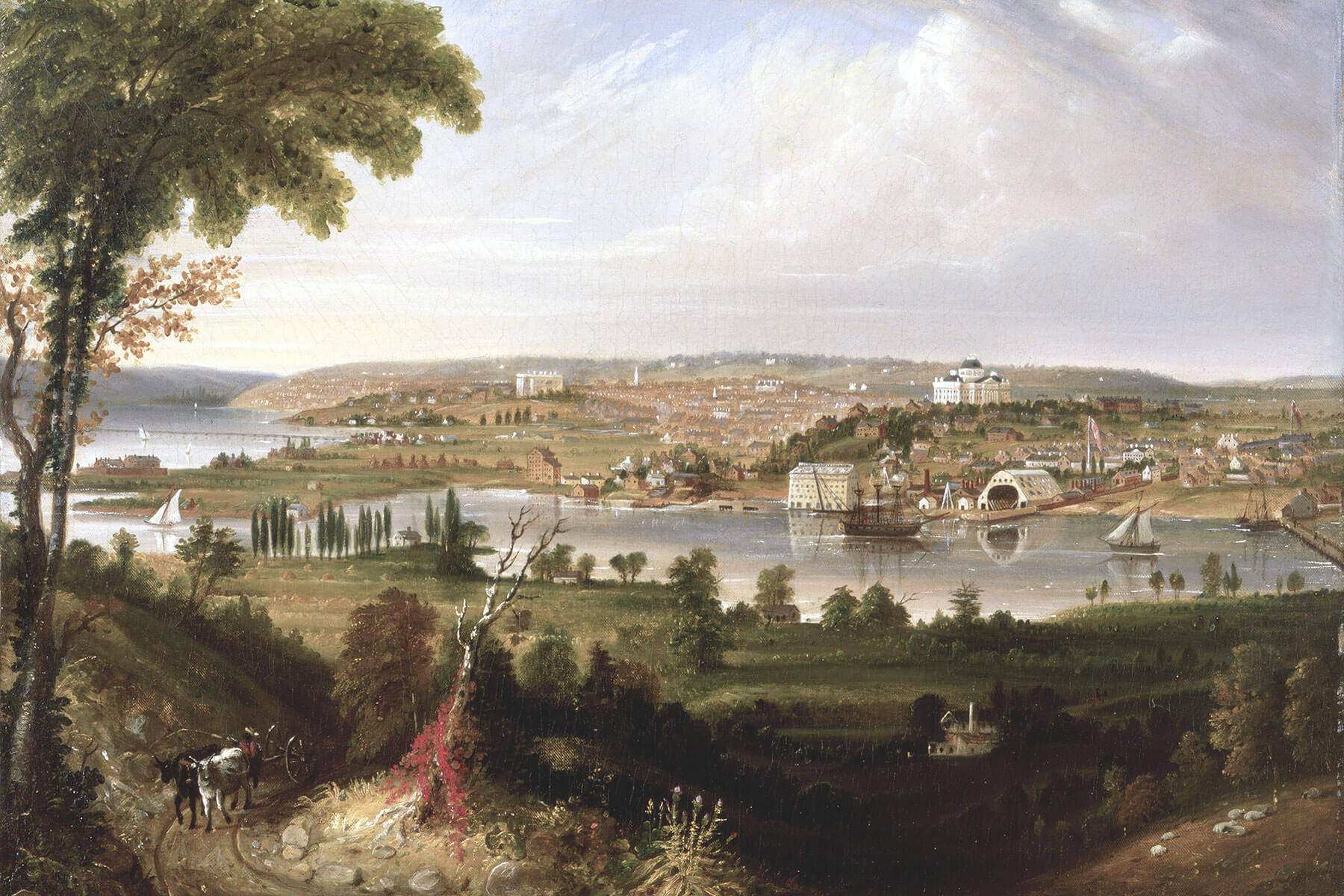
It’s a common misconception that George Washington lived in the White House — he was the first President, after all — but the building wasn’t completed until 1800, one year after Washington’s death. The President’s successor, John Adams, was the first commander in chief to call the White House home. However, Washington did play a large role in the planning and construction of the famous residence. He chose the site of what was then called the “President’s House” at what is now 1600 Pennsylvania Avenue. The first cornerstone of the White House was laid in October 1792. During this time, Washington lived in executive residences in New York and Philadelphia, both of which served as the nation’s capital before it was moved to Washington, D.C., in 1800. 

You may also like

Meet 6 Fearless World War II Heroes

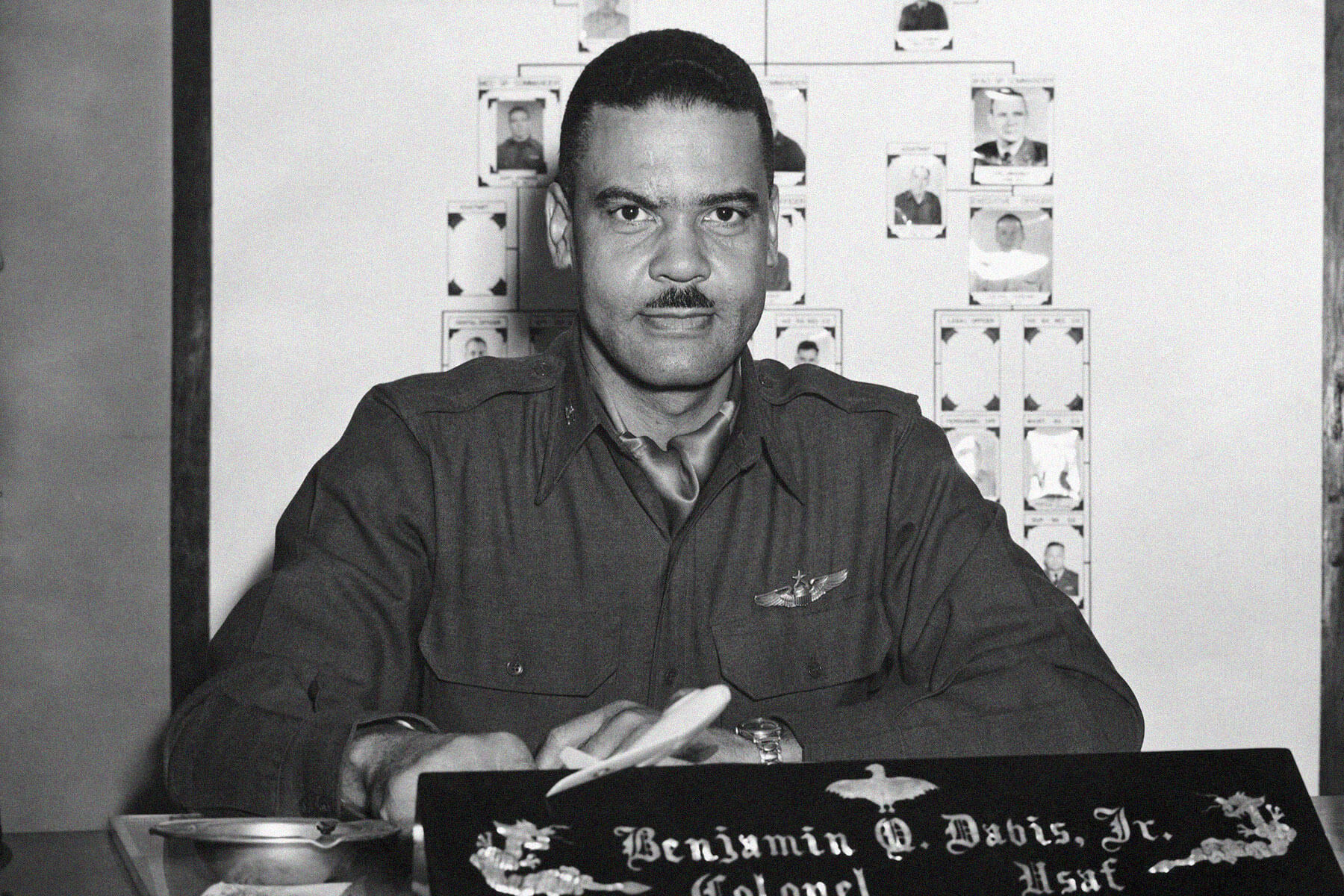
  • Benjamin O. Davis Jr.
Benjamin O. Davis Jr.
PhotoQuest/ Archive Photos via Getty Images
Author Rachel Gresh

November 3, 2023

Love it?

World War II was one of the most transformative events of the 20th century. It was the largest war ever fought, with more than 50 nations and 100 million troops involved, and it reshaped geopolitics, resulting in the United States and Soviet Union emerging as major world powers leading into the Cold War. This far-reaching war also inspired new global peacekeeping efforts, including the creation of the United Nations, and it brought to light incredibly courageous acts of humanity from soldiers and civilians alike. Here are the stories of six daring heroes of the Second World War.

Photo credit: Gibson Green/ Alamy Stock Photo

The Youngest American Soldier in WWII

Calvin L. Graham was the youngest U.S. military member during WWII, and is still the youngest recipient of the Purple Heart and Bronze Star. It wasn’t unusual for boys to lie about their age to enlist, but Graham was just 12 years old when he forged his mother’s signature and headed to Houston to enlist. The 125-pound, 5-foot-2 boy was miraculously cleared for naval service and assigned to the USS South Dakota as an anti-aircraft gunner.

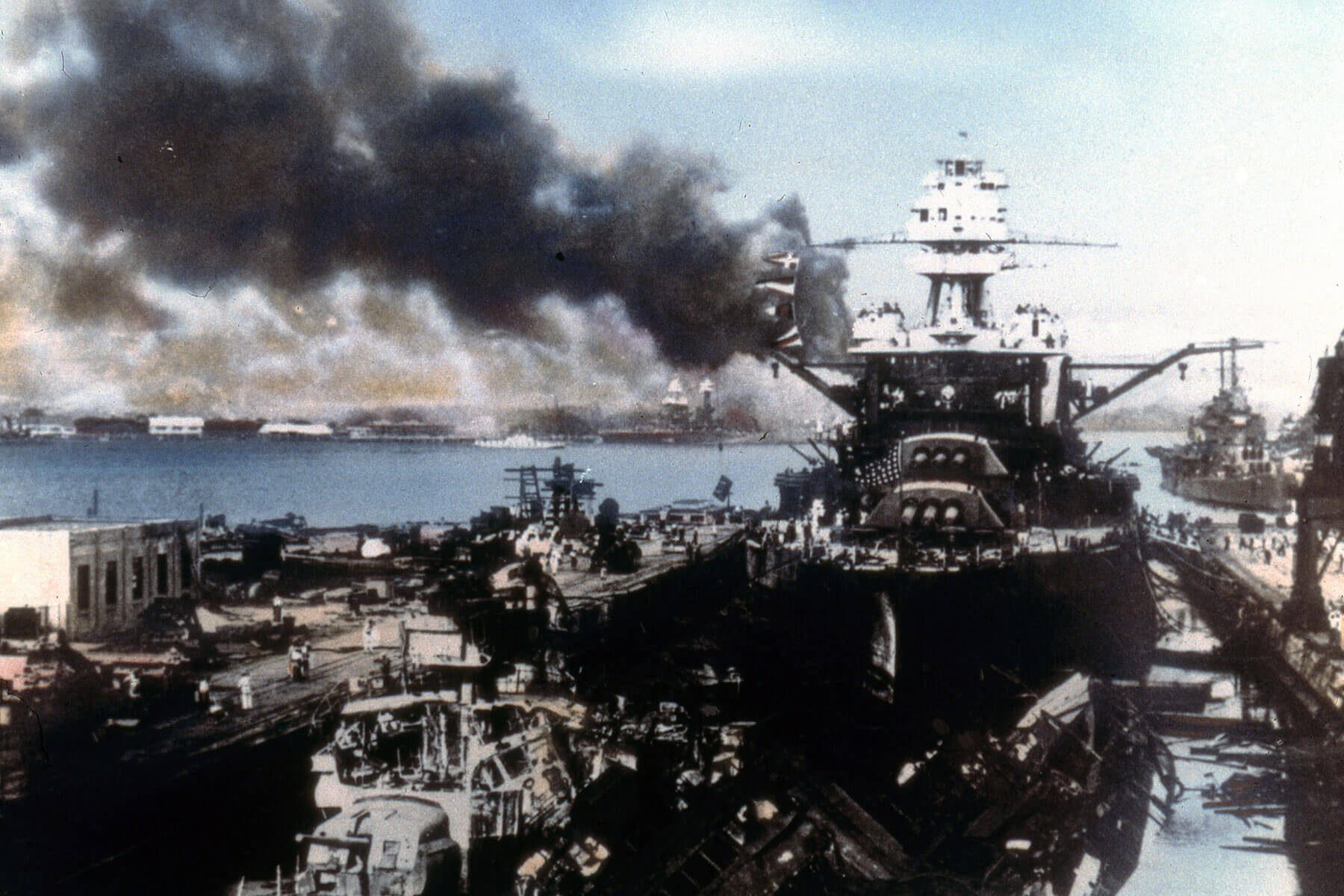
On November 14, 1942, the South Dakota was ambushed by Japanese forces at the Battle of Guadalcanal. Graham was severely burned and thrown down three stories of the ship, but still mustered the strength to tend to his severely wounded shipmates. He was honored for his heroism, but when his mother found out about the honor, she informed the Navy of his real age and he was stripped of his medals and thrown into the brig for three months. In 1978, President Jimmy Carter learned of Graham’s story and restored his medals, except for his Purple Heart, which wasn’t restored until two years after Graham’s death.

Photo credit: Fotokon/ Shutterstock

Wojtek the Bear

Polish soldiers stationed in Iran during the war were met with great surprise when a shepherd traded them a Syrian brown bear cub for a Swiss army knife and some canned goods. The cub’s mother was likely killed by hunters, so the soldiers adopted him, giving him the name “Wojtek,” meaning “joyful warrior” in Polish — a title he soon lived up to. His caretaker, a soldier named Peter Prendys, taught the bear how to salute, wave, and march, and Wojtek became a great morale booster. 

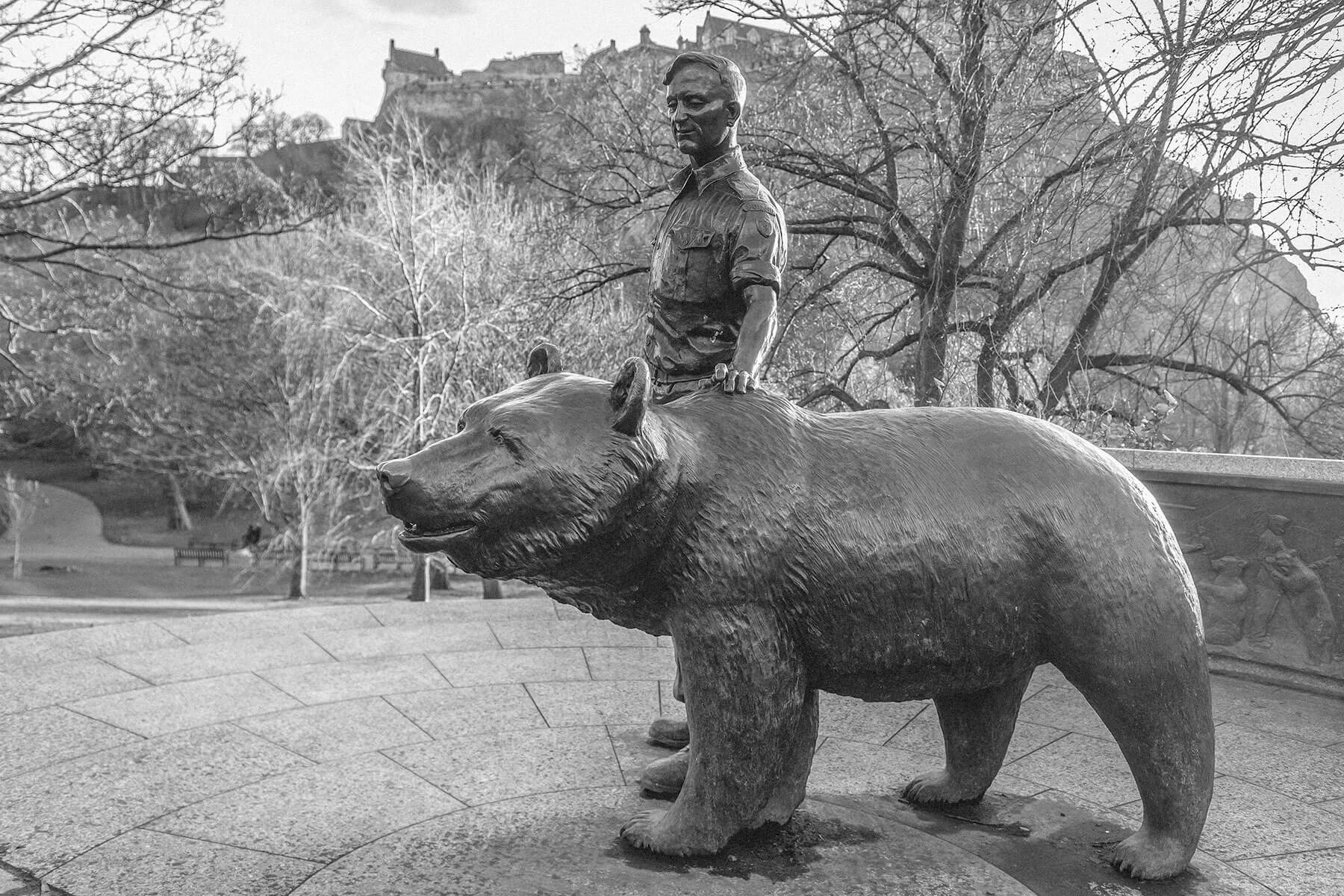
In 1944, Wojtek was given the rank of private and a serial number (pets were banned in the Polish army), and he shipped off to Italy with his unit. That May, the bear even joined combat during the Battle of Monte Cassino, carrying supplies to his fellow troops, according to witnesses. He was promoted to the rank of corporal for his bravery. After the war, Wojtek found his forever home at the Edinburgh Zoo in 1947. A bronze statue of the bear and Prendys still stands in downtown Edinburgh today.

You may also like

A Walk Through the History of Shoes

  • Shelving unit with shoes
Shelving unit with shoes
New Africa/ Shutterstock
Author Mark DeJoy

November 2, 2023

Love it?

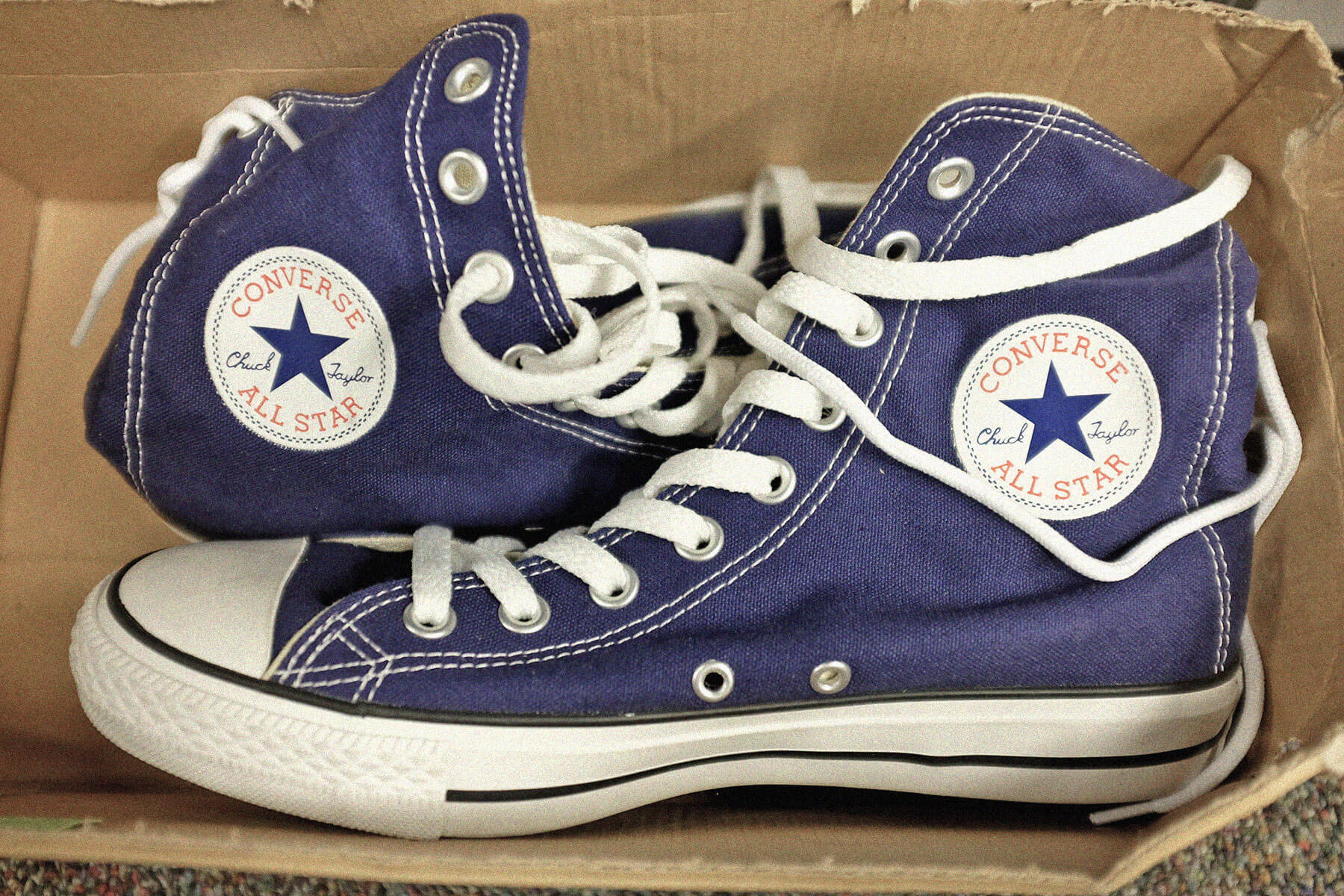
Footwear is so integral to the human experience, it’s hard to imagine a time in history when it didn’t exist. To be without shoes in modern life would pose a significant problem — can you imagine leaving your home and walking even a single city block barefoot? The degree to which footwear is essential for enhanced mobility means that it arguably could even be considered our first vehicle. Whether you’re a bona fide shoe-lover or someone who takes footwear for granted, it’s worth thinking about the lineage of these things we put on our feet to carry ourselves through the world. Let’s go on a quick walkabout to explore the history of footwear.

Photo credit: George Ostertag/ Alamy Stock Photo

First Steps

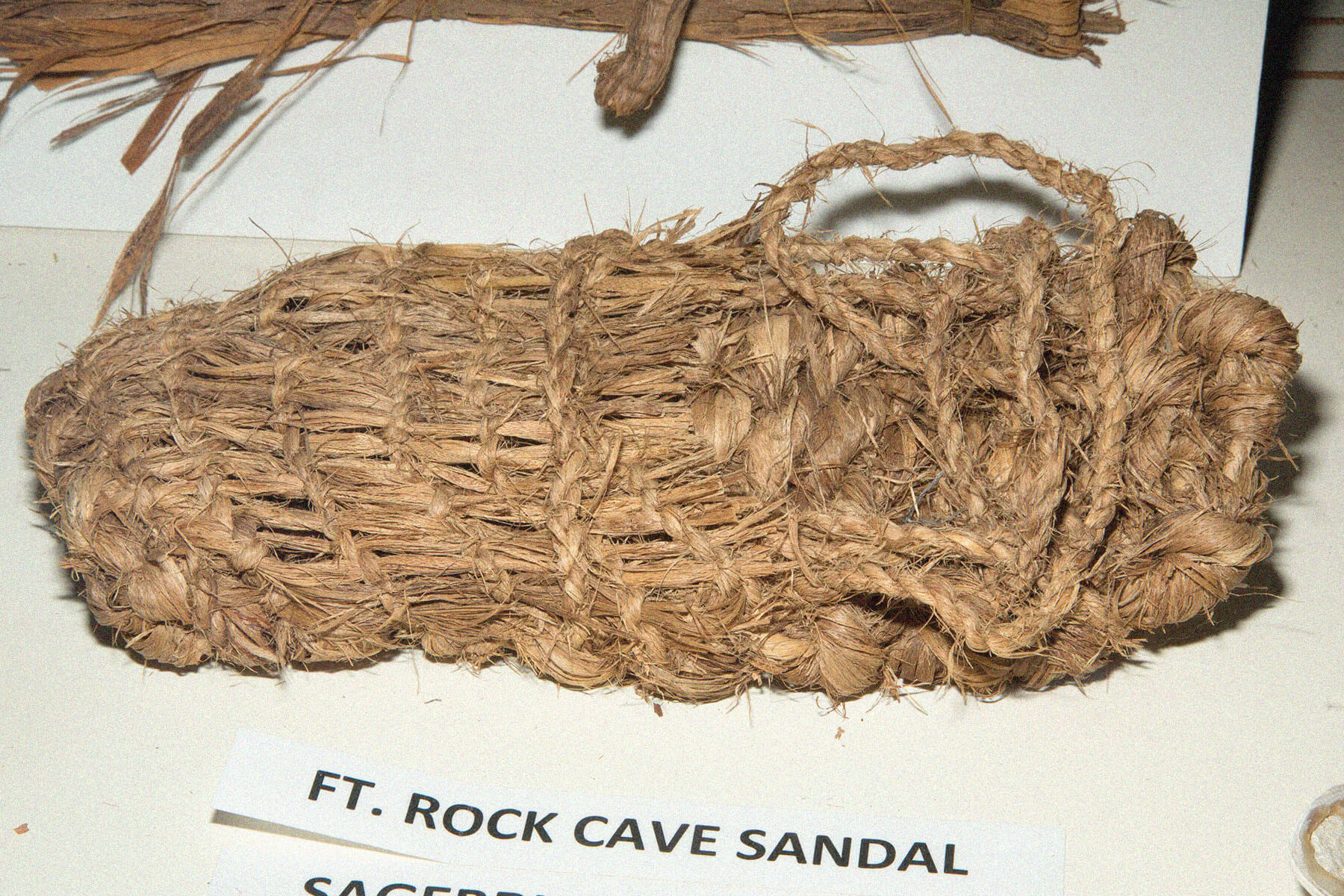
How far back in human history do shoes go? Anthropologists estimate that humans first began wearing some form of sturdy foot covering at least 40,000 years ago, based on changes in toe bones. The oldest surviving pair of shoes is what’s referred to as the Fort Rock sandals, woven sagebrush bark sandals made by Indigenous people in what’s now southeast Oregon and northern Nevada about 10,200 to 9,300 years ago (according to radiocarbon dating). Similar variants of these sandals were made by the Klamath Tribes up until the 20th century.

As for fully enclosed shoes, archaeologists made a surprising discovery during a 2010 dig in an Armenian cave: well-preserved shoes made from tanned cowhide that date back 5,500 years. In other words, the world’s oldest leather shoes. Aside from being made of a familiar modern material, the shoes were also laced along a center seam. Renowned designer Manolo Blahnik commented, “It is astonishing how much this shoe resembles a modern shoe!” 

Photo credit: Culture Club/ Hulton Archive via Getty Images

From Sandals to Pointed Toes

Throughout antiquity, footwear refinements were made as new materials were harvested and traded. Sandals that adorned the feet of Egyptian royalty were sleek and look strikingly like flip-flop prequels, as do Japanese geta. Quilted hemp sandals emerged from China and traveled the Silk Road. Roman sandals were made lighter with cork soles and may have been the first footwear built in accordance with the shape of the foot and toes, as well as the first that differentiated between right and left

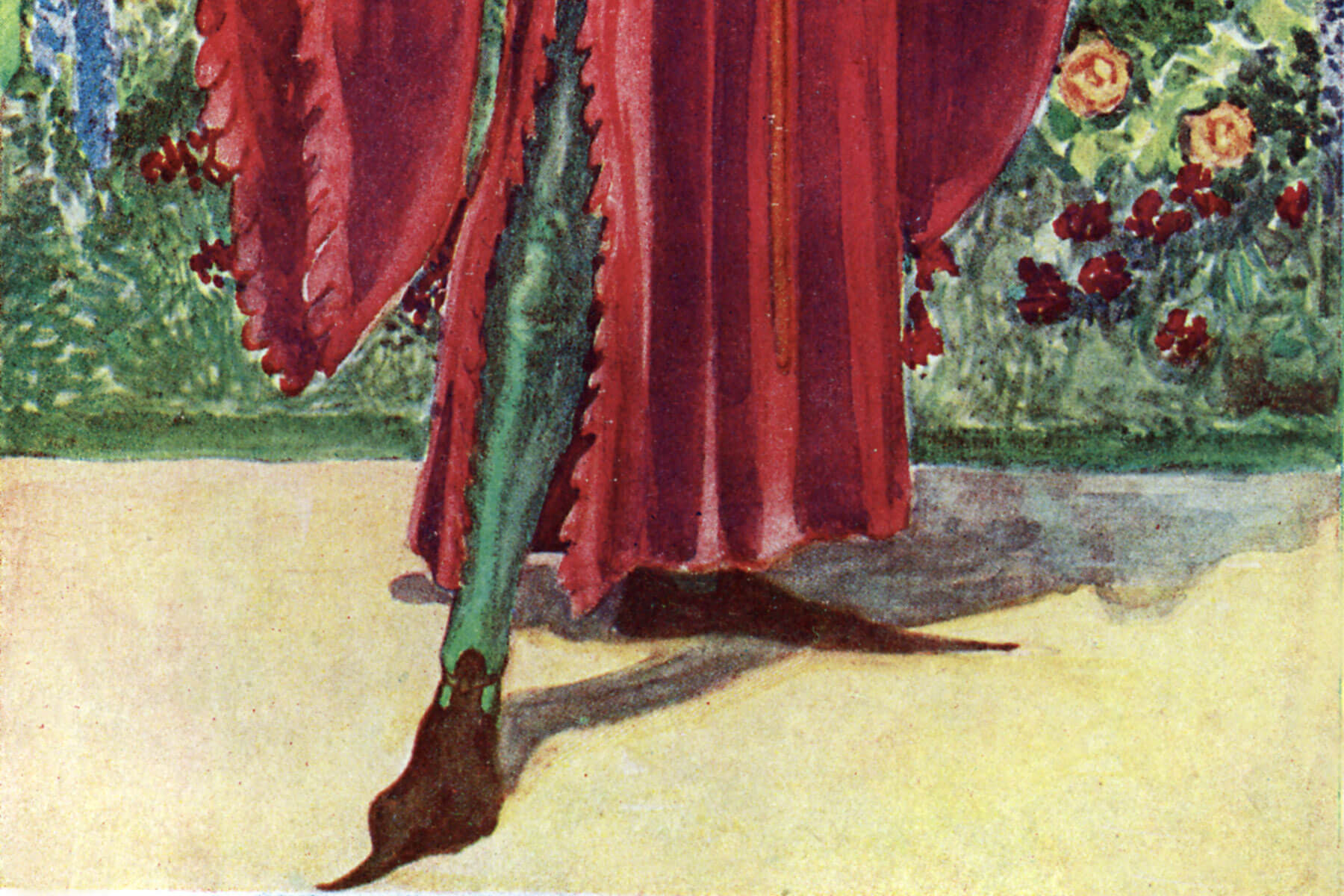
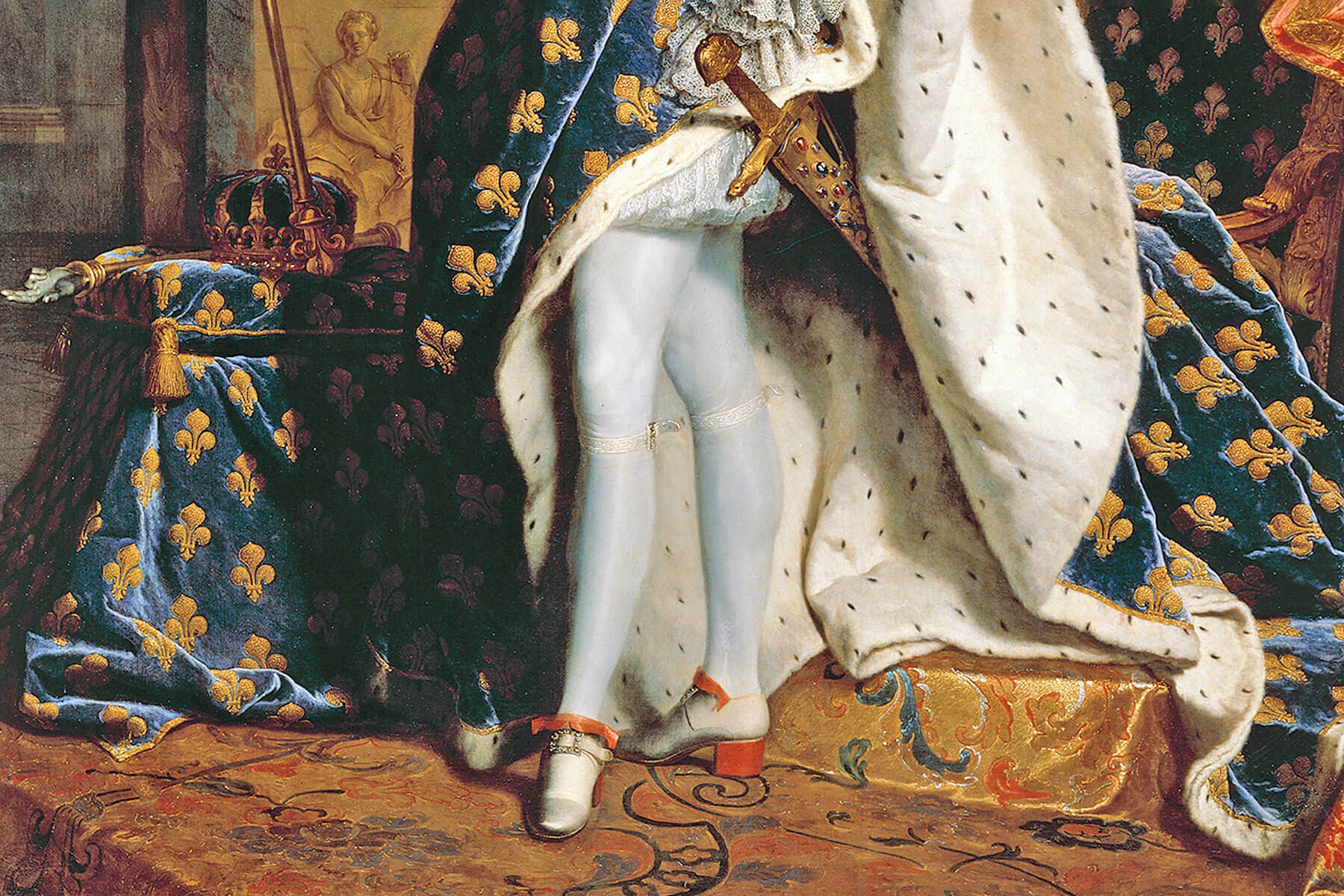
By the year 1305, King Edward I’s decree that an inch should equate to three dried barleycorns became the basis for English shoe sizing. That reference standard soon became relevant beyond the size of the whole shoe, as a fashion craze for shoes with exaggeratedly long points gripped 14th-century Europe. Known as poulaines, or crakows, the shoes were a status symbol in the truest sense; the impracticality of the design and its prevention of the wearer engaging in any kind of labor was the, well, point. The longer the poulaine, the more prosperity the shoe conveyed. Perhaps not surprisingly, poulaines also came to be considered racy, and clergymen disdained them as “claws of devils.” By 1463, English King Edward IV passed a sumptuary law limiting toe length to 2 inches (or, six dried barleycorns). This law, combined with the changing tides of fashion, caused late-15th-century shoe style preferences to veer toward a wide-toe shoe (and yes, eventually the width of the shoe was restricted, too). But even as shoe designs changed, a link between footwear and status remained.

You may also like

5 Indigenous Leaders You Should Know

  • Sacajawea in rocky mountains
Sacajawea in rocky mountains
Bettmann via Getty Images
Author Anne T. Donahue

October 27, 2023

Love it?

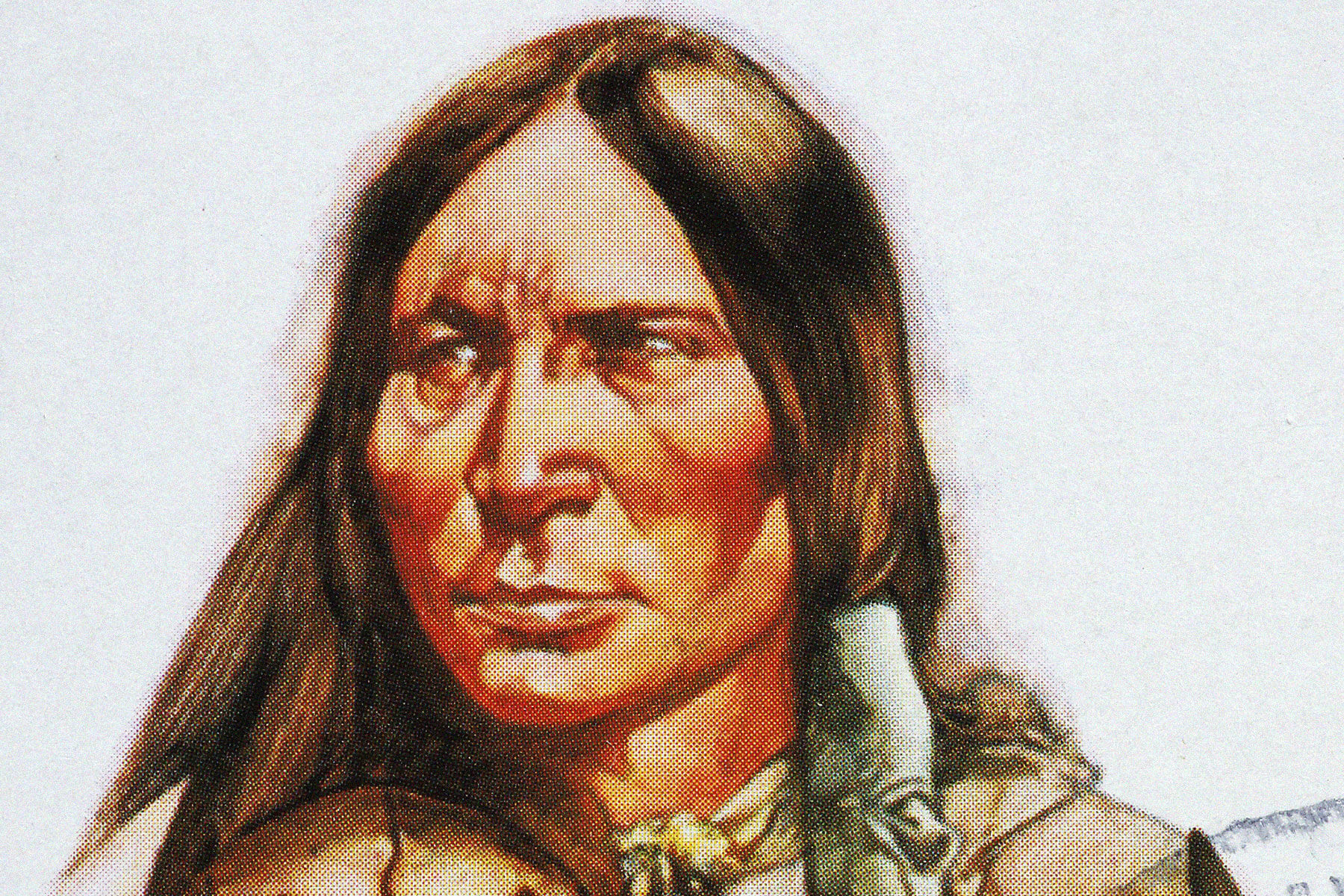
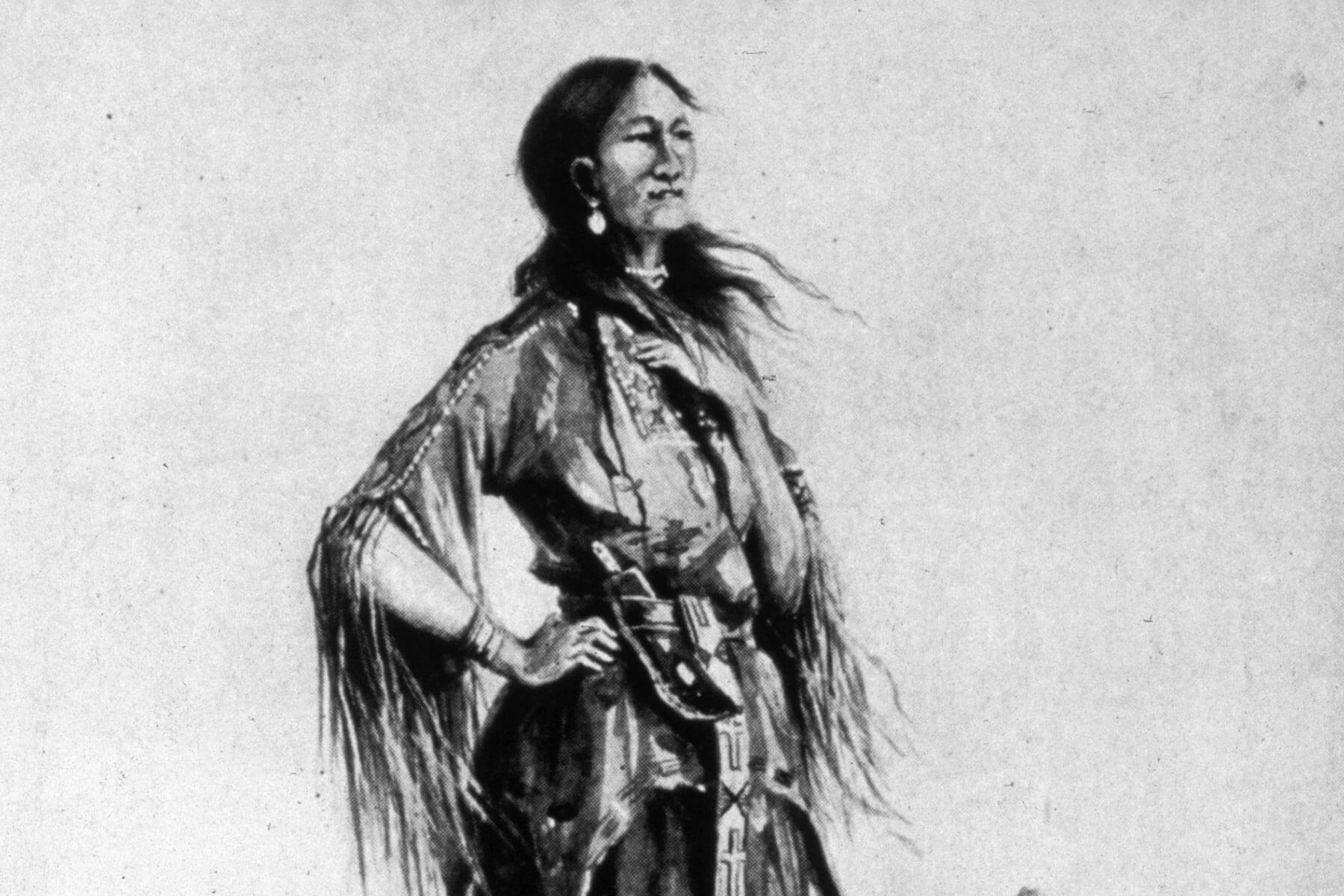
As we look back at American history, it’s crucial to take a moment to reflect on and recognize the contributions made by the nation’s Indigenous peoples, who are so often overshadowed by famous figures who came to the United States from other parts of the world. To commemorate this important part of America’s heritage, here’s a look at five notable Indigenous heroes and leaders who shaped the nation through their tireless efforts.

Photo credit: Hulton Archive/ Archive Photos via Getty Images

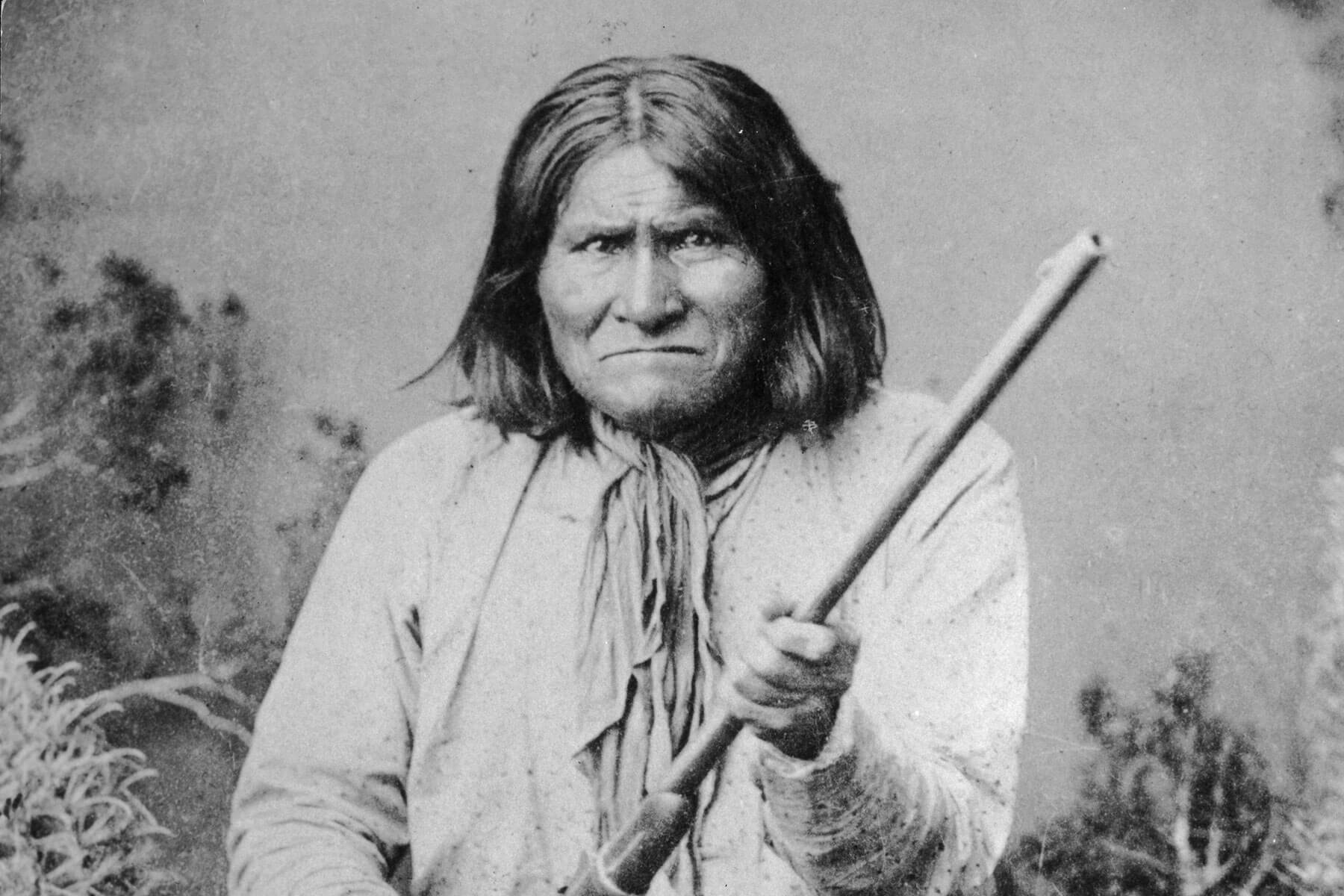
Geronimo (1829-1909)

A medicine man and leader of the Bedonkohe band of the Chiricahua Apache, Geronimo was born on the Gila River in New Mexico, where he was originally given the name Goyahkla, meaning “the one who yawns.” After the United States government forcibly relocated 4,000 Apaches to a reservation in San Carlos, Arizona, Geronimo led dozens of breakouts in an effort to return his community to their nomadic roots. Geronimo’s legacy is vast. His relationship with many American and Mexican civilians was complex, as he fought against colonialism but was made famous after appearing in Buffalo Bill’s “Wild West” sideshow and eventually in Theodore Roosevelt’s election parade. Geronimo’s tireless fight for Apache independence cemented him as a fearless crusader for freedom by the time of his death from pneumonia in 1909.

Photo credit: UniversalImagesGroup via Getty Images

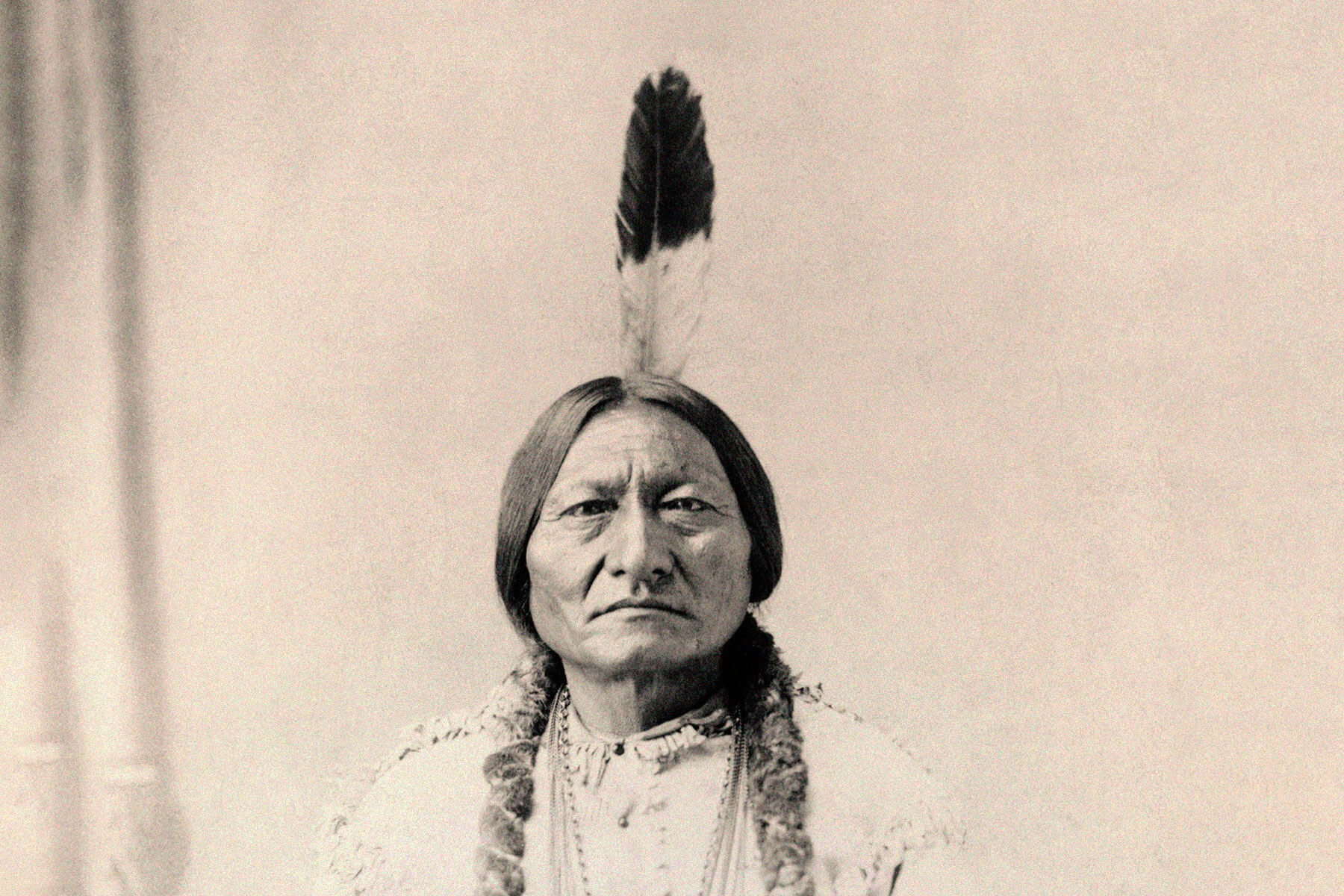
Sitting Bull (c. 1831-1890)

The son of a warrior, Sitting Bull was born in what is now South Dakota and was nicknamed “Slow” for his lack of fighting ability — that is, until he was branded Tatanka Yotanka (“Sitting Bull”) at age 14 after “counting coup” in a battle against the Crow Tribe. (“Counting coup” is a way to humiliate an enemy by riding close enough to touch them with a stick.) Sitting Bull eventually rose to become chief of the Hunkpapa Sioux, and fought tirelessly against the U.S. military, who sought to seize Indigenous land. 

After fleeing to Canada to escape a vengeful army in the wake of the defeat of General George Armstrong Custer (and his 210 troops) in 1876 at the Battle of Little Bighorn, Sitting Bull returned to the U.S. in 1881 and was held prisoner at Standing Rock Reservation on Dakota Territory. His impact, however, could not be contained: After an Indigenous mystic claimed in 1889 that a ghost dance would eliminate the threat of white settlers on Native land, Sitting Bull allowed his followers to practice the dance — much to the horror of federal officials, who feared another uprising. Sitting Bull was killed by gunfire upon his arrest in 1890, and is remembered as a martyr for freedom.

You may also like

The Most Popular Baby Names Throughout the 20th Century

  • Baby names list
Baby names list
New Africa/ Shutterstock
Author Fran Hoepfner

October 27, 2023

Love it?

Depending on where you lived and when you grew up, it’s possible you might have known more than one person with the same name. Maybe there was a Jennifer A. and a Jennifer L., or maybe you knew four different people named Michael. Year after year, decade after decade, there are trends in baby names that draw on history, religion, and cultural references. Here are the most popular baby names in the United States during each decade of the 20th century.

Photo credit: Bettmann via Getty Images

1900s

Between 1900 and 1909, the most popular name for boys in the U.S. was John, and the most popular girls’ name, by a long shot, was Mary. This is according to data from the U.S. Social Security Administration, based on people applying for Social Security cards. There were 84,591 applications under the name John, and 161,504 entries for Mary. These two names popped up time and time again throughout the 20th century. Both names come from the Bible — John is one of Jesus’ disciples, and Mary is the name of both Jesus’ mother and Mary Magdalene. After John, the most popular boys’ names of this decade were William, James, George, and Charles, and the most popular girls’ names after Mary were Helen, Margaret, Anna, and Ruth.

Photo credit: FPG/ Archive Photos via Getty Images

1910s

Between 1910 and 1919, the most popular names were once again John and Mary. In this decade, there were 376,312 registered Johns and 478,637 Marys. Why the sudden jump? For one, the Social Security Administration began collecting data in 1937, so anyone born before that was only counted if they applied for a Social Security card after 1937. (That means the data for the 1900s, 1910s, and 1920s is based on people who listed their birthdays in these decades despite obtaining cards later in life, and doesn’t count anyone born in this period that didn’t apply for a Social Security card.) The U.S. also saw a population spike as infant mortality rates decreased throughout the 20th century, thanks to advances in health care and better access to clean water. 

In the 1910s, for the second decade in a row, the second most popular names for boys and girls were William and Helen, respectively, followed by James, Robert, and Joseph for boys, and Dorothy, Margaret, and Ruth for girls. William has long been a popular English name dating back to William the Conqueror, who became the first Norman king of England in the 11th century. Helen, meanwhile, has its origins in Greek mythology: Helen of Troy was a famous beauty, known as the “face that launched a thousand ships.”

You may also like