


When Did People Start Using Last Names?

  • “Surname” line on a printed form
“Surname” line on a printed form
Credit: Zoltan Fabian/ Shutterstock
Author Kristina Wright

August 15, 2024

Love it?

There were around 6.3 million different surnames, also known as family names or last names, reported in the 2010 U.S. census, and there are millions more worldwide. Some, of course, are more popular than others: More than 106 million people have the last name Wang (a Mandarin term for “prince” or “king”), making it the most common surname in the world. And if you live in the U.S., there’s a pretty good chance you know someone with the last name Smith, Johnson, Williams, Brown, or Jones — the five most common surnames in the country.

As populations grew, surnames began as a way to differentiate between people with the same first name, for both legal and social purposes. Having more than one name helped identify which John owned a specific parcel of land or which Robert had a son who was getting married. Over time, they became important to an individual’s identity and heritage, particularly as people began to emigrate from their homelands. Today, etymologists and genealogists continue to research the origins of last names as a way of gaining insight into how people and societies have developed personal and collective identities. Here’s what we know about how this naming convention came to be.

Credit: Pictures from History/ Universal Images Group via Getty Images

Surnames First Emerged in China

The concept of surnames dates back thousands of years, with the earliest examples found in China as early as the third millennium BCE. (Some of those names, such as Zhong, also written as Chung, are still used today.) Genealogists believe that matrilineal surnames were used in China until the Shang dynasty (1600-1046 BCE), when there was a shift to using patrilineal names.

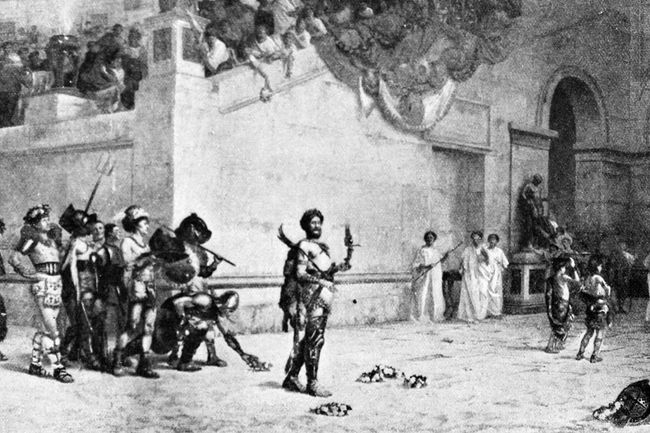
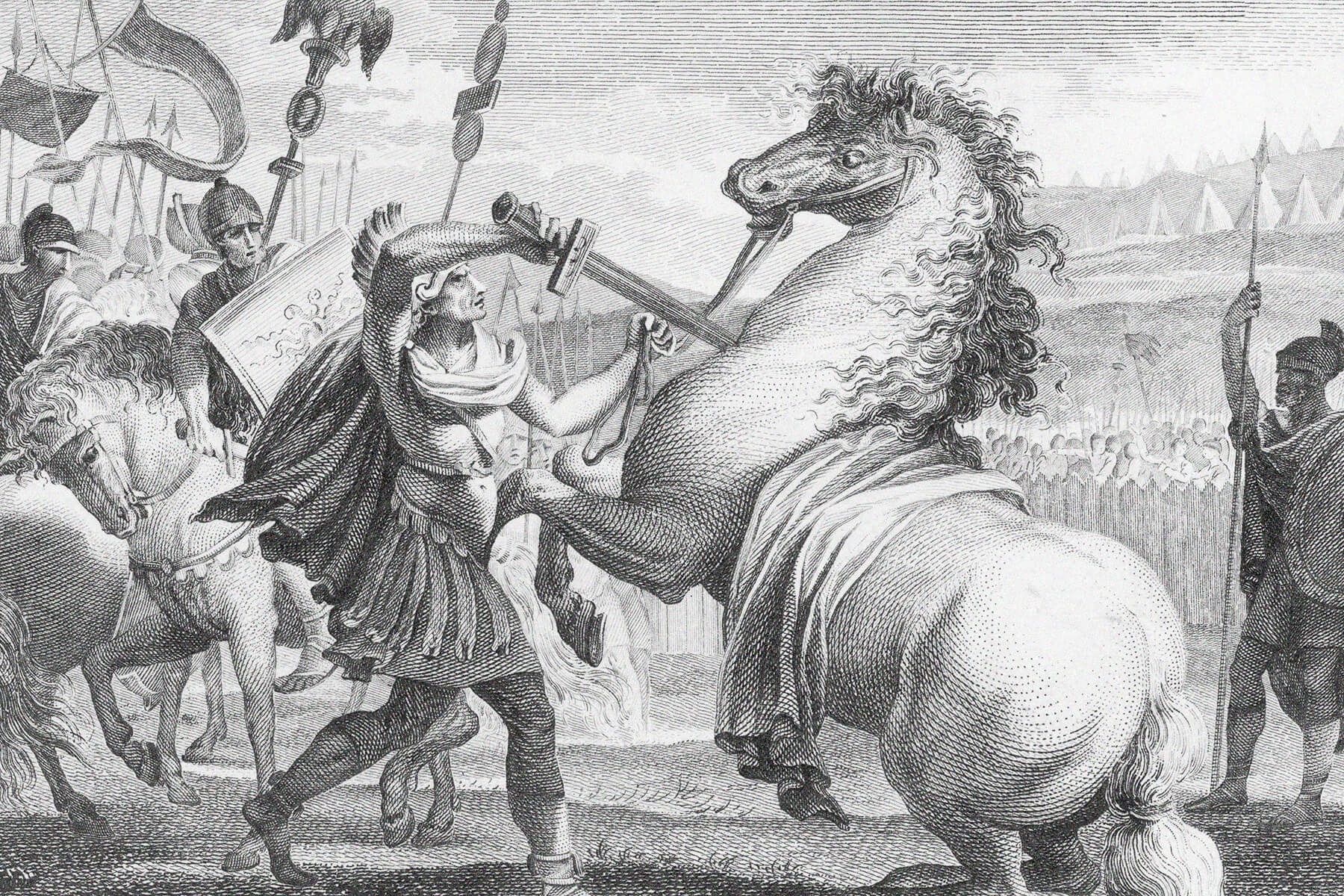
Other ancient societies, including Greece and Rome, had their own systems of assigning names based on family and clan associations. The ancient Romans assigned three-part personal names (tria nomina) that included a praenomen (given name), nomen (clan name), and cognomen (family name), indicating the importance of lineage and family connections even in early Western cultures.

You may also like

7 Things You Forgot Happened During World War II

  • Army tank at Castle Itter
Army tank at Castle Itter
Credit: ERIC SCHWAB/ AFP via Getty Images
Author Nicole Villeneuve

August 15, 2024

Love it?

The biggest, most pivotal events of World War II are cemented in the collective memory  — the D-Day invasion of Normandy, the Battle of Stalingrad, the devastating deployment of atomic bombs. But beyond these headline-grabbers, there are many forgotten or overlooked events that shaped the course of the war, from a quirky yet panic-inducing mishap to a near-disaster that was narrowly avoided. Here are seven lesser-known moments from the Second World War. 

Credit: Nikolai Ignatiev/ Alamy Stock Photo

Germany Was Ambushed by “Night Witches”

Under the cover of night and in airplanes made of plywood and canvas, an all-female Soviet bomber regiment known as the “Night Witches” became an instrumental part of the European theater of World War II. The group, officially named the 588th Night Bomber Regiment, was the brainchild of esteemed Soviet aviator Marina Raskova, sometimes called the “Soviet Amelia Earhart.” Raskova convinced Soviet leaders to allow women in combat roles as the Red Army struggled against the German invasion, and between 1942 and the end of the war in 1945, the Night Witches flew more than 30,000 bombing missions against German forces. 

The planes, each crewed by a pilot and a navigator, flew in groups. The leading aircraft acted as decoys, while the last plane would cut its engine and glide in quiet darkness to the target area before firing. This move gave the group its nickname, the “Nachthexen” — German for “Night Witches” — since the approaching planes sounded like whooshing brooms. Their courageous operations and precise skills earned many of the aviators the title Hero of the Soviet Union, the nation’s highest distinction.

You may also like

How 8 U.S. Presidents Stayed in Shape

  • Dwight D. Eisenhower playing golf
Dwight D. Eisenhower playing golf
Credit: Victor Blackman/ Hulton Archive via Getty Images
Author Bennett Kleinman

August 6, 2024

Love it?

The role of president of the United States is intensely demanding, and requires both physical strength and mental acuity to perform the job properly. This is why it’s so important for presidents to care for themselves and embrace a healthy lifestyle, which often involves a regular fitness regimen. All 45 people who have served as POTUS have gone about this in their own unique way. Some turned to organized sport, others oversaw the installation of new fitness equipment in the White House, and one president even had a workout routine named in his honor. Here’s how eight former U.S. presidents stayed in shape.

Credit: Bettmann via Getty Images

Thomas Jefferson Rode Horses Down Pennsylvania Avenue

Thomas Jefferson is famed for being one of the most learned and bookish presidents to ever hold office. But according to some of his correspondences, he valued physical fitness even more than knowledge. In a letter he wrote on June 11, 1790 — 11 years prior to his presidency — Jefferson said that he preferred to use “all the afternoon for exercise and recreation… because health is worth more than learning.” One of his favorite ways to stay in shape was by riding horses. According to historian William Seale, Jefferson was one of a few early presidents who would hop on a horse and “jump and gallop down Pennsylvania Avenue.” Seale also noted, “In those days, there was a rule that a president didn’t have to stop at an intersection,” so Jefferson could ride unimpeded to his heart’s content. Even after leaving office, he continued to ride horses for three to four hours daily, according to a letter he wrote to John Adams in 1812.

You may also like

What’s the Difference Between Homo Sapiens and Neanderthals? 

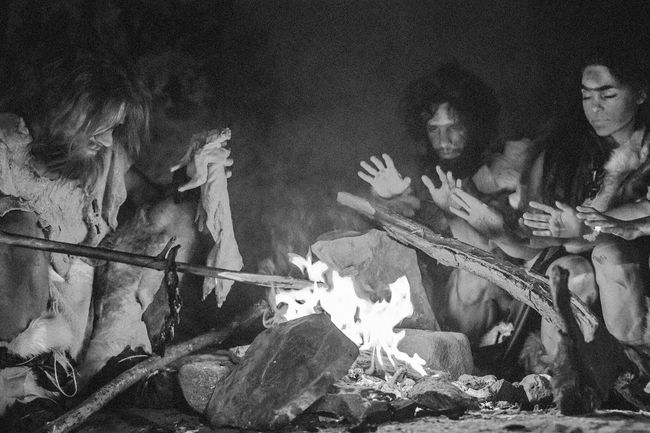
  • Recreation of a Neanderthal woman
Recreation of a Neanderthal woman
Credit: Joe McNally/ Hulton Archive via Getty Images
Author Tony Dunnell

August 6, 2024

Love it?

When our prehistoric ancestors first emerged some 300,000 years ago, at least nine species of humans walked our planet. These included Homo sapiens (that’s us) as well as Homo habilis, Homo erectus, Homo antecessor, Homo floresiensis (nicknamed “the hobbits”), and Homo neanderthalensis. This latter species, otherwise known as the Neanderthals, is arguably the most famous of all our distant cousins. They are, after all, our closest extinct human relatives.

Fossil and genetic evidence indicates that Neanderthals and Homo sapiens evolved from a common ancestor between 700,000 and 300,000 years ago. And Neanderthal DNA is 99.7% identical to present-day human DNA. But the similarities don’t end there. Like Homo sapiens, Neanderthals lived in shelters, used fire in a controlled manner, and hunted and used tools. They may have even made art, including engravings and jewelry, although that remains an ongoing debate. We also know that Homo sapiens and Neanderthals interbred, and that all modern humans likely have some Neanderthal DNA

Despite these similarities, there are a number of differences between Neanderthals and our early ancestors, ranging from their physical features to their way of living. 

Credit: QAI Publishing/ Universal Images Group via getty Images

Body Shape

Fossil remains show that Neanderthals were shorter and stockier than us. Their bodies were thicker and broader, with a wider pelvis, more muscle, and heavier bones. It’s possible that this larger physical build came about as an adaptation to the ice age, as the bigger build would have helped to consolidate heat in cold environments. A recent study of the fossilized teeth of eight Neanderthal children suggests the species may also have matured physically faster than us, reaching adulthood a few years before modern human children do.

You may also like

Why Did Sailors Wear Bell-Bottom Pants?

  • Sailors leaning on fence
Sailors leaning on fence
Credit: Jim Heimann Collection/ Archive Photos via Getty Images
Author Kristina Wright

August 6, 2024

Love it?

Bell-bottoms have long been synonymous with sailors in the U.S. Navy: Just picture Sailor Jack, the patriotic mascot who first appeared on boxes of Cracker Jack in 1918, or Frank Sinatra and Gene Kelly dancing and singing in the 1945 musical Anchors Aweigh. During World War II, songwriter Moe Jaffe even reworked the lyrics of a bawdy 19th-century English sea shanty into “Bell Bottom Trousers,” a song about a woman’s love for her sailor, who wore “bell bottom trousers, coat of navy blue.”

The Navy first authorized wearing bell-bottom denim dungarees in 1901 as an alternative to heavier wool pants. With a few rare exceptions, bell-bottoms remained the official working uniform of enlisted sailors from 1913 through the 1990s. Some changes were made to the uniform over the years, and in the late 20th century pants with wide, straight legs replaced the flared bottoms, but they were still referred to as “bell-bottoms.” The classic image of the bell-bottom-wearing seaman lives on today — but why did sailors start wearing this style in the first place?

Credit: Heritage Images/ Hulton Archive via Getty Images 

Before There Was a Navy Uniform, There Were Bell-Bottoms

It’s hard to pinpoint exactly why bell-bottoms became the clothing of choice for the U.S. Navy, but we do know the tradition started in the early 19th century, at a time when the Navy lacked a standardized uniform for enlisted personnel. By the mid-1800s, Britain’s Royal Navy had also adopted the flared-pant style, and by the end of the 19th century, other seafaring militaries had joined the bell-bottom bandwagon, too. One of the first descriptions of the attire of U.S. Navy enlisted sailors comes from an 1813 Navy file about the arrival of Commodore Stephen Decatur in New York, which describes “glazed canvas hats with stiff brims, decked with streamers of ribbon, blue jackets buttoned loosely over waistcoats and blue trousers with bell bottoms.” One theory about the origin of these bell-bottoms is that before uniform regulations were established, Navy tailors may have been aiming to differentiate sailors’ dress from civilian clothing. But it turns out that bell-bottom trousers didn’t just serve a stylistic distinction — they were also a practical choice for sailors.

You may also like

How the WWI Dazzle Ships Redefined Camouflage

  • Dazzle-painted ship, circa 1916
Dazzle-painted ship, circa 1916
Credit: IWM via Getty Images
Author Mark DeJoy

August 6, 2024

Love it?

In 1917, at the height of World War I, England was in deep trouble. Germany had established an advantage in the waters surrounding the British Isles, and its policy of unrestricted warfare meant that even merchant ships were targets. Vessels were being sunk at a rate that threatened to completely incapacitate shipping to England, cutting off all manner of supplies. For the British to avoid certain defeat, they would need to find a way to protect the outgunned and outmaneuvered cargo ships. In response, the Royal Navy developed a novel paint scheme for British vessels that practically reinvented the concept of camouflage. These “dazzle ships,” as they were called, were a unique defense tactic that gave new meaning to the phrase “the art of war.”

Credit: Universal History Archive/ Universal Images Group via Getty Images

The German navy had one of the most fearsome attack vessels of World War I: the Unterseeboot, often referred to by the abbreviation “U-boat.” Unterseeboot translates to “under the sea boat,” and these vessels were some of the first submarines used in wide-scale military operations. During the First World War, U-boats were deployed in retaliation for England’s blockade of the North Sea and English Channel; Germany’s strategy was to attack all shipping to England, and in effect create its own blockade. Germany issued a tacit threat that “a U-boat cannot spare the crews of merchant ships, but must send them and their ships to the bottom of the sea. All shipping should be warned and all merchant shipping to England should be brought to a halt in a short period of time.” 

Of course, halting all shipping trade was not a feasible action for England. The Royal Navy countered with Q-ships, which were war vessels disguised as merchant ships to bait U-boats into surfacing for an attack, at which point the Q-ship would reveal its hidden weapons and fire on the outgunned U-boat. The tactic depended upon surprise, so its success was temporary: The Germans adjusted by switching from attacking with surface guns to attacking with torpedoes while still submerged. Torpedoes were a more costly weapon, but Germany was investing heavily in U-boats, increasing its fleet sevenfold between 1914 and 1917 in an effort to swiftly defeat England. 

You may also like

Why Did the British Wear Red Coats?

  • British soldiers in uniform
British soldiers in uniform
Credit: H. Armstrong Roberts/ClassicStock/ Archive Photos via Getty Images
Author Tony Dunnell

August 1, 2024

Love it?

In February 1645, during the First English Civil War, the Parliament of England created the New Model Army. This single, standing army consisted of 22,000 regularly paid, well-disciplined, and properly trained men, with promotion gained on merit. To enhance the cohesion of this force, every soldier was supplied with a standardized uniform, which included a red coat.

It wasn’t long before these soldiers were unofficially dubbed “Redcoats,” a name that stuck through many conflicts to come. British soldiers only stopped wearing red when the khaki uniform was introduced during the Second Boer War (1899-1902), but even today, red coats are worn by British soldiers on ceremonial duty. 

But why the color red? It may seem strange today, when camouflage is so commonplace in the design of military uniforms, that such a noticeable color was used on the battlefield, rather than green, brown, or khaki. But there were a number of reasons why red was chosen, including battlefield strategies and the simple need for a uniform that could be produced quickly and efficiently. 

Credit: Science & Society Picture Library via Getty Images

Red Coats Weren’t Designed To Hide the Blood of Battle

First of all, British soldiers didn’t wear red to hide spilt blood, either their own or that of their enemies. There is no evidence to support this often-repeated explanation, and it doesn’t make much sense anyway. Not knowing that you are bleeding isn’t particularly helpful, and hiding any evidence of injuries from the enemy isn’t of much benefit amid the chaos of the battlefield. Also, a bloodstain on a red uniform would likely appear as black rather than red. 

You may also like

Why Is ‘Red Tape’ Associated With Bureaucracy?

  • Documents with red ribbon
Documents with red ribbon
Credit: andrew payne / Alamy Stock Photo
Author Kristina Wright

August 1, 2024

Love it?

The English word “bureaucracy” originated in the early 19th century, referring to an administrative system where decisions were made by a group of nonelected officials. Today, the term can refer to the regulatory system of any public or private institution, including corporations, organizations, and governments. And in a society where laws are upheld based on a set of established standards and practices, keeping everything running smoothly can require an almost mind-boggling array of rules and regulations. 

Such an excessive amount of official systems and processes is often referred to as “red tape.” But how and when exactly did that colorful term become associated with bureaucracy? 

Credit: andrew payne / Alamy Stock Photo 

Red Tape Was Used To Bind Official Documents

The use of red tape to bind documents has been noted for centuries, but its exact origins remain murky. The practice may date as far back as the 11th century, to the red, ribbonlike cloth that English clerks used to secure official documents. For hundreds of years, correspondence was tied with tape and the ends were sealed with melted wax, so that the contents couldn’t be read by anyone other than the intended recipient. The only way to access the documents was to cut the seal, which around the 18th century led to the common idiom “cutting through the red tape.” 

Some historians suggest the use of red tape for binding government records may have started later, during King Charles V’s reign over Spain in the 16th century, when important documents were secured with red tape to distinguish them from other papers. The color red has long signified royalty and wealth, and red dyes such as kermes and cochineal produced a deep scarlet that were favored by the rich and powerful. Considering the high cost these dyes at the time, it’s unlikely that red ribbon was used for anything other than the most important official documents, at least initially.

Although red tape bindings had already been around for some time, the first written reference in English to the words “red tape” appeared in 1658, in an advertisement in the Publick Intelligencer describing a lost “little bundle of Papers tied with a red Tape.” By the end of the 17th century, the tradition of using red tape to secure official documents had crossed the Atlantic and become standard practice in the American colonies as well. In 1696, a law was passed that stated records of public land boundaries in the colony of Maryland were required to be “seal’d with his Excellency’s Seal of Arms, on a Red Cross with Red Tape.” Other important government documents, including the Stamp Act of 1765, were also secured with red tape.

You may also like

The Real Story of Anastasia Romanov 

  • Grand Duchess Anastasia
Grand Duchess Anastasia
Credit: Universal History Archive/ Universal Images Group via Getty Images
Author Nicole Villeneuve

August 1, 2024

Love it?

The early 20th century was a time of significant turmoil in Russia. The Romanov dynasty, which had ruled Russia for more than 300 years, was in its twilight, facing increasing opposition over economic hardship and disastrous World War I military failures. In March 1917, the Russian Revolution forced Tsar Nicholas II to step down; just over a year later, he and his wife and children were killed in secret by Bolshevik revolutionaries. 

For years, the fate of the Romanov family was shrouded in mystery, leaving room for myths about their survival. Theories about one family member in particular — the tsar’s youngest daughter, Anastasia — flourished. The grand duchess inspired not only conspiracies and impostors, but Broadway plays and Hollywood movies. More than 100 years later, her story remains one of the 20th century’s most compelling mysteries. But who exactly was Anastasia, and what really happened to her?  

Credit: Heritage Images/ Hulton Archive via Getty Images

Anastasia Nikolaevna Romanov, the fourth and youngest daughter of Tsar Nicholas II and Empress Alexandra Feodorovna, was born on June 18, 1901. (Their son Alexei, the heir to the throne, was born three years later.) Anastasia was known for her sense of humor and mischievous personality. Gleb Botkin, the son of the family’s physician, said that “in naughtiness, she was a true genius,” describing her as “witty, vivacious, hopelessly stubborn, [and] delightfully impertinent.” 

When her father was forced to abdicate the throne in early 1917, the lives of Anastasia and her family were uncertain. The Romanovs and their staff were sent to Siberia, where they lived in relative peace and normalcy, all the while holding out hope that they could make their way to England, where Nicholas II’s cousin, King George V, reigned. But later that year, after Vladimir Lenin’s Bolsheviks seized power, the royal family was relocated again, to a house in the Russian city of Yekaterinburg. It would be their last move.

You may also like

How Did the Canary Come To Be Associated With Coal Mines? 

  • Canary in coal mine cage
Canary in coal mine cage
Credit: Mirrorpix via Getty Images
Author Tony Dunnell

July 31, 2024

Love it?

Humans have been mining since prehistoric times, when flint was excavated for its use in tools and weapons. Since then, we have gone on to mine all manner of minerals, from copper and gold to the rare earth elements used to create the components in many of our modern devices. 

Yet mining, and underground mining in particular, is extremely dangerous, with risks such as cave-ins, explosions, toxic air, and extreme temperatures. It may seem strange, then, that such a risky profession is associated with the small and spritely songbird Serinus canaria, otherwise known as the canary. 

Just how did this tiny, tuneful member of the finch family become connected with going deep down into the perilous dark of the world’s coal mines? Well, as it turns out, we owe quite a debt to this brave little bird. 

Credit: Hulton Archive via Getty Images

The link between canaries and coal mines began with the British physiologist and philosopher John Scott Haldane (1860-1936), a pioneering specialist in the physiology of respiration. Haldane’s many contributions to the field include his investigations into decompression sickness, which helped to improve safety for undersea divers, and an early gas mask designed to protect soldiers against poison gas in World War I. And it was Haldane who first proposed an innovative safety measure for miners. Following his investigation into the cause of an 1896 explosion at Tylorstown Colliery in Wales, Haldane concluded that carbon monoxide buildup was to blame for the disaster. So, he suggested using mice or birds to monitor gas levels in the mines, as he knew that these animals were far more sensitive than humans to poison gases. 
You may also like