


7 Clothing Items You Didn’t Know Were Named After Military Figures

  • General Dwight D. Eisenhower, 1944
General Dwight D. Eisenhower, 1944
Credit: © Trinity Mirror—Mirrorpix/Alamy
Author Tony Dunnell

April 16, 2026

Love it?

The world abounds with things named after popular military figures: buildings, streets, ships, strategies, weapons, and so on. But we also see these monikers in the clothes we wear, often without realizing the connection. After all, the practical demands of the battlefield — keeping soldiers warm, mobile, and functional — have produced many innovations in clothing that eventually filtered into civilian wardrobes. Here’s a look at how the history of military dress has been quietly stitched into everyday garments, with seven items that still bear the names of the figures behind them. 

Credit: © Universal History Archive—Universal Images Group/Getty Images

Cardigans

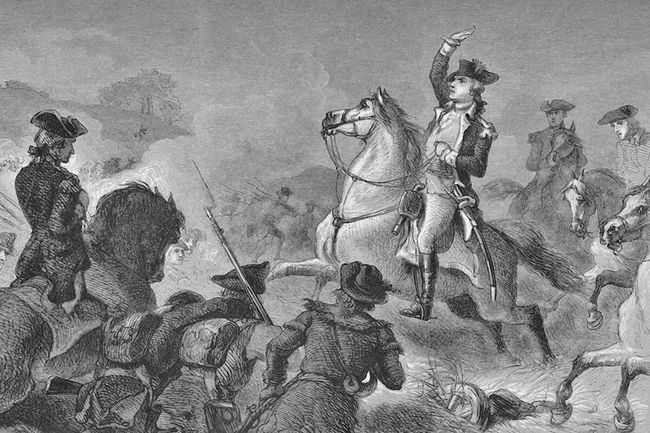
The humble cardigan is a knitted, open-front sweater that typically features buttons down the front, or in more modern versions, a zipper. It takes its name from James Brudenell, the 7th Earl of Cardigan, a British general who led the charge of the Light Brigade against the Russians during the Crimean War in 1854. (The cavalry charge was later immortalized in Alfred, Lord Tennyson’s stirring poem “The Charge of the Light Brigade.”) 

Brudenell wanted his regiment to be smartly dressed and spent significant sums of his own money to make sure this happened — while also taking into account that warm clothing was vital for soldiers fighting in the Crimean winter. He supplied his troops with a type of knitted woolen coat or sweater, which, after the disastrous charge and Tennyson’s poem, became associated with the dashing if somewhat notorious Earl of Cardigan. The name stuck when the style later rose in popularity. 

You may also like

What Did Ancient People Do With Their Trash?

  • Trash collectors, Paris, 1908
Trash collectors, Paris, 1908
Credit: © Jacques Boyer—Roger Viollet/Getty Images
Author Bess Lovejoy

April 16, 2026

Love it?

Long before curbside pickup and neatly labeled recycling bins, humans faced a familiar problem: what to do with their garbage. The answers, across ancient civilizations, were both varied and inventive — albeit often far messier than modern systems. People tossed refuse into alleyways, built their cities on top of it, and sometimes folded it back into daily life. In many cases, what we would call “garbage” wasn’t even seen as waste at all, but as a resource waiting to be reused. Here’s a closer look at how ancient societies dealt with their trash.

Credit: © DeAgostini/Getty Images

We Built This City on … Garbage?

One of the most common solutions wasn’t really a solution at all: throwing trash right outside the home. In Sumerian cities in Mesopotamia around 2500 BCE, residents routinely dumped waste into alleyways. Municipal workers spread ash and sand over the mess to tamp it down, but the buildup was inevitable. Over time, layers of garbage, ash, and dirt raised street levels so much that people had to add steps down into their homes.

This kind of accumulation was widespread in the ancient world. Early cities often dealt with refuse simply by piling it up nearby, creating thick layers of debris. The result is the deep, stratified tells (artificial mounds) or middens (concentrated trash deposits) that mark many ancient settlements around the globe.

Sometimes trash actually became part of how early cities constructed themselves. At Çatalhöyük, a Neolithic settlement (abandoned 7,000 years ago) in modern-day Turkey, trash such as food scraps, ash, broken tools, and even human waste was discarded into the gaps between buildings. Over centuries, those deposits filled in the spaces, fused structures together, and created a dense, rising mound. Residents quite literally lived atop the refuse of earlier generations. In this way, garbage didn’t just accumulate — it transformed the landscape itself. As anthropologist Sarah Hill wrote, “Çatalhöyük today is not only one of the earliest known cities; it is also one of the world’s oldest landfills.” 

You may also like

The Hidden History of Everyday Gestures

  • Winston Churchill, 1959
Winston Churchill, 1959
Credit: © Bettmann Archive/Getty Images
Author Kristina Wright

April 16, 2026

Love it?

Over the course of a single day, you might talk to several people — but you’re also communicating in nonverbal ways you probably don’t even notice. There are small, habitual movements that we all slip into conversations almost automatically, without giving much thought to where they came from or why we use them.

Even though they feel natural, most of these everyday motions have surprisingly long and interesting histories, gradually leading to the meanings we recognize today. Some trace back thousands of years, while others became widespread only in recent decades, spreading through travel or mass media. Here are five familiar examples of how we connect without words.

Credit: © H. Armstrong Roberts—ClassicStock/Getty Images

Thumbs-Up

Today, the thumbs-up gesture is widely recognized as a sign of approval, agreement, or reassurance that things are all good. It appears in everyday conversation, digital communication, and professional settings as a quick signal of affirmation.

A popular belief links the gesture to ancient Rome, where crowds supposedly used thumbs-up or thumbs-down to decide the fate of defeated gladiators. However, historians generally agree this interpretation is likely incorrect or oversimplified, though we may never know for sure.

The modern meaning of thumbs-up developed much later. t started to appear as a sign of approval in English-speaking countries by the early 20th century, and it became especially widespread during World War I and World War II, when Allied pilots used it to mean “ready” or “all set.” From there, the gesture spread globally through media, technology, and popular culture, becoming one of the most recognized hand signals today (though it is considered rude in some cultures abroad).

You may also like

What Did Explorers Eat on Long Voyages?

  • 17th-century exploration, Caribbean
17th-century exploration, Caribbean
Credit: © PHAS—Universal Images Group/Getty Images
Author Tony Dunnell

April 16, 2026

Love it?

During Europe’s golden age of exploration — from roughly the 1400s through the 1700s — long voyages over land and sea were fraught with danger. Potential threats lay around every corner and across every sea — harsh landscapes, raging oceans, and clashes with Indigenous inhabitants were just some of the problems faced. And then there were the fundamentals of survival, none more important than what to eat. 

For sailors at sea and overland expeditions pushing through unmapped wilderness, the question of food was one not of comfort but of staying alive. A lack of food meant starvation and sickness, and often a catastrophic end to even the most meticulously planned expedition. But what exactly did explorers eat on these long journeys? Here we look at some of the common food supplies carried — or harvested — during this era. 

Credit: © Bettmann Archive/Getty Images 

Hardtack

If there was one food that defined the age of exploration for sailors, it was hardtack (also known as ship’s biscuit), a dense, unleavened biscuit made from nothing but flour, water, and occasionally salt, baked until every trace of moisture was driven from it. It wasn’t particularly popular — the result was something closer to a building material than a food — but it kept stomachs from rumbling and people alive. 

When properly stored and kept dry, the rock-solid, tasteless biscuits had an almost endless shelf life, making the food vital in an age before canned goods. Hardtack became a part of the standard daily rations for sailors and explorers, who typically soaked the biscuit in water, beer, or broth to make it soft enough to chew. But hardtack could go moldy when damp and was prone to insect infestation — most sailors would tap or dunk their hardtack to scare out any lingering weevils. 

You may also like

8 Shows Everyone Watched in the ’60s

  • “The Addams Family,” 1964
“The Addams Family,” 1964
Credit: © 1964 Filmways Television
Author Michael Nordine

April 9, 2026

Love it?

Before cable was the norm, and long before streaming services were even an idea, network television ruled the airwaves. With fewer choices, viewers coalesced around a small number of shows in a way that’s practically unheard of in today’s fragmented media landscape. 

That was especially true in the 1960s, when countercultural forces were butting up against decades of tradition — a phenomenon that could be seen in the stories shown on the small screen in living rooms across America. Let’s take a trip to the past with these eight TV shows that dominated the 1960s:

Credit: © 1960 Danny Thomas Enterprises

The Andy Griffith Show (1960-68)

Arguably the decade’s defining television program, The Andy Griffith Show was a ratings juggernaut throughout its entire run. It never placed lower than seventh in the Nielsen ratings, and it aired its finale while still at No. 1 — a feat replicated only once before (I Love Lucy) and after (Seinfeld). 

The show was inherently nostalgic, with Griffith once stating, “Though we never said it, and though it was shot in the ’60s, it had a feeling of the ’30s …  of a time gone by.” Even if you aren’t old enough to have grown up watching it, The Andy Griffith Show has been in syndication for so long that there’s a good chance its theme song was still a part of your childhood.

You may also like

Was Aesop a Real Person?

  • Aesop, legendary Greek fabulist
Aesop, legendary Greek fabulist
Credit: © Universal History Archive/Getty Images
Author Kristina Wright

April 9, 2026

Love it?

For more than two millennia, readers have enjoyed the brief, morally pointed tales known as Aesop’s fables. For many of us, these stories were among the first we heard as children, alongside Mother Goose rhymes and the fairy tales of the Brothers Grimm. Long before we knew anything about ancient Greece, we learned that a steady pace could win the race, that dishonesty would cost us others’ trust, and that pride often comes before a fall.

Stories such as “The Tortoise and the Hare,” “The Boy Who Cried Wolf,” and “The Lion and the Mouse” have circulated in classrooms, children’s books, and popular culture. Their appeal lies in their simple, short narratives, often featuring animals with human traits, that deliver clear, memorable lessons. And they tend to stay with us — many of us can still recall a favorite fable and the moral it carried.

Yet while the fables themselves are widely known, the figure to whom they are attributed — Aesop — remains uncertain. Was Aesop a real person? And if so, who was this mysterious fabulist?
Credit: Courtesy of the Rijksmuseum, Amsterdam; object no. RP-P-2016-49-18-19

The First Mentions of Aesop

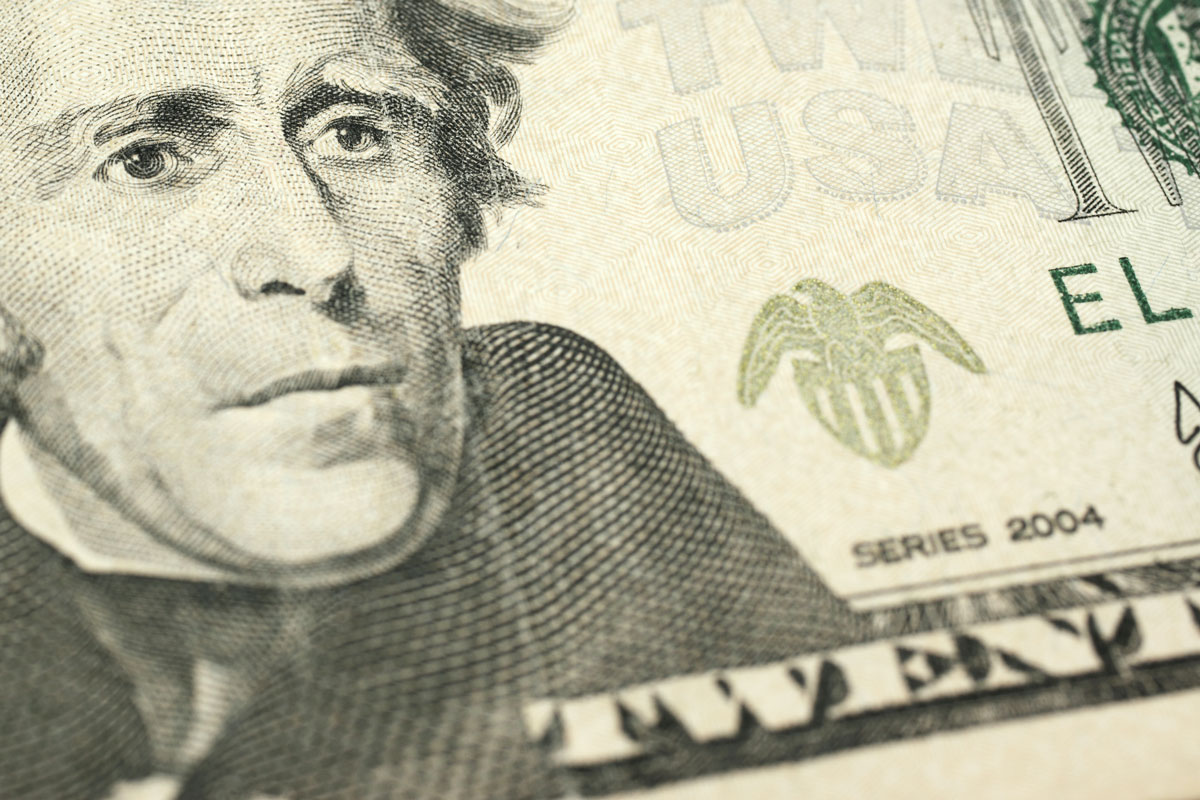
Ancient sources place Aesop in the Greek world of the late seventh to mid-sixth centuries BCE, often describing him as an enslaved storyteller. But the evidence is limited, indirect, and sometimes contradictory — a mix of early references, later embellishments, and literary tradition, making Aesop one of antiquity’s more elusive figures.

The earliest surviving mentions of Aesop appear in Greek texts written more than a century after he supposedly lived. The fifth-century BCE historian Herodotus refers to Aesop as an enslaved person on the island of Samos and notes that he was killed at Delphi. The account is brief and lacks detail, but it is widely treated as the earliest historical reference.

In the fourth century BCE, Aristotle mentions Aesop in Rhetoric, portraying him as a storyteller whose fables could be used as persuasive examples in political contexts. Aristotle cites a fable attributed to Aesop, involving a fox and a hedgehog, as an example of how storytellers can employ moral tales to persuade or instruct in political contexts. This suggests that by Aristotle’s time, Aesop was already linked with a recognizable body of moral storytelling used for public argument and instruction.
Later ancient writers expand on these details, portraying Aesop as an enslaved man who gained freedom through intelligence and wit and who used fables to comment indirectly on social and political life. However, these accounts vary in detail and reliability, and none provides a verifiable biography.
You may also like

Why Do We Clink Glasses When Toasting?

  • Men toasting with beer, 1899
Men toasting with beer, 1899
Credit: © Bettmann Archive/Getty Images
Author Tony Dunnell

April 9, 2026

Love it?

Few social rituals are as widespread or instinctive as clinking glasses after a toast. At weddings, dinners, and bars and pubs around the world, we reach across the table, touch glasses with a satisfying clink and a quick “cheers,” and take a sip. But where does this custom actually come from? Let’s take a look at the origins of this familiar custom, and try to sort the myth from reality.  

Credit: © Heritage Images—Hulton Archive/Getty Images 

The Poison Theory

The most common origin story goes something like this: In medieval times, clinking cups or glasses hard enough would cause liquid to slosh and spill from one vessel into another, so if your drinking companion had poisoned your cup, they’d be consuming poison too. As such, the clinking was a way to show that no drinks had been spiked, whether with belladonna, hemlock, arsenic, mercury, or any other common toxin — poison being a popular way of eliminating one’s rivals in the Middle Ages, especially among the nobility. 

Despite being widely repeated, this theory doesn’t make much sense if you think about it — and, indeed, it’s almost certainly not true. Both Snopes and Ripley’s have debunked the theory, concluding that all versions of this explanation are false. The logistics alone are problematic. Even if a cup or glass were filled to the brim — which in many cases it would not be — most of the clinking spillage would land on the floor, not in your companion’s cup. And if some drops of ale- or wine-diluted poison did enter, would it be enough to cause much harm? Perhaps not. 

What’s more, as Snopes points out, the practice of toasting to someone’s health dates back to the ancient world at least — well before individual glasses were common. In those times, everyone typically drank using shared vessels, rather than carrying around their own glass or cup. Producing your own private drinking vessel at a communal table would likely raise suspicion, rather than guard against it. 

You may also like

7 Foods People Used To Think Were Healthy

  • Girl buttering toast, circa 1940s
Girl buttering toast, circa 1940s
Credit: © George Marks—Retrofile RF/Getty Images
Author Kristina Wright

April 9, 2026

Love it?

If you grew up in the 1950s, ’60s, or ’70s, you might remember starting the day with a bowl of frosted cereal and a glass of orange juice, followed by a sandwich on soft white bread for lunch. At the time, packaging and advertisements emphasized that these foods were nutritionally balanced, vitamin-enriched, and backed by modern science.

Many foods promoted as “healthy” in decades past rose to prominence during specific cultural moments: the post-World War II convenience boom, the rise of industrial food processing, and the low-fat movement of the 1970s and ’80s. In each case, marketing often outpaced scientific understanding. Looking back at these former “health foods” reveals how dramatically nutrition advice and public perception can shift over time — and how easily the label of “healthy” can be shaped by trends, rather than evidence.

Credit: © Chaloner Woods—Hulton Archive/Getty Images 

Margarine

Margarine surged in popularity beginning in the 1940s and especially through the 1960s and ’70s, when concerns about heart disease began to enter public consciousness. As early as the ’50s, public health messaging increasingly warned against saturated fats, and margarine — made from vegetable oils — was positioned as the modern, healthier alternative to butter.

Advertising leaned heavily on nutrition science. Packaging and print ads used phrases such as “heart-healthy,” “cholesterol-conscious,” and “made from pure vegetable oils.” Some campaigns featured endorsements from doctors or referenced emerging research about cholesterol, even when that research was still developing or incomplete. Margarine was presented not just as a butter substitute but as a proactive choice for protecting one’s heart.

What consumers didn’t realize was that many early margarines were produced through partial hydrogenation, creating trans fats. These fats were later found to raise LDL (“bad”) cholesterol and lower HDL (“good”) cholesterol — essentially the opposite of what the marketing promised. The widespread use of margarine as a health food was based on a simplified understanding of fat and heart disease, combined with persuasive messaging that emphasized innovation over long-term evidence.

You may also like

The Weirdest Jobs From the Middle Ages

  • Pardoner in “The Canterbury Tales”
Pardoner in “The Canterbury Tales”
Credit: Culture Club/ Hulton Archive via Getty Images
Author Timothy Ott

April 9, 2026

Love it?

Falling between the heyday of the Western Roman Empire and the onset of the Renaissance, the Middle Ages have an unflattering reputation as something of a backward epoch of human civilization. Wars raged across Europe, serfs toiled in backbreaking service to feudal lords, and diseases wiped out villages with little hope of preventing the next outbreak.

While the negative connotations may not be entirely fair, few would dispute that medieval citizens lived in more primitive conditions than their modern counterparts, and that the day-to-day necessities for survival were markedly different. As such, the era produced certain professions that filled important needs of the time but seem quite unusual in hindsight. Here are six of the strangest.

Credit: Universal History Archive/ Universal Images Group via Getty Images

Rat Catcher

Although the widespread belief that rats were the main carriers of the bubonic plague has largely been debunked, these critters nevertheless did spread disease in medieval urban centers and otherwise proved legitimate pests by feasting on food supplies. Thus gave rise to the era’s version of the exterminator, the rat catcher

Known to travel from town to town with a few of their rodent victims suspended from a stick, skilled rat catchers deployed methods that included setting traps in infested areas and unleashing dogs or ferrets on their quick-footed targets. It’s worth noting that while rat catchers were in demand in the Middle Ages, the profession reached its pinnacle in the crowded streets of Victorian London, with practitioners such as Jack Black achieving renown for their prowess in the field.

You may also like

6 Popular Foods That Came From the Military

  • Soldiers eating their rations, 1944
Soldiers eating their rations, 1944
Credit: Roger Viollet via Getty Images
Author Tony Dunnell

April 9, 2026

Love it?

War is full of logistical challenges, one of the major concerns — in conflicts both ancient and modern — being how to feed the armies doing the fighting. Whether it’s Roman legionaries, British Redcoats, or modern infantry, soldiers have always needed a reliable supply of food to maintain both their energy levels and morale. As the old saying goes, “An army marches on its stomach.” 

Military rations have existed since at least the time of ancient Rome, when soldiers received 2 pounds of bread a day, sometimes with meat, olive oil, and wine. Today, U.S. troops are provided with MREs — “Meals, Ready-to-Eat” — which are carefully tested, formulated, and packaged rations designed to sustain soldiers during training and military operations. These MREs have a shelf life of three years and can survive being dropped from an aircraft. But not every soldier is a fan of these pouches of food, which they sometimes refer to as “Meals, Rarely Edible” or “Meals Rejected by the Enemy.” 

While modern MREs don’t often come with glowing reviews, some foods created specifically for soldiers — or adopted and popularized by the military — have become beloved by the civilian population. Here are six foods that managed to find their way from the ration pack to supermarket shelves across America. 

Credit: Kristoffer Tripplaar/ Alamy Stock Photo

M&Ms

In the 1930s, Forrest Mars Sr. (the son of Mars founder Franklin Clarence Mars) was traveling in Europe. According to confectionary legend, it was during this time that Forrest Mars observed soldiers eating chocolate pellets surrounded by a sugar shell during the Spanish Civil War. Inspired, he took the concept back to the United States where, in 1941, M&Ms were born. 

With World War II already underway, M&Ms were initially made specifically for the U.S. military, providing an ideal way for soldiers to carry energy-rich chocolate in tropical climates without it melting. In 1947, the candy was made available to the public, and its popularity has never waned since. 

You may also like