


7 Facts About the Earliest Humans on Earth

  • Neolithic settlement
Neolithic settlement
DEA PICTURE LIBRARY via Getty Images
Author Sarah Anne Lloyd

April 9, 2026

Love it?

Recorded human history is just a tiny blip on the temporal radar. The Pyramids of Giza were built around 2500 BCE, but 4,500 years ago seems like yesterday when you compare it to the 300,000 years our species, Homo sapiens, has been around. Since our earliest ancestors didn’t leave as much behind, we know very little about how they lived.

“Human,” however, is a genus, not a species, and the history of humanity includes much more than sapiens. With new genetic research, we’re learning more about our ancestry all the time — but much of what we learn just raises even more questions. How closely related are we to Neanderthals? When did humans start making art? What were our ancestors’ day-to-day lives like? Pique your curiosity with these seven facts about the very earliest humans on Earth.

Photo credit: Peter Hermes Furian/ Shutterstock

The Earliest Homo Sapiens Were From Africa

Scientists first theorized in the 19th century that humans originated in Africa, and modern genetic science has largely confirmed that to be the case, though researchers are still working to determine the exact geography. Scientists also disagree on when and how humans dispersed. One early theory suggested that our Homo sapiens ancestors started to leave Africa around 60,000 years ago. Most non-African humans today can trace their origins back to a large exodus around that time, but smaller migrations may have started much earlier. Fossil evidence shows that groups of foragers arrived in Asia around 120,000 years ago, and brought skills such as deep-sea fishing and cave art with them. Other fossil discoveries, including a 210,000-year-old skull found in Greece, suggest some humans left Africa even earlier.

Photo credit: Bettmann via Getty Images

Early Human Species Mated With One Another Frequently

Homo sapiens, Neanderthals, and Denisovans — the latter of which is an early human species discovered in 2008 — share a common ancestor, Homo heidelbergensis. This species also probably came from Africa, but had reached modern-day Israel more than 700,000 years ago. It has been theorized that when one group of Homo heidelbergensis left Africa more than 400,000 years ago, some moved west to Europe and evolved into Neanderthals; others moved east to Asia and became Denisovans. Those who stayed in Africa evolved into Homo sapiens.

When Homo sapiens eventually left Africa, they encountered Neanderthals and Denisovans and started reproducing, and Denisovans and Neanderthals mated with one another, too. Those two species are now extinct, but they live on in modern human DNA, which contains a significant amount of both — most non-Africans are between 1% and 4% Neanderthal, and many people with Southeast Asian and Pacific Island heritage are up to 5% Denisovan. Recent research shows that people of African descent have some Neanderthal DNA, too, likely a result of back-and-forth migration.

You may also like

7 Types of Furniture You Never See Anymore

  • Woman on a chaise longue, 1800
Woman on a chaise longue, 1800
Credit: PHAS/ Universal Images Group via Getty Images
Author Kristina Wright

April 2, 2026

Love it?

Furniture isn’t just about form and function — it’s a reflection of how we live. As technology evolves and lifestyles shift, pieces that were once considered household essentials can quietly fade into obscurity. From furniture designed around now-outdated technology to those that catered to social customs of another era, many former decor staples have all but disappeared from modern homes. 
If you’ve ever tried to fit a heavy television into a hulking TV cabinet or spent an hour at the “gossip bench” catching up with an old friend, you’re not alone. These once-popular furnishings tell the story of how we used to live. A few may linger in basements, guest rooms, or antique shops, quietly reminding us of how much things have changed. Here are seven kinds of furniture that were once common but are now rarely seen. How many have you owned?

Credit: Denver Post via Getty Images 

Waterbeds

Popular in the 1970s and ’80s, waterbeds promised a futuristic sleep experience with their wavelike motion and adjustable temperature. Though patented in California in the late 1960s, the concept had already rippled through science fiction — sci-fi author Robert Heinlein described similar beds in his novels years earlier, imagining them as ideal for both comfort and hygiene.

Once marketed as both cutting-edge and sexy, waterbeds quickly gained popularity, peaking in 1987 when they accounted for nearly 20% of all mattress sales in the U.S. One memorable slogan captured the era’s enthusiasm: “Two things are better on a waterbed. One of them is sleep.” But the charm faded as waterbeds’ drawbacks mounted: heavy frames, tricky maintenance, awkward moves, and a constant risk of leaks. Though rarely seen today, waterbeds remain a quirky relic of a bygone era — a ripple in sleep history that once made big waves.

You may also like

The Most Popular Baby Name Every Year of the Last Century

  • Nurse with newborn babies
Nurse with newborn babies
Credit: Reg Speller/ Hulton Archive via Getty Images
Author Kristina Wright

April 2, 2026

Love it?

Over the past hundred years, baby-naming trends have largely been shaped by family traditions and popular culture. Classic names such as Mary, John, Betty, and James often appear repeatedly in family trees, passed down out of respect for previous generations and a desire to keep family legacies alive. By the latter half of the 20th century, parents found baby name inspiration in popular culture, including films, theater, and music. The name Jennifer, for instance, began its climb in the U.S. thanks to the George Bernard Shaw play The Doctor’s Dilemma, which debuted on Broadway in 1927. Today, Olivia and Liam are the reigning favorites, and it’s likely only a matter of time before names that are already in the top 10 — such as Mia, Mateo, Evelyn, and Elijah — claim the No. 1 spots.Here is a fascinating look at the most popular girls’ and boys’ names of the last century, based on data collected by the U.S. Social Security Administration from Social Security card applications.

Credit: Topical Press Agency/ Hulton Royals Collection via Getty Images

1924 to 1929

1924: Mary, Robert
1925: Mary, Robert
1926: Mary, Robert
1927: Mary, Robert
1928: Mary, Robert
1929: Mary, Robert

The “Roaring ’20s” brought new cultural, economic, and sexual freedoms for women, but the most popular female names of the Greatest Generation — those born between 1901 and 1927 — didn’t reflect this newfound sense of liberation. Mary remained the most popular girls’ name from 1924 to 1929, just as it had since 1900. A biblical name that appears in both the Old and New Testaments, Mary is the anglicized form of Maria and originated from the Hebrew Miryam. In 1924, the name Robert, favored by European royalty and nobility in the Middle Ages,” replaced John, another common biblical name, as the most popular boys’ name, ending John’s decades-long place at the top of the list.

You may also like

How Many Children Did Each President Have?

  • Theodore Roosevelt and family
Theodore Roosevelt and family
Credit: Historical/ Corbis Historical via Getty Images
Author Tony Dunnell

April 2, 2026

Love it?

In 1789, George Washington became the first president of the United States. Since then, 44 other individuals have served as commander in chief, each leaving a political legacy to be analyzed and judged in the course of time. But their legacies are not only political — they’re also familial. The number of children each president had is often overlooked, but on a personal level, few things could be more important. And in two cases, presidential children — John Quincy Adams and George W. Bush — went on to become presidents themselves, combining the familial with the political.   

With that in mind, here’s a look at how many children each U.S. president had. For the sake of clarity, this list is ordered by the total number of known biological children only. Fostered and legally adopted children are noted but not counted in the total due to various factors, including legal adoption not existing in the United States until 1851. George Washington, for example, had no biological children but did raise Martha Washington’s two children from a previous marriage (as well as her four grandchildren and several nieces and nephews), but they were not legally adopted. 

From the five presidents (including Washington) with no known biological children to the commander in chief with the most kids at 15, here’s a list of all the U.S. presidents in order of the number of children born to them.

Credit: Hulton Archive via Getty Images 

No Children

Five presidents fathered no known biological children. In some cases, this was likely due to infertility caused by medical issues, such as the tuberculosis infection Washington suffered before he was married. James Buchanan, meanwhile, remains the only U.S. president who never married

George Washington: 0 (2 stepchildren)
James Madison: 0 (1 stepchild)
Andrew Jackson: 0 (1 unofficially adopted child)
James K. Polk: 0 
James Buchanan: 0

You may also like

What WWII Soldiers Carried in Their Pockets

  • WWII U.S. soldier in uniform
WWII U.S. soldier in uniform
Credit: Bettmann via Getty Images
Author Tony Dunnell

April 2, 2026

Love it?

World War II was one of history’s largest conflicts, spanning continents and engulfing nations from 1939 to 1945. In total, 127.2 million personnel were mobilized for war on all sides, with 70 million of those people fighting in the armed forces of the Allied or Axis nations. 

These numbers give us an idea of the vast scale of the war, but they don’t tell us anything about the soldiers themselves. If we zoom in to ground level and look at the daily lives of these individuals, we get a far more intimate picture of the war and those who fought it. Here, we move in even closer, to examine what the average enlisted U.S. soldier carried in the pockets of their service uniform. 

Some of these items were practical necessities, while others were highly personal. Whether they were reminders of home or just small comforts amid the chaos, these objects reveal much about the daily lives of World War II soldiers and the human experience of war. 

Credit: REVdoc/ Alamy Stock Photo

Photos of Home

Few pocket items held more emotional significance than photographs from home. These were often small, wallet-sized photos of spouses, significant others, children, or parents. The photos would be tucked into a pocket and carried into the field, providing crucial psychological support during the most difficult moments of the war. Having such a personal item helped a soldier to maintain their sense of individuality in the otherwise homogenizing environment of military life, in which group identification was strongly promoted. Remembering home by looking at a photo was also a reminder of what a soldier was fighting for. 

One other fascinating way that soldiers carried their photos was underneath a clear plexiglass strip they attached to the grips of their pistols — a form of weapon customization known as a sweetheart grip

You may also like

The Way People Slept 300 Years Ago Would Horrify You

  • Communal sleeping, 19th century
Communal sleeping, 19th century
Credit: © Universal History Archive—Universal Images Group/Getty Images
Author Bess Lovejoy

April 2, 2026

Love it?

Today, it’s common to complain of a lack of sleep; in some circles, it’s almost a badge of honor. Work and family obligations, not to mention endless digital distractions, often cut into our shut-eye. It’s easy to assume that we’re more poorly rested than our ancestors, who surely slumbered deeply and peacefully without all those glowing screens — right? Well, wrong.

Credit: © Buyenlarge—Archive Photos/Getty Images

Good Night — and Good Luck With the Bugs

The first problem was the beasts, both big and small. Before climbing into bed, families often conducted a nightly hunt for fleas, lice, and bedbugs, combing through bedding in a somewhat futile attempt to reduce the itching to come. Straw mattresses and shared blankets were ideal habitats for parasites, and the presence of dogs and livestock only made things worse. 

And we’re not kidding when we say livestock. In many rural households, animals were brought indoors at night for warmth and protection from predators and theft. Chickens, goats, and even cows might share the same space — along with all the noise, smells, and bugs they carried. (Speaking of smells, some families in East Anglia reportedly placed lumps of cow dung at the foot of the bed to ward off gnats, a solution that likely traded one problem for another.)

Even without animals, nighttime was anything but peaceful. Poor insulation meant drafts crept through walls and floors; open chimneys carried in soot and smells; chamber pots added their own aroma. From outside came the sounds of barking dogs, croaking frogs, and passing carts. Inside, every cough, snore, and shift of a bedmate was impossible to ignore.

You may also like

6 Empires That Changed the World

  • The Bayezid Mosque
The Bayezid Mosque
Heritage Images/ Hulton Fine Art Collection via Getty Images
Author Tony Dunnell

April 2, 2026

Love it?

Much of human history has been defined by the actions of around 50 to 70 empires that once ruled large swathes of people across vast chunks of the globe. Each of these empires, whether large or small, for ill or for good, has influenced world history. It’s hard to say which has had the greatest impact on society — it is, after all, somewhat subjective and hard to measure — but some have undeniably shaped the course of human history, forever and irrevocably. Here are six such empires, from the mighty Persians to the globe-spanning British. 

Photo credit: Universal History Archive/ Universal Images Group via Getty Images

Persian Empire

Around 550 BCE, Cyrus II of Persia — later to be known as Cyrus the Great — conquered a number of neighboring kingdoms, including Media and Babylon, and brought them together under his control. In so doing, he founded the first Persian Empire, also known as the Achaemenid Empire. Centered in modern-day Iran, it became one of the largest empires in history, stretching from Egypt and the Balkans to parts of Afghanistan and Pakistan. For more than two centuries, the empire was a global center of culture, religion, science, arts, and technology. But then came the Persian ruler Xerxes, whose failed invasion of Greece in 480 BCE brought about a period of decline. Weakened, the Persian Empire eventually fell in 330 BCE at the hands of the invading armies of Alexander the Great of Macedonia. 

Photo credit: Print Collector/ Hulton Archive via Getty Images

Roman Empire 

Following a period of unrest and civil wars — including the assassination of Julius Caesar — the Roman Republic came to an end and Augustus Caesar was crowned the first ruler of the new Roman Empire in 27 BCE. At its height in 117 CE, Rome controlled all the land from Western Europe to the Middle East, and was the most powerful political and military entity the world had yet seen. The impact of the Roman Empire on the modern world is hard to overstate. Our art, architecture, laws, technology, and engineering — even the very words we speak — have all been heavily influenced by the ancient Romans. But even an empire as mighty as Rome was destined to fall. A series of Gothic invasions heralded a general decline, and in 476 CE, the Western Roman Empire fell. The Eastern Roman Empire — also known as the Byzantine Empire — remained until 1453, but the glory days of the Roman Empire had reached their end. 

You may also like

The Oldest Time Capsules — and What They Contained

  • Opening a 1795 time capsule
Opening a 1795 time capsule
Credit: © Rick Friedman—Corbis News/Getty Images
Author Tony Dunnell

April 2, 2026

Love it?

The term “time capsule” was coined at the 1939 New York World’s Fair, when the Westinghouse electric company buried a large, torpedo-shaped capsule — containing everyday items, literature, and microfilm recordings of news events from the era — to be opened in 5,000 years’ time. But that capsule certainly wasn’t the first historic cache to have been deliberately left for future discovery. Here’s a look at the earliest time capsules ever discovered (or rediscovered), and what these bundles of frozen history contained. 

Credit: © Zoonar GmbHoxygen64/Alamy 

The Wschowa Church Copper Box

What is possibly the oldest known time capsule was found during renovations at the Church of St. Stanislaus in Wschowa, Poland. In 2023, workers found a copper box that had been placed inside the church spire. The box itself was inscribed with the year 1726. Inside, conservators found four packages tied with twine, containing around 300 old coins from the 18th and 19th centuries, as well as medals, newspapers, and documents relating to the town’s history. It was clear that people had added items to the box over the decades. Whether the box itself was first placed in 1726 or after is hard to determine, but it seems likely that the Wschowa time capsule is the oldest ever discovered. 

You may also like

6 People You Didn’t Know Were on U.S. Currency

  • U.S. coins and bills
U.S. coins and bills
Mathieu Turle/ Unsplash
Author Kristina Wright

March 26, 2026

Love it?

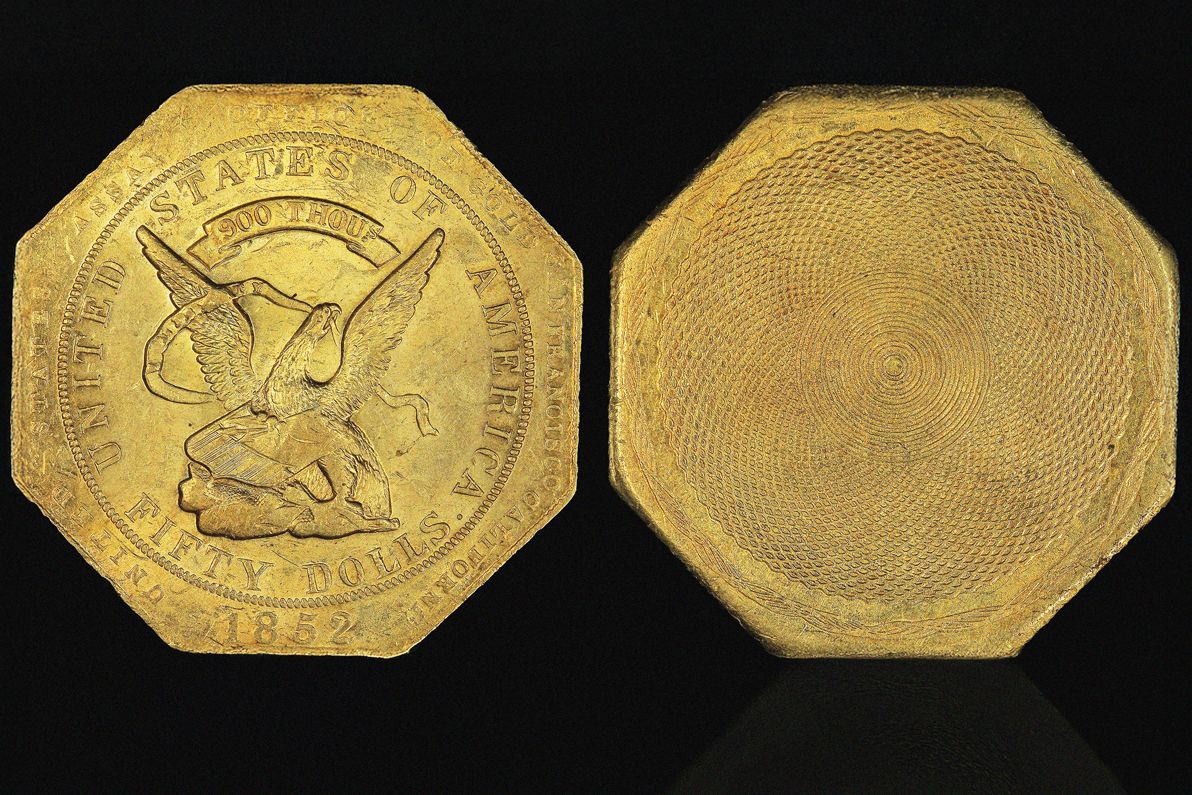
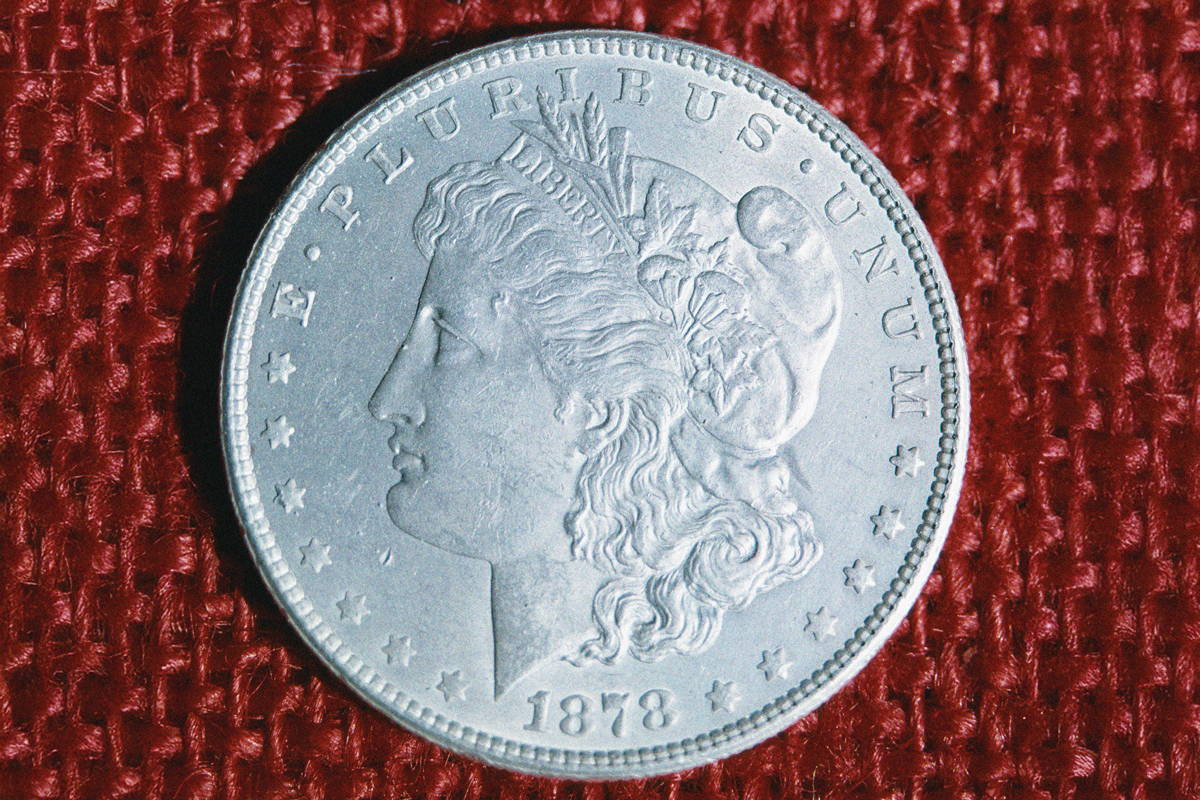
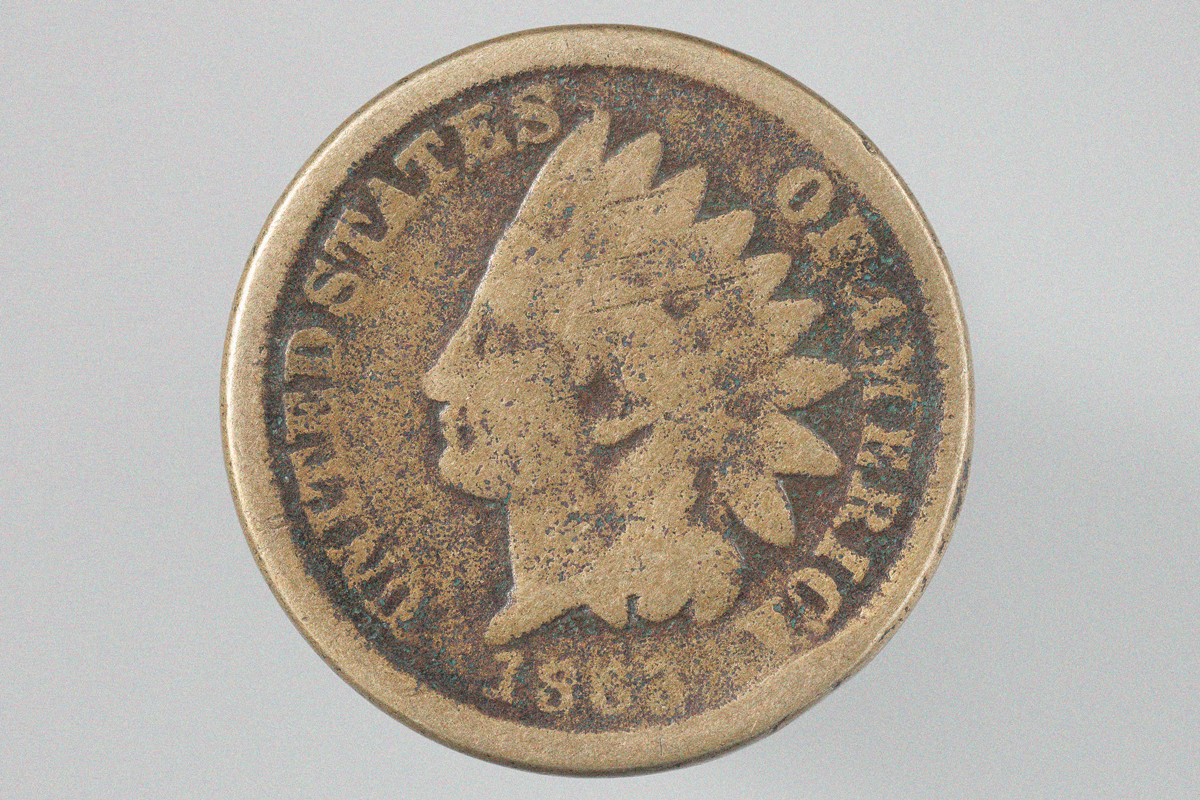
The history of U.S. currency is a fascinating journey that reflects the country’s growth, changing economic needs, and evolving cultural values. Before the United States was formed, each of the colonies issued its own currency. In 1690, the Massachusetts Bay Colony became the first to issue colonial notes in the form of paper currency. Later, during the American Revolutionary War, the Continental Congress issued paper currency to finance the war effort. These notes were called Continental currency, and some designs featured illustrations that reflected the values of the 13 colonies, such as an American soldier carrying a sword and a scroll with the words “MAGNA CHARTA.”

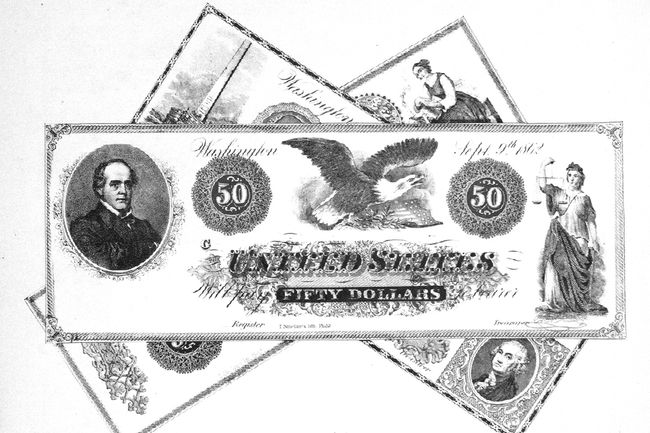
In the years following the Revolution, the dollar sign was adopted, Treasury Secretary Alexander Hamilton established the Bank of the United States to create a credit system for the new government, and Congress passed the Mint Act establishing the coinage system. Early treasury notes were redeemable for gold, but it wasn’t until 1861 that the government began issuing paper money for the first time since the war. Known as “demand notes” and nicknamed “greenbacks” because of the green ink used to print them, they were used to pay salaries and government expenses, but they weren’t backed by gold and lost value. Following the Legal Tender Act of 1862, the government began issuing paper notes that replaced demand notes and became the official currency of the United States. Of the 53 people whose portraits have appeared on U.S. banknotes, here are six of the most surprising.

Photo credit: PAUL J. RICHARDS/ AFP via Getty Images

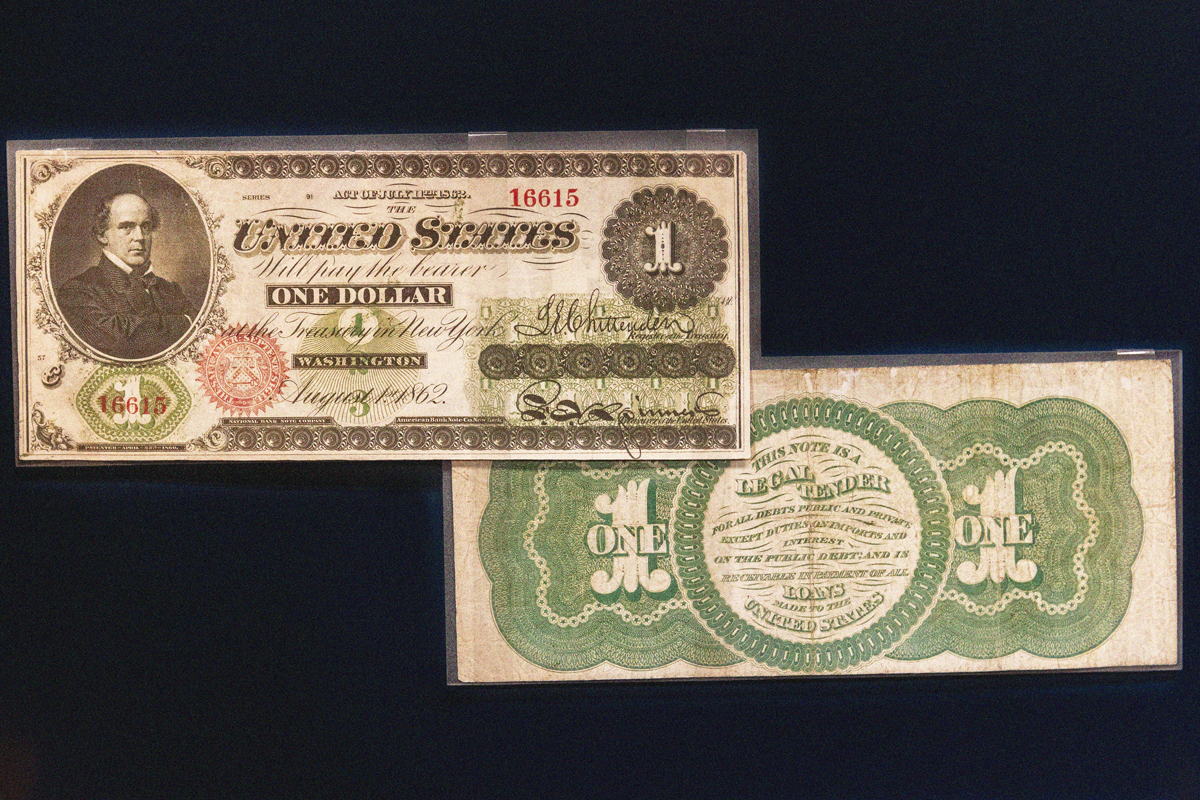
Salmon P. Chase

In 1862, during the Civil War, the first $1 legal tender banknotes were issued, featuring the Treasury seal and a portrait of Treasury Secretary Salmon P. Chase (possibly as a way to advance his own political career). While serving in the role during Abraham Lincoln’s administration, Chase was the architect of the national banking system, and he helped design the new paper money authorized under the National Bank Acts, which called for a system of nationally chartered banks and a uniform national currency. The same portrait of Chase that appeared on the $1 banknote was later used on the $10,000 banknote, the largest denomination ever in public circulation. Though currencies above $100 are no longer circulated, Chase National Bank, founded in 1877, was named in the former treasury secretary’s honor. 

Photo credit: Joe Raedle/ Getty Images News via Getty Images

Martha Washington

First Lady Martha Washington holds the distinction of being the only woman to be prominently featured on U.S. paper currency to date. Her portrait appears on the $1 silver certificate, which was first introduced in 1886, 17 years after the legal tender dollar bill featuring George Washington. She appeared again on a slightly modified certificate in 1891. The $1 certificates weren’t phased out until 1957, making them the second-longest-issued paper currency in the nation’s history, after the $2 bill. As the name implies, the certificates were backed by the federal government’s silver reserves and were exchangeable for silver from the U.S. Treasury.  

You may also like

The Real Reason Hotel Rooms Have Bibles

  • Gideon Bible in hotel room drawer
Gideon Bible in hotel room drawer
Credit: © Chad Robertson/stock.adobe.com
Author Bennett Kleinman

March 26, 2026

Love it?

If you were to book a room at a one-star roadside motel, you wouldn’t expect the same amenities you’d find at a luxury five-star resort. But there is one commonality they’re likely to share: a Bible tucked away in the drawer of the bedside table.

Bibles have been a familiar presence in hotel rooms for more than a century, and though the tradition has been declining in recent years, the bedside Bible remains an iconic part of American travel. But how did the book become a hotel staple? The origins can be traced back to the turn of the 20th century, with the creation of an evangelical Christian organization known as the Gideons.

Credit: © Jim O Donnell/Alamy

Who Are the Gideons?

The Gideons International was founded in 1899 with a simple mission: to share the word of God. It held its first official convention in 1900, and by 1901, its bylaws stated, “The object of the Gideons shall be to recognize the Christian traveling men of the world with cordial fellowship … scattering seeds all along the pathway for Christ.”

The first clue that distributing Bibles would be the perfect way to achieve this objective came in 1903, when a Chicago-based Gideon member named Fred Woodcock took a trip to Britain. He discovered that the Commercial Travellers’ Christian Association was distributing Bibles to hotels throughout England, and when he returned to the U.S., he suggested the Gideons follow suit. Due to financial limitations within the organization, there was no means of doing so at the time, but the Gideons procured enough funds by 1908 to make this goal a reality. 

You may also like