



8 Things You’d Find in Every 1960s Kitchen
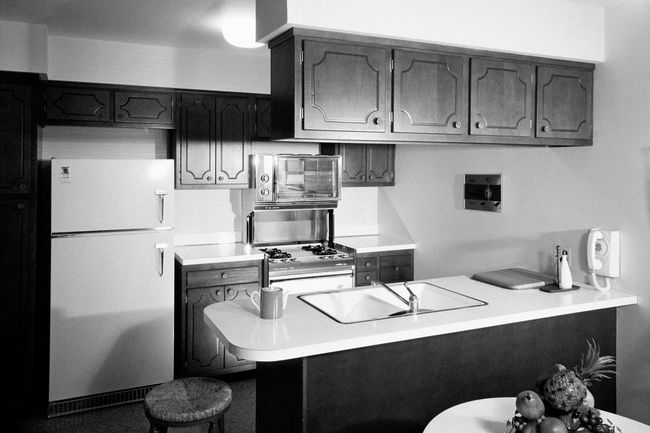
If you grew up in the 1960s, you might remember that kitchens looked and felt very different from today’s sleek, minimalist designs. The colors were soothing, patterns were popping, and design styles ranged from the early pastel “dream kitchens” to the playful retro-futurism of the Atomic Age to the richer earth tones that carried us into the 1970s.
Kitchens of the 1960s also reflected a postwar sense of optimism that embraced the bright, bold, and cutting edge. New materials such as Formica, chrome, vinyl, and molded plastics were everywhere, and convenience-driven appliances were becoming symbols of progress. Many kitchen items were designed not just to be useful, but to look modern, futuristic, and decorative.
Here are eight items you’d find in most American kitchens in the 1960s. How many of these do you remember?
Colorful Pyrex Mixing Bowls
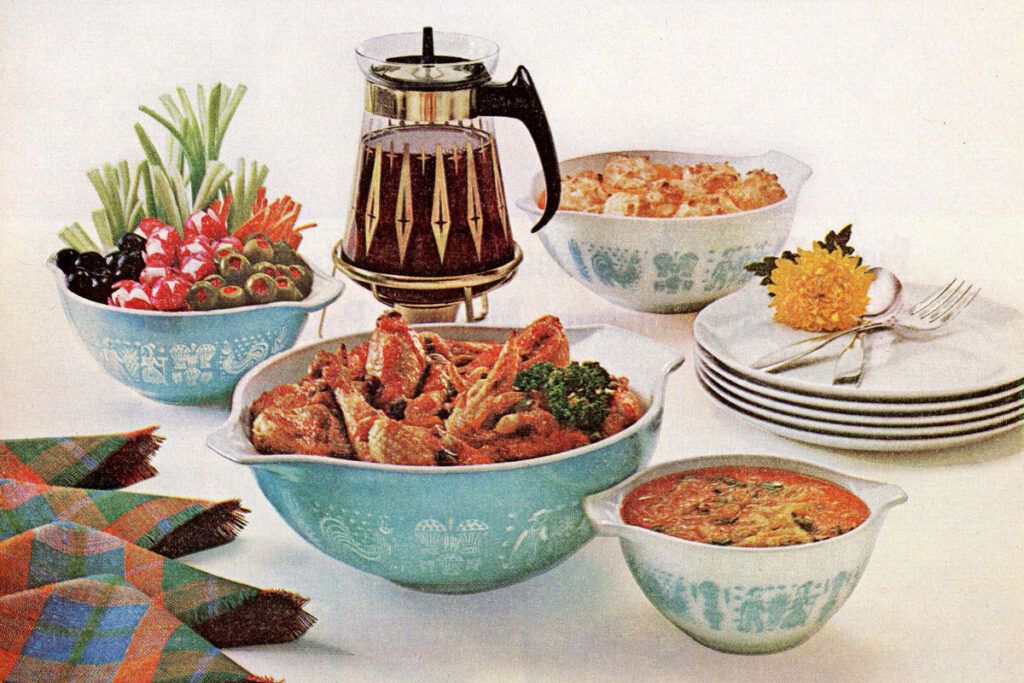
Stacked neatly in cabinets or displayed on open shelving, Pyrex nesting bowls were a staple of the 1960s kitchen. While bold primary colors were popular, the decade also embraced softer pastel versions and patterned designs such as “Gooseberry,” “Butterprint,” and “Snowflake Blue,” which aligned with the early-1960s “dream kitchen” aesthetic of coordinated, cheerful color schemes. Later patterns featured botanicals and Americana scenes in neutral beige or brown.
Made of thick, durable glass, these bowls were designed for heavy mixing, baking, and serving. Beyond their practicality, they also reflected the era’s focus on functional beauty — everyday objects that were meant to look good enough to leave out in the open.
Appliances in Earthy Colors
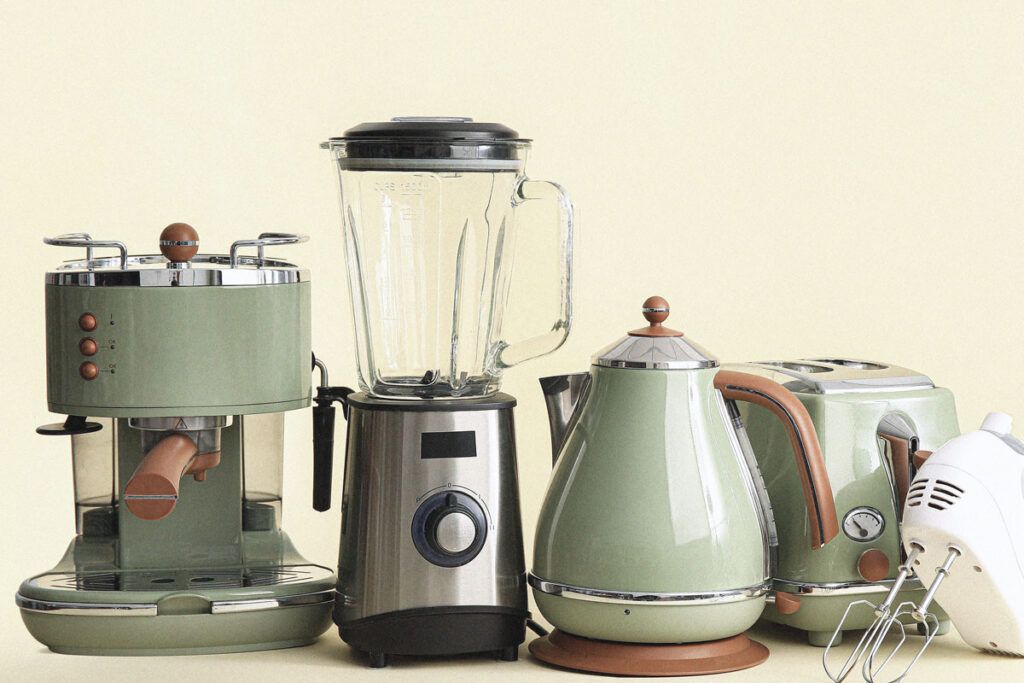
If there’s one color palette that defined the late-1960s kitchen, it’s avocado green, harvest gold, and coppertone brown. Refrigerators, ovens, and dishwashers from brands such as General Electric and Westinghouse embraced this earthy shift, moving away from the earlier white-and-pastel look toward something warmer and more grounded.
These tones reflected the broader evolution of 1960s design trends, when sleek modernism began blending with more natural, organic influences. Appliance suites were often fully coordinated, turning the kitchen into a unified color scheme. What began as futuristic efficiency gradually softened into the casually elegant, lived-in aesthetic that defined the late-1960s home.
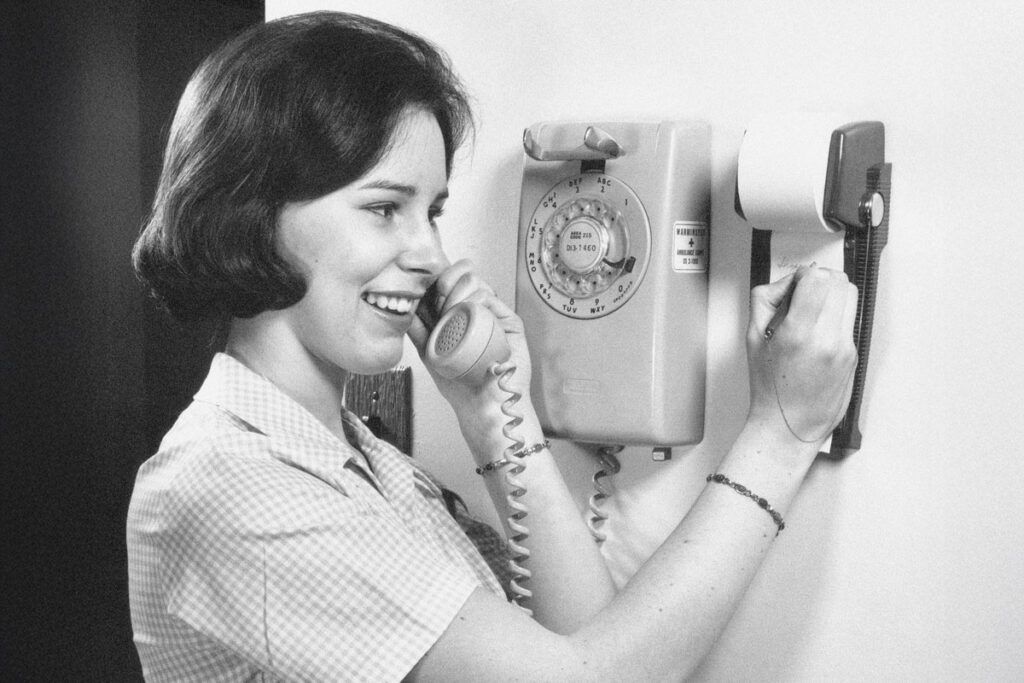
Rotary Dial Wall Phones
The kitchen wall phone was a household command center long before mobile devices existed. Usually mounted near a central wall or corner, these rotary dial phones embodied the era’s interest in streamlined, practical design by being simple, durable, and always within reach.
At the same time, their presence in the kitchen reflected the decade’s social design logic — the kitchen was the most lived-in, central space in the home, serving not just as a place for cooking but also as a hub for gathering and communication. The coiled cord often stretched into hallways or dining rooms for a little privacy, and magnetic notepads for taking messages were often hung on the refrigerator, reinforcing the kitchen as the home’s nucleus.
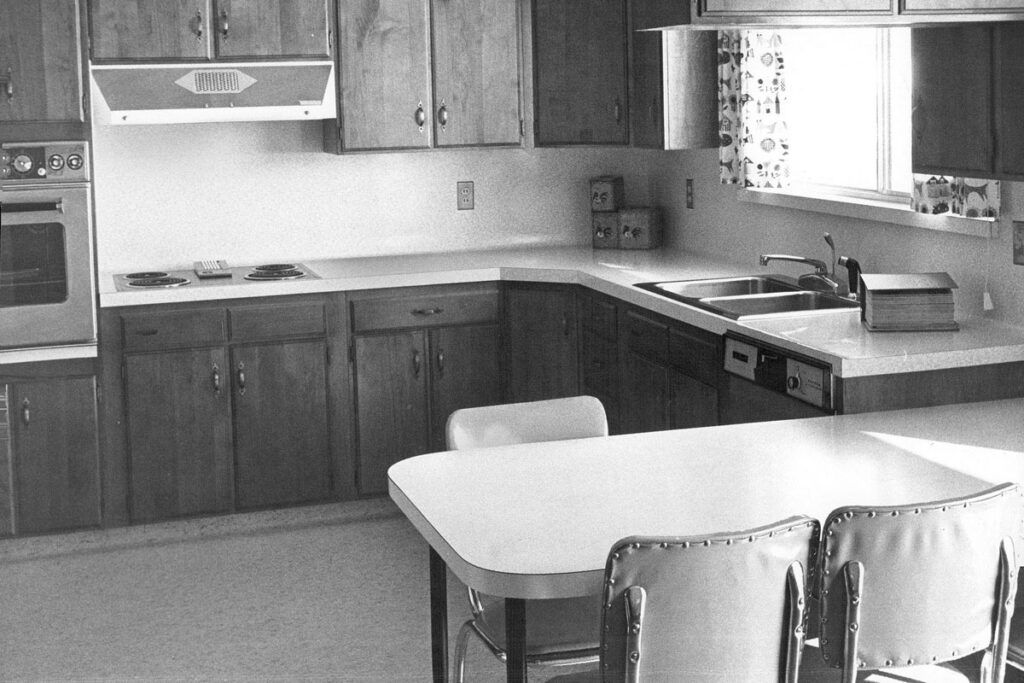
Formica Countertops
Formica countertops defined the visual identity of many 1960s kitchens, especially in their boldest Atomic Age expressions. Designs such as boomerang patterns, starbursts, and abstract geometric prints flecked with gold captured the era’s fascination with space-age futurism and modern materials.
Set against chrome edging and flat-front clean-lined cabinetry, Formica surfaces created a sleek yet playful look. In the early 1960s, these patterns often appeared in brighter, more optimistic palettes, while later versions shifted toward earth tones. Affordable, durable, and endlessly customizable, Formica became one of the defining materials of the decade’s design identity.
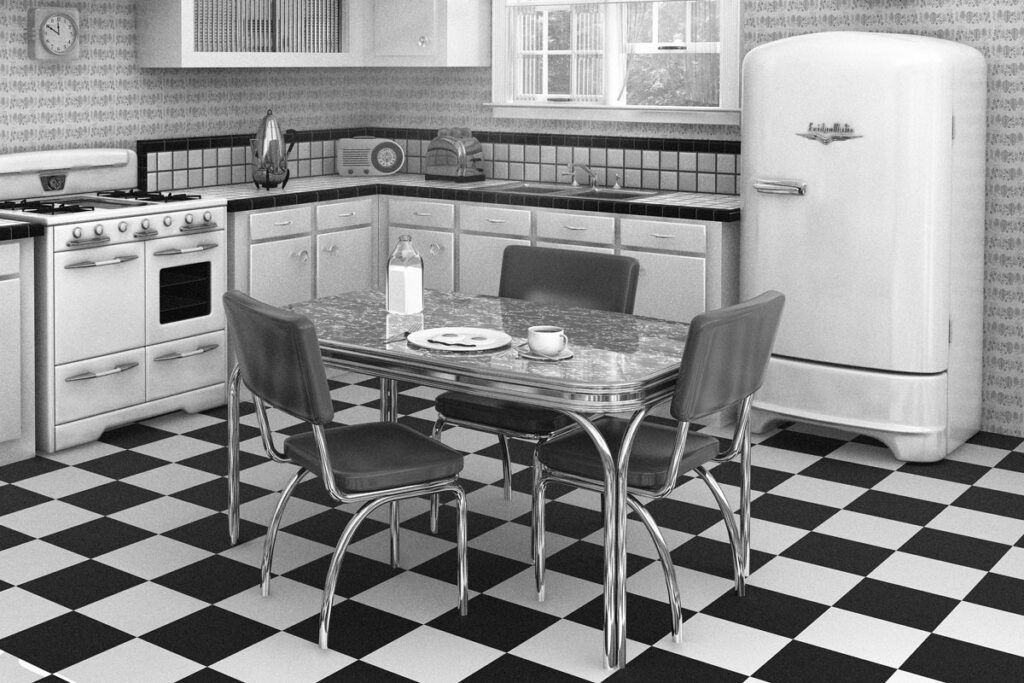
Chrome Dinette Sets
Chrome dinette sets were a classic expression of 1960s kitchen decor. With Formica tabletops, rounded edges, and chrome tubular frames, they reflected the era’s emphasis on clean geometry and easy maintenance.
Vinyl upholstery in bold colors — turquoise, red, mustard yellow, or black-and-white patterns — often tied into either the playful graphic energy of the early ’60s or the deeper neutral tones that were popular toward the end of the decade. Practical yet stylish, these sets embodied the balance between modern efficiency and casual family living that defined 1960s kitchen culture.
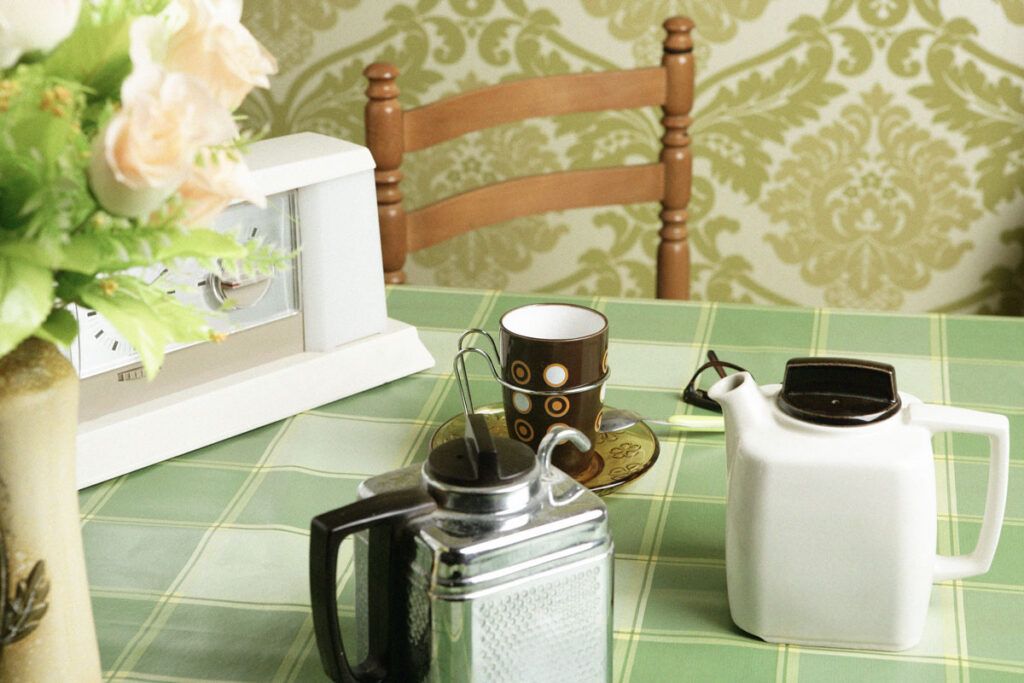
Bold, Patterned Wallpaper
Kitchen wallpaper in the 1960s was rarely subtle. Starbursts, diamond grids, and repeating geometric patterns filled the space with energy, often in saturated shades of orange, olive green, mustard yellow, black, and red. Alongside these bold, modern designs were more homey motifs — oversized, stylized florals, climbing vines, roosters, and fruit and vegetable prints — that covered entire walls.
In many homes, wallpaper was part of a fully coordinated look, paired with matching curtains, tablecloths, dishware, and sometimes even appliances. Vinyl coatings made it practical for everyday use, but its real role was visual, turning the kitchen into a lively space for gathering rather than just a purely functional one.
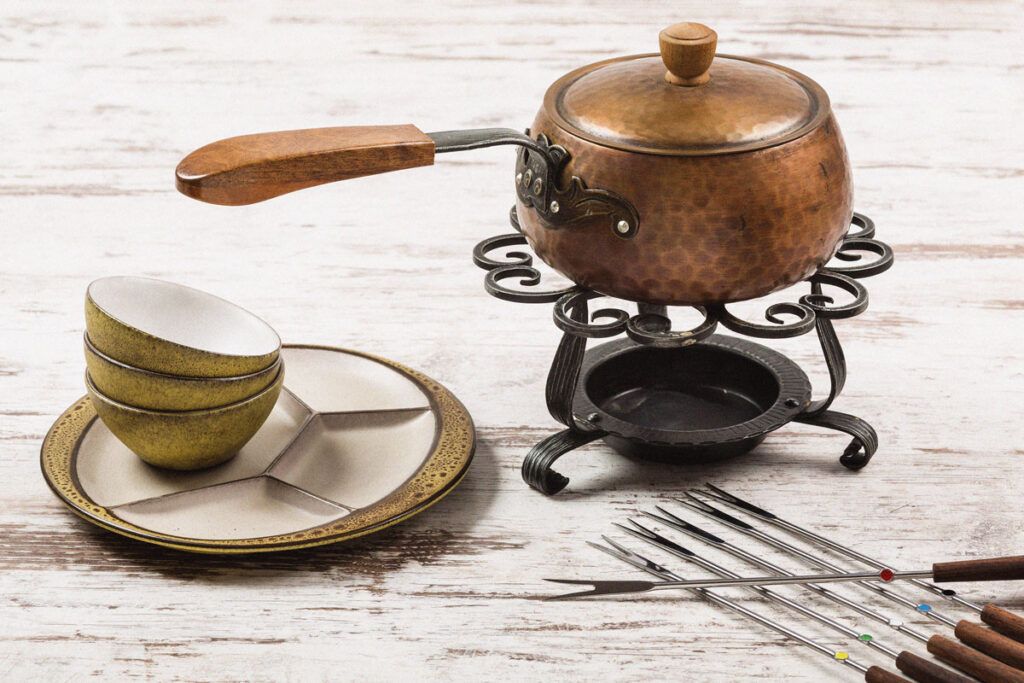
Fondue Sets
Fondue sets became especially popular in the late 1960s, aligning with the era’s shift toward social, interactive dining. Often finished in avocado green, burnt orange, or mustard yellow, they reflected the decade’s warm, organic design sensibility.
At the same time, fondue itself fit the broader cultural movement toward casual entertaining and shared meals as more women entered the workforce. Fondue gatherings emphasized experience over formality, matching the relaxed evolution of 1960s home design into something more communal and expressive.
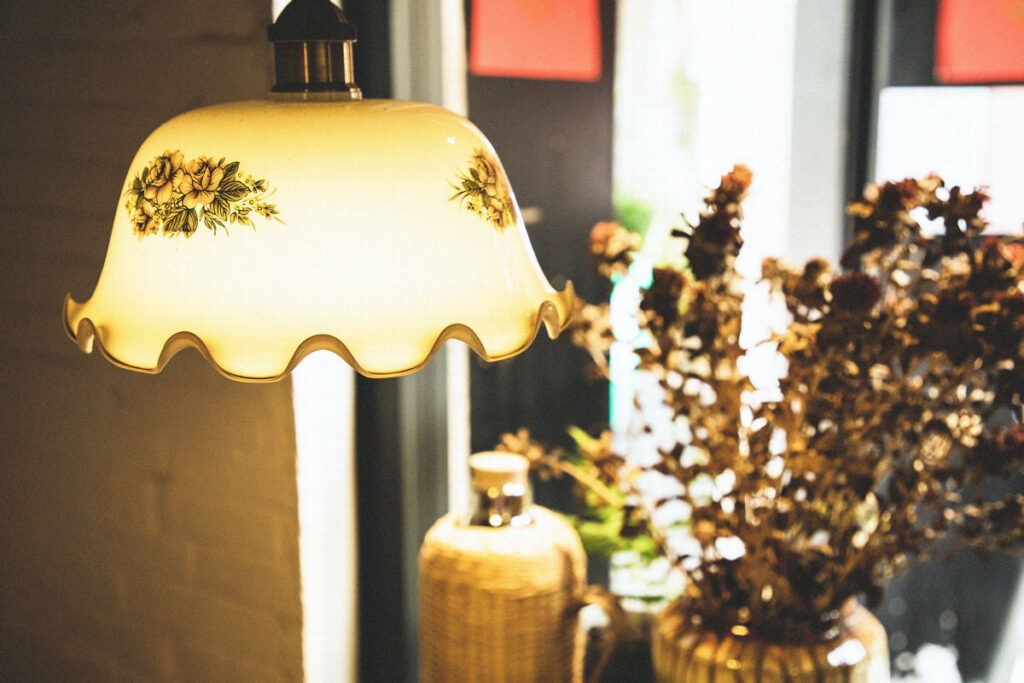
Swag Lamps
Swag lamps were a common sight in 1960s kitchens, especially over dinette tables and breakfast nooks. Instead of being hardwired into the ceiling, they hung from a hook and draped across the ceiling on a visible chain before plugging into a wall outlet. This made them easy to install and reposition, which appealed to homeowners who wanted a flexible, stylish update without major electrical work.
Their designs ranged from simple glass globes to more decorative options with colored glass, metal details, or fringed shades. Many reflected the era’s love of bold, sculptural shapes and warm lighting, adding a cozy glow that softened the harder surfaces of chrome, laminate, and vinyl so often found in 1960s kitchens.