


Credit: Stanley Bielecki Movie Collection/ Moviepix via Getty Images
Author Michael Nordine
April 4, 2024
Love it?129
With all due respect to Hollywood’s golden age, you could make a convincing argument that the 1970s were the best decade in cinematic history. As the New Hollywood era reached its peak and visionary directors were given previously unseen control over their productions, creativity flourished in Tinseltown like never before. It came to a (perhaps inevitable) end in the early ’80s after a string of high-profile box-office failures, but even the movies considered responsible for ending New Hollywood (such as William Friedkin’s Sorcerer and Michael Cimino’s Heaven’s Gate) have since been reassessed as severely underappreciated in their own time.
Though there are hundreds of movies from the ’70s well worth your time — including such classics as The Godfather, Jaws, and Star Wars that you’ve likely already seen — these seven films are a great place to start exploring the decade further.
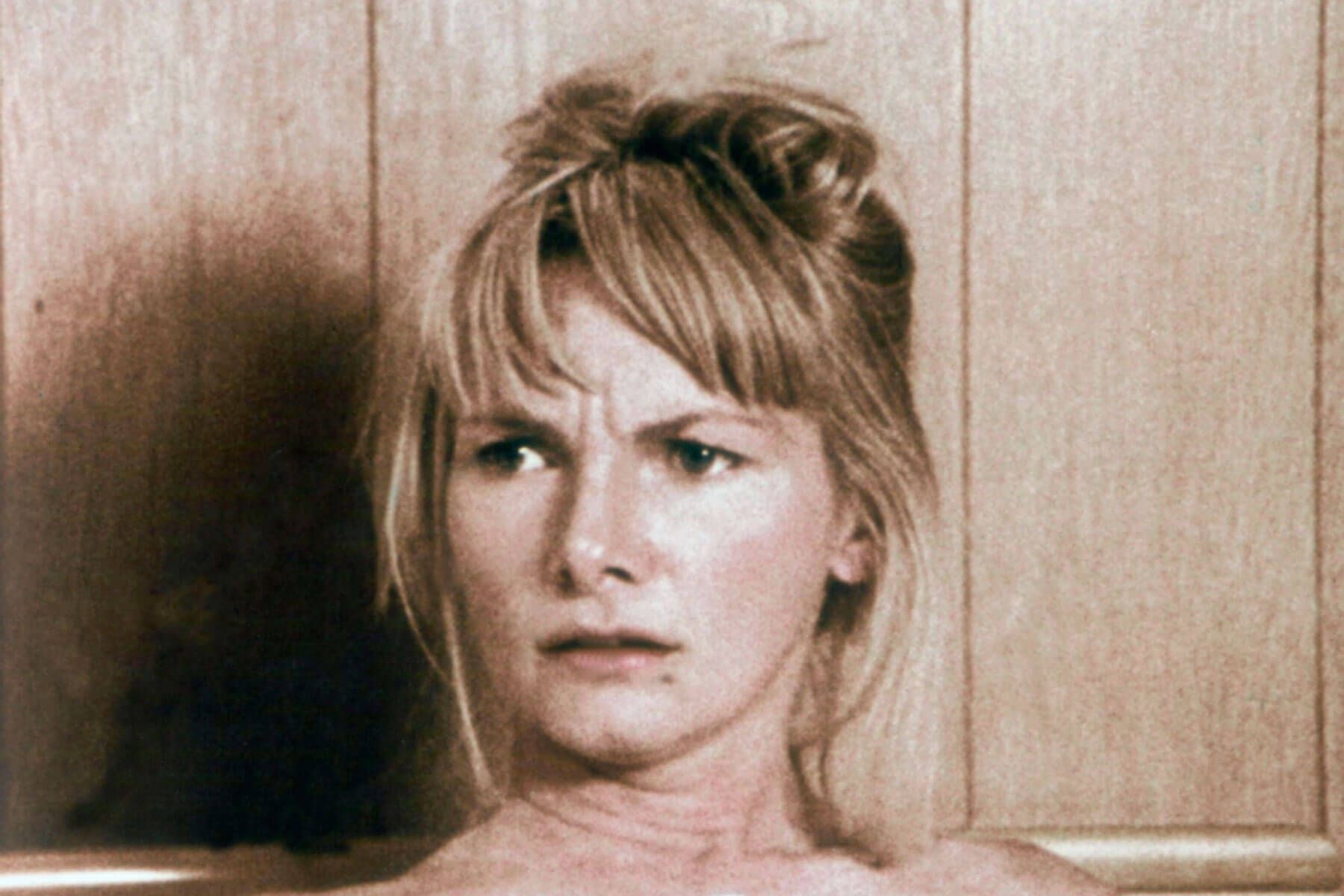
There are innovators, and then there’s Barbara Loden. The actress-turned-filmmaker wrote, directed, produced, and starred in the semi-autobiographical film Wanda, a landmark of the then-nascent independent film movement. The movie centers on an aimless housewife who joins up with a bank robber after leaving her husband in Pennsylvania’s coal country. Made for just $100,000, it won an award at the Venice Film Festival in Italy for Best Foreign Film and paved the way for countless female filmmakers to follow. Sadly, it was the only feature Loden would direct. She was diagnosed with breast cancer in 1978 — by which point she’d also helmed two short films and a number of off-Broadway plays — and died in 1980 at the age of 48. Her legacy has only grown with time, as has Wanda’s.
Stanley Kubrick’s 2001: A Space Odyssey is often (and rightly) cited as one of the greatest films ever made, but not everyone enjoyed going beyond the infinite when the film first debuted. One notable dissenter was Russian auteur Andrei Tarkovsky, who considered2001 “phony on many points” and “a lifeless schema with only pretensions to truth.” Seeking to bring more emotional depth to science fiction, a genre he feared was becoming cold and lifeless, Tarkovsky decided to put his convictions to the test by adapting Stanisław Lem’s novel Solaris.
The result is a mind-altering exploration of a semi-sentient planet that creates hallucinations and/or physical manifestations of our deepest desires and fears, depending on which interpretation you choose to believe. For the protagonist Kris, a psychologist who’s been sent light-years from Earth to a space station orbiting Solaris, that comes in the form of his long-dead wife Hari. He’s haunted by her, which is to say he’s haunted by his own decisions — a problem no less urgent than the matter of how he’s going to get home.
John Cassavetes and Gena Rowlands, a married couple who collaborated on numerous films together, essentially invented American independent filmmaking in the late 1950s. Their shared filmography includes 10 movies, none quite as moving as A Woman Under the Influence. Rowlands delivered one of the most devastating performances in cinema history as Mabel, a housewife on the verge of a nervous breakdown. Her increasingly erratic behavior — strange tics, private and public outbursts — can only be partially explained by her reliance on alcohol, and would appear to speak to a deeper affliction.
Rowlands embodied her character in a way few performers ever have, and she earned the first of her two Oscar nominations for the performance — the second was for 1980’s Gloria, also directed by Cassavetes. Their pairing ended with Cassavetes’ untimely death in 1989, but Rowlands continued working for decades — including with the couple’s son Nick Cassavetes, who directed her in The Notebook.
Jeanne Dielman, 23 quai du Commerce, 1080 Bruxelles (1975)
Recently named the greatest film of all time by the British Film Institute’s once-per-decade poll of critics, filmmakers, and academics, Chantal Akerman’s Jeanne Dielman serves as a before-and-after moment in the history of film. With much of its 201-minute running time consisting of its title character (a phenomenal Delphine Seyrig) performing her daily domestic tasks in real time, the movie is sure to alienate some potential viewers. Those who can get on its wavelength, however, will find it a uniquely immersive experience that has never been and likely never will be replicated.
Jeanne, a widowed mother who earns extra money by sleeping with a different male client shortly before her son returns home from school each afternoon, performs most of her mundane tasks with a silence that speaks to their mundanity — and, by extension, that of her entire existence. But tensions come to a boil just as surely as the water she cooks her potatoes in, and the film’s shocking climax is impossible to see as anything but inevitable in hindsight.
Robert Altman once said that the idea for his strangest film came to him in a dream while his wife was in the hospital, and it shows. And while the movie’s title is accurate, it’s also something of a misdirection: 3 Women is at its heart a cinematic dyad, with two women named Mildred (one played by Shelley Duvall, who goes by Millie, and the other, nicknamed Pinky, played by Sissy Spacek) coming into each other’s lives in the California desert with increasingly bizarre consequences. It’s not unlike Ingmar Bergman’s Persona or David Lynch’s Mulholland Drive in the way the personalities of the two female leads refract through a shared lens, until they seem to merge into something darker than the sum of their parts.
Terrence Malick burst onto the scene with 1973’s Badlands, a lovers-on-the-lam drama that helped launch the careers of Martin Sheen and Sissy Spacek in addition to his own. It was one of the most exciting debut films in years, and Malick followed it up with the even more accomplished Days of Heaven. Not that it was easy: Malick, whose loose filmmaking style entails shooting hours of footage and settling on a narrative in the editing room, had cinematographers Néstor Almendros and Haskell Wexler shoot almost entirely during magic hour, the brief period around sunset when the sky is at its most painterly, with a warm glow of light. The result, accompanied by legendary composer Ennio Morricone’s evocative score, is, well, magical. Set in 1916, it follows wayward couple Bill and Abby (Richard Gere and Brooke Adams, respectively), who flee Chicago for the Texas panhandle, where they pretend to be siblings in order to trick a wealthy, ailing farmer (Sam Shepard) into falling in love with Abby so they can inherit his money.
Also along for this ill-fated journey is Bill’s actual kid sister Linda (Linda Manz), who provides the film’s lyrical, evocative narration: “The sun looks ghostly when there’s a mist on a river and everything’s quiet,” she’ll say in one scene, and in another, “You're only on this Earth once. And I — to my opinion, as long as you’re around, you should have it nice.” Days of Heaven premiered at the Cannes Film Festival, where Malick won the prize for Best Director; it went on to be nominated for four Academy Awards, with Almendros winning Best Cinematography. It’s still considered one of the most beautiful films ever made, and few who’ve seen it would disagree.
In space no one can hear you scream, but here on Earth, your neighbors will certainly hear you the first time you watch Alien. Ridley Scott’s first masterpiece remains the measuring stick for sci-fi horror 45 years later, and the only movie to match it was one released shortly after it: John Carpenter’s The Thing. Before it was a massive franchise consisting of sequels, prequels, comic books, and toys, Alien was a fairly straightforward story of a cosmic entity coming aboard a spaceship and picking off its inhabitants one by one. And while it’s obvious to anyone watching today that Sigourney Weaver’s Ripley is the heroine all along, it wasn’t at the time — Weaver was a relative unknown then, whereas Tom Skerritt, in the role of Captain Dallas, was the character audiences expected to save the day. In addition to the xenomorph itself — an enduringly horrifying creature designed by Swiss artist H.R. Giger — Alien also introduced moviegoers to Jonesy, a fan-favorite feline who in some ways is the franchise’s ultimate survivor.
Credit: Sunset Boulevard/ Corbis Historical via Getty Images
Author Michael Nordine
March 14, 2024
Love it?64
War movies have existed for as long as cinema itself, with 1898’s 38-second Tearing Down the Spanish Flagbeginning a tradition that continues to this day. And while World War II has likely inspired more films than any other conflict, the latter half of the Vietnam War took place during an especially fruitful period in the movie industry: the director-driven New Hollywood era, a time when young, ambitious filmmakers were given unprecedented control over their work. As this era was largely youth-driven, it naturally follows that some of its most important movies were about a watershed event in American history that younger audiences had on their mind whether at the movies or elsewhere — especially those who had to register for the draft.
The list of filmmakers who responded to that growing sense of disenchantment includes Michael Cimino, Francis Ford Coppola, and Stanley Kubrick, all of whom contributed to the canon of great movies about the Vietnam War. Here are five of the very best.
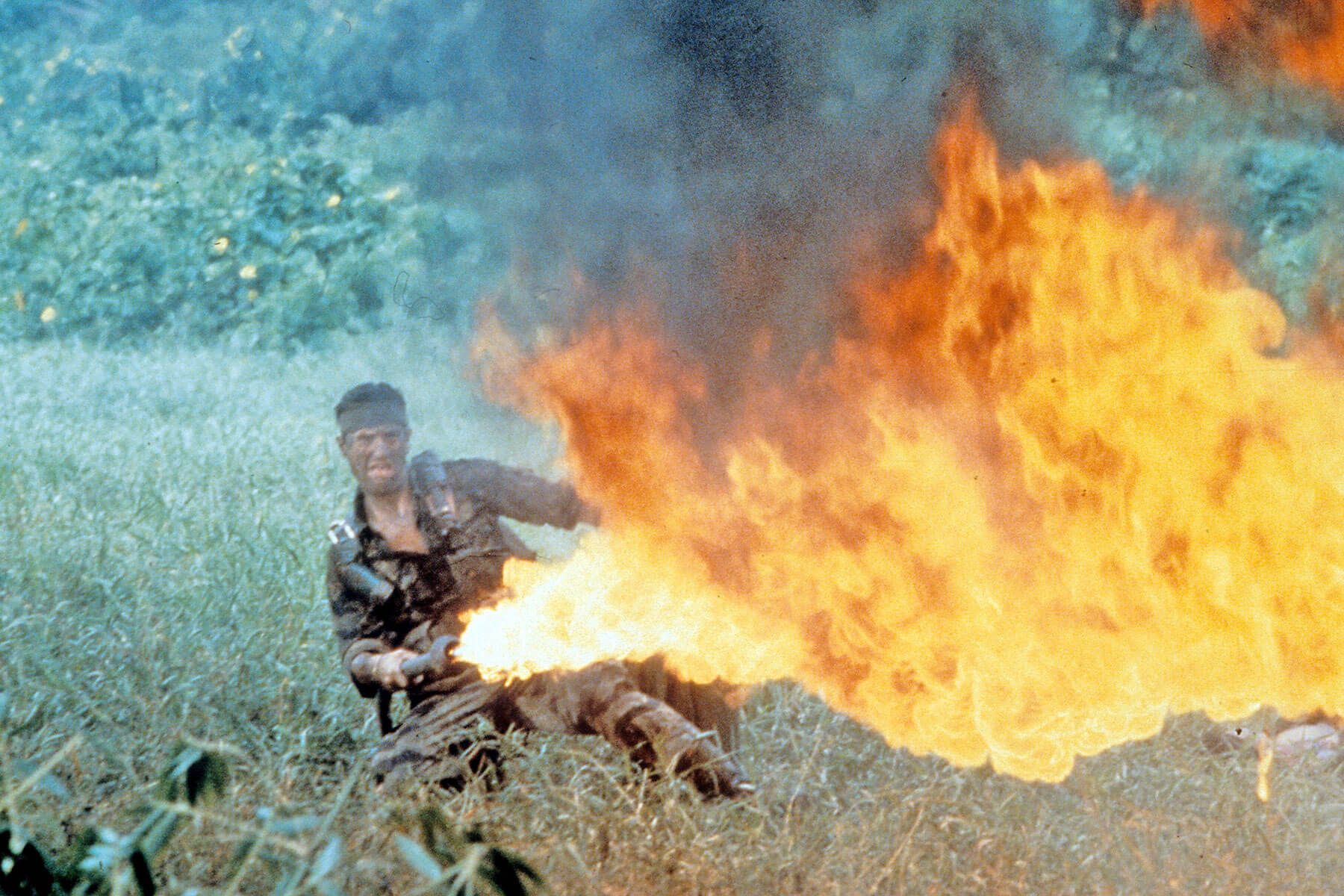
The first thing to know about The Deer Hunter is its cast, led by Robert De Niro, Meryl Streep, Christopher Walken, and John Cazale — who only appeared in five films throughout his too-short career, all five of which were nominated for Best Picture. The second is how heartbreaking it is. As personal as it is political, The Deer Hunter begins in a small Pennsylvania town before shifting the action to Vietnam, where three close friends from that tight-knit community meet tragically different fates. Not all the tragedy takes place onscreen: Cazale’s scenes were shot first, as he was dying of cancer when production began; the studio wanted to replace the actor, but both Cimino and Steep (who was in a relationship with Cazale) threatened to leave if they did. He didn’t live to see the completed film.
He likely would have been proud if he had, as The Deer Hunter is a powerful reminder that war doesn’t always end on the battlefield. It won five of the nine Academy Awards it was nominated for — including Best Picture, Best Director, and Best Supporting Actor for Walken — and was added to the National Film Registry by the Library of Congress in 1996.
“My film is not about Vietnam,” Francis Ford Coppola famously said of his long-in-the-making Apocalypse Now. “It is Vietnam.” As quite possibly the most acclaimed filmmaker of the 1970s, having previously directed the first two Godfather movies as well as The Conversation, Coppola had a commitment to the project that led to astronomically high expectations. Production nearly spiraled out of control, and Coppola later remarked that “we were in the jungle, there were too many of us, we had access to too much money, too much equipment, and little by little we went insane.”
A loose adaptation of Joseph Conrad’s novella Heart of Darkness, Apocalypse Now follows a disenchanted Army captain (Martin Sheen) who’s been given the unenviable task of assassinating a rogue colonel (Marlon Brando) whose fanatically loyal troops concur with his assessment that he’s become a kind of god. What follows is strange, harrowing, and unforgettable. Though initial reviews were divided, Apocalypse Now won the prestigious Palme d’Or at the Cannes Film Festival and was nominated for eight Academy Awards, including Best Picture and Best Director. Its reputation has only grown with time, and the film is now regarded as one of the greatest war movies ever made.
War comedies are few and far between for self-evident reasons — the subject matter doesn’t exactly lend itself to laughter — but there are some exceptions. Good Morning, Vietnam is among the most notable, not least because of Robin Williams’ performance as a DJ for the Armed Forces Radio Service. He raises the morale of troops just as he raises the ire of higher-ups, making him both a folk hero and a problem to be solved. Williams, playing the real-life Adrian Cronauer, improvised many of the radio broadcasts that serve as the film’s centerpiece, earning him a Golden Globe and his first Oscar nomination.
The poster says it all: a helmet with “born to kill” written next to a peace sign. Only Stanley Kubrick could make a movie like Full Metal Jacket, a Vietnam epic that begins with the most disturbing portrayal of boot camp you’ll ever see and ends with traumatized soldiers singing the “Mickey Mouse March.” Kubrick, whose nonpareil filmography includes everything from 2001: A Space Odyssey and The Shining to Dr. Strangelove and A Clockwork Orange, read Gustav Hasford’s 1979 novel The Short-Timers twice in 1982 before deciding to adapt it — a process that included just the sort of extensive research for which the meticulous filmmaker was known.
Divided into two sections — the first at basic training, the second in Vietnam — Full Metal Jacket introduced the world to R. Lee Ermey, a former drill sergeant whose haunting performance became the measuring stick for all such characters past and present.
Movies about the Vietnam War aren’t as common today as they were in the 1970s and ’80s, when the conflict was either still ongoing or fresh in the memory. But Spike Lee has never cared what was en vogue, and Da 5 Bloods — about a group of Black soldiers who return to Vietnam to exhume the treasure they buried there during the war — is a highlight of his uniquely impressive filmography. That’s thanks in large part to standout performances from Delroy Lindo and Chadwick Boseman (in one of the Black Panther star’s final roles before his untimely passing), who bring the director’s vision to vibrant life.
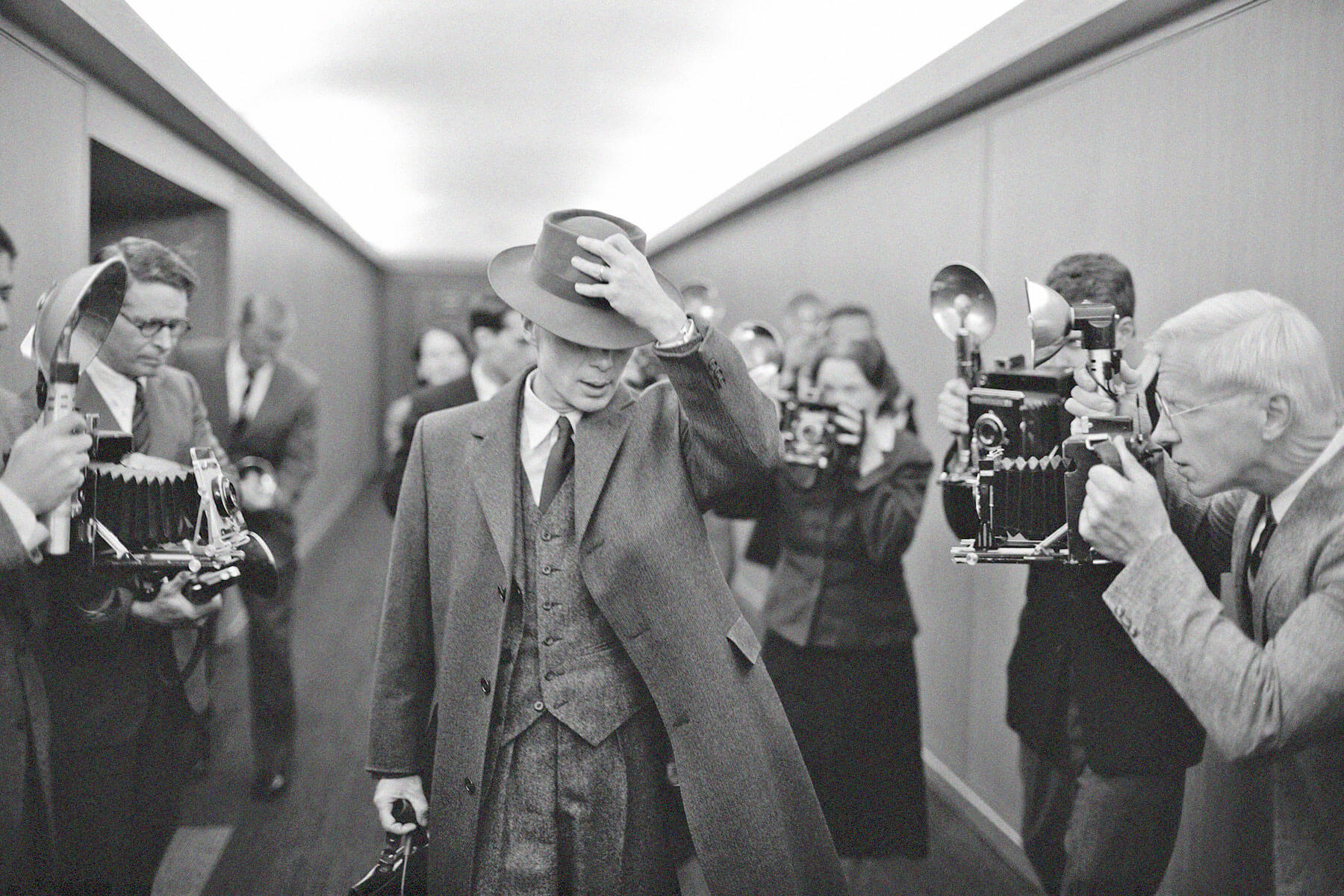
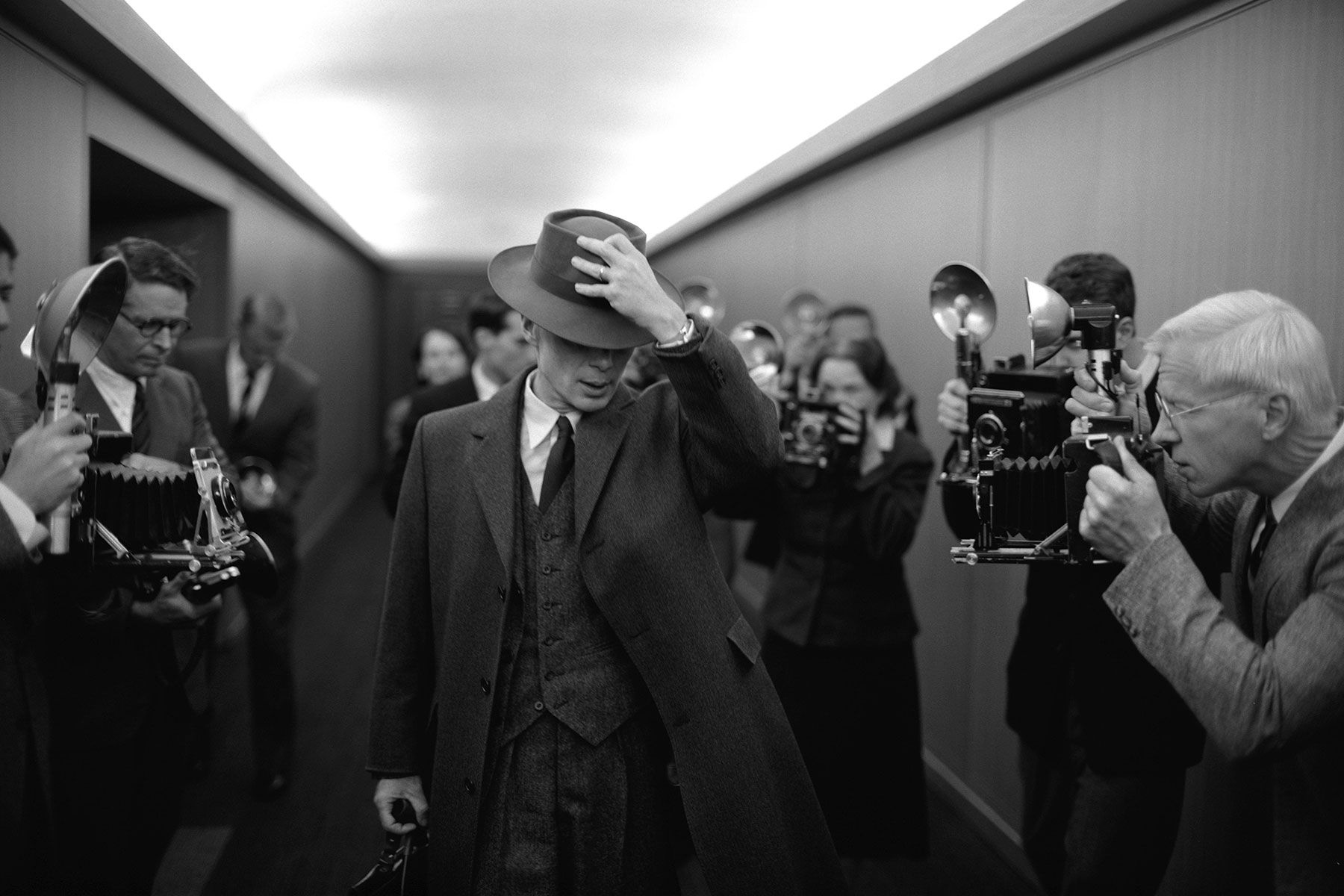
Oppenheimer was one of the most successful films of 2023, and with good reason. Christopher Nolan’s account of the “father of the atomic bomb” is a meticulous biopic and gripping thriller all at once, with its depiction of the Trinity nuclear test ranking among the most awe-inspiring visual spectacles in cinema history. After grossing an eye-popping $960 million at the box office as part of the “Barbenheimer” phenomenon, the movie dominated the 2024 Oscars, winning seven awards including for Best Picture, Best Director (Christopher Nolan), Best Actor (Cillian Murphy), and Best Supporting Actor (Robert Downey Jr.).
The film didn’t tell the whole historical story, however — no single movie could — and some of the details that were omitted are as compelling as the ones that made it into the final cut. Here are five of them.
Developing and testing nuclear weapons is a dangerous affair, especially for the people living downwind of the Los Alamos Laboratory in New Mexico, where J. Robert Oppenheimer and his team conducted their top-secret research. “Some people thought it was the end of the world,” said Paul Pino of Carrizozo, New Mexico, located some 40 miles south of Los Alamos, in an interview with NPR after the film’s release. “They thought, the sun’s coming up on the wrong side of the world.” Oppenheimer portrays the testing site as essentially barren and desolate, which isn’t exactly accurate.
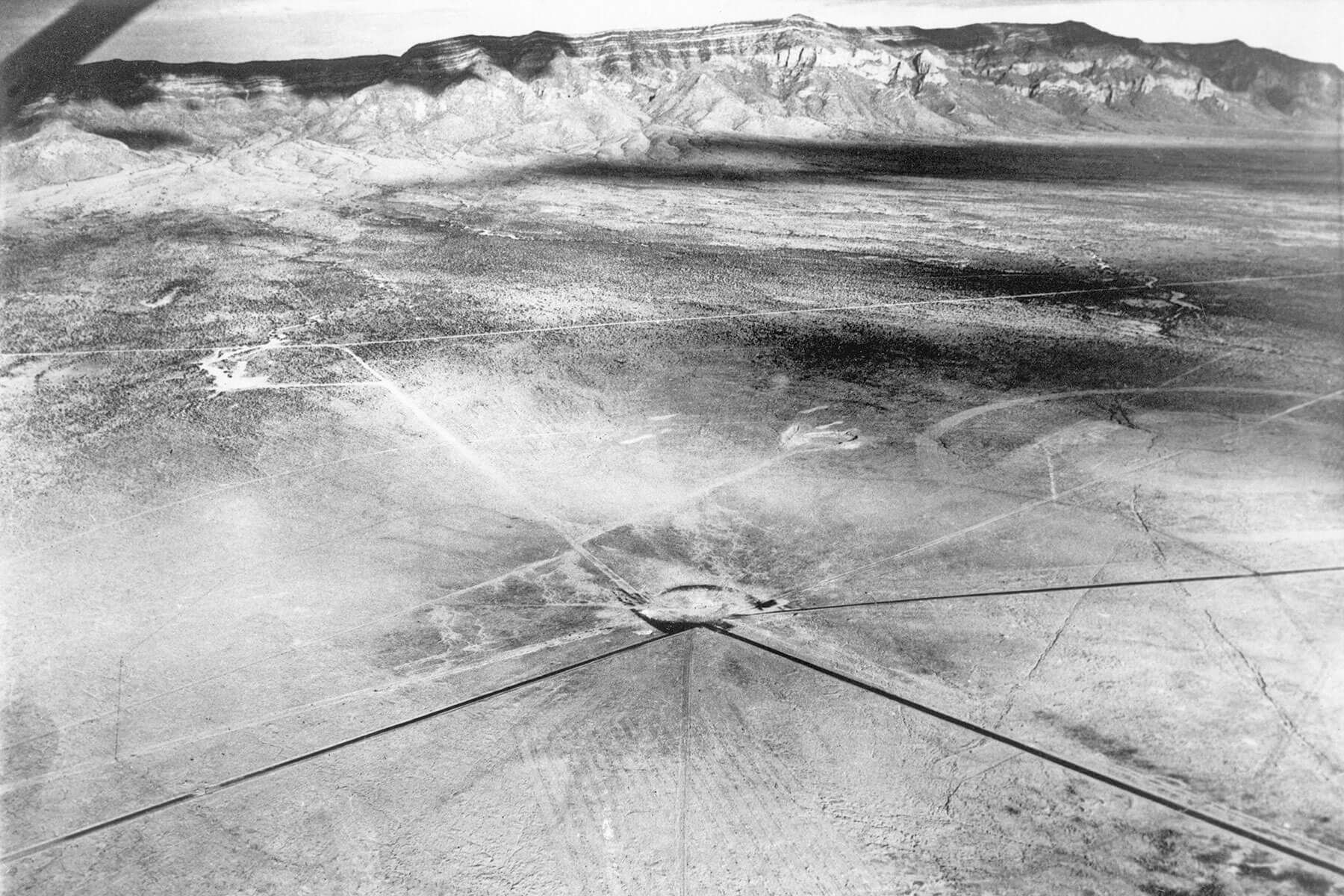
The Trinity test itself was conducted 200 miles from Los Alamos in the more remote Tularosa Basin, but even that region was hardly unpopulated: Half a million people lived within 150 miles of the explosion, many of them Indigenous and Hispanic peoples, and these “downwinders” have been called the world’s first victims of nuclear fallout. These groups have reported high rates of heart disease and cancer, not to mention their cattle’s hair getting burned off and their land being covered in white dust in the wake of the actual explosion. The Radiation Exposure Compensation Act was passed in 1990 to address some of these concerns, but many of those affected say its parameters are too narrow and they’ve been left in the cold.
Credit: Historical/ Corbis Historical via Getty Images
Oppenheimer and Einstein’s First Meeting
In one of the film’s best, most memorable sequences, Oppenheimer and Albert Einstein meet at Princeton University sometime in 1947 to discuss the trumped-up congressional hearings Oppenheimer is being subjected to. Though it’s mentioned that they’ve known each other for decades in this (likely fictional) conversation, we don’t actually see the origins of their professional relationship. That meeting of the minds began at the California Institute of Technology in 1932, when “Oppie” was a faculty member and Einstein visited the prestigious university. The two are said to have disagreed and debated many times throughout the next few decades, but they always respected one another.
Not much about the Bohemian Club is known to outsiders, which is entirely the point. An all-male private club, it has counted the likes of Richard Nixon, Ronald Reagan, Mark Twain, and Clint Eastwood among its members since it was founded in 1872. It was at Bohemian Grove, the group’s 2,700-acre restricted campground in Monte Rio, California, that Oppenheimer met with nuclear physicist Ernest Lawrence and the heads of the S-1 Executive Committee on September 13, 1942, to first discuss what became known as the Manhattan Project.
The club was left out of the film, perhaps because its inclusion could have lent a conspiratorial air to the proceedings that would have raised more questions than it answered. The Bohemian Club’s motto is “Weaving Spiders Come Not Here,” and its annual Cremation of Care ritual — in which members dress in robes, a 40-foot owl is constructed, and a body is burned in effigy to symbolize that outside concerns shouldn’t be dwelled on — is eyebrow-raising to say the least.
Credit: PhotoQuest/ Archive Photos via Getty Images
Oppenheimer’s Second Affair
The bizarre love triangle involving Oppenheimer, his wife Katherine “Kitty” Oppenheimer, and his lover Jean Tatlock, a psychiatrist, adds personal intrigue to the largely political thrills depicted in Oppenheimer — especially in the wake of Tatlock’s suicide, for which Oppenheimer considered himself responsible. That didn’t stop him from stepping outside his marriage yet again, however, the second time with Office of Strategic Services (OSS) psychologist Ruth Sherman Tolman. Though the movie briefly hints at their affair, it certainly doesn’t tell the full story: Their relationship continued long after the war and had a profound effect on both of them, to say nothing of Kitty.
Advertisement
Advertisement
Credit: Central Press/ Hulton Archive via Getty Images
Oppenheimer’s Death
Though it’s told in a nonlinear fashion, Oppenheimer’s chronological end is in 1963, when its subject receives the Enrico Fermi Award from President Lyndon B. Johnson nearly a decade after having his reputation tarnished in the wake of World War II. “I think it is just possible, Mr. President, that it has taken some charity and some courage for you to make this award today,” he told Johnson upon receiving the award. (The film’s actual final scene is a flashback to 16 years earlier, when the chilling end of Oppenheimer’s conversation with Einstein is revealed.)
Oppenheimer, who smoked as many as 100 cigarettes a day and weighed only 115 pounds at the height of the Manhattan Project, was diagnosed with throat cancer in 1965 and died at the age of 62 on February 18, 1967. His memorial was attended by more than 600 mourners, and his wife Kitty dropped his cremated remains in the sea near their beach house on Saint John in the U.S. Virgin Islands.
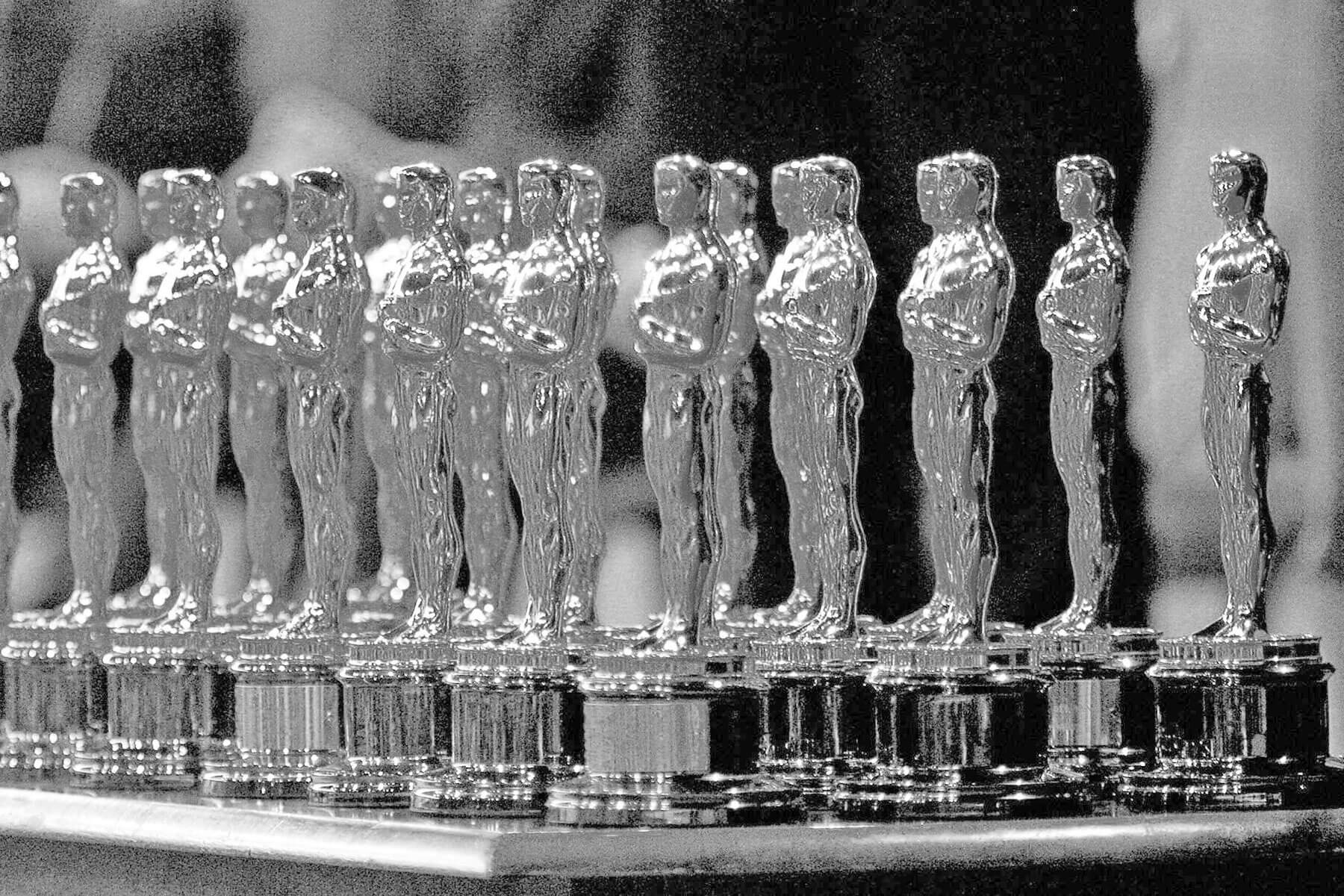
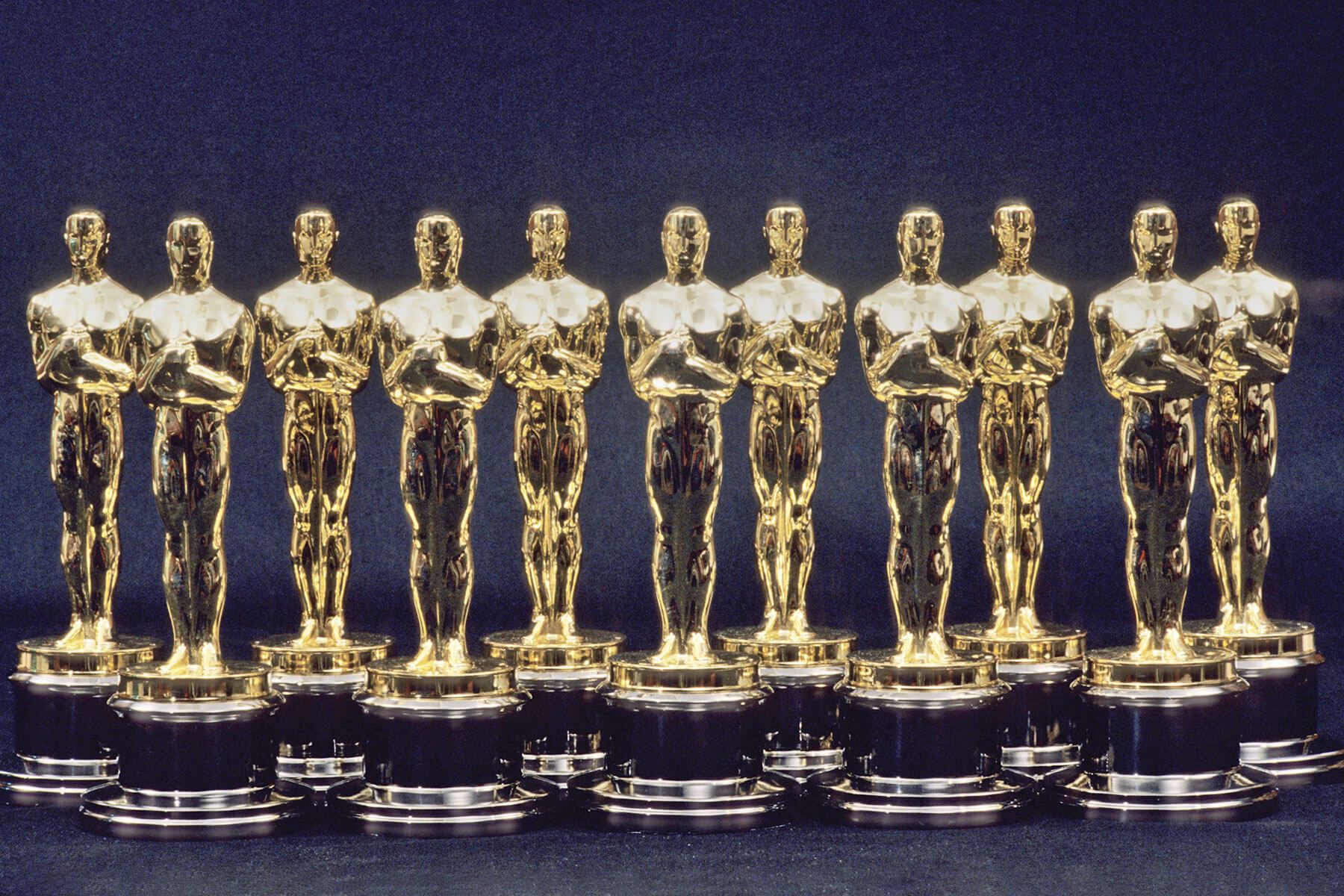
One of Hollywood’s most famous figures stands at just 13.5 inches tall, weighs only 8.5 pounds, and goes by just one name: Oscar. The famous golden statuette is awarded annually by the Academy of Motion Picture Arts and Sciences and is one of the highest honors in the film industry. Like a lot of old Hollywood lore, there have been competing stories through the years about how the little gold statuette — officially named the Academy Award of Merit — got its human nickname. Here are some prevailing theories on how this prized statuette came to be known as “Oscar.”
Credit: Santi Visalli/ Archive Photos via Getty Images
The Birth of the Little Gold Man
The first Academy Awards ceremony took place in May 1929 in the Blossom Room of the Hollywood Roosevelt Hotel, and introduced the gold-plated, solid-bronze statuette that has been an iconic Hollywood image ever since. Motion picture art director Cedric Gibbons designed it, and sculptor George Stanley brought to life the knight holding a crusader’s sword, standing on a reel of film. The film reel’s five spokes represent the original five branches of the Academy of Motion Picture Arts and Sciences: actors, directors, producers, technicians, and writers.
Although the Academy Awards and its traditional statuette have been around since 1929, the Oscar name wasn’t officially adopted by the academy until 1939. The exact origin of the nickname, however, is fairly murky. One widely circulated legend attributes the moniker to the academy’s first librarian and eventual executive director, Margaret Herrick. According to the story, in 1931, Herrick saw one of the statuettes on an executive's desk and said it reminded her of her Uncle Oscar. A newspaper reporter who happened to be nearby overheard Herrick, and the nickname stuck. (There are some inconsistencies in the story, however; Herrick later claimed the name Oscar came from an inside joke with her husband). Another popular, though unlikely, theory is that the actress Bette Davis said in a 1936 Academy Awards acceptance speech that the statuette’s backside resembled that of her then-husband, Harmon Oscar Nelson. And yet another oft-repeated legend is that Hollywood gossip columnist Sidney Skolsky coined the term when he used it in a 1934 story about Katharine Hepburn’s first Academy Award for Best Actress.
Advertisement
Advertisement
Credit: Andrew H. Walker/ Getty Images Entertainment via Getty Images
The Award for Naming the Oscar Goes to…
According to Bruce Davis, who spent 20 years as the academy’s executive director, the Oscar nickname began to make its way through the Hollywood community sometime between 1930 and 1933 — predating Bette Davis and Sidney Skolsky’s use of the term. Davis suggests someone else entirely deserves credit for inventing the Oscar alias: a woman named Eleanore Lilleberg. Lilleberg was an academy secretary and office assistant during the award's early days, and part of her duties included managing the statuettes before the ceremony. Stories have occasionally surfaced that she jokingly called the award “Oscar,” which Davis claims is the true origin of the name. While researching his book The Academy and the Award, he came across an autobiography by Lilleberg’s brother, California artist Einar Lilleberg, at the tiny Lilleberg Museum in Green Valley, California. Einar’s text claimed that his sister referred to the awards as “Oscar” in honor of a Norwegian army veteran she knew in their hometown of Chicago. Einar described the veteran as, like the famous statuette, always "standing straight and tall."
Credit: Kevin Winter/ Getty Images Entertainment via Getty Images
How the Academy Awards Became “the Oscars”
Since 1939, 10 years after the first Academy Awards, the AMPAS has accepted and used “the Oscars” name as the official shorthand for its annual ceremony. In 2013, for the 85th annual Academy Awards, the show dropped the lengthy original title and simply went with “the Oscars.” Neil Meron, who co-produced the 2013, 2014, and 2015 ceremonies, said the rebrand was an attempt to modernize the show. “We're not calling it the 85th annual Academy Awards, which keeps it mired somewhat in a musty way,” he said. "It'll be like the Grammys. The Grammys don't get a number, and neither will the Oscars." The colloquial new name remains in use to this day.
Few events have been depicted on screen as many times and in as many ways as World War II, which is remarkable given how many stories are left to tell. Eighty years’ worth of movies have deepened our understanding of the 20th century’s defining conflict, and there’s little reason to suspect that filmmakers will stop anytime soon. If you’ve seen all the usual suspects — your Saving Private Ryans, your Casablancas — and want to explore beyond the frontlines, here are five essential movies about World War II.
With good reason, we rarely associate war with comedy — World War II least of all. The ability to make a charming, lighthearted picture about such a world-altering event as it was happening is part of the “Lubitsch Touch” that made German-born director Ernst Lubitsch one of the most acclaimed filmmakers of his or any other era. (Billy Wilder, who directed such acclaimed movies as Double Indemnity, Some Like It Hot, and Sunset Boulevard, had a sign taped to his office wall asking, “How would Lubitsch do it?”)
To Be or Not to Be takes place in Nazi-occupied Warsaw, where a troupe of actors find themselves entangled in a scheme to track down a German spy. Whatever you think of their production of Hamlet, there’s no doubting their ability to trick the Nazis with their performances — or make you laugh at some truly dark jokes. The film was added to the National Film Registry by the Library of Congress in 1996 and remains one of Lubitsch’s most acclaimed works, no small feat considering he also directed Ninotchka, The Shop Around the Corner, and Heaven Can Wait.
You might not expect a movie named The Best Years of Our Lives to be about this or any other war, but then little about William Wyler’s classic was expected. The legendary filmmaker received 12 Academy Award nominations for Best Director throughout his one-of-a-kind career, winning the second of three for his epic story of three veterans readjusting to civilian life after returning home from World War II. Leading the ensemble are screen legends Fredric March and Myrna Loy, whose performances helped make the film as successful with audiences as it was with critics.
Indeed, few films have ever been as popular with the Academy. The Best Years of Our Lives won seven Oscars, including Best Picture, Director, Actor (March), and Supporting Actor for Harold Russell, a veteran who lost both of his hands in a demolition accident. As Russell wasn’t a professional actor and the Academy Board of Governors didn’t expect him to win, they gave him an honorary award “for bringing hope and courage to his fellow veterans through his appearance.” And yet he did win, of course, making this the only time someone has won two Oscars for a single performance.
One of the most personal movies ever made about the war, Au revoir les enfants (Goodbye, Children) is based on writer/director Louis Malle’s childhood experiences at a Catholic boarding school for boys near Fontainebleau, France. That lived-in quality is present throughout the movie, which has the feeling of an intimate memory come to life. Among the other students at the boarding school seen in the film are three Jewish boys who’ve been secretly taken in by the headmaster, a priest based on the heroic Père Jacques. He’s done so at great personal risk, as Nazi-occupied France isn’t exactly known for rewarding such good deeds, and even the other students are unaware of their new classmates’ true identities — including our protagonist Julien, who slowly forms a close friendship with one of them. Alternately charming and heartbreaking, Au revoir les enfants won the Golden Lion at the Venice Film Festival and was nominated for Best Foreign-Language Film and Best Original Screenplay at the 60th Academy Awards.
History is written by the victors, which is to say that most World War II movies are by and about Americans. Not so Grave of the Fireflies, an animated adaptation of Akiyuki Nosaka’s short story of the same name released by Studio Ghibli in 1988. Following two Japanese war orphans (one 14, the other just 4) as the conflict nears its end, with a particular focus on the aftermath of the brutal bombing of Kobe, writer/director Isao Takahata’s devastating story of the struggle for survival is one of the most wrenching depictions of wartime you’ll ever see, animated or otherwise. It is, however, also considered one of the greatest animated films of all time, as well as one of the saddest.
Only Terrence Malick could make a war movie like The Thin Red Line, one in which battle sequences seem less important than long shots of multicolored birds in trees and lyrical narration reveals more about its characters than the orders they give and receive in the heat of battle. It was Malick’s first movie in 20 years — the media-shy director had seemingly disappeared after wowing audiences and critics alike with Badlands (1973) and Days of Heaven (1978) — and just about every actor in Hollywood was desperate for a role. The result is a sprawling ensemble cast that includes Sean Penn, Nick Nolte, George Clooney, John Cusack, Woody Harrelson, John Travolta, John C. Reilly, Elias Koteas, and Jared Leto, many of whom are only on screen for a minute or so.
When they aren’t advancing on their Japanese counterparts’ position, these soldiers ask questions such as, “What’s this war in the heart of nature?” and “Is this darkness in you, too?” Despite not offering any easy answers, the film reveals as much about the human spirit as it does about the nature of war. The Thin Red Line went on to be nominated for seven Academy Awards, including Best Picture and Director, but didn’t win any — it had the misfortune of being released the same year as Saving Private Ryan, 1998’s most popular World War II movie by far, though arguably not its best.
A good documentary can make for one of the more edifying experiences available to moviegoers. A great documentary makes for one of the more edifying experiences available, period — it shows us something we didn’t already know, or gives us a better understanding of something we thought we knew. But what makes a documentary qualify as one of the best of all time? “Best” is admittedly a subjective word, but for our purposes here, we’ll define it not just as a film that illuminates a particularly substantial topic to enduring effect, but a film that has consensus regard. The following documentaries are works that show up on a multitude of best-oflists, from industry polls to culture magazines, and more.
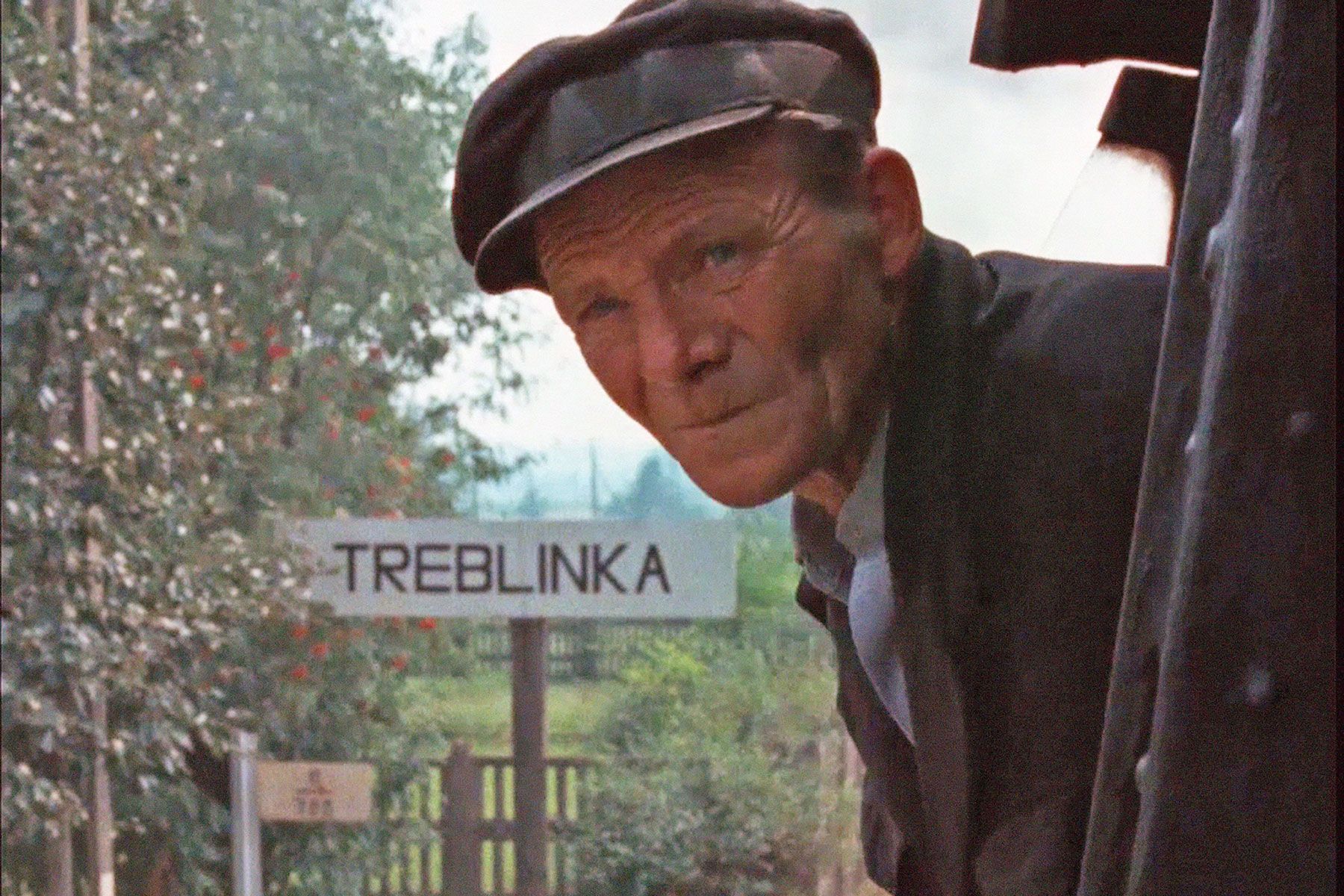
When Shoah was released in 1985, Roger Ebert called it “one of the noblest films ever made,” and its regard hasn’t slipped since. Director Claude Lanzmann spent 12 years interviewing survivors of concentration camps at Auschwitz, Treblinka, Chelmno, Sobibor, and Belzec, as well as former German SS officers and the Polish townspeople who lived in the surrounding areas. Lanzmann famously eschewed archival footage, comprising the entirety of the nine-hour film with interviews intercut with location footage. It’s a powerful, ponderous approach that grounds Shoah in the humanity of the aftermath of the Holocaust, versus dusty newsreels, which risk feeling detached. It is not an easy topic to take in, but as Ebert concluded, “Claude Lanzmann celebrates the priceless gift that sets man apart from animals and makes us human, and gives us hope: the ability for one generation to tell the next what it has learned.”
Todd Douglas Miller’s documentary about the moon landing mission takes the complete opposite approach from Shoah. Constructed from hundreds of reels of previously unseen footage and 11,000 hours of audio that NASA gave Miller access to, Apollo 11 is, in the director’s own words, “an all-archival experience.” The subject of space is, by nature, visually mysterious, and Apollo 11 shows the viewer exactly what we want to see, via footage of space exploration as it happened. Apollo 11 is a visual masterpiece, frequently stunning in its beauty, and those never-before-seen images make for a more revealing picture than any previous documentary about the moon landing.
Advertisement
Advertisement
Photo credit: Theo Wargo/ Getty Images Entertainment via Getty Images
13th (2016)
Named after the constitutional amendment that outlawed slavery, Ava DuVernay’s film contextualizes the evolution of race relations in the U.S. along with the history of the American criminal justice system. It was nominated for an Academy Award for Best Documentary; it won a BAFTA Award, a Peabody Award, an NAACP Image Award, and many other film critic awards. 13th weaves together interviews with scholars, activists, journalists, and politicians that decisively illuminate inequity in criminal justice. The result is a potent document that invites the viewer to, as DuVernay puts it herself, “get to a place where we just do better as Americans.”
Raoul Peck’s Oscar-nominated documentary uses a rich amount of archival material to piece together a vision of James Baldwin’s unfinished book on race in America, Remember This House. Samuel L. Jackson narrates the 30 pages of notes on the unfinished manuscript along with letters written by Baldwin, giving an intimate look at Baldwin’s friendships with Martin Luther King Jr., Medgar Evers, and Malcolm X — as well as the lives and deaths of those leaders. As Baldwin wrote, “I want these three lives to bang against and reveal each other as in truth they did,” and the power of that intention, along with found footage and present-day contextualization from Peck, is what makes this documentary exceptional.
Advertisement
Advertisement
Photo credit: Getty Images Entertainment via Getty Images
Won’t You Be My Neighbor? (2018)
Morgan Neville delves into the life of children’s television icon Fred Rogers, and the result is 93 minutes imbued with the gentle and moving warmth that Rogers brought to his eponymous show Mister Rogers’ Neighborhood. Through archival footage of the show, interview clips from various points in Rogers’ career and from those closest to him, and even inventive animated interludes, Won’t You Be My Neighbor? paints a full picture of Rogers’ life; and in it, his integrity, tolerance, and humanism. Here is an unassuming man whose calmly resolute testimony in front of a Senate subcommittee was instrumental in saving public television. His reassuring advice to children to look for the helpers during upsetting times is still quoted to this day. It would be easy for a film like Won’t You Be My Neighbor? to end up cloying or mawkish — that it never does is what lands it on so many best-of lists. As critic A.O. Scott put it in his New York Times review, it’s an intellectually rigorous portrayal of an unwavering commitment to the value of kindness.
Since the beginning of cinema, historical movies have been popular for their ability to transport audiences to bygone eras. These films serve as a cinematic journey into the past, reflecting our enduring fascination with history and its influence on modern culture. The most popular historical films of 2023 offer a new look at events that shaped our world, from the Manhattan Project to the Battle of Waterloo. Here, then, is a glimpse at some of the most memorable and powerful historical movies of the year.
Written and directed by Christopher Nolan,Oppenheimer traces the life of J. Robert Oppenheimer, the American theoretical physicist called the “father of the atomic bomb” for his role in the development of nuclear weapons for the U.S. government’s Manhattan Project. With a three-hour running time, the historical drama features an all-star cast that includes Cillian Murphy as Oppenheimer; Matt Damon as Leslie Groves, the head of the Manhattan Project; Robert Downey Jr. as Lewis Strauss, a U.S. Atomic Energy Commission member; Emily Blunt as Kitty, Oppenheimer’s wife; and Florence Pugh as psychiatrist and communist Jean Tatlock, Oppenheimer’s lover.
Inspired by the 2005 biography American Prometheus, and a collection of Oppenheimer’s speeches, Nolan wanted to explore how Oppenheimer grappled with the implications of his work. Nolan, best known for a string of moody, cerebral blockbusters including the Dark Knight trilogy, Interstellar, Tenet, and the World War II epic Dunkirk, has crafted another hit with Oppenheimer. With an 8.4/10 rating on IMDb, Oppenheimer has almost hit the $1 billion mark in global box-office sales, and Variety hailed the film as an “across-the-board contender” for Oscar wins.
Based on the 2017 book by the same name,Killers of the Flower Moon is the latest project by legendary director Martin Scorsese, who also co-produced and co-wrote the script. The film centers on a series of killings of Osage Nation members that occurred in 1920s Oklahoma after oil was discovered on the tribal land. The ensemble cast includes Leonardo DiCaprio as Ernest Burkhart, a member of the crime ring responsible for the murders; Robert De Niro as William King Hale, Ernest’s uncle and crime boss; Lily Gladstone as Ernest’s wife, Mollie Kyle; and Jesse Plemons as Thomas Bruce White Sr., the Bureau of Investigation (which became the FBI) agent who solves the crimes.
Killers of the Flower Moon was one of the most anticipated films to debut at the Cannes Film Festival and is predicted to be an Oscar favorite in several categories. Its success was driven by the filmmakers’ collaboration with the Osage. The film has a 7.9/10 rating on IMDb and has been praised as “authentic” by Osage Nation Chief Standing Bear.
Set in a retro-futuristic version of the 1950s,Asteroid City was written, directed, and produced by Wes Anderson, whose unique storytelling style has been described as “subversive” and “highly stylized.” Best known for films such as The Royal Tenenbaums, Moonrise Kingdom, and The Grand Budapest Hotel, Anderson weaves a story within a story in Asteroid City about a Junior Stargazer/Space Cadet convention and a TV documentary production about the fictional play Asteroid City.
With an ensemble cast that includes Jason Schwartzman, Scarlett Johansson, Tom Hanks, Tilda Swinton, Bryan Cranston, and Margot Robbie, the film was nominated for the Palme d’Or prize at the Cannes Film Festival and has a “Certified Fresh” rating on Rotten Tomatoes. Film critic Glenn Kenny called this homage to 1950s pop culture, “ingeniously conceived and seamlessly executed.”
With a script by Nicholas Martin and directed by Guy Nattiv,Golda stars Helen Mirren as Golda Meir, the “Iron Lady of Israel,” and Liev Schreiber as U.S. Secretary of State Henry Kissinger, in a biopic about the life of Israel’s first and only female prime minister during the Yom Kippur War of 1973. Centered on three weeks in Meir’s life, the film explores the impact of the decisions she made after receiving intelligence about Egypt and Syria’s plan to launch a military campaign against Israel during its holiest day of the year. The film addresses the intense criticism Meir received about the government’s seeming lack of preparedness, and her subsequent resignation.
While film critics have offered mixed opinions on the film, Golda has an audience score of 91% on Rotten Tomatoes, with reviewers calling it an “outstanding character study” and “refreshingly thoughtful.” TheHollywood Reporter called it “one of those key-moment-in-world-events films,” comparing it to Gary Oldman’s portrayal of Winston Churchill in Darkest Hour or Daniel Day-Lewis in Lincoln.
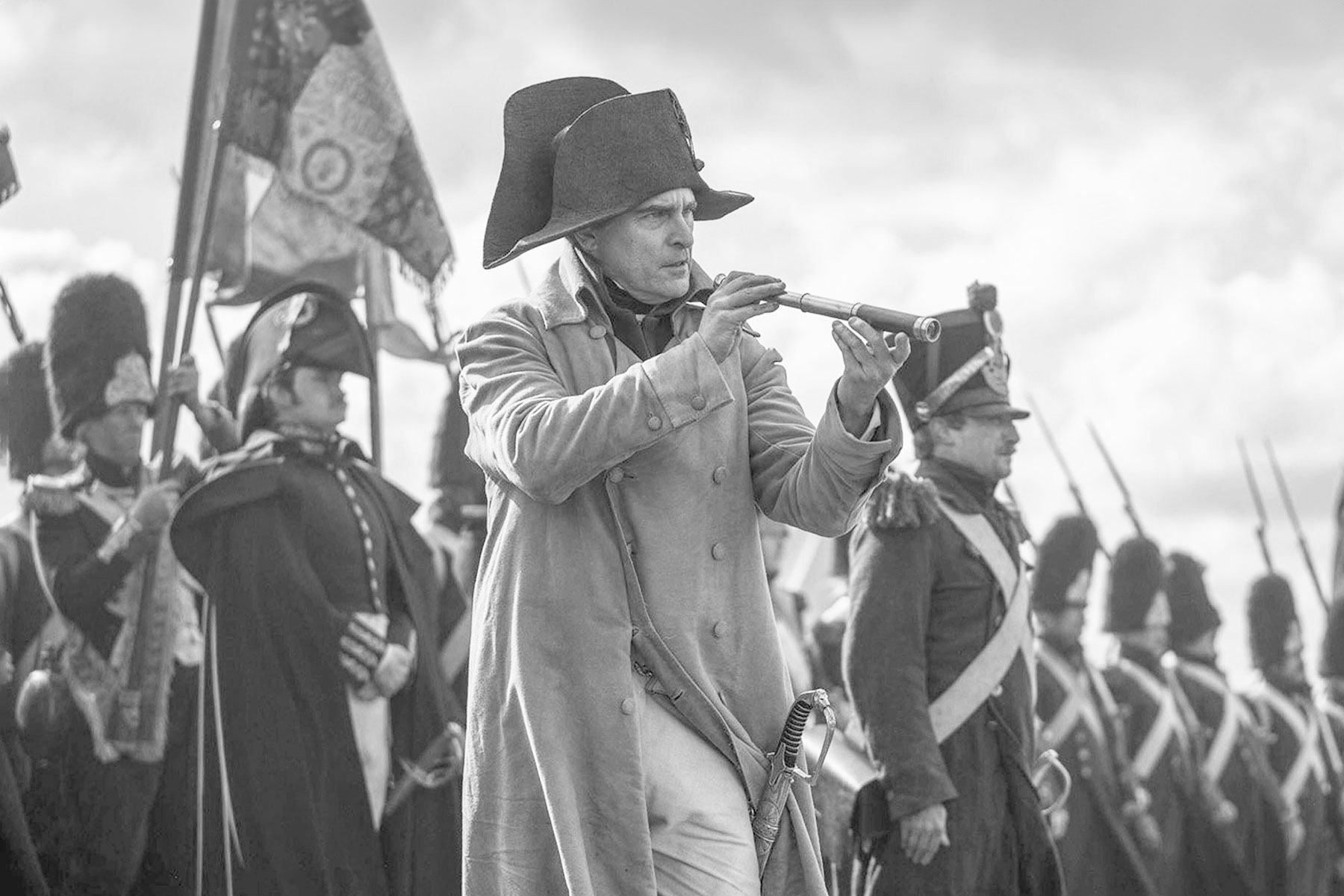
In Napoleon, which Collider called director and producer Ridley Scott’s “slyly funny epic historical drama,”Joaquin Phoenix portrays the rise to power of French Emperor Napoleon Bonaparte, and his tumultuous relationship with Empress Joséphine, played by Vanessa Kirby. Phoenix, who previously worked with Scott on Gladiator, delivers a “character-first experience for fans,” according to Collider. Scott has also garnered praise for Napoleon’s battle scenes and the way he “treats battlefields as open canvases upon which to paint monumental scenes of heroism and spinelessness, glory and disgrace, sacrifice and selfishness.” Despite receiving mixed reviews from critics, Napoleon made a “strong start” at the box office after opening in the U.S. on November 22.
Advertisement
Advertisement
Did You Know These Fun Facts About the Hollywood Sign?
Underwood Archives/ Archive Photos via Getty Images
Author Kristina Wright
October 9, 2023
Love it?63
Among the most memorable U.S. landmarks is the iconic Hollywood sign that sits on the steep hillside of Mount Lee in Los Angeles, part of the Santa Monica Mountains. Over the decades, the sign has become an internationally recognized symbol of the glitz and glamour associated with the movie industry. It is a remnant of the early days of Hollywood’s golden era in the early to mid-20th century, and has been featured in countless films, television shows, and photographs. Visible for miles, the towering letters serve as a place marker for both L.A. and Hollywood, representing the hopes and dreams of all who have ventured there to pursue careers in show business. As the Hollywood sign passes the century mark looking better than ever, here are six fun facts about this beloved landmark.
The Hollywood Sign Started Out as a Real Estate Ad
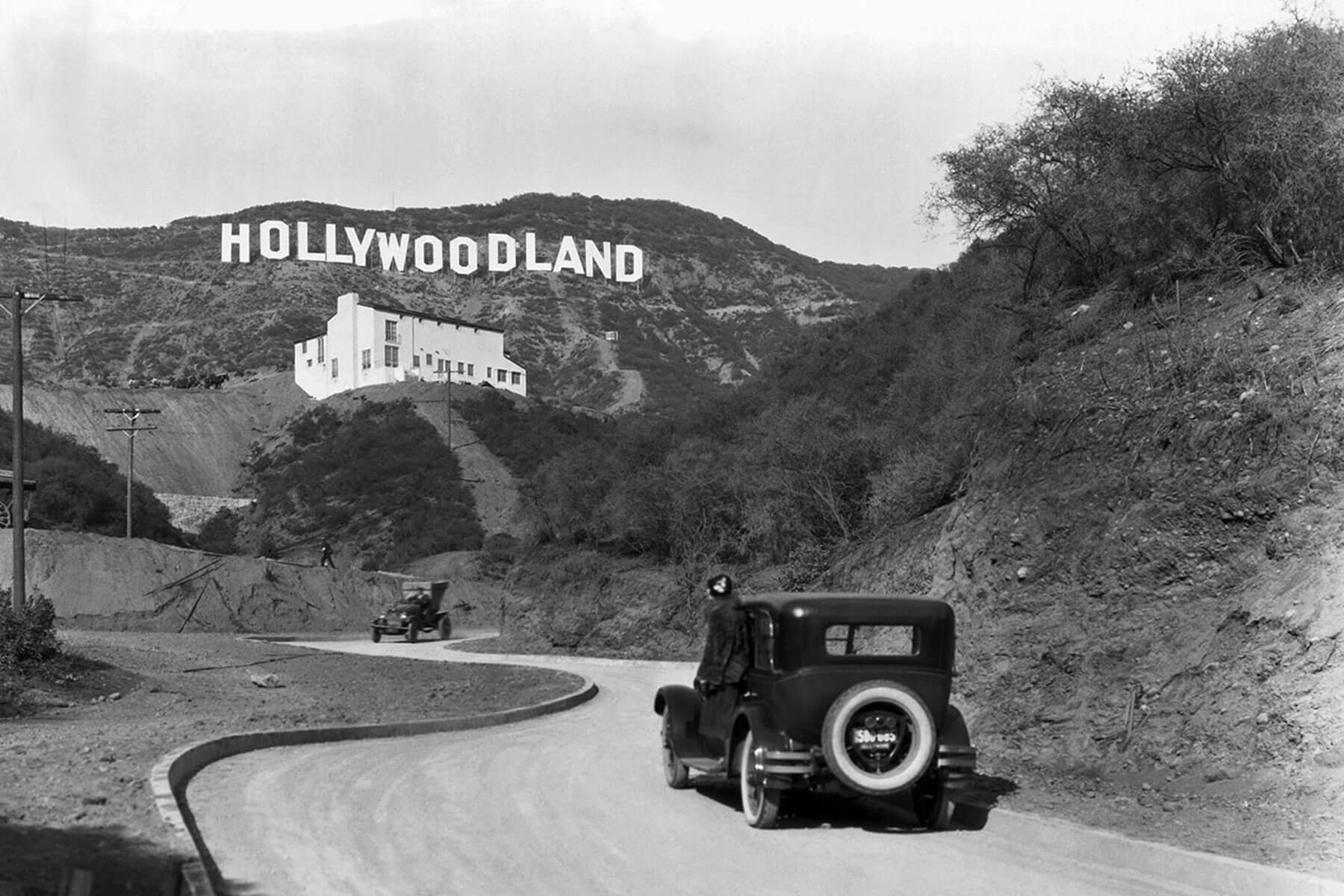
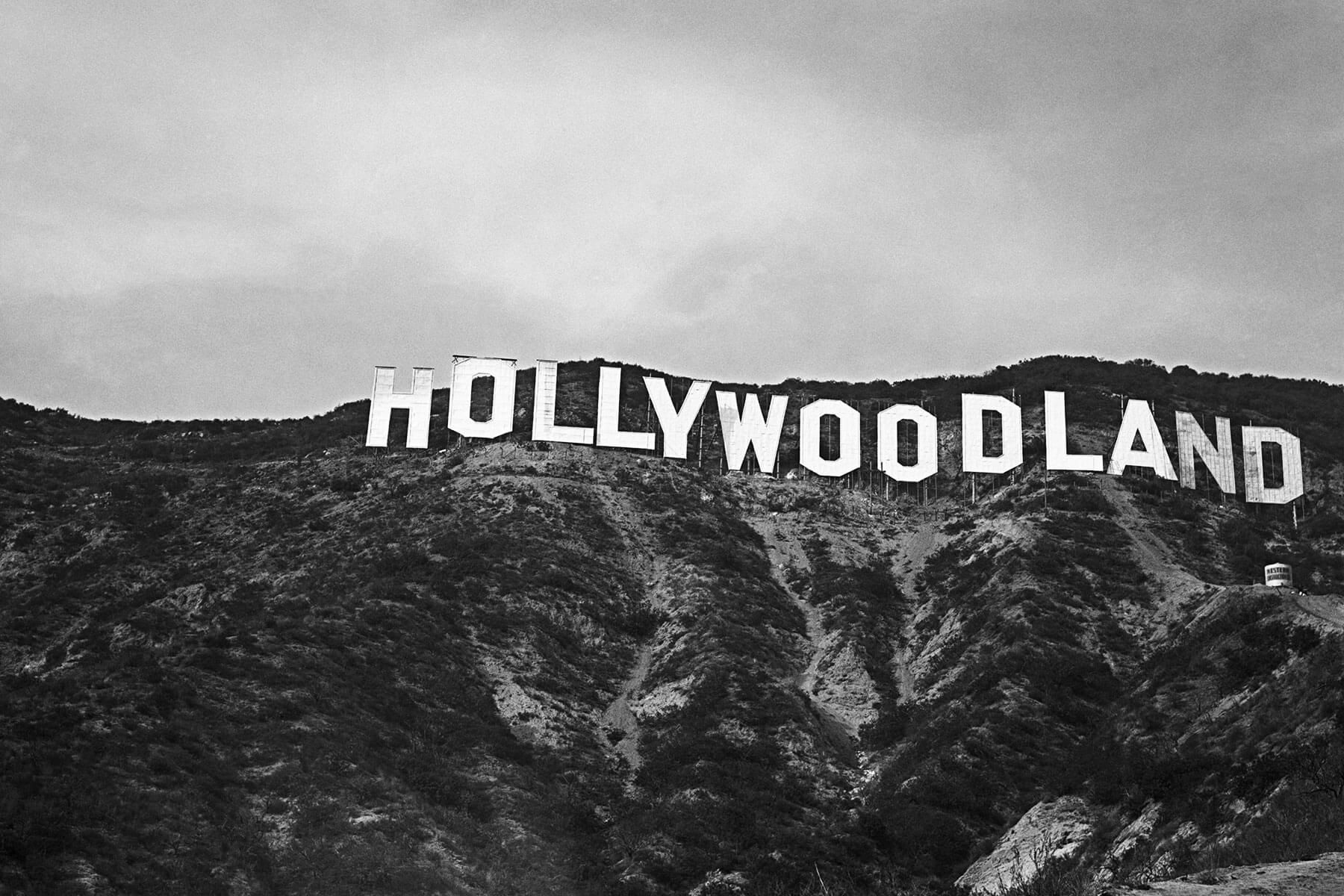
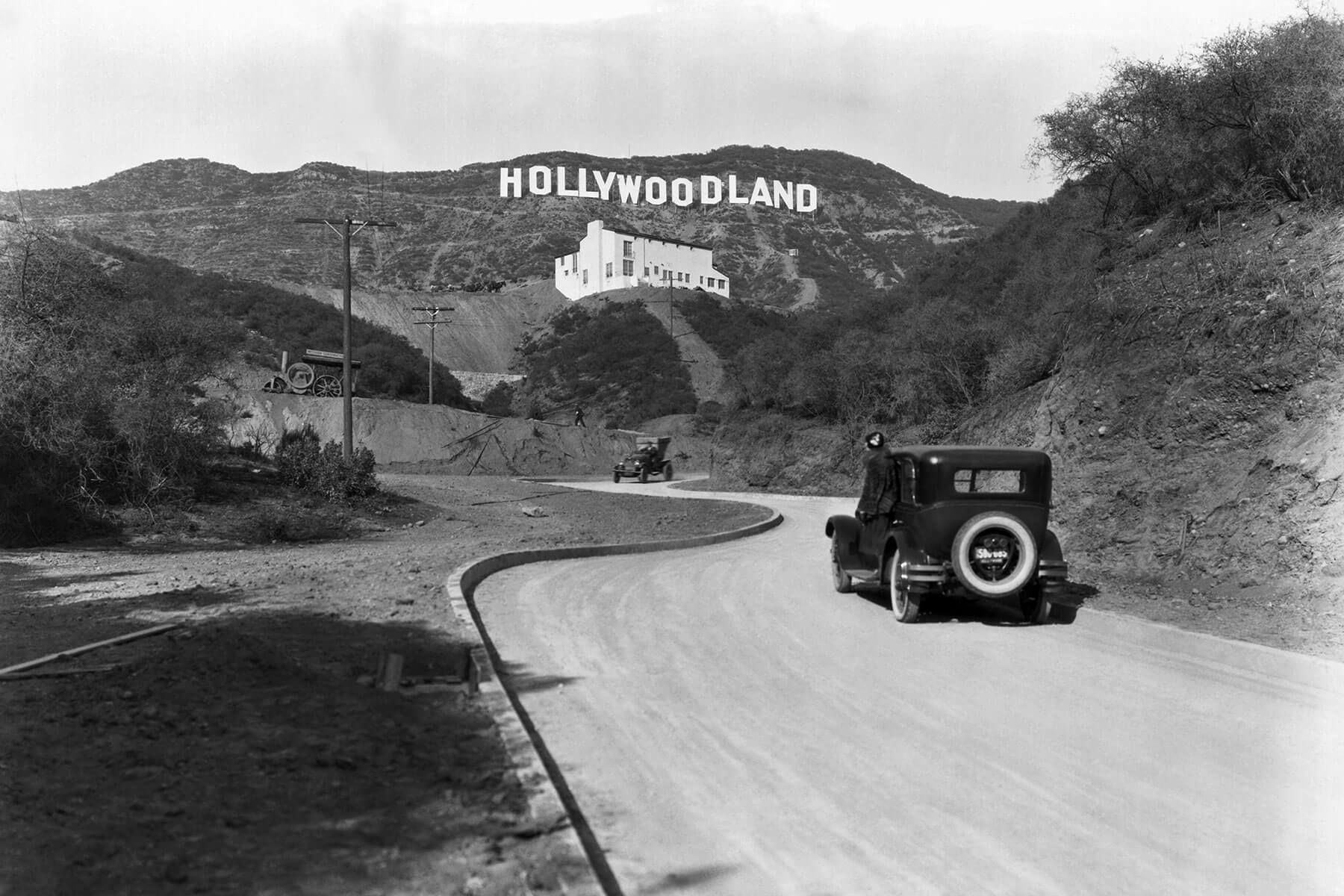
The sign that has become a symbol for the entertainment industry actually started out as a real estate billboard. In 1923, 12 years after the first Hollywood studio opened on Sunset Boulevard,Los Angeles Times publisher Harry Chandler and his real estate partners spent $21,000 (about $375,000 today) to commission an electric sign to advertise their new upscale housing development in the Hollywood Hills. The sign was constructed of metal squares connected by a frame of scaffolding, pipes, telephone poles, and wires to form 13 letters that were each approximately 30 feet wide by 43 feet tall, spelling out “Hollywoodland.” The sign was outfitted with 4,000 20-watt bulbs spaced 8 inches apart, guaranteeing it would be the brightest “star” in the night sky as it blinked: “Holly,” “wood,” “land,” and finally, “Hollywoodland.”
In 1924, a large, white dot, 35 feet in diameter and ringed with lights, was added under the “Hollywoodland” sign. It was an eye-catching addition to an already famous sign, but it also served as a political statement, reflecting the “good business conditions” of Los Angeles, a status that was noted with a white dot on a grayscale map produced by the U.S. Chamber of Commerce. Chandler began referring to Los Angeles as a “White Spot of America,” boasting that it was without crime, communism, and corruption. Thus, the white dot was added to the “Hollywoodland” sign, and the tagline “Keep the White Spot White” was used to promote investments in the area. The slogan had other connotations, as well, particularly in a city that was both anti-union and racially segregated at the time.
Originally, the plan was to leave the “Hollywoodland” billboard in place for about a year and a half, but the sign drew so much attention that it stayed up — albeit in various states of disrepair over time. The Hollywoodland real estate area was called a “haven, peaceful and filled to overflowing with contentment,” but even it was not impervious to effects of the Great Depression. Chandler’s real estate syndicate was dissolved in 1933 and the sign’s new owner, the M.H. Sherman Company, abandoned the billboard because the cost of electricity was too expensive to maintain. The sign went through long periods of neglect and the natural elements took their toll, causing several letters to collapse under strong winds. In 1944, the sign, along with the 425-acre site around it, was donated to the city of Los Angeles. After several years of debate about what to do with the structure, the Hollywood Chamber of Commerce took the lead on restoration, removing the letters “land” and repairing the sign by the end of 1949.
Photo credit: Ken Levine/ Getty Images Sport via Getty Images
The Sign Was Almost Destroyed
With no regular maintenance after the 1949 refurbishment, the sign fell into decline once again and began to deteriorate — the “O” and “D” letters even fell down the side of the mountain. In the early 1970s, local residents launched another restoration campaign, and as a result the sign was designated a City of Los Angeles Historic-Cultural Monument, and “Save the Sign” campaigns were launched. In 1978, thanks to pledges from celebrities and entertainment leaders — including Alice Cooper, Andy Williams, Gene Autry, Hugh Hefner, and Warner Bros. Records — the original sign was replaced with a steel and concrete structure that could better withstand the elements. The new structure measured 45 feet tall by 450 feet long, establishing it as the largest sign in the world. That same year, the Hollywood Sign Trust was established to ensure the landmark would be maintained and preserved to promote Hollywood as the world capital of film and cinema arts.
Though it’s illegal to make physical changes to the Hollywood sign or the surrounding area, that hasn’t stopped pranksters from taking a few liberties with the landmark over the years. Case in point: The sign has been altered twice, in 1976 and again in 2017, to read "HOLLYWeeD” in honor of new laws reducing restrictions around marijuana use. There have been other unofficial changes to the sign over the years, too. One came in 1983, the only year the Army-Navy football game was hosted on the West Coast. A group of Navy midshipmen covered a few of the letters so the sign would read GO NAVY. Navy won the game 42-13.
Sunset Boulevard/ Corbis Historical via Getty Images
Author Michael Nordine
August 24, 2023
Love it?53
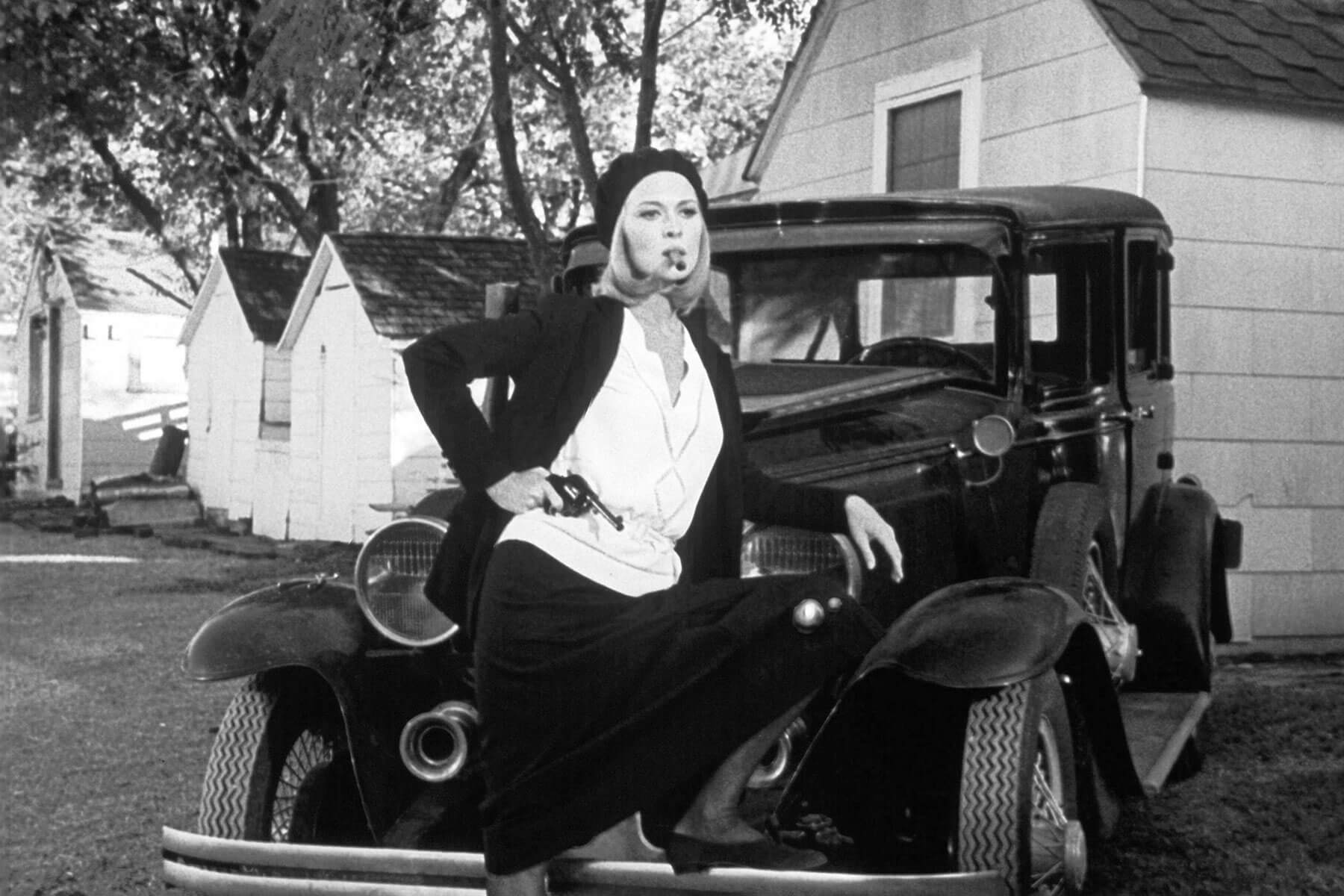
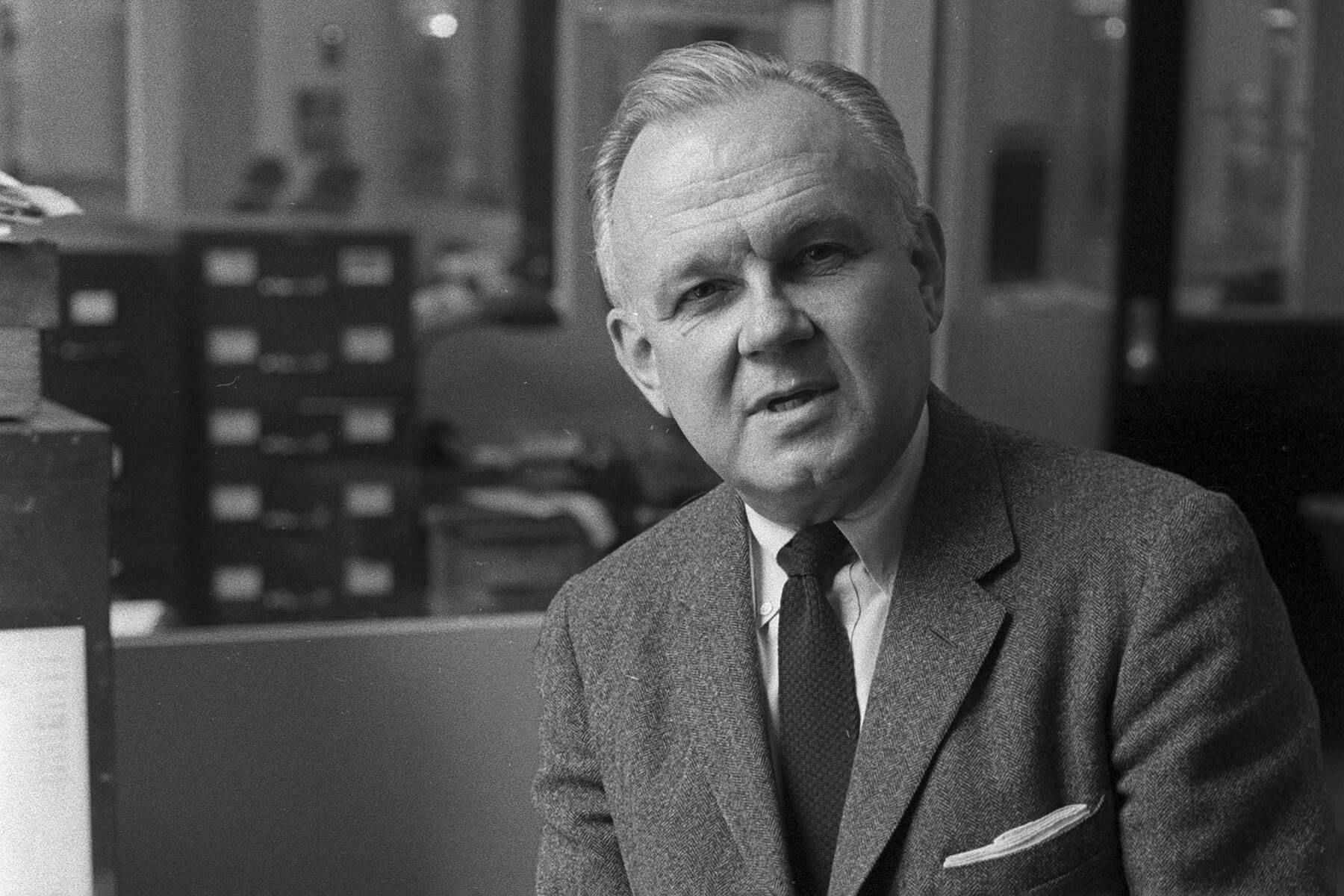
On August 14, 1967, film critic Bosley Crowther did the same thing he had been doing several times a week for more than a quarter-century: He published a film review in TheNew York Times. The subject of his latest piece was director Arthur Penn’s Bonnie and Clyde, starring Warren Beatty (who also produced) and Faye Dunaway. To say that the picture was not to Crowther’s liking would be putting it lightly. “This blending of farce with brutal killings is as pointless as it is lacking in taste,” he wrote in a particularly ferocious passage, “since it makes no valid commentary upon the already travestied truth. And it leaves an astonished critic wondering just what purpose Mr. Penn and Mr. Beatty think they serve with this strangely antique, sentimental claptrap.”
Crowther had no way of knowing it, but this was to be one of the most significant movie reviews ever written — albeit not for reasons that reflected favorably on him. Bonnie and Clyde heralded a new tide that had just begun rising in Hollywood, one that would leave Crowther and others with old-fashioned sensibilities in its wake.
Photo credit: Ben Martin/ Archive Photos via Getty Images
Throughout his decades-long tenure at the Times,during which time he rose to prominence as one of the most respected voices on film, Crowther cultivated a reputation as something of a moralist. Despite the fact that he was an early proponent of such foreign auteurs as Ingmar Bergman and Akira Kurosawa, and was also openly critical of Senator Joseph McCarthy and the Hollywood blacklist, Crowther’s readership was nevertheless beginning to turn against his increasingly out-of-touch ways. A negative review of a film that, by and large, had done rather poorly in terms of critical reception was unremarkable in and of itself. What attracted so much publicity was Crowther’s sustained attack against it.
In the months following Bonnie and Clyde’s initial release, he wrote two more negative reviews and went out of his way to blast it in critiques of other movies, as well as in published responses to letters he received from unhappy Times readers. He was far from alone in his displeasure — Bonnie and Clyde was also panned by TIME and Newsweek, to cite two of the more high-profile outlets to bash it — but what he was alone in was his refusal to move on. The critical consensus was so negative that Warner Bros. decided to pull the film from theaters after a few short weeks in order to put it out of its misery. At the behest of Beatty a few months later, they re-released Bonnie and Clyde in theaters after launching a new promotional campaign.
Photo credit: Erin Combs/ Toronto Star via Getty Images
On October 21, a freelance contributor to TheNew Yorker named Pauline Kael wrote a 9,000-word review — really a defense — of the beleaguered film. “Bonnie and Clyde is the most excitingly American American movie since The Manchurian Candidate,” she proclaimed. “The audience is alive to it. Our experience as we watch it has some connection with the way we reacted to movies in childhood: with how we came to love them and to feel they were ours — not an art that we learned over the years to appreciate but simply and immediately ours.”
These oppositional responses created a domino effect that sealed the fate of both writers. Kael’s response led to other reevaluations of the film, including a cover story in TIME in December of the same year, in which the magazine reversed its opinion, and the following mea culpa from Newsweek's Joe Morgenstern: “I am sorry to say I consider that review grossly unfair and regrettably inaccurate. I am sorrier to say I wrote it.” Crowther was forced into retirement by the end of 1967, by which time the tide had turned squarely against him, and Kael was officially taken on as a staff critic at TheNew Yorker around the same time. She worked there for another 23 years, and is widely considered one of the most influential film critics of all time.
To better understand the extreme responses — both immediate and prolonged — elicited by the film, we must first understand the Hollywood climate of the time. Bonnie and Clyde has long been regarded as a watershed event that in many ways marked the arrival of what we now call New Hollywood. Also known as the American New Wave, the movement was a delayed reaction to the “horrible decade” for the film industry that was the 1950s and everything it represented: stagnation in the wake of Hollywood’s golden age. Studio filmmaking had become too safe, the thinking went, and the success of Bonnie and Clyde helped usher in a new era of creative freedom, in which directors exerted more control over their films than ever before. The studios didn’t cede that control out of the goodness of their heart, of course; they did it because the historical epics and musicals they’d relied on for so long were finally losing money as the younger crowds who now made up a larger share of their audience craved something new.
Bonnie and Clyde wasn’t the first of its kind — Stanley Kubrick’s Dr. Strangelove (1964), Mike Nichols’ Who’s Afraid of Virginia Woolf? (1966), and Norman Jewison’s In the Heat of the Night (1967) were equally important exemplars of the movement — but the controversy surrounding its release exemplified its role in bringing about a sea change in the industry. Many other audacious pictures followed in the next two years, from The Graduate and Rosemary’s Baby to Easy Rider and Butch Cassidy and the Sundance Kid, and by the 1970s, New Hollywood was in full force. Nearly all of that decade’s defining films are considered part of New Hollywood, in part because they’re synonymous with their directors: Francis Ford Coppola made The Godfather, William Friedkin made The Exorcist, Woody Allen made Annie Hall, and so on and so forth.
Most of these filmmakers were young, influenced by foreign directors whose sensibilities were far beyond those of the studios, and took novel approaches to telling stories — including a propensity for more downbeat narratives than we associate with the typical Hollywood ending. All of this ran counter to conventional wisdom in Tinseltown, but because so many of them proved to be massively successful, they were allowed to explore their idiosyncratic visions with less studio meddling than ever before.
Bonnie and Clyde went on to gross $70 million against a $2.5 million budget and was nominated for 10 Oscars, including Best Picture and Best Director, winning for Supporting Actress and Cinematography. That it didn’t win any of the major prizes was in some ways good for its reputation:Being fully embraced by the establishment from the outset would have been antithetical to its place in the counterculture the film helped usher in and define.
When we think of Hollywood’s heyday, we’re often recalling those classics of the 1930s and ’40s that many of us watched long after they were shown in the theater. From King Kong and It Happened One Night to Casablanca and Citizen Kane, the films of the industry’s golden era still enchant and entertain. And it’s not just the movies themselves that have stood the test of time. We’re still captivated by the era’s shining stars, be it the love story of Humphrey Bogart and Lauren Bacall, the bubbly innocence of Shirley Temple, or the rugged good looks of Clark Gable.
Some film historians believe that Hollywood’s golden age was ushered in by the silent films that gave us Charlie Chaplin’s Tramp and the improvisational comedy of the Marx Brothers. Others say it was 1927’s The Jazz Singer that kicked off the era, by introducing the wonder of the “talkies.” One thing is for sure: Each exciting new production found an ever-growing audience, worn down by the harsh realities of war and the Great Depression, that couldn’t get enough of the sophisticated characters, slapstick humor, swoon-worthy romances, and faraway locales that only Hollywood could deliver. For those of us who still can’t get enough of the fascinating world of Hollywood, here are six fun facts about filmmaking’s glitziest era.
Photo credit: Ken Lubas/Los Angeles Times via Getty Images
The “Big Five” Controlled Everything in Hollywood
Behind the glamorous, larger-than-life celebrities of the silver screen was the all-controlling Hollywood studio system business model. The major players in the industry were known as the “Big Five”: 20th Century-Fox, MGM, Paramount, RKO, and Warner Brothers. The executives of these five studios, along with three smaller ones, controlled every aspect of film production, including casting, filming, distribution, and exhibition. They even owned many of the theaters where their movies were shown. Actors were paid on salary rather than by film, and everyone involved in the production process was under contract to the studio. This system made filmmaking a profitable and efficient assembly line affair, but it also stifled careers and limited opportunities. That is, until a 1948 Supreme Court ruling recommended the studio-theater monopolies be dismantled, and things began to change in Hollywood.
The Hollywood Sign Started as a Billboard for a Housing Development
The iconic Hollywood sign that sits on L.A.’s Mount Lee and heralds visitors’ arrival to Tinseltown started out as a real estate billboard. In 1923, Los Angeles Times publisher Harry Chandler commissioned the electric sign to advertise his new upscale housing development, “Hollywoodland,” paying $21,000 to have the name spelled out in 43-foot letters outfitted with 4,000 20-watt bulbs. The billboard was only supposed to be in place for 18 months, but it drew so much attention, a decision was made to leave it up. The sign cycled through periods of neglect and repair until 1944, when it was donated to the city of Los Angeles. The letters “LAND” were removed, and in 1973, the structure was declared a historic landmark. In 1978, a public campaign was launched and the deteriorated original sign was replaced with a steel and concrete structure that would better withstand the elements.
Advertisement
Advertisement
Photo credit: George Rinhart/ Corbis Historical via Getty Images
Joan Crawford’s Stage Name Was Chosen in a Contest
The who’s who of Hollywood’s golden era is peppered with actors who used stage names, from Marilyn Monroe (née Norma Jeane Baker) to Judy Garland (born Frances Ethel Gumm). Margarita Carmen Cansino was first billed as Rita Cansino before a Columbia Pictures studio head convinced her to change her name to Rita Hayworth. Studio executives were also responsible for reinventing Marion Robert Morrison as John Wayne, and Archibald Alexander Leach as Cary Grant. But legendary actress Joan Crawford’s stage name was chosen in a public contest. Born Lucille Fay LeSueur, Crawford went on to perform as a dancer under the name Billie Cassin. In 1924, she landed a contract with MGM and the following year the studio sponsored a ”name the star” contest for the promising young actress, offering a $1,000 prize for the best name. The formidable Crawford reportedly disliked the winning name, saying it sounded like “crawfish.”
Hollywood Was Far More Risqué Before the Hays Code
In the film industry, the years from 1927 to 1934 were known as “Pre-Code Hollywood.” This brief period marked the time between the introduction of sound in films and the strict enforcement of the Motion Picture Production Code, also known as the Hays Code. The enforcement of the code came as a result of Hollywood’s increasingly scandalous image throughout the 1920s, both on and off the screen. The Hays Code stated that no film should “lower the moral standards of those who see it” and included a long list of rules for filmmakers. Among the prohibitions were nudity, unnecessary use of liquor, ridicule of religion, lustful kissing, and scenes of passion — all of which had appeared in dozens of films during the bold and bawdy Pre-Code years.
Advertisement
Advertisement
Photo credit: Andrew H. Walker/ Getty Images Entertainment via Getty Images
No One Really Knows How the Oscar Statuette Got Its Name
Every film buff knows the Academy Awards are the most prestigious honors in Hollywood. The prize is the coveted “Oscar” trophy, which was created in 1928, shortly after the Academy of Motion Picture Arts and Sciences was formed. MGM art director Cedric Gibbons designed a statuette of an art deco-stylized knight holding a sword and standing on a reel of film, and Los Angeles sculptor George Stanley rendered the design in 3D, casting it in bronze and plating it in 24-karat gold. Its official name was the Academy Award of Merit, but the golden statuette became better known as the Oscar. No one, including the academy itself, knows for sure who was the first to refer to the golden knight as Oscar, but by 1939 the academy had officially adopted the nickname.
Photo credit: Keystone Features/ Hulton Archive via Getty Images
Television Led to the End of Hollywood’s Golden Era
No matter what year we assign to the end of Hollywood’s golden age, there were a number of factors that led up to it, not least of which was the rise of television. After World War II ended, families began moving to the suburbs and away from movie houses, and started trading the silver screen for the television set. As cinema attendance fell, the powerful studios scrambled for control of TV production, too. But after the U.S. Supreme Court found Paramount and seven other studios guilty of violating antitrust law in 1948, the studios were denied TV licenses. Color TVs became available in 1953, and by the 1960s, more than half of all households in the U.S. had a television, marking the start of a new era of entertainment.
Advertisement
Advertisement
Another History Pick for You
Today in History
Get a daily dose of history’s most fascinating headlines — straight from Britannica’s editors.