


5 of the Most Famous Telegrams in History

Author Timothy Ott
June 30, 2025

Love it?

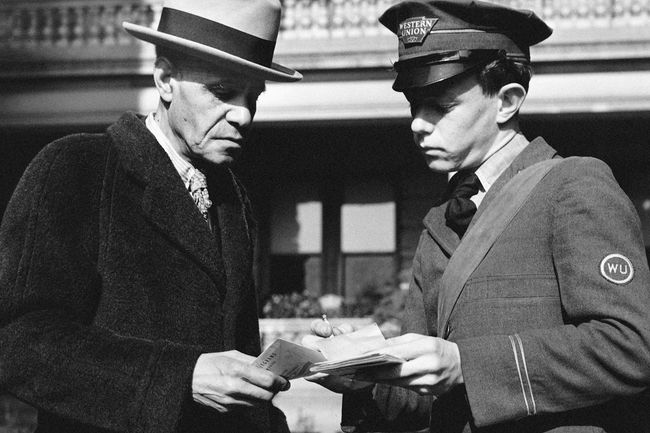
Although it still exists, the telegraph has been all but forgotten in a world dominated by instant digital messaging, relegated to the archives of 20th-century institutions alongside the corner phone booth and the horse and buggy. Yet there was a time when this form of communication was the best and most efficient way to deliver a message across significant distances. Western Union, the largest provider of the service, logged more than 200 million telegrams sent in its peak year of 1929.

Given the telegraph’s popularity, it’s not surprising that numerous important messages from the past two centuries traveled by way of telegram, some of which inspired notable changes to global events while others provided appropriate commentary to historic moments as they unfurled. Here are five such transmissions that have proved to possess staying power even as the technology that provided them has largely been pushed aside.
Credit: Bettmann via Getty Images 

Samuel Morse’s Test Message From the U.S. Capitol
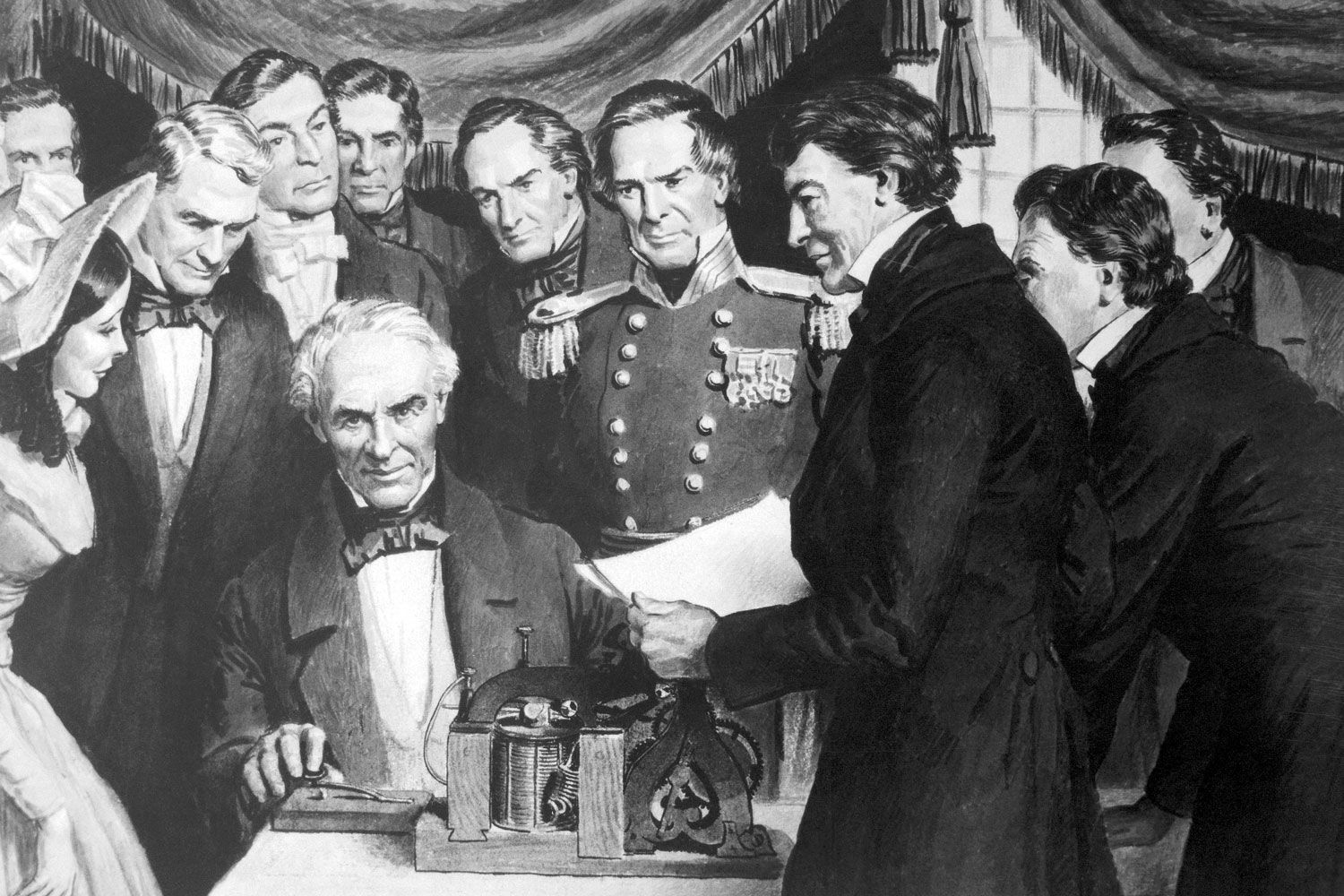
On May 24, 1844, some 12 years after he set about devising a way to transmit information by way of an electrical current, Samuel F.B. Morse prepared to showcase his perfected invention before an influential audience in the U.S. Capitol. Morse transmitted the words “What hath God wrought” — a message inspired by the Bible, suggested by the patent commissioner’s daughter — over a copper wire that followed the B&O Railroad line nearly 40 miles to a Baltimore station. There, his assistant Alfred Vail received the message and replied with the same phrase from a second machine. 

This wasn’t the first example of a working telegraph. Inventors William F. Cooke and Charles Wheatstone had unveiled their version in the United Kingdom in 1837, and Morse and his team had previously conducted demonstrations across shorter distances. However, this particular showing, colored by a message hinting at divine intervention, has endured as the impetus for the rapid spread of this novel communication system over the following decade.

Why Do We Have Summer Vacation?

Author Nicole Villeneuve
June 18, 2025

Love it?

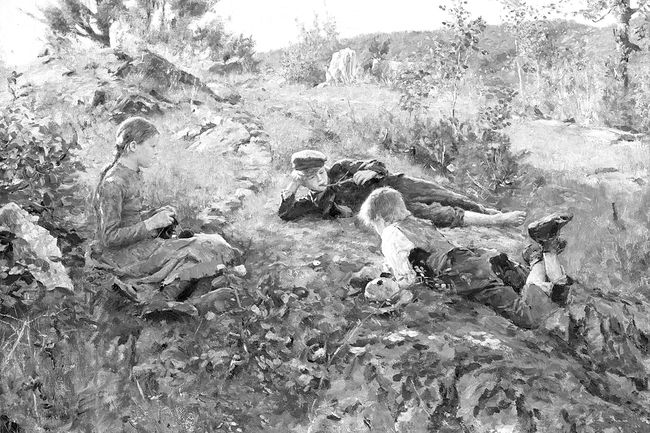
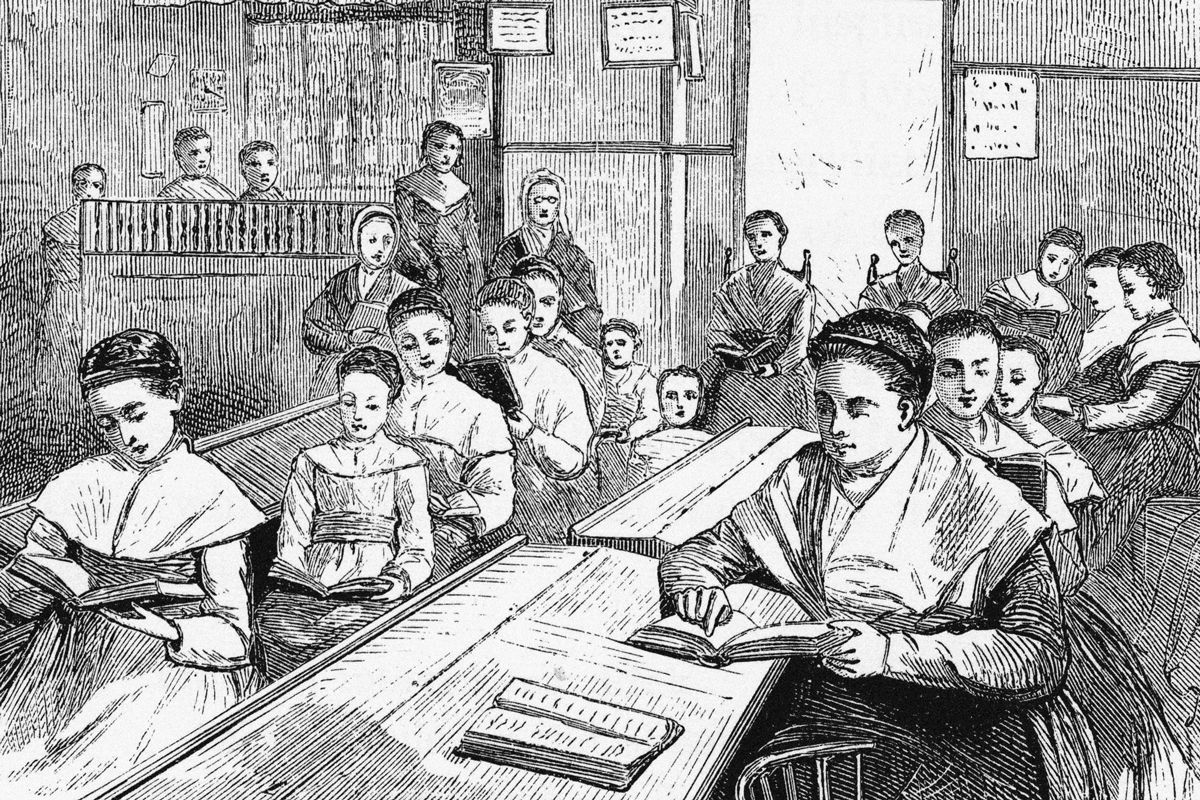
Summer vacation has been an integral part of American family life for more than a hundred years. This season of leisure is primarily due to one thing: School’s out. But why is there no school in summer? You may assume it’s a holdover from the country’s agrarian days, when children were required to help out on the family farm. But the summer vacation we know today actually had more to do with urban health concerns and public policy than with hay bales or cornfields. Here’s a look at the origin of summer vacation.

Credit: Peter Righteous/ Alamy Stock Photo

The Days of Sporadic Schooling

In the early 1800s, there was nothing even close to a standard school calendar in the United States. Communities ran schools as best suited their needs or abilities, leading to a very loose patchwork of local schedules. Rural schools were typically open in winter and summer in order to accommodate busy farm seasons that required planting in the spring and harvesting in the fall. (That said, even in the summertime there was plenty of farm work to do, and school attendance was often low.) City schools worked differently. Many operated almost year-round, taking only a short break each quarter. And the inconsistencies didn’t end there: Even within a single county, schools were extremely localized and their operational calendars could be starkly different.

7 Major Historical Events That Happened in June

Author Timothy Ott
May 22, 2025

Love it?

For those who live in the Northern Hemisphere, there’s something about the culmination of ever-warming weather, the full ripening of foliage, and the seemingly endless daylight hours that makes June a magical time of year. And while many of us harbor fond recollections of beachfront jaunts or backyard games that took place as spring swept into summer, June also comes with a collective well of memories that transpired within its 30-day span.

Here are seven historical events from Junes of both recent vintage and centuries past. From crucial battles to transformative treaties and political scandals, each has stood the test of time as a major checkpoint of the shared human experience.

Credit: Rischgitz/ Hulton Royals Collection via Getty Images 

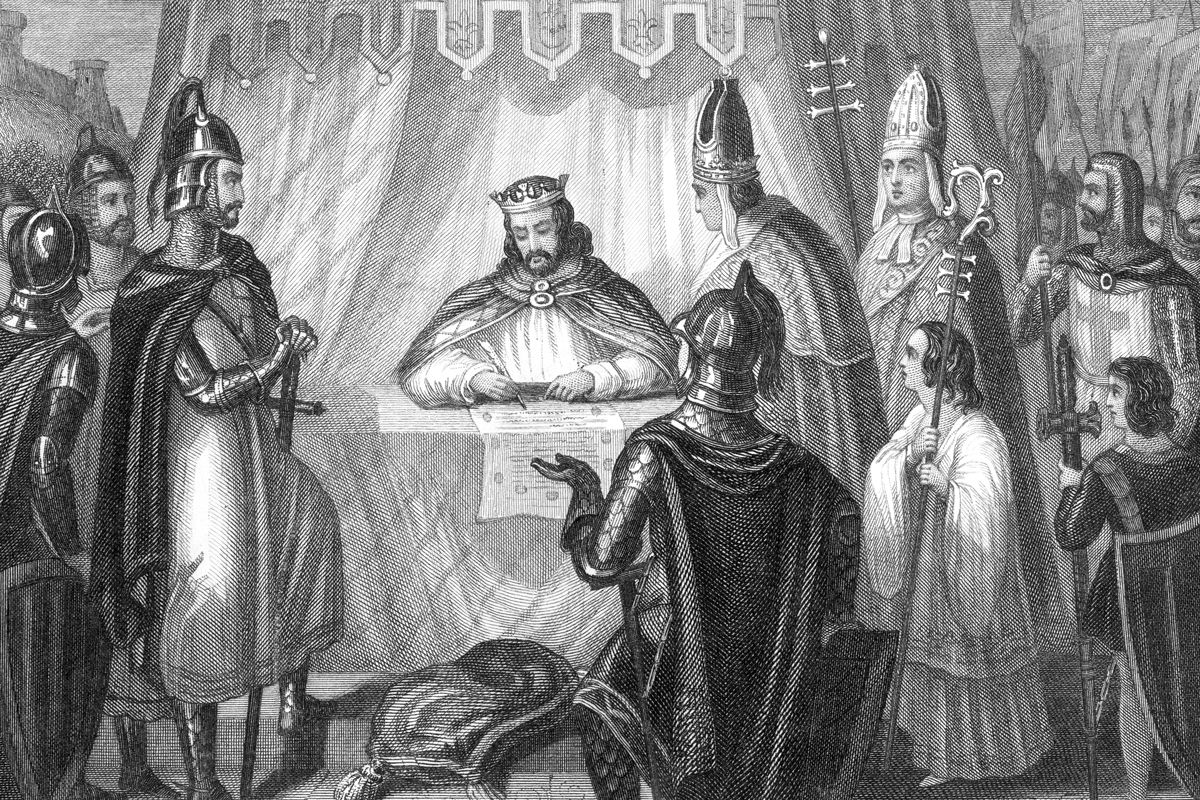
June 15, 1215: King John Affixes His Seal to the Magna Carta

King John’s ascent to the English throne in 1199 seemingly brought nothing but trouble for the monarch, who subsequently lost control of several French territories, was excommunicated by Pope Innocent III, and faced an uprising from powerful barons who chafed at high taxes. Seeking to at least pacify the barons, John agreed to a series of terms that provided specific limits on the king’s power over matters of land ownership, debts, and the election of church officials, signing the agreement on June 15, 1215. 

Although peace between the two sides was short-lived, the charter was revised and reissued multiple times over the years, and the 1225 version of what is now known as the Magna Carta is recognized as the definitive issue. And while it was never intended to define the course of human rights beyond the immediate feudal concerns, the document did exactly that with its clauses that guaranteed basic liberties and justice for citizens, words that later influenced the United States Declaration of Independence and Constitution.

What the World Smelled Like Before Industrialization

Author Bess Lovejoy
May 8, 2025

Love it?

Before the churn of factories and the tang of coal smoke came to dominate modern life during and after the Industrial Revolution, the smells of daily life were intensely organic, shaped by proximity to animals, bodies, plants, and decay. Urban and rural environments offered distinct olfactory experiences, but both were pungent, earthy, and changed with the seasons. 

Once industrialization and modern sanitation systems had taken hold in the industrialized world by the mid-1800s (following a transformation that lasted about a century), the smells of waste, sewage, manure, and other organic materials were significantly less common, even in rural areas. Changes in agriculture, the decline of small cottage industries, and advances in chemistry also pushed scents away from earthy and toward synthetic. But understanding these historical odors offers a visceral glimpse into how people once experienced the world — as they say, “the nose knows.” 

Credit: Heritage Image Partnership Ltd/ Alamy Stock Photo

What Preindustrial Cities Smelled Like

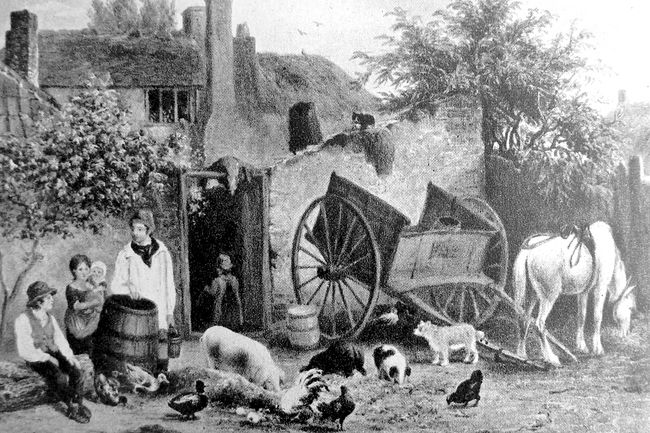
Before industrialization transformed cities in Britain and the U.S., urban areas were often crowded, unsanitary, and deeply aromatic environments. Unfortunately, some of the most dominant smells were related to waste, both human and animal.

In an era before modern plumbing, human waste flowed unchecked in waterways, pooled in cesspits, or was collected in “night soil” buckets to be used later as fertilizer. Open gutters often carried sewage and refuse, while heaps of offal and carts of dung were common sights — and smells — on city streets.

Animals were also a major contributor to the aromatic landscape, such as it was. Horses were ubiquitous in cities, and their manure (and occasional carcasses) filled the air with ammonia and other not-so-pleasant smells. In New York City there were 10,000 horses by 1835, each producing 15 to 30 pounds of manure and a quart of urine. In her book Taming Manhattan: Environmental Battles in the Antebellum City, historian Catherine McNeur describes how rotten food and dead animals mixed with “enormous piles of manure to create a stench particularly offensive” in the heat of a New York summer.

Meanwhile, in England, the River Thames served as a dumping ground for sewage, emitting overpowering odors that were also especially ripe in the summer. As in America, streets were littered with horse manure, and industries such as tanneries and slaughterhouses contributed to the pervasive foul smells.​

In fact, urban centers on both sides of the Atlantic were full of small-scale trades and markets — tanners, butchers, fishmongers — each adding their own pungency. Tanning leather required soaking hides in urine and lime, producing a rank, acrid scent. Butcher shops dumped blood and offal into gutters. In the U.S., industries such as slaughterhouses and leather tanners were called the “offensive trades” because of how they offended the nose, according to historian Melanie Kiechle.

Street vendors contributed too: Roasting chestnuts, boiling tripe, and frying fish could be welcome or foul scents, depending on your appetite and the weather.

How Is a New Pope Chosen?

Author Timothy Ott
May 1, 2025

Love it?

On March 13, 2013, the former Cardinal Jorge Mario Bergoglio, archbishop of Buenos Aires, Argentina, appeared for the first time as Pope Francis, the 266th head of the Roman Catholic Church. Following his death on April 21, 2025, the church turned once again to an ancient tradition that’s been in place for centuries: the election of a new pope.

There were some novelties associated with Pope Francis’ ascension to Bishop of Rome: He was the first pope from the Americas, as well as the first to assume the name of Francis. He was also the rare pope to take charge while his predecessor was still alive, after an aging Benedict XVI became the first pontiff in nearly 600 years to voluntarily resign.

But for all the unusual components of his particular case, Francis’ assumption of the papacy still adhered to the traditions of the church — some that are relatively new and others that have been faithfully followed for centuries. Here’s a look at exactly how the Catholic Church elects a new pope.

Credit: Chronicle/ Alamy Stock Photo

The Process of Voting Began in the Middle Ages

The origins of papal elections are a little murky. Some evidence suggests that St. Peter, generally considered the first pope, designated a group of two dozen priests and deacons to name his successor. Other sources say that the second pope, Linus, was elected from a pool of neighboring bishops and the Roman clergy.

After Roman Emperor Constantine I legitimized the spread of Christianity in Rome in the early fourth century, subsequent generations of European monarchs sought to influence control over the increasingly influential post of bishop of Rome. This was exemplified by the actions of the Holy Roman Emperors Otto III and Henry III, who installed a combined half-dozen popes during their respective reigns in the late 10th and mid-11th centuries.

The first step toward the modern voting process came in 1059, when Pope Nicholas II decreed that only cardinal-bishops would be allowed to select a pope. Another major change came in 1274, when Pope Gregory X codified the “conclave” system that required voters to be sequestered until a new pope was chosen — a system still used today.

Later pontiffs continued to modify the rules as they saw fit. In 1970, Pope Paul VI determined that only cardinals below the age of 80 were eligible to vote, and in 1975, he established a maximum number of electors at 120. 

While some form of a two-thirds voting majority has been required since 1179, Pope John Paul II decreed in 1996 that the winner could be determined by a simple majority after about 12 or 13 days of deadlocked voting. His successor, Benedict XVI, reintroduced the full two-thirds vote to prevent blocs from holding on to a 50% majority until the time when that percentage would be enough to decide the election.

The Curious History of Love Potions

Author Timothy Ott
March 27, 2025

Love it?

The idea of a love potion created to win the heart of an uninterested companion has been around for virtually as long as recorded history. While no one knows for sure when these elixirs first bubbled into existence, their development through the years, in many guises, serves as a snapshot for the cultures these creative concoctions have passed through.

Credit: Culture Club/ Hulton Archive via Getty Images 

The Ancient Greeks Set the Tone

According to Love Potions Through the Ages: A Study of Amatory Devices and Mores by Harry E. Wedeck, the ancient Greeks were among the earliest civilizations to foster the regular use of love potions, also known as “philtres.” The physician Xenocrates, who lived in the third century BCE, suggested that drinking the sap of the mallow plant would arouse passions in women. 

The stimulating effects of the roots of the satyrion and mandrake plants were well known to both the Greeks and the Romans that followed. The Greek physician Dioscorides, who served as an army surgeon for the Roman Emperor Nero, wrote of how the mandrake root dipped in wine would help win over prospective lovers.

Even those who lacked wealth and power enjoyed access to love-inducing aides, as they could find various charms and concoctions in a seedy district of ancient Rome known as the Sabura. Yet the widespread availability of such philtres, with their varying degrees of effectiveness, could also be a source of trouble. 

The poet Lucretius, a contemporary of Julius Caesar’s, was said to have been driven mad by a potion administered by his wife. Later, the Roman writer Apuleius stood trial for his alleged concoction of love potions to win the heart of a widow, with recipes including such stimulating seafood as spiced oysters, cuttlefish, and lobsters.

Why Is a Workweek 5 Days? 

Author Nicole Villeneuve
March 13, 2025

Love it?

Many Americans structure their lives around a simple schedule: five days of work followed by two days off for leisure, chores, and, if they’re lucky, rest. But the concept of a standard Monday through Friday workweek is a relatively recent development, shaped by decades of activism, industrial shifts, and, eventually, government intervention. 

What many of us take for granted today as a normal part of life was once a hard-fought cause. The five-day workweek as we know it emerged gradually from a long — and often contentious — battle for fairer labor rights. Let’s take a look at how it all began.

Credit: Bettmann via Getty Images 

Industrial Labor Meant Long Hours

For much of human history, labor was dictated by necessity rather than a fixed schedule. Farmers worked according to the seasons, and artisans and merchants worked at their own pace and set their own hours. That all changed with the Industrial Revolution. By the mid-19th century, this sweeping cultural transformation was in full swing, and factory work had replaced farming as the dominant form of labor in the U.S. 

Workers in manufacturing and other industrial sectors often clocked 60-plus hours a week across six or seven days; shifts averaged 10 to 12 hours per day but often stretched up to 16 hours, even for children. Conditions were harsh and often unsafe. The Industrial Revolution may have transformed economies, but it also pushed workers to their limits.

Why Are Historical Doors So Large?

Author Kristina Wright
February 20, 2025

Love it?

When visiting a historic site — whether an ancient or medieval castle, cathedral, or statehouse — you may have noticed an eye-catching detail about the architecture: doors that are far larger than those found in modern buildings.

Today, a standard interior door is typically 80 inches (6 feet, 8 inches) tall and 28 inches to 36 inches wide, while exterior doors are usually the same height but range from 32 inches to 42 inches wide for single doors and 60 inches to 72 inches for double doors. Historically, however, door sizes varied widely, reflecting architectural styles and cultural priorities. Doors built on an impressive scale, often towering over their modern counterparts, adorned buildings of all kinds, but these oversized entryways weren’t just for aesthetics. Here are some reasons historical doors tend to be so large.

Credit: imageBROKER.com/ Alamy Stock Photo 

Big Doors Represented Great Power and Influence

Large doors have long symbolized power, authority, and social hierarchy. In ancient civilizations including Mesopotamia, Egypt, and Rome, monumental doorways marked temples, palaces, and civic buildings, emphasizing their divine or political significance. The Ishtar Gate of Babylon, built in the sixth century BCE under King Nebuchadnezzar II, was a massive entryway adorned with glazed blue bricks and images of sacred animals. It served as both a protective barrier and a symbol of the city’s splendor. Similarly, Rome’s grand entrances, such as those of imperial forums and temples, reinforced the might of the empire. Medieval European cathedrals later adopted this tradition, using towering doors to inspire awe and humility.

A striking example is the set of bronze doors at the Basilica of St. John Lateran in Rome, originally part of the Curia Julia, the ancient Roman Senate House completed in 29 BCE. These massive doors were relocated to the Basilica of St. John Lateran in the late 17th century under Pope Alexander VII. Standing more than 25 feet tall, they reflect both the opulence of imperial Rome and the authority of the Catholic Church.

How Do Aztec Death Whistles Make That Chilling Sound?

Author Mark DeJoy
February 13, 2025

Love it?

As far as cultural artifacts are concerned, few sound quite as intimidating as the Aztec death whistle. Not only is the word “death” right there in the name, but the Aztec culture has a reputation for religious ceremonies involving sacrificial rituals. Add to that the fact that the whistles are shaped like human skulls, and the imagination can run wild with macabre possibilities for the meaning and purpose of the death whistle. But the instrument was not necessarily deployed for morbid uses. Let’s take a closer look at the function of these ominous-sounding objects.

Credit: Robert Och/ iStock

The name “Aztec death whistle” is actually a colloquialism. The whistles are also known as ehecachichtli, and in scholarly circles, they’re referred to as skull whistles due to their shape. Their exact origin is unclear, but researchers estimate they date to between 1300 CE and 1521 CE. The whistles were made of clay or bone and were small enough to be held in the palm of the hand. The holes for blowing into them were located at the top of the skull. 

Some scholars have theorized that the skull design represents the winds of the mythological underworld Mictlan, while others suggest the whistles symbolize the Aztec wind god, Ehecatl. And due to the fact that many whistles were discovered during burial site excavations, it’s commonly believed that they served a purpose in burial ceremonies, and possibly human sacrifice rituals. There is also speculation that they were used as a warfare instrument, played on the battlefield in order to intimidate enemies.

5 Retro Photos From the Swinging ’60s

Author Nicole Villeneuve
January 16, 2025

Love it?

The Swinging ’60s were a period of whirlwind of change in the United Kingdom — bold, colorful, and bursting with possibility. At the dawn of the decade, Britain was still shaking off the postwar doldrums, with austerity lingering and life defined by staid convention and cautious optimism. But as the country entered an era of economic growth and prosperity, a sense of freedom and opportunity also emerged. By the end of the 1960s, London had transformed into a global hot spot of youth, freedom, and creativity, where music, fashion, and art collided in a cultural revolution that reverberated around the world.

As a generation of young people — resulting from the postwar baby boom — emerged free from war and its looming shadow, they embraced individuality. Not content to follow the old rules, they set out to rewrite them entirely: Music became their driving force, with bands such as the Beatles leading the charge. Fashion transformed too, with Mary Quant’s daring designs embodying the era’s exuberance. London was alive with energy, and the city spent the better part of the decade reinventing itself. Here are five photos from the era that illustrate what it was like to live through the Swinging ’60s.

Credit: Trinity Mirror / Mirrorpix/ Alamy Stock Photo

George Harrison’s Sitar (1968)

Few things capture the cultural imprint of 1960s London quite like the Beatles. Their meteoric rise to fame coincided with the youth-driven revolution that defined the era. The Fab Four were more than just a band; they were an unstoppable force that touched everything from fashion to philosophy. The Beatles were known to experiment with new sounds, particularly Eastern influences, and guitarist George Harrison’s introduction of the sitar into their music marked a pivotal moment. 

This photo, taken in June 1968 at Heathrow Airport, shows George and Pattie Harrison, Ringo Starr, Maureen Starkey, and Beatles assistant Mal Evans returning to England from California after Harrison filmed scenes for the Ravi Shankar documentary Raga. Shankar, a renowned Indian composer and musician, was a major influence on Harrison, and Harrison can be seen carrying his own sitar off the plane. Years earlier, in 1965, the Beatles became the first Western rock band to use the sitar on a commercial recording when they released the song “Norwegian Wood (This Bird Has Flown).” It inspired fellow musicians to explore new sonic landscapes, paving the way for the Rolling Stones, Pink Floyd, and others to adopt the psychedelic sound that formed the soundtrack of the Swinging ’60s.