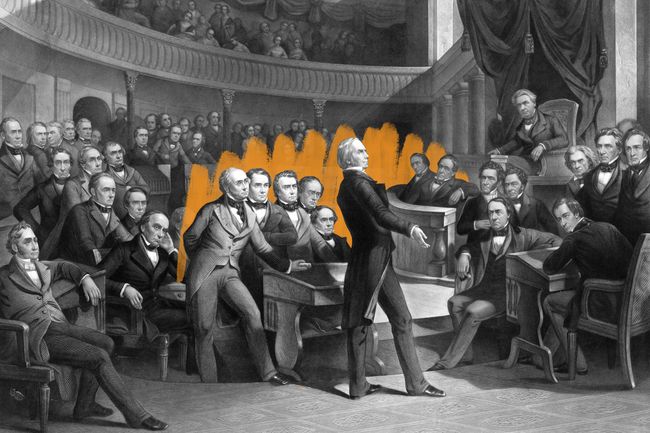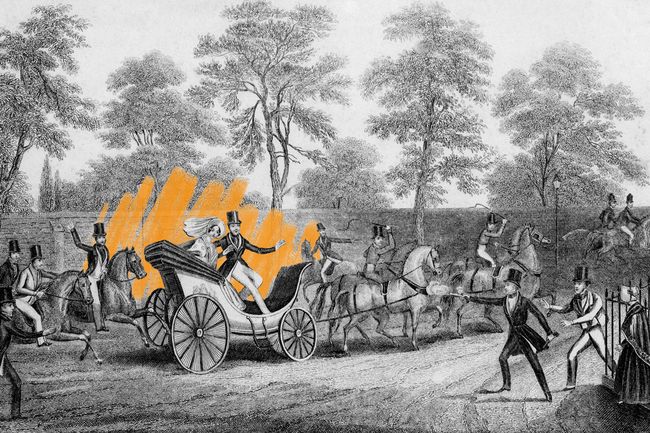
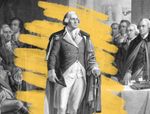


The 3 Musketeers candy bar was named for its flavors.

  • 3 Musketeers bar
3 Musketeers bar
Credit: Food Tree Images/ Alamy Stock Photo
Author Nicole Villeneuve

August 22, 2024

Love it?

The 1930s were a landmark time for the candy business. Despite the economic hardships of the Great Depression, confectionary companies flourished, launching popular products that still remain in demand today. Snickers, the top-selling candy bar in the U.S., debuted in 1930, and in 1932, another well-known sweet treat made its first appearance: the 3 Musketeers candy bar, or, more accurately, candy bars. At the time, each 5-cent package contained three bars with three different flavors: chocolate, strawberry, and vanilla. 

The three flavors resulted in the candy bar’s name, one that had already been made familiar by author Alexandre Dumas’ popular 1844 adventure novel The Three Musketeers. The 3 Musketeers bar remained a multipack from 1932 until 1945, but like many industries at the time, the candy business was majorly impacted by World War II. In 1942, government-mandated sugar rationing came into effect. When regular production resumed following the war in 1945, 3 Musketeers, citing ongoing challenges and costs related to wartime restrictions, was reduced to just one piece, available in just one flavor: chocolate. But despite the lower bar count, the name remained the same.  

A copy of the Declaration of Independence from July 1776 will be on sale this spring.

  • Copy of the Declaration of Independence
Copy of the Declaration of Independence
Credit: Selcuk Acar/ Anadolu via Getty Images
Author Michael Nordine

February 19, 2026

Love it?

There have been copies of the Declaration of Independence for as long as there’s been a Declaration of Independence. The handwritten, signed document is currently safe from Nicolas Cage in the National Archives. But the Continental Congress’ printer John Dunlap made about 200 broadside copies of the document on July 4, 1776, of which 26 remain. These were posted in public places for soon-to-be Americans to read and celebrate. One of them will be sold at auction in May 2026 to commemorate the 250th anniversary of American independence, and it’s likely to fetch a high price — another was recently sold for $5.6 million.

In an interview with Philly Voice, Ken Goldin, founder and CEO of the auction house near Philadelphia that will be selling the rare document, described it as being in “tremendous condition” despite the fact that it “may have been posted in a tavern or some kind of hall.” More than 400 other historical objects also will be available at the auction, though Goldin has yet to reveal what they’ll be. The copy of the declaration will be lot No. 1, however, and is sure to be the most sought-after item.

There have been 27 versions of the American flag.

  • American flags
American flags
Credit: Christian Lucas/ Unsplash
Author Kerry Hinton

August 27, 2024

Love it?

A nation’s flag is not merely a piece of cloth used to identify a country or mark territory. It also allows people with a shared culture to celebrate what unites and represents them. In other words, flags matter — which may help explain why the American flag has gone through no fewer than 27 iterations. In fact, the United States holds the world record for the most changes to a national flag, as the design was continuously updated as the country expanded and more states were added to the union.  

The first official American flag (which, contrary to popular myth, was most likely not designed by Betsy Ross) was approved by the Continental Congress on June 14, 1777. It featured 13 red and white stripes meant to represent the 13 original colonies, and a blue canton — the rectangle in the upper left corner — with 13 stars in a circular pattern. After Kentucky and Vermont became states, the Second Flag Act of 1794 authorized a new design with two additional stars and stripes. The version of this 15-star flag that flew over Baltimore’s Fort McHenry during the War of 1812 became known as the “Star-Spangled Banner,” and inspired Francis Scott Key to write the United States’ national anthem. 

In 1818, the number of stripes in the flag design was reduced to the original number, 13, and the number of stars increased to 20, for the 20 states in the union at the time. The Flag Act of 1818 further specified that in the future, a star would be added for each new state, and the addition would take effect on the Fourth of July following the state’s admission. Over the next several decades, as the U.S. grew, the stars in the flag’s canton were arranged in different patterns. In 1912, President William Howard Taft signed an executive order that specified, for the first time, almost every detail of the flag, including its proportions and arrangement of stars. This flag looked very similar to the current design, but with 48 stars, as Alaska and Hawaii had not yet become states. In 1960, an updated flag design was made official by President Dwight D. Eisenhower, and became the standard 50-star flag that still flies today.

Benjamin Franklin had 16 siblings.

  • Benjamin Franklin portrait
Benjamin Franklin portrait
Credit: Georgios Kollidas/ Adobe Stock
Author Sarah Anne Lloyd

February 19, 2026

Love it?

For one of the most famous statesmen of all time, Benjamin Franklin had some relatively humble beginnings. His father, Josiah Franklin, made soap and candles. It wasn’t considered a prestigious art, but it provided a middle-class upbringing for Franklin and his many, many siblings. Josiah had seven children with his first wife, Anne Child, and then 10 more — including Benjamin — with his second wife, Abigail Folger. That’s 17 children all together. Benjamin was Josiah’s youngest son, and his third-youngest child.

Franklin didn’t actually meet all his siblings; his last two half-siblings, both named Joseph, died at less than a month old, and the two brothers that came just before him died before Franklin was born. But he still grew up in quite a large family. “I remember thirteen sitting at one time at his [Josiah’s] table, who all grew up to be men and women, and married,” he recalled in his autobiography.

As the youngest boy — “the youngest son of the youngest son for five generations back,” Franklin noted — the future founding father wasn’t supposed to be ambitious. His formal education ended when he was about 10 years old, after which he spent two years working for his father. Because he loved reading, at age 12 he became an apprentice to his half-brother James, who taught him the printing trade. This launched his illustrious career; he eventually opened his own press, started the Pennsylvania Gazette newspaper, and launched Poor Richard’s Almanack. As he gained prestige in his business endeavors, he became more involved in civic life, and the rest is, as they say, history.

As much as 4% of the sand on Normandy’s Omaha Beach is broken-down shrapnel.

  • Omaha Beach, June 1944
Omaha Beach, June 1944
Credit: MGPhoto76/ Alamy Stock Photo
Author Timothy Ott

August 22, 2024

Love it?

As the first step of Operation Overlord, nearly 160,000 Allied troops descended on five beaches across a 50-mile stretch of northwestern France on the morning of June 6, 1944, now known as D-Day. They encountered the fiercest resistance along the section code-named Omaha Beach, where the Germans unleashed torrents of gunfire from their encampments in ravines and on the bluffs that overlooked the sandy bank. 

On a quieter day 44 years later, geologists Earle McBride and Dane Picard scooped a sample of sand from the high-tide point of Omaha Beach for closer examination. Among their findings, which were published in the September 2011 edition of The Sedimentary Record and the January 5, 2012, edition of Earth magazine, were a significant number of “angular opaque grains that were magnetic.” They eventually realized that these grains, ranging in size from .06 to 1.0 millimeters, were shrapnel shards that had been broken down into tiny pieces. They concluded that the shards made up 4% of the total sample. Additionally, they found 30 slightly larger iron and glass beads, believed to be the result of high-temperature munitions explosions in the sand and air.

The geologists pointed out, however, that the 4% figure doesn’t represent the entirety of Omaha Beach, as wave breaks and currents can disrupt grain distribution on a daily basis. What’s more, because of the corrosion accelerated by rust and waves, there was already a drop in the concentration of beach shrapnel in the years between when the sample was collected and when the results were published. Which means that while beachgoers today still walk among these fleeting remnants of one of history’s most important military engagements, nature will sweep them away for good within the next century or so.

Gargoyles on churches were originally drain pipes.

  • Gargoyles at Notre dame
Gargoyles at Notre dame
Credit: Mikhail Proskalov/ iStock via Getty Images Plus
Author Michael Nordine

February 19, 2026

Love it?

If you’ve ever wondered whether gargoyles serve a function beyond looking cool in a vaguely sinister way, just check the etymology. The word “gargoyle” comes from the Old French gargole, meaning “throat” or “carved downspout” — a hint toward their original purpose as decorative water spouts that divert rainwater from rooftops. It’s no coincidence that “gargoyle” sounds like another word: “gargle.” Gargoyles that don’t drain water technically aren’t gargoyles at all but grotesques, a distinction that has largely been lost over the centuries as “gargoyle” has become a catchall term for stone figures carved into buildings.

The same Old French root gave rise to La Gargouille, a legendary dragon from French folklore that wreaked havoc across Rouen by spewing water and flooding the city. Legend holds that after La Gargouille was burned at the stake, his head remained unscathed. The townsfolk, making the best of an odd situation, decided to put the dragon’s head on their church to ward off other beasts who would do them harm — likely reinforcing the modern image of a gargoyle.

Gargoyles are older than their name, however, and are believed to date back to antiquity; lion’s-head statues that spout water have been found in ancient Rome, Egypt, and Greece. The medieval gargoyles of Notre-Dame are especially well known, though many of them were lost in the 2019 fire that destroyed much of the iconic cathedral. Those that remain have come to symbolize the landmark’s centuries of resilience as they continue to watch over it.

‘Ye olde’ is pronounced ‘the old.’

  • Ye Olde Curiosity Shop, Nantucket
Ye Olde Curiosity Shop, Nantucket
Credit: YA/BOT/ Alamy Stock Photo
Author Sarah Anne Lloyd

August 22, 2024

Love it?

The next time you visit Ye Olde Shoppe or Ye Olde Taverne, you should know that the pronunciation of “ye” is actually just the boring, modern “the.” Way back in ye days of Old English — the earliest form of English, spoken from 450 CE to 1100 CE — the alphabet had some letters unfamiliar to us today. Starting in the seventh century CE, Christian missionaries began bringing the Latin alphabet with them to the British Isles, which slowly started to replace the runic script used before then. But a few of the older runes were integrated into what became a hybrid alphabet, including thorn (þ), which was pronounced “th.”

Until the Late Middle English period (beginning around 1450 CE), one common spelling of the word “the” was “þe,” particularly when the word was used at the beginning of a sentence. Over time, Middle English speakers began writing “þ” in a way that looked a little more like a “Y,” and once the printing press was invented, printers started just using “Y” to represent the character, especially when converting older written documents to typed ones. By then, “th” was also being used to represent the sound (the letter combination dates all the way back to ancient Rome), and it eventually took over the letter “Y” in the spelling of the word.

“Ye,” meaning “the,” reentered the popular lexicon with its modern pronunciation around 1850 as a gimmick for businesses that were trying to appear old, a usage that still persists today in business names such as Ye Olde Curiosity Shoppe. Soon after, “ye olde” also became a figure of speech for describing anything as archaic; one of the earliest uses referenced in the Oxford English Dictionary is a magazine article that describes a character as “ye olde fogie.”

Horse-riding librarians delivered books during the Great Depression.

  • Pack horse librarians, 1930s
Pack horse librarians, 1930s
Credit: Kentucky Department for Libraries and Archives
Author Sarah Anne Lloyd

February 12, 2026

Love it?

During the Great Depression, the Works Progress Administration, one of the most visible New Deal programs, hired unemployed Americans to develop public works projects. These public works included libraries — and one unique WPA project proved that libraries are so much more than buildings. Starting in 1934, librarians on packhorses rode to remote rural communities in the Appalachian Mountains to deliver much-desired reading material to struggling families.

With coal and railroad companies preparing to expand into the area, many residents were hungry for information to help them navigate the coming changes. But the Appalachian communities in eastern Kentucky rarely had easy access to books, and the location presented a special set of challenges for mobile librarians, including rough terrain, brutal weather, and communities wary of outsiders. 

Packhorse librarians offered some significant advantages over previous traveling librarians in the area: They were mostly locals, and the packhorses were better-equipped to travel the rough terrain than book wagons, although some areas required leaving a horse behind and continuing on foot. 

Local librarians kept stashes of books in post offices, churches, or wherever else they could set up shop, and loaded up panniers for the horseback librarians. Each route could cover more than 100 miles in a week, and some librarians took a second horse to carry more inventory. Magazines with practical information, such as Popular Mechanics and Woman’s Home Companion, were in high demand. Children’s books were also very popular, both for children and for adults just learning to read. Librarians even crafted new books in cardboard binders, some from books that were worn out and others that were cut-and-pasted from children’s stories in newspapers.

Funding for the Pack Horse Library Project was eliminated in 1943, and most of the librarians went back to farm work or teaching. In 1956, a U.S. representative from Kentucky introduced legislation that provided dedicated federal funding to public libraries; he’d been on one of the packhorse routes as a child. That funding, along with newly paved roads, allowed bookmobiles to fill in the gaps once served by librarians on horseback.

Apollo 10 achieved the fastest speed humans have ever traveled.

  • Apollo 10 mission crew
Apollo 10 mission crew
Credit: NASA Photo/ Alamy Stock Photo
Author Michael Nordine

August 15, 2024

Love it?

Despite being described as a “dress rehearsal” for the first moon landing, which took place just two months later, Apollo 10 achieved something incredible in its own right: the fastest speed that humans have ever traveled. Astronauts Thomas Stafford, John Young, and Eugene Cernan reached a speed of 24,816 mph while returning from their eight-day voyage on May 26, 1969, a record that not even subsequent Apollo missions managed to top. Before doing so, Stafford and Cernan boarded the Apollo lunar module and orbited our only natural satellite at a distance of about 9 miles from its surface. Young later walked on the moon as part of the Apollo 16 mission, and Cernan did so with Apollo 17.

Other speed records, while impressive, don’t even come close to Apollo 10. The land speed record, set in 1997 by a 54-foot Thrust SuperSonic Car, is 763 mph, while a diving peregrine falcon can reach speeds of 200 mph — making it the world’s fastest animal. The average commercial airliner travels at a speed of 550-600 mph, which is the fastest most of us will ever go. Unless you have an intense need for speed, that’s probably a good thing.

Stop signs used to be yellow, not red.

  • Woman holding a stop sign
Woman holding a stop sign
Credit: ClassicStock/ Alamy Stock Photo
Author Bess Lovejoy

February 12, 2026

Love it?

In the freewheeling early days of American motoring, traffic was chaotic and largely unregulated. The streets were a mess of horses, bicycles, and cars, and the concept of a driver’s license was still just a twinkle in a bureaucrat’s eye. To bring some sanity (and safety) to the roads, traffic reformer and New England native William Phelps Eno proposed, in a 1900 article for Rider and Driver, what’s generally credited as the first stop sign.

Mind you, these early signs, first installed in Detroit around 1915, looked nothing like the ones we’re familiar with today. They were originally a simple square sheet of metal — white with black lettering — rather than the distinctive red octagon. The eight-sided shape emerged in 1922, when a regional highway association developed a system of sign shapes based on perceived danger levels. Circles were reserved for the highest-risk situations, such as railroad crossings; octagons signaled the next tier of seriousness, making them the choice for “STOP.” The idea was that even drivers approaching the sign from behind could recognize it by silhouette alone.

Color took longer to standardize. Early traffic engineers wanted a red stop sign, since red already meant stop in the growing world of traffic lights. But durable red reflective materials didn’t exist yet. As a result, the 1935 edition of the Department of Transportation’s “Manual on Uniform Traffic Control Devices” (MUTCD) specified a yellow background with black letters.

By the early 1950s, advances in porcelain enamel coatings finally made long-lasting red signs practical. In 1954, the MUTCD officially adopted the now-familiar red octagon with white lettering — a design that soon became one of the most recognizable symbols in modern driving culture.