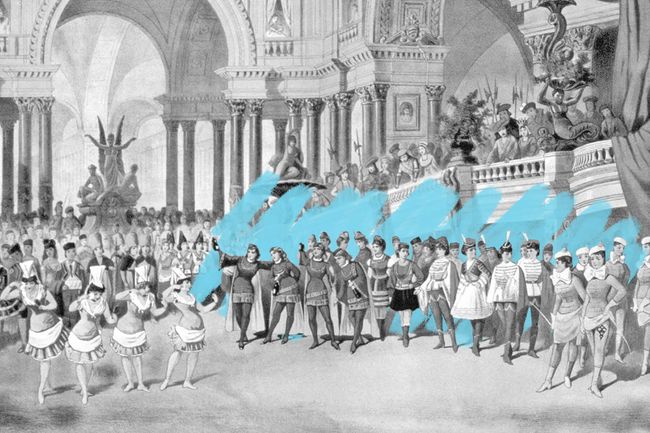



Winners received a silver medal at the first modern Olympics.

  • 1986 Olympic Games
1986 Olympic Games
Credit: INTERFOTO/ Alamy Stock Photo
Author Sarah Anne Lloyd

July 17, 2024

Love it?

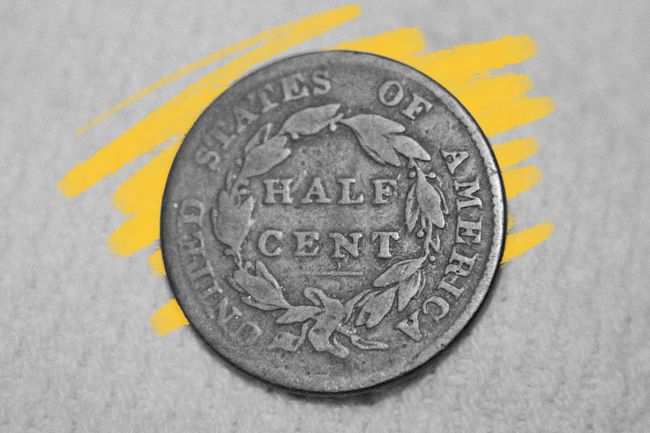
The modern Olympic Games have gone through a lot of changes since their inception more than 120 years ago. Tug-of-war has come and gone as an Olympic sport, and nobody’s shooting live pigeons anymore. At the first modern Games in 1896 in Athens, Greece, even the prizes worked differently: There was no gold medal. First-place winners were awarded a silver medal and an olive branch. Second place got a bronze medal and a laurel branch. Third place got nothing at all.

The current three-medal system came along at the next Olympic Games, held in Paris in 1900: First place received a gilt silver medal (silver coated in a thin layer of gold), followed by a simple silver medal for second place and bronze for third. First-place winners at the 1904 St. Louis Olympic Games got solid gold medals for the first time.

Today, original Olympic first-place medals are pretty rare — there were only 43 events at the first modern Games, and many medals have been lost to time, though a few have come up for auction in the last couple of decades. One silver medal that was never awarded at the event sold in 2012 for around $32,000; it was intended for a boat race that was canceled due to high winds. Two more sold in July 2021 and January 2024 for $180,000 and $112,000, respectively.

Even now that Olympic athletes are awarded gold medals for first place, the medals are still mostly silver — in fact, the International Olympic Committee (IOC) mandates that they should be composed of at least 92.5% silver. Host countries mint their own medals, and some have put personalized touches inside. Japan, for instance, used metal from obsolete electronics, and for the 2024 Paris Games, France incorporated pieces of the Eiffel Tower into the medals.

Jackie Robinson was honorably discharged from the Army after refusing to move to the back of a segregated bus.

  • Jackie Robinson in Army uniform
Jackie Robinson in Army uniform
Credit: Historic Collection/ Alamy Stock Photo
Author Michael Nordine

February 12, 2026

Love it?

Five years before he broke the color barrier in Major League Baseball, Jackie Robinson was drafted into the military. He received his notice on April 3, 1942, just a few months after the attack on Pearl Harbor propelled the United States into World War II. He joined an all-Black unit stationed at Fort Riley, Kansas, and was later transferred to Fort Hood, Texas. There, racial segregation was strictly enforced despite Executive Order 8802, which was issued by President Franklin D. Roosevelt to ban discriminatory practices in federal agencies and organizations contributing to the war effort. 

This ban was put to the test on July 6, 1944, when Robinson refused to move to the back of a bus in Fort Hood. He faced six charges at a subsequent court-martial, which he believed was racially motivated. In his autobiography, Robinson wrote that his lawyer “summed up the case beautifully by telling the board that this was not a case involving any violation of the Articles of War, or even of military tradition, but simply a situation in which a few individuals sought to vent their bigotry on a Negro they considered ‘uppity’ because he had the audacity to exercise rights that belonged to him as an American and a soldier.” 

The nine combat officers who comprised the court acquitted Robinson of all charges. The ballplayer received an honorable discharge four months later.

The oldest business in North America was founded in 1670.

  • Hudson’s Bay Company logo
Hudson's Bay Company logo
Credit: Andrew Rubtsov/ Alamy Stock Photo
Author Kerry Hinton

August 15, 2024

Love it?

Hundreds of years before Amazon, Walmart, Alphabet, and other modern megacorporations existed, King Charles II of England invested in what is now the oldest continually operating company in North America: the Hudson’s Bay Company (HBC), a retail giant founded in 1670 and currently headquartered in New York and Toronto. HBC’s origins can be traced to fur traders and brothers-in-law Médard Chouart des Groseilliers and Pierre-Esprit Radisson, the first Europeans to extensively explore the forests of northern Canada. The French explorers launched their first expedition in 1659, spurred on by rumors of vast untouched beaver preserves north of Lake Superior. 

Beaver pelts were at the center of a European fashion craze in the late 17th century that created a surge in demand for beaver-fur felt hats. However, des Groseilliers and Radisson made their journey in secret, without obtaining a trading license. Upon their return to Quebec, the French authorities confiscated their furs, levied fines against them, and briefly jailed des Groseilliers. Angered by their treatment, the explorers offered their services to other nations, eventually finding a receptive ear in England. 

On May 2, 1670, King Charles II granted a royal charter to the Hudson’s Bay Company, named after Canada’s Hudson Bay. The company was incorporated with three goals in mind: fur trade with Indigenous tribes, mineral exploration, and finding a passage to the West. HBC possessed exclusive commercial domain over a large territory around the Hudson Bay, giving the company a virtual monopoly on the fur trade. By the mid-19th century, the company’s landholdings encompassed around 1.5 million square miles, making it the largest private landowner in history. HBC operated as a monopoly until 1869, when the land was effectively transferred to the newly formed nation of Canada. Today, HBC’s historic connection to fashion lives on in luxury clothing stores such as Saks Fifth Avenue.

In the 1930s, a skyscraper was rotated 90 degrees while everyone kept working inside.

  • Indiana Bell building, 1930
Indiana Bell building, 1930
Credit: The Indiana Album/ Ray Hinz Collection
Author Sarah Anne Lloyd

August 28, 2024

Love it?

In 1929, the Indiana Bell Telephone Company purchased the Central Union Telephone Company, along with its eight-story headquarters in downtown Indianapolis, Indiana, as part of a plan to majorly expand its footprint in the area. First, it considered demolishing the Central Union Telephone building, which housed its administrative offices and telephone switchboards. But architect Kurt Vonnegut Sr. (yup, the father of author Kurt Vonnegut Jr.) had a different idea. Rather than raze the building and start from scratch, they could move it across the lot — 52 feet sideways, followed by a 90-degree turn — and expand from there. The plan didn’t just work; it was a resounding success. Not only did the eight-story, 11,000-ton building end up safely in its new location, but the offices remained fully operational during the monthlong moving process, with no disruptions to telephone service. 

The move was an impressive feat of engineering. The building’s support columns were lifted from their cast-iron bases at the foundation, and each was put on a temporary steel support. (The elevator shaft was modified to keep the car from going into the now-nonexistent basement.) Eighteen manually operated jacks moved the supports along a series of rollers three-eighths of an inch at a time, and the building traveled roughly 15 inches per hour. Workers had to be careful to move all the columns at the same pace, so they’d follow the lead of the construction foreman, who would blow a whistle to signal that it was time to pull the levers. Engineers kept an eye on the building’s alignment with a plumb bob; if a roller started to shift out of position, they’d simply whack it with a sledgehammer.

When it was time for the 90-degree pivot, the crew had to lift the building briefly to adjust the rollers. Steam engines attached to cables helped power this final movement, rotating the structure into place. Ultimately, the building sat within one-sixteenth of an inch of its planned destination. During the move, the 600 employees entered and exited the building from the sidewalk via a movable bridge. Reportedly, the workers inside the building didn’t even feel the movement. The project made way for a seven-story limestone art deco building, completed in 1932 and now on the National Register of Historic Places. The company continued to add to the campus, and the original building was demolished in 1963 to make room.

The first microwave ovens were about 6 feet tall.

  • Early microwave oven, 1946
Early microwave oven, 1946
Credit: Bettmann Archive via Getty Images
Author Sarah Anne Lloyd

February 11, 2026

Love it?

Microwaves are near-ubiquitous in American kitchens today and come in all kinds of sizes, including itty-bitty ones designed to fit in dorm rooms. But when they were first invented, these appliances were anything but space-saving. 

The invention of the microwave sprang directly from the invention of the cavity magnetron, a microwave-generating component in radar systems used in World War II. One of the scientists working on these devices was Percy Spencer, who dropped out of school at age 12 and taught himself calculus and physics while serving in the U.S. Navy during World War I. When he worked at the technology company Raytheon during World War II, Spencer’s innovations included manufacturing radar components more efficiently.

Not long after the war ended, Spencer was testing some equipment when he noticed a candy bar in his pocket melted when he got too close to magnetrons. After some further experiments, he and his colleagues realized that enclosing food in a metal box before exposing it to microwaves would trap the energy, allowing for very fast cooking.

In 1945, Spencer filed his patent for the first microwave using a water-cooled magnetron, but it wasn’t practical for a home kitchen. The Radarange, as it was known, was 6 feet tall, weighed 750 pounds, and cost about $5,000 — a steep price for a microwave even now, and in 1946 that was the equivalent of more than $75,000. At first, the product was marketed to and adopted by only commercial kitchens, including restaurants, hotels, cafeterias, and ships. A smaller, relatively cheaper wall unit, which debuted in 1955, didn’t catch on for home use, either. It wasn’t until the 1967 debut of the Radarange RR-4, a countertop model with a price tag of $495, that microwaves made their way into home kitchens.

Roman Emperor Nero participated in the Olympics and won every event he entered.

  • Emperor Nero with laurel wreath
Emperor Nero with laurel wreath
Credit: clu/ DigitalVision Vectors via Getty Images
Author Sarah Anne Lloyd

February 5, 2026

Love it?

It’s hard to separate legend from reality when it comes to notorious Roman Emperor Nero — but it’s pretty clear that he loved the Olympic Games, which combined his enthusiasm for Greek culture and commitment to athleticism. In the year 66 CE, Nero planned a 15-month tour of Greece and went to great lengths to ensure that he would not only compete in the Olympic Games, but also win several laurels.

The first hurdle to cross was timing. The ancient Olympics took place once every four years, and Nero’s visit to Greece fell on an off year. No problem: The Greeks moved the Games, along with other festivals throughout the region, to coincide with the emperor’s visit.

Nero wanted to prove his prowess not only in sports, but in the arts, too. The ancient Olympics generally included just athletic events, but organizers tacked on musical events so the Roman leader could show off his acting and lyre-playing skills. Charioteering was one of Nero’s favorite activities, so of course he entered a chariot race. According to some versions of the story, he opted to compete in the four-horse chariot race with six extra horses, fell off his chariot, and was declared the winner anyway. (Some sources report that it was a special 10-horse race.) Regardless of any mishaps, Nero was declared the winner in every event he participated in.

Shrapnel is named for a British army officer.

  • Portrait of Henry Shrapnel
Portrait of Henry Shrapnel
Credit: The Picture Art Collection/ Alamy Stock Photo
Author Bess Lovejoy

February 5, 2026

Love it?

When we talk about shrapnel today, we usually mean jagged fragments of metal blasted from an exploding shell. But the word originally referred to a very specific invention — and to the man behind it.

Henry Shrapnel, born in 1761 in Wiltshire, England, was a young lieutenant in the British Royal Artillery when he began experimenting with a new kind of antipersonnel ammunition. Working at his own expense and in his off-hours, he devised what he called “spherical case shot,” a hollow cannon ball packed with small shot and a bursting charge. A time fuse ignited the charge just before the projectile reached enemy lines, spraying bullets in a highly lethal distribution. Crucially, the shell could be fired from existing guns, making it easier to deploy across the army.

After years of tinkering (squeezed in between postings to Newfoundland, Gibraltar, and the West Indies), Shrapnel submitted his design to the British army. In 1803, they officially adopted it, and within a few years soldiers were calling it simply the “Shrapnel shell.” The invention saw extensive use during the Napoleonic Wars, and caused a majority of the artillery wounds in World War I. Shrapnel, for his part, was awarded an annual pension of 1,200 pounds (around 124,000 pounds in today’s money) in 1814 for his decades of private research to develop his device. But his invention’s legacy far outlasted him. Even after militaries shifted to high-explosive shells, which shattered their own casings into deadly fragments without added bullets, the name stuck.

St. Valentine wasn’t just one person.

  • St. Valentine, third century CE
St. Valentine, third century CE
Credit: PRISMA ARCHIVO/ Alamy Stock Photo
Author Sarah Anne Lloyd

February 6, 2025

Love it?

Today, Valentine’s Day is perhaps the most secular holiday named for a Catholic saint. What started as a commemoration of a third-century religious martyr is now a commercialized tradition of romance and candy. But even digging back into the holiday’s past, it’s unclear exactly which St. Valentine was the cause for celebration in the first place. There were up to three saints named Valentine who were active in the third century CE: Religious scholars have found documentation of a man in Africa, a Roman priest, and the bishop of Terni in Umbria, Italy.

There’s very limited information on the African St. Valentine, and the other two have enough parallels in their mythology that they might actually have been the same person — either that, or their legends borrow heavily from one another. Both were beheaded in Rome on February 14 in either 269 CE or 270 CE on the orders of Emperor Claudius II Gothicus, and were buried on the same road. And both supposedly healed a child of their jailer from blindness, inspiring an entire household to convert to Christianity.

The Italian St. Valentines also were rumored to perform secret weddings, although that element of the tale was probably added later, since the day wasn’t originally associated with romance. While St. Valentine is still recognized by the Catholic Church, his feast day was removed from the General Roman Calendar, the liturgical calendar of the Catholic Church, in 1969. According to that calendar, February 14 currently commemorates St. Cyril and St. Methodius, Byzantine brothers known for preaching in Central Europe in the ninth century CE.

Harriet Tubman was a spy during the Civil War.

  • Harriet Tubman
Harriet Tubman
Credit: GL Archive/ Alamy Stock Photo
Author Michael Nordine

February 5, 2026

Love it?

Though she’s most famous for her role as a conductor on the Underground Railroad, Harriet Tubman — better known as “Minty” to her loved ones — wore many hats throughout historic life, including a covert one: Civil War spy. She took on the role at the behest of Massachusetts Governor John Andrew, an abolitionist who formed the all-Black 54th and 55th Massachusetts Regiments. 

Tubman’s experience rescuing enslaved people in the years before the Civil War resulted in a wealth of invaluable geographical knowledge that proved critical on numerous scouting expeditions; she also recruited and trained informants, many of whom were formerly enslaved. Her greatest contribution to the Union effort came in 1863, when she helped lead an operation that liberated more than 700 enslaved people in South Carolina.

That operation, known as the Combahee Ferry Raid, took place on June 2, 1863. Tubman became the first woman in American history to plan and lead a military raid, doing so with the help of about 150 Black soldiers. Many of the people who were emancipated during the raid later joined the Union Army themselves. In a letter written to General Quincy Gillmore on July 6, Montgomery wrote, “I wish to commend to your attention Mrs. Harriet Tubman a most remarkable woman, and invaluable as a scout.” Tubman came to be known as the “Moses of Her People” for her tireless work before and during the Civil War.

Dinosaurs were alive longer than they’ve been extinct.

  • Mesozoic dinosaurs
Mesozoic dinosaurs
Credit: Orla/ iStock
Author Michael Nordine

August 15, 2024

Love it?

Dinosaurs have been extinct for 65 million years. That’s a long time, but not nearly as long as they were alive for: 165 million years. Their reign as the planet’s dominant species absolutely dwarfs our own, which began a few hundred thousand years ago, and accounts for just 0.007% of the Earth’s history — a blink of the cosmic eye. If you compressed the planet’s history into one calendar year, dinosaurs would have appeared on January 1 before going extinct in the third week of September; humans, meanwhile, wouldn’t have shown up until December 31.

Dinosaurs lived in the Mesozoic Era, which began 252 million years ago and was divided into three periods: Triassic, Jurassic, and Cretaceous. Many of the most well-known species had already gone extinct by the time others appeared; for instance, more time separated Stegosaurus and Tyrannosaurus (80 million years) than separated the T. rex and humans. It wasn’t until 1677 that the first fossil was discovered, not that the man who came upon it had any way of knowing what it was — he thought the bone in question belonged to a giant.