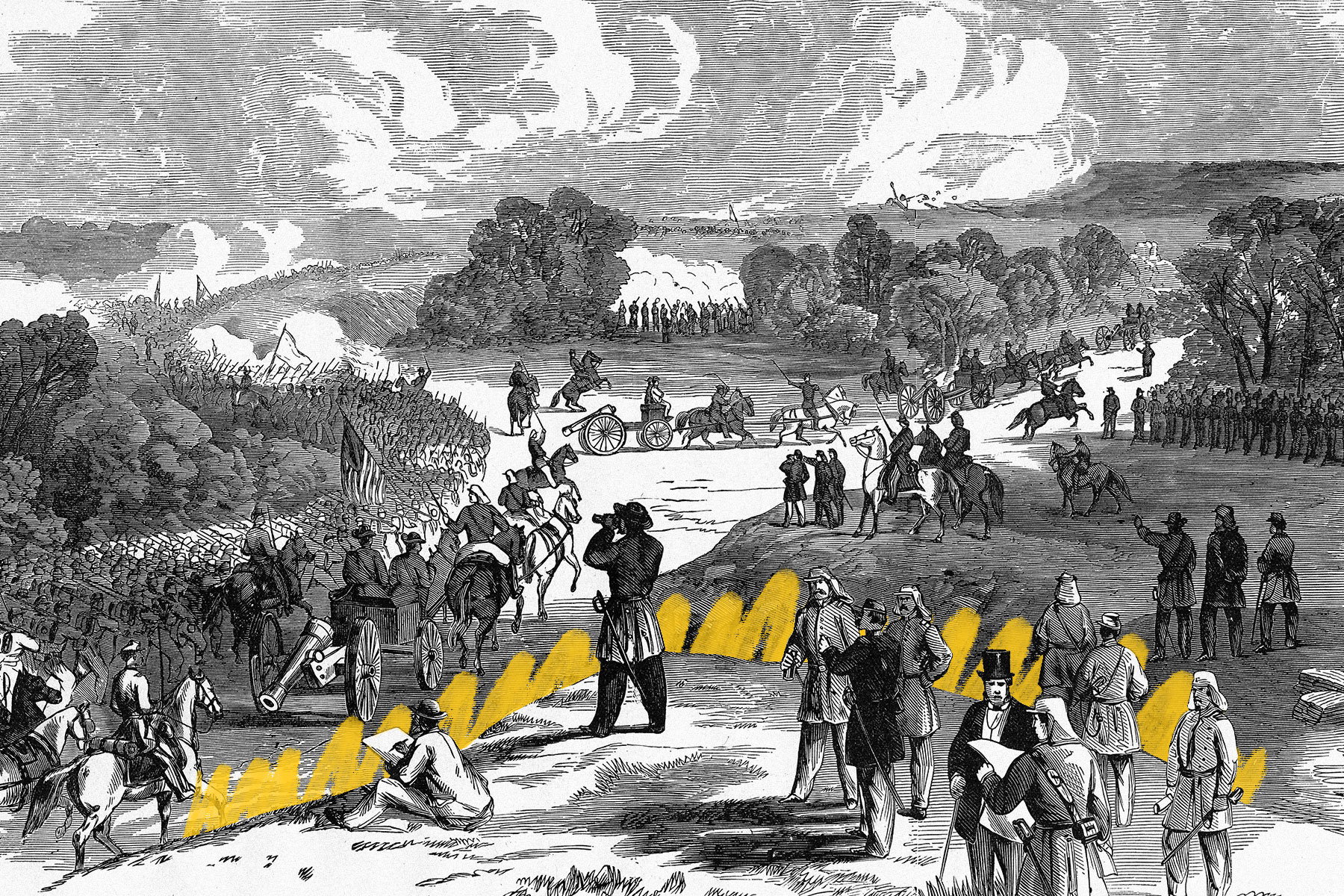

Ferdinand Magellan wasn’t the first person to circumnavigate the globe.

  • Magellan’s ships
Magellan's ships
ZU_09/ DigitalVision Vectors via Getty Images
Author Darren Orf

September 6, 2023

Love it?

Five hundred years ago, no one suspected the 16th-century vessel the Nao Victoria would become the stuff of legend. In 1519, a Portuguese consul called the Spanish carrack “very old and patched up” and unfit to even “sail … to the Canaries.” Nevertheless, the Nao Victoria was chosen for a five-ship expedition, crewed by 270 men, that would come to be known as one of the most significant journeys in the history of human exploration. 

The captain of this unprecedented adventure was Portuguese explorer Fernão de Magalhães, anglicized Ferdinand Magellan. On September 20, 1519, he set sail aboard the flagship Trinidad from Sanlúcar de Barrameda in southern Spain, with an intended destination of the present-day Maluku Islands. Three years and tens of thousands of miles later, the “very old and patched up” Nao Victoria was the journey’s sole surviving ship — and Magellan wasn’t on board. 

Magellan had died in a skirmish in the Philippines in 1521. It was Juan Sebastián Elcano, another mariner on the expedition, who brought the Nao Victoria back to its home port, but Elcano wasn’t the first person to circumnavigate the globe either. Historians believe that honor belongs to an enslaved person named Enrique, whom Magellan seized during the Portuguese conquest of Malacca (in present-day Malaysia) in 1511. 

Enrique served as an interpreter during the historic journey for eight years after his capture, but he abandoned the mission after Magellan’s death. As luck would have it, Enrique was only a little over 1,500 miles from his native land of Malacca. If Enrique found his way home before September 6, 1522 (when the 18 men aboard the Nao Victoria made it home to Spain), he’d officially be the first person to ever circumnavigate the globe — but we’ll likely never know for sure.

The “Mo” in “Motown” stands for “Motor.”

  • Motown records section
Motown records section
Richard Newstead/ Moment via Getty Images
Author Adam Levine

August 31, 2023

Love it?

On January 12, 1959, musician and record producer Berry Gordy founded an independent R&B record label called Tamla Records. A year later, Gordy gave the label a new name, one that achieved immortality in the world of American popular music: Motown Record Corporation, usually referred to simply as “Motown.” The “Mo” in the name stands for “Motor,” a reference to Gordy’s native Detroit, which was nicknamed the “Motor City” because of the central role it played in the American auto industry. The Motown moniker was Gordy’s way of paying tribute to his community and the industry that defined it in the mid-20th century. Before beginning his career in the music industry, Gordy himself even worked in the foundry of the Ford Motor Company, and later on the production line at the Lincoln-Mercury auto plant in Detroit.

The Motown name soon transcended its regional origins to become synonymous with hit records and pop superstardom. The signature “Motown sound” combined elements of R&B, soul music, and mainstream pop, an alchemical blend of musical styles that launched the careers of some of the most legendary recording artists in music history. Over the course of the 1960s and ’70s, Motown Records’ roster of superstars included the Supremes (led by Diana Ross), the Temptations, Stevie Wonder, Marvin Gaye, and the Jackson 5. Motown’s influence on the landscape of American popular music is hard to overstate. In addition to pioneering a new blueprint for writing and recording pop hits, the label became one of the most successful Black-owned businesses of all time, helping African American artists and musicians break into the American mainstream and achieve pop success with audiences of all races. Not bad for an independent record label founded with just $800 in the Motor City.

Only one U.S. national park is named after a person.

  • Viewpoint at the Badlands
Viewpoint at the Badlands
Credit: Lisay/ iStock
Author Sarah Anne Lloyd

August 8, 2024

Love it?

For the most part, America’s 63 national parks are named not after people, but after the cities and towns where they’re located or the geographical features in and around the parks. There are a couple of national parks that indirectly take their names from individuals — for example, Bryce Canyon National Park is named for Bryce Canyon, which is named for Mormon pioneer Ebenezer Bryce — but Theodore Roosevelt National Park is the only park that’s directly named after a person.

Teddy Roosevelt was an avid outdoorsman and conservationist, and made it a priority in his life and presidency to preserve the United States’ natural resources. During his two terms as president, he established the United States Forest Service, protected 150 national forests, and created five national parks. Along with several bird preserves, game preserves, and national monuments, Roosevelt protected around 230 million acres of public land.

Though Roosevelt was a New Yorker, the Little Missouri badlands in North Dakota held a special place in his heart. He first visited the region in 1883 at the age of 24 to hunt big game, and he fell in love with what he called its “desolate, grim beauty.” The next year, his wife and his mother died within hours of each other, and he returned to the area to grieve and established a ranch there. It remained a sanctuary for him throughout his life. After Roosevelt’s death in 1919, a park in the badlands he loved so much seemed like an apt memorial. It took another three decades to map the land and complete the site, but in 1947, Harry S. Truman formally established Teddy Roosevelt Memorial Park, which was designated as a national park in 1978. 

Einstein was the inspiration for Yoda.

  • Yoda, Star Wars Episode V
Yoda, Star Wars Episode V
AJ Pics/ Alamy Stock Photo
Author Bennett Kleinman

August 23, 2023

Love it?

From their unparalleled wisdom to their wispy white hair, physicist Albert Einstein and Jedi master Yoda have quite a bit in common — and that’s no coincidence. In fact, the real-life scientist helped influence the physical look of the beloved Star Wars character. When Yoda was being developed for 1980’s The Empire Strikes Back, Star Wars creator George Lucas hired special effects artist Stuart Freeborn to bring the character to life. By chance, a picture of Einstein happened to hang in the studio where Freeborn worked on the early Yoda puppets. The wrinkled look around Einstein’s eyes eventually made it into Yoda’s final design, coupled with features from Freeborn’s own likeness.

While we all recognize Yoda today, the character almost looked entirely different, and nearly Smurf-like. As seen in The Empire Strikes Back Sketchbook, published in 1980, early concept art for Yoda depicted the great Jedi master as a lanky, blue creature with a long white beard and a pointed hat akin to a garden gnome. Another sketch showed the creature with a handlebar mustache, not quite fitting for the Star Wars universe. Other characters also underwent vast transformations from their original sketches; Chewbacca was originally a tall, thin, and hairy lemur-like creature, whereas Ewoks had long legs like an ostrich. 

Before instant photos, Polaroid created goggles for dogs.

  • Wartime dog with goggles
Wartime dog with goggles
Stocktrek Images, Inc/ Alamy Stock Photo
Author Nicole Villeneuve

August 23, 2023

Love it?

Inventor Edwin Land is often referred to as the “original Steve Jobs.” The founder of Polaroid made a lasting impact on the photography world with the introduction of instant photos in 1948. But even before that, Polaroid experimented with other innovative products, all based on Land’s plastic-sheet light polarizers, patented in 1933. Researchers from General Motors, General Electric, and Kodak were intrigued by the possibilities of polarizer sheets, and Land pioneered a groundbreaking 3D movie process. Kodak became his first customer in 1934, buying the product to use in camera filters, and the following year, American Optical began buying polarizer-laminated sunglass filters, which Land had long thought would be helpful to reduce headlight glare while driving.

Despite Land’s momentum, Polaroid, like many other American companies in 1940, altered its strategy and production to assist World War II efforts. The U.S. government’s Office of Scientific Research and Development recruited Land and his company, and working with the National Defense Research Committee, they created a slew of Polaroid products using polarizer technology for military use: aerial survey equipment, tank telescopes, gunsights, flight training machines, and infrared night viewing devices, to name a few. Among the most commonly used objects that came out of this wartime production were goggles; Life magazine even noted in a February 1944 issue that “every U.S. fire-control instrument is equipped with filters and every second man in combat wears filter goggles. Most of these are produced by the Polaroid Corp.” The goggles weren’t just for humans, either: Polaroid produced special goggles to keep debris out of the eyes of dogs and mules, wartime companions who fulfilled countless important roles on the battlefield, including guarding, rescuing, and transporting materials and even soldiers.

Wagon wheel tracks from the Oregon Trail are still visible.

  • Oregon Trail Wagon
Oregon Trail Wagon
Jeffrey M. Frank/ Shutterstock
Author Sarah Anne Lloyd

August 17, 2023

Love it?

In the grand scheme of world history, the Oregon Trail era wasn’t all that long ago, and the physical marks the wagons left behind are still very much visible in Missouri, Kansas, Nebraska, Wyoming, Idaho, and, of course, Oregon. More than 300 miles of impressions left behind from heavy wagons can still be seen, sending modern-day travelers back in time to the mid-1800s, when hundreds of thousands people made the treacherous journey to America’s West Coast.

The famed path from Missouri to Oregon pushed through many different types of terrain, so each collection of tracks is unique. Some are wide, shallow indentations worn down in soft earth, while others still show individual wheel tracks. In harder terrain, such as sandstone, deep, angled impressions are still visible, some up to 5 feet deep. In a few places, the tracks tell their own story: Ash Hollow State Park in Nebraska still shows deep erosion from a hilly stretch of trail where travelers had to lock their wheels to keep from going too fast along the steep grade.

Following the tracks can give modern-day road trippers a sense of the route that settlers took westward; helpfully, several highways are in roughly the same place as the original trail, so you never have to miss a historic park or roadside marker. Along I-84 in Oregon, even the rest areas have interpretive signage and, occasionally, yet more wheel tracks to transport you back in time.

The Nixon administration tried to deport John Lennon.

  • John Lennon and Yoko Ono
John Lennon and Yoko Ono
JJs/ Alamy Stock Photo
Author Michael Nordine

August 17, 2023

Love it?

You don’t have to imagine Richard Nixon trying to deport John Lennon, because it actually happened, in 1972. The 37th President of the United States was no fan of the former Beatle, whose ballad “Give Peace a Chance” became a rallying cry among anti-Vietnam War activists who believed the best way to end the conflict was to make Nixon a one-term commander in chief. This was highly irksome during Nixon’s 1972 reelection campaign, and the famously vindictive leader responded by sending the Immigration and Naturalization Service (INS) after Lennon, under the pretense that he had been allowed into America improperly since he’d been charged with a marijuana-related misdemeanor in England in 1968.

Their efforts were unsuccessful, in part because Lennon had a little help from his friends. Artists such as Bob Dylan, Joan Baez, Leonard Bernstein, Joyce Carol Oates, and John Updike wrote letters on behalf of Lennon and his wife Yoko Ono. The administration kept pushing for deportation despite the “let them stay in the USA” campaign, and even after Nixon won reelection in a landslide. A year after Nixon resigned in disgrace, a three-judge panel ruled in the musician’s favor, writing in its ruling that “Lennon’s four-year battle to remain in our country is testimony to his faith in this American dream.”

Two months of the year are named after Roman rulers.

  • Julius Caesar & Augustus
Julius Caesar & Augustus
Credit: calvio/ iStock, Benoit Bruchez/ Shutterstock
Author Michael Nordine

July 10, 2024

Love it?

In addition to frequently being the hottest months of the year, July and August share etymological origins: Both are named after Roman rulers. July is named in honor of Julius Caesar, while August is named after his successor and adopted heir, Augustus. Born Gaius Octavius in 63 BCE, Augustus was Caesar’s grandnephew on his mother’s side and became the first Roman emperor following his great-uncle’s assassination. Ancient Rome’s influence on the calendar can also be seen in just about every other month: January is named after the god Janus, February comes to us from a purification festival known as Februa, March is named in honor of Mars, June is named for the goddess Juno, and September, October, November, and December had the same names in the Roman calendar. (The names initially corresponded to the months’ position in the 10-month calendar.)

These are all found in the Gregorian calendar, which most of the world has been using for centuries. It succeeded the Julian calendar first introduced by none other than Caesar himself in 46 BCE. The Gregorian calendar was formed because the Julian calendar slightly overestimated a solar year as lasting 365.25 days, which eventually led to a discrepancy of 10 days. Pope Gregory XIII decided to do something about it in 1582 — leading to October 4 being followed directly by October 15 that year. Time may not be a flat circle, but it’s occasionally open to interpretation.

High heels used to be for men.

  • Baroque high heel
Baroque high heel
picturelibrary/ Alamy Stock Photo
Author Fran Hoepfner

August 18, 2023

Love it?

Long before the days of stilettos and pumps, kitten heels and wedges, high-heeled shoes were worn by men. As far back as the 10th century, Persian soldiers and emissaries wore heels when riding, battling, or traveling to faraway lands. These heels weren’t for show, however; they were for function. When a soldier wore heeled boots on a horse, he was able to better steady himself and generate more balance both for riding and fighting. Persian soldiers were also able to stand upright in their stirrups, positioning their feet so the space between the heel and the sole was snug in the stirrup, which gave them an advantage in battle.

Once heels made their way to Europe in the 16th century, their purpose was much more akin to how we think of these shoes today. Men in the French, Spanish, German, and Russian courts wore heels to project height and physical stature in order to intimidate rivals and foreign diplomats in court. Over the course of the next 200 years, men’s heels got shorter and stockier — making the shoes better for balance and walking, and less of an ornate fashion statement. By the 18th century, high heels faded out of fashion for men, who started to favor less flamboyant clothing and accessories. When women started to wear high heels, the goal was to hide as much of the foot as possible beneath a long skirt. The peeking toe suggested a small foot, showing daintiness. Though sneakers are far more popular than heels today, the concept of the “platform sneaker” suggests that the ethos of the high heel is not yet a thing of the past. 

Harry S. Truman’s middle initial doesn’t stand for anything.

  • Vintage Truman stamp
Vintage Truman stamp
Credit: manley099/ E+ via Getty Images
Author Darren Orf

August 15, 2023

Love it?

Serving as the 33rd President of the United States, Harry S. Truman guided the country out of World War II after the death of his predecessor, Franklin D. Roosevelt, and prepared America for the geopolitical battle ahead: the Cold War. Today, Truman is regarded as one of the nation’s best Presidents, and yet most people probably can’t tell you what his middle initial stands for — because it doesn’t stand for anything. When the future President was born on May 8, 1884, in Lamar, Missouri, his parents couldn’t decide which of Truman’s grandfathers, Anderson Shipp Truman and Solomon Young, to honor with their son’s middle name. Instead, they chose a simple “S” — without a period — for Truman’s middle initial. This atypical name caused some confusion during Truman’s presidential inauguration in 1945, when Chief Justice Harlan F. Stone assigned a middle name to Truman while swearing him into office. He asked the future President to say, “I, Harry Shipp Truman,” but Truman repeated the words with one alteration: “I, Harry S Truman.” Despite the President’s insistence, the name is now officially styled with a period following the middle initial. 

Strangely, Truman isn’t the only U.S. President with an unconventional “S” middle initial. Ulysses S. Grant — whose birth name was Hiram, though he went by his middle name, Ulysses — also has an “S” middle initial that stands for nothing. Unlike Truman’s ambiguous tribute to his ancestors, Grant’s “S” was a simple clerical error. In 1839, Congressman Thomas Hamer nominated Grant to the U.S. Military Academy at West Point. Believing Ulysses to be Grant’s first name and at a loss for his middle initial, Hamer wrote in “S” as a stand-in for the cadet’s mother’s maiden name, Simpson. When Grant arrived at West Point, he tried to get the error fixed, but to no avail, and the “S” eventually even appeared on his diploma. The error proved prophetic — after all, U.S. Grant is a pretty good name for any future President.