


5 Bizarre Medieval Battle Tactics

  • Olga’s revenge on the Drevlians
Olga's revenge on the Drevlians
Credit: Heritage Images—Hulton Archives/Getty Images
Author Tony Dunnell

March 4, 2026

Love it?

Medieval warfare conjures up images of knights charging on horseback, archers raining down hails of arrows, armored infantry clashing in the chaos of battle, and prolonged sieges lasting for months. These were all part of the conventional tactics that dominated battlefields in the Middle Ages. But military commanders also employed some genuinely unconventional — and at times bizarre — tactics that reveal a stranger, often darker side of medieval combat. 

From catapulting odious projectiles to getting the enemy drunk, these unusual methods demonstrate how deception, ingenuity, and sheer audacity sometimes trumped standard military doctrine. Here are some of the strangest battle tactics employed by cunning commanders during the medieval period.

Credit: Heritage Images—Hulton Archives/Getty Images 

Fighting on Ice

On April 5, 1242, the frozen surface of Lake Peipus (between modern-day Estonia and Russia) hosted one of history’s strangest — and certainly most slippery — battlefields. When the Teutonic Knights prepared to face Prince Alexander Nevsky’s Russian forces, Nevsky used the terrain to his advantage: He took up a strong defensive position on the shore of Lake Peipus and waited for the approaching knights — around 2,500 of them — to cross the ice. 

The ice made it hard for the approaching crusaders to maneuver. The Russian forces, meanwhile, were lightly armored and familiar with winter warfare, and could more easily hold their defensive position. When the two forces engaged, the knights began slipping on the ice, and the precarious terrain sapped their strength. When the knights were exhausted, Nevsky unleashed his cavalry to finish them off. According to some accounts, many Teutonic Knights died in the retreat when the frozen surface cracked, further contributing to the chaos of the so-called “Battle on the Ice.” 

You may also like

Why Is Table Salt Iodized?

  • Iodine
Iodine
Credit: Ben Mills/ Wikimedia
Author Bess Lovejoy

February 26, 2026

Love it?

It’s probably sitting in your kitchen cabinet right now: a container of salt, maybe the familiar blue Morton Salt canister with the little girl carrying an umbrella, with the word “iodized” somewhere on the label.

The curious fact that most table salt contains iodine — a trace mineral — is the result of a long chain of historical discoveries. The story begins with seaweed ash and gunpowder, runs through a scientific priority battle, and ends with one of the most effective nutritional interventions ever devised. Adding iodine to salt helped vanquish a problem that had plagued humankind for millennia — and the effects occurred within a single generation.

Credit: Ludmila/ Adobe Stock 

A Violet Vapor in a Seaweed Vat

The story of iodine starts in 1811, toward the end of the Napoleonic Wars, when French chemist Bernard Courtois was searching for a new way to make saltpeter, or potassium nitrate, a crucial ingredient in gunpowder. France was running out of wood — the traditional source of saltpeter via wood ash — and the government urgently needed alternatives. Seaweed, abundant along the coast of Normandy, seemed promising.

Courtois used sulfuric acid to clean his tanks, and one day, after a particularly strong batch of acid had been applied, he noticed something unusual: a billowing of violet vapor. When the vapor condensed, it left purplish-black crystals that gleamed on the sides of the vats. Courtois had unknowingly isolated a new element.

He reported his discovery in 1813 in the Annales de chimie, in a paper titled “Découverte d’une substance nouvelle dans le vareck” — vareck being the French word for washed-up seaweed. On the second page of that paper, Courtois labeled the new substance iode, the French form of “iodine,” after the Greek word for “violet-colored,” ἰοειδής (ioeidḗs).

Within months, two major scientists — English chemist Humphry Davy and French chemist Joseph-Louis Gay-Lussac — independently studied Courtois’ samples and claimed to have isolated and identified the element. A scientific priority quarrel followed, but a surprisingly polite one. Both men ultimately credited Courtois as the true discoverer.

It was Davy who suggested “iodine” as the English term, aligning with elements such as chlorine (both belong to the same group of elements, the halogens). The element was officially ushered into the chemical pantheon in 1813, and its biological importance became clear almost immediately.

You may also like

When Did Companies Start Designing Products To Fail?

  • Limited warranty stamp
Limited warranty stamp
Credit: Olivier Le Moal/ iStock via Getty Images Plus
Author Nicole Villeneuve

February 26, 2026

Love it?

When our gadgets slow down after an update or come with batteries that are impossible to replace, it’s hard not to wonder if they’re designed to fail in order to force us to buy something new. This is known as planned obsolescence — the idea that products are intentionally made to wear out and be replaced quickly. And while it may feel like a recent phenomenon, companies designing products with a built-in limited lifespan began much earlier than you may think.

Credit: Interim Archives/ Archive Photos via Getty Images 

The Light Bulb Cartel

One of the earliest examples of what we now know as planned obsolescence involved a seemingly mundane object: the light bulb. By the early 1900s, incandescent bulbs were capable of lasting up to 2,000 hours (or roughly 83 full days). That durability, while impressive, was bad for business. So in 1924, several major light bulb manufacturers including General Electric, Philips, and Osram formed a secret group known as the Phoebus cartel. 

Together, they agreed that the bulbs they manufactured shouldn’t last longer than 1,000 hours; shorter-lived bulbs meant more frequent replacements and therefore steadier sales. The cartel disbanded during World War II, and was later uncovered by antitrust investigations that revealed the extent of its coordination. But the idea had been planted: Companies didn’t have to simply respond to the natural wear and tear of a product — they could decide how long it should last. 

You may also like

The Short-Lived Republic of West Florida

  • East and West Florida, 1810
East and West Florida, 1810
Credit: Darling Archive/ Alamy
Author Kristina Wright

February 26, 2026

Love it?

In the early 19th century, as the United States pushed steadily south and west, the nation’s map was far less settled than it is today. Borders shifted, treaties were creatively interpreted, and distant empires claimed lands they could barely govern. 

On the American frontier, settlers often lived in a gray zone — technically under a nation’s flag, but more or less governing themselves. Out of that uncertainty emerged one of the strangest chapters in U.S. history: a republic that survived for just two and a half months.

The Republic of West Florida’s brief existence began in the fall of 1810, when Anglo-American and British settlers in Spanish territory staged a revolt and declared independence from Spain — only to see their fledgling nation absorbed, almost immediately, by the United States. Here’s a look at the strange story of West Florida.

Credit: Sepia Times/ Universal Images Group via Getty Images 

It Wasn’t the Florida We Know

To understand West Florida, you have to set aside modern geography. This was not the western half of today’s Sunshine State. In fact, none of the short-lived republic’s territory lies in modern Florida. West Florida was a narrow strip of Gulf Coast land stretching from the Mississippi River east to the Perdido River — territory that now falls mostly within Louisiana, Mississippi, and Alabama.  

The name Florida dates back to Spanish exploration in the 1500s, when Juan Ponce de Leon named the peninsula La Florida — referring to Pascua Florida, the Spanish Easter season during which he first sighted the land. By the 18th century, the Perdido River served as the boundary between West Florida and East Florida, with the latter encompassing most of the peninsula that later became the modern state of Florida.

The region’s political identity shifted repeatedly during the 18th century. Originally claimed by Spain, it passed to British control in 1763 after the French and Indian War. Britain divided its holdings into East Florida and West Florida, establishing administrative borders that outlived British rule. When Spain regained the territory after the American Revolution, it kept those British-era boundaries and governed East and West Florida as separate colonies.

By 1810, both East and West Florida remained  Spanish colonies, but in West Florida the empire’s grip was weak. Spain was strained by wars in Europe and independence movements across Latin America. Out on the Gulf Coast, Spanish officials were underfunded and undermanned — and settlers in the region, whose cultural and economic ties leaned toward the United States rather than distant Spain, were ready for change. East Florida, which was centered on St. Augustine and more dependent on Spanish military support, remained comparatively loyal to Spain.

You may also like

How Was Mail Delivered Before House Numbers?

  • Postal worker, 1958
Postal worker, 1958
Credit: Harold M. Lambert/ Archive Photos via Getty Images
Author Timothy Ott

February 19, 2026

Love it?

Though mail is almost an afterthought today with the amount of correspondence conducted online, we can still count on bills, holiday cards, and various other goodies to arrive with the mail carrier’s visit. 

The daily post enabled the exchange of information before radio, television, or the internet — and it wasn’t always an easy feat. Mail trucks and planes do the heavy lifting now, but delivery once depended on the pace of trains and steamboats, and before that the physical capabilities of equestrian and human carriers.

Another complicating factor was the lack of an established street address system for a good chunk of U.S. history. Given all these complications, one could be forgiven for wondering just how mail ended up in the right hands without an exorbitant number of mistakes in the olden days. Here’s a look at how the Post Office Department, the precursor to the United States Postal Service (USPS), found its way.

Credit: Image courtesy of the National Archives 

Early Mail Service Required a Trip to the Post Office

The first post office in the American colonies was established in a Massachusetts tavern in 1639, with the first intercolonial systems surfacing in the 1670s. In this era of sparse settlements, mail delivery was often handled by enslaved people or Native American carriers who knew the terrain well.

By 1789, when a Congressional Act under the brand-new U.S. Constitution placed the postmaster general under the power of the executive branch, there were 75 post offices and some 2,400 miles of post roads spread along the Eastern Seaboard. While this ensured mail access for most Americans, people needed to travel to the nearest post office to retrieve it.

There were exceptions to this rule. Benjamin Franklin, who became deputy postmaster of the colonies in 1753 and later the first postmaster general of the United States, established the “penny post” home delivery service in Philadelphia for a fee. 

Several of the private mail companies that materialized in the 1800s also would deliver mail to a recipient’s door, while a postmaster in a smaller town, such as a pre-presidential Abraham Lincoln, might find time to stop by the homes of those unable to retrieve their mail. By and large, however, home delivery service was not a reality for most Americans before the Civil War.  

You may also like

5 Things Movies Get Wrong About the Medieval Era

  • Scene from “Tristan & Isolde”
Scene from “Tristan & Isolde”
Credit: Moviestore Collection Ltd/ Alamy
Author Michael Nordine

February 19, 2026

Love it?

There’s a reason you’ve never heard Nicole Kidman say, “We come to this place for a history lesson,” in her AMC commercials. Movies don’t have the best track record when it comes to historical accuracy, especially where the Middle Ages are concerned. Some dubious medieval tropes show up more than others, of course, and these are five of the biggest offenders.

Credit: 20th Century-Fox/ Archive Photos via Getty Images

Prima Nocta

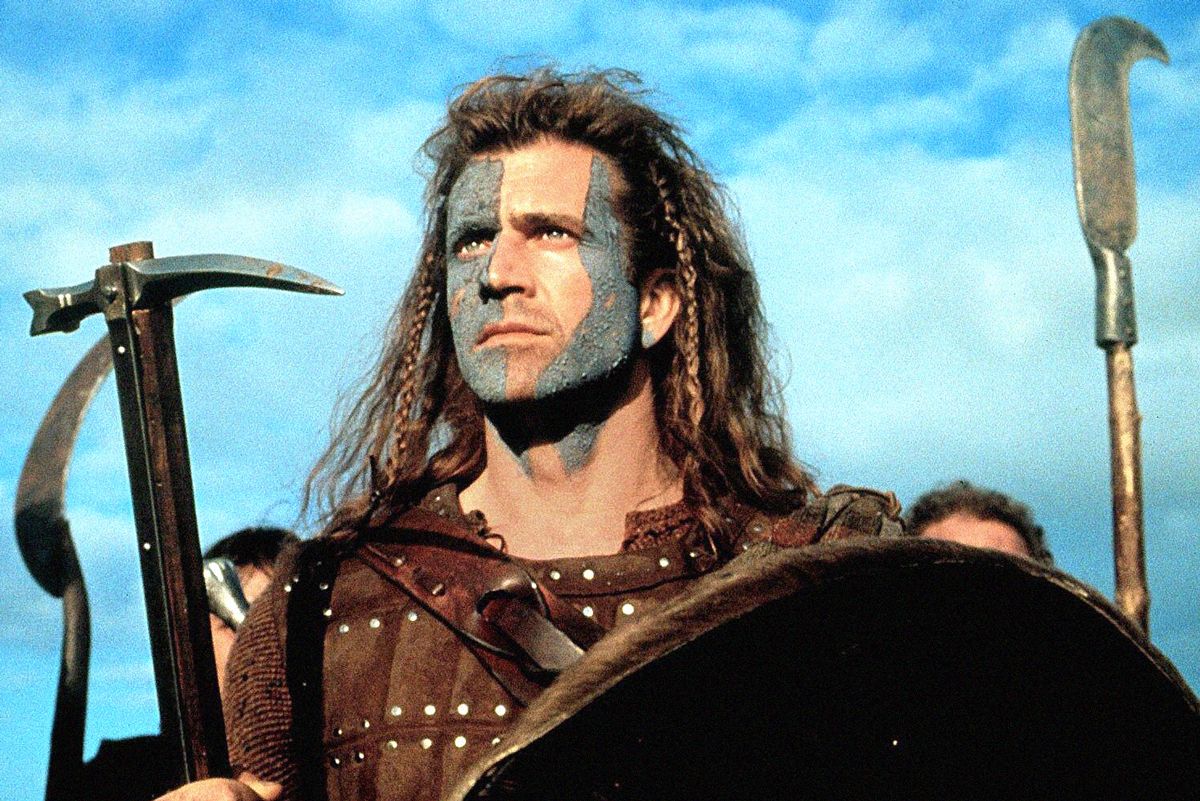
In one of Braveheart’s most upsettingly memorable scenes, Edward Longshanks invokes prima nocta (Latin for “first night”): the right of a feudal lord to sleep with any female subject he so desires, especially on her wedding night. Not only does Hollywood often get the name wrong — it’s more accurately known as either droit du seigneur (“right of the lord”) or jus primae noctis (“right of the first night”) — but the practice most likely never existed. Braveheart is (in)famous for its historical inaccuracies, few of which have seeped into the collective imagination quite like this one. The tradition has been referenced in everything from Avengers: Age of Ultron to The Office, always as prima nocta — a sign that the writers in question first heard of it from Braveheart rather than any historical source.

You may also like

5 Forgotten Desserts Your Grandparents Loved

  • Chocolate mayonnaise cake
Chocolate mayonnaise cake
Credit: Brian Hagiwara/ The Image Bank via Getty Images
Author Nicole Villeneuve

February 12, 2026

Love it?

Americans’ eating habits have changed a lot throughout the country’s history, and not unlike breakfast, lunch, and dinner staples, dessert choices tend to look very different today than they did a few generations ago. 

In the late 1800s and early 1900s, desserts were shaped by the ingredients and circumstances of the era. Until the mid-20th century, most of the U.S. didn’t have year-round access to fresh foods; economic downturns, food rationing, and periodic shortages during certain seasons were a normal part of life. Home cooks thus had to be thrifty and creative, turning whatever was affordable, seasonal, or already on hand into something tasty. Here are a few dessert dishes from your grandparents’ era that have all but disappeared today.

Credit: Oksana_S/ iStock via Getty Images Plus 

Junket

For much of the late 19th and early 20th centuries, a custardlike dessert known as junket was a mainstay on American tables. Junket originated as a European dessert in the Middle Ages, made by gently warming milk and setting it with animal rennet, an enzyme traditionally used in cheesemaking. It required no baking, no eggs, and very little sugar, along with a little nutmeg or vanilla. The result was a softly set dessert with a texture somewhere between a pudding and a jiggly gelatin.

Junket’s rise in the U.S. started around 1886. That’s when Danish company Chr. Hansen’s Laboratory began marketing rennet tablets, sold in a box that included a recipe for junket. By the early 20th century, rennet tablets and presweetened, flavored powdered mixes that eliminated the need for additional sugar, vanilla, and nutmeg were widely available. Recipes and advertisements appeared regularly in newspapers, calling the dessert nutritious and easily digestible; it was pitched as ideal for children or anyone recovering from illness.

By the 1970s, junket custard had largely faded in popularity. Refrigerated desserts such as Jell-O and boxed puddings replaced junket as a staple, though the dessert does survive today — mostly as a specialty item at select stores. 

You may also like

5 Famous Figures Who Nearly Made the Olympics

  • Geena Davis tests for the Olympics
Geena Davis tests for the Olympics
Credit: Jim Pozarik/ Hulton Archive via Getty Images
Author Tony Dunnell

February 12, 2026

Love it?

In 67 CE, the Roman Emperor Nero decided to take part in the Olympic Games. He competed in a number of events, including chariot racing, singing, poetry, and lyre playing. Needless to say, the eccentric emperor made sure he was declared the winner in each discipline — including the chariot race, despite him falling out of his chariot and never finishing the event. 

Other famous figures have made far more dignified appearances in the modern Olympics. George S. Patton, one of the United States’ most famous military generals, competed in the modern pentathlon at the 1912 Games in Stockholm, finishing in fifth place. Johnny Weissmuller was a superstar in the pool, winning five gold medals, before he became famous on the silver screen as Tarzan. Other notable celebrity Olympians include bestselling author Benjamin Spock (gold medal in rowing), Jessica Springsteen (Bruce’s daughter, equestrian), and Caitlyn Jenner, who won gold and broke the world decathlon record at the 1976 Montreal Games.

Of course, for every athlete who makes it to the Games, countless others fall short of their dreams, including some celebrities who went on to achieve success in entirely different fields. Here are five famous figures you may be surprised to learn nearly made the Olympics. 

Credit: Rick Maiman/ Sygma via Getty Images 

Geena Davis

Academy Award-winning actress Geena Davis took up archery at age 41 after becoming fascinated by the sport while watching the 1996 Atlanta Games. She’d already established herself as an A-list actress by that point, having portrayed Thelma Dickinson in Thelma & Louise (1991) and the baseball-playing Dottie Hinson in A League of Their Own (1992), but archery was calling. 

In 1997, she found a coach and dedicated herself completely to the sport for two years. She won local and national tournaments and soon found herself competing against 300 other women vying for a place on the U.S. Olympic archery team for the 2000 Sydney Games. She finished in 24th place — a highly respectable achievement, but not quite enough to make it to the Olympics. 
You may also like

The Strangest Military Fashion Through History

  • French Zouave
French Zouave
Credit: ilbusca/ iStock
Author megneal

February 12, 2026

Love it?

Military uniforms are nearly as old as organized warfare itself. Armies in ancient Egypt and Mesopotamia wore coordinated dress and equipment as early as 3000 BCE. This included helmets, shields, and distinctive garments that helped identify soldiers while signaling rank, loyalty, and authority. Although these early outfits were not uniforms in the modern sense, they served the same two goals that most military dress has always balanced: practicality on the battlefield and symbolic display.

Long before camouflage and synthetic fabrics, military clothing often prioritized visibility and impact over concealment or comfort. Bright colors cut through the smoke of black-powder battles, towering hats and exaggerated silhouettes made troops appear larger and more intimidating, and ornate details reinforced discipline, tradition, and national pride. Here are some of history’s strangest military fashions, from elaborate uniforms that prized showmanship over function to practical gear that defied convention.

Credit: Duane Howell/ The Denver Post via Getty Images 

Mountain Division Ski Uniforms 

The U.S. Army’s 10th Mountain Division was created during World War II for mountain and winter warfare, with troops trained in skiing, climbing, and high-altitude survival at Camp Hale, Colorado. Its soldiers wore specialized cold-weather and ski gear that looked very different from standard Army uniforms. The attire included wool shirts and trousers, layered ski parkas reversible for snow camouflage, white over-trousers, ski boots, goggles for glare protection, and white wooden skis.

The distinctive white camouflage and layered clothing reflected function over form, prioritizing warmth, flexibility, and survival in extreme conditions. Despite looking unconventional, the uniform proved highly effective during combat in the harsh Italian Apennines.

You may also like

What Did History’s Most Important Moments Smell Like?

  • Queen Victoria on wedding day, 1840
Queen Victoria on wedding day, 1840
Credit: whitemay/ iStock
Author Kristina Wright

February 11, 2026

Love it?

Think about the historical moments you’ve learned about over the course of your life — scenes shaped by textbook descriptions, famous photographs, paintings, or old newsreels. Some historical events left tangible evidence behind: documents, tools, clothing, buildings, and personal objects that help anchor those happenings in the real world. By the late 19th and early 20th centuries, many of history’s turning points were even documented with sound, preserved on scratchy recordings or early film.

But there’s one sense that we rarely consider when talking about the past: what history smelled like. It’s not something most of us have considered because it’s not usually possible to bottle or archive an odor from the past. Still, the historical moments that we know so much else about had distinct smells shaped by their environment. When we pause to imagine the smell of pivotal events, history becomes less distant and more immediate. Here’s what some of the most important moments in history likely smelled like.

Credit: Picture Post/ Hulton Archive via Getty Images

The First Olympic Games (776 BCE) 

The first recorded Olympic Games, held at Olympia, Greece, in 776 BCE, unfolded in air thick with oil, dust, and body odor. Athletes often competed nude with their bodies massaged and coated in olive oil that smelled fresh, grassy, and faintly bitter, clinging to skin warmed by the sun. Mixed with this was the sharp, salty odor of sweat from unwashed bodies, intensified by days of exertion, heat, and close proximity in training and competition areas, where physical contact further concentrated these smells.

Underfoot, dry earth and trampled grass released dusty, mineral scents as crowds moved through the grounds. Animal dung from pack animals, human waste in nearby latrines, and food scraps added to the odors. Herbal garlands of laurel, thyme, and wildflowers contributed pleasant aromas, while animal sacrifices to Zeus created a heavy odor of greasy smoke and charred meat that lingered throughout the area. It was a smell of dedication and competition, marking the Olympics as both a religious festival and a test of physical excellence.
You may also like