
Why Is a Piece of Paper 8.5 by 11 Inches?

  • Papermaking, 1809
Papermaking, 1809
Credit: © Science & Society Picture Library—SSPL/Getty Images
Author Bess Lovejoy

March 19, 2026

Love it?

If you’ve ever wandered the aisles of an office supply store, you may have noticed something curious: For all the different pens, folders, and desk gadgets on display, paper doesn’t offer much in the way of variety. In the United States, the go-to sheet of printer paper is 8.5 inches wide and 11 inches long, and it has been for decades. So who made that call?

Credit: © Hulton Archive/Getty Images

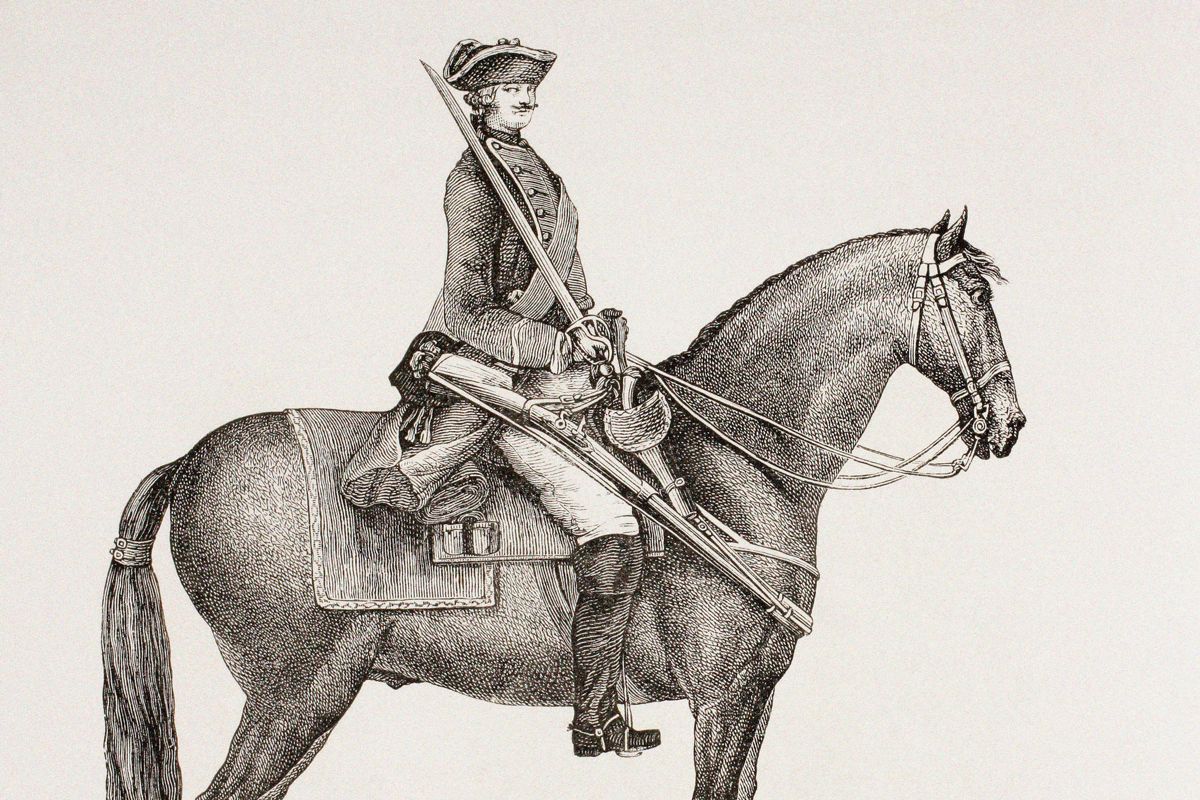
The answer goes back to the 1600s, when Dutch papermakers used wooden molds to form sheets of paper from big vats of watery pulp. The molds had to be big enough for the vatman — the worker handling the frame — to lift and shake comfortably. Through trial and error, papermakers settled on molds roughly 44 inches long, the average span of a worker’s outstretched arms. When that large sheet was quartered, the resulting pieces measured about 11 inches on their long side.

The origin of the width is less certain, but historians point to the molds’ original 17-inch dimension. Halved, that produced the familiar 8.5-inch width. In other words, the size of the modern office memo may be the legacy of how far a 17th-century worker could stretch their arms.

You may also like

Did Victorian Women Really Faint All the Time?

  • Victorian woman fainting
Victorian woman fainting
Credit: © Universal History Archive—Universal Images Group/Getty Images
Author Nicole Villeneuve

March 19, 2026

Love it?

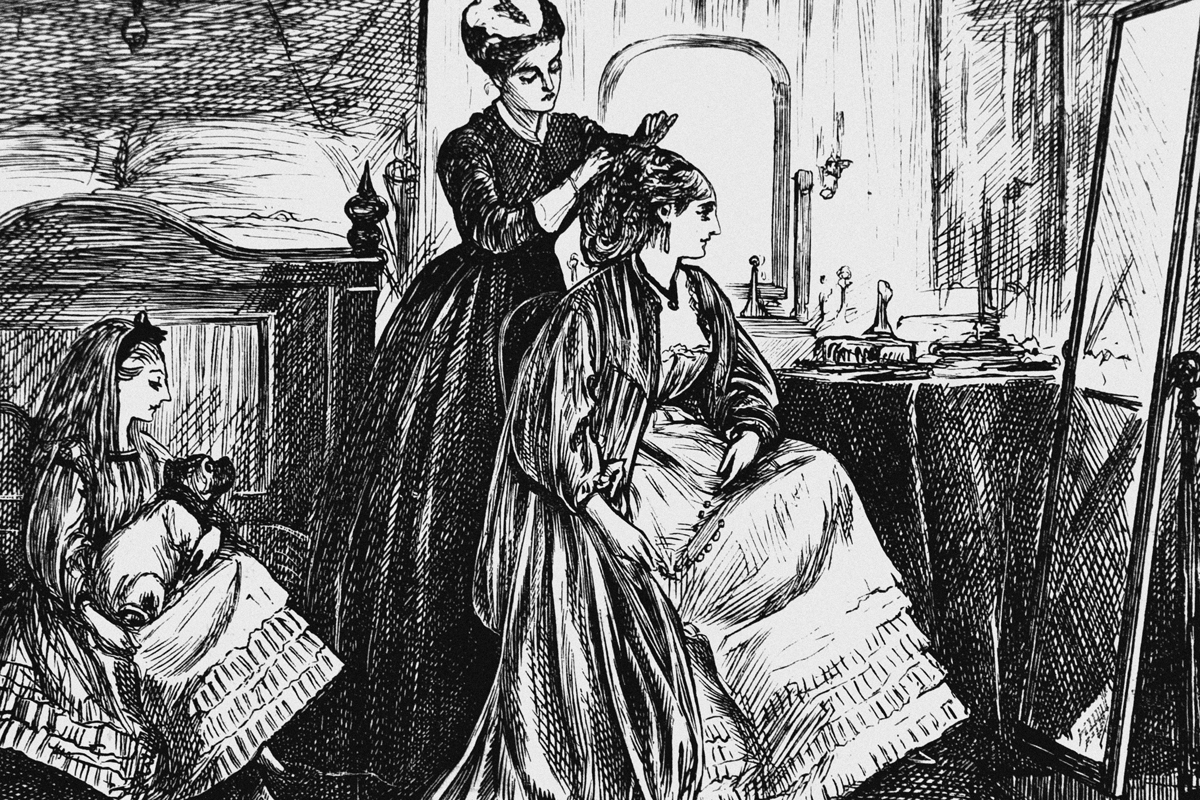
It’s one of the most enduring images of the 19th century: a Victorian lady, corseted and coiffed, collapsed on a fainting couch. The idea appears repeatedly in literature and period dramas, and has become a kind of shorthand for the female condition during Queen Victoria’s reign. But did women of the era really swoon so easily and so frequently?

There are certainly many reasons to believe fainting was common; life in Victorian England wasn’t always the most sanitary or healthy, and women’s clothing was often elaborate and restrictive. But while these factors explain occasional collapses, they don’t tell the whole story. 

Credit: © Sepia Times—Universal Images Group/Getty Images

A Literary Trope

In the mid-18th century, novels started to become popular in Britain, and a social tradition known as the culture of sensibility dominated the evolving medium, rooted in Enlightenment ideas about moral improvement. Literary works celebrated emotion as a sign of morality, depicting weeping and fainting — by both women and men — as signals of virtue.  

The tradition continued into the 19th century. Fainting was still a common trope, but it was often framed as “swooning,” a softer, more romantic take that made it a natural fit for fiction — and usually, though not exclusively, for female characters. Writers such as Charles Dickens and Charlotte and Emily Brontë frequently used fainting not as a medical event but as a dramatic plot device that portrayed shock, fear, repression, or being overcome with emotions. 

You may also like

Why Did Doctors Stop Making House Calls?

  • Country doctor leaving home, 1949
Country doctor leaving home, 1949
Credit: © Bettmann Archive/Getty Images
Author Kristina Wright

March 17, 2026

Love it?

There was a time when seeing the doctor didn’t mean sitting in a crowded waiting room or logging in to a patient portal. Instead, the doctor came to you, carrying a black bag and bringing their expertise and equipment to your bedside.

Today, health care looks very different. We drive to medical campuses filled with imaging suites and labs, check in electronically, and have our patient notes transcribed by AI. The transformation has been so complete that it can be hard to imagine the house call was a central feature of American medicine little more than a century ago. So what changed?

Credit: © Debrocke/ClassicStock—Archive Photos/Getty Images 

When House Calls Were the Norm

From the earliest days of American medicine through the early 20th century, house calls were a routine part of medical care in the United States. Physicians regularly traveled to patients’ homes in cities and rural areas alike. In 1930, approximately 40% of physician visits were house calls, according to the New England Journal of Medicine.

Most doctors were general practitioners who worked with patients of all ages. They delivered babies, set fractures, drained infections, treated pneumonia and influenza, and managed chronic illnesses. Medications were often dispensed directly from the physician’s bag. Payment could be made in cash or, particularly in rural areas, in goods or services.

Doctors did maintain offices, but they were often modest — sometimes located in the physician’s home — and equipped with limited diagnostic tools. Hospitals existed, but they were typically reserved for surgery, serious trauma, or advanced illness. Much everyday medical care happened in the home.

You may also like

Popular Breakfast Foods That Used To Be Dinner Foods

  • Chicken and waffles
Chicken and waffles
Credit: © Joshua Resnick/stock.adobe.com
Author Kristina Wright

March 12, 2026

Love it?

Why do pancakes remind us of a lazy Sunday morning ritual but seem like a strange choice at 7 p.m. on a weekday? And why do we whip up an omelet before work but rarely think to serve eggs for dinner? Many of the foods we now associate with breakfast weren’t always tied to the first meal of the day. Indeed for much of history, the idea of “breakfast foods” didn’t exist at all.

While breakfast has been around for centuries, the modern concept of it as a specialized category of food emerged primarily in the late 19th and early 20th centuries. Before the Industrial Revolution, meals were shaped largely by agricultural labor cycles and household food availability, and people commonly ate similar foods throughout the day. Industrialization transformed daily life by imposing standardized work hours and commuting routines, creating demand for quick, portable, and easily digestible morning meals. 

Meanwhile, the rise of packaged foods, advertising, and mass media introduced new ideas about nutrition, health, and productivity, helping define what breakfast should look like. Here are six foods that once graced the dinner table but have become associated primarily with breakfast.

Credit: © Roy Morsch—The Image Bank/Getty Images

Pancakes

In colonial America and through much of the 19th century, pancakes — also known as flapjacks, hoecakes, johnnycakes, or slapjacks — were served not just at breakfast but also for dinner (the day’s main midday meal, or what we’d call lunch today) and supper. Early American cookbooks, such as American Cookery (1796), include multiple versions of pancakes made from wheat flour or cornmeal. They might be eaten with butter, molasses, maple syrup, or alongside savory dishes and meat drippings. Rather than belonging to a specific mealtime, pancakes functioned much like bread: inexpensive, filling, and adaptable.

Their tighter identification with breakfast developed gradually in the late 19th and early 20th centuries. As printed breakfast menus became more standardized in hotels, restaurants, and eventually diners, pancakes appeared more consistently as a morning offering. Commercial baking powder made lighter cakes easier to prepare, and affordable syrup brands such as Long Cabin and Aunt Jemima (introduced in 1887 and 1888) reinforced the pairing of pancakes with sweet toppings and the morning meal. By the mid-20th century, pancakes were culturally framed almost exclusively as breakfast food, and their long history as an all-day staple was largely forgotten.

You may also like

Things You Didn’t Know About 7 Famous Paintings

  • Saint-Paul-de-Mausole asylum
Saint-Paul-de-Mausole asylum
Credit: © Jose Nicolas—The Image Bank Unreleased/Getty Images
Author Kristina Wright

March 12, 2026

Love it?

Whether you love wandering through museums or only studied art back in school, chances are you recognize many of the world’s most iconic paintings on sight. These images appear everywhere — on posters and calendars, in movies and magazines, on book covers and social media feeds. History’s most famous paintings are reproduced so widely that most of us encounter their images hundreds or even thousands of times over the course of our lives, even if we never see the originals in person.

With so much exposure, it’s hard to be surprised by these works. But many masterpieces contain little-known stories that can permanently change how we see them. Here are surprising facts about some of the most recognizable paintings in Western art.

Credit: © Alfredo/stock.adobe.com

“Mona Lisa” Wasn’t Her Name

Mona Lisa isn’t the name of the woman in Leonardo da Vinci’s famous portrait. “Mona” is a shortened form of Madonna, meaning “lady” in Italian, and the sitter is widely believed to be Lisa del Gherardini, the wife of Florentine silk merchant Francesco del Giocondo. The painting’s name, then, simply means “Madam Lisa.” The title likely emerged as a respectful way to identify the subject rather than a personal name, a convention common in Renaissance Italy.
Leonardo’s careful sfumato technique is a major reason the portrait became so enduring. By layering thin, translucent glazes of paint, he created the famously elusive smile, which seems to shift depending on the viewer’s angle and focus. Rather than depicting a single fixed expression, Leonardo designed an expression that subtly changes with human perception — and that face has fascinated audiences for more than five centuries.

You may also like

The Hidden Histories of Your Favorite Fonts

  • Typing on a typewriter
Typing on a typewriter
Credit: © pressmaster/stock.adobe.com
Author Tony Dunnell

March 12, 2026

Love it?

When we create a document, send an email, or design a logo, we’re able to choose from a wide array of typefaces to find the perfect font. Most of the time, we don’t give much thought to these fonts, apart from the way they look. But these are much more than just collections of letters. 
Many fonts are products of history, commissioned for particular purposes and often named in ways that reveal surprising connections to the wider world. Here are the fascinating histories behind seven of the world’s most recognizable fonts.

Credit: © Maurice Savage/Alamy

Times New Roman

In 1929, Stanley Morison, a noted type designer, criticized the London newspaper The Times for being typographically outdated, its narrow shapes and thin lines making it hard to read in print. Rather than push back against the criticisms, the newspaper challenged the designer to come up with something better. In collaboration with draftsman Victor Lardent, Morison spent the next year creating a new font designed specifically for the narrow columns and dense layout of the newspaper, providing improved economy of space without sacrificing readability. 

The resultant font, which debuted in The Times on October 3, 1932, was named Times New Roman, because the newspaper’s previous typeface had informally been referred to as Times Old Roman. While they didn’t realize it at the time, Morison and Lardent had created what would become the world’s most famous serif typeface (lettering with small decorative strokes at the ends) — a status cemented in the 1990s when Times New Roman became the default font for Microsoft Office. 

You may also like

The Weirdest Cars Ever Made

  • Peel P50 car, 1964
Peel P50 car, 1964
Credit: © National Motor Museum/Heritage Images—Hulton Archive/Getty Images
Author Tony Dunnell

March 12, 2026

Love it?

Automobile designers and engineers have often pushed boundaries to make faster, sleeker, and more attractive cars. But sometimes that effort results in vehicles so eccentric that the world looks on in bemusement. 

These automotive oddities aren’t necessarily bad cars, but they certainly stand out for being well beyond the norm, whether it’s a vehicle so tiny it can fit through a doorway or a propeller-powered safety hazard. Here are seven of the most curious cars ever presented to an unsuspecting public.

Credit: © Jim/stock.adobe.com

Leyat Helica

In 1913, French biplane designer Marcel Leyat had what he believed was a brilliant idea: Why not put an airplane propeller on the front of a car? The result was the Leyat Helica — basically a wingless plane on wheels, with a massive wooden propeller mounted directly to the front. The first production model appeared in 1921, but despite some initial interest, only 30 were ever built. 

Leyat’s car had a few issues, but one stood out: It was spectacularly unsafe. The lightweight vehicle had rear-wheel steering, minimal brakes, a top speed of 106 mph, and a giant spinning blade where most cars would have a grille. Thankfully for pedestrians, pigeons, and anything else that stood in the way of the propeller-driven death trap, the Leyat Helica never took off. 

You may also like

6 Historical Dramas Competing for Oscar Glory

  • Scene from “Hamnet”
Scene from “Hamnet”
Credit: © 2025 Hera Pictures/Neal Street Productions/Amblin Entertainment/Book of Shadows/Amblin Partners/Focus Features/Universal Pictures
Author Michael Nordine

March 4, 2026

Love it?

“Oscar bait” and “period piece” aren’t exactly synonymous, but there’s certainly a lot of overlap. Biopics and historical dramas tend to feature prominently throughout awards season, and this year has been no exception. 

Only four of the 10 Best Picture nominees at the 2026 Oscars take place in the present day (Bugonia, F1, One Battle After Another, and Sentimental Value), while two are set in the past but aren’t exactly historical (Guillermo del Toro’s take on Frankenstein and Ryan Coogler’s superlative vampire flick Sinners). 

The historical dramas nominated for an Academy Award this year, including but not limited to Best Picture, take place everywhere from 16th-century England to 1970s Brazil and tell an equally wide range of stories. Here are all six of them.

Credit: © FlixPix/Alamy 

Blue Moon

You might not know Lorenz Hart by name, but you’ve almost certainly heard his music. The famed lyricist is the wordsmith behind “My Funny Valentine,” “Manhattan,” and “Blue Moon,” among many other tunes; he disliked being known for the last of these, which is part of why Richard Linklater cheekily named his biopic about Hart after the classic song. 

Ethan Hawke earned a Best Actor nomination for his portrayal of Hart, while screenwriter Robert Kaplow is up for Best Original Screenplay. The entire movie unfolds over one night in 1943 as Hart is forced to endure the success of Oklahoma!, which his former writing partner Richard Rodgers wrote with Oscar Hammerstein II — a development our protagonist doesn’t exactly greet with joy for his longtime friend and collaborator.

You may also like

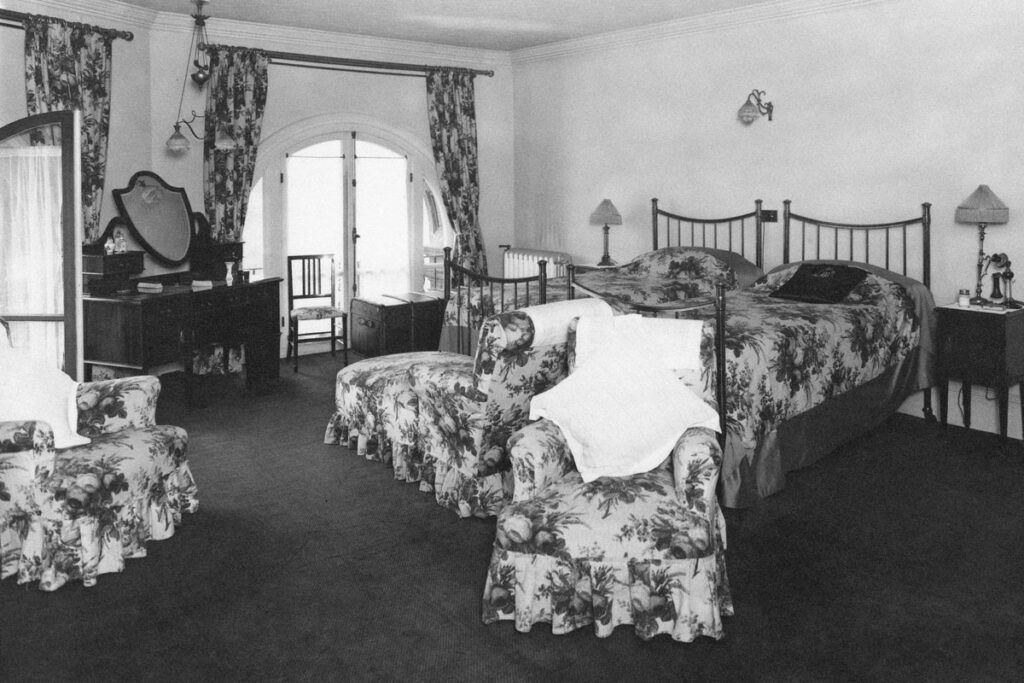
A Victorian Guide to Sleeping Well

  • Sleeping girl, 1878
Sleeping girl, 1878
Credit: DEA / BARDAZZI—De Agostini/Getty Images
Author Kristina Wright

March 4, 2026

Love it?

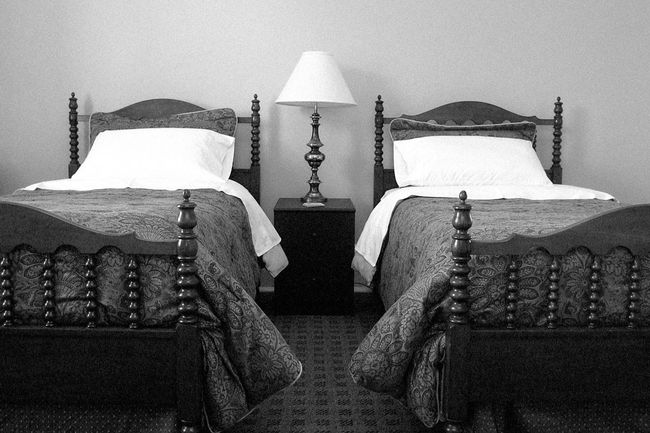
It’s easy to assume that earlier generations slept more easily than we do today, untroubled by modern stress, artificial lighting, and digital overload. But people in the Victorian era — living at the dawn of industrial modernity — would have recognized much of our anxiety. They worried intensely about sleep, and advice on how to obtain it filled newspapers, magazines, and medical manuals. 

In 1900, British neurologist William Broadbent wrote, “Sleeplessness is one of the torments of our age and generation.” Meanwhile, the popular Cassell’s Family Magazine frequently ran articles with titles such as “On Sleep and Nervous Unrest” and “Why Can’t I Sleep?” 

For many Victorians, sleep was not just a biological process. It was also understood as a moral, emotional, and mental discipline, shaped by religious beliefs and emerging medical theories about the nervous system. Good sleep, experts argued, depended on calm habits, emotional restraint, and mental order. Restlessness, anxiety, and overstimulation were seen as obstacles to both health and character.

Yet while Victorian worries about sleep feel familiar, their sleeping habits might not. Indeed, closer examination reveals that what we now consider normal, uninterrupted rest is largely a modern invention. Here’s a look at how people slept in the Victorian age.

Photo credit: Image courtesy of the Brooklyn Museum 

They Went to Bed Early

The Victorian era stretched across more than 60 years (Queen Victoria reigned from 1837 to 1901) and encompassed wide differences in class, occupation, and geography. Naturally, sleep habits varied between rural and urban households, between working families and the wealthy, and across the seasons. But for most people, natural light was the primary regulator of daily life, and Victorian daily schedules followed daylight far more closely than our modern routines.

Before electric lighting became common in the late 19th century, evenings tended to end early, not long after dark. Oil lamps, candles, and gaslight were expensive, dim, and labor-intensive, encouraging households to wind down after supper, typically eaten between 5:30 p.m. and 7 p.m. Evenings were spent reading, sewing, writing letters, or in quiet conversation before bed. In working- and middle-class households, bedtime commonly fell between 8 p.m. and 10 p.m., often earlier in winter. Among the upper and upper-middle classes, urban social life could stretch later, especially for formal dinners and parties, but these late nights remained occasional rather than routine.

Morning schedules were shaped by work and daylight. Rural laborers often rose before dawn, especially during planting and harvest seasons, while urban workers and domestic servants typically began their days early as well, with shifts starting between 6 a.m. and 8 a.m. As a result, most Victorians rose between 5 a.m. and 6:30 a.m., depending on the season and their occupation. For many families, especially outside major cities, this rhythm produced nights of roughly eight to nine hours in bed, even longer in winter — though these extended nights were not designed for uninterrupted sleep.

You may also like

5 Scientific Discoveries Born From Self-Experimentation

  • Jonas Salk in his lab, 1956
Jonas Salk in his lab, 1956
Credit: Bettmann Archive/Getty Images
Author Tony Dunnell

March 4, 2026

Love it?

Throughout history, some bold scientists have taken the ultimate research risk when it comes to proving the efficacy of their work: experimenting on themselves. Due to constraints of time, funding, or available alternatives, these brave — some might say reckless — individuals chose to become their own test subjects, exposing themselves to diseases, vaccines, invasive techniques, and new technologies in the name of scientific progress. 

While most modern ethics committees would likely never approve such experiments, these acts of courage sometimes led to breakthroughs that have saved countless lives. Here are five major discoveries that came about when experts put their own bodies on the line for science.

Photo credit: PhotoQuest—Archive Photos/Getty Images

Polio Vaccine

In the 1950s, polio outbreaks ravaged the United States. Tens of thousands of cases across the country left hundreds of people paralyzed or dead, and thousands of children disabled. During the crisis, American virologist and medical researcher Jonas Salk developed a vaccine that he believed could prevent infection. In 1953, after successful tests on monkeys, Salk made the audacious decision to test the vaccine on himself — and his family. He boiled needles and syringes on his kitchen stove, then vaccinated himself, his wife, and their three young sons. Thankfully for all involved, the family developed antibodies against polio without any adverse effects. 

It may seem reckless today, but Salk’s willingness to inject his own children was based on his complete confidence in the vaccine’s safety. His actions helped convince the medical establishment to support large-scale trials. By 1961, the vast majority of American schoolchildren had received the vaccine, all but ending the polio scourge. Salk famously, and altruistically, decided not to patent the vaccine, saying in a TV interview with Edward R. Murrow, “There is no patent. Could you patent the sun?”

You may also like