

What Your Last Name Says About Your History

  • Magnifying glass on ancient map
Magnifying glass on ancient map
Credit: Andrey Burmakin/ Shutterstock
Author Kristina Wright

October 24, 2024

Love it?

Last names, also known as surnames, can be more than just family identifiers — they can be gateways to understanding more about our ancestral history, cultural heritage, and even ancient migration patterns. The practice of using last names began as populations expanded and it became necessary to distinguish individuals with the same first names. The origins of these surnames are often tied to geographical regions, occupations, or even personal traits — think “Hill,” “Baker,” or “Armstrong.” In the United States, where the population is a diverse mix of cultures, surnames also carry with them the marks of migration, colonization, and assimilation.
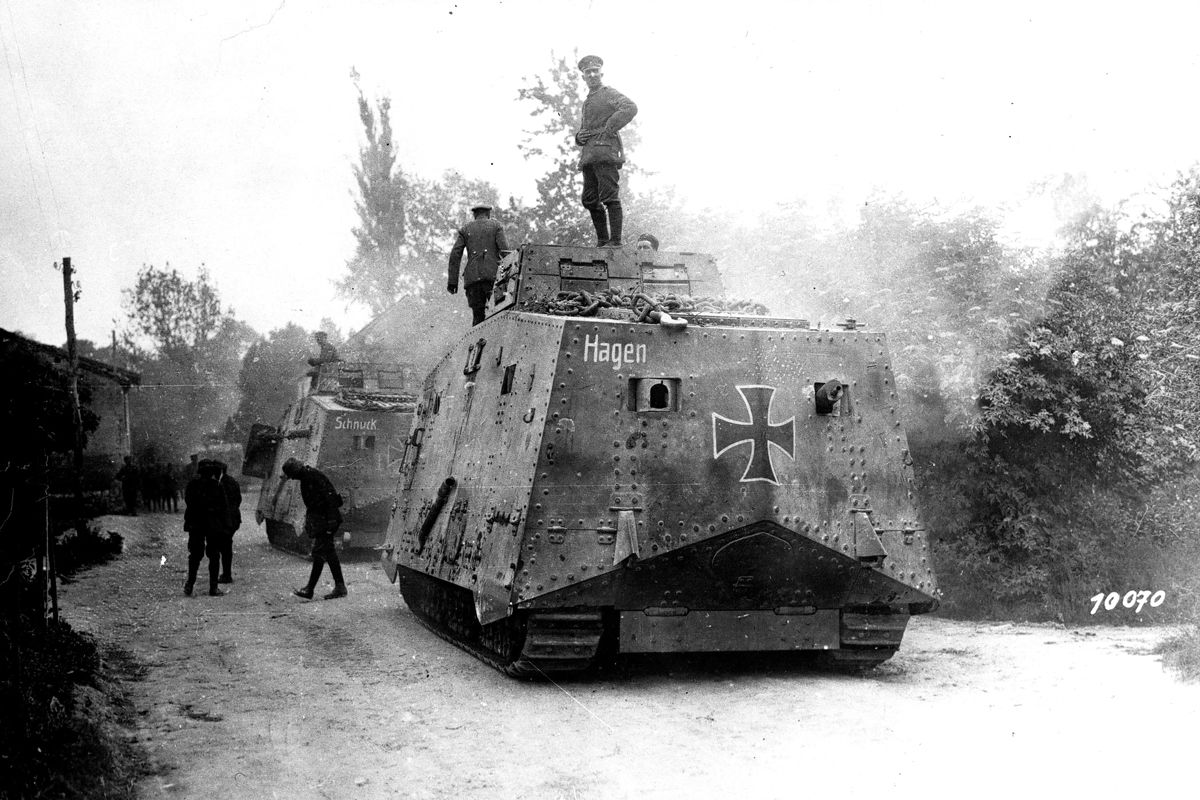
Whether a last name suggests our ethnic heritage, an occupational trade, a geographical region, or the influences of colonization and religion, the identifiers we carry with us can reveal intriguing stories about our past and connect us to a broader story of human movement and settlement. With around 31 million surnames in the world, here are just a few ways that our last names tell us who we are.

Credit: Print Collector/ Hulton Archive via Getty Images 

Viking Migration Affected Naming Traditions

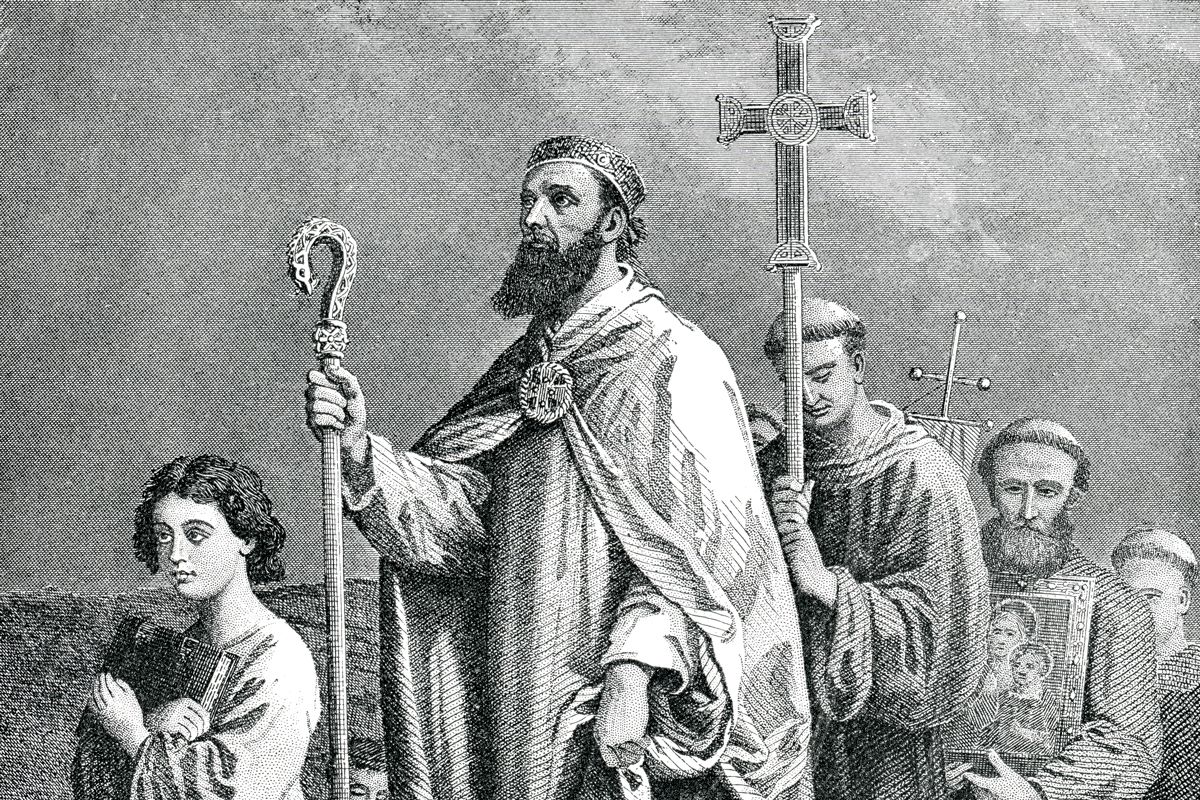
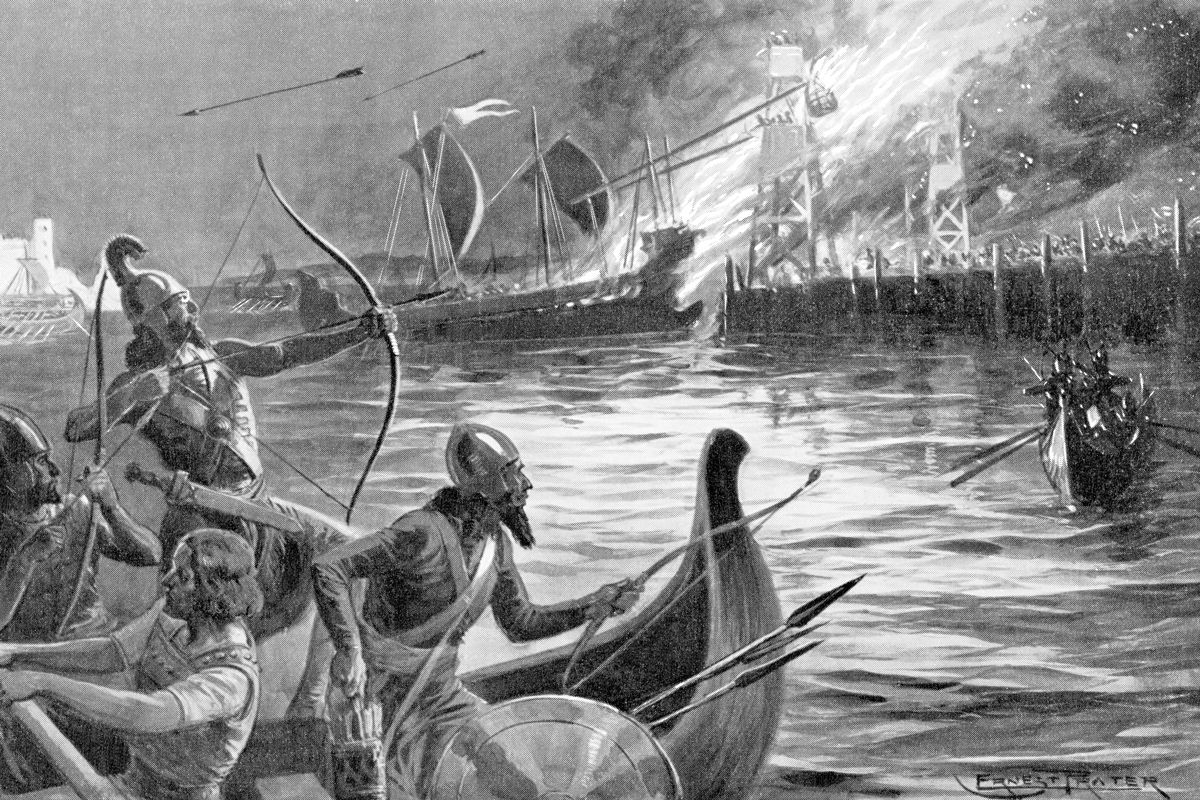
The Viking Age marks the period of time when seafaring Norse people raided and colonized their way through Northern Europe, from the end of the eighth century CE until the Norman Conquest in 1066. The influence of the Vikings can still be seen in the surnames of people with Scandinavian, English, Irish, and Scottish ancestry. Names ending in “-son” or “-sen,” such as Davidson or Andersen, are likely to have Viking roots in Scandinavian or Norse heritage, derived from the practice of using “son of” to identify a man’s father. For example, Andersen means “son of Anders,” a popular Scandinavian first name. Other surnames of Old Norse descent include Carlson, Ericsson, Rogerson, Gundersen, Olsen, and Iverson.

Viking migrations, raids, and settlements spread Viking naming conventions as well as the Old Norse language across regions that are now part of modern-day England, Ireland, and Scotland. Regions such as Yorkshire in northern England and parts of Ireland were significantly influenced by Viking settlers, a fact still visible in the surnames common in these areas, such as Holmes, a Viking word meaning “a small island”; McAuliff, meaning “son of Olaf”; and Higgins, which comes from an Irish word that means “Viking.” 

Similarly, Doyle, from the Irish Ó Dubhghaill, means a “descendant of Dubhghaill,” coming from the Old Gaelic dubh, meaning “dark” or “black” and ghaill, meaning “foreigner” or “stranger,” which was how the first Vikings in Ireland were described. Other Viking names with the same meaning include the Irish surname Mcdowell and the Scottish surname Mcdougall, both of which are anglicized forms of Mac Dubhghaill, meaning “son of Dubhghaill.”

You may also like

Did George Washington Have a British Accent?

  • Statue of George Washington
Statue of George Washington
Credit: Epics/ Hulton Archive via Getty Images
Author Mark DeJoy

October 24, 2024

Love it?

In 1584, the first English colony in North America was founded in what is now North Carolina. And though the 117 settlers who comprised the Roanoke Colony mysteriously disappeared three years later, ensuing waves of settlements established England’s presence on the continent for generations to come. By 1770, the total population of Great Britain’s 13 colonies in America was approximately 1.5 million. It raises the question: Since much of the population of the fledgling U.S. descended from Brits, would the American speech pattern at the time have sounded British? Could someone like George Washington, one of the most famous early Americans, have had a British accent?

Credit: Interim Archives/ Archive Photos via Getty Images

Since Washington lived in an era that predates sound recordings, we don’t have a simple answer to that question in the form of audio records of the founding father’s voice. But we can determine some possibilities by piecing together factors from Washington’s life that would have impacted the way he spoke. 

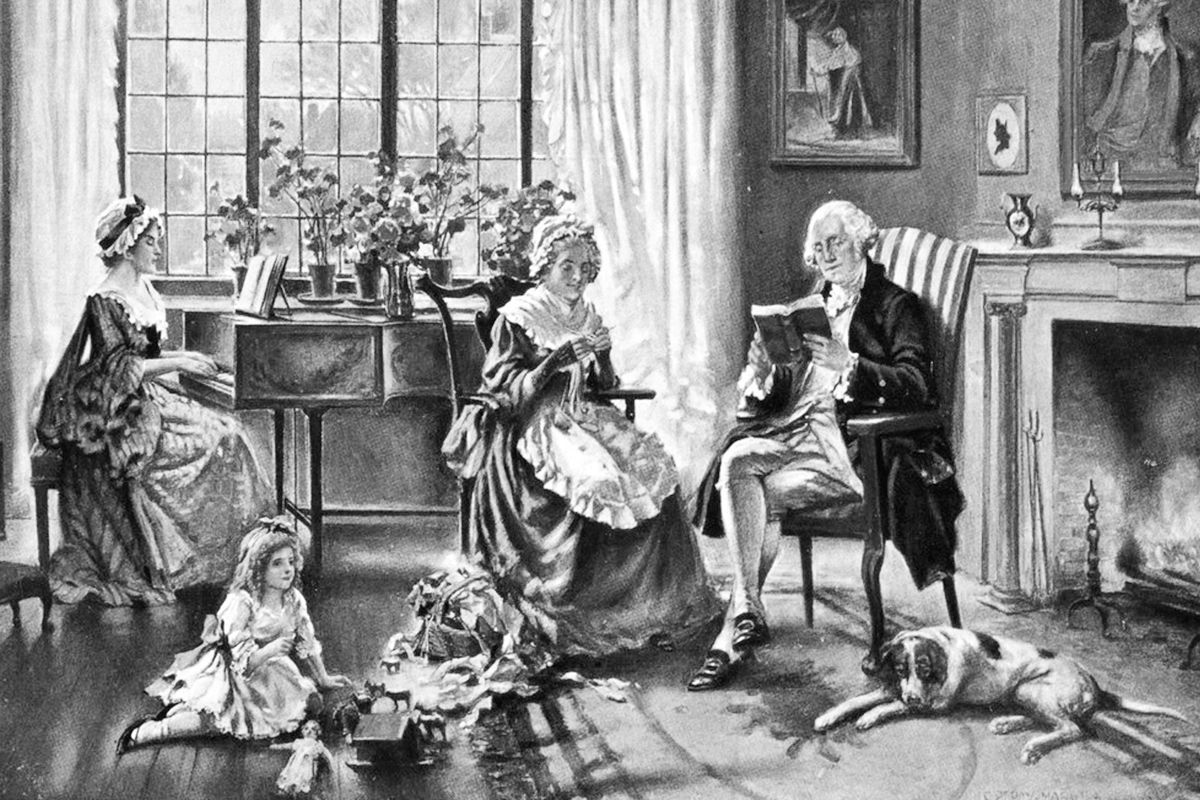
Washington was born in 1732 in Westmoreland County, Virginia, and spent most of his childhood near Fredericksburg. His father, Augustine Washington, and mother, Mary Ball Washington, were also born in Virginia. Indeed, George Washington’s lineage in the colony went back two more generations — it was his great-grandfather John Washington who set sail from England and established the family in Virginia. So America’s first president wasn’t from a family of recent British settlers; he was three generations removed, and the household he grew up in wouldn’t have necessarily spoken an accent that was common in England at the time.                                                                                                                    

You may also like

Fascinating Facts About Every First Lady

  • Mary Todd Lincoln
Mary Todd Lincoln
Credit: Bettmann via Getty Images
Author Timothy Ott

October 24, 2024

Love it?

As highly visible but unelected members of the U.S. executive branch, America’s first ladies occupy a singular place in the firmament of public figures. Most have capably satisfied the requirements of supporting the president, hosting official affairs, and (more recently) advocating for charitable causes, but the sheer number of participants has resulted in a wild divergence of characters to play the part. 

Some first ladies were born outside the country, others enjoyed prominent careers before the White House, and a fair share weren’t actually married to the person calling the shots in the Oval Office. Some also only held the role temporarily, which is why the total number of first ladies outnumbers the 45 men who have served as commander in chief. Here are 57 facts to illuminate the lives of the 57 women who have served as first lady.

Credit: Bettmann via Getty Images

Martha Washington

George Washington never lived in the White House, but Martha Washington did; that was, coincidentally, the name of the Virginia plantation she inherited after her first husband, Daniel Parke Custis, died in 1757.

Abigail Adams

Said to be the first recorded female investor in the U.S., Abigail Adams shrewdly funneled the family finances toward government bonds and securities while her husband, John Adams, was serving his pre-presidency ambassadorships in France, the Netherlands, and Great Britain.

Martha Jefferson Randolph

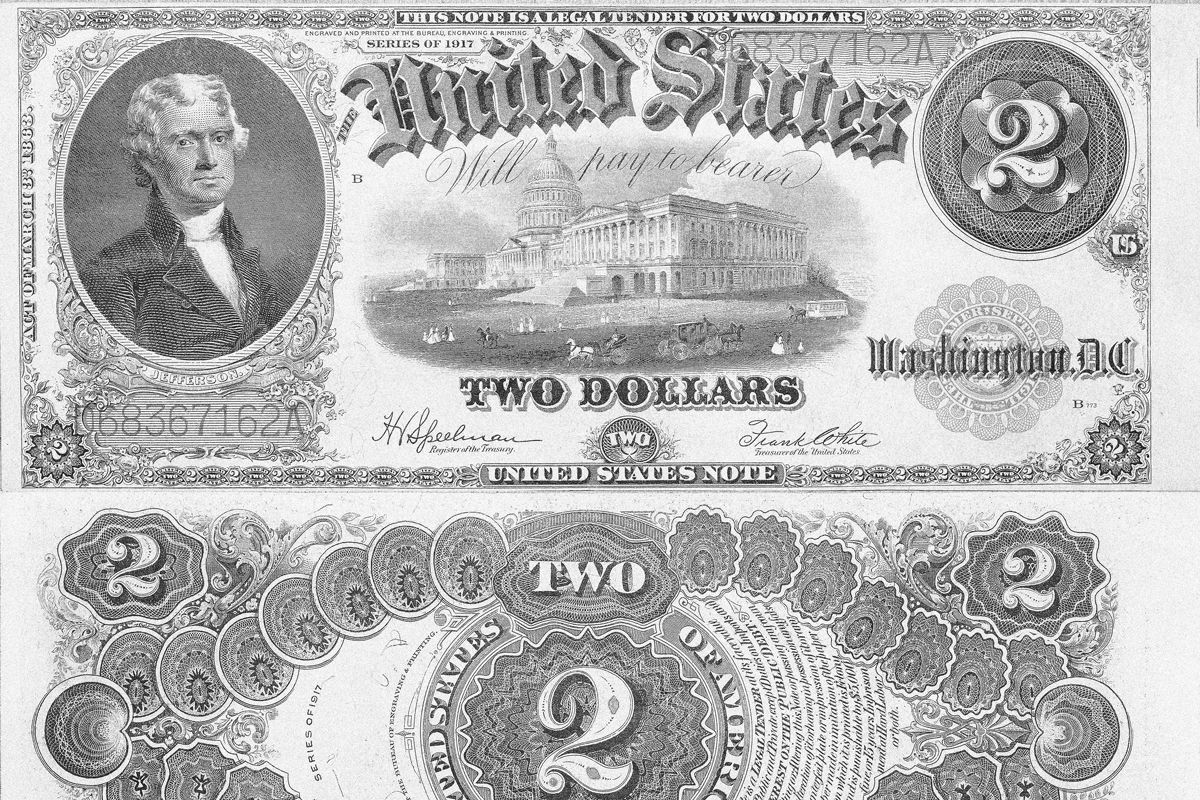
Martha Jefferson Randolph served as acting first lady to her father, President Thomas Jefferson, two decades after the death of her mother, Martha Wayles Skelton Jefferson. In early 1806, Randolph gave birth to the first child born in the Executive Mansion, a boy named James Madison Randolph.

You may also like

7 Foods That Are Way Older Than You Think

  • Stack of pancakes
Stack of pancakes
Credit: ClassicStock/ Archive Photos via Getty Images
Author Tony Dunnell

October 24, 2024

Love it?

In our fast-paced modern world, where trendy superfoods and innovative culinary fusions are constantly emerging, it’s easy to overlook the rich history behind many of our everyday meals. But the foods we consume daily often carry with them stories that span centuries, if not millennia. These humble dishes may have witnessed the rise and fall of civilizations or the births of revolutionary technological advancements, without ever really changing their basic nature. 

Here are seven foods that are much older than we might think — foods that are not only part of culinary history, but also part of the story of human civilization itself. 

Credit: jazz3311/ Shutterstock

Noodles

Noodles, a staple in cuisines worldwide, have a history spanning thousands of years. While many people associate pasta with Italy, the oldest known noodles were actually discovered in China. In 2005, scientists uncovered this ancient food, dating back 4,000 years, at the Lajia archaeological site along the upper reaches of the Yellow River in northwest China. The thin, delicate, yellow noodles resembled the traditional lamian noodles (pulled noodles) still common in northern China today. The discovery proved that people have been enjoying noodles for millennia. Since then, of course, the food has spread across the globe, be it in the form of Italian spaghetti or Japanese ramen. 

You may also like

Why Is 13 Considered an Unlucky Number?

  • Unlucky number 13
Unlucky number 13
Credit: Whiteway/ iStock
Author Tony Dunnell

October 24, 2024

Love it?

The number 13 has long been considered unlucky in many Western cultures. Even today — in a world far less superstitious than it was in the past — a surprising amount of people have a genuine, deep-rooted fear of the number 13, known as triskaidekaphobia. For this reason, many hotels don’t list the presence of a 13th floor (Otis Elevators reports 85% of its elevator panels omit the number), and many airlines skip row 13. And the more specific yet directly connected fear of Friday the 13th, known as paraskevidekatriaphobia, results in financial losses in excess of $800 million annually in the United States as significant numbers of people avoid traveling, getting married, or even working on the unlucky day.  

But why is 13 considered such a harbinger of misfortune? What has led to this particular number being associated with bad luck? While historians and academics aren’t entirely sure of the exact origins of the superstition, there are a handful of historical, religious, and mythological matters that may have combined to create the very real fear surrounding the number 13. 

Credit: DEA / G. DAGLI ORTI/ De Agostini via Getty Images

The Code of Hammurabi

The Code of Hammurabi was one of the earliest and most comprehensive legal codes to be proclaimed and written down. It dates back to the Babylonian King Hammurabi, who reigned from 1792 to 1750 BCE. Carved onto a massive stone pillar, the code set out some 282 rules, including fines and punishments for various misdeeds, but the 13th rule was notably missing. The artifact is often cited as one of the earliest recorded instances of 13 being perceived as unlucky and therefore omitted. Some scholars argue, however, that it was simply a clerical error. Either way, it may well have contributed to the long-standing negative associations surrounding the number 13. 

You may also like

Why Did People Wear Ruff Collars in Elizabethan Times?

  • Procession of Queen Elizabeth I
Procession of Queen Elizabeth I
Credit: Heritage Images/ Hulton Archive via Getty Images
Author Nicole Villeneuve

October 24, 2024

Love it?

The ruff collar is one of the most recognizable symbols of Elizabethan fashion. Picture Queen Elizabeth I, her head surrounded by a crisp, fanlike collar, or William Shakespeare, the most famous author of the time, whose own likeness and theatrical productions depict the prominent garment. Though the collar began as a modest ruffle on a shirt, it went on to become an elaborate piece of its own. In 16th-century England, it would have been hard to miss the sight of these towering, fluted sculptures circling the faces of the English elite. But why did people wear these stiff, awkward garments?

Credit: Universal History Archive/ Universal Images Group via Getty Images

Like many sartorial choices of the time, ruff collars signified more than just taste; they were statements of status, wealth, and power. In the first half of the 1500s, English men exposed just a hint of a collar of their shirt, ruffled up from underneath their doublets. By the mid-1500s, however, Spanish fashion began to infiltrate England, and the exaggerated collar worn by Spain’s aristocracy was adopted by the English as well.

You may also like

5 Facts About Samhain, the Celtic Festival That Inspired Halloween

  • Pagan altar decorated for Samhain
Pagan altar decorated for Samhain
Credit: CaroleGomez/ iStock
Author Kristina Wright

October 16, 2024

Love it?

Samhain, the ancient Celtic festival that inspired many of our modern-day Halloween traditions, represents the end of the harvest season and the onset of winter. An Irish Gaelic word that’s also used in Scottish Gaelic and Manx, “Samhain” translates to “summer’s end” and is pronounced “sow-in” (rhyming with “cow-in”). Traditionally celebrated on November 1, it marked the time when the harvest had been gathered and stored, cattle were moved to closer pastures, livestock were secured for the winter, and communities were hunkering down for the long, cold months ahead.

Samhain was also believed to be a time when the spirits of those who had died during the year traveled to the otherworld. People believed that during Samhain, the boundary between the living and the dead was at its thinnest, allowing the spirit world to interact with the human world. To protect themselves from restless or malevolent spirits, people would light fires, leave offerings for deceased loved ones, and wear disguises.

Today, much of what we know about Samhain is rooted in Irish mythology, making it difficult to discern truth from lore. But here are five things we do know about this ancient and mysterious holiday.

Credit: Heritage Images/ Hulton Archive via Getty Images 

It Dates Back to the Iron Age

Observed by the ancient Celts across Ireland, Scotland, and the Isle of Man, Samhain dates back to the Iron Age, more than 2,000 years ago. The Celts divided the year into two halves, Samhain (the darkness) and Beltane (the light). Those two halves were further divided by Imbolc (a holiday marking the beginning of the spring season) and Lughnasadh (marking the beginning of the harvest season). These four cross-quarter days, as they were known, were celebrated with fire festivals and were among the eight sacred days in ancient Celtic tradition, along with the spring and fall equinoxes and summer and winter solstices, known as quarter days.

Some historians believe that Samhain, which fell on the day that corresponds to November 1 on the contemporary calendar, marked the beginning of the Celtic new year, while others argue there isn’t enough evidence to support that hypothesis. What we do know for certain is that elements of Samhain influenced the celebration of Halloween as we know it.

You may also like

Our Movie Editor’s Favorite Historical Films

  • Still from “Lawrence of Arabia”
Still from “Lawrence of Arabia”
Credit: Columbia TriStar/ Moviepix via Getty Images
Author Michael Nordine

October 16, 2024

Love it?

Historical movies are often as notable for their factual inaccuracies as they are for their emotional truths, a tension that continues to define the genre. The best of them strike a delicate balance somewhere in the middle, offering insights that no other medium can deliver in the same way. And while some of the films on this list have more fidelity to the historical record than others, all are worth seeking out for the fresh perspectives they provide on old topics.

For similar articles, subscribe to our new sister brand Movie Brief, brought to you by our resident film critic Michael Nordine. You’ll receive a weekly review and recommendation of a new movie, whether in theaters or available to stream, as well as a list of 25 must-see movies when you first sign up.

Credit: Bettmann via Getty Images

Spartacus (1960)

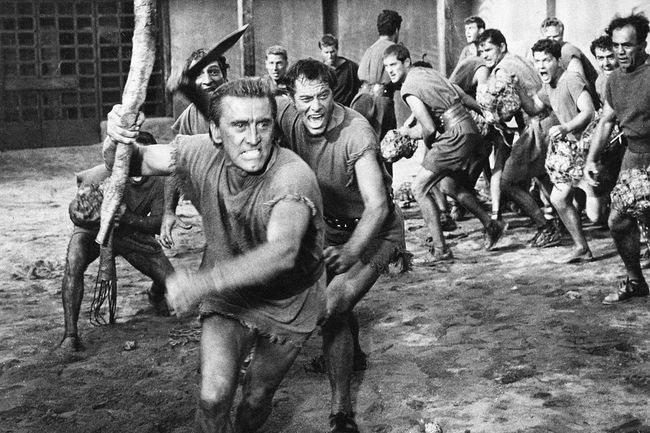
If you’ve ever seen a crowd of people break into chants of “I’m Spartacus!” but never seen Stanley Kubrick’s three-hour-plus epic, there’s no time like the present to watch one of the best movies ever made about the past. Kirk Douglas stars in the title role, an enslaved gladiator in ancient Rome who breaks his chains and starts an unstoppable movement. The actor lived to be 103 and received three Academy Award nominations as well as a star on the Hollywood Walk of Fame for his legendary body of work, but no singular performance was more moving than this one. (Amazon Prime Video)

You may also like

5 WWII Fighter Planes You Should Know

  • Supermarine Spitfires, 1943
Supermarine Spitfires, 1943
Credit: Keystone/ Hulton Archive via Getty Images
Author Tony Dunnell

October 15, 2024

Love it?

World War II was an unprecedented time for advancements in aviation technology, and fighter aircraft played a crucial role in the conflict’s outcome. Fighter planes — the so-called “knights of the sky”— were agile, powerful aircraft designed primarily for air-to-air combat, whether in dramatic dogfights against enemy fighters or while intercepting enemy bombers. 

The demands of the war pushed fighter designs to new heights, resulting in planes that were faster, more maneuverable, and more lethal than ever before. And with air superiority often proving pivotal on any given front, from the Battle of Britain to the Battle of Kursk, these machines and their brave pilots helped shape the course of history. 

Here we look at five World War II fighter planes — from Britain, the U.S., Germany, Japan, and Russia — that left an indelible mark on aviation history. 

Credit: Fox Photos/ Hulton Archive via Getty Images

Supermarine Spitfire

Both the Supermarine Spitfire and the Hawker Hurricane played crucial roles during the Battle of Britain, defending British airspace against wave after wave of German bombers and fighters. The sturdier Hurricane was often tasked with intercepting enemy bombers and engaging in ground attack missions, while the Spitfire, with its superior speed and agility, had the edge when engaging enemy fighters. 

Both planes were vital, but the elegant Spitfire is regarded by many as the most iconic fighter aircraft of all time. The Spitfire evolved as the war progressed, from the early Mk I to, finally, the Mk 24. More powerful engines, improved armaments, and enhanced aerodynamics allowed the plane to remain competitive against newer Axis designs. Not only was it an engineering marvel, but the Spitfire also became an enduring symbol of British resistance and ingenuity. 

You may also like

The Secret Service Code Names of 11 First Ladies

  • First Lady Nancy Reagan
First Lady Nancy Reagan
Credit: Dirck Halstead/ Hulton Archive via Getty Images
Author Kristina Wright

October 10, 2024

Love it?

In the chaos of a post-Civil War America, the federal law enforcement agency known as the Secret Service was formed as a branch of the U.S. Treasury Department. Back then, they weren’t the elite presidential protection unit we know today, but a critical line of defense against the rampant counterfeiting that threatened the nation’s financial stability. But that changed after the 1901 assassination of President William McKinley, when the Secret Service was assigned a new role that would redefine its legacy: protecting the nation’s political leaders and visiting foreign dignitaries.

One of the more fascinating aspects of the Secret Service is the use of code names when referring to the president, vice president, their family members, and key officials. Harry S. Truman became the first president to be assigned an official code name — “General” — in 1945, though Secret Service agents had code names for at least two first ladies before that. The practice began as advancements in communication technology called for more robust protocols for protecting leaders’ anonymity. And even though technology has evolved since the mid-20th century, the code name tradition persists as a simple way of communicating between agents. Here are 11 first ladies whose unique Secret Service code names offer some insight into this quirky aspect of political history.

Credit: Heritage Images/ Hulton Fine Art Collection via Getty Images

Edith Wilson: Grandma

When Edith and Woodrow Wilson married in 1915, he was two years into his first term as president and both had been previously married and widowed. Edith became the first presidential spouse to be given a Secret Service agent, and during her courtship with the president, she was assigned the code name “Grandma.” There is no indication why the Secret Service chose this seemingly unsuitable name, as Edith was only 43 years old when she married Woodrow — 15 years his junior — and not a grandmother.

You may also like