


When Did People Start Eating Three Meals a Day?

  • Lunchtime, 1821
Lunchtime, 1821
Credit: Heritage Images/ Hulton Fine Art Collection via Getty Images
Author Nicole Villeneuve

October 10, 2024

Love it?

Food has always been central to human life, but our eating habits have evolved considerably over time. The idea of eating three meals a day, for instance, is now an intrinsic practice for many people, yet it’s a relatively recent development in human history. For centuries, meal habits were sporadic and dictated by various factors: success in hunting or agriculture, religious practices, work schedules, and even the availability of lighting among them. So how did we arrive at this trio of meals?

Credit: Print Collector/ Hulton Archive via Getty Images

Dinner’s Daily Dominance

Of our three routine meals, “dinner” has the deepest etymological roots, though the meaning of the word has shifted over time. In ancient Roman times, it was the one large meal everyone ate, although it was consumed earlier in the day than it is today — sometime around noon. This extended into the Middle Ages in Europe. Laborers often ate a small meal of bread and ale early in the morning before starting a day’s work on the farm. Their main meal of the day, called dinner, was served around noon, and a light snack, known as supper, was sometimes eaten in the evening. 

By the late 1700s, the Industrial Revolution was in full swing in Britain; workdays became longer, people could no longer come home to eat their main meal of the day, and artificial lighting — primarily candles — became more accessible and reliable, enabling household activities to go later into the evening. The timing of dinner began to shift, and by the end of the 18th century, many people were eating dinner in the evening after returning home from work. For most people in Europe and the United States, this evening meal became the largest and anchor meal of the day by the mid-1800s, informing the traditional family dinner as we still know it.

You may also like

What Artists Were Actually Famous in Their Lifetime?

  • Andy Warhol at the Whitney
Andy Warhol at the Whitney
Credit: Jack Mitchell/ Archive Photos via Getty Images
Author Timothy Ott

October 10, 2024

Love it?

There’s an old stereotype about the “starving artist” having to suffer in poverty and isolation as the world rejects their efforts, and many times in history it’s proved to be true. Even all-time greats such as Vincent Van Gogh and Johannes Vermeer struggled to draw attention to the very works that were later taught in art schools around the world.

But not every successful artist spends a lifetime waiting in vain for the recognition that never arrives. Here are five figures who saw the adulation of the masses, and the accompanying financial windfalls, while they were still around to enjoy the success.

Credit: Hulton Archive via Getty Images

Michelangelo

Italy’s thriving city-states were marvelous places for gifted artists during the 16th century, and no one attracted more demand from wealthy patrons than Michelangelo di Lodovico Buonarroti Simoni. Following the stunning successes of his marble-carved Pietà (1498-1499) and David statue (1501-1504), Michelangelo became a favorite of Pope Julius II, for whom he produced the equally breathtaking Moses (1513-1515) as part of an otherwise unfinished mausoleum project. While he primarily viewed himself as a sculptor, Michelangelo also delivered some of humankind’s greatest paintings with frescoes such as “The Creation of Adam” (1508-1512) on the ceiling of the Sistine Chapel, and he later displayed his talents for design after taking over as chief architect of St. Peter’s Basilica. The nonstop commissions made this Renaissance master a very rich man, even as he lived frugally, while his fame made him the first Western artist to be the subject of a biography while he was still alive.

You may also like

6 Famous Members of the Skull and Bones Secret Society

  • Skull and Crossbones stone
Skull and Crossbones stone
Credit: Mrak.hr/ Shutterstock
Author Tony Dunnell

October 10, 2024

Love it?

In 1832, Yale University students William Huntington Russell and Alphonso Taft co-founded “The Order of the Skull and Bones,” a secret society that has gone on to become one of the most elite organizations of its kind in the United States. For almost two centuries, Skull and Bones has been a subject of much fascination, speculation, and suspicion. Its members have included some of the most influential and powerful figures in American history — including three U.S. presidents — and its secrecy has fueled numerous conspiracy theories and rumors about the society’s true nature and purpose.

Credit: Enigma/ Alamy Stock Photo

Over the years, several strange secrets about Skull and Bones have been revealed. According to some accounts, new members are — or once were — made to lie naked in a stone coffin while describing their most intimate secrets and experiences. And the society’s headquarters — a stark, windowless brownstone building in New Haven, Connecticut, called “The Tomb” — is rumored to house a number of macabre artifacts, including the skulls of the Apache warrior Geronimo and the Mexican revolutionary Pancho Villa. Perhaps of greater import to the Bonesmen and Boneswomen, as initiates are known (women were granted membership in 1992), is the promise that all members are guaranteed lifelong financial stability — in exchange, of course, for their absolute loyalty and secrecy. 

Despite this secretive nature, many prominent individuals have been identified as members of Skull and Bones. (Up until 1971, the society published an annual membership register.) Here are six of the most influential known members of the secret society. 

You may also like

5 Timeless Drinks From the Cocktail Golden Age

  • Martini glass on table
Martini glass on table
Credit: Katelyn Perry/ Unsplash+
Author Bennett Kleinman

October 3, 2024

Love it?

The mid-1800s to the start of Prohibition in 1920 is considered a golden age of mixology in the United States. Imbibing alcohol had long been a crucial component of Americans’ social lives, but for many years people mainly drank rudimentary ales, ciders, rums, and whiskeys. That began to change during the Industrial Revolution, with the mass-production of alcoholic spirits. As copious amounts of affordable liquor became available, some ingenious bartenders began to experiment with new cocktail recipes, many of which became highly popular and in turn revolutionized the alcohol industry.

By the middle of the 19th century, many new boozy beverages with complex and decadent flavor profiles were being created, giving rise to a golden age of cocktails — a term first used in 1798 to describe a “drink made from water, sugar, spirits, and bitters,” according to etymonline.com. In 1862, New York City bartender and saloon owner Jerry Thomas — who The New York Times called the “Father of American Mixology” — published The Bar-Tenders’ Guide, which is now widely considered the first cocktail book in U.S. history. This foundational text redefined cocktail-making, bringing innovative mixed drinks to the masses and inspiring future creations. Here’s a look at five timeless drinks that came out of this golden age of cocktails.

Credit: Johann Trasch/ Unsplash

Sazerac

Some sources claim the origins of the Sazerac date back to the 1830s, though that date is disputed; according to drinks columnist and cocktail expert David Wondrich, it was more likely invented during the 1880s or 1890s. Whatever the origins, there’s no disputing the Sazerac is still a beloved classic cocktail, particularly among residents of the city where it was created: New Orleans, Louisiana.

The earliest Sazeracs were made using a French brandy called Sazerac de Forge et Fils Cognac, which was mixed with half a teaspoon of cold water, a sugar cube, a lemon peel, and four dashes of bitters. The purported mastermind behind this libation was pharmacist Antoine Amédée Peychaud, who moved from the French colony of St. Domingue to New Orleans around 1800. (Peychaud is also known for selling his namesake bitters, which have become staples of cocktail bars around the world.) 

Around 1885, the cognac in the recipe was swapped out for American rye whiskey, which remains the standard spirit used in Sazeracs. The preparation process is also noteworthy: While the drink is mixed in one glass, another chilled cocktail glass is swirled with a wash of absinthe; the ingredients are then poured into the absinthe-scented glass and served immediately. After well over a century of enduring popularity, Sazerac was declared the official cocktail of New Orleans in 2008.

You may also like

Surprising Hobbies of U.S. Presidents

  • Nixon bowling at White House
Nixon bowling at White House
Credit: Bettmann via Getty Images
Author Tony Dunnell

October 3, 2024

Love it?

Being the president of the United States is no easy task. The day-to-day responsibilities and weighty decisions of the presidency are enough to turn anyone gray, and the role typically draws more criticism than praise. With so much pressure involved, even the most dedicated commander in chief needs some respite from the job. It’s only natural, then, that throughout the history of the White House, the private lives of American presidents have been filled with a wide array of hobbies.

Some of these activities have been fairly common, such as reading, horseback riding, fishing, painting, and of course, golf. Others, however, are not necessarily what you’d expect from a person holding the highest office in the land. Here are some of the more surprising hobbies of U.S. presidents. 

Credit: Archive Photos via Getty Images

John Quincy Adams Was Into Skinny-Dipping

Beyond extensive reading and writing, John Quincy Adams enjoyed a wholesome morning routine in which he would wake between 4 a.m. and 5 a.m. and set off on a 2-mile walk. In the summer months, this walk included taking a daily dip in the Potomac River, wearing nothing apart from his large sideburns. (Adams was the first U.S. president to have facial hair.) According to legend, a female reporter named Anne Royall was keen to talk with the president, so she went to the river while he was bathing in the buff, sat on his clothes, and refused to move until he granted her an interview. This likely never occurred, however — the oft-repeated story unfortunately has no basis in fact

You may also like

Who Wrote the Constitution?

  • Close-up of U.S. Constitution
Close-up of U.S. Constitution
Credit: bonniej/ iStock
Author Timothy Ott

October 3, 2024

Love it?

In the spring and summer of 1787, a contingent of lawyers, businessmen, and other highly regarded state representatives met at the Pennsylvania State House to fine-tune the parameters of the shaky federal government that was established by the Articles of Confederation, the nation’s first stab at a framework for government. Known as the Constitutional Convention, this meeting was perhaps the most momentous occasion in the short history of the United States following the end of the Revolutionary War.

Even in the absence of founding fathers Thomas Jefferson and John Adams, who were serving ambassadorships in Europe, the gathering boasted a formidable collection of the nation’s leaders, including James Madison of Virginia, Roger Sherman of Connecticut, and the elderly but still razor-sharp Benjamin Franklin of Pennsylvania.

As described in The Summer of 1787: The Men Who Invented the Constitution, many of the 55 delegates carried with them a raft of ideas and some combination of deft oratory skills and a forceful personality to push others to action. As such, there was no shortage of passionate speeches and threats issued over clashing values, although it proved to be more of a challenge to find calmer voices willing to nudge the rest toward compromise, and an additional challenge to pull the oft-debated and revised proposals into a document with language that would stand the test of time.

Credit: Bettmann via Getty Images

James Madison’s “Virginia Plan” 

Four days after the Constitutional Convention officially commenced on May 25, 1787, Virginia Governor Edmund Randolph presented an outline of 15 draft resolutions under what became known as the “Virginia Plan.” Largely authored by Madison, the plan proposed a three-branch federal government and two-house legislature, a system that heavily concentrated power in the latter and gave the national government the ability to veto state laws.
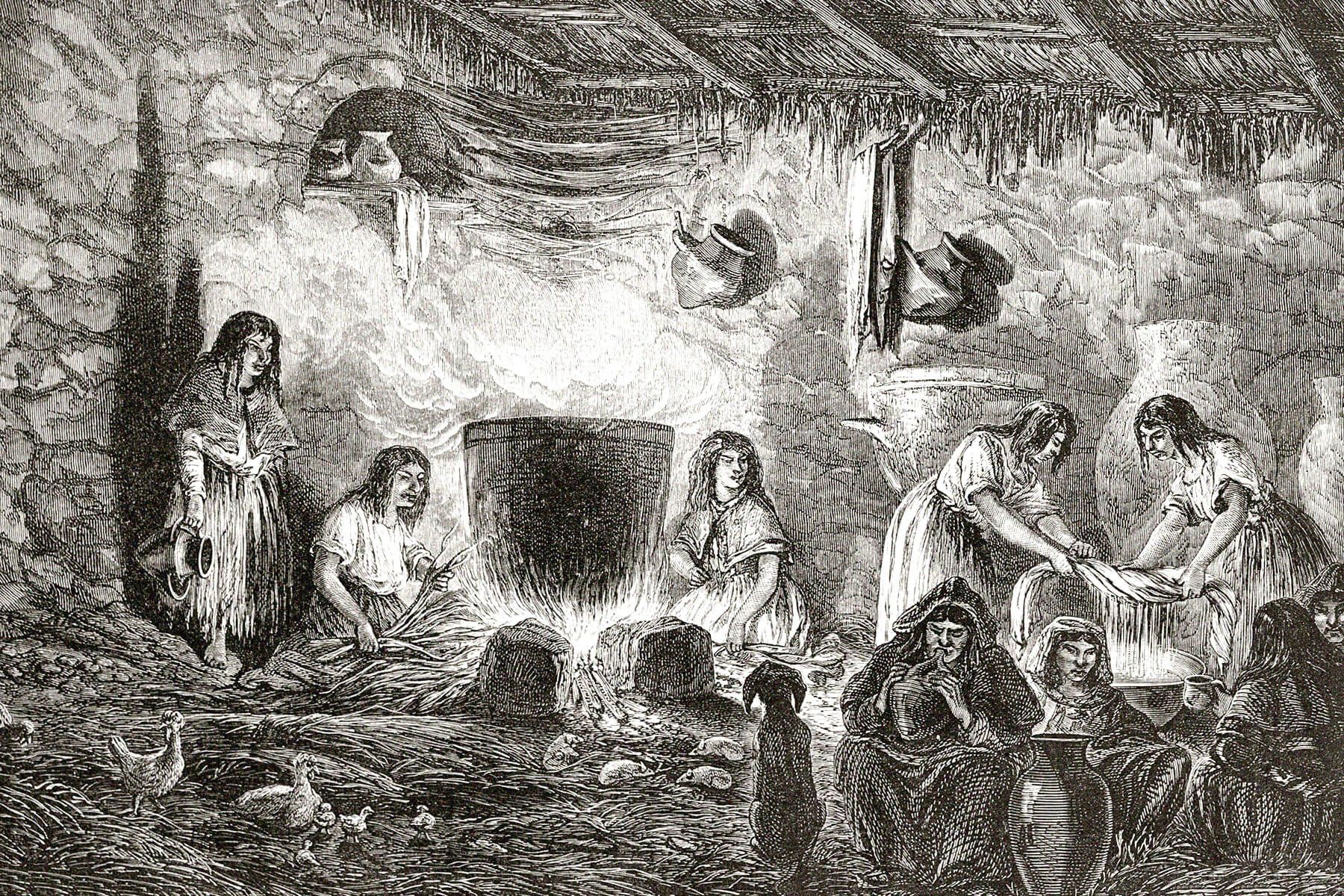
The ambitious Virginia Plan touched off a series of debates within the convention, starting with how it represented a clean break from — as opposed to a means for improving — the system laid out by the Articles of Confederation. Even more contentious were the debates over how the states would be represented in Congress, and who had the power to choose the chief executive. Although an alliance of the smaller U.S. states later proposed a system that hewed closer to the Articles of Confederation, known as the “New Jersey Plan,” the delegates ultimately rejected this version when the two plans were put to a vote in mid-July.

You may also like

Why Were Old Bridges Covered?

  • Covered bridge in Vermont
Covered bridge in Vermont
Credit: Arthur Rothstein/ Hulton Archive via Getty Images
Author Nicole Villeneuve

October 3, 2024

Love it?

Covered bridges are an idyllic symbol of rural America. These charming, often hand-built structures have been romanticized in popular culture for years, from Thomas Kinkade’s painting “The Old Covered Bridge” to the novel (and film adaptation) The Bridges of Madison County. Despite their dispensability in the age of concrete and steel, these old wooden bridges continue to be beloved landmarks, their distinct roofs making them easily recognizable even today. But what exactly led to their proliferation in decades past?

Credit: Jonathan W. Cohen/ iStock

A covered bridge is exactly what its name suggests: a bridge with a roof and enclosed sides, typically constructed from wood. The reason for the covering is quite simple. While there are some theories — most likely with some truth to them — that the roofs were added to keep animals calm above rushing water, or to provide shelter for travelers, the real purpose was much more practical. Wooden bridges, which were common in the U.S. and Europe in the 18th and 19th centuries due to the abundance of timber, deteriorated quickly when exposed to the elements. Rain, snow, and sunlight caused the wood to rot or warp, compromising the materials’ integrity and reducing the lifespan of the bridge. Covering the structure protected the wooden framework and deck. By keeping the timber dry, the bridge’s life could be extended by decades. Uncovered wooden bridges might last just 10 to 20 years, whereas some of America’s original covered bridges, such as the Hyde Hall Bridge in New York’s Glimmerglass State Park, remain intact almost 200 years after being built. 

You may also like

Everyday Etiquette That Came Out of World War II

  • WWII Marines brushing teeth
WWII Marines brushing teeth
Credit: HUM Images/ Universal Images Group via Getty Images
Author Nicole Villeneuve

October 3, 2024

Love it?

World War II didn’t just reshape global politics and drive social change; it also left a lasting imprint on the everyday habits we now take for granted. As the war effort led to new challenges in the U.S., such as resource scarcity and shifting societal rules, the need for innovation and efficiency ushered in not only new military strategies, but new ways of life on the home front. These small but significant changes may have been born out of necessity, but they shaped American etiquette and culture permanently. From grooming to fashion to nutrition, here are some now-common habits that came out of World War II.

Credit: Michael Ochs Archives via Getty Images

Wearing T-Shirts 

T-shirts are among the indispensable components of modern style, but they were once considered mere undergarments. The classic white garment first became a standard part of the U.S. Army’s uniform during World War I. The undershirt was given a new name — the T-shirt — in the 1920s thanks to writer F. Scott Fitzgerald, and in World War II, it was once again made part of the standard-issue military uniform. By that time, T-shirts were already becoming more than just underwear; they were marketed to civilians and worn by younger crowds in high schools and universities. But it wasn’t until after the war ended that they became ubiquitous. Soldiers returning home from combat had grown accustomed to the T-shirt’s comfort and began incorporating the item into their everyday wear. Images of soldiers wearing T-shirts while serving their country also boosted the garment’s popularity, and in the 1950s, movie stars such as Marlon Brando and James Dean made the T-shirt an undeniable staple of casual fashion.

You may also like

Why Do Older Movies Look Faster? 

  • Charlie Chaplin, 1914
Charlie Chaplin, 1914
Credit: Hulton Archive/ Archive Photos via Getty Images
Author Timothy Ott

September 25, 2024

Love it?

When we think about old, silent films, we’re likely to picture the choppy, fast-paced movements of Charlie Chaplin or Buster Keaton, or perhaps the newsreel footage of Babe Ruth hitting a home run and seemingly zipping around the bases at 40 miles per hour. As talented as these individuals were, they weren’t capable of moving at speeds far beyond the range of normal people. So why do they appear that way on film?

Credit: Historical/ Corbis Historical via Getty Images

Film Only Provides the Illusion of Movement

To answer this question, we need to go back to some of the basics of filmmaking. Throughout the history of cinema, movie cameras have never been able to faithfully capture real-life movement. Rather, they record a series of still images in rapid succession, and replay them at speeds fast enough to trick the human mind into perceiving movement.

The number of individual images (or frames) displayed in one second of film is known as the frame rate, measured in frames per second (fps). Thomas Edison, who patented (but didn’t invent) the movie camera, noted that film needed to be shown at a speed of at least 46 fps to provide the illusion of movement. But in the early days of cinema, this proved too pricey to be practical, and some filmmakers found that the visual illusion could be sustained — and expensive celluloid film stock conserved — with frame rates closer to 16 fps, or even as low as 12 fps. While this speed was considered fast enough for a movie camera of that era, it is noticeably slower than the 24 fps rate that later became commonplace for both filming and projecting. And when old footage filmed at 16 fps or lower is accelerated for replaying at modern speeds, it will make the objects on screen move noticeably faster.

You may also like

What Americans Ate for Dinner in the 1800s

  • Chicken fricassee dish
Chicken fricassee dish
Credit: kochabamba/ Shutterstock
Author Mark DeJoy

September 25, 2024

Love it?

Tastes in 19th-century America were generations removed from our tastes today. Vegetables weren’t generally as appreciated as they are nowadays, and vitamins were yet to be discovered as an important nutritional factor. Food was also very regional, a trend we see in modern cuisine, too, but the localization at the time was due to scarce means of transporting ingredients. Some foods from the Victorian era endure today, such as oatmeal, roast beef, tomato soup, and mayonnaise. But others might seem as strange and outmoded as the horn on a victrola. Here’s a look at some bygone dishes from the Victorian table.

Credit: The Washington Post via Getty Images

Squab

Nowadays, if squab is known at all, it’s known as the meat of a meticulously raised young rock pigeon, served as a rarified poultry component of an exclusive dinner. But in the 1800s, squab was a staple protein. That’s because the squab of previous eras was a different type of pigeon, one that was among the most abundant birds in the world: the passenger pigeon. Due to its tendency to fly in massive, densely packed flocks, the passenger pigeon was extremely easy to hunt, and represented freely available meat. Prized for its tenderness and often described in terms that suggest a ducklike quality (one historical source recounts it as “darker than the dark meat of a chicken” and “entirely without strong taste”), squab was prepared just about every which way: served in stews, roasted with salt pork, fried, baked in a pie, broiled, and served on toast. 

In the wake of post-Civil War advancements in communication, such as the telegraph, and transportation, such as the railroad, a large-scale pigeon industry emerged, which saw professional hunters and trappers tracking and harvesting the flocks en masse. Sadly, the resulting combination of overhunting and habitat disruption led to a catastrophic decline in the passenger pigeon population. By 1900, the birds were too scarce to hunt; by 1914 the passenger pigeon was extinct. 

You may also like