

The World’s Most Powerful Secret Societies
Secret societies have long shaped history from the shadows. Some groups have guarded spiritual truths, others operated underground to challenge political authority, and still others have connected powerful individuals across borders. While their aims vary, they share a structure: restricted membership, formal initiation, and closely guarded knowledge often revealed through a series of hierarchical ranks.
What these groups also share is a reliance on secrecy itself — not just as a tool, but as the foundation of their influence. Here’s a look at 10 secret societies that held remarkable power in their time.
Eleusinian Mysteries
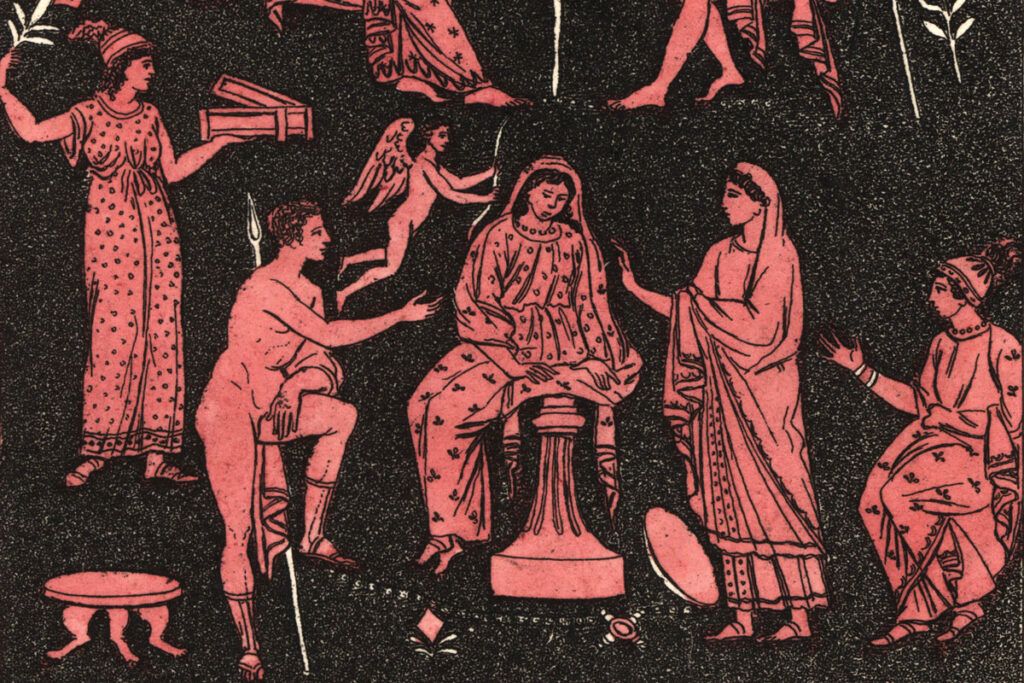
For nearly 2,000 years, the Eleusinian Mysteries — a secretive religious tradition centered on the goddesses Demeter and Persephone — stood as the best-known and most enduring mystery cult in ancient Greece. Held at Eleusis, a town northwest of Athens, likely starting around 1600 BCE, the rites were open only to those who underwent a formal initiation that involved a strict vow of silence.
What initiates experienced during the Eleusinian rites remains one of history’s most tantalizing unknowns. Ancient sources agree that the ceremonies culminated in a dramatic nighttime ritual inside a grand hall known as the Telesterion, where participants went through a profound spiritual revelation — one so powerful, some claimed it erased their fear of death.
The Eleusinian Mysteries expanded across the Greek and later Roman worlds, attracting figures such as Plato, Socrates, and Cicero. Like later secret societies, it became an exclusive network whose initiates were bound by secrecy and promised personal transformation through hidden knowledge.
More from our network






Pythagorean Brotherhood
Founded around the sixth century BCE by the mathematician Pythagoras (of the famous theorem), the Pythagorean Brotherhood was both a philosophical school and a tightly controlled secret society. Based in southern Italy, its members lived communally, shared property, and adhered to strict rules — including long periods of silence for new initiates — while guarding their teachings from outsiders.
At the core of the Brotherhood was a radical idea: that numbers underpinned all reality. Mathematics wasn’t just a tool but a sacred key to understanding the universe. This idea was intertwined with beliefs in the immortality of the soul and reincarnation. Members pursued purification through study, discipline, and an almost monastic lifestyle that involved strict vegetarianism.
But the Brotherhood’s influence extended beyond philosophy. Ancient sources suggest it also pursued political power, embedding itself within elite circles and shaping civic life. Ultimately, that strategy provoked backlash. By the fifth century BCE, persecution and internal strife led to the Brotherhood’s collapse. Still, its ideas endured, profoundly shaping later thinkers including Plato and leaving a lasting imprint on Western thought.

Assassins
Active in the 12th and 13th centuries, the Assassins were a secretive Shiite Islamic sect known for their targeted political killings and unwavering loyalty to their leader, Ḥasan-e Ṣabbāḥ (also known as the “Old Man of the Mountains”). Operating from mountain strongholds in Lebanon, they built influence not through armies but through fear, eliminating powerful enemies with precision.
Their name is the origin of the modern word “assassin,” though its exact roots are debated. It may derive from the Arabic term asāsīyūn (“the faithful”), later conflated with hashshāshīn — or “hashish users” — a label likely spread by enemies to discredit the group. Over time, the order’s real activities became entangled with dramatic stories, from drug-induced devotion to elaborate initiation rites — many of them recorded by outsiders and difficult to verify. Even so, the Assassins stand as an early example of a secret society wielding outsized political power through secrecy, discipline, and targeted violence.

Knights Templar
Founded around 1118 during the Crusades, the Knights Templar were a Christian military order tasked with protecting pilgrims in the Holy Land. Unlike classic secret societies, they were a highly visible institution — sanctioned by the church and deeply embedded in medieval politics — but their internal rituals, hierarchy, and initiation practices were closely guarded.
As their power grew, so did their wealth. The Templars established one of Europe’s first international banking systems, allowing travelers to deposit funds in one location and withdraw them in another. Soon they controlled vast landholdings, lent money to monarchs, and answered only to the pope, giving them extraordinary autonomy.
That combination of secrecy, wealth, and independence made them both influential and suspect. In 1307, King Philip IV of France ordered their mass arrest, and under pressure, the papacy dissolved the order in 1312 — although their legend still lingers.

Freemasons
Formally established in 1717 with the creation of the first Grand Lodge in London (though their roots stretch much farther back), the Freemasons grew into one of the most expansive and influential secret societies in history. Evolving from medieval stonemasons’ guilds, the organization retained a structure of lodges, initiation rites, and closely guarded rituals that bound members together across borders.
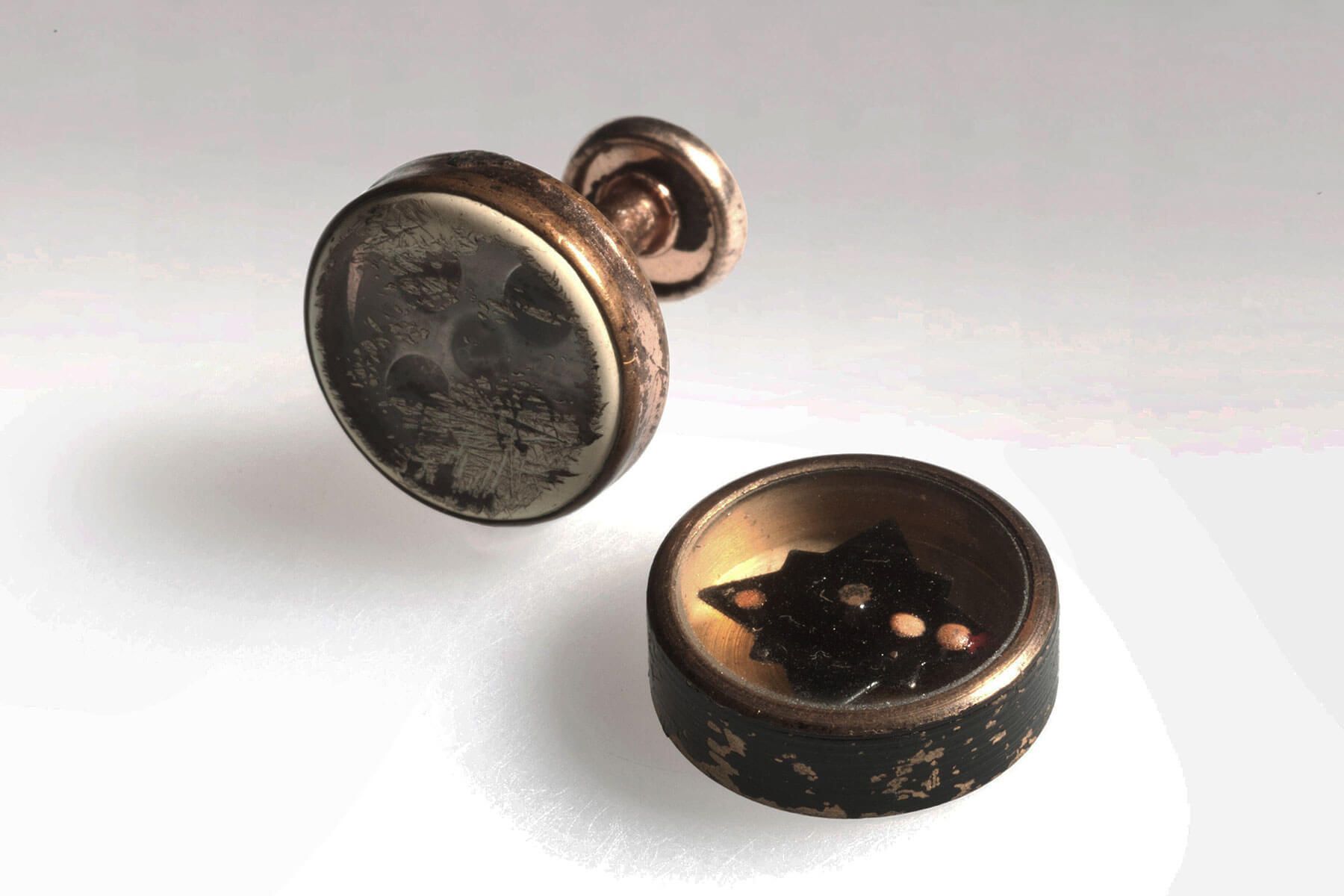
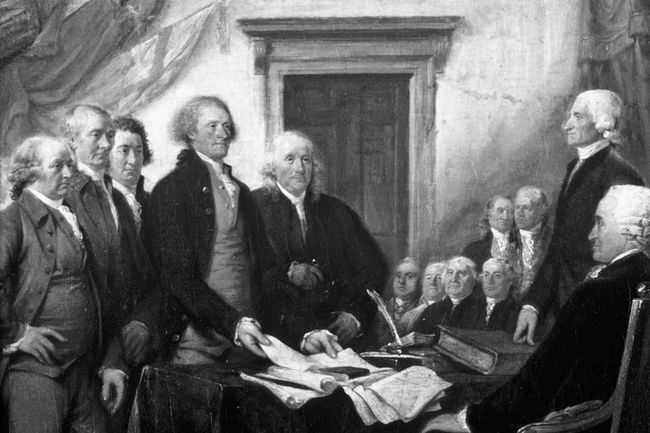
In the American colonies and early United States, Freemasonry attracted an unusually high concentration of political leaders. Thirteen of the 39 signers of the Constitution were Masons, including George Washington, Benjamin Franklin, John Hancock, and Paul Revere. Lodges functioned as spaces where educated, well-connected figures exchanged ideas shaped by Enlightenment values — including constitutional government and republicanism.
Freemasons have long been linked, sometimes speculatively, to major political upheavals, including the American, Russian, and French revolutions. Whether or not they acted in concert, their real power lay in their network: a far-reaching, oath-bound fraternity that connected influential figures and helped circulate ideas that reshaped the modern world.

Sons of Liberty
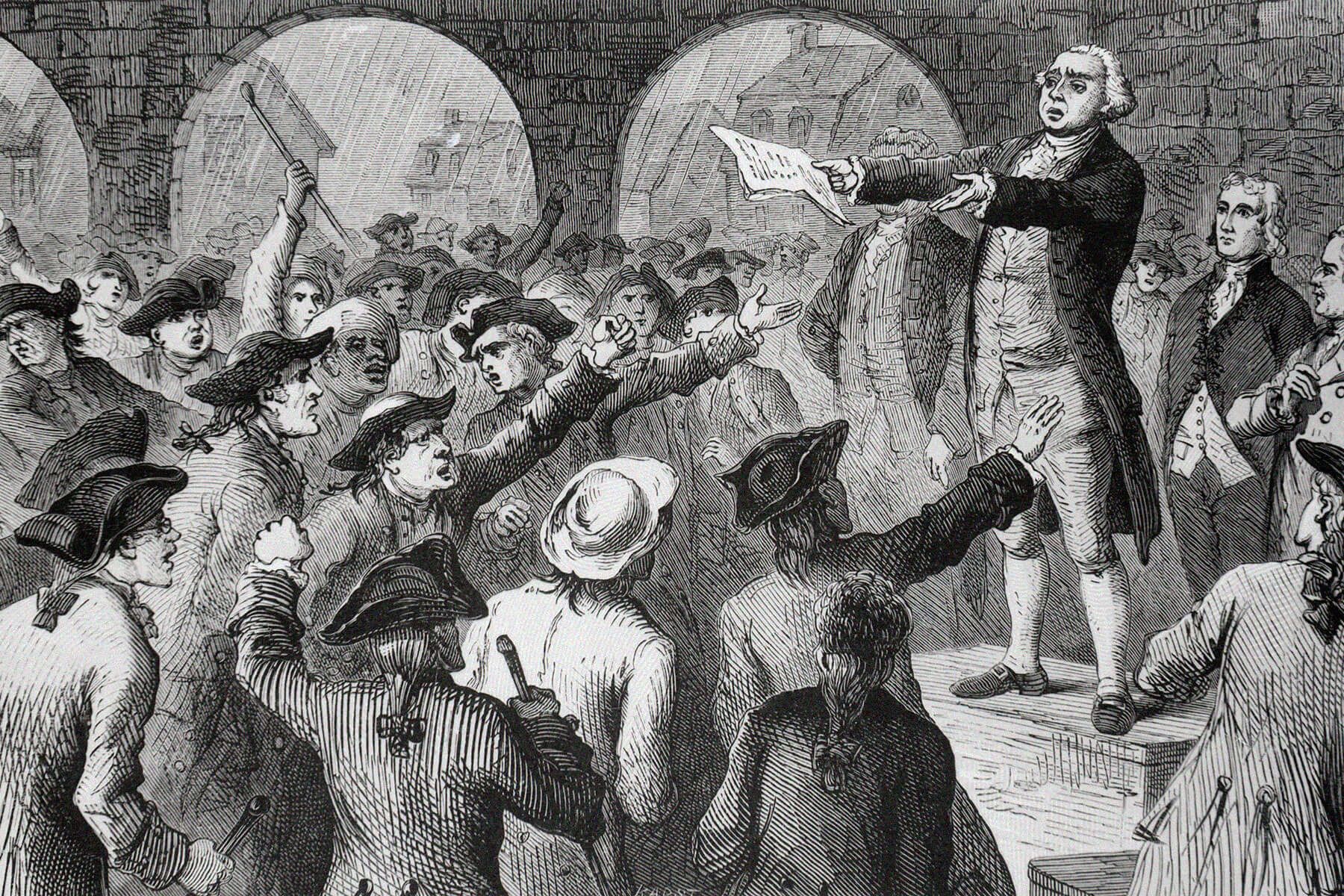
Formed in 1765 in response to British taxation, the Sons of Liberty were a secretive political organization that helped drive the American colonies toward revolution. Originating in Boston and quickly spreading across the colonies, the group operated through local cells, organizing protests, intimidation campaigns, and acts of resistance against royal authority.
Their most famous action came in 1773, when members carried out the Boston Tea Party, dumping 342 chests of British tea into the harbor in defiance of imperial control. But their influence extended far beyond a single protest. The Sons of Liberty coordinated opposition to the Stamp Act and other policies, mobilizing public sentiment and, at times, using violence to enforce boycotts and punish loyalists.
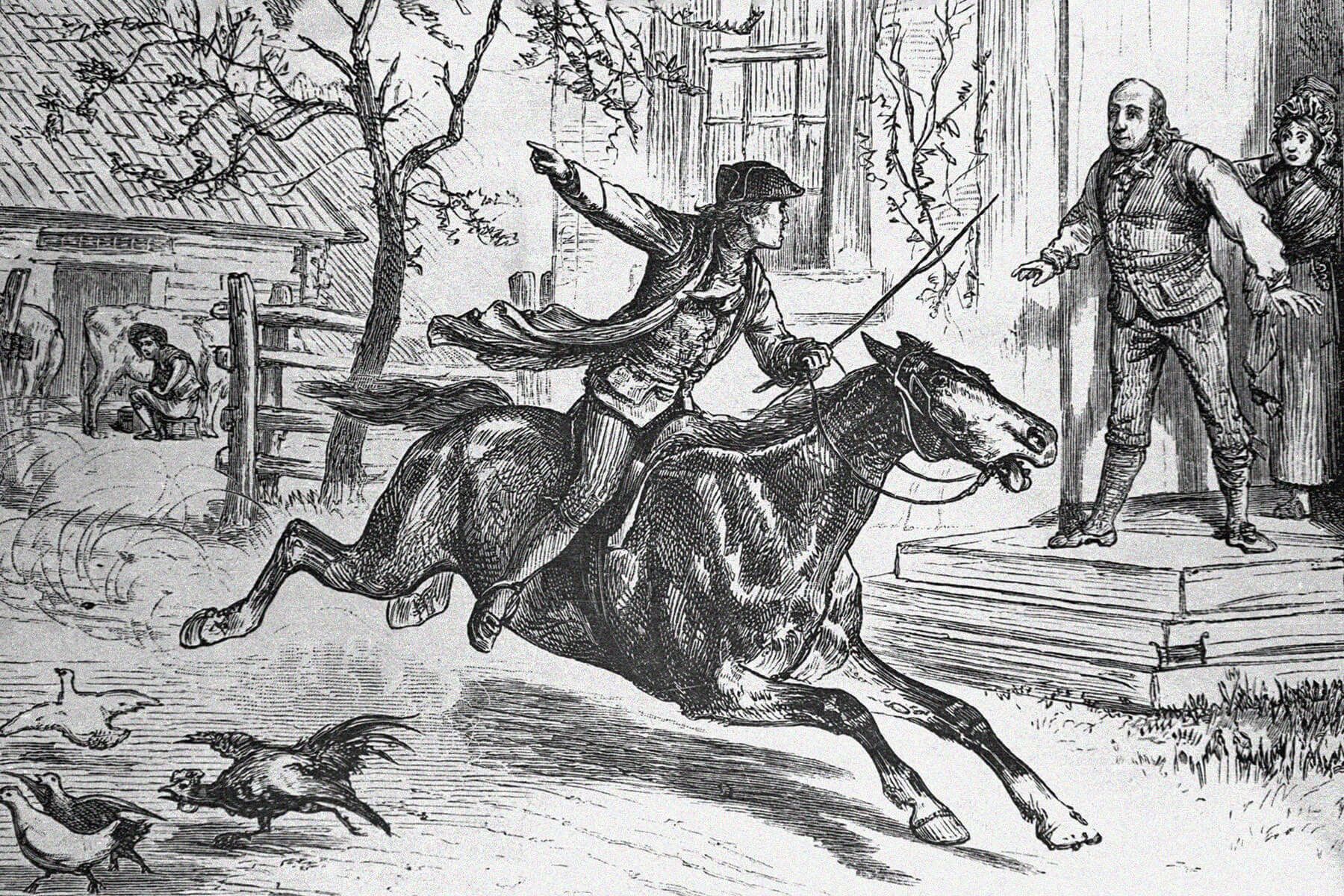
Though less formal than other secret societies, they shared key traits: selective membership, covert operations, and a shared ideological mission. In effect, they functioned as an underground political network — one that helped transform colonial unrest into organized revolution. Paul Revere, John Adams, Samuel Adams, and other important figures of the American Revolution were all members.

Bavarian Illuminati
Founded in 1776 by the German law professor Adam Weishaupt, the Bavarian Illuminati was a short-lived but highly influential secret society rooted in Enlightenment ideals. Created in opposition to what Weishaupt saw as the oppressive influence of church and state, the order sought to promote reason, moral reform, and political change through a tightly controlled, hierarchical network.
Members were recruited from educated and elite circles — including academics, officials, and intellectuals — and organized into 13 graded levels of initiation, each revealing more of the group’s aims. Like the Freemasons (from which they took some of their members), the Illuminati relied on secrecy, coded identities, and internal discipline to bind its members and extend its reach across Europe.
Despite its rapid growth, the order lasted less than a decade. At its height around 1784, the Illuminati had around 2,000 to 3,000 members, including notable figures such as Johann Wolfgang von Goethe. But within a few years the Bavarian government had outlawed the secret society, and its leaders were arrested or dispersed.
Almost immediately after being outlawed, the Illuminati became the subject of conspiracy theories linking it to revolutions and global power — a reputation that has endured ever since.

Carbonari
Active in early-19th-century Italy, the Carbonari were a network of clandestine groups advocating liberal reform and national independence. Their name — meaning “charcoal burners” — hints at their use of coded language and ritual symbolism.
Emerging around the Napoleonic era, the Carbonari became the primary source of opposition to conservative regimes imposed after 1815. They organized revolts, most notably the 1820 uprising in Naples, and helped lay the groundwork for the Risorgimento, the movement that led to the unification of Italy.
Despite their influence, the Carbonari were never ideologically unified. Some members favored republicanism, others constitutional monarchy. Their origin remains murky — they were possibly linked to Freemasonry or earlier mutual-aid societies. What united them was structure: secret initiations, hierarchical ranks, and a decentralized network capable of mobilizing dissent across the peninsula.

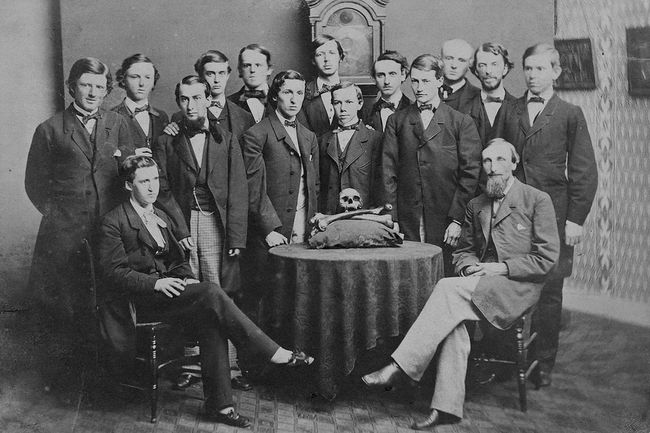
Skull and Bones
Founded at Yale University in 1832, Skull and Bones is one of the most famous collegiate secret societies in the United States, and one of the most exclusive. Each year, a small group of seniors is selected for initiation, joining a tightly knit network whose rituals and inner workings remain largely hidden from outsiders.
What sets Skull and Bones apart is not its size but its influence. Its membership has included Presidents William Howard Taft, George H.W. Bush, and George W. Bush, along with senators, judges, financiers, and intelligence officials. The society has long been seen as a pipeline into positions of power, with connections formed at Yale extending into the highest levels of American political and economic life.
While many details about its activities are speculative, its structure — selective membership, lifelong loyalty, and secrecy — places it firmly in the tradition of elite secret societies whose power lies in who they connect.

Bohemian Club
The Bohemian Club, founded in San Francisco in 1872, began as a gathering of writers, artists, and journalists but quickly evolved into an exclusive enclave for the wealthy and powerful. Its members — including presidents, business leaders, and cultural figures — meet privately throughout the year, most notably at the annual summer retreat at Bohemian Grove in California’s redwood forest.
There, members don robes, stage theatrical ceremonies, and socialize far from public scrutiny. The most famous ritual is the “Cremation of Care” ceremony, a musical drama held in front of a concrete owl. While the club insists these traditions are merely playful, the secrecy surrounding the gatherings — and the prominence of those who attend — has fueled decades of speculation.
More than a conventional secret society, the Bohemian Club is a rarefied social network where influence and access converge. Its power lies less in ideology than in proximity: a private space where some of the world’s most powerful figures can meet off the record.