


A Fascinating Look at World War-Era Military Uniforms
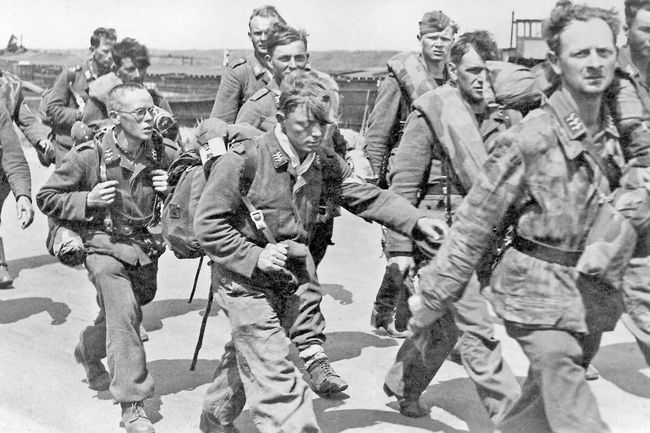
Vehicles and weaponry attract much wartime attention, but failing to give proper consideration to uniform design can spell disaster. Take, for instance, World War I, when the French army ignored war minister Adolphe Messimy’s warning about the country’s insistence on retaining the conspicuous red coloring of its historic pantalon rouge uniforms, despite his pointed admonishment: “This stupid blind attachment to the most visible of colors will have cruel consequences.” The French went on to suffer heavy casualties at the outset of the war, and switched to issuing horizon blue uniforms in 1915. The importance of uniforms became apparent to the Soviet Union as well, when soldiers suffered frostbite and other cold injuries during the Winter War against Finland at the start of World War II.
Both world wars created shifts in uniform design that were sometimes innovative, sometimes bizarre, and in some cases, enduringly impactful to civilian fashion. These are some of the more notable facts about military uniforms from the two world wars.
WWI Marked the U.S. Army’s First Monochromatic Uniform
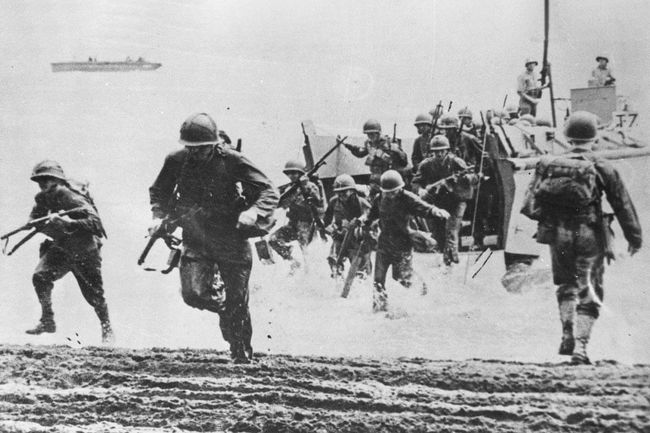
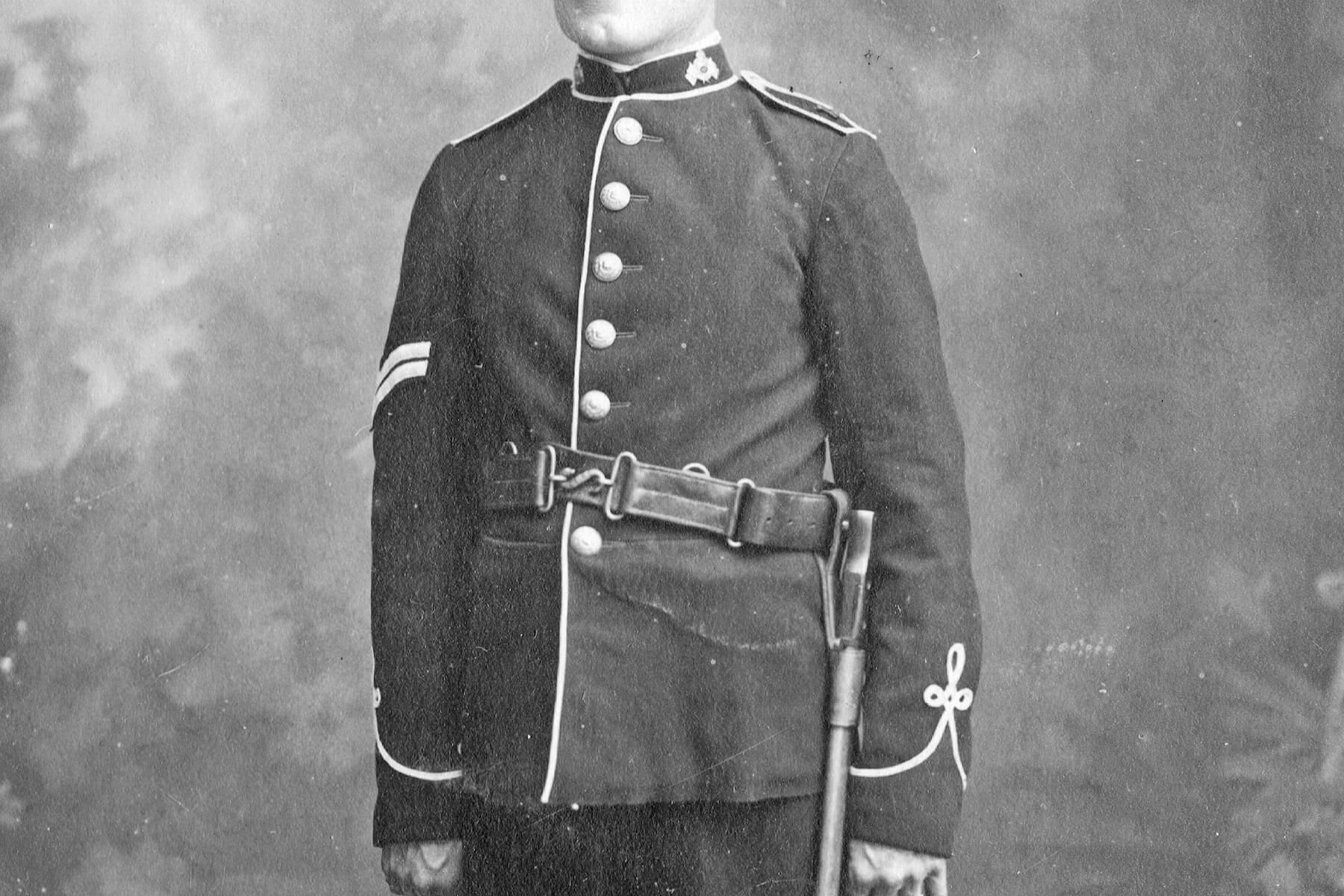
The uniform worn by the United States Army in the First World War was called the M1910 uniform. In addition to being the Army’s first single-color uniform — allowing for better camouflage and easier manufacturing — it was also the first time the standard olive drab uniform was worn during a war (though the Army switched to khaki-colored cotton uniforms during the summer). The M1910 was also notable for not including any blue outerwear or pants, which had been a part of every United States (or Continental) Army uniform since the Revolutionary War.
More from our network






The French Army Reintroduced the Metal Helmet During WWI
Metal helmets had been in use throughout antiquity, but they fell out of favor in the 18th and 19th centuries with the decline of sword-and-spear close combat and the rise of firearms. In 1915, the French army outfitted its soldiers with steel helmets in order to protect them from falling shrapnel, which was an increasing problem in trench warfare. The helmets were designed by Intendant-General Louis Auguste Adrian, and were known as M15 Adrian helmets. The Adrian helmets proved effective enough that other Western armies began adopting them. Eventually, most countries began manufacturing some sort of metal helmet design.

The WWI-Era German Helmet Spikes Originally Had a Function
The famous spike-adorned German helmet from World War I is called a pickelhaube, and it was designed in 1842 by King Friedrich Wilhelm IV of Prussia. (Similar spiked helmets were already in use in other countries, such as Russia.) So what was the spike for? Its original purpose was as a point to attach the decorative strands of a cavalry helmet plume. Later, the spike itself (without the attached plume) gained aesthetic value for its aggressive appearance and was favored by the German infantry. The pickelhaube didn’t last for the entirety of the war, though, as it was discontinued in 1916 due to its ill-suitedness for trench warfare and a shortage of materials necessary to manufacture them. That didn’t stop it from being an enduring symbol of the German army, though, as its sinister appearance was ideal for war propaganda depicting the Germans as vicious aggressors. To celebrate the end of the war, New York City built a pyramid out of around 85,000 pickelhaubes.

Soviet Soldiers Wore Fur Coats and Felt and Wool Boots
The frigid climate of the Soviet Union posed a harrowing challenge to soldiers, especially during winter months. To combat the cold, the Soviet Union outfitted the Red Army with thick fur coats and traditional boots made of felt and wool, known as valenki. Valenki weren’t exclusively military-issued boots, though; in fact, they were a traditional form of Russian footwear worn for hundreds of years. Though the fur coats and valenki were age-old items, they were only added to the army’s provisions in August of 1941 after poor cold-weather preparedness in the Soviet Union’s 1939 invasion of Finland caused higher-than-expected casualties.

Soviet Soldiers Didn’t Wear Socks
During the world wars, and at least as far back as the Napoleonic Wars, the Russian army used a predecessor to socks: the foot wrap. The clothing, known in Russian as a portyanki, is a simple rectangular piece of cloth wrapped around the foot that provides the same function a sock would. The advantage is that the foot wrap is cheap and easy to manufacture en masse, though the drawback is that it requires considerably more technique to put on correctly. Incorrectly wrapping the cloth could result in creases or folds that would cause blistering or other discomfort. Nonetheless, the portyanki remained in use by the Russian army as late as 2013.

WWII Flight Jackets Became an Enduring Fashion in the U.S.
World War II aerial warfare created a unique problem for military uniform designers to solve. Temperatures at the altitudes pilots flew at could reach as low as -30 degrees Fahrenheit, but the tight quarters of an aircraft’s cockpit meant that any outerwear that was too bulky would impede movement. In response to this challenge, the U.S. Army Aviation Clothing Board developed two leather flight jackets that were used in World War II: the A-2 and the G-1. The A-2 was issued for the Air Force, had a medium snap collar and an enclosed snap-secured pocket on each side, and zipped closed. The G-1 was issued for the Navy, and had a similar pocket and zipper design, but added some flashiness in the form of a larger fur-lined collar, and ornamental patches on the front, arms, and back.
The military ceased production of the A-2 in 1943, but the design was popularized in the 1963 Steve McQueen film The Great Escape, and retailers manufacture replicas to this day. As for the G-1, it’s still issued to enlisted members of the Navy, and had its own film role as the jacket Tom Cruise wore in 1986’s Top Gun.