

7 Surprising Facts About the Age of Dinosaurs
For millions of years, the predominant class of animal on Earth was that of the dinosaurs — a name that comes from the Greek words for “terrible lizards” (even though dinosaurs were reptiles but not lizards at all). From around 252 million to 66 million years ago, these incredible creatures evolved in every corner of the globe, even Antarctica. Although the age of dinosaurs stretched far longer than humans have even walked upright (186 million years versus 7 million years), scientists have only been aware of the existence of dinosaurs for about two centuries, and our understanding of them changes almost daily as paleontologists uncover more secrets. These seven surprising facts explore the ever-fascinating world of these ancient “terrible lizards.”
Two Mass Extinctions Gave Rise to the Dinosaurs
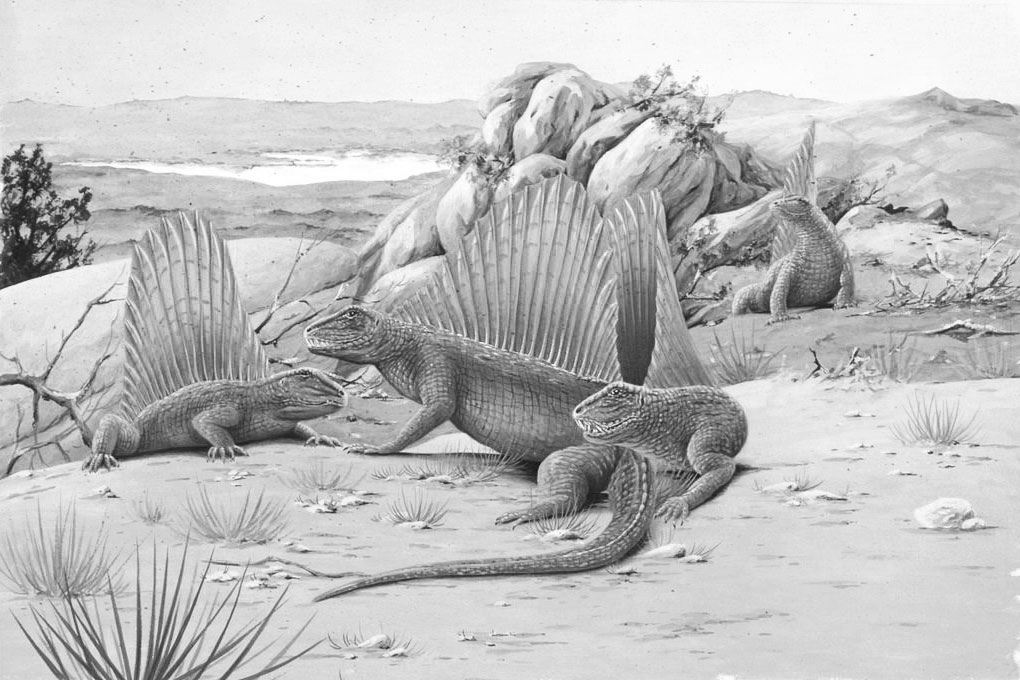
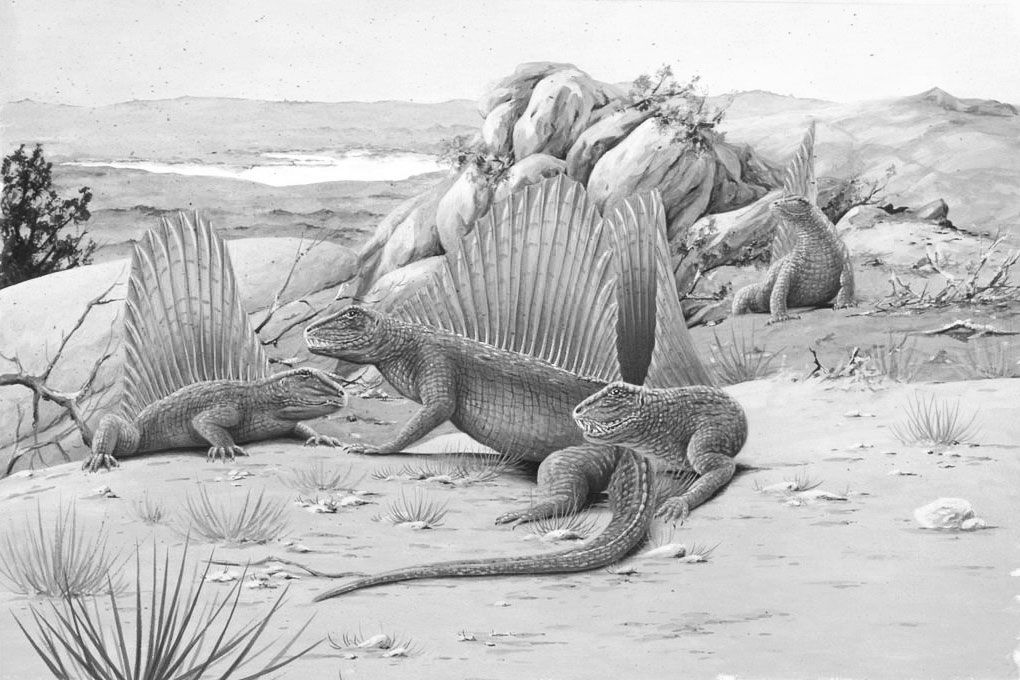
The Earth is no stranger to mass extinctions, having experienced five (and currently undergoing a sixth) in its 4.6 billion-year history. But none was quite so devastating as the Permian extinction, otherwise known as the “Great Dying.” Scientists are not certain of its cause (a leading theory is continuous volcanic eruptions in modern-day Siberia), but its deadly results aren’t up for debate: The world lost 90% of its plant and animal species. This cataclysmic event, which occurred around 252 million years ago, marked the end of the Permian Period and start of the Triassic Period. As life recovered from this biological trauma, various animals took root, including the Lystrosaurus, ichthyosaurs, and eventually, archosaurs — the ancestors of dinosaurs. The first dinosaurs appeared in the fossil record around 240 million years ago, and a second extinction, known as the Triassic-Jurassic extinction event, occurred around 202 million years ago, killing off many of their rival archosaur species. With less competition and larger ranges, the small dinosaurs were then able to thrive and evolve into the gigantic reptiles of the subsequent Jurassic and Cretaceous periods.
More from our network






Most Dinosaurs in Jurassic Park Didn’t Live During the Jurassic Period
Although the age of dinosaurs often conjures up an image of a tropical planet with stegosauruses and T. rexes running rampant, the scientific reality is more complicated. The dinosaurs actually lived during three different geologic periods: the Triassic, Jurassic, and Cretaceous (known overall as the Mesozoic Era). All three periods played host to giant reptiles we know today as dinosaurs, but each one was distinct, with its own unique cast of dino characters. While the Triassic Period saw mostly small dinosaurs, the Jurassic Period gave rise to monstrously proportioned dinos, and the Cretaceous Period hosted an immense diversity of species. Many of the dinosaurs featured in Steven Spielberg’s 1993 film Jurassic Park — including the velociraptor, triceratops, ankylosaurus, parasaurolophus, and most famously, the Tyrannosaurus rex — actually evolved during the late Cretaceous Period. Only a few starring dinos, such as the dilophosaurus and brachiosaurus (in arguably the best scene in the film), actually lived during the titular Jurassic Period. Thankfully, Hollywood corrected the error with a Jurassic Park-inspired children’s movie in 2020 called Camp Cretaceous.

Dinosaurs Measured From a Few Inches Big to Several Stories Tall
Today, the animal class Mammalia features a stunning array of species in all different shapes and sizes, from the 2-gram bumblebee bat to the 200-ton blue whale. The same can be said for the dinosaurs. The smallest of the now-extinct dinosaurs weren’t very big at all; some may have only been the size of a sparrow. On the other end of the spectrum, no creature quite compared to the Titanosaur, an especially gargantuan long-necked sauropod. The largest of this cadre was the Argentinosaurus, a species discovered in (you guessed it) Argentina. Although no complete skeleton of this dinosaur has ever been uncovered, paleontologists estimate it would’ve stood 131 feet tall (taller than a 10-story building) and weighed upwards of 110 tons, making it the largest land animal in Earth’s history.

A Dinosaur’s Day Was Not 24 Hours Long
The world of the dinosaurs was unlike our own. For one, the supercontinent Pangea was beginning to break up during the Triassic Period, so the Earth’s landmasses during the dinosaur age would look unrecognizable to modern eyes. What’s more, the length of a day — the average time it takes Earth to rotate on its axis — wasn’t 24 hours. This is because ever since the Earth’s creation, the planet’s rotation has been slowing down. Some 1.4 billion years ago — long before the dinosaurs — a day on Earth was approximately 18 hours and 41 minutes. At the dawn of the dinosaur age, a day would have been around 23 hours long. Over time, Earth’s rotation continued to slow down as the moon moved further into its modern orbit. Every year, approximately 0.0000135 seconds are added to the length of a day on Earth. Since the end of the Bronze Age (around 1200 BCE), that small change has only added up to 0.047 seconds, but in the many millions of years since the dinosaurs, it made up the difference of an entire hour.

The Tyrannosaurus Rex (And Many Dinos) Had Feathers
One of the biggest paleontological revelations of the past couple of decades is the discovery that most (if not all) dinosaurs had feathers. Similar to how all mammals have some kind of fur — from an alpaca’s extra-dense coat to the wispy hairs found on elephants — dinosaurs also sported a wide range of feathers. When scientists first identified dinosaur fossils in the 1820s, the consensus was that these extinct creatures were simply large reptiles. While true, many dinosaurs are actually more closely related to birds (which can technically be classified as reptiles). However, the reptilian classification caused paleontologists for more than a century to picture these beasts more like scaly crocodiles than resplendent roosters, so when fossil discoveries in the early 20th century displayed evidence of feather insertion points, paleontologists overlooked them in favor of the accepted “big lizard” paradigm. Now scientists know that many of the dinosaurs of the Jurassic and Cretaceous periods displayed a wide array of colorful feathers. The precise ubiquity of feathers is still up for debate, with some evidence suggesting that early Triassic dinosaurs and also long-necked dinosaurs such as sauropods were perhaps more scaly than feathery. But experts are now starting to change their perception of even the most famous dinos; one paleontologist described the theropod T. rex as a “roadrunner from Hell.”

All Land-Based Dinosaurs Died Out Within Nine Months
Mass extinctions are not usually measured in months, but one exception is the K-T (Cretaceous–Tertiary) extinction event that occurred 66 million years ago. When a 6-mile-wide asteroid larger than Mount Everest struck off the coast of what’s now the Yucatán Peninsula, the impact released 100 million megatons of energy, vaporizing the asteroid and sending a massive cloud of material into the atmosphere and across the globe. The resulting rain of molten glass, wildfires, tsunamis, volcanic eruptions, scalding air temperatures, and lasting darkness killed off all land-based dinosaurs within just nine months. Just as two extinction events had given rise to the dinosaurs’ rule on Earth, a third one ended it in a geological millisecond — or did it?

Dinosaurs Never Went Extinct
Although swift velociraptors, massive titanosaurs, and carnivorous T. rexes are long extinct, some species of small avian dinosaurs — by some accounts no larger than ducks — survived the cataclysmic blast thanks to their ability to subsist on small amounts of food and forage the world’s destroyed forests with an evolutionary advantage known as a “beak.” It’s from these hardy survivors that all of today’s birds descended. And these avian dinos weren’t the only survivors: Rodent-like mammalian species outlasted the blast in their burrows, eventually awakening to a completely changed world. No longer the constant prey of meat-eating dinosaurs, these rodents ushered in a new age of mammals on land.