
Between 1789 and today, 45 people have served as president of the United States. During their time in office, as well as throughout their lives before and after the presidency, these leaders saw accomplishments and setbacks that shaped the nation in ways both big and small. Some of these stories have gone down in history, while others — such as George Washington’s time as a whiskey distiller, or Franklin D. Roosevelt’s pioneering foray into television — are less well known. Here are some surprising and fascinating facts about every U.S. president in history.
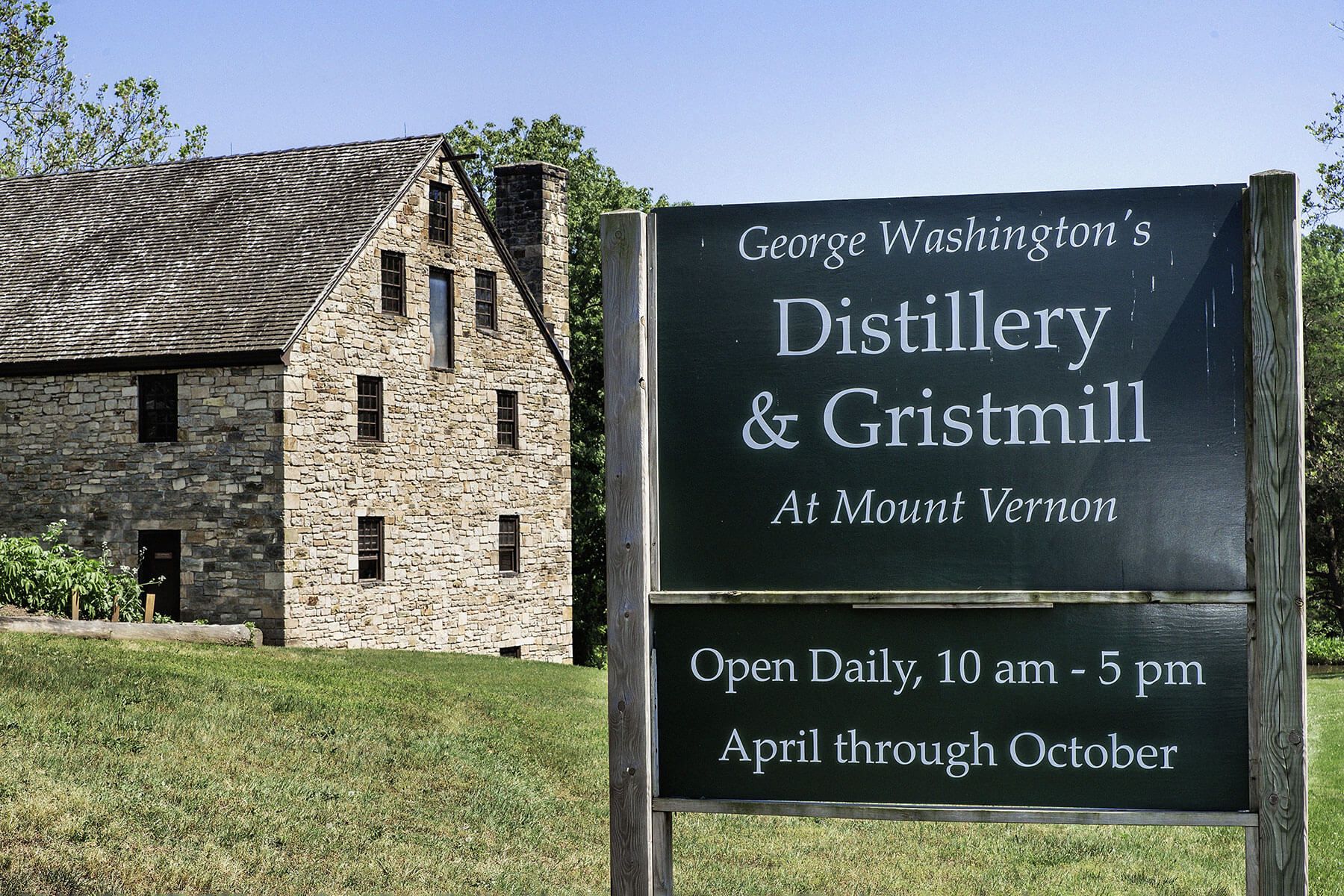
Photo credit: John Greim/ LightRocket via Getty Images
George Washington Distilled Whiskey After His Presidency
In 1797, mere months after leaving office, George Washington opened a whiskey distillery on his vast Mount Vernon estate. The venture proved to be wildly successful, as the distillery produced nearly 10,000 gallons of the liquor in 1799 — far more than the average of 650 gallons produced by other Virginia-based distilleries at the time.
John Adams Was the First President to Live in the White House
When John Adams’ predecessor, George Washington, took office, the White House was just an idea. Irish American architect James Hoban was tapped to design the building, which was finally completed in 1800 during the Adams administration, allowing America’s second president to become the first White House resident.
Thomas Jefferson Helped Popularize Macaroni and Cheese
Around the time he served as U.S. minister to France (1785 to 1789), future President Thomas Jefferson wrote, "The best maccaroni in Italy is made with a particular sort of flour called Semola, in Naples.” Jefferson tasked his private secretary, diplomat William Short, with tracking down a machine for making this dish, which he eventually had shipped to the U.S. The founding father was known for serving “maccaroni” — a term he used to describe all pastas — both with and without cheese to his guests. Jefferson even had his own written recipe for an early form of mac and cheese that was influenced by similar Italian recipes. The spoken and written accounts of those meals led to the dish’s increased popularity throughout the United States.
James Madison Was the Shortest President
Standing at just 5 feet, 4 inches, James Madison — who also weighed only around 100 pounds — was exactly a foot shorter than the tallest U.S. president, Abraham Lincoln (who stood at 6 feet, 4 inches). Madison’s closest presidential rivals in height were Benjamin Harrison and Martin Van Buren, both of whom were a wee bit taller at 5 feet, 6 inches.
Advertisement
Advertisement
Photo credit: MPI/ Archive Photos via Getty Images
James Monroe Was the Third President to Die on the Fourth of July
In an eerie coincidence, three of the first five U.S. presidents passed away on the anniversary of America’s birth. Both John Adams and Thomas Jefferson died on July 4, 1826, while James Monroe passed away on Independence Day in 1831. On the flip side, Calvin Coolidge was the only president born on the Fourth of July, in the year 1872.
John Quincy Adams Served in Congress Before and After Being President
Only one U.S. president — John Quincy Adams — served in the House of Representativesafter being elected commander in chief. Adams served as a senator from Massachusetts from 1803 to 1808, then as president of the United States from 1825 to 1829. He was elected to the House of Representatives shortly after his presidential term, serving from 1831 until his death in 1848.
Advertisement
Advertisement
Andrew Jackson Kept a Giant Wheel of Cheese in the White House
In 1836, President Andrew Jackson received a 1,400-pound block of cheese as a gift from a dairy farmer in New York, which he displayed in the White House for more than a year. Before leaving office, Jackson invited the public to the White House to come take some cheese. A firsthand account recalls men, women, and children hacking away at it until "the carpet was slippery with cheese."
Photo credit: Heritage Images/ Hulton Archive via Getty Images
Martin Van Buren Was the First President Born a U.S. Citizen
Unlike the seven presidents who preceded him, Martin Van Buren wasn’t born under the authority of the British crown. Van Buren was born in 1782, several years after the signing of the Declaration of Independence, and was thus a U.S. citizen for his entire life. While his successor, William Henry Harrison, was also born under British rule, every POTUS since Harrison has been an American citizen from birth.
Advertisement
Advertisement
William Henry Harrison Delivered the Longest Inaugural Address
On a cold, wet day in March 1841, William Henry Harrison refused an overcoat as he delivered his lengthy 8,445-word inaugural address. Harrison died 31 days into his term as President, and while some initially attributed his death to the long, chilly speech, researchers now believe unclean drinking water was the cause of Harrison’s fatal illness.
John Tyler Was the First Vice President to Succeed to the Presidency
John Tyler — notoriously dubbed “His Accidency” — became president upon the death of William Henry Harrison, and served as commander in chief from 1841 until 1845. Tyler was the first vice president elevated to the highest office in the land due to such an event, though he served only the one abbreviated term before being succeeded by James K. Polk.
Advertisement
Advertisement
James K. Polk Oversaw the Greatest Territorial Expansion of Any President
Between 1845 and 1849, America’s 11th president oversaw the largest U.S. territorial expansion of any POTUS. The United States added upwards of 1 million square miles of land during Polk’s time in office, including land that now makes up modern-day Arizona, Utah, Nevada, California, Oregon, Idaho, Washington, New Mexico, Wyoming, Montana, and Colorado.
Photo credit: Hulton Archive/ Hulton Archive via Getty Images
Zachary Taylor Was Nominated for President Without His Knowledge
At the 1848 Whig Party convention, delegates nominated former military general Zachary Taylor as their candidate for president — and he was eventually elected to the position. However, Taylor wasn’t present at the convention and was nominated without his prior knowledge. He didn’t find out about his own nomination for several weeks, as he initially refused to pay postage on a letter sent his way alerting him of the news.
Advertisement
Advertisement
Millard Fillmore Was the Last President Who Was Not a Democrat or Republican
Since 1853, the American presidency has been dominated by politicians who belonged to either the Democratic Party or the Republican Party. That trend began after Millard Fillmore, who was a member of the Whig Party during his presidency from 1850 until 1853. The Whig Party dismantled shortly after his term, and the two-party system has dominated ever since.
Franklin Pierce Defeated His Former General to Become President
The presidential election of 1852 was a race between Franklin Pierce and Winfield Scott, two men who served in the U.S. Army during the Mexican-American War. Pierce served as brigadier general during the conflict, whereas Scott was commanding general of the entire U.S. Army. Despite Scott’s greater military rank, Pierce emerged victorious during the presidential election.
Advertisement
Advertisement
Photo credit: Hulton Archive/ Archive Photos via Getty Images
James Buchanan Was the Only President to Remain a Lifelong Bachelor
James Buchanan was a lifelong bachelor, the only U.S. president who never married. He was engaged at one point, but his fiancée called off the engagement, after which Buchanan was reportedly brokenhearted and vowed not to marry. During his time in office, the president’s niece Harriet Rebecca Lane Johnston took on the hostess role usually filled by a First Lady.
Abraham Lincoln Was the First President to Appear on a Coin
In 1909, in honor of his 100th birthday, Abraham Lincoln became the first president to appear on a U.S. coin. The famous side profile bust design, created by engraver Victor David Brenner, is still in use today. Though some have called for the penny to be discontinued thanks to inflation cratering its value, there are still billions in circulation.
Advertisement
Advertisement
Photo credit: Kean Collection/ Archive Photos via Getty Images
Andrew Johnson Was the First President to Be Impeached
After Abraham Lincoln’s death, his Vice President Andrew Johnson took over the highest office in the land. A few years into his presidency, Johnson tested the newly passed Tenure of Office Act of 1867 by illegally firing Lincoln’s former secretary of war, Edwin Stanton. The House impeached Johnson for it, but the president survived removal from office by just one vote in the Senate.
Ulysses S. Grant’s Middle Initial Didn’t Stand for Anything
America’s 18th president was born Hiram Ulysses Grant. His now-famous middle initial “S” was the product of a clerical mistake. Grant was nominated to West Point by Ohio Congressman Thomas Hamer, who accidentally wrote Grant’s name in the application as “Ulysses S. Grant.” The confusion stemmed from the fact that Grant often went by Ulysses, rather than Hiram. The application called for a middle initial, so the confused Hamer added an “S” for Grant’s mother’s surname, Simpson. Despite Grant’s efforts to change the name, the middle initial stuck.
Rutherford B. Hayes Had the First White House Telephone Installed
On May 10, 1877, during Rutherford B. Hayes’ administration, the White House’s first telephone was installed in the telegraph room. Hayes was supportive of this new technology, though rarely received phone calls. However, it was pretty easy to remember how to dial the White House, as its phone number was simply “1” at the time.
James A. Garfield Was the First Left-Handed President
In 1881, James A. Garfield was elected as the 20th president of the United States. The 19 who came before him were all right-handed, making Garfield the first lefty ever to hold the office. Garfield could also be said to be ambidextrous, as he was known to have the ability to write in Greek and Latin with different hands at the same time. Since his tenure, there have been many other left-handers in the Oval Office, including Gerald Ford and Barack Obama.
Advertisement
Advertisement
Chester A. Arthur Owned Approximately 80 Pairs of Pants
Chester A. Arthur was a fashionable president, dubbed “Elegant Arthur” and the “Dude of all the White House residents” by political commentators and cartoonists of the time. He was said to own around 80 pairs of pants, which was considered an extravagance at the time (and even today). Arthur was known for changing his pants multiple times a day, and often wore a tuxedo to dinner.
Grover Cleveland was the 22nd and 24th president of the United States. When Cleveland ran for reelection after his first term in 1888, his opponent Benjamin Harrison won the electoral count despite Cleveland winning the popular vote. Four years later, Cleveland was successful in denying Harrison’s reelection and reclaiming his former role as president.
Advertisement
Advertisement
Benjamin Harrison Introduced Electricity at the White House
Electricity was first installed at the White House in 1891 during Benjamin Harrison’s time in office. Initially, the Harrison family was afraid of flipping any light switches, as they feared being electrocuted. Instead, they tasked electrician Irwin “Ike” Hoover with turning the lights off and on, sometimes resulting in lights burning overnight until Hoover returned the next morning to switch them off.
Photo credit: Photo 12/ Universal Images Group via Getty Images
William McKinley Was the First President to Ride in a Car
After taking a reportedly unenjoyable ride in an early automobile called the Stanley Steamer in 1899, President William McKinley is said to have remarked, “Stanley’s overoptimistic, I think, when he says those things will someday replace horses.” Though McKinley was wrong about the future of cars, he left a lasting mark on their history, as his Steamer ride was the first time a sitting president ever rode in an automobile.
Advertisement
Advertisement
Theodore Roosevelt Witnessed Abraham Lincoln’s Funeral Procession
When he was just 6 years old, young Theodore Roosevelt witnessed Abraham Lincoln’s funeral procession in New York City. On April 25, 1865, the future POTUS gazed down from a second-story window as the late president passed the Roosevelt family mansion on Broadway. A perfectly timed photograph captured the image of two young boys — Teddy and his brother Elliott — looking out from the window that day.
Photo credit: George Rinhart/ Corbis Historical via Getty Images
William Howard Taft Also Served as Chief Justice
President Theodore Roosevelt supported William Howard Taft as his successor in 1908, but their relationship soured, and Roosevelt challenged President Taft for reelection during the 1912 campaign. (Both candidates lost the election to Woodrow Wilson.) Later, in 1921, President Warren G. Harding appointed Taft as chief justice of the United States. Taft preferred the role, once saying, “I don’t remember that I ever was president.”
Advertisement
Advertisement
Woodrow Wilson Was the Only President Buried in Washington, D.C.
Of all the former presidents who have since passed away, only one is buried within the nation’s capital. That former leader is Woodrow Wilson, a native of Virginia, who died in 1924 and was interred at the Washington National Cathedral in the District of Columbia.
Warren G. Harding’s Dog Sat in on Cabinet Meetings
The first White House animal to really achieve celebrity status was President Warren G. Harding’s pup, an Airedale terrier named Laddie Boy, who lived in Washington, D.C., during the Harding administration from 1921 to 1923. On March 5, 1921, one day after taking office, Harding interrupted his first official Cabinet meeting to introduce the dog, who had just arrived from Ohio. After that, Laddie Boy became a regular at Cabinet meetings, and even had his own chair at the table.
Advertisement
Advertisement
Photo credit: FPG/ Archive Photos via Getty Images
Calvin Coolidge Had at Least 29 Pets Living in the White House
Calvin Coolidge practically ran a petting zoo out of the White House. The 30th president kept no fewer than 29 pets during his tenure on Pennsylvania Avenue. There were normal pets in large numbers, but there were some strange ones, too. Among them: a goose named Enoch, a mockingbird, Rebecca and Reuben the raccoons, Ebenezer the donkey, and Smoky the bobcat.
Herbert Hoover Was the First President Born West of the Mississippi River
Herbert Hoover was born on August 10, 1874, in West Branch, Iowa. Fifty-four years later, he was elected president, becoming the first POTUS born west of the Mississippi River. Hoover remains the only president born in Iowa, though there have been several other presidents born west of the Mississippi, including Harry Truman (in Missouri), Gerald Ford (in Nebraska), and Richard Nixon (in California).
Franklin D. Roosevelt Was the First President to Appear on Television
In 1939, Franklin D. Roosevelt became the first president to appear on television when he attended the New York World’s Fair in Queens. The technology was fairly new at the time, so not many people actually tuned in. Less than a decade later, in October 1947, FDR’s successor, Harry S. Truman, delivered the first televised presidential address, asking Americans to cut back on grain and meat consumption to help a struggling Europe.
Harry S. Truman Signed a Bill Creating the Air Force
Back in 1907, just four years after the Wright brothers took their first successful flight, a small division of the U.S. Army was established to focus on aeronautics. The Army’s aviation segment grew over the years, serving an important role in both world wars. After World War II ended, President Truman signed the National Security Act of 1947, formally establishing the U.S. Air Force.
Advertisement
Advertisement
Dwight D. Eisenhower Was Responsible for America’s System of Highways
In 1956, President Dwight D. Eisenhower signed one of the most ambitious public works projects in U.S. history into law, the Federal-Aid Highway Act. This feat of engineering added more than 41,000 miles of roadway across the United States. The interstate system provided both ease of travel for American citizens as well as strategic military benefits.
Photo credit: Historical/ Corbis Historical via Getty Images
John F. Kennedy Helped Popularize James Bond
President John F. Kennedy was a fervent early supporter of the James Bond franchise, as he was gifted a copy of the novel Casino Royale while recovering from back surgery in 1954, long before Bond became widely popular. Kennedy was such a fan that during the 1960 presidential campaign, he even invited author Ian Fleming to his house, where the pair discussed foreign affairs. In 1961, shortly after JFK’s inauguration, the new president told reporters that Fleming’s novel From Russia With Love was among his favorite books, causing the James Bond series to spike in popularity.
Advertisement
Advertisement
Lyndon B. Johnson Held Meetings on the Toilet
LBJ had an unorthodox style of conducting meetings. In fact, sometimes he dragged aides into the bathroom, where he discussed official government business while on the toilet. The president even had phones installed in White House bathrooms so he could take calls while using the facilities.
Photo credit: Hulton Archive/ Archive Photos via Getty Images
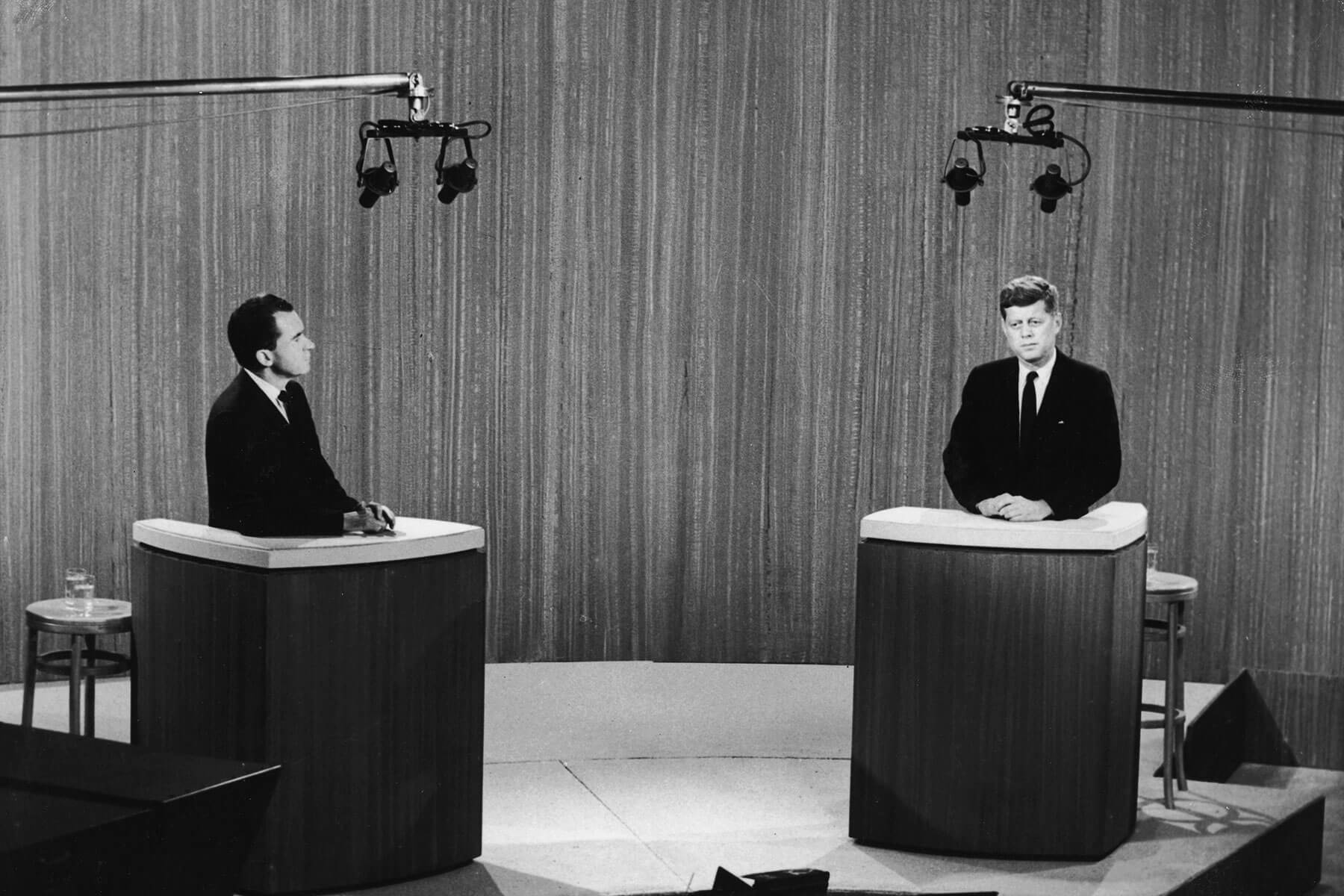
Richard Nixon Participated in the First Televised Presidential Debate
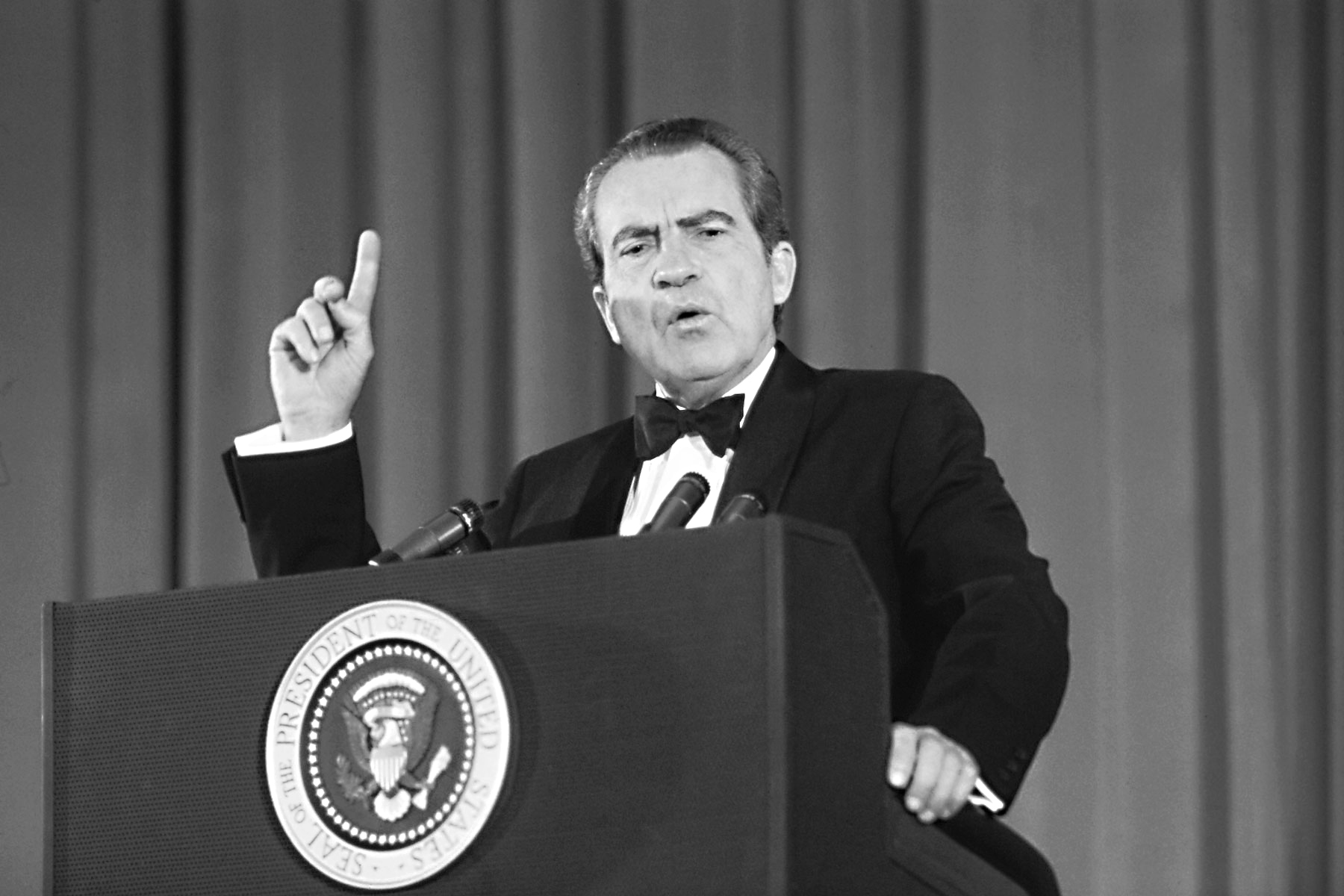
On September 26, 1960, Richard Nixon went up against John F. Kennedy in the first-ever televised presidential debate. Kennedy was widely deemed the winner due to his charismatic presence on camera compared to Nixon, who refused to wear makeup and appeared visibly sweaty. Though Nixon fared better in future debates, this moment in TV history turned the early tides in favor of Kennedy, who went on to win the election.
Advertisement
Advertisement
Gerald Ford Was a Collegiate Football Star
Gerald Ford was an MVP football player at the University of Michigan, and played with the 1935 Collegiate All-Star football team. Ford turned down offers to play for the Detroit Lions and the Green Bay Packers, instead choosing to pursue his law degree at Yale University, though he did serve as the Yale football team’s assistant coach during his time there.
Jimmy Carter Was the First President Born in a Hospital
Jimmy Carter, born in 1924, was the first U.S. president born in a hospital. All of Carter’s presidential predecessors were born in their parents’ homes, and it wasn’t until the early 20th century that hospital births became common nationwide. However, when baby Carter went home to the family farm, his house lacked plumbing and electricity, so the future president’s upbringing wasn’t quite so modern.
More than three tons of Jelly Belly jelly beans were brought in for Ronald Reagan’s inauguration on January 20, 1981. The flavors were Very Cherry (red), Coconut (white), and Blueberry (blue), the last of which was made specifically for the event to complete the American flag colors. Why jelly beans? Reagan used them to quit smoking and was known to carry around a jar of the colorful candy.
George H.W. Bush Formalized the Tradition of Pardoning a Thanksgiving Turkey
The tradition of presidents pardoning turkeys has unofficial roots dating as far back as Abraham Lincoln, who’s said to have granted clemency to a Thanksgiving turkey in 1863. While JFK “unofficially” pardoned a turkey in 1963, the tradition was formalized in 1989 under George H.W. Bush, who officially granted a bird a presidential pardon that year.
Bill Clinton Was the Only President Who Was a Rhodes Scholar
Bill Clinton experienced a thorough education, attending the prestigious Georgetown University beginning in 1964. Four years later, just prior to his college graduation, Clinton earned the esteemed Rhodes Scholarship, allowing him the opportunity to study at England’s Oxford University. Upon returning to the states, the future president earned a law degree at Yale Law School.
George W. Bush Once Owned the Texas Rangers Baseball Team
Before his full-time transition into politics, George W. Bush was part of the ownership group of Major League Baseball’s Texas Rangers from 1989 to 1998. He gave up his leadership role in 1994 upon being elected governor of Texas, but remained invested in the team until it was sold in 1998. Bush ran for president two years later, and was elected in 2000.
Advertisement
Advertisement
Photo credit: The White House/ Getty Images News via Getty Images
Barack Obama Won an Emmy and Two Grammys
Barack Obama not only won a Nobel Peace Prize for his international diplomacy, but he also earned himself an Emmy Award and two Grammys. Obama won his Emmy for narrating the Netflix documentary series Our Great National Parks, and his two Grammys for audiobook recordings of his personal memoirs, The Audacity of Hope and Dreams From My Father.
Donald Trump Appeared in the Movie Home Alone 2
Before taking office, Donald Trump was a celebrity who made regular appearances in television and film, including a small role in the 1992 filmHome Alone 2: Lost in New York. In the scene, a young Kevin McCallister — portrayed by Macaulay Culkin — encounters Trump in the lobby of the Plaza Hotel and asks him for directions.
Joe Biden First Sought the Presidency in 1987
America’s current president, Joe Biden, first ran for the nation’s highest office a whole 33 years before he actually proved victorious. Biden was elected to the Senate in 1972 and later ran for president in 1987 at age 44. He ended his campaign after a mere three months, opting to run again in 2008 (albeit unsuccessfully) and 2020, when he was finally elected.
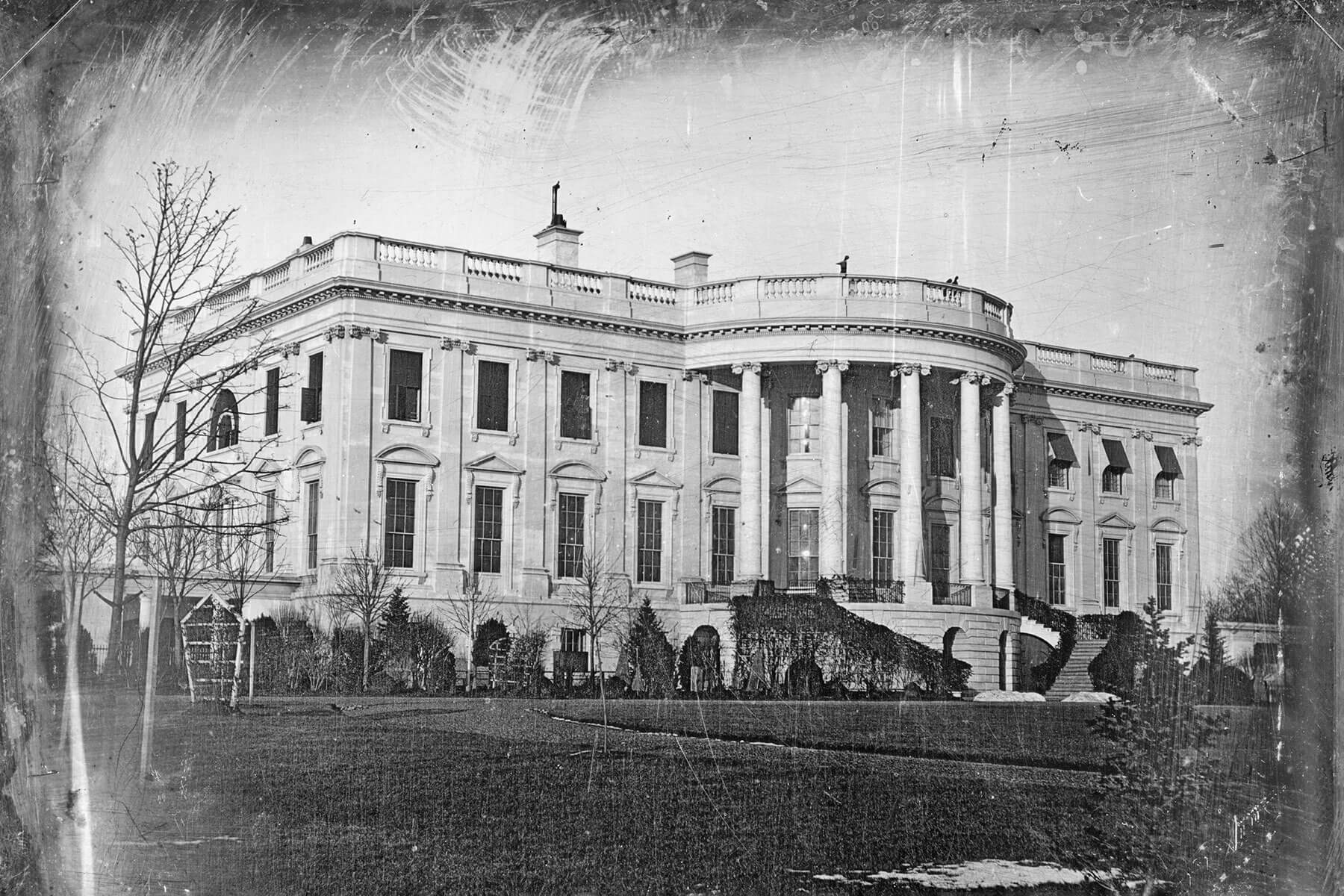
The White House is undoubtedly one of Washington, D.C.’s most recognizable landmarks. But while many Americans have seen it in person or on the back of a $20 bill, there’s still much to be learned about the history of this iconic building. From its massive renovations to the many rooms that were converted into entertainment venues, the White House boasts a rich history that makes it one of the most remarkable places in the nation’s capital.
When George Washington took office as the first President of the United States, the White House was just a concept. In fact, original proposals called for an even grander “President’s Palace” that would have been four times bigger than the White House we know today. Architect James Hoban later proposed a more modest neoclassical design based on the Leinster House in Dublin, and he was chosen to spearhead the project. Upon its completion in 1800, John Adams became the first President to call the White House home, and the building’s legacy has only grown from there. Here are six little-known facts about the White House.
The White House Has a Bowling Alley, Movie Theater, and Pool
The White House is not only a place to conduct government business; it’s also the first family’s home. Over the years, Presidents and their families have repurposed some of the building’s 132 rooms into entertainment venues to make their lives more enjoyable. One such room is the White House bowling alley, which Harry Truman opened in 1947 in the West Wing. While Truman wasn’t a frequent bowler himself, White House staffers formed the White House Bowling League in 1950. Those original lanes were closed by Dwight D. Eisenhower in 1955, but years later, Richard Nixon opened a new bowling alley directly underneath the North Portico.
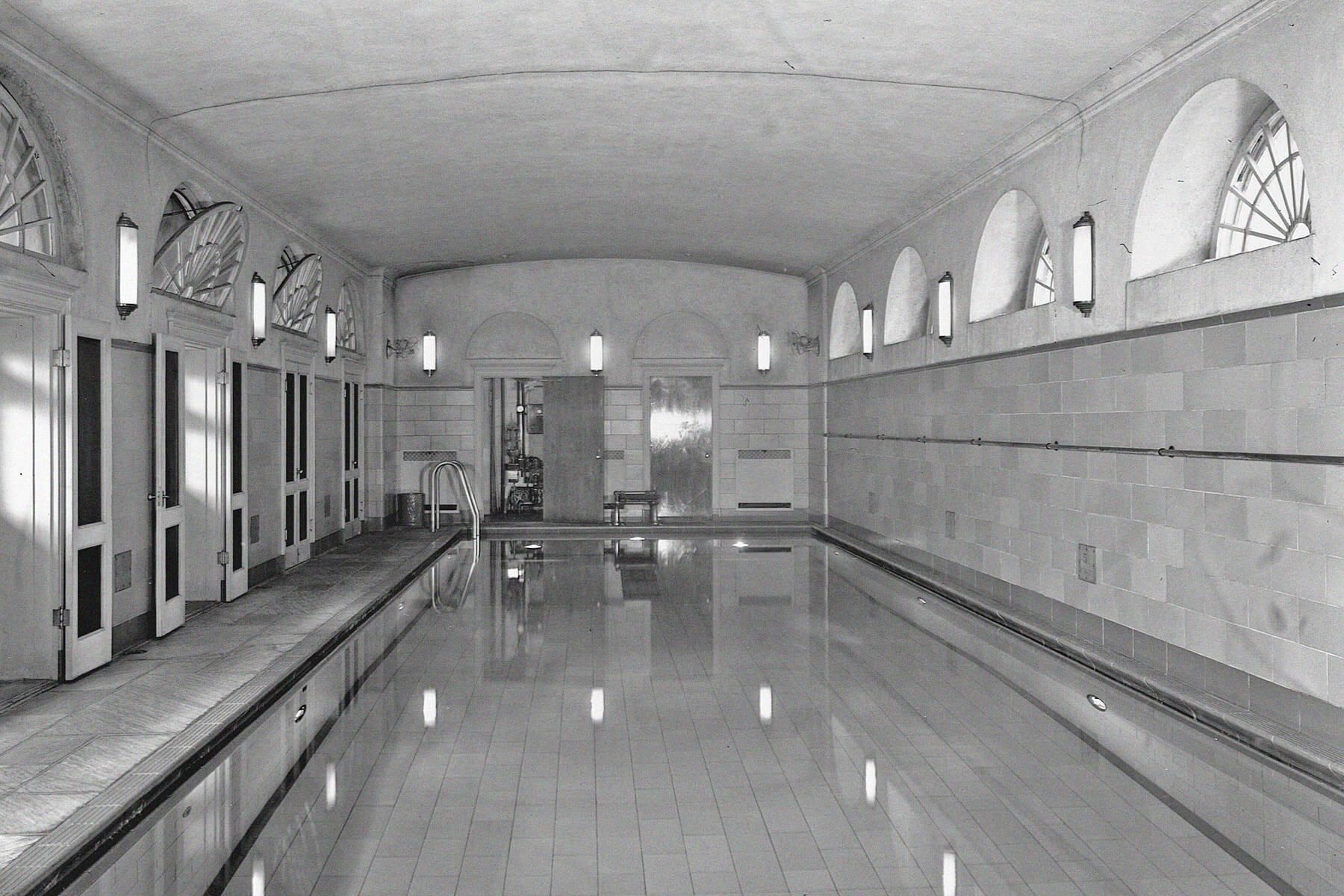
Other notable spaces found throughout the White House include a 40-seat movie theater, which was converted from a former cloakroom in the East Wing. During Bill Clinton’s administration, a third-floor sitting room was repurposed as a music room, where the President practiced playing saxophone. The White House also has a storied history of swimming pools; the first White House swimming pool was built indoors for Franklin D. Roosevelt in 1933, as he often swam for exercise in the wake of his polio diagnosis. In 1975, Gerald Ford commissioned the construction of an outdoor pool that he proudly showed off by taking a dip in front of reporters on July 5 of that year. This secluded escape is located just south of the West Wing, and remains open to Presidents and their families.
The White House wasn’t always treated with the same care and respect that it is today. In 1948, during the Truman administration, the building was deemed on the verge of structural collapse, forcing President Truman to move into the nearby Blair House (a building normally used as the President’s guest residence). Analysts determined that the White House deteriorated in part throughout FDR’s presidency, as the Depression and World War II caused Roosevelt to put off much-needed repairs.
Though Truman wasn’t pleased with the displacement, he also wasn’t in a rush to return to an unsafe building. The President authorized an extensive renovation that lasted from 1948 until 1952, which saw the digging of deeper foundations and the addition of a steel frame skeleton within the White House’s interior. Truman had previously installed a balcony outside the presidential living quarters, which was completed in early 1948. While most of the White House had to be revamped, this balcony was one of the few elements left untouched, as it was built so well.
Photo credit: Stock Montage/ Archive Photos via Getty Images
The White House Requires 570 Gallons of Paint Every Few Years
Keeping the White House so white is an expensive and time-consuming process. The building requires a new coat of paint every four to six years, and recently underwent an extensive recoating in 2019. The cost of this massive paint job is around $85,000, as workers use a special German-made paint by Duron. The specific shade — called Whisper White — is used for the preservation of historic buildings, and costs up to $150 per gallon.
While $20,000 for new paint may seem like a lot, it’s actually a small portion of the total annual maintenance costs needed to keep the White House up and running. The 2023 Financial Services and Appropriations Act set aside $2.5 million in annual funds for White House upkeep.
On August 24, 1814, the White House was lit aflame by British troops as part of the Burning of Washington, an invasion during the War of 1812. The fire devastated the structure, and only two items were salvaged that still hang in the modern White House today: a full-length portrait of George Washington that was saved by First Lady Dolley Madison, and a small wooden medicine chest. The rebuilding process proved to be an arduous one, and Congress even considered temporarily moving the nation’s capital. However, in the end, the White House’s original architect, James Hoban, was tasked with rebuilding the President’s home, and repairs were completed in 1817.
Tragedy struck the White House yet again on Christmas Eve in 1929, as a fire swept through a storage area containing 200,000 government pamphlets. Aides were alerted to the blaze around 8 p.m., while President Herbert Hoover hosted a Christmas party downstairs. After being informed of the inferno, the President and his aides rushed to the executive offices to save important documents, the desk chair, and a presidential flag — just in time. More than 100 firefighters rushed to the White House, and despite working in freezing temperatures, they successfully put out the fire around 10:30 p.m. Though the building on the whole was still usable, the executive offices were heavily damaged and the press room destroyed, necessitating repairs that continued until the following spring.
The Building Wasn’t Officially Named the White House Until 1901
The White House was painted white in 1798 to protect the building’s sandstone exterior, and the press began colloquially referring to it as the “White House,” though it was just a nickname at the time. Throughout the 19th century, the building was formally known as the “President’s House” or “Executive Mansion,” two names that were used until Theodore Roosevelt took office in 1901.
On October 17, 1901, Roosevelt directed his secretary, George B. Cortelyou, to alert various cabinet departments of the building’s new name. Roosevelt’s bulletin mandated the change of “the headings, or date lines, of all official papers and documents requiring [Roosevelt’s] signature, from ‘Executive Mansion’ to ‘White House.’” The President believed that “Executive Mansion” was too generic a term used around the world. Roosevelt determined that by changing the name to the “White House,” the building would be instantly recognizable as the home of the President of the United States.
Jackie Kennedy Won an Emmy for Her Televised Tour of the White House
While President Truman worked to ensure the stability of the White House’s structure, it was First Lady Jacqueline Kennedy who revolutionized its interior. In 1941, long before she became a resident of the White House, Jackie toured the building with her mother and sister, and was dismayed by the lack of historical furnishings. Shortly after moving in with her husband in 1961, she made it her mission to overhaul the White House experience and create a more comfortable environment that also highlighted the building’s extensive legacy.
Enlisting the help of Americana collector Henry Francis du Pont, French designer Stéphane Boudin, and decorator Dorothy Parish, the First Lady began work on a massive restoration project. Her goal was not merely to redecorate but to showcase the history of the mansion and the country itself. From outfitting the Blue Room with French furniture that President James Monroe had ordered back in 1818, to redesigning the Treaty Room in a Victorian style, Jackie left almost no corner of the White House untouched. On February 14, 1962, Mrs. Kennedy led a guided tour of the building that was broadcast on CBS and NBC, drawing an estimated 80 million viewers and earning an honorary Emmy Award.
Advertisement
Advertisement
7 Little-Known Facts About America’s Founding Fathers
Few figures in U.S. history are as well known as the Founding Fathers — a cadre of generals, writers, politicians, lawyers, and one particular dentist who fought for and founded the United States. Although many of us know the broad facts about America’s founders, and almost as many myths (George Washington never actually cut down a cherry tree, for instance), there are still many little-known stories about these famous figures. Here are seven facts about the Founding Fathers that may surprise you.
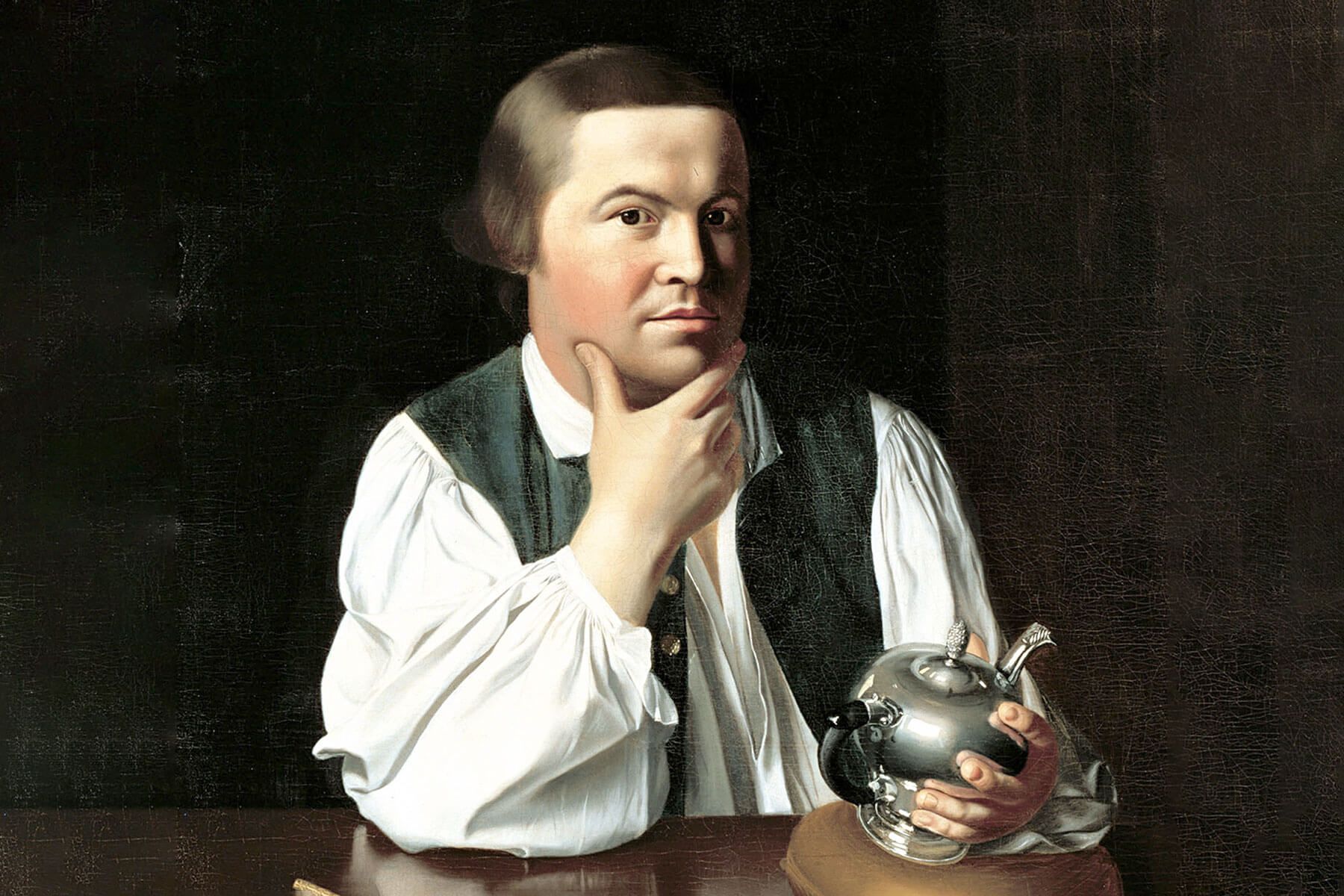
Paul Revere went down in history for his famous “Midnight Ride,” when, as the story goes, he warned the residents of Lexington, Massachusetts, that “the British are coming” (though he likely never said that exact phrase). But what few people know is that Revere was also a local dentist. In 1770, five years before his “Midnight Ride,” Revere placed an ad in the Boston Gazette that read, “Fix [teeth] as well as any Surgeon-Dentist who ever came from London.” What’s more, Revere was the first person in the U.S. to practice dental forensics. One of Revere’s patients was physician Joseph Warren, the Patriot who alerted Revere about the British advance the night of April 18, 1775. Warren was killed in the Battle of Bunker Hill a few months later, and it took nine months — after the British evacuated Boston — for Revere to search the mass graves for his friend. As Warren’s dentist, Revere was able to successfully identify the body by noticing his own dental handiwork, the first known use of dental forensics in the new nation.
Ben Franklin Invented a Musical Instrument Used by Mozart and Beethoven
In the mid-1700s, while spending time in Europe, Benjamin Franklin experienced what was a popular musical performance at the time: singing glasses. Intrigued by the beautiful sound of a wet finger on glass, Franklin developed an instrument known as a “glass armonica” in 1761. Working with a glassblower in London, Franklin altered the thickness of glass bowls interlocked along a rod in order to produce a range of pitches. Franklin had his share of odd ideas over the years (such as his failed phonetic alphabet), but the glass armonica was an 18th-century sensation. Some of the era’s greatest composers, including Wolfgang Amadeus Mozart and Ludwig van Beethoven, wrote music for the instrument. However, it was largely forgotten by the 1820s — many musicians complained of dizziness and other symptoms after playing it, which may have been due to lead poisoning (the instrument used lead paint to color code each bowl) or the instrument’s vibrations. Today, a few musicians still practice the subtle, ethereal art of the glass armonica.
Thanks to the hit 2015 musical Hamilton, America’s first treasury secretary is now one of the most famous Founding Fathers. Yet historians are still unclear on one very basic piece of information about him: his age. Hamilton always insisted that he was born in 1757, but official documents from the Caribbean island of Nevis, where Hamilton was born, state the year as 1755. Experts have debated the reason behind this discrepancy, and most believe Hamilton lied about his age on purpose. Why? Well, there are a couple theories. One theory put forward by historians takes us back to 1768, when Hamilton was (probably) 13. That year his mother died, and since his father had abandoned the family years earlier, Hamilton was effectively an orphan. To score an apprenticeship with a local businessman, Hamilton may have lied and said he was 11, which was a more appropriate age to begin training for a trade. Ron Chernow, author of the biography Alexander Hamilton (the literary inspiration behind the musical), has offered a different theory, suggesting Hamilton might have altered his age on his application to Princeton to appear as a prodigy in the eyes of his peers.
Thomas Jefferson Wrote His Own Epitaph and Didn’t Mention Being President
Before his death, Thomas Jefferson outlined a few specific instructions for his burial; for instance, he wanted the obelisk to be made of coarse stone. Always the writer, Jefferson also crafted his own epitaph highlighting the achievements for which he hoped to be remembered, and, as he put it, “not a word more.” It reads: “Here was buried / Thomas Jefferson / Author of the Declaration of American Independence / of the Statute of Virginia for religious freedom / & Father of the University of Virginia.”
Strangely, nowhere on this epitaph does Jefferson state that he was President of an entire nation; he also fails to mention that he served as governor of Virginia, secretary of state, and Vice President. It’s possible that Jefferson was more proud of his intellectual contributions than the moments he held power. In 1883, Jefferson’s descendants donated the original gravestone to the University of Missouri — a campus designed in a similar fashion to Jefferson’s University of Virginia and the first university in the region acquired by the Louisiana Purchase. Today, a new gravestone marks the founding father’s final resting place, but the epitaph remains the same — still omitting Jefferson’s time as the nation’s chief executive.
Thomas Paine Wasn’t Popular Until Long After His Lifetime
Writer and political activist Thomas Paine played a unique role in America’s road to independence. Instead of fighting with a sword and musket (he didn’t prove to be a very good soldier), Paine fought for his fledgling country with his pen. One of his most important works is the political pamphlet Common Sense. Published on January 10, 1776, it lays out the American colonies’ united cause against the British Empire and King George III, and was one of the bestselling works in 18th-century America. His follow-up pamphlet The American Crisis (published between 1776 and 1783) opened with the iconic line, “These are the times that try men’s souls,” and gave much-needed encouragement to the struggling Continental Army.
Without Paine’s writing, which stirred up the revolutionary spirit throughout the colonies and persuaded many Patriots to fight on, there may not be an America, so it’s strange that at the time of his death (and for more than a century afterward), many Americans didn’t think very highly of him. When Paine died in 1809, only six people attended his funeral in New York’s Greenwich Village — an obituary at the time even wrote, “He had lived long, done some good, and much harm.” The “harm” referred to his radical anti-Christian views found throughout his work The Age of Reason. Although Paine was actually a deist and not an atheist, his reasoning was too controversial for a deeply religious America, and many U.S. schools avoided teaching Paine because of his radical views. But times changed, and in 1937 an article in the Times of London referred to Paine as “America’s Voltaire,” a reference to the influential 18th-century French writer who also questioned religious beliefs. Paine’s legacy has been on the mend ever since with statues and memorials dedicated to him throughout the U.S. Today his former cottage in New Rochelle, New York, is considered a U.S. National Historic Landmark.
Advertisement
Advertisement
Photo credit: Three Lions/ Hulton Archive via Getty Images
George Washington Lost More Battles Than He Won
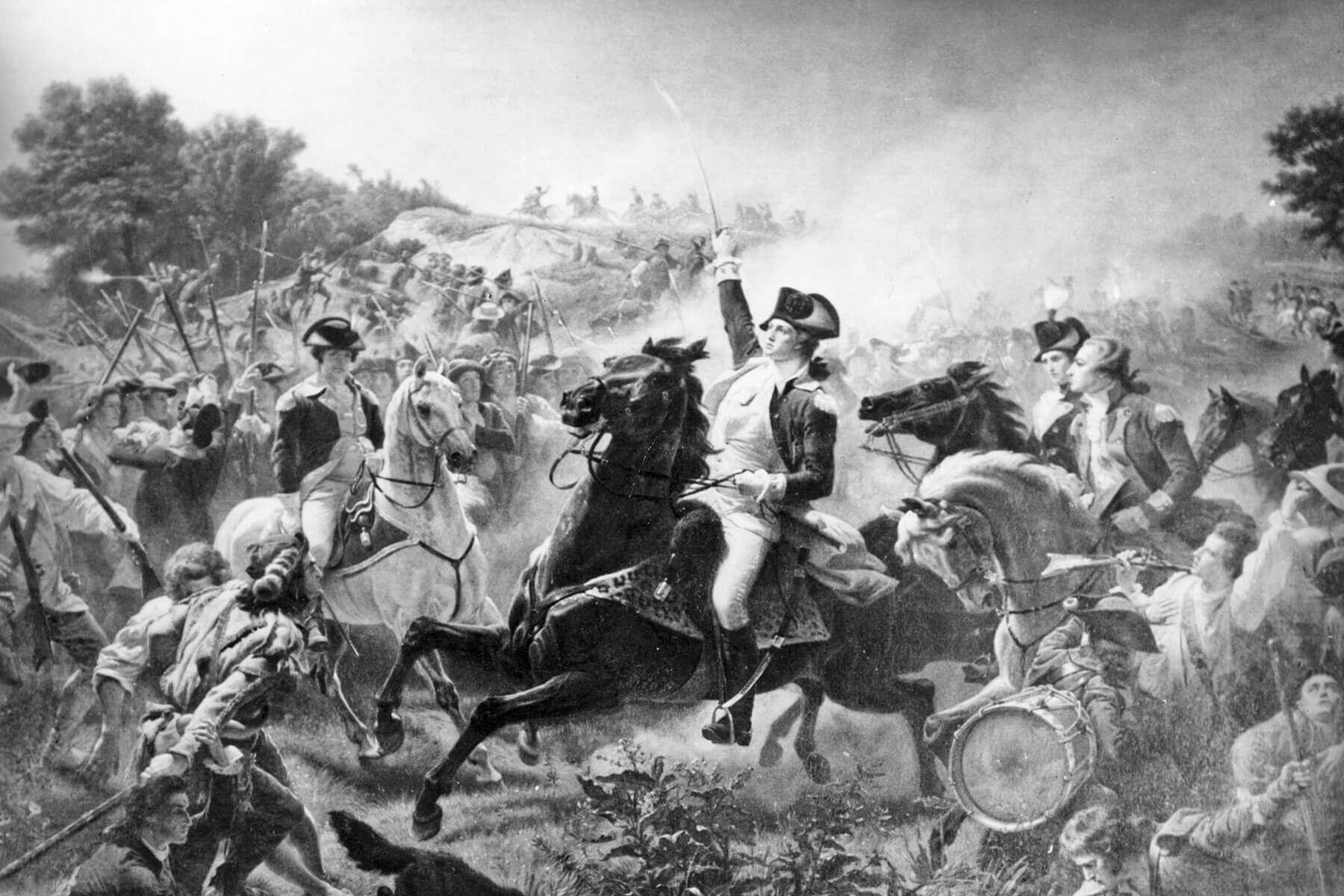
General George Washington embodies the phrase “losing the battle but winning the war,” because during the American Revolution, he lost more battles than he won. Despite some experience in the British army, Washington had little experience fielding a large fighting force, and the Continental Army was filled with soldiers who were far from professional fighters. However, Washington’s resilience, determination, and long-term strategy eventually won the day. According to Washington’s aide Alexander Hamilton, the plan was simple: “Our hopes are not placed in any particular city, or spot of ground, but in preserving a good army … to take advantage of favorable opportunities, and waste and defeat the enemy by piecemeal.” Washington, also aided by competent generals and assisted by the French navy, decisively ended British ambitions in the colonies at the Battle of Yorktown in 1781.
James Madison Is the Shortest President in U.S. History
Although James Madison’s signature doesn’t adorn the Declaration of Independence, as the nation’s fourth President and chief architect of the Bill of Rights, he’s widely regarded as one of the most influential Founding Fathers. Madison had a large impact on early U.S. history even though he is also the country’s shortest President thus far, standing just 5 feet and 4 inches tall. That makes Madison a full foot shorter than America’s tallest President, Abraham Lincoln (and no, that height doesn’t include Lincoln’s signature stovepipe hat).
Founded in the 17th and 18th centuries on the East Coast of what is now the U.S., the 13 British colonies in America were established for different reasons and governed in different ways. Maryland, for instance, was founded as a religious haven for English Catholics, while royal colonies such as New Hampshire were established to generate wealth for England. Despite their differences, all 13 colonies eventually became united in their resistance to British rule. At the start of the American Revolutionary War in 1775, there were more than 2.5 million people — a mix of European colonists, enslaved Africans, and Indigenous peoples — living in the colonies, from New Hampshire in the North to Georgia in the South. Here are 13 interesting facts that you may not have learned about the 13 original colonies.
Photo credit: Heritage Images / Hulton Fine Art Collection via Getty Images
New Hampshire Was the First Colony to Grow Potatoes
New Hampshire was the first of the American colonies to form an independent government, as well as the first colony to have a state constitution. Yet it’s the humble potato that might be the Granite State’s biggest contribution to American history. Potatoes were brought to the colonies several times during the 1600s, but it wasn’t until 1719 that the first permanent potato patches were established by Scotch-Irish immigrants near Londonderry, New Hampshire. From there, the popularity of potatoes spread, making them the most commonly consumed vegetable in the U.S. today — and, since 2013, the state vegetable of New Hampshire.
Photo credit: MPI / Hulton Royals Collection via Getty Images
Massachusetts Was Named for Its Indigenous Peoples
In 1620, English settlers, many of whom were religious pilgrims, arrived on the Mayflower in what is now Plymouth, Massachusetts, forming the second permanent settlement of British colonists in the New World (after Jamestown, Virginia, in 1607). A larger group of English Puritans followed soon after, and established the Massachusetts Bay Colony. Indigenous peoples had been living on the land for thousands of years, and the colony was named for the Massachusett tribe, making the Bay State the first of the colonies to be given an Indigenous name. The name “Massachusett” comes from the Algonquin word “Massa-adchu-es-et,” which roughly translates as “great-hill-small-place.”
Photo credit: Interim Archives / Archive Photos via Getty Images
Connecticut’s Royal Charter Was Hidden in a Tree
In 1662, the Colony of Connecticut was granted a royal charter by England’s King Charles II. But in 1686, King James II, after taking the throne following his brother’s death, decided he wanted the royal charters returned so he could establish the Dominion of New England. James wanted to combine the New York, New Jersey, and New England colonies under the leadership of one royal-appointed official. The colonists refused, because the charter guaranteed them the ability to self-govern and elect their own officials without interference from England. Legend has it that while the matter was being debated in Hartford between the royal governor and the colonists, the candles in the meeting hall suddenly went out. Under cover of darkness, the royal charter was spirited away by colonial captain Joseph Wadsworth and hidden in the trunk of a nearby white oak tree. The tree came to be known as the Charter Oak, a symbol of freedom and, in time, the Connecticut state tree.
Rhode Island’s Founder Was Kicked Out of Massachusetts
The founder of Rhode Island, Roger Williams, also established the first Baptist church in colonial America, and his views about religious freedom led to his banishment from the Massachusetts colony. In 1636, the banished Williams and his followers purchased land from the Narragansett people (Williams had disapproved of how land was being taken from the Indigenous population) and settled on Narragansett Bay. Rhode Island was governed on the basis of religious freedom and the separation of church and state — making it a haven for religious minority groups, including Baptists, Quakers, and Jews. In 1763, the Touro Synagogue was dedicated in Newport, Rhode Island, making it the first Jewish synagogue in New England and only the second synagogue in the colonies, after the one in New York.
When the Pilgrims left England in 1620, they were sailing for the Hudson River, because they had heard good reports about the area following English explorer Henry Hudson’s Dutch-sponsored journey in 1609. Unfavorable weather conditions led the pilgrims to settle near Cape Cod instead, but their impending arrival in the New World spurred the Dutch traders to colonize Manhattan before the English could arrive and stake their claim. The colony of New Netherland was established by the Dutch West India Company in 1624, encompassing parts of modern-day New York, Connecticut, and New Jersey, and Dutch settlers established the settlement of New Amsterdam on the island of Manhattan. Forty years later, the English took control and renamed the area New York. The city went on to become the first United States capital after the American Revolution.
New Jersey Is Home to One of the Oldest Colonial Legends
Early American history is filled with myths and legends, many of which were based on Indigenous folklore. One of the most enduring mythical creatures from the original colonies is the Jersey Devil, a terrifying beast said to stalk the forests of New Jersey’s Pine Barrens (also called the Pinelands). Different versions of the story exist, but all share a similar narrative: In 1735, a woman named Mother Leeds learned she was pregnant with her 13th child and cried out, “Let it be the devil!” She then gave birth to a monstrous “devil baby” who flew out the window into the forest. The legend is rooted in the different cultural and religious beliefs held by both the European colonists and the Lenape people who lived in the area.
Photo credit: Print Collector / Hulton Archive via Getty Images
Pennsylvania Was Founded as Payment for a Debt
Several of the original colonies were established under proprietary charters, with land grants given to individuals based on their relationship with England’s king. In 1681, English Quaker writer and intellectual William Penn secured a large grant of land from King Charles II as payment for a debt the king owed to Penn’s father. The king gave the younger Penn the territory between Maryland and New York, allowing Penn to establish the Province of Pennsylvania, named for his father. The colony was known for being a safe haven for Quakers, and open to all faiths.
Advertisement
Advertisement
Photo credit: Heritage Images / Hulton Archive via Getty Images
Delaware Also Declared Independence From Pennsylvania
In 1682, the year after the Pennsylvania colony was established, the Duke of York sold William Penn the deed to three counties in lower Pennsylvania that make up modern-day Delaware. At first, the three counties were governed as part of Pennsylvania, but in 1704, they were allowed to form their own separate elected legislature. This division created two colonial assemblies, the “Upper Counties” of Pennsylvania and the “Three Lower Counties on Delaware,” governed by a single governor. On June 15, 1776, Delaware declared itself independent from both British and Pennsylvania authority.
Photo credit: Interim Archives / Archive Photos via Getty Images
Maryland’s First Documented Pirate Was a Leader of the Virginia Colony
The Delmarva Peninsula separates the Chesapeake Bay from the Atlantic Ocean, which made the bay very attractive to pirates and privateers in the early days of the colonial settlements. The first act of piracy in Maryland history was committed in 1635 by William Claiborne, a member of the Council of Virginia. Claiborne had established a settlement and trading post on Kent Island, which was a part of the Virginia colony at the time. However, when King Charles I granted a royal charter to George Calvert, Lord Baltimore, the map was redrawn to include Kent Island in the Maryland territory. Refusing to relinquish his claim to the island, Claiborne ordered his men to raid a Maryland fur trading port on Palmer Island (modern-day Garrett Island) and went on to attack Maryland ships in Chesapeake Bay. Claiborne’s rebellion eventually led to the Maryland Assembly charging him with “grevious crimes of pyracie and murther.”
About two dozen trials for witchcraft took place in Virginia between 1626 and 1730, the most famous of which was the trial of Grace Sherwood, who was convicted of witchcraft after enduring a trial by water method known as “ducking.” On July 10, 1706, Sherwood’s thumbs were tied to her toes and she was “ducked” in the Lynnhaven River. The belief was that an innocent person would sink and drown, while a true witch would survive the ordeal. After being thrown from a boat, Sherwood was able to free herself and float, thus securing her conviction for witchcraft. She became known as the “Witch of Pungo” and spent several years in jail before eventually being released.
North Carolina’s “Lost Colony” of Roanoke Remains a Mystery
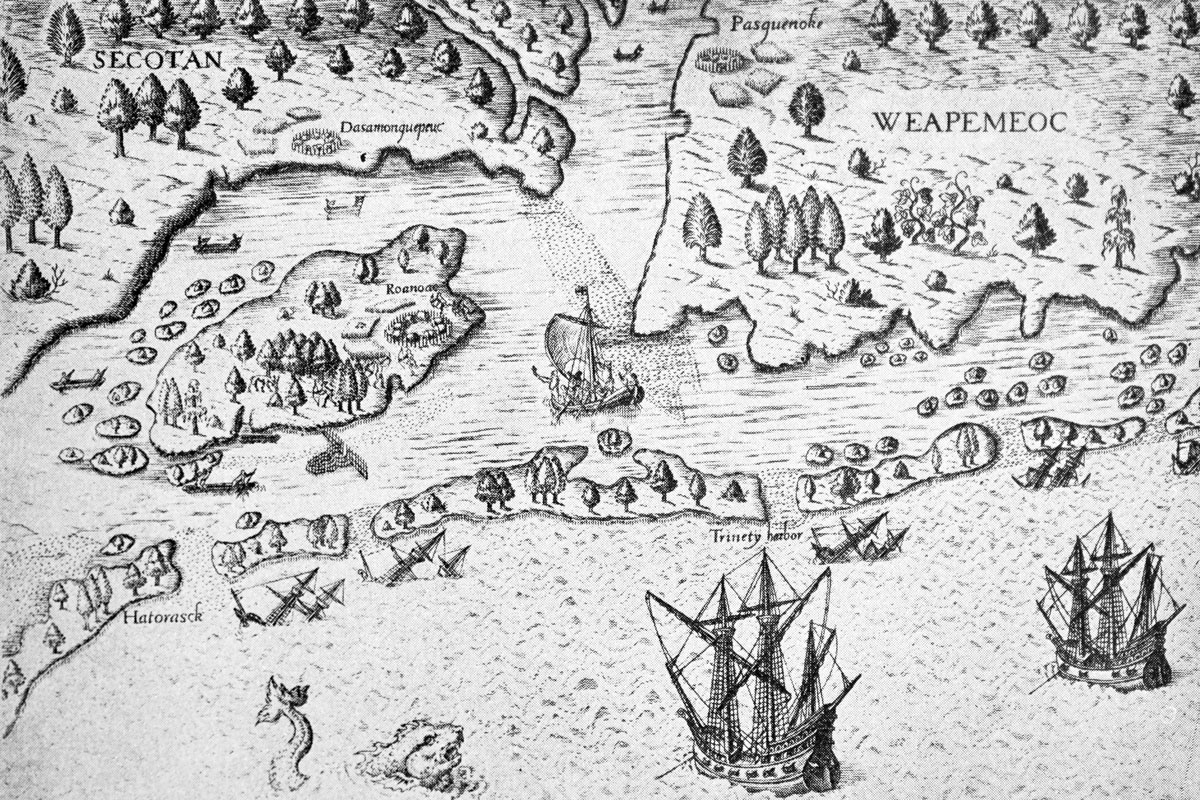
In 1587, two years after the first failed attempt to establish a settlement on North Carolina’s Roanoke Island, a group of more than 100 English colonists made a second attempt, forming the first English outpost in the New World. John White, the governor of the new colony, left his family to return to England for supplies, but when he finally made it back to Roanoke in 1590, everyone was gone, including his daughter and granddaughter, Virginia Dare, the first English child born in the Americas. DNA and archaeological research suggest the group may have split up, with the majority going to live on Hatteras Island with the Croatoan people, and the rest going to live near the Chowan River near the North Carolina border. But more than 430 years later, there are still more questions than answers about what’s become known as the “Lost Colony” of Roanoke.
Advertisement
Advertisement
Photo credit: MPI / Archive Photos via Getty Images
South Carolina Had a Booming Indigo Trade
South Carolina was the first of the colonies to successfully grow indigo — a crop so vital to the colony’s economy that it was referred to as “blue gold.” Indigo’s production, and subsequent success in the colonies, is attributed to teenager Eliza Lucas (later Eliza Pinckney), whose father shipped indigo seeds to America from Antigua in the 1730s. Her father also hired Nicholas Cromwell, a dye-making expert from Montserrat, to guide her. Cromwell was caught sabotaging the dye-making process and was dismissed, only to be replaced by his brother Patrick, who was also caught sabotaging Lucas’ production efforts. The Cromwell brothers had good reason for concern: Indigo dye was a major export for Montserrat and competition with South Carolina could ruin the island’s economy. Despite the setbacks, Lucas and the enslaved people on her father’s plantations learned how to successfully process the subtropical bush. They were so successful that when Lucas married Charles Pinckney in 1744, she used her indigo crop as dowry, and the couple shared their seeds with other plantation owners. However, Indigo’s success was dependent on the labor of the enslaved people on the plantations, and the increasing demand for the dye in England unfortunately led to an increase in the number of enslaved laborers to keep up with production.
Photo credit: Kean Collection / Archive Photos via Getty Images
Georgia Was Founded as a Colony for Social Reform
In 1732, King George II signed a charter that established Georgia as the last of England’s North American colonies. Founded by prison reformer James Oglethorpe and a group of like-minded trustees, Georgia was envisioned as a charity colony for England’s “worthy poor.” The colony laws outlawed slaveryand forbade large landholdings. Oglethorpe and the other trustees couldn’t hold office, earn a salary, or own land in the colony. However, the settlers in Georgia, many of whom arrived from other colonies, believed enslaved labor was the only way for the colony to achieve prosperity. Ultimately, the slavery ban, along with many of the other restrictions the trustees had placed, was lifted in 1751.
It’s nearly impossible to live in the United States without learning quite a bit about the infamous Watergate scandal. You probably know that Watergate is the name of a Washington, D.C., hotel, that a politically motivated burglary there led to the first presidential resignation in American history, and that it’s the scandal that caused the suffix “-gate” to be attached to the end of just about every controversy in politics, sports, or pop culture since. But the Watergate story has so many layers and strangely fascinating details, there is always more to uncover, even for those of us who remember the events unfolding in the early 1970s. Here are a few facts you might not know about one of the most surreal episodes in U.S. political history.
Photo credit: Bettmann / Bettmann via Getty Images
The Slang Term “Big Enchilada” Was Popularized By Watergate
John Ehrlichman, President Richard Nixon’s chief domestic affairs adviser, popularized so many catchphrases, he could have been a pro wrestler. One of these was “the big enchilada,” which he used to refer to U.S. Attorney General John Mitchell. Ehrlichman was caught on tape expressing his hope that Mitchell, as a big name and political heavyweight, could take the blame for Watergate and get the heat off of everyone else. Merriam-Webster’s dictionary now defines “the big enchilada” as a phrase meaning “the most important issue, person, etc.” The Watergate scandal and ensuing trial also popularized the terms “cover-up,” “deep-six,” and “smoking gun,” the latter of which was used to describe the tape Nixon made that reveals he ordered the FBI to stop investigating the break-in.
Photo credit: Wally McNamee / Corbis Historical via Getty Images
One of the Watergate Burglars Also Helped Plan the Bay of Pigs
When it came to political subterfuge, Bernard L. Barker had a pretty legendary slump in the 1960s and ’70s. Barker, a CIA operative turned Miami realtor, helped organize the 1961 Bay of Pigs invasion, a failed attempt to overthrow Fidel Castro in Cuba. He was then one of the five burglars arrested in the Watergate burglaries in 1972. Four of the five Watergate burglars had CIA ties, while the fifth, Virgilio R. González, was a Cuban refugee and locksmith from Miami. Eugenio Martínez was the only burglar to receive a pardon, from President Ronald Reagan in 1983. After Martínez served 15 months in prison, the Cuban government reached out to him, thinking he might have turned on the U.S. because of Watergate. Martínez contacted the CIA and began working as a double agent, which led to his special consideration by Reagan.
Photo credit: Bettmann / Bettmann via Getty Images
Nixon Tanked the Stock Value of “The Washington Post” Out of Revenge
In 1973, when President Nixon was coming off reelection and feeling confident that he was out of the woods, he spoke about “sticking it to Washington” in a conversation with White House counsel Chuck Colson. The conversation was — of course — caught on tape. With the election behind him, Nixon put together a list of enemies who had to pay. TheWashington Post was high on the list, having broken the Watergate story, and the company had just gone public. Nixon used the Federal Communications Commission to challenge the licenses of the two Florida TV stations owned by the company, and he instructed his people to cut off access to the Post.
In a memo to his chief of staff, H.R. Haldeman, Nixon wrote: “[Press Secretary Ron] Ziegler under no circumstances is to see anybody from TheWashington Post and no one on the White House staff is to see anybody from TheWashington Post or return any calls to them. … [J]ust treat the Post absolutely coldly — all of their people are to be treated in this manner.” The freezing out of the paper, and the legal challenges to the company’s TV stations, successfully drove the Post’s stock down from $38 a share to $16 a share, well over a 50% drop in value. Nixon also had a plan around this time to get a conservative ally, Pittsburgh millionaire Richard Mellon Scaife, to buy the newspaper, but the plot ultimately failed.
Watergate Salad and Watergate Cake are recipes of arguable origin, but what we do know is that they were popularized around the time of the Watergate scandal, and the eponymous hotel does not claim to have invented either. Watergate Cake is a layer cake made with pistachio, pecan, and coconut, with a creamy frosting on top. In an article published in Hagerstown, Maryland’s The Morning Herald a month after Nixon’s resignation, one home cook speculated, “I don’t know where the recipe originated and I don’t know why it’s called ‘Watergate Cake’ unless it’s because of all the nuts in it!”
Photo credit: John Bryson / The Chronicle Collection via Getty Images
Nixon’s Watergate Interview Is the Highest-Rated Political Interview of All Time
Ignoring the advice of many of his advisers, Nixon agreed to a series of interviews about his presidency, including Watergate, with British journalist David Frost. The first interview aired on May 4, 1977, with a record-setting 45 million Americans watching. Some 29 hours of interviews were edited down to five episodes, and the first 90-minute broadcast still holds the record for most-watched interview with a U.S. President.
These conversations were the first and only time Nixon agreed to address direct questions about Watergate, and the first time he admitted anything resembling guilt. “I let down my friends,” the former President said. “I let down the country. I let down our system of government.” At the same time, Nixon also found a way to blame other people, attempting to scapegoat his attorney general John Mitchell and Mitchell’s wife, Martha Mitchell. Nixon also famously stated, “Well, when the President does it… that means that it is not illegal.” Nixon was paid $600,000 for the series of interviews, which were dramatic enough to be adapted into a 2006 play and the 2008 filmFrost/Nixon— just one of the many pop culture depictions of this captivating chapter of U.S. history.
Advertisement
Advertisement
Another History Pick for You
Today in History
Get a daily dose of history’s most fascinating headlines — straight from Britannica’s editors.