

Rock ’n’ Roll’s Greatest Muses

  • Feat-HF-Rock-‘n’-Roll-Greatest-Muses
History Facts
Author Tony Dunnell

December 4, 2025

Love it?

The idea of a muse — someone who serves as a profound source of artistic inspiration — is far from new. Muses were an everyday part of ancient Greek culture, which typically notes nine muses — all of them goddesses — covering every branch of the arts. They are mentioned in Homer’s Odyssey, which was completed sometime around 675 BCE, and the concept never went out of fashion after that. In modern times, muses can still be found throughout the arts — even in rock ’n’ roll. And while men have certainly served as sources of artistic inspiration, the most legendary muses in rock, just like those of ancient Greece, have been women. 

Behind some of the genre’s most unforgettable songs stand influential muses — lovers, partners, friends, objects of obsession — who sparked the creative fires that led to classic rock tracks. Here we look at some of rock’s greatest muses — figures who energized albums, defined eras, and occasionally provoked the frustrated smashing of guitars. 

Credit: Michael Ward/ Hulton Archive via Getty Images 

Pattie Boyd 

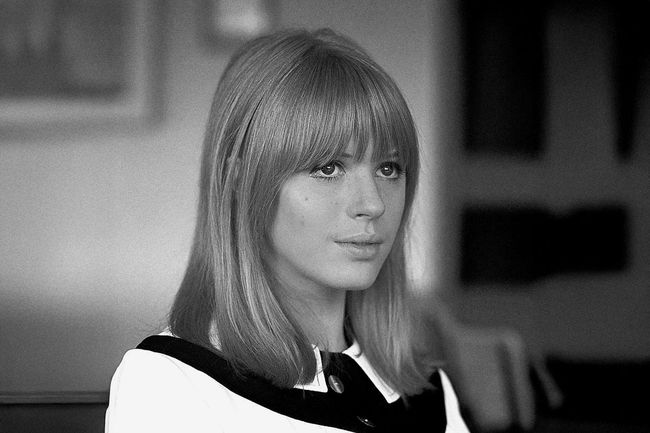
Pattie Boyd was the archetypal 1960s “It” girl and arguably rock’s most legendary muse. The English model married George Harrison in 1966 and inspired him to write a handful of classic Beatles songs, including “I Need You,” “If I Needed Someone,” “Something,” and “For You Blue.” Boyd and Harrison divorced after a decade and she married their mutual friend Eric Clapton in 1979, a union that inspired songs such as “Wonderful Tonight” and “She’s Waiting.” They divorced in 1989, at which point Clapton began working on his album Journeyman (which included a song written by Harrison). One track on the album, “Old Love,” was about his ex-wife, proving the potency of Boyd’s enduring role as a muse. 

You may also like

What Was the First Musical Instrument?

  • A variety of drums and flutes-Musical-Instrument
A variety of drums and flutes
Credit: SanerG/ iStock
Author Timothy Ott

February 5, 2025

Love it?

Although some radio stations boast of their repertoire of “oldies,” we know that label is a bit of a misnomer. After all, songs from the 1950s are hardly old when compared to the sheer length of time that humans have been creating music.

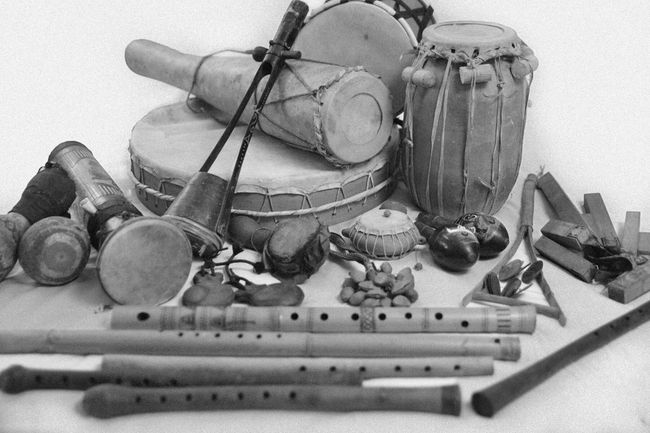
Given the importance of this form of expression, it’s unsurprising that ancient cultures around the world created their own distinct instruments for making music. Some of these, including a 4,000-year-old Mesopotamian lyre and a 3,000-year-old Egyptian harp, are still in existence today. Others, such as the 2,000-year-old Roman water organ, are known only through documentation.

But even these standouts from antiquity represent relatively advanced examples of musical instruments. Prehistoric humans certainly sought to soothe and entertain themselves and their companions by way of music from simpler generators. So what form did these simpler instruments take? And can we definitively identify the first one known to humanity?

Credit: UniversalImagesGroup via Getty Images

Voice and Makeshift Instruments

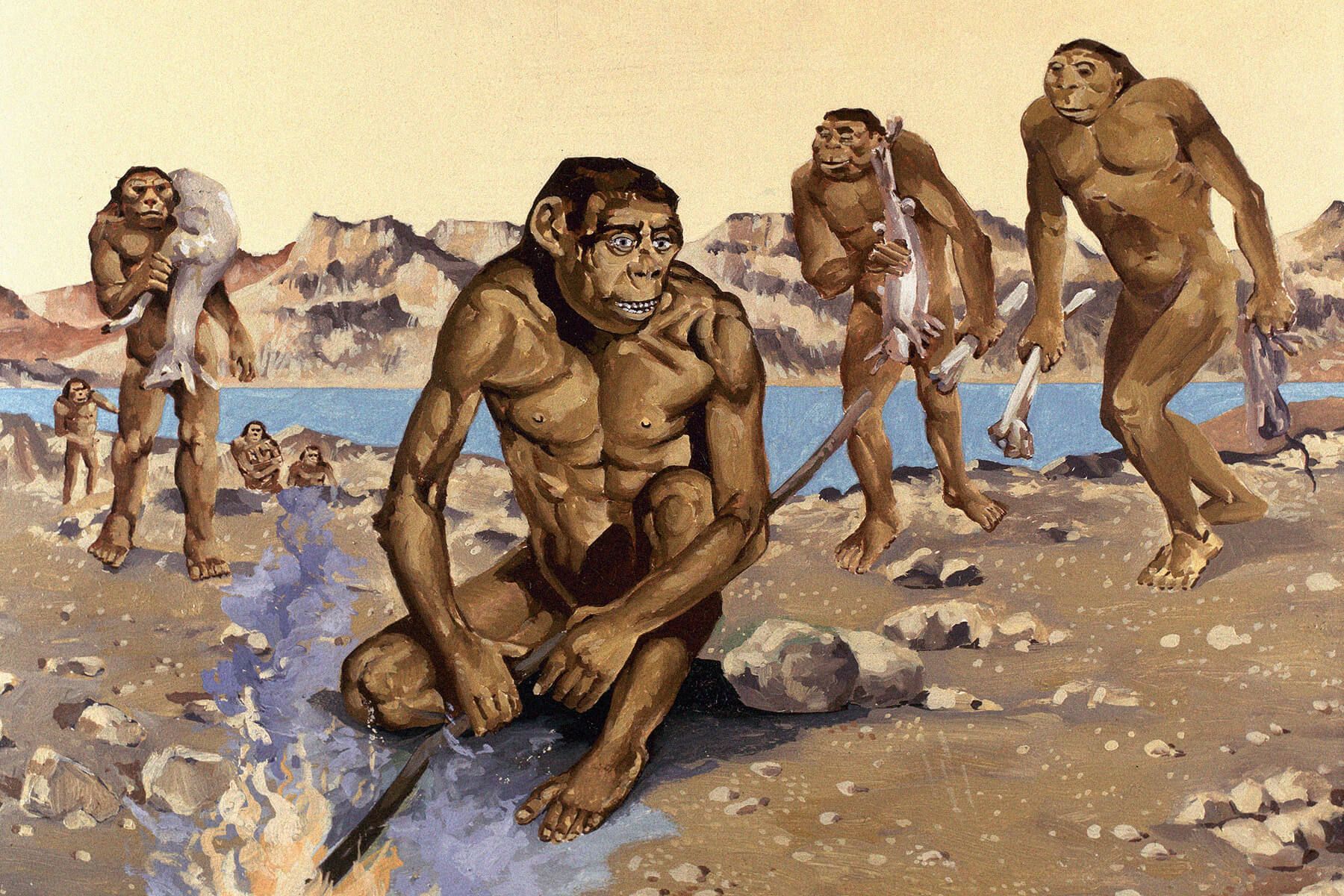
If we consider voice a musical instrument, then this is undoubtedly the answer. Although it’s unknown when early humans first discovered their capacity for singing, they would have possessed the physical ability to do so as far back as 530,000 years ago.

If our definition of a musical instrument is an object that is deliberately used to create sounds, then it’s also worth noting that hominids realized they could rhythmically whack a stick against a tree or clap two rocks together at an indeterminate juncture of the distant past.

It would seem logical, then, for the earliest known instruments to be those of the percussion variety, which create sounds by the act of banging or shaking them. In fact, a remarkable “orchestra” of these instruments, consisting of mammoth bones and ivory rattles, was found at a 20,000-year-old Paleolithic settlement in modern-day Ukraine.

But neither these nor any other prehistoric percussion tool can be considered the world’s oldest musical instrument. The honor instead belongs to flutes that are at least twice as old, although the age and instrumental status of at least one of the candidates is up for debate.

You may also like

The Most Popular Song the Year You Were Born

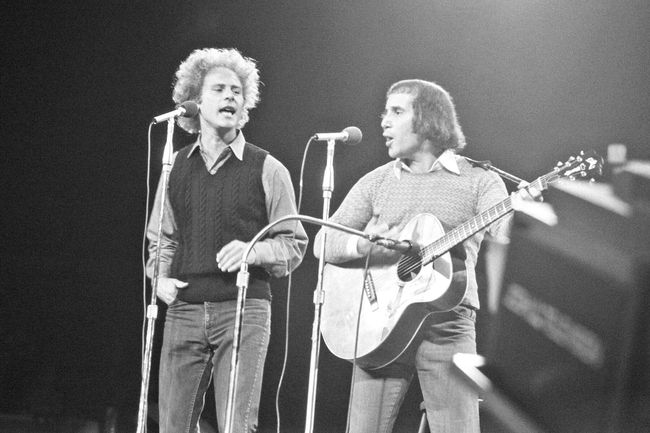
  • Art Garfunkel and Paul Simon
Art Garfunkel and Paul Simon
Credit: Bettmann via Getty Images
Author Bennett Kleinman

September 5, 2024

Love it?

Nostalgia is a powerful feeling, and it’s easy to spend hours reminiscing about days gone by. It’s especially fun to look back at — and of course, listen to — the music that was popular during our childhood. Since 1940, Billboard magazine has been compiling the most widely purchased and played songs year after year. Originally, the Billboard charts ranked songs based on various categories, such as record sales and radio playtime. But in 1958, Billboard unveiled the Hot 100 chart, which compiled those  metrics into a definitive list of the top tunes each year. Let’s take a look back at the most popular songs of each year of the past century, based on these lists and other early data. 

Credit: Smith Collection/Gado/ Archive Photos via Getty Images

1920s

The 1920s were the decade in which pop music became a distinct genre of its own. In fact, the term “pop music” was actually coined in 1926 to refer to any widely “popular” songs. But given that it was still such a nascent concept, there were no existing methods for tracking a song’s popularity over time. In fact, it wasn’t until the 1930s that anyone compiled an official weekly music chart that took into account sales and airplay. Despite the lack of an authoritative industry list, it’s possible to identify the most popular songs based on contemporary records such as The Billboard theatrical digest and historical compilations that generally reference the same tunes as the biggest hits in a given year. Here’s a look at the top tunes from each year of this formative decade.

1920 — “Swanee” by Al Jolson
1921 — “I Ain’t Got Nobody” by Marion Harris
1922 — “My Man” by Fanny Brice
1923 — “Down Hearted Blues” by Bessie Smith
1924 — “Rhapsody in Blue” by George Gershwin
1925 — “Sweet Georgia Brown” by Ben Bernie
1926 — “Bye Bye, Blackbird” by Gene Austin
1927 — “Stardust” by Hoagy Carmichael
1928 — “Blue Yodel No. 1 (T for Texas)” by Jimmie Rodgers
1929 — “Makin’ Whoopee” by Eddie Cantor

You may also like

How the Brill Building Changed Pop Music

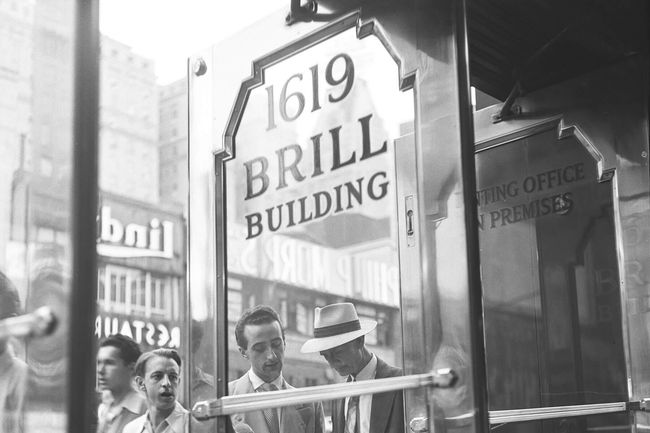
  • Brill Building at 1619 Broadway
Brill Building at 1619 Broadway
Credit: Graphic House/ Archive Photos via Getty Images
Author Kerry Hinton

February 22, 2024

Love it?

The Brill Building isn’t just an art deco structure in midtown Manhattan — it’s also the name of a musical genre. Throughout the early and mid-1960s, the “Brill Building sound” became synonymous with groundbreaking pop music. The heyday of the Brill Building era was short-lived, but in one six-year span, the songwriters, arrangers, musicians, and producers behind this sound contributed to hundreds of Billboard Hot 100 hits, including “Stand By Me” (Ben E. King, 1962), “One Fine Day” (the Chiffons, 1963), and “Be My Baby” (the Ronettes, 1963).

Located at 1619 Broadway in New York City, the Brill Building was a hub of songwriters, record labels, and recording studios, all under one roof. It built on the tradition of the “Tin Pan Alley” district before it — a concentration of music publishers and studios in a strip of Manhattan that dominated the music industry in the big-band era. But while their downtown predecessors were mainly concerned with the profits produced by pumping out sheet music for radio hits, the writers and producers at the Brill Building were also on a mission of artistic idealism. Their compositions drew inspiration from classical music, Latin music, traditional Black gospel, and rhythm and blues to create songs that appealed to an audience already hungry for the new sound of rock ’n’ roll. The assembled talent was a once-in-a-generation roster of songwriters, including Burt Bacharach and Hal David, Gerry Goffin and Carole King, and Neil Diamond. Together, they produced sophisticated songs that were directly aimed at a new, youthful generation and a powerful rising subculture: teenagers.

By the mid-’60s, an increasing number of artists — such as the Beatles and Bob Dylan — began composing and playing their own material, making the songwriter-for-hire less of a necessity. As Dylan wrote in 1985, “Tin Pan Alley is gone. I put an end to it. People can record their own songs now.” This may be true, but the creators behind the Brill Building sound helped make the ascent of these singer-songwriters possible. Here are five ways the Brill Building shaped popular music in the 20th century.

Credit: Michael Ochs Archives via Getty Images

It Pioneered “Assembly-Line Pop”

The Brill Building employed a model of vertical integration that supervised every phase of a song’s life cycle, from production to distribution, all under one roof. The 11 floors of 1619 Broadway and a few surrounding buildings became a one-stop shop where a songwriter could pen a would-be hit, sell it to a publisher, find a band, and cut a demo. Songs could even be played for radio promoters in the building to garner airplay. This new type of streamlined hitmaking — often called “assembly line pop” — gave publishers and producers a huge pool of material to choose from and encouraged creative collaboration, merging art and commerce in a new way.

You may also like

5 Key Moments in the History of Rock ’n’ Roll

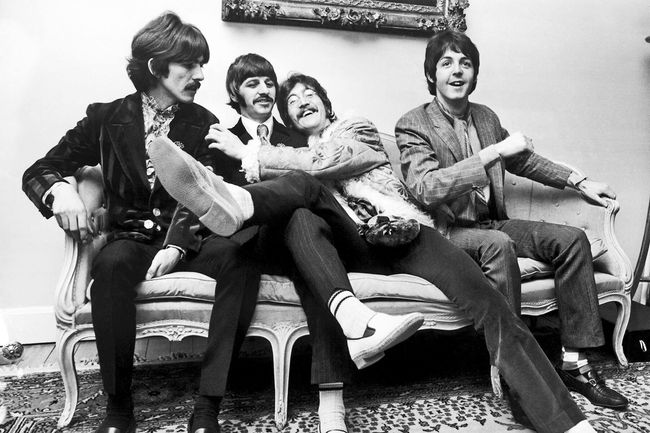
  • The Beatles
The Beatles
John Downing/ Hulton Archive via Getty Images
Author Tony Dunnell

January 18, 2024

Love it?

It’s hard to say precisely when rock ’n’ roll began, though the genre has its roots in African American music such as jazz, rhythm and blues, boogie-woogie, and gospel, as well as country music. Ask a room full of music historians what the first rock ’n’ roll record was and you’ll likely receive a number of different answers. Was it Sister Rosetta Tharpe’s “Strange Things Happening Every Day” in 1944? Or perhaps “Rocket 88,” first recorded in Memphis by Jackie Brenston & His Delta Cats in 1951? Or Bill Haley & His Comets’ 1955 single “Rock Around the Clock?” It’s hard to say for sure. 

What we do know is that rock ’n’ roll became a defined mainstream genre during the 1950s, when the sound and the image coalesced around one man: Elvis Presley. Elvis took rock music to new and giddy heights, bringing about a seismic shift in popular culture — and causing deep concern among certain sections of society that considered rock the “devil’s music.” Once unleashed, however, there was no going back: Rock ’n’ roll was here to stay. Here are some of the most defining moments in the history of the genre, from the King himself to the rise of MTV.

Photo credit: Michael Ochs Archives via Getty Images

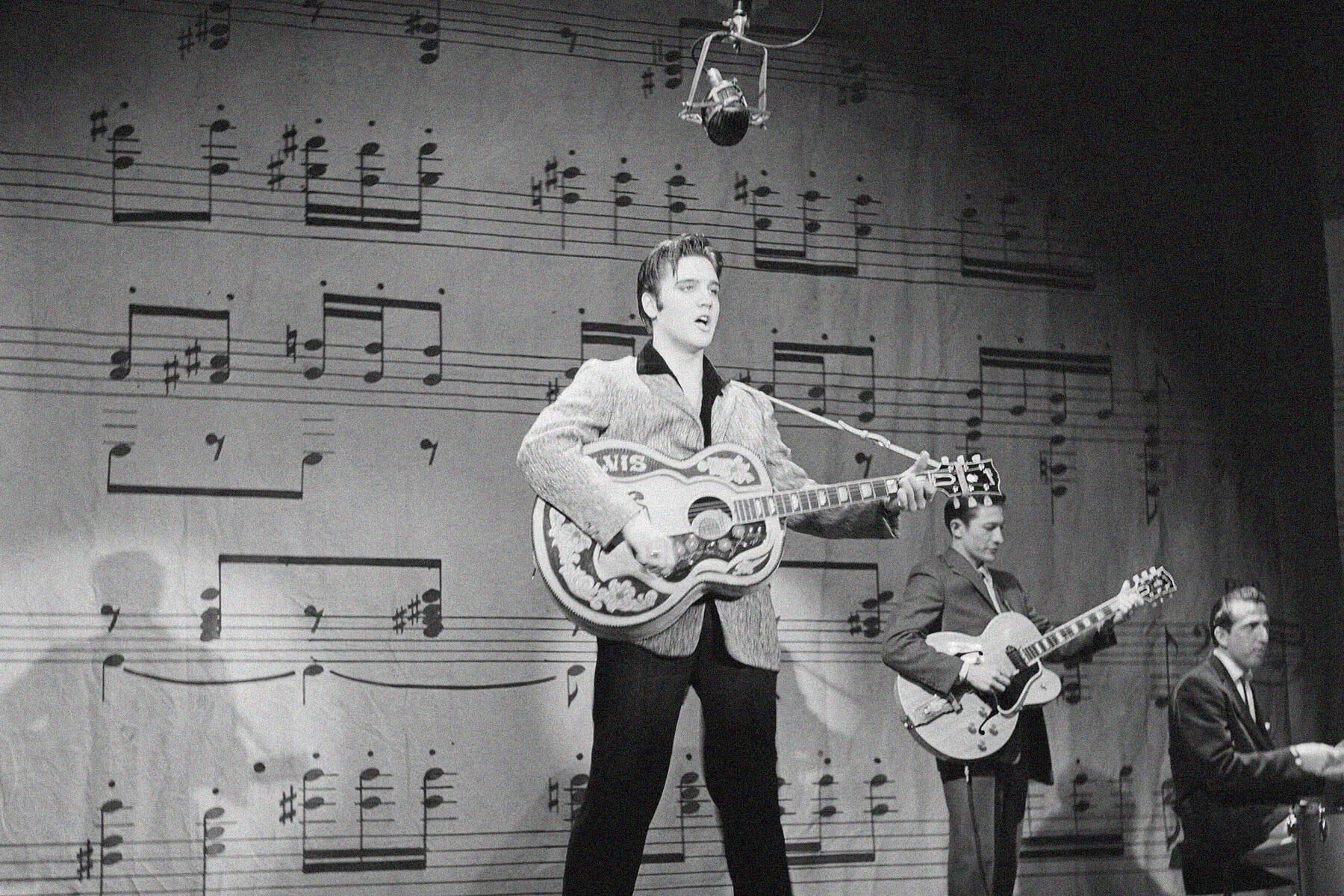
Elvis on Ed Sullivan 

On September 9, 1956, Elvis Presley made his first appearance on The Ed Sullivan Show. At this point, Elvis had already put out a number of successful singles, and his debut album, Elvis Presley, released in March 1956, was the first rock ’n’ roll album to make it to the top of the charts. Elvis had yet to cement his status as the “King of Rock ’n’ Roll,” but his first performance on Ed Sullivan can be seen as his coronation. He performed a number of songs — including “Don’t Be Cruel,” “Hound Dog,” and “Love Me Tender” — in front of screaming audience members at the studio and watching from home. Despite ongoing fears that his hip-shaking gyrations would corrupt the nation’s youth, viewers were given full head-to-toe shots of the 21-year-old singer’s performance. The show was a massive success, as 60 million people — 82.6% of the entire television audience at the time — tuned in to watch the then-21-year-old perform. 

You may also like

What the “Hamilton” Musical Got Wrong About History

  • Hamilton performance
Hamilton performance
Theo Wargo/ Wireimage via Getty Images
Author Kevin McCaffrey

September 14, 2023

Love it?

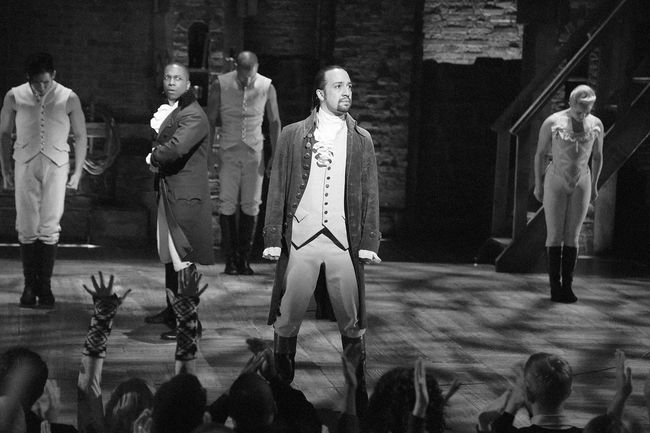
Lin-Manuel Miranda’s smash hit Hamilton is one of the most highly acclaimed Broadway musicals of the 21st century, and most of the story follows real events from American history. The duel between Alexander Hamilton and Aaron Burr really happened, and Hamilton really was an orphan who came to the mainland from the Caribbean island of Nevis and went on to become one of America’s Founding Fathers and the first U.S. treasury secretary. Still, there are a few details of the story that were embellished for dramatic purposes. Here are five things that happened in the musical Hamilton that aren’t quite historically accurate. 

Angelica Didn’t Crush on Hamilton Like That

While there were some flirty vibes between Hamilton and his sister-in-law Angelica Schuyler Church in their letter-writing later in life, Angelica didn’t exactly graciously step aside for her sister (Elizabeth Schuyler Hamilton) as the musical has us believe. In the song “Satisfied,” Angelica tells the crowd that while she is drawn to Hamilton, she can’t act on her feelings because as the oldest sister in a family with no sons, she has to put her financial responsibility to her family over love. In reality, Angelica had three brothers, and she didn’t even meet Hamilton until she was already married with children

Photo credit: Stock Montage/ Archive Photos via Getty Images

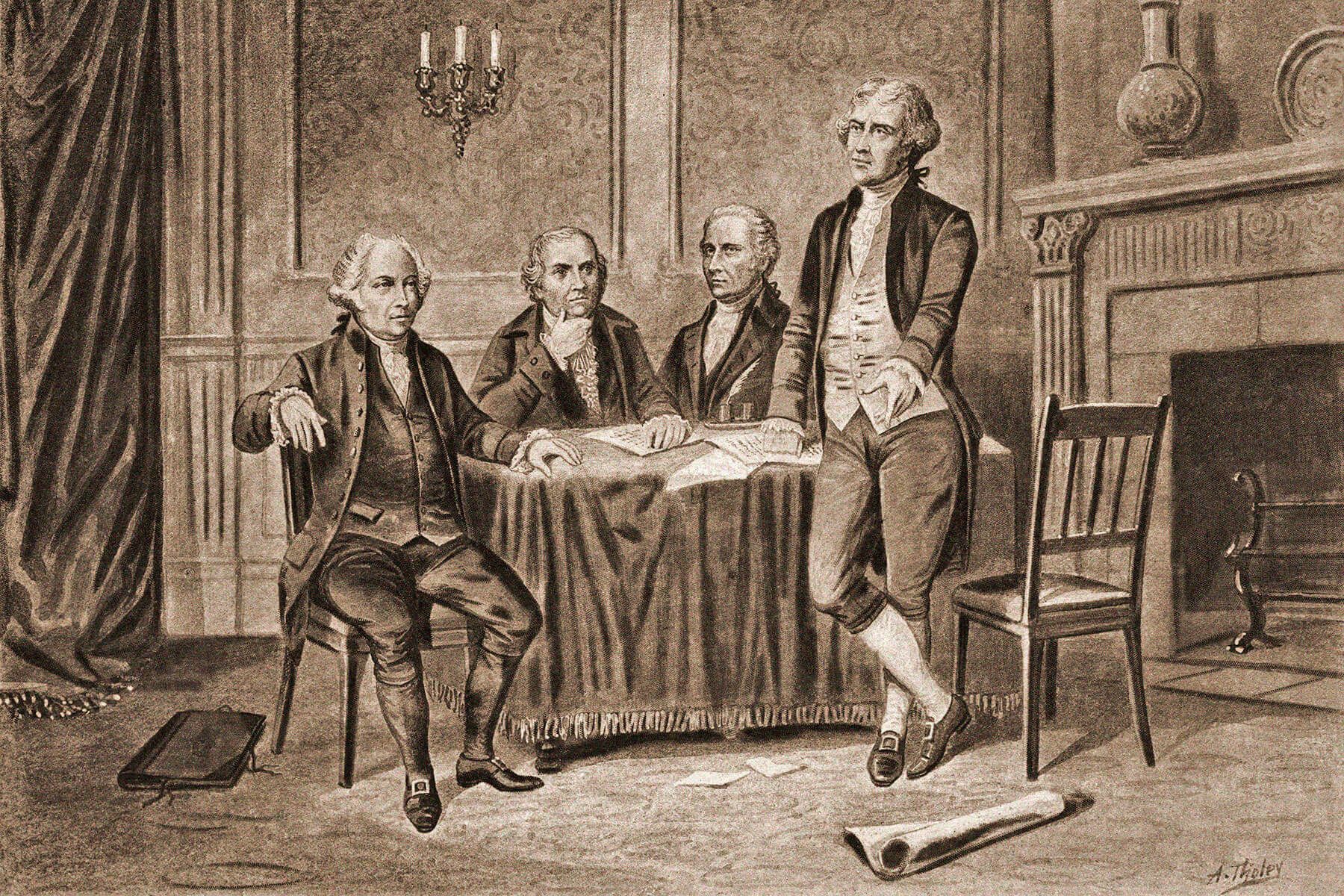
John Adams Never Fired Alexander Hamilton

In the musical, the song “The Adams Administration” describes rising tensions between Hamilton and the second U.S. President, John Adams, and the lyrics state, “Adams fires Hamilton.” Not only did that not happen, but it would have been impossible for several reasons. At the time, the President did not explicitly have the power to simply fire members of the Cabinet without congressional approval . Also, Hamilton resigned his post as secretary of the treasury in 1795, and Adams didn’t become President until 1797. What’s more, the letter mentioned in the song, in which Hamilton roasts Adams, wasn’t written until 1800. 

You may also like

5 Fab Facts About Music’s British Invasion

  • The Beatles
The Beatles
Fiona Adams/ Redferns via Getty Images
Author Kristina Wright

July 19, 2023

Love it?

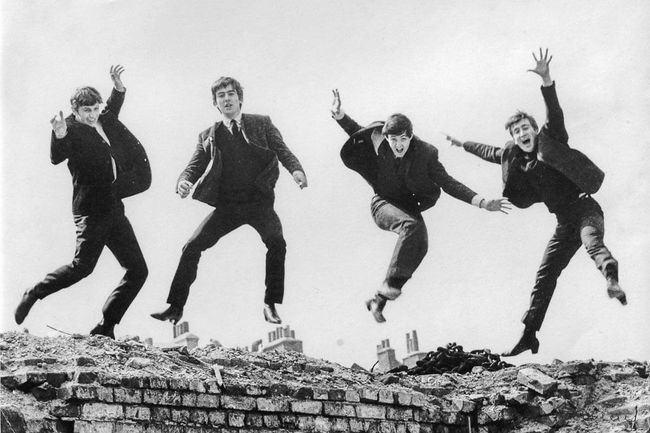
On February 7, 1964, the Beatles made their first visit to the United States, prompting Walter Cronkite to quip, “The British invasion this time goes by the code name ‘Beatlemania.’” The band was already popular in the U.K., but their instant appeal to audiences in the U.S. was unlike anything anyone had seen before; thousands of screaming teenagers met the Beatles’ plane at New York’s Kennedy Airport and thousands more were waiting for them to arrive at the Plaza Hotel. Not even Elvis Presley had generated that level of uninhibited euphoria, and it left people, especially the parents of all of those starstruck teens, curious about the shaggy-haired young men who were taking over the airwaves.

Before 1964, only two British singles had ever topped Billboard’s Hot 100 chart, and both of them were instrumentals. The Beatles’ popularity paved the way for many of Britain’s hottest acts to follow, from the Rolling Stones to the Who, ushering in a new musical era dominated by British performers. Here are five fun facts about the Fab Four and the musical phenomenon known as the British Invasion.

Photo credit: Fiona Adams/ Redferns via Getty Images

Beatlemania Provided a Diversion to a Nation in Mourning

In February 1963, Chicago DJ Dick Biondi became the first disc jockey to introduce U.S. listeners to the Beatles when he played “Please Please Me,” the band’s first U.S. single. The song was picked up by other radio stations, but it was months before the Fab Four caught on in America. On the morning of November 22, 1963, CBS News aired a story about the Beatles’ popularity in England, but the segment on the band slotted for that evening was shelved when President John F. Kennedy was assassinated later that day. 

A few weeks later, Walter Cronkite decided the country could use a break from their collective grief and decided to finally air the Beatles story. Marsha Albert, a 15-year-old girl from the suburbs of Washington, D.C., saw the segment and wrote to WWDC radio to request they play more of the band’s music. Disc jockey Carroll James had also seen the report, got a copy of the track “I Want to Hold Your Hand,” and invited Albert to come to the studio to introduce the song on December 17. Radio stations in other major markets followed suit, and Capitol Records, which had been planning to release the single in January, decided to rush-release it on December 26. The label originally planned for 200,000 copies to be pressed, but that jumped to 1 million — all of which were sold by January 10, 1964. Beatlemania had taken hold in the U.S. and the British Invasion was on its way.

You may also like