



The Most Popular Christmas Presents 100 Years Ago
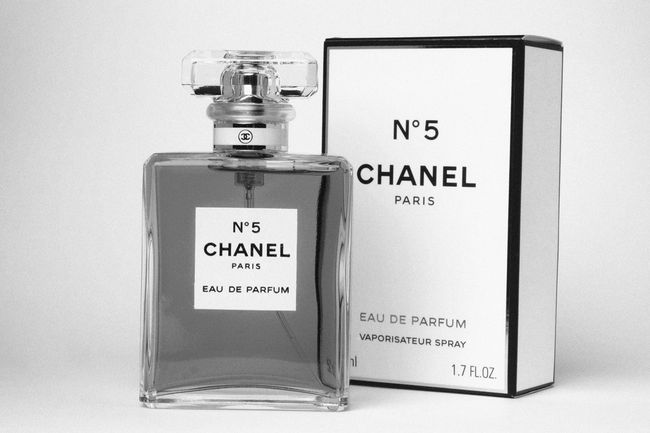
  • Chanel No. 5 perfume
Chanel No. 5 perfume
Credit: Camera Press Ltd/ Alamy Stock Photo
Author Tony Dunnell

December 11, 2025

Love it?

The 1920s brought a newfound prosperity to many U.S. families, and gift-giving — especially at Christmas — entered a new era. Innovative manufacturing techniques, along with mass production, made toys more affordable and diverse than ever. Radio broadcasting, meanwhile, brought advertising into the home, while in the streets Santa Claus was increasingly being used to push Christmas products. And with women having recently won the right to vote — and embracing shorter skirts and bobbed hair — a freer way of life was taking shape. 

The Roaring ’20s were, for many, a decade of possibilities, something we can see reflected in the popular Christmas gifts of the era. Here are six coveted items you would have been likely to see on Christmas lists across America a hundred years ago.

Credit: Dana B. Merrill/ Conde Nast Collection via Getty Images  

Wristwatches

The perception of wristwatches, which were previously considered feminine and unmanly, changed completely after World War I. During the war, officers discovered that watches worn on the wrist were far more practical than pocket watches, and wristwatches quickly became a key piece of combat equipment. When soldiers returned home after the war, they took their watches with them, popularizing the idea that the accessory was not only practical, but could also be a part of masculine fashion. With both affordable models and luxury brands soon coming to market, wristwatches became the perfect gift for the 1920s man. 

You may also like

The Strange History of Santa Schools

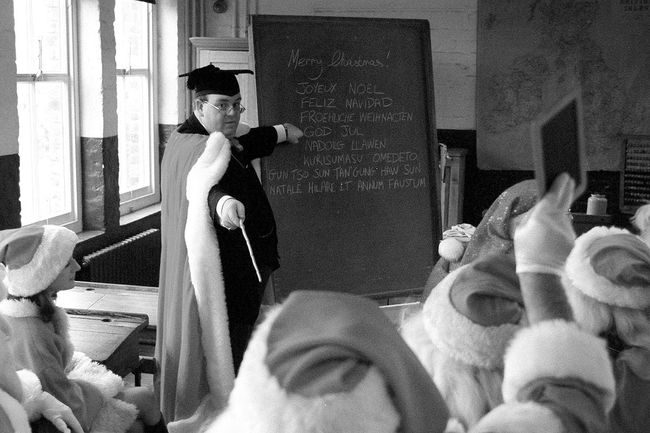
  • Santa School lecture, 1999
Santa School lecture, 1999
Credit: Neil Munns - PA Images/ PA Images via Getty Images
Author Nicole Villeneuve

December 10, 2025

Love it?

Every December, shopping malls, markets, parades, and office parties call in an army of Santas to headline their Christmas festivities. Donning the red suit is no small responsibility: The best Santas must know the correct way to say “ho ho ho,” how to squint those magical eyes and apply the right amount of makeup for rosy cheeks, and how to care for that signature beard — and also stay calm and react safely should a little one try to give it a yank. So how are these skills perfected? Welcome to the strange world of Santa schools. 

Credit: Bettmann Archive via Getty Images 

While the history of Santa Claus dates back to the fourth century CE and a generous man known as St. Nicholas, professional Santas are just a little more than a century old. The idea of Santas-for-hire began taking shape in the late 19th century, when American department stores began turning holiday shopping into a full-fledged production. 

By 1910, any store with a toy department was expected to have a jolly, white-bearded man for children to tell their Christmas wishes to. As stores scrambled to fill the red suit, one boy in Albion, New York, found himself captivated by the character. That boy, Charles W. Howard — who first played Santa in a school play as a child and never grew out of the role — would go on to teach generations of others how to properly become St. Nick.

After spending time playing Santa in several upstate New York stores, Howard grew disillusioned with what he saw among many of his fellow Santas: cheap suits, unkempt beards, and a lack of storytelling flair. So in 1937, Howard opened the Charles W. Howard Santa School right in his own home. With just three inaugural students, it was a humble operation — and deeply idiosyncratic. 

You may also like

Why Do We Celebrate May Day?

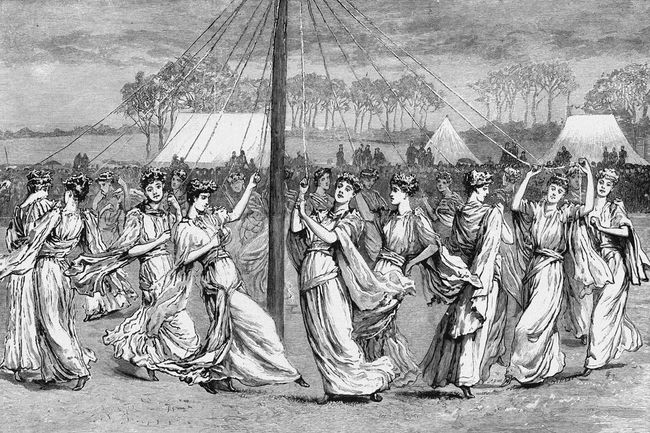
  • May Day festivities, 1891
May Day festivities, 1891
Credit: Print Collector/ Hulton Archive via Getty Images
Author Timothy Ott

April 24, 2025

Love it?

Most dates that are recognized as national holidays or at least entail widespread celebrations can enjoy that particular 24-hour designation to themselves on the calendar. It’s rare for a widely acknowledged holiday — say, Halloween or Presidents Day — to share top billing with another commemoration. Which brings us to the outlier of May Day. 

For hundreds of years across much of Europe, May 1 was celebrated as a time when spring was in full bloom, with outdoor communal festivities highlighting the merriment enjoyed by participants who no longer had to fear winter’s wrath. However, for more than a century now, May Day has had a more serious significance. Also known as International Workers’ Day, it’s recognized as a time to mark the ongoing struggles for improved labor conditions — and by extension, human rights.

Although neither version of May Day is formally acknowledged as a holiday in the United States, both are more widely known internationally, and in some areas dually celebrated. So, what exactly is May Day, and how has the significance of the day evolved?

Credit: Universal History Archive/ Universal Images Group via Getty Images 

May Day Originated From Pagan Celebrations

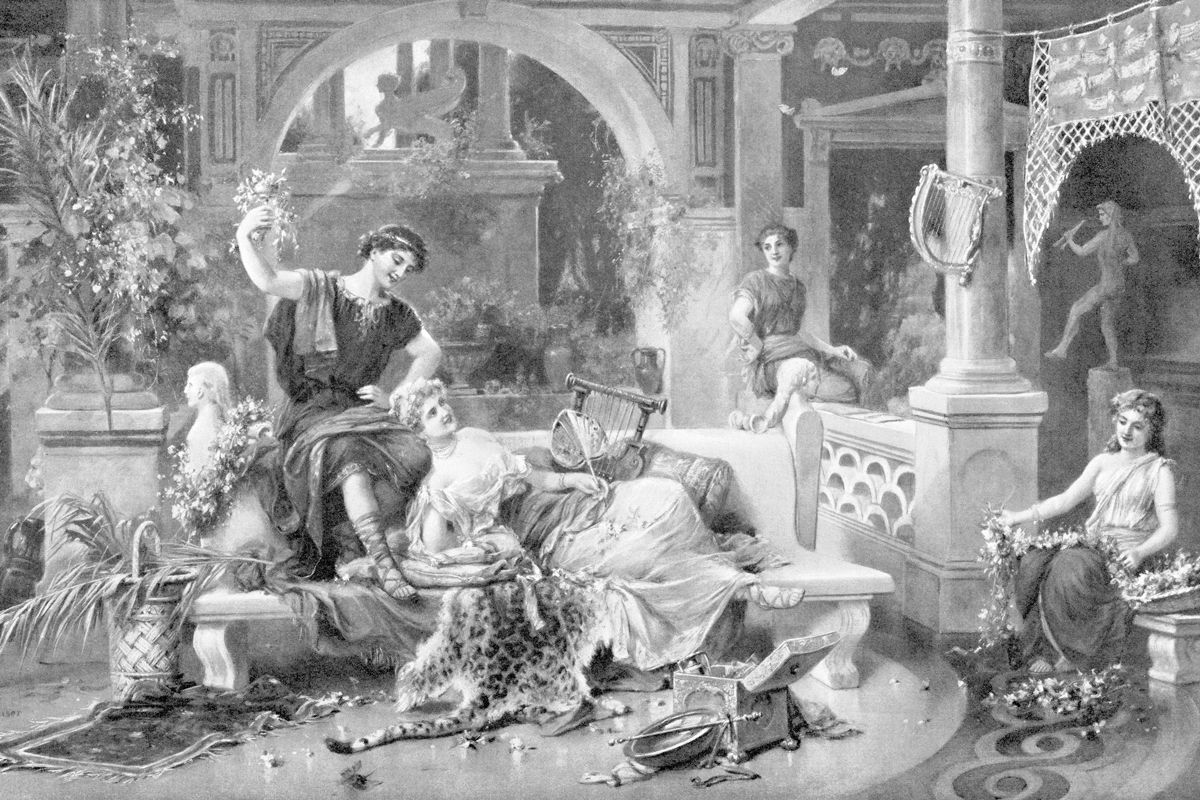
May Day as a commemoration of spring has its origins in older pagan traditions. The Romans celebrated the six-day festival of Floralia from late April into early May, an event marked by various competitions, theatrical presentations, and the releasing of hares and deer as symbols of fertility.

Farther north, the people of Ireland, Scotland, and the Isle of Mann celebrated May 1 with the Gaelic festival of Beltane. Marking the start of summer, Beltane was traditionally observed with the lighting of bonfires and collection of flowers.

By the late Middle Ages, these events had coalesced into the May Day celebrations that were held through much of Europe. Perhaps the most famous rite associated with the day is dancing around the maypole. First noted in the 14th century, the maypole was originally a full tree hauled into a village, before evolving into a shorn wooden pole. Other May Day traditions surfaced later, including the appearance of the Jack-in-the-Green and the selection of the May Queen.

You may also like

The Greatest April Fools’ Pranks in History

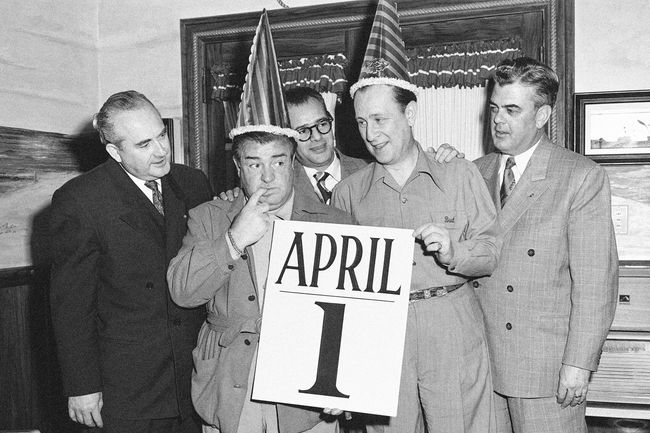
  • April Fool’s Day, early 1950s
April Fool's Day, early 1950s
Credit: Gene Lester/ Archive Photos via Getty Images
Author Timothy Ott

March 27, 2025

Love it?

No one knows for sure when the concept of April Fools’ Day originated. It may have sprung from the Roman spring festival of Hilaria, a time of merriment and mischief-making when even local magistrates were subject to ridicule. Another possible starting point was the Catholic Church-decreed shift of the new year from the end of March to January in 1582, with those who continued to celebrate the old date derided as “April fools.”

Whatever the source, the practice of pulling a prank on April 1 is by now well established across different cultures. And it isn’t simply a matter of the average Joe or Jane zinging their friends with a mild gag — prominent companies have been known to partake in the action on a far larger scale, too. Here are six cases where a well-executed idea blew past the boundaries of the garden-variety April Fools’ Day prank to earn widespread attention.

Credit: Shawshots/ Alamy Stock Photo

The Lung-Powered Aviator

In April 1934, The New York Times, the Daily News, and the Chicago Herald & Examiner were among the American newspapers to publish an eye-opening photo of an airborne man wearing skis and clinging to a pair of bulky tubes. The caption explained how the contraption’s pilot was able to power rotors in the tubes by simply blowing into a box, making him the first man to achieve flight with his own body’s energy. 

What the editors of these publications didn’t realize was that the picture, distributed by the International News Photos, was from a fabricated story in the April Fools’ edition of the German news magazine Berliner Illustrirte Zeitung. The Americans also missed out on the joke by misspelling the pilot’s name, which was “Koycher” — a play on the German word for wheezing.

You may also like

5 Surprising Facts About St. Patrick’s Day

  • St. Patrick
St. Patrick
Credit: Chronicle/ Alamy Stock Photo
Author Kristina Wright

March 6, 2025

Love it?

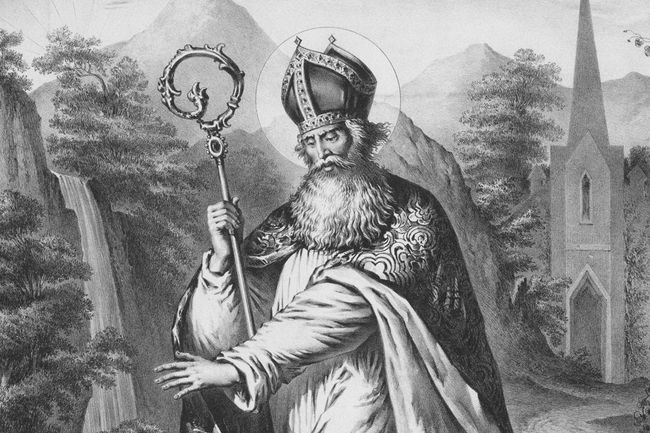
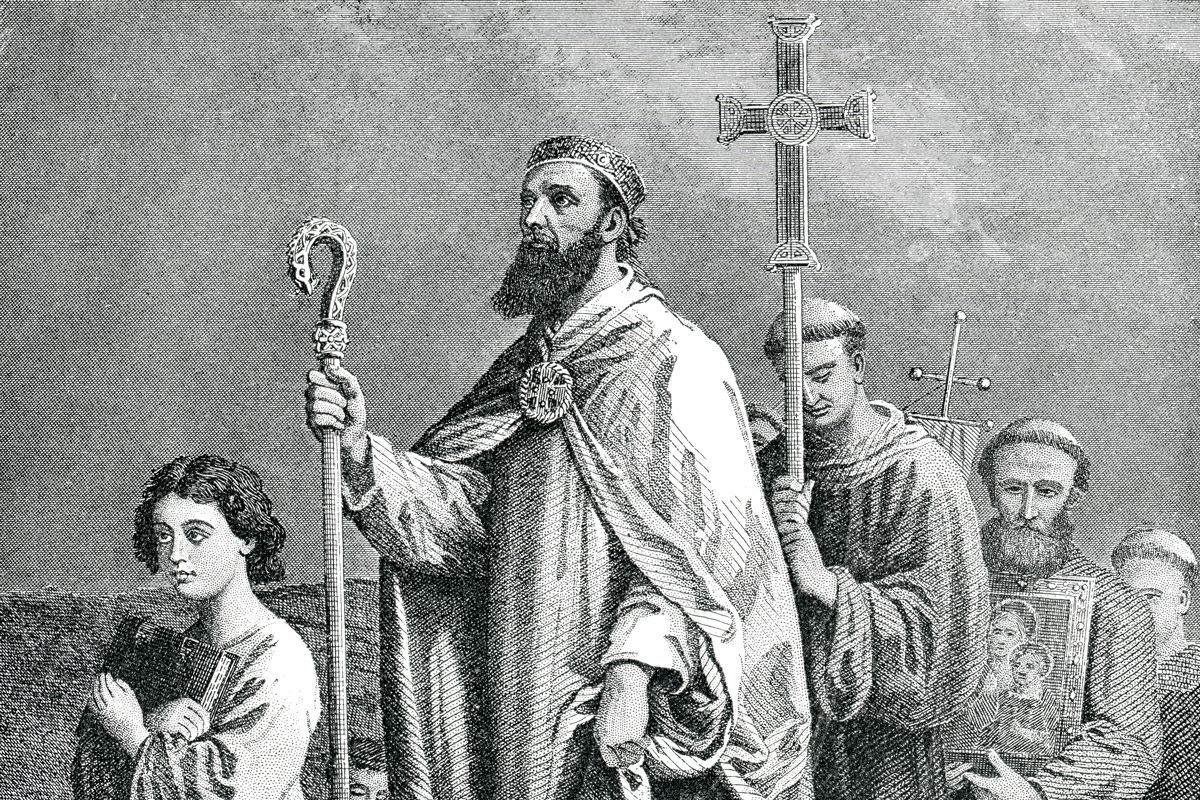
St. Patrick’s Day, celebrated on March 17 each year, is known for its parades, shamrocks, and a whole lot of green. It’s a day when people around the world embrace Irish culture — whether they have Irish heritage or not. But behind all the revelry, St. Patrick’s Day has a deep and fascinating history that goes far beyond the modern celebrations. Some of the traditions we associate with March 17th aren’t as old as you’d think, while others have surprising historical roots. Here are five intriguing facts about St. Patrick’s Day that might just change the way you see this beloved holiday.

Credit: traveler1116/ DigitalVision Vectors via Getty Images 

Pubs Were Closed on St. Patrick’s Day 

Long before it became a worldwide celebration filled with traditional food, music, and pints of Guinness, St. Patrick’s Day was a quiet and solemn religious feast day in Ireland. For centuries, March 17 was dedicated to honoring St. Patrick’s role in bringing Christianity to Ireland, and the day was primarily observed through prayer, church services, and reflection. In fact, until the 1970s, Irish law required pubs to close on March 17 to preserve the day’s religious significance.

It wasn’t until later in the 20th century that the holiday evolved into a more public and festive occasion. As Ireland sought to promote its culture and boost tourism, St. Patrick’s Day’s celebratory aspects became more prominent. Today, while the religious roots remain, St. Patrick’s Day is as much a celebration of Irish heritage and national pride as it is a tribute to the country’s patron saint.

You may also like

Why We Give Chocolates and Flowers on Valentine’s Day

  • Box of chocolates and red roses
Box of chocolates and red roses
Credit: Stephanie Frey/ Shutterstock
Author Nicole Villeneuve

February 6, 2025

Love it?

Valentine’s Day is widely recognized as a celebration of love and affection, but the origins of the day are somewhat ambiguous. As the holiday evolved from a blend of Roman rituals, Christian traditions, and medieval courtly love through centuries, chocolates and flowers became nearly synonymous with February 14. But why are these two items the default symbols of romance on Valentine’s Day? 

Credit: AFP via Getty Images

Say It With Flowers

More flowers are given on Valentine’s Day than on any other holiday. While practical and symbolic uses of flowers trace back to ancient civilizations, and flowers have certainly long embodied love and beauty in poetry and art, the custom of gifting them for Valentine’s Day as we know it today began in the Victorian era. The practice evolved from both the historical association between flowers and romance and, most importantly, the era’s use of flowers to express feelings that might have been deemed too bold to express verbally. 

In 19th-century Europe and America, courtship was dictated by strict rules of etiquette, and gifts exchanged between romantic partners were heavily restricted outside of marriage; flowers, seen as both beautiful and ephemeral, were one of the few acceptable tokens of affection. The art of floriography — using flowers to represent sentiments without words — became a popular way to convey feelings discreetly. Bouquets were thoughtfully arranged with specific flowers, each carrying a particular meaning. While violets were considered the original Valentine’s flower, symbolizing modesty and fidelity, over time, red roses — already steeped in centuries of romantic symbolism — became the most common choice. Carnations, another favorite, signified strong feelings of either love or hurt, depending on the color. 

The practice of giving flowers as a romantic gesture gained traction in the early 1800s. The book Langage des fleurs (Language of Flowers) by Charlotte de Latour was first published in 1819 and was widely translated and circulated in the following decades. Later works, such as Kate Greenaway’s illustrated 1884 book Language of Flowers, helped cement the art at a time when Valentine’s Day itself was flourishing as a holiday of romantic gestures. As the 20th century carried on, flowers became an even bigger business, with refrigeration and transportation accelerating commercialization and accessibility to blooms of any kind, and at any time, around the world. Today, Americans spend more than $2 billion on Valentine’s Day flowers. Roses remain the most popular, with about 250 million of them grown just for February 14. 

You may also like

5 Facts About Samhain, the Celtic Festival That Inspired Halloween

  • Pagan altar decorated for Samhain
Pagan altar decorated for Samhain
Credit: CaroleGomez/ iStock
Author Kristina Wright

October 16, 2024

Love it?

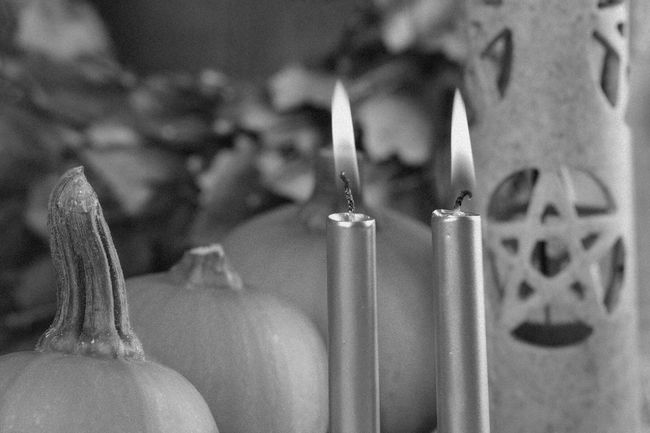
Samhain, the ancient Celtic festival that inspired many of our modern-day Halloween traditions, represents the end of the harvest season and the onset of winter. An Irish Gaelic word that’s also used in Scottish Gaelic and Manx, “Samhain” translates to “summer’s end” and is pronounced “sow-in” (rhyming with “cow-in”). Traditionally celebrated on November 1, it marked the time when the harvest had been gathered and stored, cattle were moved to closer pastures, livestock were secured for the winter, and communities were hunkering down for the long, cold months ahead.

Samhain was also believed to be a time when the spirits of those who had died during the year traveled to the otherworld. People believed that during Samhain, the boundary between the living and the dead was at its thinnest, allowing the spirit world to interact with the human world. To protect themselves from restless or malevolent spirits, people would light fires, leave offerings for deceased loved ones, and wear disguises.

Today, much of what we know about Samhain is rooted in Irish mythology, making it difficult to discern truth from lore. But here are five things we do know about this ancient and mysterious holiday.

Credit: Heritage Images/ Hulton Archive via Getty Images 

It Dates Back to the Iron Age

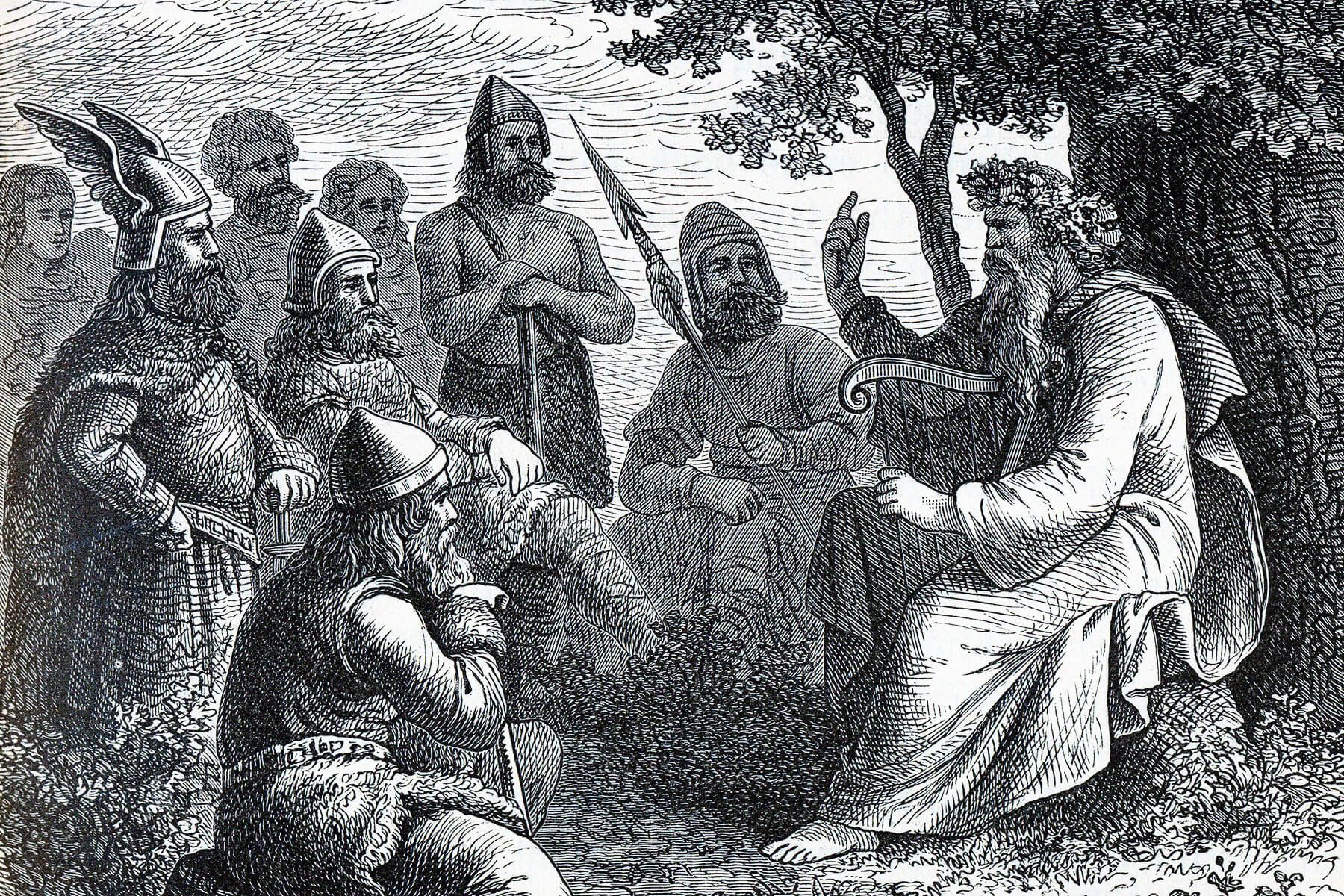
Observed by the ancient Celts across Ireland, Scotland, and the Isle of Man, Samhain dates back to the Iron Age, more than 2,000 years ago. The Celts divided the year into two halves, Samhain (the darkness) and Beltane (the light). Those two halves were further divided by Imbolc (a holiday marking the beginning of the spring season) and Lughnasadh (marking the beginning of the harvest season). These four cross-quarter days, as they were known, were celebrated with fire festivals and were among the eight sacred days in ancient Celtic tradition, along with the spring and fall equinoxes and summer and winter solstices, known as quarter days.

Some historians believe that Samhain, which fell on the day that corresponds to November 1 on the contemporary calendar, marked the beginning of the Celtic new year, while others argue there isn’t enough evidence to support that hypothesis. What we do know for certain is that elements of Samhain influenced the celebration of Halloween as we know it.

You may also like

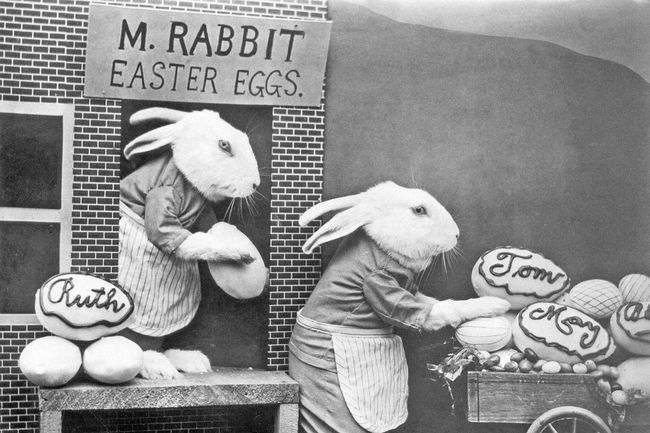
The Strange History of the Easter Bunny

  • Two Easter Bunnies
Two Easter Bunnies
Credit: Frees/ Archive via Getty Images
Author Tony Dunnell

March 21, 2024

Love it?

Easter, known in the Christian faith as Resurrection Sunday, is a religious holiday that commemorates when Jesus Christ rose from the dead. According to the New Testament of the Bible, the resurrection occurred on the third day after Jesus’ crucifixion by the Romans at Calvary, around 30 CE. Fast-forward to the present day, and we find people celebrating this miraculous event by searching for hidden colorful eggs and consuming copious amounts of chocolate, all of it enabled by a fluffy rabbit — not exactly what you would associate with the events following the crucifixion. 

The rabbit’s involvement, in particular, is somewhat baffling. The Bible certainly doesn’t mention any rabbits in association with Jesus’ resurrection, Holy Week (the last week of Lent), or Easter. So where did the Easter Bunny come from? Historians still aren’t entirely sure, but there are some clues as to the origins of this legendary leporid. 

Credit: bilwissedition Ltd. & Co. KG/ Alamy Stock Photo

The Easter Bunny’s Ancient Origins

Rabbits and hares have been perceived as sacred for millennia by civilizations across the globe. They were venerated in Celtic mythology, they appear in the fables of Central African societies, and they are portrayed as cunning tricksters in the myths of Indigenous tribes in North America such as the Michabo and Manabush. Then there’s the intriguing “three hares” symbol, an enigmatic representation of three hares running in an endless loop, which has been discovered in numerous cultures across the globe, from the United Kingdom to China. How any of this might connect with Easter is difficult to say, but we do know that the rabbit has a long history of symbolic usage, and is commonly associated with fertility. Rabbits, after all, are well known for their ability to reproduce at impressive rates — something the philosopher Aristotle noted way back in the fourth century BCE. By the medieval and Renaissance periods, rabbits had become well established as symbols of reproduction in European art. So, while we don’t know precisely when the rabbit became involved with Easter, we do know that it had a symbolic connection with birth, and therefore rebirth — or resurrection. 
You may also like

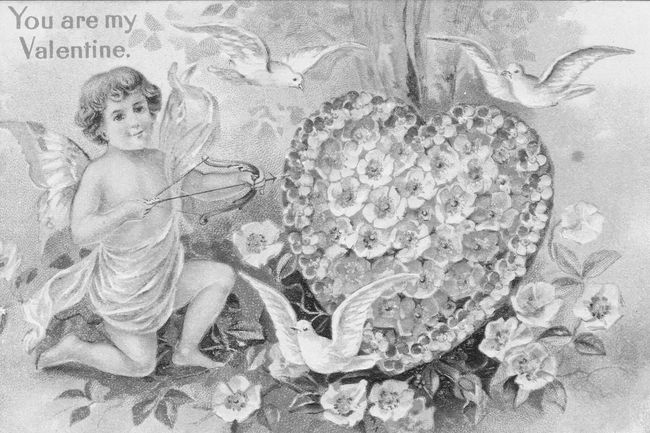
The Difference Between St. Valentine and Cupid

  • Valentine’s Day card
Valentine's Day card
Kean Collection/ Archive Photos via Getty Images
Author Nicole Villeneuve

February 8, 2024

Love it?

Each year on February 14, romantic partners exchange affectionate cards and sugary-sweet chocolates, all in the name of St. Valentine — and all while the iconic image of Cupid takes center stage. But who are these figures, and how did they converge for this sentimental holiday? From Cupid’s roots in Greek mythology to St. Valentine’s Christian symbolism, here’s how these two figures became the unlikely faces of love and Valentine’s Day. 

Photo credit: Fototeca Storica Nazionale./ Hulton Archive via Getty Images

Who Is St. Valentine?

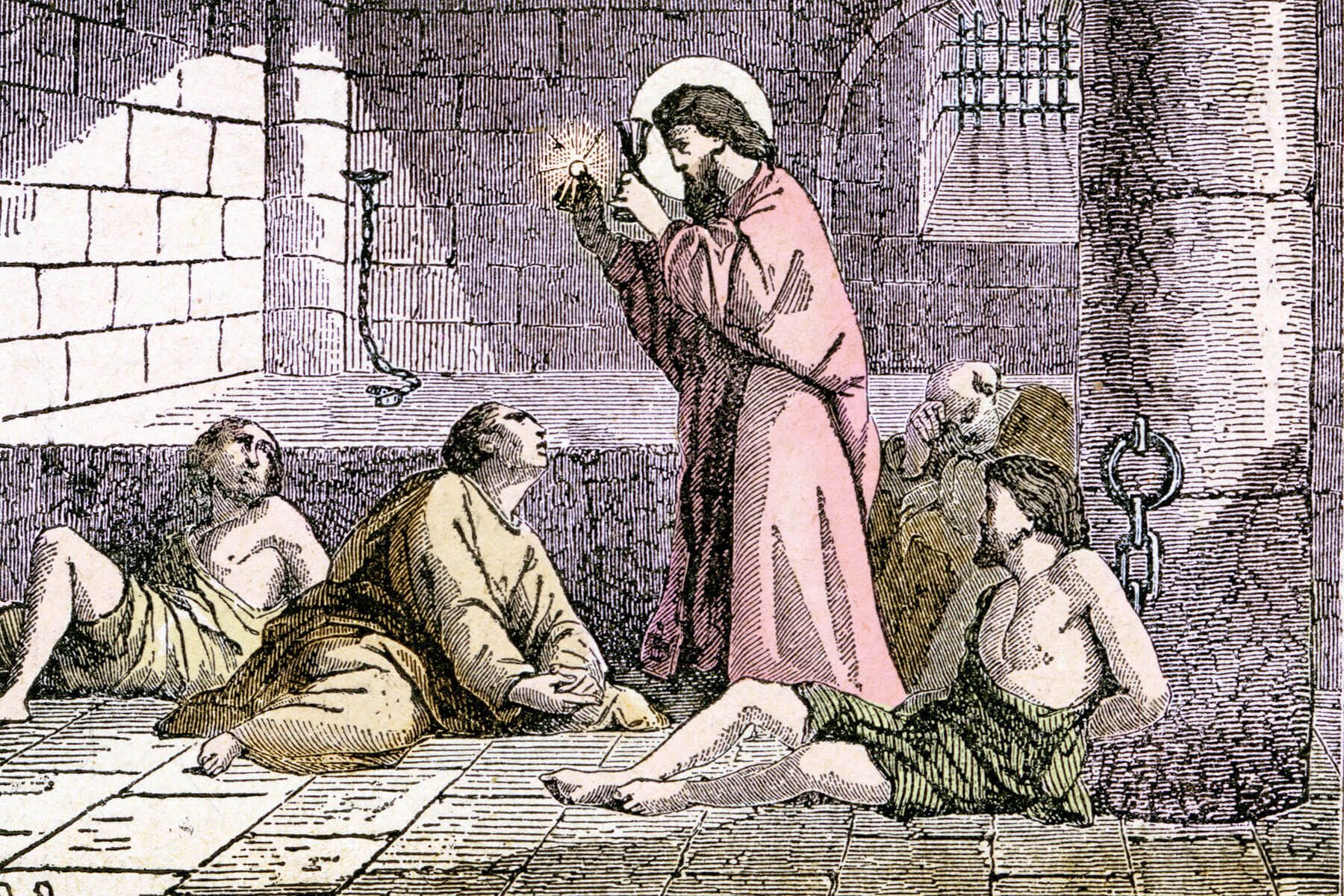
The exact origin of the saintly namesake of Valentine’s Day is murky. According to one belief, St. Valentine was a third-century Roman priest who defied the Roman Empire’s stance against men marrying at a young age (it was thought that they should instead serve as soldiers). Valentine continued to perform marriages in secret, leading to his execution on February 14. Another belief portrays St. Valentine as a compassionate man who helped free persecuted Christians in ancient Rome. According to legend, he healed the local jailer’s blind daughter and, before his death, sent her a note signed, “from your Valentine.” Whether these were two separate figures or just one isn’t entirely clear, nor is whether they were actually historical characters and events or just myths. In records from the medieval era, for instance, there is no connection between St. Valentine and love or marriage. But regardless of how the figure became linked with romance, the association between St. Valentine and love has remained strong.

You may also like

The Origins of 6 Unique Christmas Traditions

  • Christmas stocking
Christmas stocking
Maya Kruchankova/ Shutterstock
Author Kristina Wright

December 14, 2023

Love it?

Observed on December 25, Christmas is both a religious holiday, commemorating the birth of Jesus Christ, and a secular holiday that includes cultural customs and traditions, many of which have their roots in the pagan festival of Saturnalia, honoring the agricultural god, Saturn. For more than 2 billion people in over 160 countries, Christmas is a time of joy and festivity, family and friends. From the snowy landscapes of Scandinavia to the sun-warmed beaches of Australia, the way we celebrate the holiday season varies widely from one community to the next. Here are the origins of six unique Christmas traditions around the world. 

Photo credit: Sean Gallup/ Getty Images News via Getty Images

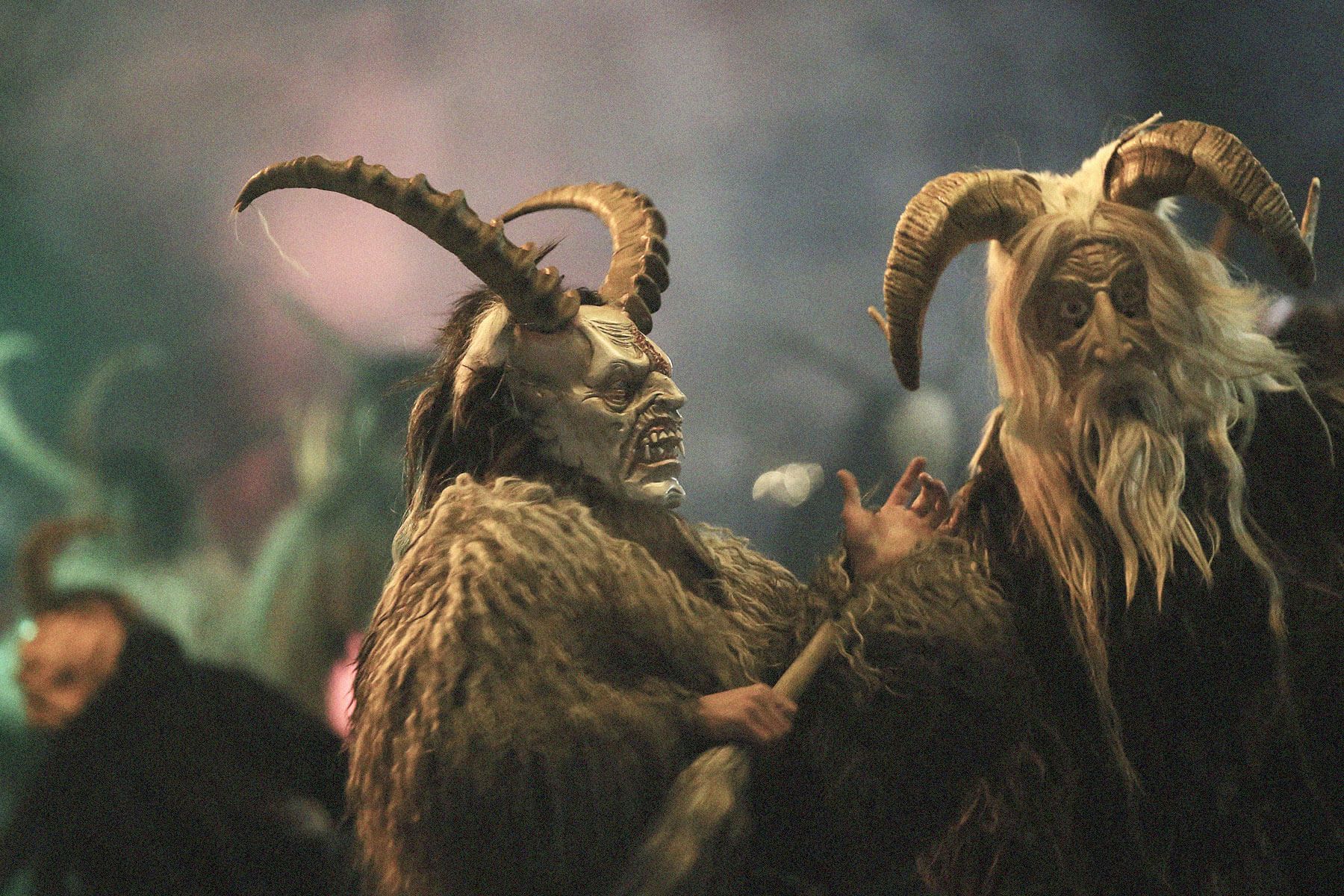
Krampus in Austria

Krampus is a mythical creature with roots in Alpine folklore, who acts as a menacing counterpart to the jolly figure of Santa Claus or St. Nicholas. He is often depicted as a horned, anthropomorphic goat-like demon with claws and a long tongue. His primary role is to accompany St. Nick during the Christmas season and punish naughty children with beatings while Santa rewards the well-behaved kids with gifts.

The legend of Krampus blends pagan celebrations of the winter solstice with the Christian traditions associated with St. Nicholas. In many Alpine communities, especially Austria, Bavaria, and other parts of Central Europe, Krampus Night (Krampusnacht) falls on December 5,  the night before the celebration of the Feast of St. Nicholas. Several European communities host a Krampus Run (Krampuslauf) each year, a tradition that is believed to be hundreds of years old. During the run, adults dressed in devilish costumes take to the streets, often accompanied by a St. Nicholas character, to playfully menace spectators.

You may also like