



History’s Most Dangerous Beauty Trends

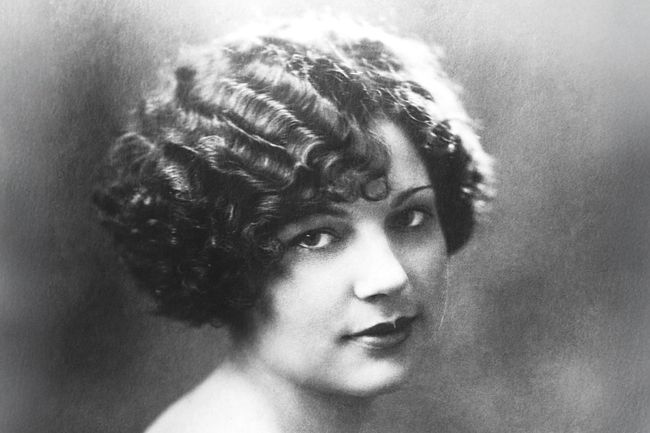
  • Perms made with radium, 1924
Perms made with radium, 1924
Credit: © Historical–Corbis Historical/Getty Images
Author Nicole Villeneuve
May 7, 2026

Love it?

“Beauty is pain” is a familiar phrase, and one that has been taken quite literally at many points in history. People have swallowed toxins such as arsenic and restricted their bodies with corsets, all in the name of status, style, and desirability. Here are five of the most extreme examples of dangerous beauty trends from decades past.

Credit: © Apic—Hulton Archive/Getty Images 

Radium Products

In the early 20th century, radium was briefly treated like a miracle ingredient. Following its 1898 discovery, radium’s mysterious, faint luminescence made it seem almost magical; as early as 1904, products such as the topical product Ec-Zine and even drinkable radium water were being advertised as a cure-all for everything from eczema to pimples to blood poison. 

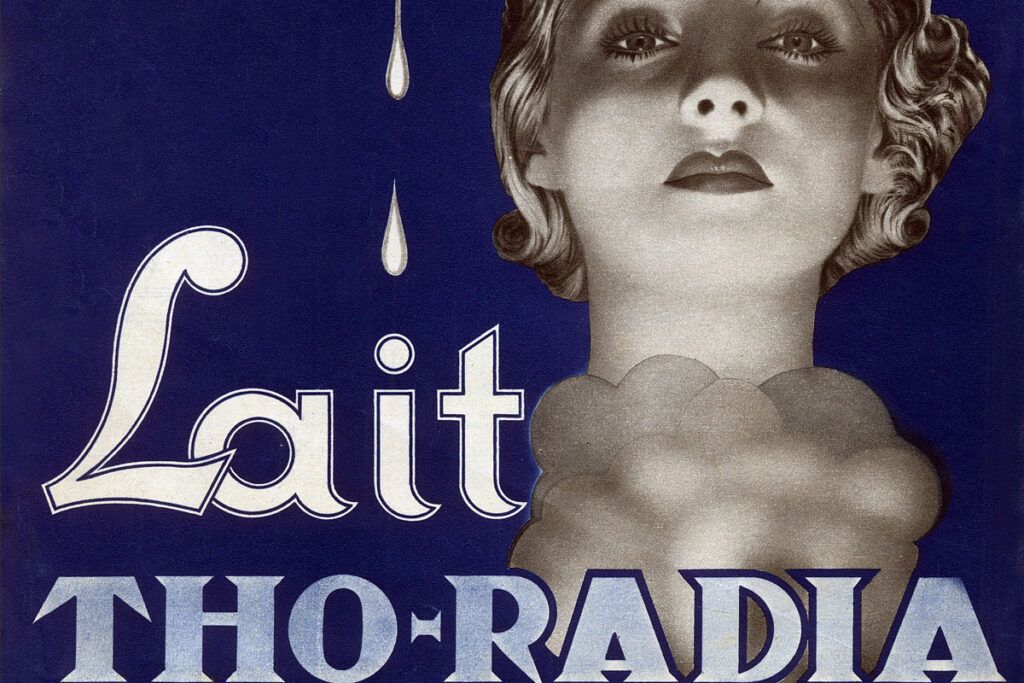
By the 1930s, beauty brands had leaned in, too. The French company Tho-Radia — so named for the elements thorium and radium — sold face creams and lipstick claiming to be a “perfect scientific method of keeping the skin of the face and neck in order.” The claims, of course, turned out to be very wrong. Long-term exposure to radium has many negative health effects, including damaging bones and increasing cancer risk. By the end of the 1930s, growing awareness of health dangers and tightening government regulations brought the use of radium in beauty and wellness products to an end. 

Why Did Houses Have Parlors?

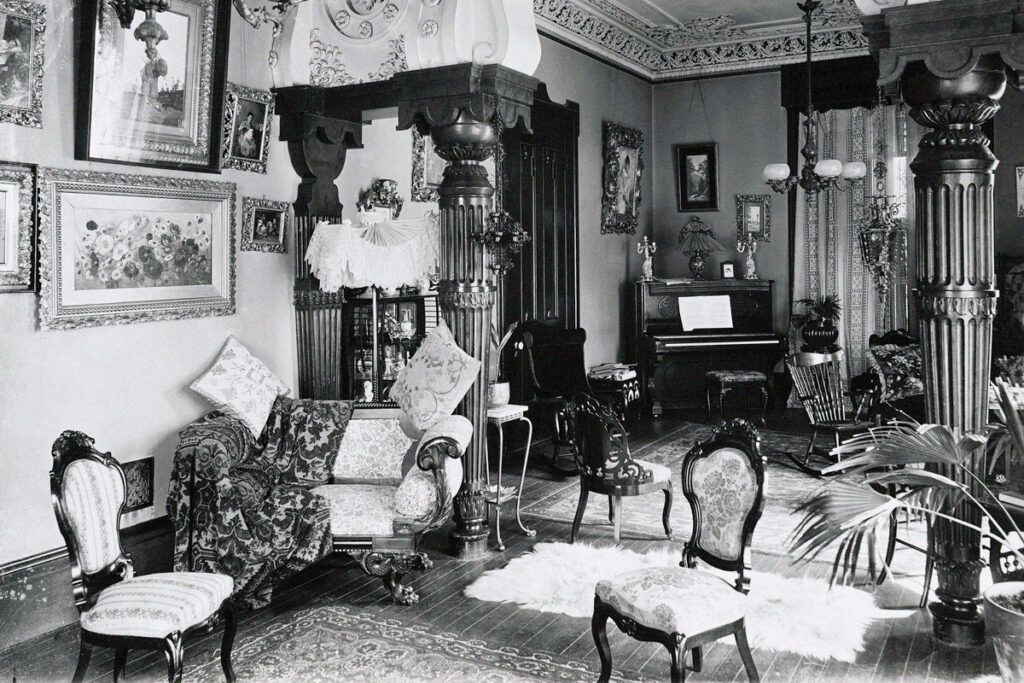
  • Interior of a parlor, 1800s
Interior of a parlor, 1800s
Credit: © Heritage Art—Heritage Images/Getty Images
Author Bess Lovejoy
May 7, 2026

Love it?

Before living rooms and family rooms, there was the parlor — a space designed less for living in than for being seen. Often pristine and a little intimidating, the room was reserved for guests, special occasions, and the careful display of a family’s taste and status. Though the term has mostly disappeared today, the parlor has a long history, from medieval monasteries to middle-class domestic life. Here’s a look back at the rise and fall of the parlor.

Credit: © The Print Collector—Heritage Images/Getty Images

“Parlor” Comes From the Verb “To Speak”

The word “parlor” has always been about talking. The term traces back to the Old French parler, meaning “to speak,” and entered English around the 13th century as “parlur” — a word that originally referred to a small window in monasteries through which priests heard confessions. The meaning then expanded to describe a designated room within a monastery set aside for conversation — a space where the otherwise cloistered inhabitants could interact with visitors or speak privately among themselves.

That dual idea — conversation paired with separation — stuck. By the late 14th century, the word had shifted beyond religious life to describe a room set apart from a great hall and offering a measure of privacy. By the 15th century, the concept had settled into domestic architecture as a room in a private home used for receiving guests or holding more formal conversations. 

The World’s Most Powerful Secret Societies

  • Skull and Bones, Yale, 1861
Skull and Bones, Yale, 1861
Credit: © Album/Alamy
Author Bess Lovejoy
April 29, 2026

Love it?

Secret societies have long shaped history from the shadows. Some groups have guarded spiritual truths, others operated underground to challenge political authority, and still others have connected powerful individuals across borders. While their aims vary, they share a structure: restricted membership, formal initiation, and closely guarded knowledge often revealed through a series of hierarchical ranks. 

What these groups also share is a reliance on secrecy itself — not just as a tool, but as the foundation of their influence. Here’s a look at 10 secret societies that held remarkable power in their time.

Credit: © Florilegius—Universal Images Group/Getty Images 

Eleusinian Mysteries

For nearly 2,000 years, the Eleusinian Mysteries — a secretive religious tradition centered on the goddesses Demeter and Persephone — stood as the best-known and most enduring mystery cult in ancient Greece. Held at Eleusis, a town northwest of Athens, likely starting around 1600 BCE, the rites were open only to those who underwent a formal initiation that involved a strict vow of silence.

What initiates experienced during the Eleusinian rites remains one of history’s most tantalizing unknowns. Ancient sources agree that the ceremonies culminated in a dramatic nighttime ritual inside a grand hall known as the Telesterion, where participants went through a profound spiritual revelation — one so powerful, some claimed it erased their fear of death.

The Eleusinian Mysteries expanded across the Greek and later Roman worlds, attracting figures such as Plato, Socrates, and Cicero. Like later secret societies, it became an exclusive network whose initiates were bound by secrecy and promised personal transformation through hidden knowledge.

Why Is the Bride on the Left at a Wedding? 

  • A church wedding, 1812
A church wedding, 1812
Credit: © Hulton Archive/Getty Images
Author Bess Lovejoy
April 29, 2026

Love it?

If you’ve been to a traditional (or somewhat traditional) Christian wedding recently, you may have noticed that the bride generally stands on the left and the groom on the right during the ceremony. If somewhere between the vows and the bouquet toss you found yourself wondering about the “why” behind that arrangement, you’re not alone. So how did this tradition emerge?

10 Bizarre Things the Sears Catalog Sold

  • Sears advertisement, 1927
Sears advertisement, 1927
Credit: © Fotosearch—Archive Photos/Getty Images
Author Nicole Villeneuve
April 23, 2026

Love it?

In 1888, Sears, Roebuck and Co. distributed its first mail-order catalog to U.S. households, a thin booklet that sold only watches and jewelry. But by the early 1900s, the Chicago-based business had greatly expanded its inventory, offering a world of goods that some rural Americans had never even laid eyes on. 
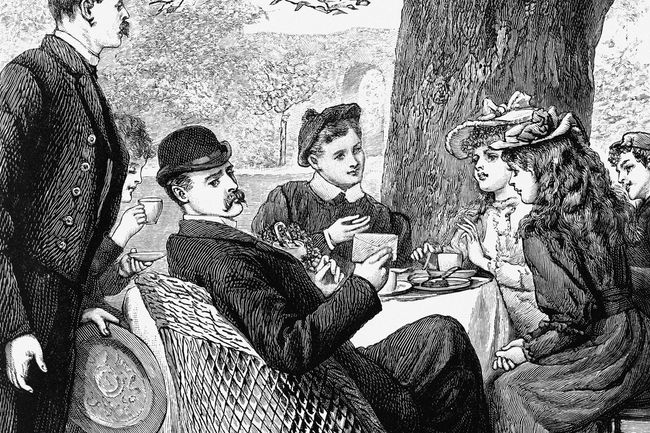
The Sears catalog became a go-to for one-stop shopping: Everything from clothing and furniture to tools and toys and even full house-building kits could be ordered and delivered right to doorsteps across the country. But tucked between these practical items were some truly strange and surprising products. Here’s a look at some of the oddest things the Sears catalog had on offer.
Credit: © Advertising Trust—Heritage Images/Getty Images

Electric Belts

In the early 20th century, electric belts were marketed as medical marvels, promising to cure everything from fatigue and hernias to glaucoma and indigestion. The fall 1902 Sears catalog featured the Heidelberg Electric Belt, a deluxe model that boldly claimed to be the “cure of […] all diseases, disorders and weaknesses peculiar to men, no matter from what cause or how long standing” — quite the claim for just $18 (about $680 today). 

Customers strapped metal plates connected to small batteries around their waists or limbs, hoping for a restorative jolt. Medical evidence on the belt’s effectiveness was nonexistent, but the device certainly captured the era’s fascination with so-called cure-alls.

The Hidden History of Everyday Gestures

  • Winston Churchill, 1959
Winston Churchill, 1959
Credit: © Bettmann Archive/Getty Images
Author Kristina Wright
April 16, 2026

Love it?

Over the course of a single day, you might talk to several people — but you’re also communicating in nonverbal ways you probably don’t even notice. There are small, habitual movements that we all slip into conversations almost automatically, without giving much thought to where they came from or why we use them.

Even though they feel natural, most of these everyday motions have surprisingly long and interesting histories, gradually leading to the meanings we recognize today. Some trace back thousands of years, while others became widespread only in recent decades, spreading through travel or mass media. Here are five familiar examples of how we connect without words.

Credit: © H. Armstrong Roberts—ClassicStock/Getty Images

Thumbs-Up

Today, the thumbs-up gesture is widely recognized as a sign of approval, agreement, or reassurance that things are all good. It appears in everyday conversation, digital communication, and professional settings as a quick signal of affirmation.

A popular belief links the gesture to ancient Rome, where crowds supposedly used thumbs-up or thumbs-down to decide the fate of defeated gladiators. However, historians generally agree this interpretation is likely incorrect or oversimplified, though we may never know for sure.

The modern meaning of thumbs-up developed much later. t started to appear as a sign of approval in English-speaking countries by the early 20th century, and it became especially widespread during World War I and World War II, when Allied pilots used it to mean “ready” or “all set.” From there, the gesture spread globally through media, technology, and popular culture, becoming one of the most recognized hand signals today (though it is considered rude in some cultures abroad).

Why Do We Clink Glasses When Toasting?

  • Men toasting with beer, 1899
Men toasting with beer, 1899
Credit: © Bettmann Archive/Getty Images
Author Tony Dunnell
April 9, 2026

Love it?

Few social rituals are as widespread or instinctive as clinking glasses after a toast. At weddings, dinners, and bars and pubs around the world, we reach across the table, touch glasses with a satisfying clink and a quick “cheers,” and take a sip. But where does this custom actually come from? Let’s take a look at the origins of this familiar custom, and try to sort the myth from reality.  

Credit: © Heritage Images—Hulton Archive/Getty Images 

The Poison Theory

The most common origin story goes something like this: In medieval times, clinking cups or glasses hard enough would cause liquid to slosh and spill from one vessel into another, so if your drinking companion had poisoned your cup, they’d be consuming poison too. As such, the clinking was a way to show that no drinks had been spiked, whether with belladonna, hemlock, arsenic, mercury, or any other common toxin — poison being a popular way of eliminating one’s rivals in the Middle Ages, especially among the nobility. 

Despite being widely repeated, this theory doesn’t make much sense if you think about it — and, indeed, it’s almost certainly not true. Both Snopes and Ripley’s have debunked the theory, concluding that all versions of this explanation are false. The logistics alone are problematic. Even if a cup or glass were filled to the brim — which in many cases it would not be — most of the clinking spillage would land on the floor, not in your companion’s cup. And if some drops of ale- or wine-diluted poison did enter, would it be enough to cause much harm? Perhaps not. 

What’s more, as Snopes points out, the practice of toasting to someone’s health dates back to the ancient world at least — well before individual glasses were common. In those times, everyone typically drank using shared vessels, rather than carrying around their own glass or cup. Producing your own private drinking vessel at a communal table would likely raise suspicion, rather than guard against it. 

The Way People Slept 300 Years Ago Would Horrify You

  • Communal sleeping, 19th century
Communal sleeping, 19th century
Credit: © Universal History Archive—Universal Images Group/Getty Images
Author Bess Lovejoy
April 2, 2026

Love it?

Today, it’s common to complain of a lack of sleep; in some circles, it’s almost a badge of honor. Work and family obligations, not to mention endless digital distractions, often cut into our shut-eye. It’s easy to assume that we’re more poorly rested than our ancestors, who surely slumbered deeply and peacefully without all those glowing screens — right? Well, wrong.

Credit: © Buyenlarge—Archive Photos/Getty Images

Good Night — and Good Luck With the Bugs

The first problem was the beasts, both big and small. Before climbing into bed, families often conducted a nightly hunt for fleas, lice, and bedbugs, combing through bedding in a somewhat futile attempt to reduce the itching to come. Straw mattresses and shared blankets were ideal habitats for parasites, and the presence of dogs and livestock only made things worse. 

And we’re not kidding when we say livestock. In many rural households, animals were brought indoors at night for warmth and protection from predators and theft. Chickens, goats, and even cows might share the same space — along with all the noise, smells, and bugs they carried. (Speaking of smells, some families in East Anglia reportedly placed lumps of cow dung at the foot of the bed to ward off gnats, a solution that likely traded one problem for another.)

Even without animals, nighttime was anything but peaceful. Poor insulation meant drafts crept through walls and floors; open chimneys carried in soot and smells; chamber pots added their own aroma. From outside came the sounds of barking dogs, croaking frogs, and passing carts. Inside, every cough, snore, and shift of a bedmate was impossible to ignore.

The Oldest Time Capsules — and What They Contained

  • Opening a 1795 time capsule
Opening a 1795 time capsule
Credit: © Rick Friedman—Corbis News/Getty Images
Author Tony Dunnell
April 2, 2026

Love it?

The term “time capsule” was coined at the 1939 New York World’s Fair, when the Westinghouse electric company buried a large, torpedo-shaped capsule — containing everyday items, literature, and microfilm recordings of news events from the era — to be opened in 5,000 years’ time. But that capsule certainly wasn’t the first historic cache to have been deliberately left for future discovery. Here’s a look at the earliest time capsules ever discovered (or rediscovered), and what these bundles of frozen history contained. 

Credit: © Zoonar GmbHoxygen64/Alamy 

The Wschowa Church Copper Box

What is possibly the oldest known time capsule was found during renovations at the Church of St. Stanislaus in Wschowa, Poland. In 2023, workers found a copper box that had been placed inside the church spire. The box itself was inscribed with the year 1726. Inside, conservators found four packages tied with twine, containing around 300 old coins from the 18th and 19th centuries, as well as medals, newspapers, and documents relating to the town’s history. It was clear that people had added items to the box over the decades. Whether the box itself was first placed in 1726 or after is hard to determine, but it seems likely that the Wschowa time capsule is the oldest ever discovered. 

The Real Reason Hotel Rooms Have Bibles

  • Gideon Bible in hotel room drawer
Gideon Bible in hotel room drawer
Credit: © Chad Robertson/stock.adobe.com
Author Bennett Kleinman
March 26, 2026

Love it?

If you were to book a room at a one-star roadside motel, you wouldn’t expect the same amenities you’d find at a luxury five-star resort. But there is one commonality they’re likely to share: a Bible tucked away in the drawer of the bedside table.

Bibles have been a familiar presence in hotel rooms for more than a century, and though the tradition has been declining in recent years, the bedside Bible remains an iconic part of American travel. But how did the book become a hotel staple? The origins can be traced back to the turn of the 20th century, with the creation of an evangelical Christian organization known as the Gideons.

Credit: © Jim O Donnell/Alamy

Who Are the Gideons?

The Gideons International was founded in 1899 with a simple mission: to share the word of God. It held its first official convention in 1900, and by 1901, its bylaws stated, “The object of the Gideons shall be to recognize the Christian traveling men of the world with cordial fellowship … scattering seeds all along the pathway for Christ.”

The first clue that distributing Bibles would be the perfect way to achieve this objective came in 1903, when a Chicago-based Gideon member named Fred Woodcock took a trip to Britain. He discovered that the Commercial Travellers’ Christian Association was distributing Bibles to hotels throughout England, and when he returned to the U.S., he suggested the Gideons follow suit. Due to financial limitations within the organization, there was no means of doing so at the time, but the Gideons procured enough funds by 1908 to make this goal a reality.