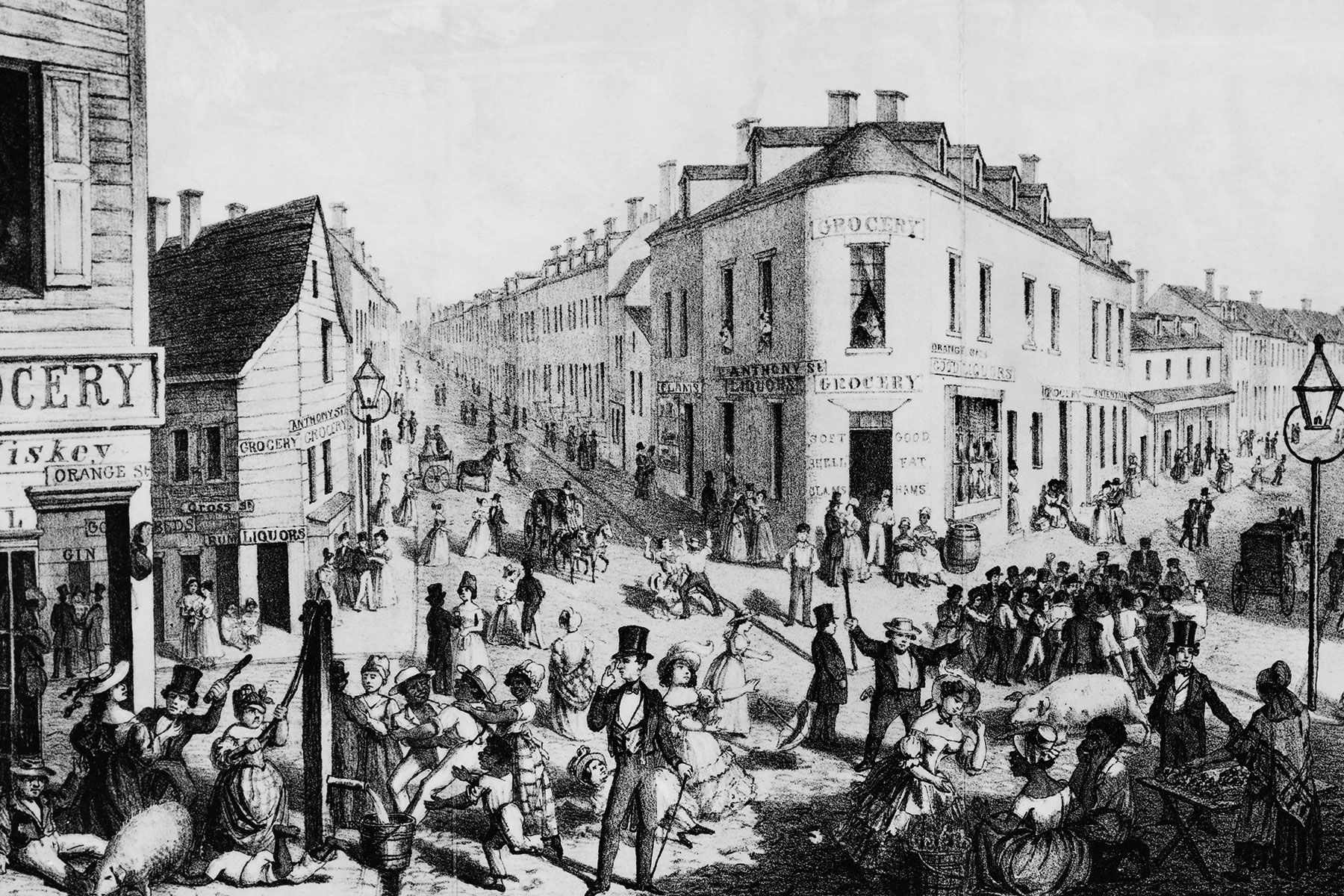



Credit: United Archives/ Hulton Archive via Getty Images (LEFT); DjelicS/ E+ via Getty Images (RIGHT)
Author Timothy Ott
April 10, 2025
Love it?14
Every city experiences noticeable changes with the march of time. Political leaders come and go, businesses appear and disappear, old landmarks are destroyed and new ones erected. To paraphrase the ancient Greek philosopher Heraclitus, nothing is permanent within these centers of human activity except change itself.
That said, some locales certainly change more dramatically than others, due to a variety of factors. While many of us have been around long enough to remember things from 50 years ago, these before-and-after photos from five cities around the world have the mid-1970s looking like a distant era.
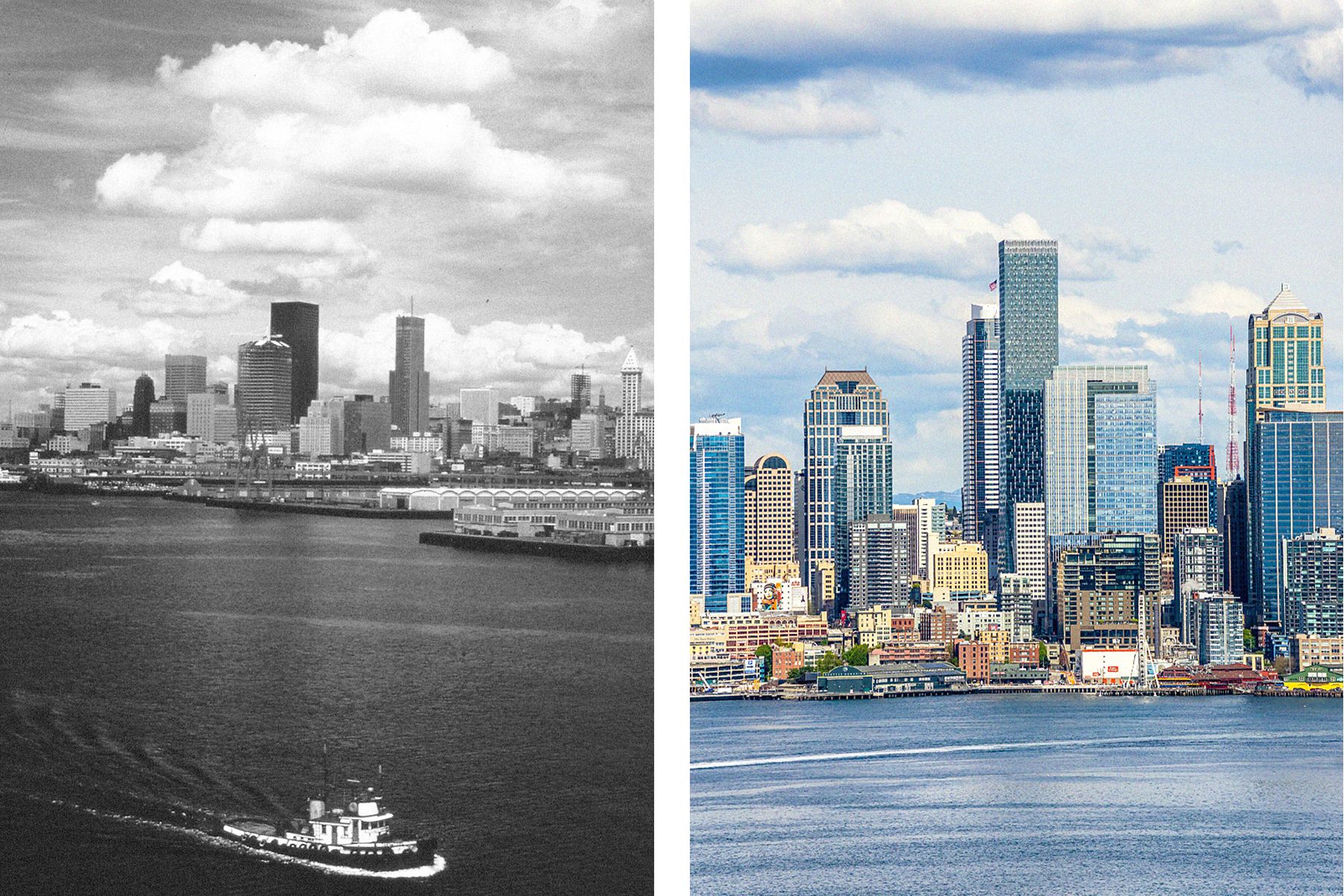
Credits: Hum Images/ Alamy Stock Photo (left); pawel.gaul/ iStock via Getty Images Plus (right)
Seattle, Washington
Seattle was hardly a desirable place to live in the early 1970s; following years of layoffs by aerospace giant Boeing, a billboard appeared near the airport, reading, “Will the last person leaving SEATTLE — Turn out the lights.” To say the least, the Emerald City has recovered quite nicely since then. Boeing moved its corporate headquarters to Chicago in 2001 but has since been replaced in Seattle by the sprawling urban campuses of Google and Amazon, the latter boasting its conspicuous Spheres in the Denny Triangle neighborhood.
Other projects have boosted Seattle’s standing among major American cities, from the creation of Freeway Park and the aquarium in the mid-1970s, to the construction of dedicated stadiums for Seattle’s baseball and football teams around the turn of the century. Meanwhile, the tourist-heavy downtown area has also undergone transformation, with the Great Wheel presenting another waterfront attraction and scenic Overlook Walk replacing the Alaskan Way Viaduct, the elevated freeway that was damaged in a 2001 earthquake.
But perhaps the biggest difference between Seattle of the 1970s and today? There was only one Starbucks in existence then, as opposed to the 90-plus stores that populate the city now, among the 17,000 spread across the United States.
Credits: United Archives/ Hulton Archive via Getty Images (LEFT); DjelicS/ E+ via Getty Images (RIGHT)
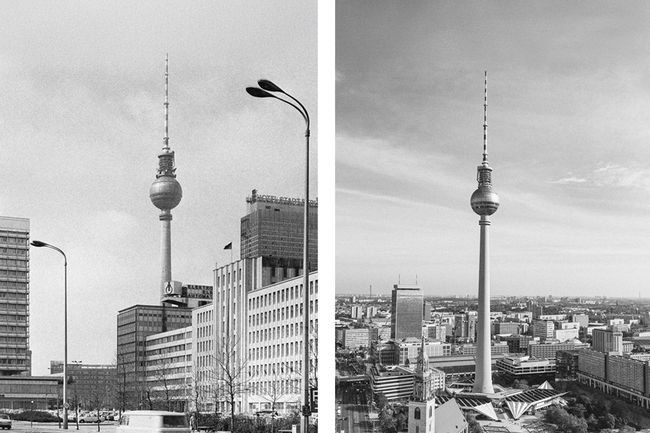
Berlin, Germany
Without question, the biggest difference between the German capital today and 50 years ago is the eradication of the Berlin Wall that divided the city from 1961 to 1989. The wall still exists in bits and pieces, some portions standing as memorials and another hosting the longest open-air art gallery in the world. But the physical and symbolic barrier has given way to efforts to unify the German capital.
The East German Palace of the Republic was torn down in the early 2000s, as design competitions were held to revitalize Potsdamer Platz in the center of the city. Meanwhile, most of the 16 public parks proposed in a 1994 landscape plan have been developed, while the launch of the large Holzmarkt urban market and cultural center along the Spree River underscores how the modern sensibilities of West Berlin have spread to the rest of the city.
Advertisement
Advertisement
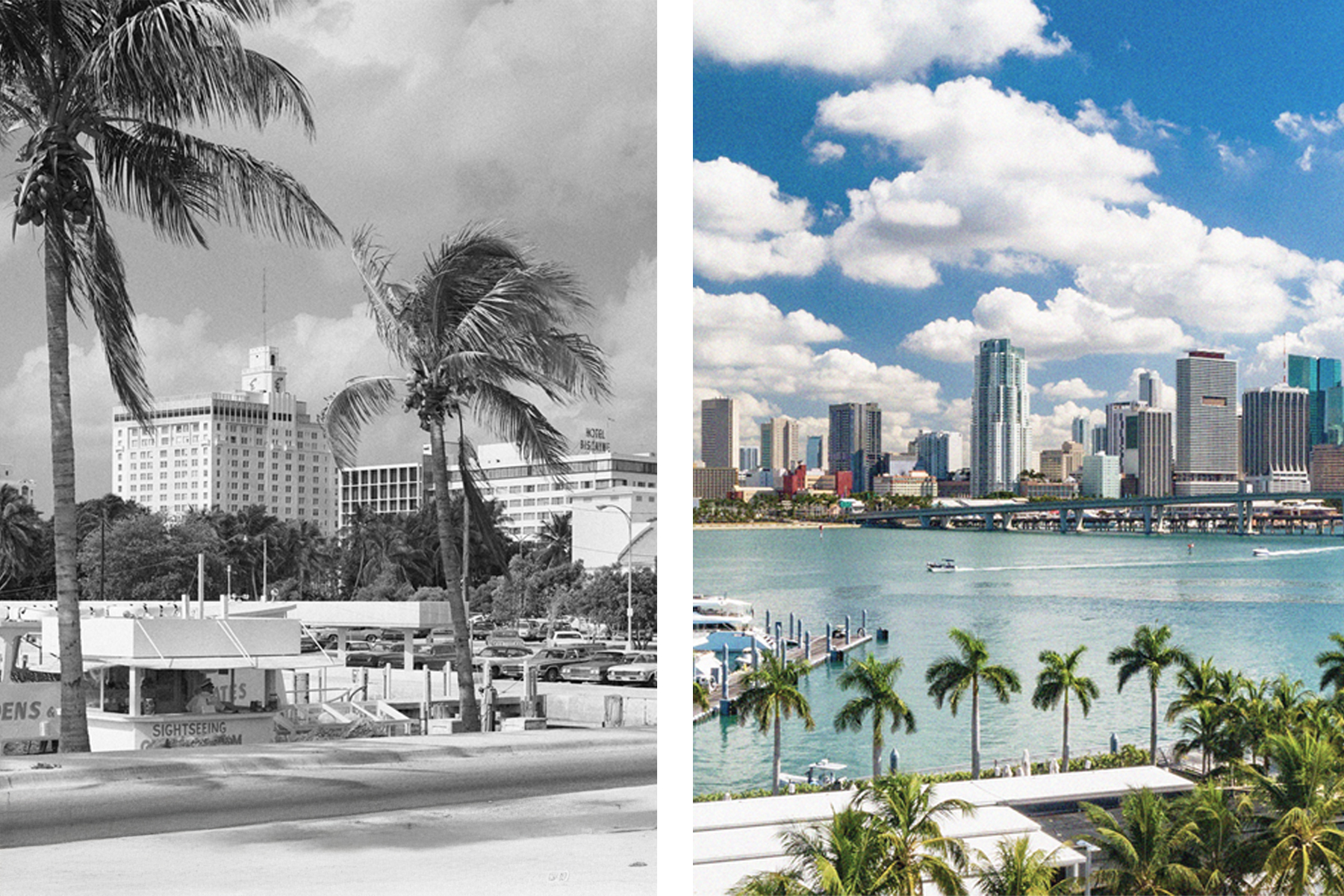
Credits: ClassicStock/ Archive Photos via Getty Images (LEFT); Davel5957/ iStock via Getty Images Plus (RIGHT)
Miami, Florida
Miami has long been a draw for its year-round favorable weather, but there are some stark differences between the beach town of 50 years ago and the metropolis of today. As with other cities on this list, one of the obvious changes are the soaring skyscrapers; Miami had 18 of the top 100 tallest buildings in the country as of March 2024, with the number of buildings reaching more than 300 feet tall increasing by 66% over the previous decade alone.
The money flowing from investors has also made a mark closer to eye level, with Lincoln Road transformed into a world-renowned shopping district and once-quieter neighborhoods such as Wynwood and Sunset Harbor emerging as coveted real estate.
Other areas have undergone major cultural changes by way of demographics, with Cuban and Haitian immigrants pouring in from the 1960s through the 1980s to form the bustling Little Havana and Little Haiti districts. As for public attractions, Miami now boasts the acclaimed Adrienne Arsht Center for the Performing Arts and new homes for the Jorge M. Pérez Art Museum and Phillip and Patricia Frost Museum of Science, while the Kaseya Center and LoanDepot park host professional sports teams in place of the now-demolished Orange Bowl.
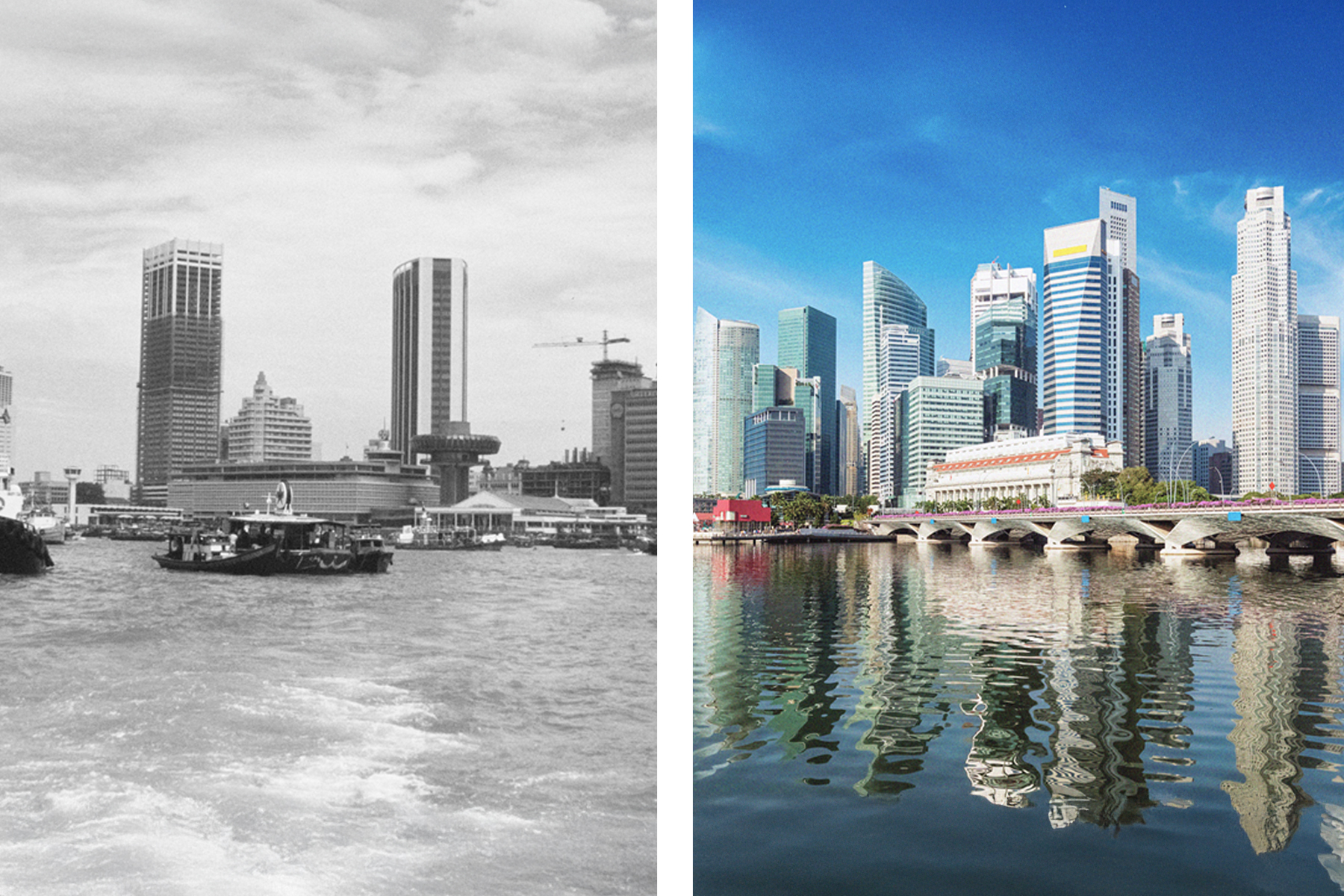
Credits: Bettmann via Getty Images (LEFT); f9photos/ iStock via Getty Images Plus (RIGHT)
Singapore
In 1975, Singapore had been independent for 10 years and was 15 years into the widespread public housing construction program that encompassed most of the city-state. But more extreme changes were also underway, thanks to geopolitical alliances and foreign investments that transformed this tiny nation into one of the world's strongest economies. Most striking, of course, is the skyline — most of the nearly 100 buildings that stand almost 500 feet tall were raised over the past 50 years.
Other major construction projects include the conversion of the royal air force base into the world-renowned Changi Airport, and the development of the artificial Jurong Island, home of the nation's chemical and energy industry. Singapore has also demonstrated that modernization can work in tandem with an environmental focus; nearly 10,000 acres of parks and green spaces have been created since the mid-1970s, with the city’s Gardens by the Bay, featuring the world's largest glass greenhouse and concrete and steel "supertrees," standing as a crowning achievement.
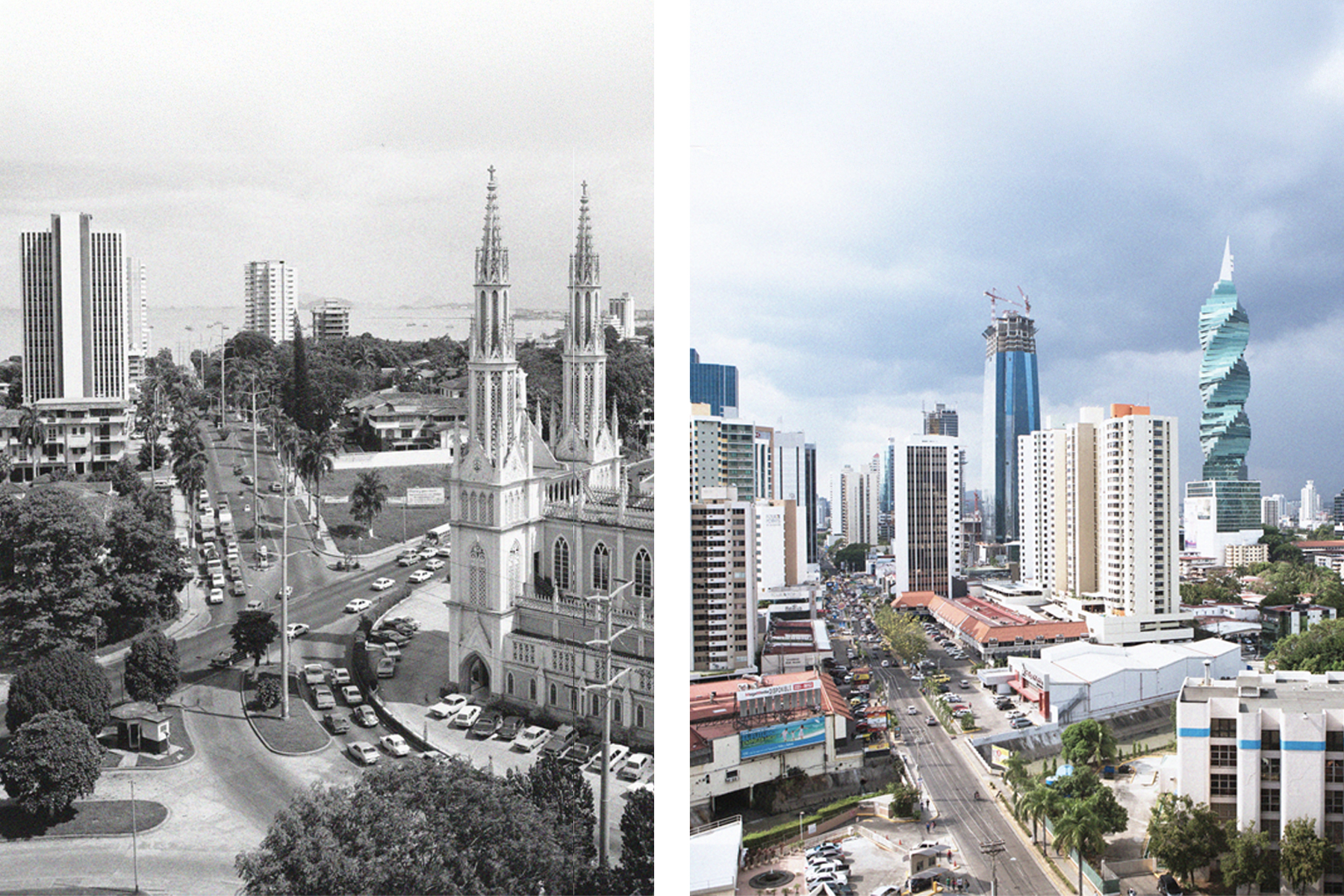
Similar to Berlin, Panama's capital stands on the outskirts of a human-made feature that has altered the course of the city's history. In this case, the Panama Canal has spelled economic good fortune for the area, especially after ownership of the crucial trade channel passed back into local control at the start of the new millennium.
A construction boom that began a few years later pushed the city to the skies, with more than three dozen of the largest skyscrapers built between 2008 and 2014. The city's urban footprint also expanded by 55% from 2000 to 2020.
Major civic works including the expansion of Tocumen International Airport and the launch of the Panama City Metro improved the traveling experience to and around the capital, while the 64-acre Cinta Costera parkland along the waterfront provides the play space for both locals and high-rolling visitors to Central America's richest country.
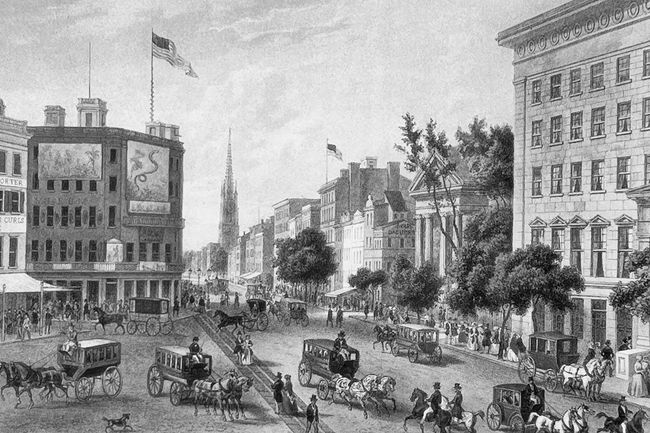
Advertisement
Advertisement
What the New York City Skyline Looked Like 100 Years Ago
Credit: Underwood Archives/ Archive Photos via Getty Images
Author Mark DeJoy
July 24, 2024
Love it?35
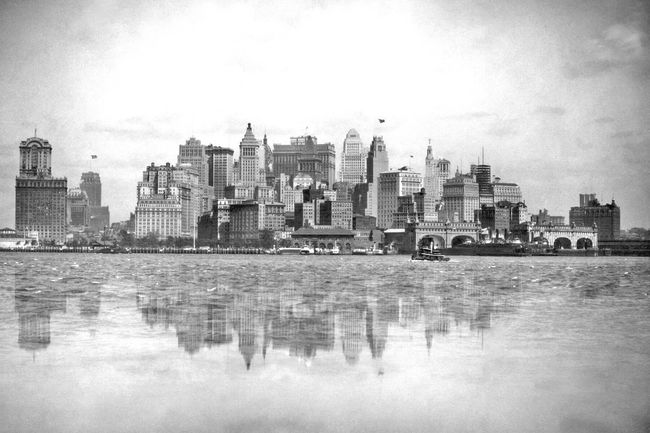
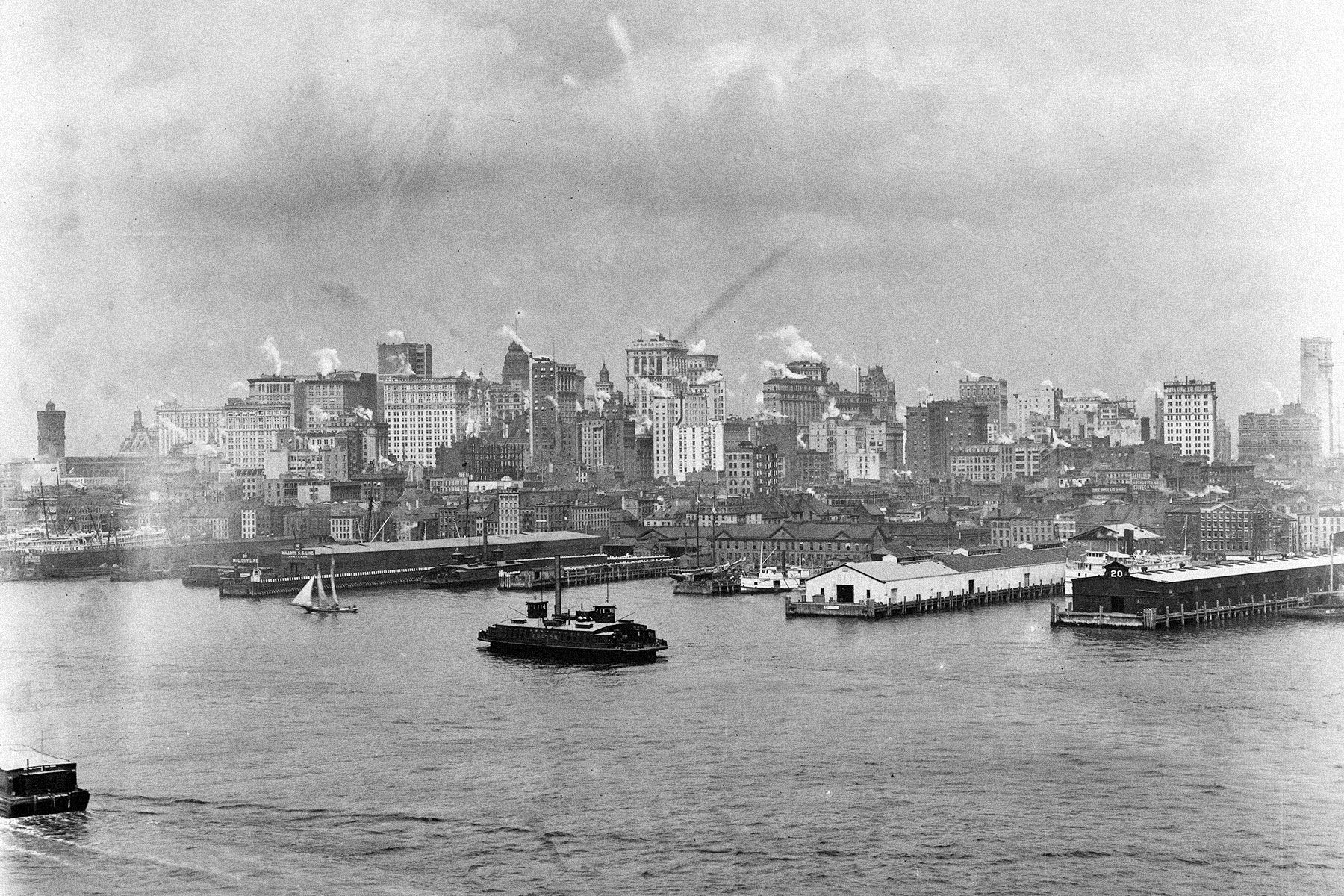
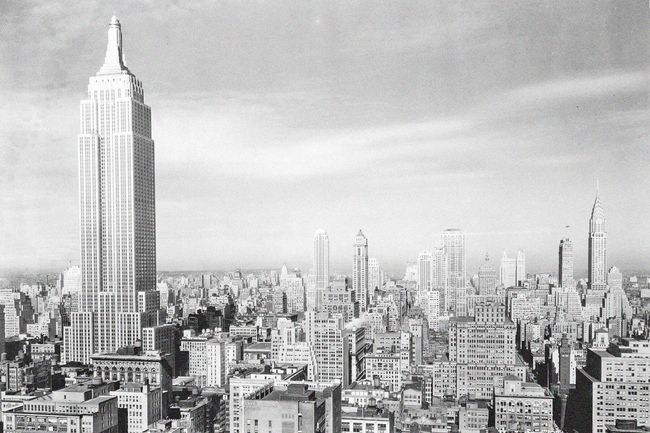
Rising up from the inlet of the Hudson River, New York City has one of the world’s most recognizable and expansive skylines. It’s a built environment defined by skyscrapers, with towering historical icons such as the Empire State Building, Chrysler Building, 30 Rockefeller Plaza, and the Woolworth Building. The city — Manhattan in particular — has a legacy of cutting-edge vertical architecture dating back to the late 19th century. But 100 years ago, many of the city’s most famous buildings didn’t exist yet.
In 1924, New York City was hardly in its infancy. It had been the most populated city in the United States since 1790, and it grew to become the second most populated city in the world by 1900. As of the 1920 census, the city was home to more than 5.6 million people (compared to roughly 8.8 million today). At the time, New York’s tallest buildings were concentrated in lower Manhattan, the colonial center of the city, which by 1910 contained a bona fide vertical skyline. When downtown land became too scarce and costly, developers began building skyscrapers in midtown, which was a transportation hub thanks to Penn Station and Grand Central Terminal. But this development didn’t take place until the late 1920s. In 1924, the original Waldorf-Astoria Hotel was located at the site of the eventual Empire State Building, and the iconic twin towers of the World Trade Center were still 50 years away. Let’s travel back a hundred years for a glimpse at a very different New York City.
Lower Manhattan skyline south of the Brooklyn Bridge, 1895.
The construction of tall buildings in Manhattan was spurred by two things: a finite amount of space on the narrow island, and the advent of the passenger elevator, which enabled developers to add higher floors that could be accessed without climbing stairs. Construction was completed on the city’s first two elevator-equipped office buildings in 1875, which historians consider New York’s proto-skyscrapers: the 11-story, 260-foot Tribune Building and the 10-story, 230-foot Western Union Building. The engineering capabilities of the time meant that both structures were built with load-bearing exterior walls — the walls of high buildings were designed to taper to greater thickness on the ground floor in order to provide support for the top floors. Ground-floor walls for a 150-foot building needed to be 3 feet wide; they had to be even wider for greater heights, thus reducing space on the ground floor. This created a sort of practical (and economic) cap on building height, and both the Tribune Building and Western Union Building remained New York City’s tallest occupiable buildings for many years.
Such height limitations were solved in the 1880s by a method known as skeleton construction, in which support for each floor was provided by an iron or steel frame, replacing the need for load-bearing walls. The first structure in New York City built using skeleton construction was the Tower Building in lower Manhattan. At 11 stories tall, it didn’t become NYC’s tallest building when it was completed in 1889 (it used skeleton construction to overcome a narrow lot size, not to achieve grandiosity), but it did provide the means for the city’s skyline to take shape.
View of Manhattan from Queens, with Roosevelt Island in the foreground and the Metropolitan Life Tower at the far left, early 1920s.
The 1890s ushered in an era of increasingly tall buildings. When the New York World Building was completed in 1890, the 16-story, 309-foot office tower became the first structure to exceed the height of the colonial-era Trinity Church’s spire. It was not only the tallest building in New York, but also the tallest in the world. In 1894, the 18-floor Manhattan Life Insurance Building surpassed it at 348 feet to become the world’s tallest building. Five years later, the 30-floor, 391-foot Park Row Building was completed; it had a nine-year stint as the world’s tallest building before the 42-floor Singer Building thoroughly towered over any other building at the time, at 612 feet tall. In 1909, only a year later, the 50-story, 700-foot Metropolitan Life Tower was completed and became the world’s tallest building. By 1968, the New York World Building, Manhattan Life Insurance Building, and Singer Building had all been demolished. But 100 years ago, they were some of the centerpieces of the New York City skyline.
Office buildings proliferated at the turn of the 20th century as the American economy shifted from agriculture to manufacturing and service industries. These industries required clerical work that in turn required office space to accomplish. But the need for commercial space wasn’t the only reason building heights soared; the lucrative real estate market was another important factor. The high value of property near already-established commercial districts motivated skyscraper construction in midtown and downtown Manhattan. The value of vertical real estate was illustrated to an extreme degree in 1913 with the completion of the Woolworth Building, which took the mantle of world’s tallest building, and became an unsurpassed fixture of the New York City skyline throughout the 1920s.
Advertisement
Advertisement
Credit: PhotoQuest/ Archive Photo via Getty Images
Construction of the Woolworth Building on Broadway in lower Manhattan, 1912. On the right is the Municipal Building, also under construction, with the East River in the background.
Standing 792 feet tall, the Woolworth Building contained 58 floors above ground, and another three floors below ground. With its Tudor-style arched entrance portal, sculpted allegorical figures, Greek marble and stained glass interior, it was such a striking example of Gothic Revival architecture that it was referred to as the “cathedral of commerce.” But even though the building was commissioned by F.W. Woolworth as a grand representation of the retail giant, only one and a half floors of the building were actually occupied by the Woolworth Company. The rest of the building — 60.5 floors — was essentially an investment in real estate. Records from 1914 show that the other floors were leased by as many as 1,000 tenants.
New York City’s building boom wasn’t entirely a height race, though — other skyscrapers were adding grandeur to the skyline without breaking records. In 1889, 41 Park Row was built as a Richardsonian Romanesque headquarters for The New York Times. The Flatiron Building (officially, though obscurely, named the Fuller Building) was completed in 1902 as a distinctly wedge-shaped (or iron-shaped, hence its nickname) beaux arts office tower for its intended tenant and original designer, the George Fuller Construction Company.
Other buildings focused on size, but in the form of usable office floor space, not height: In 1908, the City Investing Building became the largest office building in the world in terms of square footage, with 559,000 square feet of office space. It was surpassed by the nearly 1 million square feet of the Manhattan Municipal Building in 1914, which was then exceeded by the 1.2 million-square-foot Equitable Building in 1915. The dark corridor the building made of Pine Street, which ran between it and 100 Broadway, is an example of an unfortunate side effect of the skyscraper boom, leading to the city’s first-ever zoning law the following year.
The skyline of lower Manhattan, circa 1915. The Municipal Building is at the far left; the Woolworth Building is the tall skyscraper to the right of that. The Singer Building is the darker skyscraper in the center of the photo.
New York City’s 1916 Zoning Resolution contained a provision that would have major implications on the design of the skyline from that point forward: It required tall buildings to include setbacks in order to preserve street-level light. Per the law, a tower would need to be indented if it occupied more than 25% of its lot. The requirement was in effect until 1961, and its impact can be seen in buildings such as the Bush Tower (1917), Cunard Line Building, Crown Building (both completed in 1921), Standard Oil Building (1928), and American Radiator Building (1924).
This setback was also incorporated into the signature ziggurat design element of the art deco movement that emerged in the late 1920s. But 100 years ago, the New York City skyline was dotted with buildings designed in Gothic Revival, neoclassical, beaux arts, Jacobethan, Renaissance Revival, Richardsonian Romanesque, French second empire, and neocolonial styles. Art deco icons such as the Empire State Building and Chrysler Building, completed in 1930 and 1931, respectively, were just around the corner.
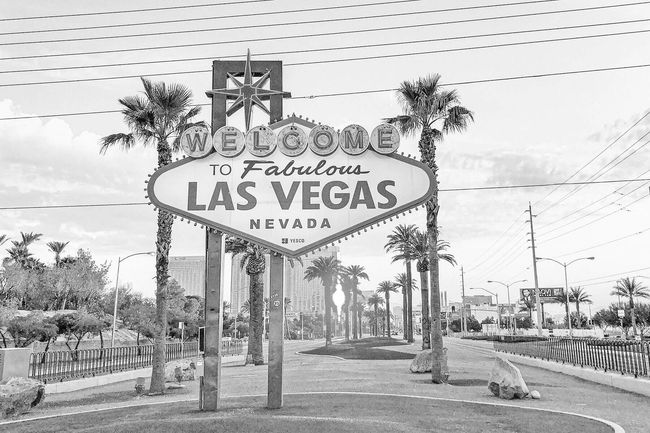
Since the middle of the 20th century, Las Vegas has been known as the capital of the American id. Gambling has long been at the center of its appeal, as nicknames such as “Sin City” and “Lost Wages” suggest. “What happens in Vegas stays in Vegas” is the city’s well-known slogan, while others have remarked, “Las Vegas is where losers come to win, and winners come to lose.”
Rising up from the Nevada desert, the city’s built environment is so extravagant that it’s difficult to imagine a time when its spectacle did not exist, fully formed. Let’s go back and trace the origins of this uniquely American city.
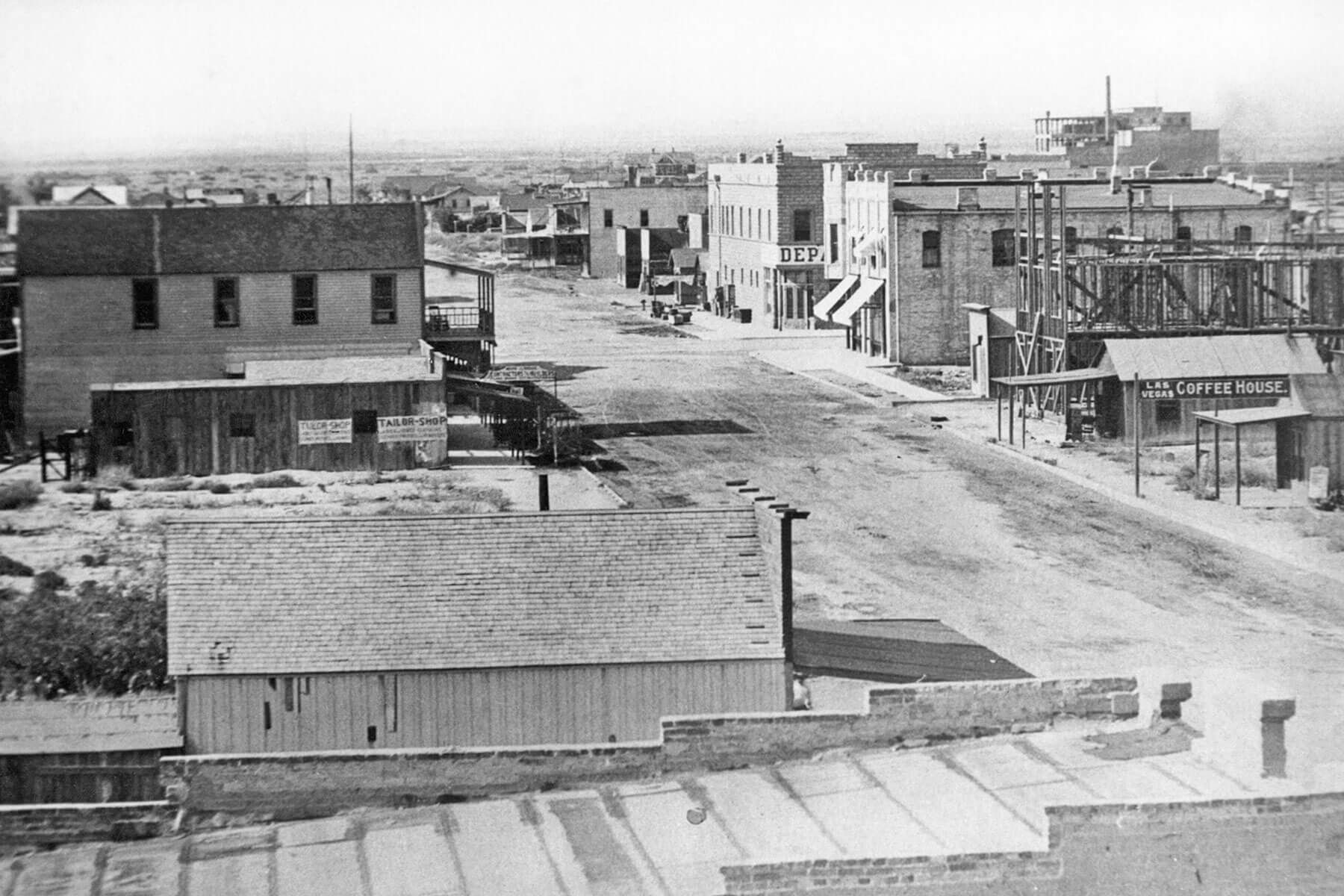
Even though Las Vegas occupies a unique place in American culture, its metropolitan origin was sparked by the same thing that gave rise to many other U.S. cities: the development of the railroad. The area that includes present-day Nevada became a United States territory with the signing of the Treaty of Guadalupe Hidalgo in 1848, which ended the U.S. war with Mexico. Despite its location in the basin of the Mojave Desert, the site of what is now Las Vegas was a sort of oasis — a valley that included a water source in the form of artesian springs.
The water source was the selling point for railroad magnate and U.S. Senator William Clark. In 1902, he bought 2,000 acres of land and water rights in order to create a waypoint for the San Pedro, Los Angeles & Salt Lake Railroad he incorporated to connect those cities. The railroad line through Nevada began construction in 1904, and the following year, Clark auctioned off parcels of his land, which was located east of the railroad tracks.
Around the same time, civil engineer John T. McWilliams was attempting to build a township west of the railroad tracks. Though he was working with far less acreage than Clark — 80 acres to Clark’s 2,000 — the development provoked competition and intensified Clark’s efforts to build his township. Clark offered refunds on the $16 train fare to town in order to attract buyers. Newspaper advertisements promised, “Get into line early. Buy now, double your money in 60 days,” though accounts differ on which of the two were commissioning that ad.
Ultimately, McWilliams couldn’t really compete. After all, Clark owned the water rights and far more land, and he had a major stake in the railroad. On September 5, 1905, a fire almost completely consumed McWilliams’ townsite, and ensured that the competition between the two was short-lived; development would be concentrated west of the railroad tracks. Clark formed the Las Vegas Land & Water Company with his partners, and vowed, “I will leave no stone unturned and spare myself no personal effort to do all that lies within my power to foster and encourage the growth and development of Las Vegas.”
Clark’s dramatic statement might sound like a natural lead-up to building the bombastic city we know today. But that’s not quite what happened. Over the next 25 years, Las Vegas settled into an existence as a quasi company town, with railroad and mining as the main industries and a population of about 2,300. Clark sold his share of the railroad to Union Pacific in 1921, living in retirement for four more years until his death at age 86.
The 1920s were a tumultuous decade for Las Vegas nearly from the outset. In 1921, Union Pacific cut 60 jobs in the wake of its acquisition of the railroad. President Warren G. Harding’s incoming administration also meant new appointments to the Railroad Labor Board, and the board approved a series of wage cuts for railroad workers. In the meantime, a post-World War I downturn in mining further impacted Las Vegas. Then, in what is largely viewed as a retaliatory move, Union Pacific moved its repair shops out of Las Vegas and to Caliente, Nevada, costing hundreds of jobs.
With a dire economic outlook impacting the entire state, Nevada revisited the legalization of gambling, which had been legal from its statehood in 1869 up until 1910. With greater public support for relegalizing gambling than previous efforts had, a bill to legalize “wide open” gambling passed in both the state Assembly and Senate, and on March 19, 1931, Governor Fred Balzar signed it into law. That same year, divorce laws were loosened to permit anyone with a six-week residency in the state to legally divorce. And just one year earlier, construction had begun on the Hoover Dam, bringing an influx of thousands of workers to the area, many of whom would take the short trip to Las Vegas to try their luck with the newly legalized games. With this confluence of events, the Las Vegas we know today began to take shape.
Advertisement
Advertisement
Credit: Gene Lester/ Hulton Archive via Getty Images
Organized Crime and the Strip
The decriminalization of gambling made Las Vegas an attractive destination to experienced gambling operators, some of whom were running criminal enterprises in other states. One such figure was the archetypal crooked cop Guy McAfee, a Los Angeles vice squad officer who fled to Las Vegas to escape prosecution for running gambling and prostitution rings — the exact vice he was supposed to be policing. Arriving in town in 1938, he bought the Pair-O-Dice Club on Highway 91 and renamed it the 91 Club, delaying its grand opening to 1939 in order to coincide with Ria Langham's six-week residency for divorcing Clark Gable.
McAfee was responsible for two enduring pieces of Las Vegas culture: He opened the Golden Nugget on Fremont Street, ushering in an era of grandiose casinos, and he is also credited with nicknaming Highway 91 “the Strip.” The Golden Nugget opened in 1946, about a year after the Nevada Legislature created the first casino license stipulating a 1% tax rate on gross gaming revenue in excess of $3,000.
The lucrative gaming industry began to attract heavier organized crime players beyond McAfee. Benjamin “Bugsy” Siegel arrived in Las Vegas intending to create a base of operations for the notorious Syndicate, which, at the time, was led by Meyer Lansky during a period when Salvatore “Lucky” Luciano was in prison. Using funds from the Syndicate, Siegel became the primary stakeholder in the construction of a casino on Highway 91 to rival the Golden Nugget. Siegel wanted it to depart from the Old West aesthetic of most casinos of the time, and instead be patterned after the tropical resorts the Syndicate backed in Havana, Cuba. He dubbed it the Flamingo, and hoped to set a new standard for opulence in line with Siegel’s own worldview. “Class, that’s the only thing that counts in life," he once said. “Without class and style, a man’s a bum, he might as well be dead.”
Lavish attention to detail and poor business management contributed to enormous cost overruns, and bad luck compromised the Flamingo’s opening and its ability to quickly recoup costs. Maybe because of the money, maybe for a number of other possible motives that are debated to this day, Bugsy Siegel was gunned down while reading the newspaper in a Beverly Hills mansion on June 21, 1947. The murder was a national sensation, covered in tabloids and TIME magazine alike. LIFE magazine ran a gruesomely iconic full-page photo of the crime scene in its article about the murder. The case, Crime Case #46176 in the Beverly Hills Police Department, is still open and unsolved.
In a tellingly quick matter of minutes after Siegel’s murder, other Syndicate bosses took over the Flamingo. The resort eventually became profitable — so much so that the Syndicate began building more casino-resorts on the Strip. Organized crime had taken hold in Las Vegas, and the era of the swanky, entertainment-oriented hotel-casino was born. The mob invested in more casinos; the Sands Hotel and Casino opened in 1952 and brought in the “Rat Pack” (Frank Sinatra, Dean Martin, Sammy Davis Jr., Joey Bishop, and Peter Lawford) for a high-profile residency. The Dunes, Riviera, and New Frontier opened in 1955; the Tropicana followed in 1957, and the Stardust opened a year later. Each had ties with organized crime syndicates from around the country.
Despite the sensational murder of Bugsy Siegel, the mob’s involvement in casinos, hotels, restaurants, and other Vegas businesses expanded, and more gangsters arrived in the city throughout the 1960s and ’70s. But in the late ’60s, billionaire Howard Hughes bought a series of mob-connected casinos — the Desert Inn, the Sands, Castaways, Frontier, the Silver Slipper, and Landmark — that shifted the balance of casino ownership in the city from mob-connected to corporate-owned. In 1969, the Nevada Legislature promoted corporate ownership of casinos, and in 1970, Congress passed the Racketeer Influenced and Corrupt Organizations Act (commonly known as RICO), which aided the U.S. Justice Department in cracking down on organized crime.
During the ’70s, high-profile car and restaurant bombings between rival gangs unsettled the city to the point of attracting the attention of the FBI. The Nevada Gaming Commission and the Nevada Gaming Control Board refocused on organized crime, and Governor Mike O’Callaghan made it a point of emphasis. A RICO case focused on mobster Anthony Spilotro and Frank “Lefty” Rosenthal, whose connections ran from Chicago mob families to others throughout the Midwest. By 1981, Spilotro’s operations had been broken up, and the mob was all but finished in Las Vegas.
Advertisement
Advertisement
Credit: Frank Edwards/ Archive Photos via Getty Images
The Rise of the Corporate Mega-Resort
Billionaire businessman Kirk Kerkorian bought the Flamingo in 1967, and in 1969, he opened the massive International Hotel. It was the largest hotel in the country, with 1,500 rooms and a 4,200-seat showroom. For its grand opening, he brought in Barbra Streisand, and then followed that by bringing in Elvis Presley for a famed residency — 837 consecutive sold-out performances over seven years — that set an enduring record. The same year, Kerkorian bought Hollywood’s venerable MGM Studio, and set out to build a themed resort in Las Vegas based on the production house.
With all of the buying and building, Kerkorian incurred enormous costs, so to help balance the ledger, he sold the Flamingo (and later the International Hotel as well) to the Hilton Hotel Corporation. The success of the Flamingo Hilton caught the attention of other major hotel corporations, such as Sheraton and Holiday Inn, and they too began opening casino-hotels in the city. In 1973, Kerkorian opened the MGM Hotel-Casino, which eclipsed the International Hotel in grandeur, boasting 2,100 rooms, eight restaurants, two showrooms, and the (at the time) world’s largest casino. It was the largest resort in the world, and Las Vegas’ first mega-resort.
During the rest of the ’70s and into the ’80s, development on the Strip stagnated. But Las Vegas itself was growing: From 1985 to 1995, the city’s population nearly doubled, increasing to around 368,360. Using junk bonds in 1989, developer Steve Wynn reinvigorated the Strip by building the most ostentatious mega-resort yet: the Mirage Resort and Casino. A 29-story Y-shaped tower with 3,044 rooms, a 1,500-seat showroom, and waterfalls, it also had a simulated volcano that would “erupt” every 15 minutes after sundown. That same year, Kerkorian announced plans for a new MGM Grand, which was completed in 1991 and took the mantle as Las Vegas’ largest casino, with even more over-the-top touches including a lion zoo and heavyweight boxing arena.
Credit: George Rose/ Getty Images News via Getty Images
An Entertainment Capital
The 1990s were a transitional era in Vegas, as many of the midcentury casino icons were razed in favor of constructing new family-friendly mega-resorts, representing a commitment toward broader entertainment tourism, rather than singular gambling. The Sands was imploded and replaced by the Venetian; similarly, the Dunes was replaced by the Bellagio, and the Hacienda was replaced by Mandalay Bay Resort. In true Las Vegas fashion, each implosion was a spectator event. The Hacienda implosion was even scheduled at 9 p.m. on December 31, 1996, in order to coincide with the new year on the East Coast. Most of the casino implosions were televised, and the videos can still be viewed on local TV news channel websites.
Today, Las Vegas continues to broaden its scope. Professional sports leagues have ended their historical aversion to placing teams in the city, as seen by the NHL awarding the expansion team the Las Vegas Golden Knights in 2017, the WNBA’s San Antonio Stars relocating to Las Vegas and becoming the Aces in 2018, and the NFL’s iconic franchise the Raiders relocating to Las Vegas in 2020. Major League Baseball’s Athletics are likely to follow. Las Vegas is now known as a city with an excellent fine-dining scene, with a number of chefs up as semifinalists for 2024 James Beard Awards. And the only place in town the mob exists now is in a museum.
Advertisement
Advertisement
What 6 Major State Capitals Looked Like 100 Years Ago
One hundred years is a long time in the life of a city. New technologies emerge and wane, people come and go, cultural factors ebb and flow. But not all cities change at the same rate; some stay comparatively similar to their older incarnations, while others become drastically different. Here’s a glimpse at what a few iconic state capitals looked like a century ago.
Credit: Buyenlarge/ Archive Photos via Getty Images
Atlanta, Georgia
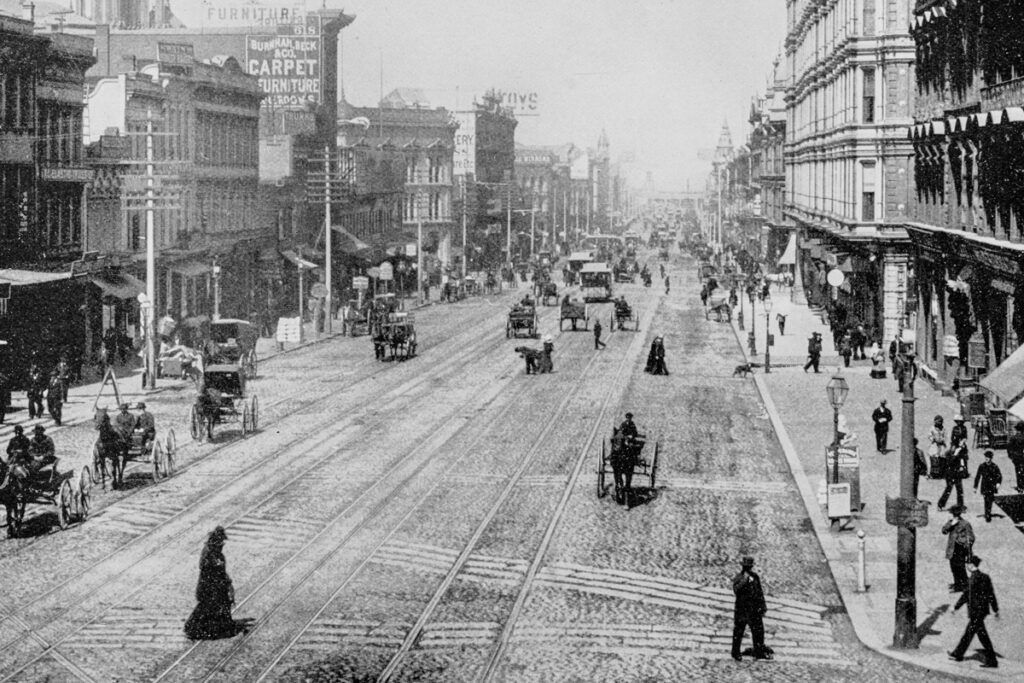
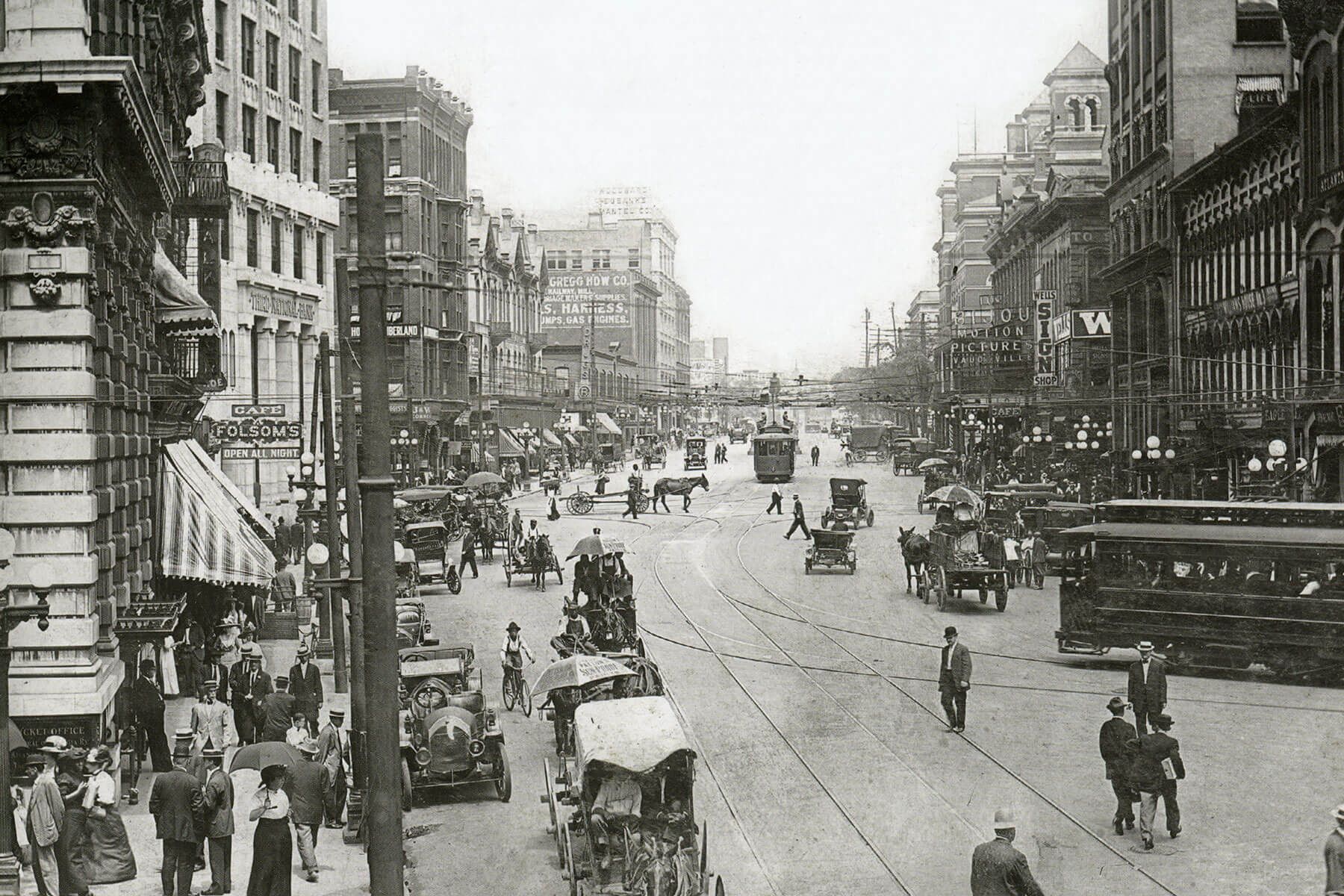
Atlanta was named after the Western and Atlantic Railroad, for which it was a terminus. In the early 20th century, the city was well established as a major railway hub, and the downtown was built around its first train station. Hotels were concentrated in an area near the station (called, fittingly, Hotel Row) in order to serve train travelers, and by the 1920s, masonry high-rises created the city’s skyline.
Like many cities during this period, Atlanta was beginning to expand its roads in order to accommodate increasing numbers of cars. In the 1920s, the city built three major viaducts to allow traffic to bypass the high number of railroad crossings. The Central Avenue, Pryor Street, and Spring Street (later renamed Ted Turner Drive) viaducts not only improved vehicle safety, but also led to development outside the city’s downtown core.
Though Boston was established as a colonial port city as early as 1630, a wave of immigration between 1880 and 1921 fueled a population boom and a sense of transition similar to what many younger cities were facing at the time. An expanding population created a need for a building boom, and changes wrought by the Industrial Revolution were at the forefront. The industrialization of nearby Springfield, Massachusetts led to a high population of mechanics and engineers in that city, and it became a hub for the nascent automotive industry. Rolls-Royce selected Springfield as the site of its U.S. factory, and many other early auto manufacturers were based in the area. In fact, Massachusetts claimed to have manufactured more cars at the beginning of the 20th century than Detroit, Michigan. Cars were particularly popular in Boston — more so than in many other cities — and 1 in 8 Bostonians were car owners by 1913. This led to the construction of a large number of buildings dedicated to automobiles, including garages, repair shops, car dealers, and more.
In terms of architecture, the city’s affluent Beacon Hill neighborhood appears very similar today to how it looked in the 1920s, with well-preserved colonial-style and Victorian buildings. However, little remains of Boston’s once-abundant theater district, which reached a peak count of 40 theaters by 1935.
Nashville has a storied history as a center of American popular music, but that history was in its very infancy 100 years ago. The famous Grand Ole Opry didn’t begin until the middle of the 1920s, first broadcasting as “the WSM Barn Dance,” and at the time, it was hardly the institution it would become later. In those days, it was purely a radio show broadcast out of the WSM studio on the fifth floor of the National Life and Accident Insurance building, with only as many spectators as could fit in the limited confines of the station’s Studio A.
Unlike other major capitals, Nashville wasn’t a city of high-rises — the 12-story Stahlman Building was the tallest building from the time of its completion in 1908 until the L&C Tower was built in the 1950s — and much of the low-rise brick and masonry buildings from the last century are preserved today. This is particularly true along the First Avenue front of the Cumberland River, and along SecondAvenue, formerly known as Market Street.
Though Austin’s population began steadily growing around the end of the 19th century, in 1920 it was only the 10th-largest city in Texas, with a population just under 35,000. Its visual focal point was the Texas State Capitol Building (the UT Tower didn't exist yet), and the surrounding downtown consisted of low- and mid-rise buildings with brick or stone facades — an aesthetic that was more “Main Street” than “metropolis.” Cars weren’t quite as dominant in Austin as in larger cities of the time, and horse-drawn carriages were still seen on the streets.
Phoenix is another city that had a relatively small population in 1920 — just around 29,000 — but it was still the largest city in a state that had existed for only eight years. Because of this, Phoenix had the flashiness and bustle of an up-and-coming city, despite its small size. The city’s first skyscraper, the Heard Building, was even the site of a stunt climbing performance shortly after it was built. Nonetheless, the Heard Building’s height of seven stories might not pass for consideration as a skyscraper in larger cities. The 10-story Luhrs Building surpassed it in height when it opened in 1924, and the 16-story Hotel Westward Ho became the city’s tallest building in 1928. It held that title for more than 30 years, as the vast availability of land surrounding Phoenix disincentivized vertical construction, in favor of outward land expansion.
Sacramento is often overshadowed by other iconic California cities, but 100 years ago it boasted a downtown of ornate classical architecture, was home to the largest manufacturing train yard in the western United States, and served as a major retail hub for the region. Vital downtown structures of the time — such as Sacramento City Hall, Memorial Auditorium, the California State Life Building, and the Federal Building — were all built during a construction boom that occurred between 1912 and 1932. But there isn’t much evidence of this architectural period today, as even some surviving buildings, such as Odd Fellows Hall, have been remodeled with simpler midcentury-style facades.
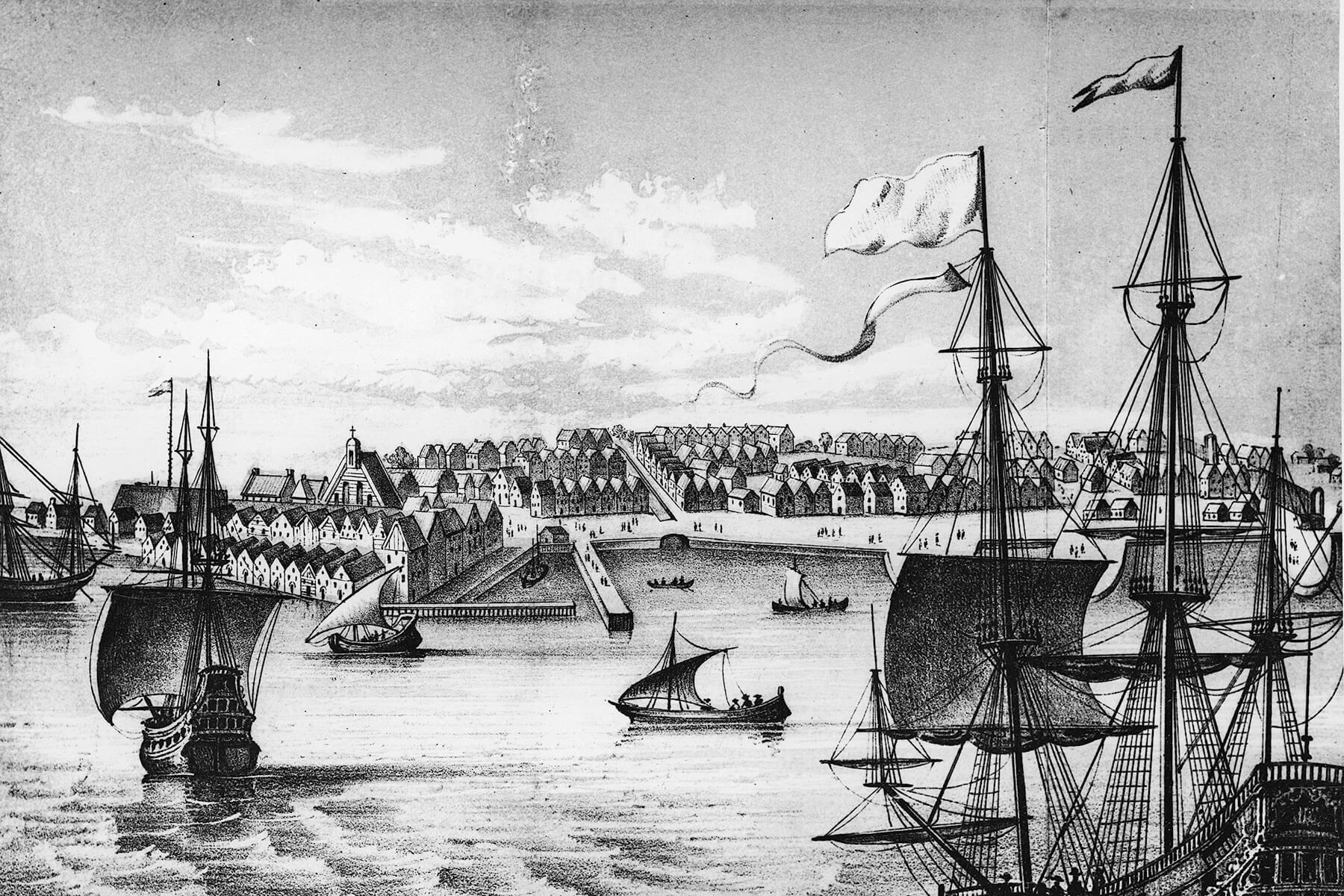
The first known inhabitants of what is now New York City were the Lenape (aka Delaware), an Indigenous people native to the northeastern U.S. Their villages were groupings of round-shaped wigwams constructed from bark, some of which were large enough to function as communal housing. The name “Manhattan” comes from the Lenape “Manahatta,” their word for a hilly, forested area, which roughly translates to “the place for gathering wood to make bows.” But when Dutch colonists acquired the land around New York Harbor in 1626, they named it New Amsterdam.
The Dutch constructed modest red tile-roofed brick and stone buildings, warehouses to support the fur trade, a church, and thatch-roofed wooden homes, in the style of a small European village. They also built a series of walls bordering the settlement in order to protect it against attacks — the street that was originally adjacent to one of the walls is known today as Wall Street.
Photo credit: FPG/ Archive Photos via Getty Images
On September 8, 1664, the British navy took New Amsterdam and renamed the settlement New York. In 1698, the British built the square-steepled First Trinity Church out of brownstone and brick in the English style, as well as a Georgian-style mayor’s mansion. Larger buildings began to appear, too — many as high as six stories and constructed of red-and-yellow Flemish brick with gable roofs, a design that complemented the existing Dutch-style buildings. In the early 18th century, New York was still distinctly rural — much of the area was farmland, rolling hills, and wetlands — but its population was increasing. By the time the Revolutionary War began in 1775, there were about 20,000 residents in the city.
Advertisement
Advertisement
Photo credit: FPG/ Archive Photos via Getty Images
1800s
In 1811, New York City’s commissioners developed a master plan for urbanization, to order and expand the streets of Manhattan: the now-famous city grid. The plan called for streets to be numbered from 1 to 155, and the commissioners assumed that it would take centuries for the grid to be filled in with development. But between 1810 and 1820, New York City’s population grew by 50% due in large part to immigration. By 1860, the population had surged to 813,669 — up from 33,131 near the turn of the 19th century. Development boomed along with the population growth and approached the end of the grid at 155th street in just 50 years as New York became a preeminent shipping, immigration, and manufacturing hub. Graceful row houses were built along Washington Square in what is now Greenwich Village, making it a desirable destination for the city’s elite. The Upper West Side remained rural, with green pastures, rail fences, and farmhouses. Construction began on Central Park in 1858, and its first section opened that same year.
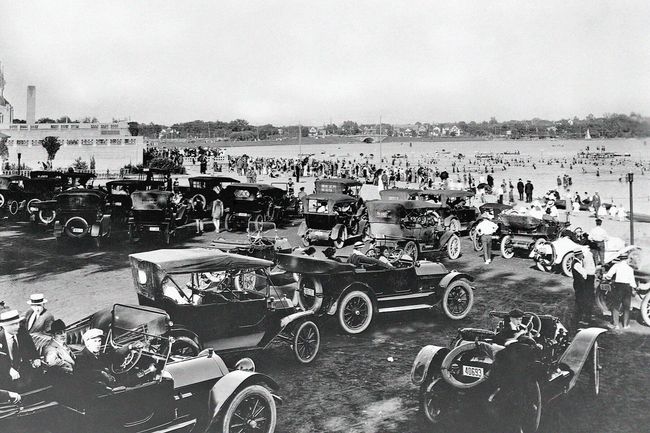
Photo credit: FPG/ Archive Photos via Getty Images
The 19th century was marked by a growing division of wealth, however, and in poor areas of the city, tenement housingproliferated in order to meet increased housing needs, numbering more than 15,000 by the end of the Civil War in 1865. Tenements were largely centered in immigrant areas such as the Five Points in Lower Manhattan, near modern-day Chinatown and the Lower East Side. Living conditions in these overcrowded dwellings were often incredibly poor and dangerous, and became a major social issue toward the turn of the 20th century.
Advertisement
Advertisement
Photo Credit: FPG/ Archive Photos via Getty Images
1900s and 1910s
In 1898, the “Greater New-York” bill took effect and united New York City, Brooklyn, Long Island City, and the then-sparsely populated Queens and Staten Island (the area that became the Bronx had already been annexed by New York in 1895). In 1904, the Interborough Rapid Transit opened the first line of the electric subway system that would connect the five boroughs. The Industrial Revolution brought a massive amount of wealth to New York City, and industries such as publishing, textiles, advertising, and other manufacturing thrived.
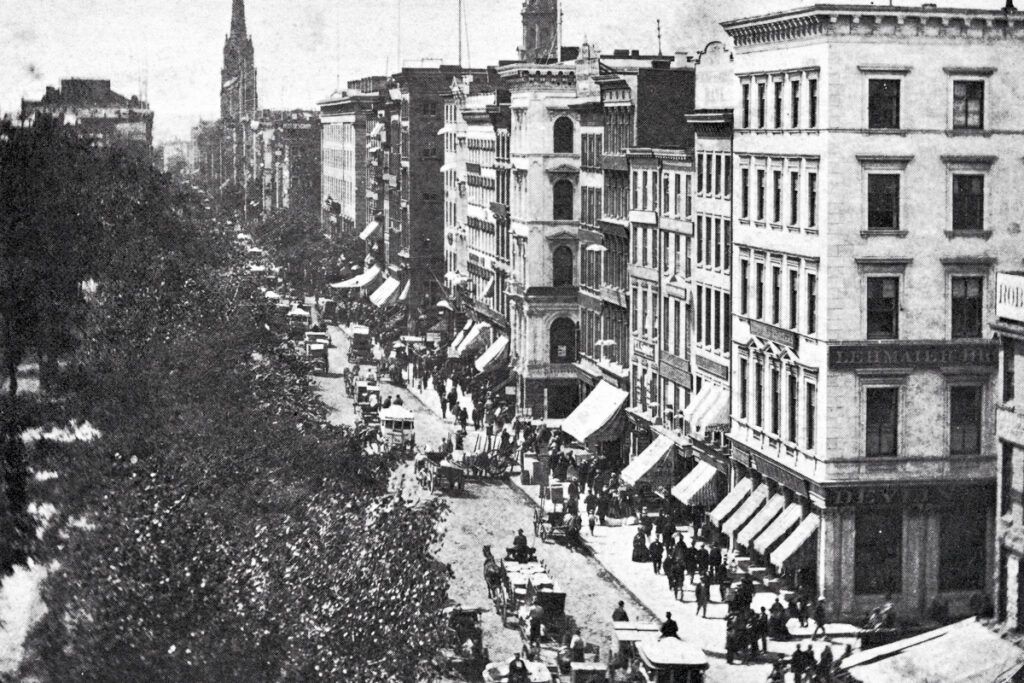
The cityscape began to reflect the influx of wealth, as increasingly opulent structures were built toward the end of the 19th century — America’s “gilded age.” The Washington Square Arch was built in 1895, and skyscrapers became a prominent part of the city, starting with the Tower Building in 1889, and then the Home Life Insurance Building in 1894. At the turn of the century, skyscraper construction increased in both frequency and magnitude, spurred by the City Beautiful movement that cast them as sources of civic pride. The Flatiron Building was built in 1902, followed by the 395-foot original New York Times Building in 1904. When the Singer Building was completed in 1908, it was the tallest building in the world at 612 feet. Just one year later, the 700-foot Metropolitan Life Insurance Tower took the tallest building mantle until 1913, when the Woolworth Building towered over it by nearly 100 feet. The marble or terracotta cladding and ornate neo-Gothic or beaux-arts designs of these buildings gave a cathedral-like sensibility to the emerging NYC skyline.
The 1920s in New York City were marked by the Harlem Renaissance, an era in which Black-owned arts and cultural centers were the hub of American culture at large. Jazz and blues nightclubs, cabarets, and theaters added to the city’s nightlife, especially in the Harlem neighborhood of Upper Manhattan. The prosperity at the turn of the century also resulted in a skyscraper height arms race. The vertical city we know today began to take shape, with the appearance of the street wall — the narrow blocks of Manhattan lined with sky-high buildings. The “jazz moderne” architectural style that became known as art deco emerged spectacularly in two iconic buildings constructed at the beginning of the 1930s: the Chrysler Building and Empire State Building, which were both the tallest in the world at the time they were completed. The first neon sign in the city was installed in Times Square in 1924, and proliferation of neon signs proliferation throughout the 1930s added a colorful glow to nighttime in New York.
The postwar era was a new peak for New York City. In 1947, the British writer J.B. Priestley commented, "The New York (of) 40 years ago was an American city, but today's glittering cosmopolis belongs to the world, if the world does not belong to it." New York in the 1940s was a center of broadcasting and media, as well as the world’s largest manufacturing center, wholesale center, and port. It was a global financial pillar and an enormous corporate hub, with 27% of Fortune 500 companies headquartered there. Yet postwar NYC was also more affordable than it is today: Higher-market rents equated to about $2,500 in today’s dollars — nearly $1,000 less than the average market rent today.
While the 1950s largely continued the prosperity of 1940s New York City, the 1960s were an era of tumult. The decade began with the passing of the 1961 Zoning Resolution, which encouraged the design of plazas and other open spaces, in order to combat the “street wall” effect that had emerged in the city’s landscape. But construction in the early ’60s didn’t carry the same optimism it once did, and there was a more ominous development that same year: the demolition of Penn Station. The iconic transportation hub had been an architectural marvel, and its destruction (to make room for the latest iteration of Madison Square Garden) was an infamous wound to the civic psyche, so much that it inspired the city’s historic preservation movement. While midcentury New York was a hub for booming creative industries such as TV and pop music, storm clouds of decline were gathering. Socio-cultural and racial tensions rose, and an increasing number of middle-class and affluent families left the city for the ever-growing suburbs. Infrastructure problems such as garbage and transit strikes, as well as power grid failures, also began to cast an ominous shadow by the end of the decade, a product of the city running account deficits since 1961.
In the 1970s, the financial deficits the city had been running throughout the previous decade reached a boiling point. In 1974, New York City was forced to borrow $2.2 billion for facilities projects and to cover debts. By the end of the year, municipal debt increased to $13.5 billion. The New York of this era reflected the financial strife: Debt meant cost-cutting, and cost-cutting meant a reduction in maintenance services. An estimated 441,963 people left the city between 1970 and 1976, a population loss of 5.6%. Transit and sanitation workers again organized strikes at the beginning of the 1980s. The city took on a dingy griminess that was depicted in such films as Taxi Driver and The Warriors. Graffiti began appearing throughout the boroughs, and though it was condemned by NYC Mayor John Lindsay, its distinctive urban patina was embraced by the city’s punk rock and hip-hop movements as art on its own terms.
French photographer Gregoire Alessandrini likened 1990s New York to “waking up with a bad hangover from all the past parties and eccentricity.” Yet New York City was beginning to recover financially, and the first signs of gentrification began in the 1980s and ’90s as young professionals returned to the city and crime rates began to drop. The city also saw a cultural renaissance through the rise of hip-hop and other artistic movements, as well as activist movements such as LGBTQ+ rights and racial justice. In the new millennium, the tragic September 11 attacks inspired a widespread reaction of renewed pride in the quintessential American city. Extensive rezoning in the 2000s emphasized residential high-rises, bike lanes, and multipurpose buildings, especially in Brooklyn and Long Island City, spreading gentrification beyond the island of Manhattan.
Advertisement
Advertisement
7 Things You Would Find on a City Street 100 Years Ago
Minnesota Historical Society/ Corbis Historical via Getty Images
Author Tony Dunnell
December 20, 2023
Love it?100
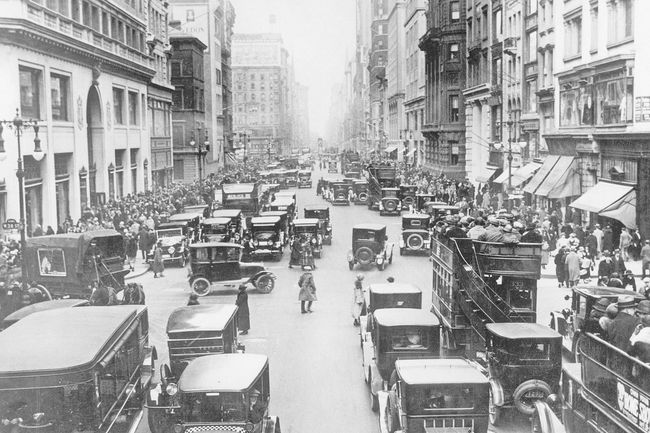
If we could travel back 100 years and land on a typical city street, we’d probably be mightily discombobulated. Some things would seem familiar: the buzz of the urban environment, people walking this way and that, and buildings with facades that could well still exist today. But looking around, we’d soon realize that we weren’t in Kansas anymore — or if we were, it would be Kansas City in the 1920s.
A century ago, America was going through a monumental change. For the first time in U.S. history, more people were living in urban areas than in rural areas. The cities were booming, and for many middle-class Americans, the 1920s were a decade of unprecedented prosperity. People were earning more and spending more, advertising had reached new levels of sophistication, and the automobile was changing the way we live.
So, before you step into that time machine, you’d better brace yourself. Here are seven things you’d find in a city street a century ago, back in the dizzying days of the Roaring ’20s.
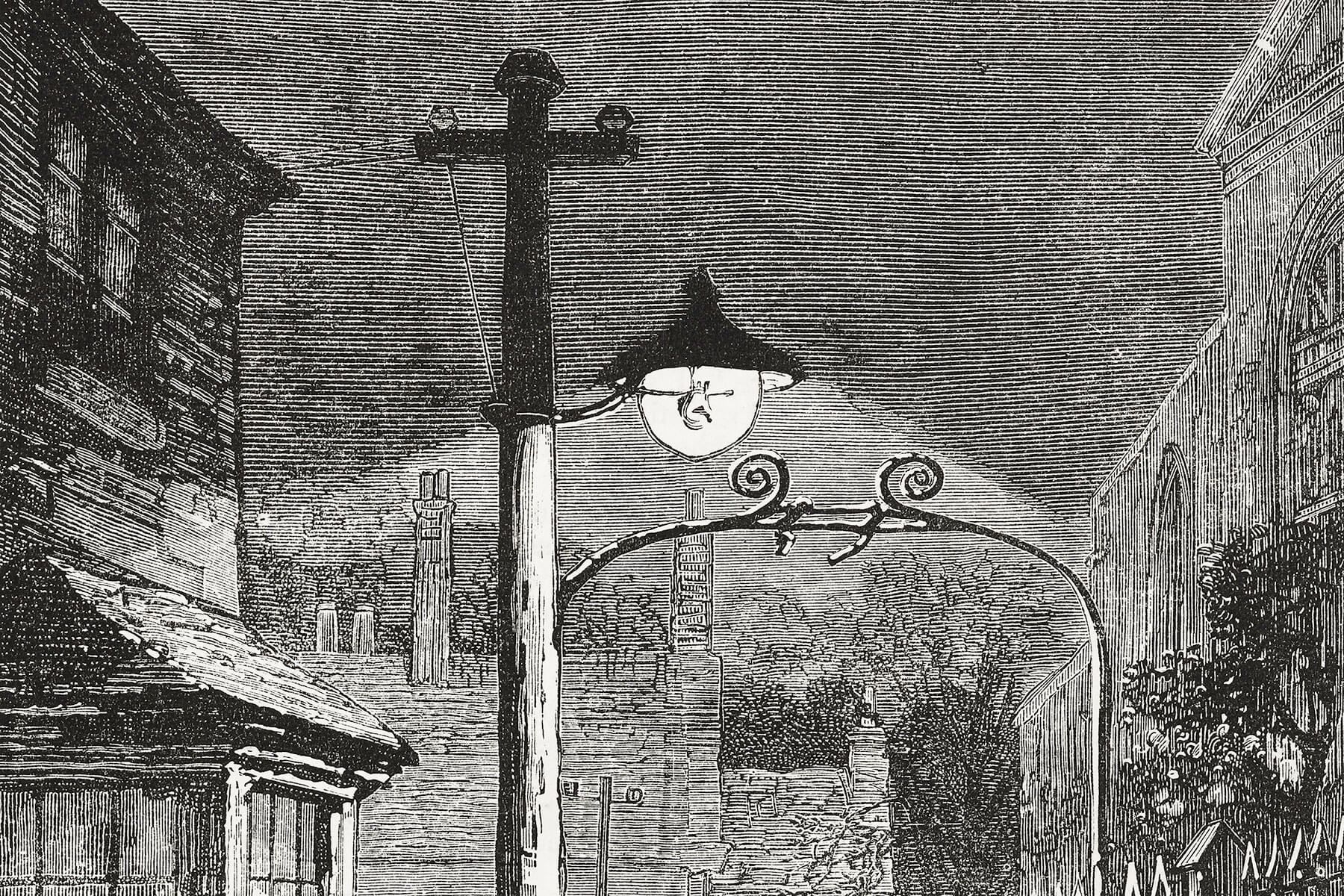
Before the development of practical light bulbs, street lights typically used piped coal gas, oil, or kerosene as fuel. The first electric streetlights were installed in Paris in 1878, but these used unwieldy and harsh arc lamps. Then came inventors such as Joseph Swan in the U.K. and Thomas Edison in the U.S., both of whom patented revolutionary incandescent light bulbs in 1880. Incandescent street lamps became the norm in many cities throughout the world, and the 1920s saw a wave of patents filed for innovative new street lighting. These electric lights, however, were often placed where they were needed rather than lining a whole street. So, 100 years ago, a city street at night would not have been as brightly lit as it is today, and pedestrians would often find themselves walking from one pool of yellowish light to the next.
Public phones and phone booths began appearing in the U.S. not long after Alexander Graham Bell patented the first telephone in 1876. By the 1920s, wooden phone booths were a fairly common sight on many city streets, but the wooden construction meant they were hard to maintain, limiting their popularity. In some cities, you’d be more likely to come across a public telephone room, which contained multiple booths. Individual outdoor phone booths became truly commonplace in the 1950s, when glass and aluminum became the booth-building materials of choice. Today, of course, public phones are heading rapidly toward extinction, now that most everyone can carry a phone in their pocket.
The art deco style flourished in the United States during the 1920s, in both the visual arts and architecture, as well as product design. Walking down a city street 100 years ago, art deco would have been everywhere, from the facades of grand buildings such as the Empire State Building and the Chrysler Building, to the window displays of newly emerging department stores such as Macy’s and Saks. The style, characterized by bold geometric patterns, vibrant colors, and glamorous details, became synonymous with the opulence and extravagance that defined the Roaring ’20s.
Thankfully, modern child labor laws ensure that we don’t see children working in the streets anymore. But 100 years ago, it was a common sight. In 1920, about a million children aged 10 to 15 were working in America, out of a total population of about 12 million children in that age range. The most visible were those working in city streets, in jobs such as flower seller, shoe shine, and courier. Children carried messages — and sometimes money and sales slips — throughout the city, facilitating daily commerce for banks, factories, and offices. Even more notable were the “newsies,” young children (some as young as 5) who sold newspapers in the street. But by the end of the decade, a growing preference for home delivery and tougher child labor laws led to the decline of the “newsie” in urban America.
If we traveled back 100 years, one of the first things we might notice is the fashion of the day. Men would be walking the streets wearing three-piece suits, thin bow ties, wingtip shoes, and the then-ubiquitous fedora hat. Sportswear was also becoming acceptable menswear, thanks in large part to the growing popularity of golf, which brought longer “plus four” trousers and wide-legged oxford bag pants to the urban milieu. Women’s fashion, meanwhile, reflected the newfound freedoms of the day. The dresses of the 1920s were loose, straight, and slender, with shorter hemlines. This was typified by the flapper style of the Jazz Age, with dropped waistlines and calf-revealing dresses — clothing that was stylish but also allowed women to move. New hairstyles completed the look, with bobs and waves becoming the defining cuts of the ’20s.
Today, we don’t encounter many horses on our city streets, but go back 100 years and you’d still occasionally see peddlers, milk trucks, coal wagons, and fire wagons using horse-drawn carriages. The heyday of horses, however, was coming to an end. In 1916, for instance, there were 46,662 horse-drawn vehicles in Chicago. By the end of the 1920s, this number had plummeted, and by 1940 there were fewer than 2,000 horse-drawn vehicles in the city. In New York City, meanwhile, the last horse-drawn fire engine was retired in 1922. The rise of the automobile had begun in earnest, bringing about a permanent change in the very nature of city streets.
Arguably no invention changed the everyday lives of Americans in the 20th century more than the automobile. Between 1900 and 1920, the number of cars increased dramatically, from 8,000 to 8 million. By 1929, there were more than 23 million automobiles on American roads. These early vehicles, of course, looked very different from the cars we drive today. A hundred years ago, the car of choice was the Model T Ford, which brought driving to the masses. By the early 1920s, more than half of the registered automobiles in the world were Model Ts. They were so popular that Henry Ford himself once quipped, “There’s no use trying to pass a Ford, because there’s always another one just ahead.” Pedestrians, however, found it hard to adapt to the new laws of the street. With the introduction of jaywalking laws — facilitated by automobile manufacturers themselves — the streets became a place for cars, rather than for pedestrians, horse-drawn carts, and children at play, as they once had been.
Advertisement
Advertisement
We Asked an Anthropologist About the Gangs of 19th-Century New York
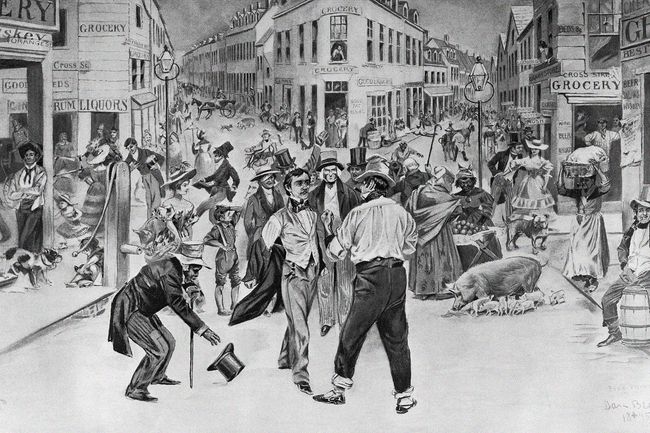
Beginning in the 1830s, a combination of poverty, rapid industrialization, and immigration contributed to the rise of notorious street gangs throughout New York City. For the next several decades, these groups ran rampant until being largely replaced by organized crime syndicates toward the end of the 19th century. But during their heyday, gangs such as the Bowery Boys and Dead Rabbits ruled the streets of New York, particularly a neighborhood in southern Manhattan known as the Five Points. This turbulent period in New York City was marked by violence and corruption, events that were brought to the silver screen in Martin Scorsese’s 2002 historical drama Gangs of New York.
While that film is based on realities of the time, it also furthered several misconceptions about this crime-ridden era. We reached out to anthropologist R. Brian Ferguson, a professor at Rutgers University-Newark and author of the 2023 book Chimpanzees, War, and History, to learn more about this volatile period in NYC history. Ferguson has spent decades studying and teaching how conflict permeates throughout society, and was interviewed for the 2002 documentary Uncovering the Real Gangs of New York, a special feature included on DVD copies of the Scorsese film.
(Editor’s note: This interview has been edited for length and clarity.)
HISTORY FACTS: What was life like in New York City’s Five Points neighborhood?
FERGUSON: Well, the Five Points was from the intersection of different streets, and it began as a residential neighborhood but it was built on landfill from filling in a big lake. So it was wet, and it was sinking, which meant that it was full of diseases in the summer. By 1827, it was already disreputable. Mainly poor people who had no choice about where to live were there — it was the bottom for New York society.
For decades it became — not just in New York, but internationally — famous for incredible squalor and crime and drunkenness and prostitution. It became a symbol for all of that. It was also a highly political environment, and the politics of the time were more contentious in New York than what we’re seeing today in our own lives. It was really a tough time politically.
HISTORY FACTS: Speaking of politics, I know Tammany Hall was a big player in New York City. What was Tammany Hall and how did it play a role in local politics?
FERGUSON: Tammany Hall was the Democratic political machine. It won elections, gave out patronage; it was famous for corruption and vote fraud. But besides that, it was the only kind of government that did anything for the poorest of the poor. In the 1840s, it had found its base in immigrants who were pouring into New York, many of whom were Catholic, which Protestant America generally hated.
Tammany Hall was controlled by political ward politicians from the street up, using force. It wasn’t a top-down organization as it once was, but it was really responding to what was happening on the streets, like in the Five Points. The Five Points was its central power base because it was so densely populated. It was known as the “Bloody Ould Sixth Ward,” and the votes from there could control mayors, city government, even tip state and presidential elections.
HISTORY FACTS: Who were the predominant gangs at the time?
FERGUSON: Gangs were always changing; they rarely lasted more than a few years. They came and went by time and place and by politics. The movie by Scorsese is based on a book by Herbert Asbury, both called Gangs of New York, and both of those introduced a lot of inaccuracies. In the movie, the big gangs were the Dead Rabbits and the followers of Bill “the Butcher” Poole. The riot that did occur was between the Dead Rabbits and the Bowery Boys. The Dead Rabbits were a gang; whether the Bowery Boys were a gang or not — they were also kind of a social type — is not as clear.
The movie was inspired by the Bowery Boy-Dead Rabbit riot of 1857. That was a real thing that went on for hours with maybe 11 people dead, and it involved fighting — bricks, up to guns. It was the biggest gang clash that ever occurred in New York City. Not the biggest violence on the street, but the biggest gang clash. And that was the inspiration for Scorsese’s film adaptation.
HISTORY FACTS: You mentioned immigration — how did the gangs reflect the ethnic makeup of New York City at this time?
FERGUSON: The gangs were organized — the nucleus of the power structure were saloons and volunteer fire companies, which were omnipresent and very political. Leadership in a gang came by association with one of those, and leadership was based mainly on fists. Fighting in the street was extremely common. All neighborhoods had their ethnic character, but it was never pure; it was always a mix.
So the Five Points was mostly Irish-inhabited at this point, but not exclusively. Gangs were mostly Irish but wouldn’t turn away anybody who lived in the neighborhood who could fight. But they were also shaped from the top down. Politicians built their organizations based on the compositions of neighborhoods. It was both a cause and effect of the political organization that gave life to the gangs. And it wasn’t just mostly Irish, but you could say particular areas of Ireland. A whole building might be from one area.
But [in terms of the city’s general ethnic makeup] German immigration was big; [New York City] also had people who were native born and were seen as “true” Americans. Italians hadn’t come in yet; the Eastern European Jews hadn’t come in yet. But New York always had lots of different people in it, like Syrians were a big immigrant population.
Advertisement
Advertisement
HISTORY FACTS: How did immigration contribute to the rise of these gangs?
FERGUSON: The immigration was a big part of, to use a contemporary word, the intersectionality of street organizations back then. Most immigrants were also extremely poor. But it wasn’t just the immigrants — this is when industrialism was on the rise, unemployment was exploding for all, and the time around the 1850s was seen as mainly just rich and poor. [There was] little in between. And poverty was mapped onto the ethnic divisions.
Also, politicians would scare the immigrants with the specter of competition from freed slaves, and really conjured up racism to a hot degree. So, there were mixes in terms of how people were organized. The racist, and anti-abolitionist groups, were mostly poor and could include any of the poor. But nativism, which was anti-immigrant, excluded the Catholics, and the Catholics were a lot of the poor. So there were these different combinations possible, and the local ward politicians worked all of these permutations.
HISTORY FACTS: Is the Irish vs. “native” conflict as depicted in Scorsese’s film accurate?
FERGUSON: The Irish versus the “native” thing, it’s a yes and no. It’s not false, but it’s not really true either. The Bowery Boy-Dead Rabbit riot of 1857 was part of crises all across the United States in the time leading up to the Civil War. In New York state, this played out largely as a conflict between the state government and the city government. The state government in Albany was Protestant, Republican, and anti-immigrant, and the city government by this time was more immigrant- and Catholic-oriented and Democrat. So this was the polarization.
The state of New York then put through, in 1857, a kind of a coup, restructuring the city, which took over many of the city functions — like control of the Port of New York. But most important of all, they disbanded the police force at the time — the Tammany police force known as the Municipal Police — and created a new police force called the Metropolitan Police that were controlled from Albany. Tammany itself, besides the state and city thing, was extremely divided into two warring factions. So there was like a three-way struggle going on.
Nativism was a part of all of that, but who had political power, and who got the benefits of controlling corruption were at least as big or bigger issues. When I did research on the gangs that fought in 1857, they all had clear local political alignments, and one thing that was left out entirely of the film, and Asbury’s book, was that the fights that became riots began with attacks on the Metropolitan Police — that’s the state police force. That was clearly one of the biggest issues here.
Advertisement
Advertisement
HISTORY FACTS: What led to the rise of these gangs and their eventual downfall?
FERGUSON: Well, poor neighborhoods like the Five Points — but there were many — provided kind of the raw material: people who could fight and were looking for something to do, and were looking for a leg up. These could be shaped into adult gangs. But as an anthropologist, what I like to look at is the local organizations of the street that organized and raised up gangs into kind of political actors. Back at that time, there were two organizations: There was the saloon, which was the neighborhood center, and the volunteer fire companies, which were all over the city and connected to large political factions. And [all of these groups] were always fighting; they would fight each other all the time. So, the conflicts in 1857 went through these things, like volunteer fire companies and saloons, to raise these local street people up into named gangs and to pit them against each other.
If you look at the gangs around then, they’re very big in newspapers of the times. After that, they’re not so much. In later years, and I’ll just pick 1885 as an example, there were still street gangs all around the town, but they were less important politically. The reason was the then-boss of Tammany Hall, a guy named Dick Croker, had iron control and didn’t need [the gangs] as much.
Also, that was the Gilded Age of extreme capitalist fortunes, and the capitalists who had great control over the city supported the police, which by that point was the NYPD, to keep control of what they saw as dangerous classes — the people who lived in the slums. Otherwise, cops — if [the cops] kept [the people in the slums] from being a problem — could do whatever they wanted, which led over a couple of decades to police brutality and corruption.
And then there was a big scandal that came along in 1895. It was called the Lexow Investigation and it revealed that the New York Police Department was what they called “organized criminality” in New York City. It wasn’t allowing it, it was it. So, reform and another era of political turmoil in Tammany Hall led to new named gangs coming up. People might recognize the Monk Eastman gang or the Paul Kelly gang. And by about 1900, these were changing from what they used to be and taking over what the police had been pushed out of and had controlled, including gambling and prostitution and rackets and extortion.
That was a new era that led to the gangster era, and the gangsters in their peak generally led to less street crime because they were organized to make money. You didn’t want people to get mugged when they came out of a speakeasy. So, the area got less violent, less uncontrolled, as that developed. And as it went on, New York City went through the whole process of development, which is a much bigger topic about changing industrial structure and job structure and development of a middle class.
HISTORY FACTS: Going back to Scorsese’s movie, what did the film get right and what did it get wrong?
FERGUSON: It’s imaginary, like any movie; I don’t hold that against it. The plot, of course, is fiction. The film was loosely based on Herbert Asbury’s book, and Herbert Asbury really tried, but he had bad information. I’ve tracked down most of his sources in my own research. The movie did get the look right. Many details of the time are very real. They exaggerated certain things, like they made the Dead Rabbits look like they wore a particular kind of uniform, which, not really. No naval ships fired cannons on crowds, although soldiers did. The film left out the stench and the insects and the sewers in the street and all of that stuff. So you don’t get quite that depth of it, but it’s a movie. (Editor’s note: Ferguson recommended a book by Tyler Anbinder called Five Points for those interested in learning more about these details.)
Other big inaccuracies are due to the fact that the filmmakers had to compress time. And so Bill “the Butcher” [Poole] — the guy played by Daniel Day-Lewis — was dead a few years before the big Bowery Boy-Dead Rabbits riot. And Scorsese, consistent with his own film background, made Bill Poole a crime boss, getting a cut of everything. No, that came later. There’s nothing indicating that this was organized crime in that sense. Another thing is that Bill Poole worked for the politicians. He wouldn’t kill one of them, as he does in the film. There was a political hierarchy and he was a step down.
There were, in reality, lots of little turf fights all the time, but there wasn’t anything like Daniel Day-Lewis says to decide once and for all who’s going to be the lords of the Five Points. It wasn’t that kind of territorial control. And one big inaccuracy of the movie is the excessive violence, especially in the opening riot. Now, there was violence all the time, but with fists and bricks and sometimes up to guns. Most people in the poor neighborhoods didn’t own guns; they were too expensive. But there were chimneys all over the place and you could topple a chimney over and you’ve got a supply of bricks, which is what they did.
I think the thing that I have the biggest issue with in the film is that it leaves out how important was politics and everything that was going on, and how important was the role of the new state Metropolitan Police. But I’ll add, on a positive note, I think it was great that Scorsese brought in the Draft Riots [violent citywide protests against the Civil War draft and fueled by racial tension] — although, this was not a gang event, other than gang members participating in rioting mobs, individually. But I teach about the Draft Riots, and what I can tell you is that no one has heard about this incredible event in American national history. The Draft Riots tell you an awful lot about what was becoming America.
Advertisement
Advertisement
HISTORY FACTS: What gang-related sites from this time period are still standing?
FERGUSON: There are a lot of gang locations if you know where to look, walking on 2nd Avenue from 14th Street to Houston Street. And there’s more than a dozen significant locations, mainly shootings, that took place on that stretch, although that was mostly the later gangsters up to the beginning of Prohibition.
From the [Gangs of New York] film era, and for the Five Points, there’s really only one thing that remains. On the northwest corner of Baxter and Worth Street — this is between the courthouse district and Columbus Park — is the only remaining point. That point, I can’t go by that area without going by and standing on that point. I’ve seen lots of illustrations of the Five Points and I just imagine all those illustrations while I’m there and standing on that point. But that’s the only physical remnant that you can see.
As time went on, the Five Points kind of got toned down by mission and other reform efforts in the Five Points itself. The most squalid and dangerous part of New York moved just one block east to Mulberry Street. When they tore down the block known as Mulberry Bend, they didn’t cart the stuff away; they just tumbled everything into the basements. So when they were redoing Columbus Park, they cleaned away the surface and I could see all of these basements that were the Five Points, that were Mulberry Bend — they’re still there. But they’re underground.
If I can expand the scope a little bit for gangster sites, my favorite is many blocks north on Great Jones Street, which is in the East Village. Right on the south side of Great Jones Street, west of the Bowery, there are two buildings. One has a window on the second floor that has an arch to it. This window became famous because Andy Warhol bought it some years ago, and the artist [Jean-Michel] Basquiat had a studio there, and in fact died in that room. But that building was the headquarters of Paul Kelly’s gang. Paul Kelly, whose birth name was Paul Vaccarelli, is what my [current] research centers on, and I think he was the most successful gangster in New York City history. For one thing, he died in bed, which most gangsters didn’t.
____
R. Brian Ferguson is a New York City-based anthropologist. To learn more about his work, visit his website. His most recent work, Chimpanzees, War and History, is also available for purchase here.
Advertisement
Advertisement
Another History Pick for You
Today in History
Get a daily dose of history’s most fascinating headlines — straight from Britannica’s editors.