


Unlocked: A Brief History of Keys

  • Lock and key in France, 1950
Lock and key in France, 1950
Credit: Gaston Paris/ Roger Viollet via Getty Images
Author Timothy Ott

September 4, 2025

Love it?

Well before there was a need to enter individual units of an apartment building or secure clothes inside a gym locker, people sought to keep thieving hands away from their stores of grain or precious jewels. As a result, locks and keys have been around for a large chunk of recorded history. 

While both have undergone numerous alterations in accordance with ever-updating technologies, the story of keys is perhaps more personal to the human experience as the portable component that has accompanied us on our journeys over the years. Here’s a look at how these pronged keepsakes have changed since they first surfaced in the ancient world.
Credit: Science & Society Picture Library/ SSPL via Getty Images 

The First Keys

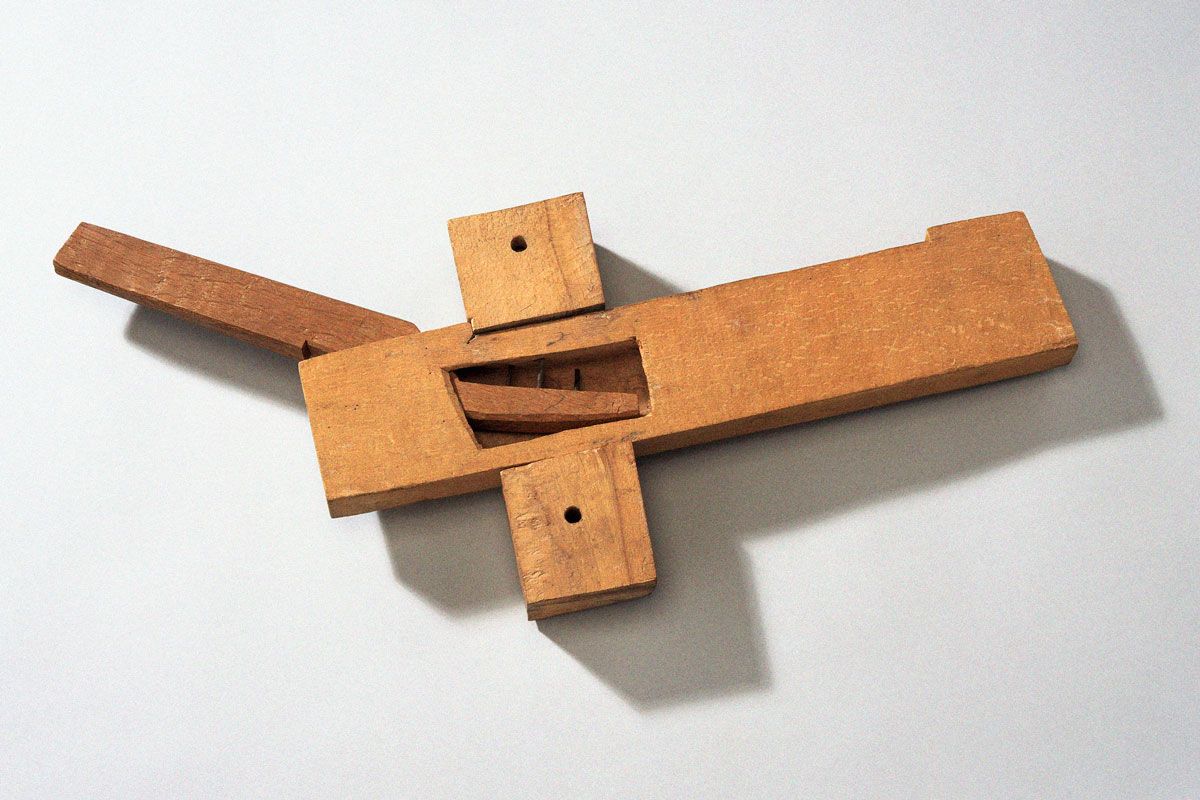
According to Eric Monk’s Keys: Their History and Collection, the oldest known lock is a wooden specimen unearthed from the ruins of the Palace of Sargon in Dur-Sharrukin (modern-day Khorsabad), near the Assyrian capital of Nineveh. As a similar version was found displayed on frescoes at the Karnak temple complex in Egypt, this style of “Egyptian lock” is believed to be in the neighborhood of 4,000 years old.

This early form of security entailed sliding a wooden board through a slot across a door, with movable pins above the slot dropping through corresponding holes in the board to keep it bolted in place. The key for this type of lock was another long piece of wood, sometimes measuring more than 2 feet, with pegs on the end to push the pins back through the holes and allow the board to be released from the bolting position. While these locks were originally fitted to the outside of a door, a hole cut next to the lock enabled a person to reach through and operate the lock from the inside.

You may also like

When Did We Start Having Parades?

  • 19th-century parade procession
19th-century parade procession
Credit: ilbusca/ iStock
Author Nicole Villeneuve

December 17, 2024

Love it?

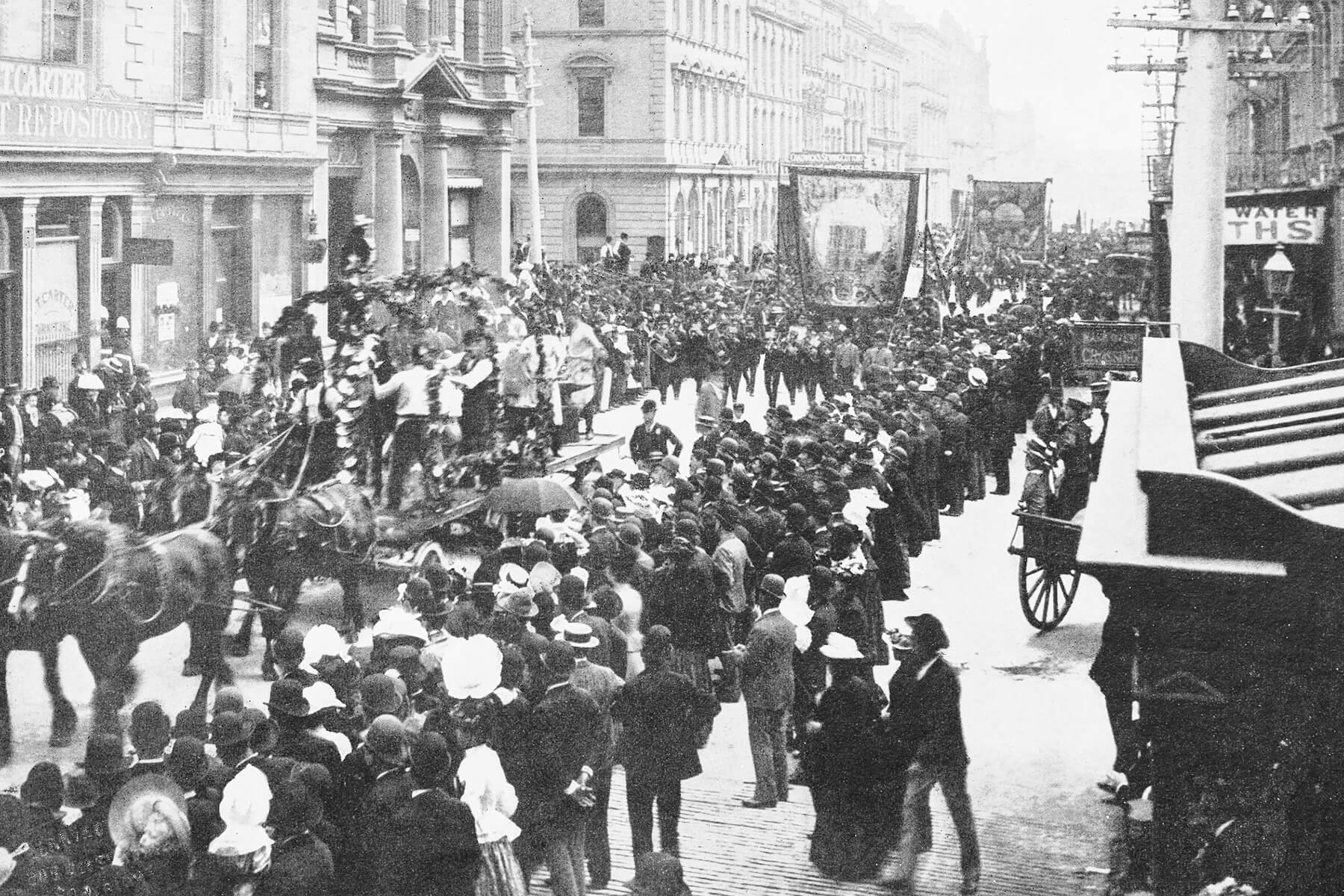
Parades are a curious phenomenon: We gather en masse to march through a space with music, costumes, and elaborate displays. But even at their most odd, these festive demonstrations also feel universal — most likely because they represent a tradition that spans continents and centuries. 

Credit: bilwissedition Ltd. & Co. KG/ Alamy Stock Photo

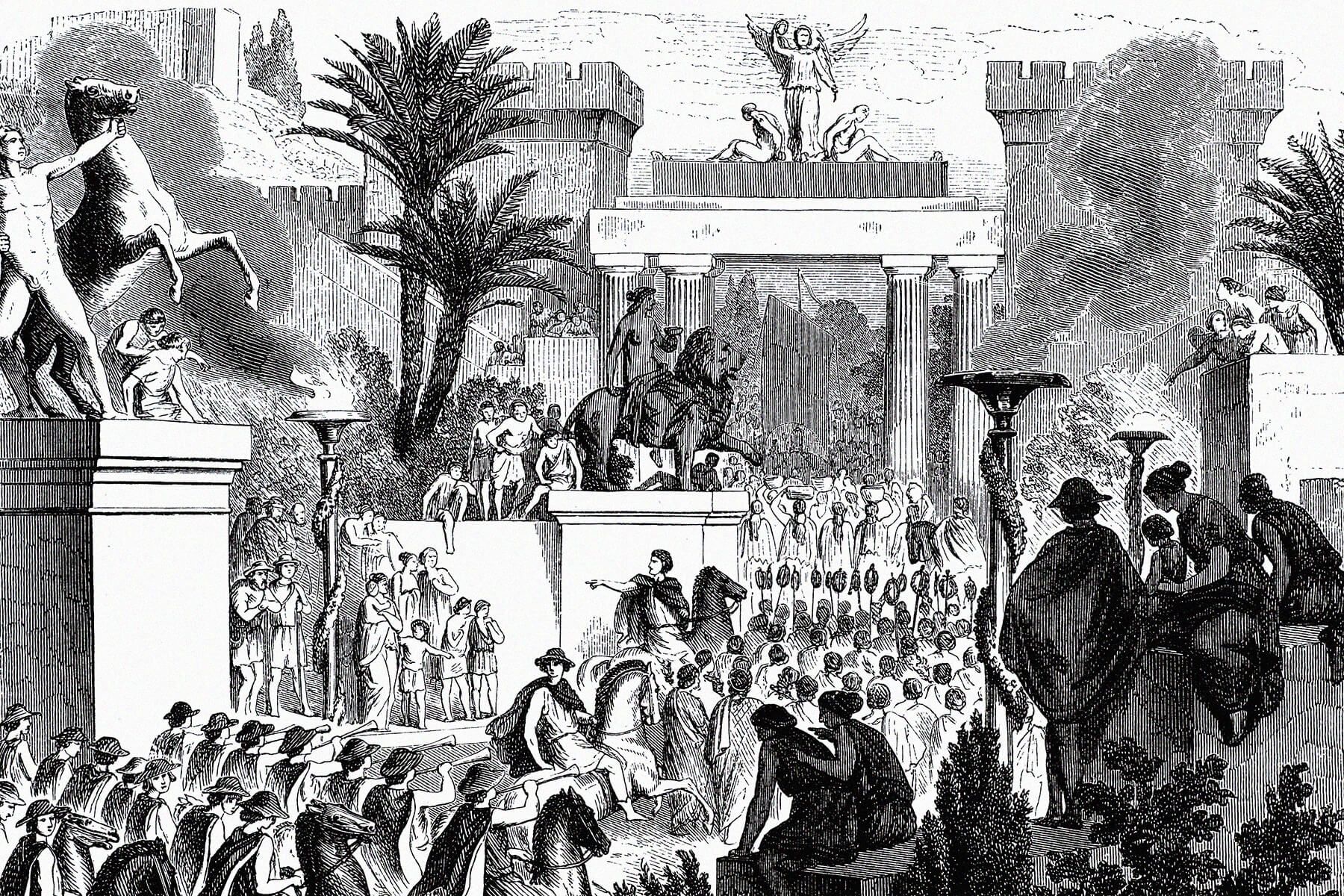
Before there were parades, there were processions. These were ceremonial or ritualistic events that anthropologists believe predated parades as a way to connect with community — and with the divine. Their roots stretch back to ancient civilizations: In Mesopotamia, as early as 2900 BCE, priests and citizens marched with statues of deities such as the Babylonian god Marduk during the multiday Akitu celebrations for the new year. 

The Panathenaic festival, held in Athens to honor the goddess Athena, similarly featured a grand procession to the Acropolis, where offerings and sacrifices were made. These events were spiritual and social, but they were not yet parades as we know them. As author Doug Matthews explains in his book Why We Love Parades: Their History and Enduring Appeal, there is an important difference: A procession has deeper significance behind the occasion, while a parade, though often organized around an occasion, is primarily about the content of the event for the enjoyment of spectators. 

You may also like

A Brief History of Christmas Trees

  • Decorated Christmas tree
Decorated Christmas tree
Credit: Lightspring/ Shutterstock
Author Timothy Ott

December 10, 2024

Love it?

As the subject of numerous carols, a featured attraction for both cavernous department stores and cozy mom-and-pop businesses, and an object of purchase for some 35 million to 50 million American consumers every year, Christmas trees are undoubtedly a focal point of annual Yuletide celebrations. Older than the carols in which they’re celebrated but not nearly as old as the pagan origins of the holiday they support, Christmas trees have been a familiar, comforting sight since childhood for countless people dating back many generations. 

But these evergreen conifers didn’t simply emerge as part of holiday celebrations like a fully assembled toy right out of the box. Here’s a look back at how Christmas trees became part of, and then inextricable from, the end-of-year festivities in which they have a starring role.

Credit: Ivy Close Images/ Alamy Stock Photo

Early Evergreen Symbolism

The Christmas tree tradition has its roots in the long, multicultural history of evergreen plants being used to mark the arrival of the winter solstice. From the palm branches that featured in celebrations of the sun god Ra in ancient Egypt to the wreaths that were incorporated into the Roman festivities of Saturnalia, evergreens symbolized the rebirth of life during the cold, dark winter months.

According to Judith Flanders’ Christmas, A Biography, the emergence of trees to commemorate the season were in part inspired by the “paradise plays” that were popular in Europe during the Middle Ages. Staged in observance of the Christian feast day of Adam and Eve on December 24, the plays typically featured an evergreen fir, festooned with apples, as the stand-in for the symbolic tree of life.

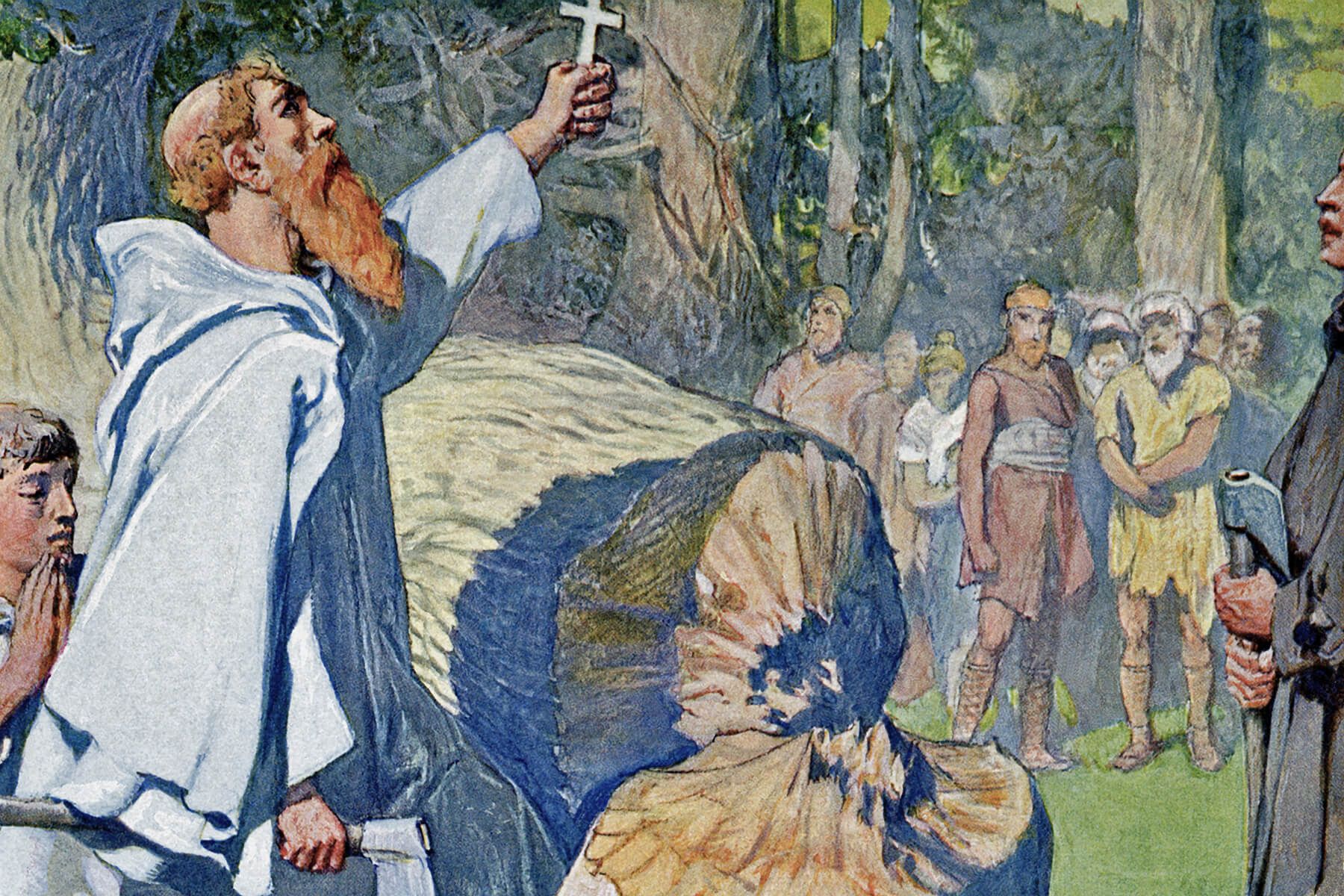
Meanwhile, the proliferation of certain legends in 15th-century Germany further strengthened the association of trees with the Christian celebrations of the winter holiday. Among the most popular was the story of St. Boniface, who supposedly chopped down an oak that was towering above the remains of human sacrifice meant for the pagan god Thor, and replaced it with a fir tree that symbolized the eternal truth of Christ.

You may also like

The Origins of the Beloved Teddy Bear

  • Teddy Bear with tag
Teddy Bear with tag
Credit: Hulton Archive via Getty Images
Author Nicole Villeneuve

April 16, 2024

Love it?

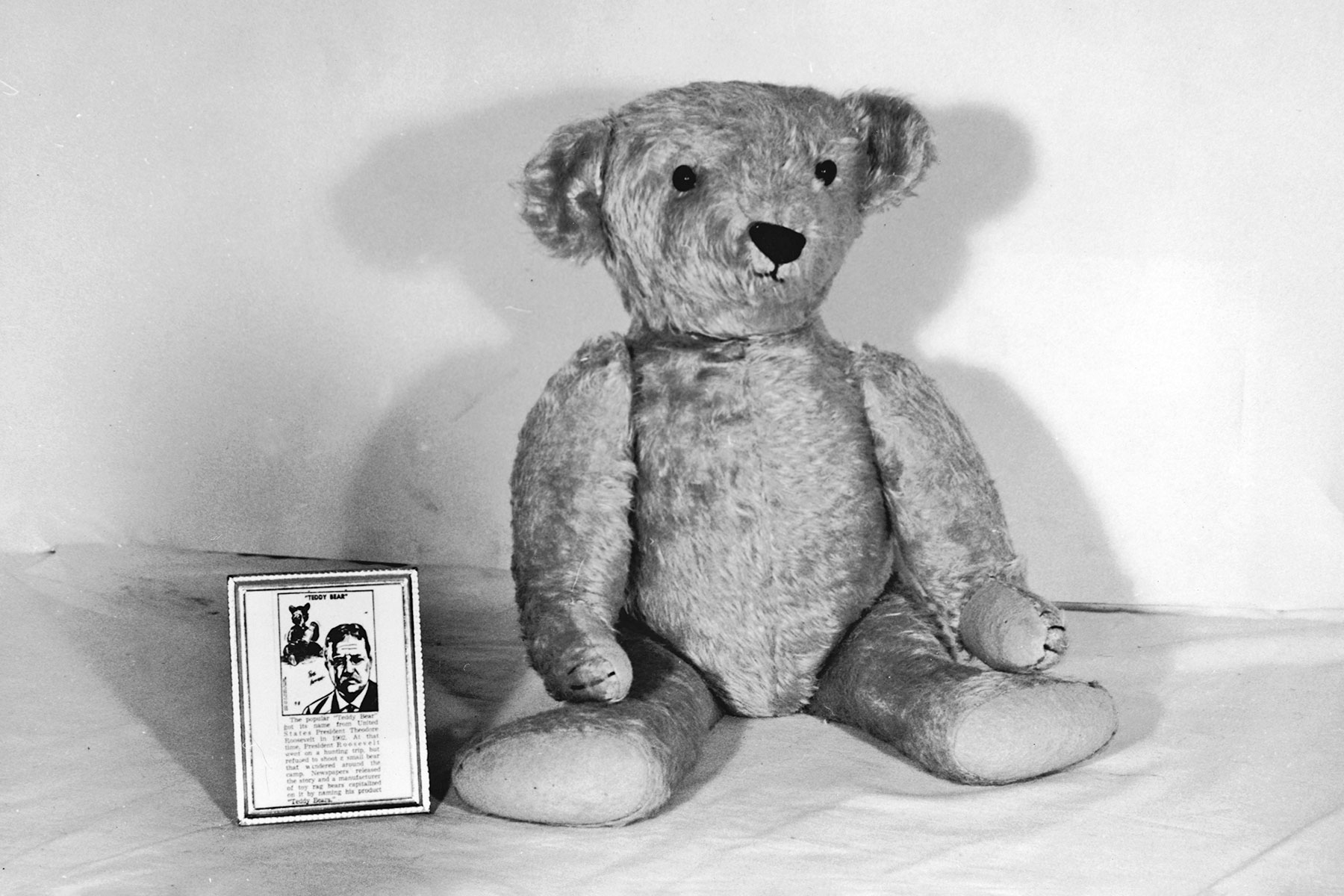
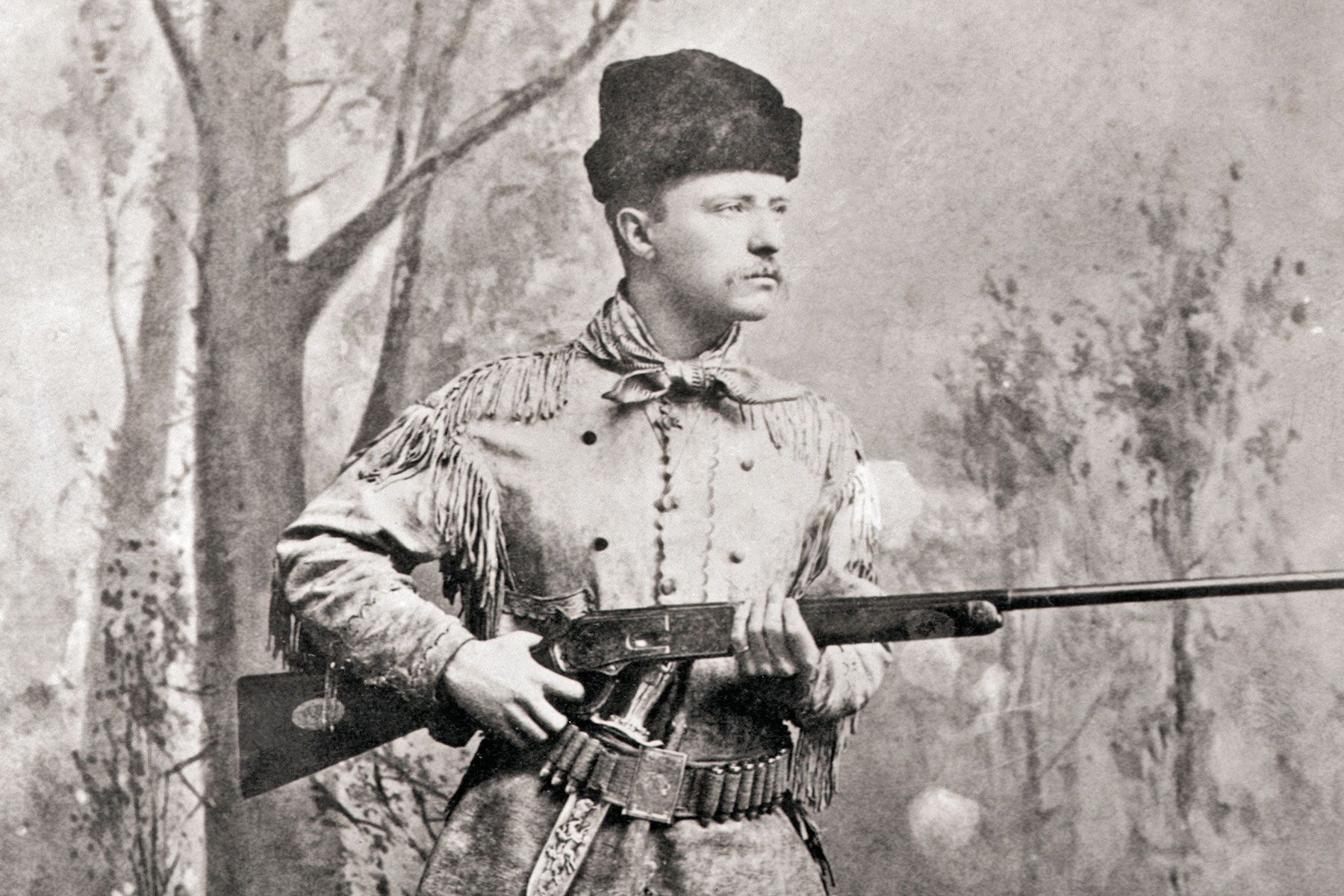
Theodore Roosevelt is known as the first conservationist President, having established national parks, wildlife refuges, and national forests during his time in the White House. It seems fitting, then, that one of the world’s most recognizable animal figures — the beloved teddy bear — was inspired by and named after the 26th U.S. President. 

Credit: Bettmann via Getty Images

In November 1902, Roosevelt joined Mississippi Governor Andrew H. Longino on a hunting trip in Mississippi. On the second day of the trip, Roosevelt’s aides — including guide Holt Collier, a skilled hunter in his own right — captured a bear, tied it to a tree, and presented it to the President, who was eager to start the trip off strong with a catch. Roosevelt, however, refused to shoot the restrained bear. He may have been an avid hunter, but he found it unsportsmanlike to harm a defenseless animal. 

The hunting incident attracted attention in the press. Washington Post cartoonist Clifford Berryman depicted Roosevelt refusing to shoot a small, tied bear in “Drawing the Line in Mississippi,” a cartoon that doubled as a commentary on the President’s handling of a state border dispute. The cute bear cub character became popular with Americans, and in the ensuing years, Berryman continued to use the bear as a symbol for President Roosevelt, who was commonly known as “Teddy,” short for Theodore.

You may also like

The Fascinating History of Mail

  • Letters from the mail
Letters from the mail
Credit: sue hughes/ Unsplash
Author Kristina Wright

March 21, 2024

Love it?

For many of us, sending and receiving mail is a routine part of our daily lives. But this seemingly mundane task has quite an interesting history. Postal systems have existed for nearly as long as humans have communicated through writing. Egypt holds the distinction of pioneering the earliest documented state-sponsored postal service, which dates all the way back to 2400 BCE, with the oldest known postal document dating back to 255 BCE. Initially used by pharaohs, emperors, and kings to disseminate information across their domain, postal systems eventually broadened their scope to transmit messages among religious and educational institutions. 

Relay stations were established along messenger routes to expedite the delivery of information across vast distances. As these systems evolved to become more efficient and inclusive, the opportunity to send messages via formal postal services was eventually made available to private individuals.

Since the earliest days of royal postal services, mail has been delivered via nearly all possible means: It’s been carried by couriers on foot, horse and wagon, mule, bicycle, train, steamboat, plane, motorcycle, and even dog sled. Here are more fascinating facts about the history of mail and how it has evolved over the centuries to keep us all connected.

Credit: Bettmann via Getty Images

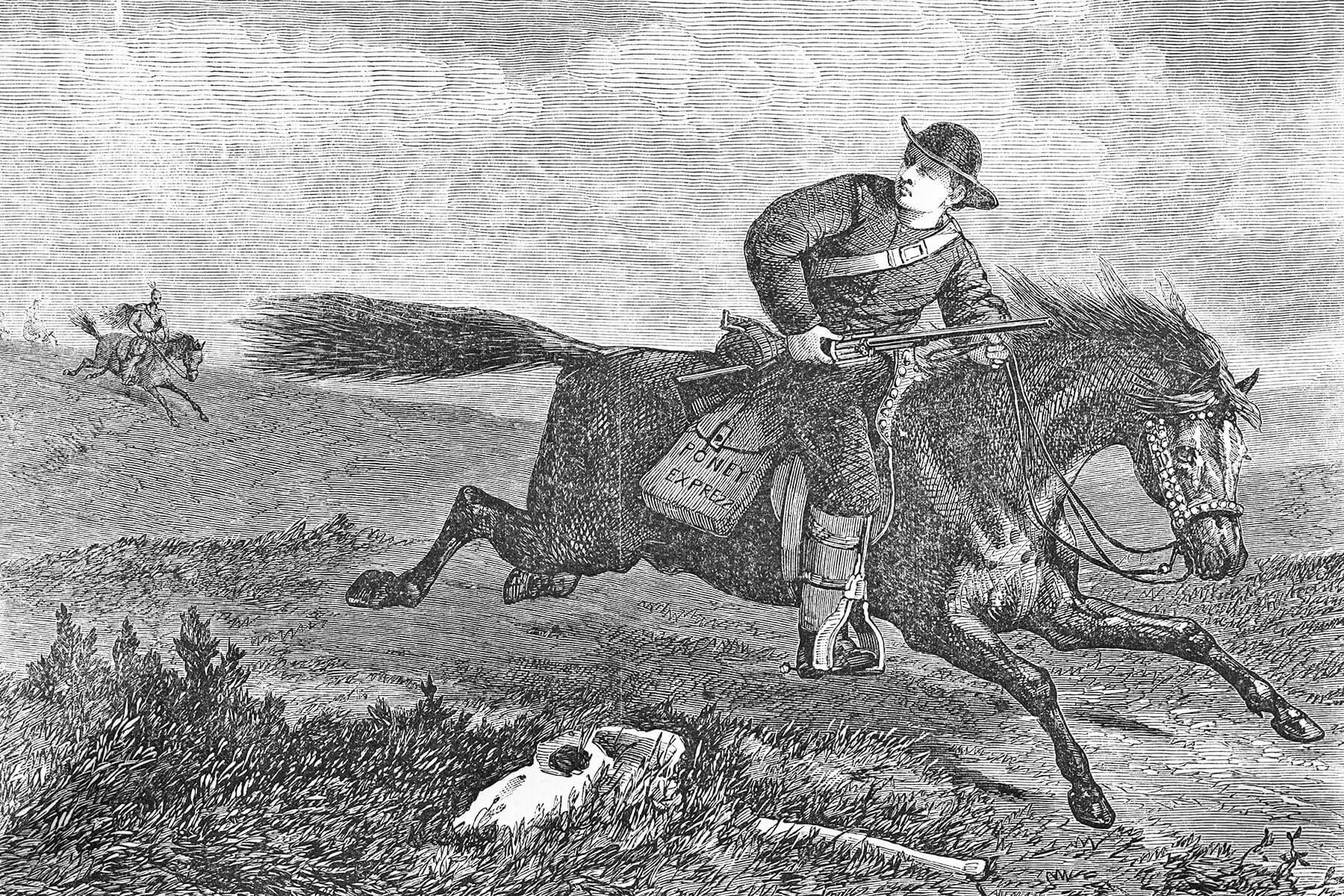
The Pony Express Operated for Just 18 Months

In the 1800s, mass migration westward via the Oregon Trail, the arrival of Mormon immigrants in Utah, and the California gold rush all played a role in the need for swift and reliable mail service beyond the Rocky Mountains. The Leavenworth and Pike’s Peak Express Company, which eventually became the parent company of the Pony Express, galloped in to fulfill this need in 1859.

Covering more than 1,900 miles in just 10 days, the Pony Express ran between St. Joseph, Missouri, and Sacramento, California. With horse-changing stations posted at 10- to 15-mile intervals along the route, each rider was able to cover an average of 75 to 100 miles before passing the reins to the next. 

However, it wasn’t long before the completion of the transcontinental telegraph system brought an end to the Pony Express. Although the equestrian delivery service looms large as an enduring symbol of the rugged American Old West, it really only ran from April 1860 to October 1861.

You may also like

The Fascinating History of Las Vegas

  • Las Vegas, Nevada sign
Las Vegas, Nevada sign
Credit: Sung Shin/ Unsplash
Author Mark DeJoy

March 14, 2024

Love it?

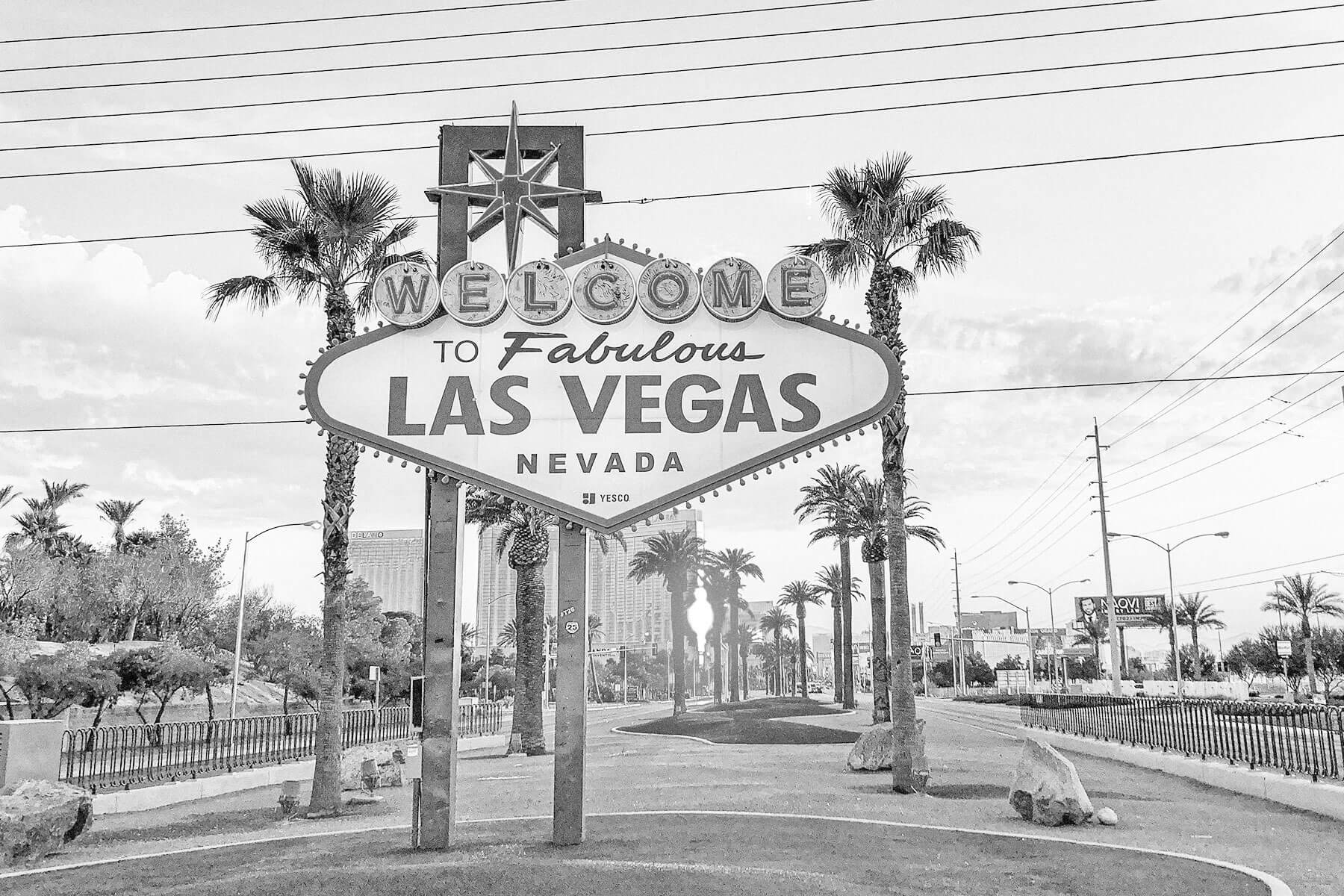
Since the middle of the 20th century, Las Vegas has been known as the capital of the American id. Gambling has long been at the center of its appeal, as nicknames such as “Sin City” and “Lost Wages” suggest. “What happens in Vegas stays in Vegas” is the city’s well-known slogan, while others have remarked, “Las Vegas is where losers come to win, and winners come to lose.” 

Rising up from the Nevada desert, the city’s built environment is so extravagant that it’s difficult to imagine a time when its spectacle did not exist, fully formed. Let’s go back and trace the origins of this uniquely American city.

Credit: Bettmann via Getty Images

A Desert Oasis

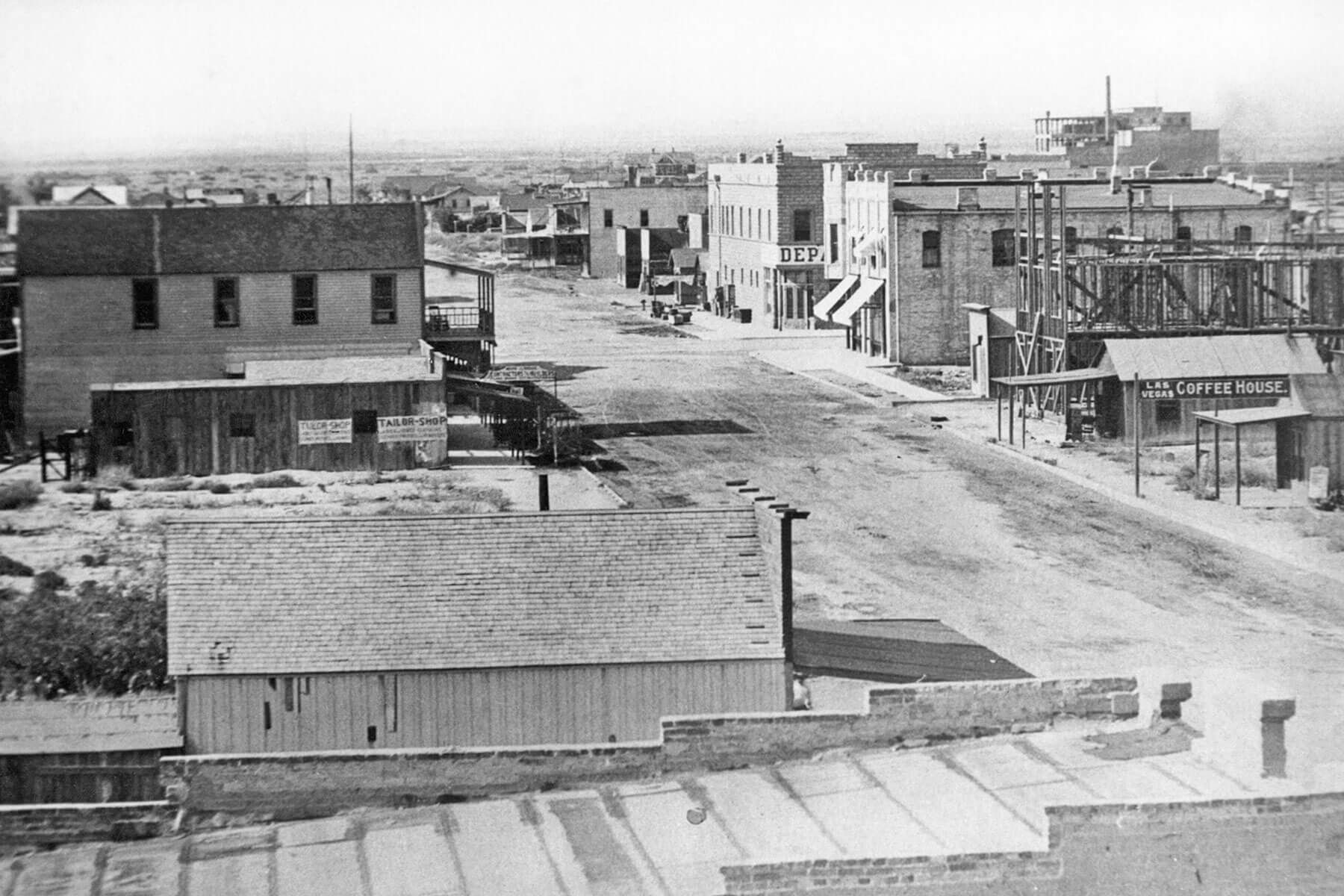
Even though Las Vegas occupies a unique place in American culture, its metropolitan origin was sparked by the same thing that gave rise to many other U.S. cities: the development of the railroad. The area that includes present-day Nevada became a United States territory with the signing of the Treaty of Guadalupe Hidalgo in 1848, which ended the U.S. war with Mexico. Despite its location in the basin of the Mojave Desert, the site of what is now Las Vegas was a sort of oasis — a valley that included a water source in the form of artesian springs. 

The water source was the selling point for railroad magnate and U.S. Senator William Clark. In 1902, he bought 2,000 acres of land and water rights in order to create a waypoint for the San Pedro, Los Angeles & Salt Lake Railroad he incorporated to connect those cities. The railroad line through Nevada began construction in 1904, and the following year, Clark auctioned off parcels of his land, which was located east of the railroad tracks. 

Around the same time, civil engineer John T. McWilliams was attempting to build a township west of the railroad tracks. Though he was working with far less acreage than Clark — 80 acres to Clark’s 2,000 — the development provoked competition and intensified Clark’s efforts to build his township. Clark offered refunds on the $16 train fare to town in order to attract buyers. Newspaper advertisements promised, “Get into line early. Buy now, double your money in 60 days,” though accounts differ on which of the two were commissioning that ad. 

Ultimately, McWilliams couldn’t really compete. After all, Clark owned the water rights and far more land, and he had a major stake in the railroad. On September 5, 1905, a fire almost completely consumed McWilliams’ townsite, and ensured that the competition between the two was short-lived; development would be concentrated west of the railroad tracks. Clark formed the Las Vegas Land & Water Company with his partners, and vowed, “I will leave no stone unturned and spare myself no personal effort to do all that lies within my power to foster and encourage the growth and development of Las Vegas.”

You may also like

A Brief History of the Pantone Color of the Year

  • Pantone color swatches
Pantone color swatches
Taylor Heery/ Unsplash
Author Anne T. Donahue

February 13, 2024

Love it?

In 1962, Lawrence Herbert founded Pantone to solve a problem he noticed while working at a commercial printing company: There was no standard language to describe different shades of color. The printer he worked for specialized in color charts for the cosmetics and fashion industries, but there was no easy way to match the specific hues that designers needed. For instance, the printer created color swatches for customers to use to match their skin tones with pantyhose, yet ink manufacturers defined shades such as beige and cream differently. Recognizing the need for a universal language of color, Herbert set out to create a graphic standards system that could be used for color matching worldwide. 

Photo credit: Mika Baumeister/ Unsplash

The Pantone Matching System Is Born

Herbert drew on his chemistry background to hand-mix his own combinations of color tones, developing a series of shades that were each given a unique name — descriptors such as “Greenery” or “Tangerine Tango” — and a number (15-4020, 19-1664, and so on). The result was the Pantone Matching System, which was presented as a book of swatches that fanned out to showcase a rainbow of standardized colors. A name and number combination would consistently yield the same results because each color tone contained an exact ink formula. By the 1970s, Pantone had sold more than 100,000 swatch books and expanded into the industrial, plastics, and fashion markets. The Pantone process was digitized in the 1980s, and the Pantone Color Institute was founded in 1986 to educate designers about color, the way it’s described, and, in more recent years, the psychology that helps determine the Pantone Color of the Year.

You may also like

The History of Calendars, in 7 Facts

  • The Gregorian calendar
The Gregorian calendar
PHAS/ Universal Images Group via Getty Images
Author Anne T. Donahue

December 21, 2023

Love it?

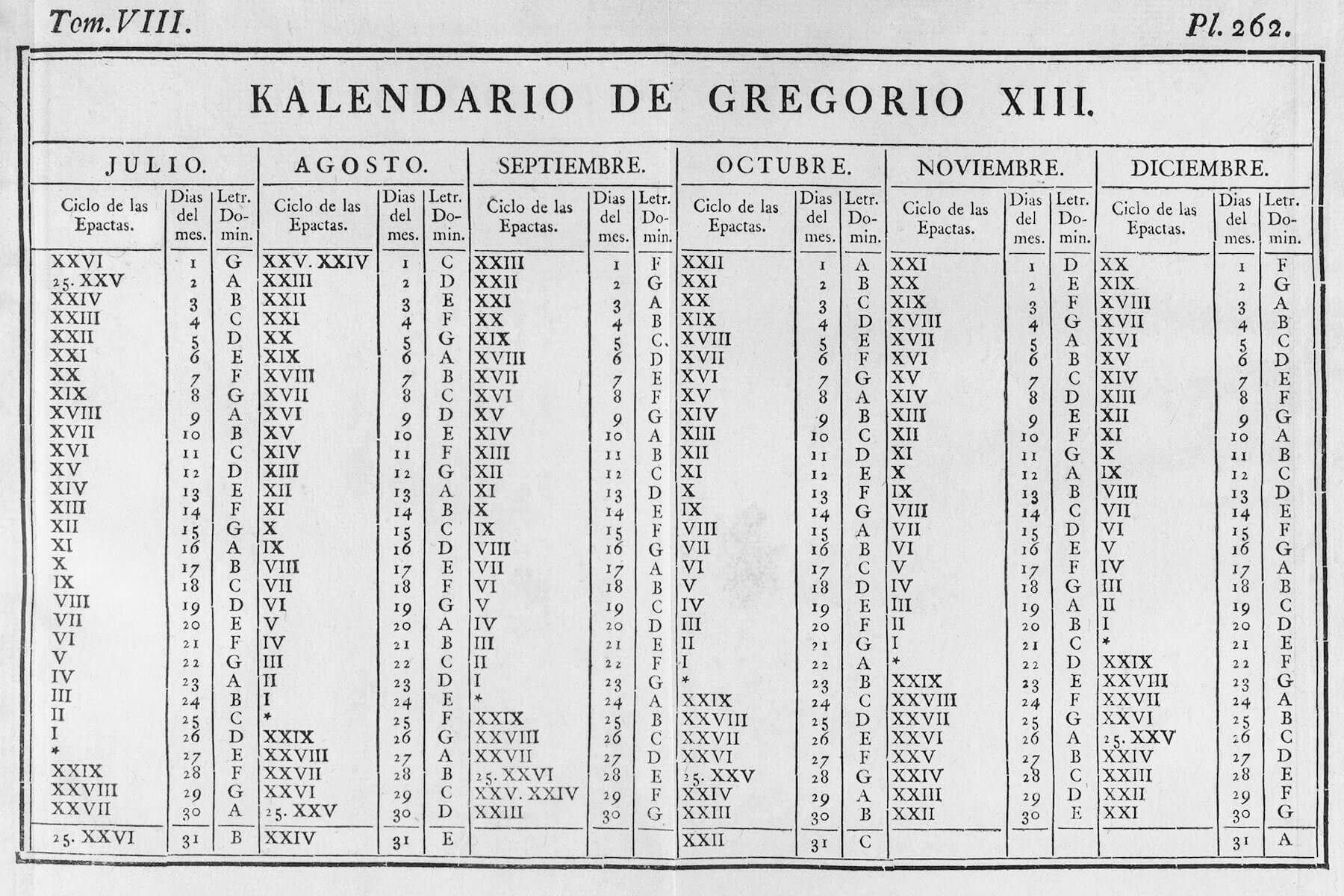
The humble calendar of one of civilization’s oldest staples. The earliest means of measuring days and weeks dates back 10,000 years, and timekeeping techniques adopted by the ancient Babylonians, Egyptians, and Romans slowly evolved into the calendar we use today. Yet the emphasis here is on “slowly.” The evolution from charting moon phases to separating seasons to measuring fiscal years was one of controversy and chaos across centuries. Still, humans never stopped working to perfect how we mark the passage of time. Here’s a brief look at the fascinating history of calendars, just in time to start a new one.

Photo credit: Buyenlarge/ Archive Photos via Getty Images

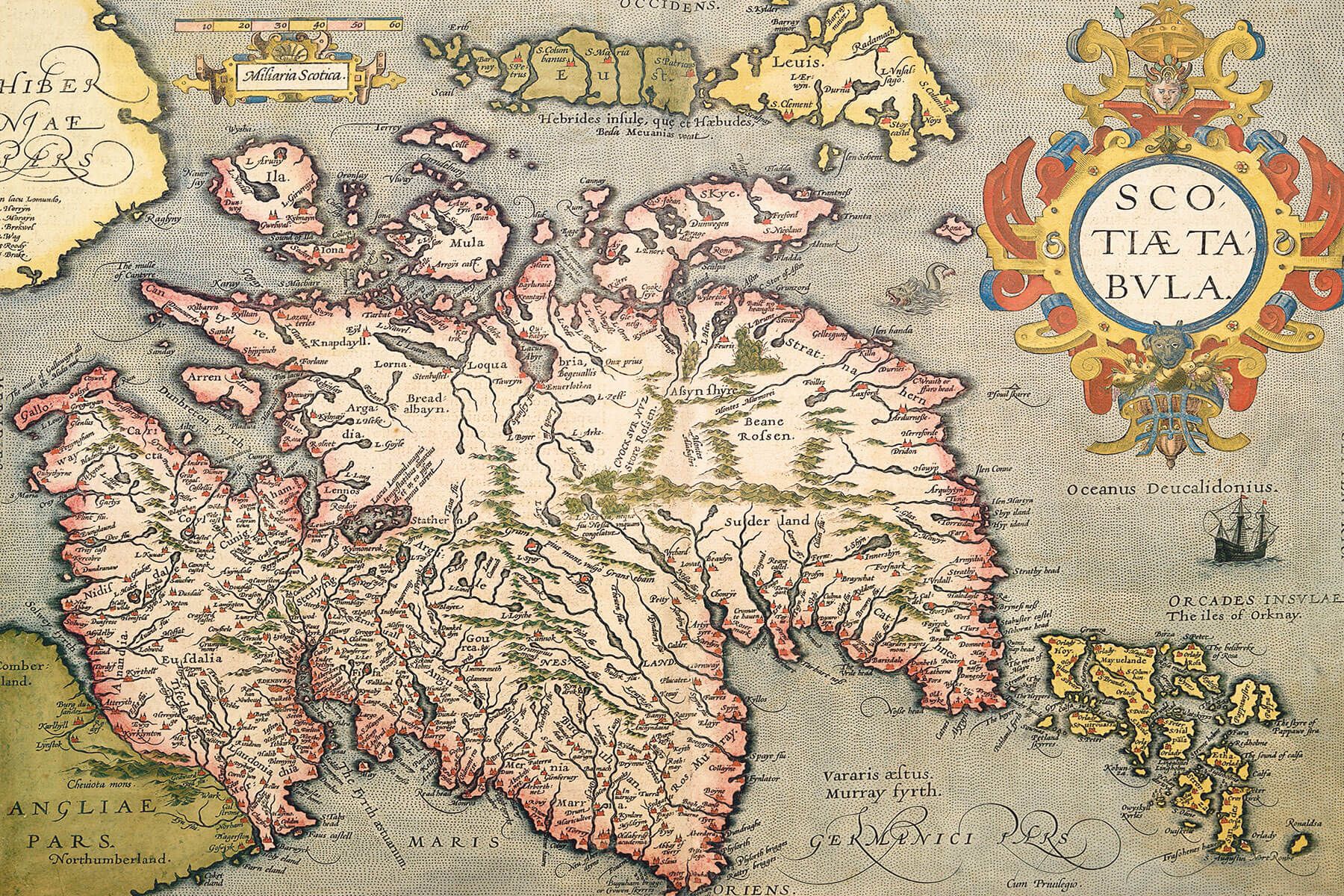
The First Known Calendar Is From Prehistoric Scotland

In 2013, British archaeologists discovered what they consider the world’s oldest calendar, dating back to around 8000 BCE. The prehistoric calendar, located at Warren Field in Scotland, consists of 12 pits believed to have contained wooden posts representing months of the year. Positioned to chart lunar phrases, the pits are aligned with the southeast horizon and were likely used by hunter-gatherer societies to track seasons. The site precedes Stonehenge by several thousand years.

You may also like

A Tiny History of Dollhouses

  • Playing with a dollhouse
Playing with a dollhouse
G-Stock Studio/ Shutterstock
Author Nicole Villeneuve

December 20, 2023

Love it?

The concept of miniature dwellings traces back to ancient civilizations, when Egyptians placed small clay replicas of their houses and belongings in and around burials. These models were intended to provide the comforts of home to the deceased in the afterlife. Although the tiny dwellings we know as dollhouses today are quite different from these ancient versions, their history also includes purposes other than play. Over the last 500 years, dollhouses have evolved from elaborate displays for adults, to useful household teaching tools, to enduring objects of imagination and aspiration for children. 

Photo credit: Milan Tesar/ Shutterstock

Early Origins

The earliest known dollhouses were made in the 16th century, primarily in Germany, and later in Holland and England. Known as a “dockenhaus” (miniature house), “cabinet house,” or “baby house” (because of the size, not the intended audience), these handcrafted items were not initially made for children to play with — they served as display cases for wealthy adults to fill with miniature furniture, fabrics, and artwork that reflected their own taste and lifestyle. 

One of the earliest recorded examples of a dollhouse is the Munich Baby House. Commissioned by Albert V, the Duke of Bavaria, in the 1550s, the piece was made by skilled artisans in the shape of a royal residence (instead of a wooden cabinet like the dominant style that soon followed). Though the Munich Baby House was lost in a fire in the 1600s, Albert V had the object detailed in an inventory of his household goods. Historians believe that the Munich Baby House was likely made for the duke’s entertainment, but some suggest it may have been built as a gift for his daughter, which would make it an early example of a dollhouse for children.

You may also like

Sunny Days: A Brief History of ‘Sesame Street’

  • Cookie Monster and Zoe
Cookie Monster and Zoe
STAN HONDA/ AFP via Getty Images
Author Nicole Villeneuve

November 21, 2023

Love it?

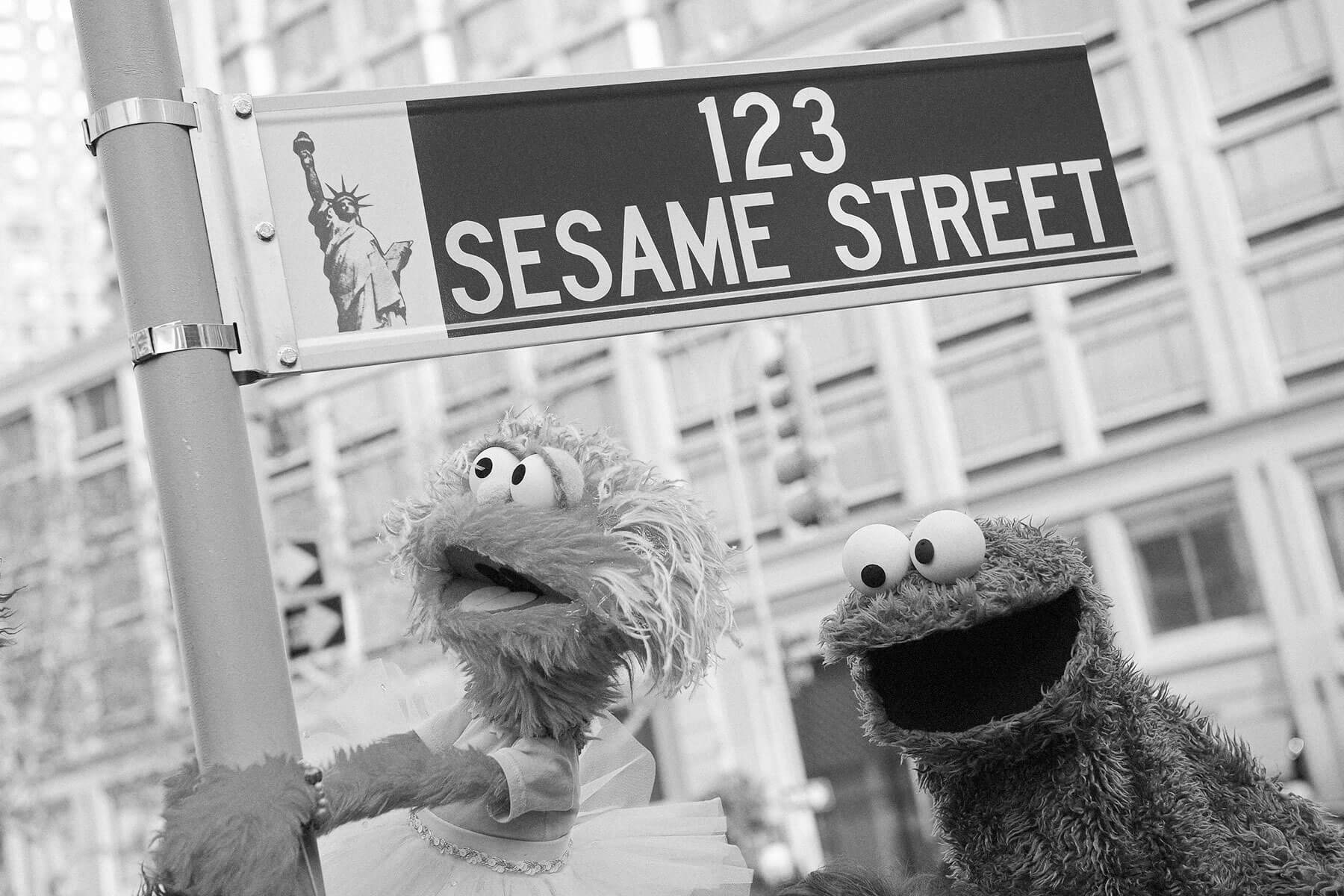
From its very first episode in 1969, Sesame Street captivated the imaginations of America’s youth, using research-based programming to reinvent children’s television. Created by Joan Ganz Cooney and Lloyd Morrisett in the late 1960s, the show aimed to not only entertain, but educate — and it did just that. It’s been called the “largest and least-costly [early childhood] intervention that’s ever been implemented” in the United States. 

Through its diverse characters and cast members, the show reflected the real world, and its fast-paced storytelling, repetition, and humor helped impart valuable life lessons. Sesame Street quickly became more than just another TV show: It’s been a trusted companion for generations of families. Read on to learn more about the history of the show that, through its commitment to inclusivity and social change, has left a profound mark on society — and made Big Bird a star.

Photo credit: STAN HONDA/ AFP via Getty Images

A New Kind of TV Show 

The seed that grew into Sesame Street was planted at a fateful Manhattan dinner party hosted by Joan Ganz Cooney, a producer with a background in education. At the time, Cooney was working for WNET/Channel 13, where she produced public affairs programming, including an Emmy Award-winning documentary about poverty in America. The guest list at the dinner party included Lloyd Morrisett, vice president of the nonprofit Carnegie Corporation. As the conversation turned to television, Morrisett shared that his young daughter was so mesmerized by TV that she would sit and stare at nothing but the test pattern. Morrisett, who was also a psychologist, wondered whether the medium could be used to teach children.

Inspired by the conversation, Cooney went on a three-month trip around the country to interview educators, psychologists, television producers, and more. The result was a study called “The Potential Uses of Television in Preschool Education.” It proposed a new kind of children’s television program — Cooney envisioned a fast-paced format similar to a sketch comedy show. She wanted to foster a strong connection between the show’s characters and the audience. And most of all, she wanted it to teach the young minds that would be watching, especially kids from lower-income and marginalized communities who often slipped through the cracks.

The yet-unnamed show went into development at the newly formed Children’s Television Workshop (now known as the Sesame Workshop). Morrisett helped raise the funds to make it happen, and in 1968, Cooney hired Jon Stone from the children’s show Captain Kangaroo to produce and direct the project. That summer, Stone brought a former colleague, a puppeteer named Jim Henson, to one of Cooney’s workshops. Together, Stone and Henson produced a pitch reel for the show featuring some of Henson’s Muppets, including Kermit the Frog and Rowlf the Dog. “Hey, Rowlf, why don’t you call your show ‘Sesame Street’?” Kermit says in the reel. “You know, like ‘Open Sesame’? It kind of gives the idea of a street where neat stuff happens.” 

You may also like