


Canned food was invented for military use, but soldiers had to cut cans open with bayonets.

  • Military canned food
Military canned food
PRESSLAB/ Shutterstock
Author Nicole Villeneuve
January 31, 2024

Love it?

In the late 18th century, the French army was looking for a way to keep food edible long enough to get it to soldiers on the front lines throughout Europe and beyond. Napoleon’s government offered a payment to whoever could develop a proper food preservation system, and in 1795, Nicolas Appert, a French chef, candymaker, and brewer, began experimenting with different techniques. He eventually discovered that sealing food in airtight containers and then heating them could prevent spoilage. At first, he packed a variety of foods such as soups, fruits, and vegetables into empty champagne bottles, sealed the cork with a mixture made of cheese and lime, and placed the bottles in boiling water. He then moved from bottles to jars and, eventually, also experimented with tin cans.

In 1810, Appert’s method of canning food was officially recognized by the French government; he was awarded the prize money and published his methods in a book called The Art of Preserving Animal and Vegetable Substances for Many Years. The same year, the process for using tin-coated iron cans for preserved food was patented, and by 1813, England was supplying canned food to the Royal Navy. While the problem of properly preserving food was solved, another issue presented itself: opening the cans. Soldiers resorted to using their weapons to get to their food, trying to cut them open with their bayonets or knives. It wasn’t until decades later, in the 1850s, that the can opener was finally invented.
A con artist ‘sold’ the Eiffel Tower for scrap metal — twice.

  • The Eiffel Tower
The Eiffel Tower
Unsplash+ via Getty Images
Author Bennett Kleinman
January 30, 2024

Love it?

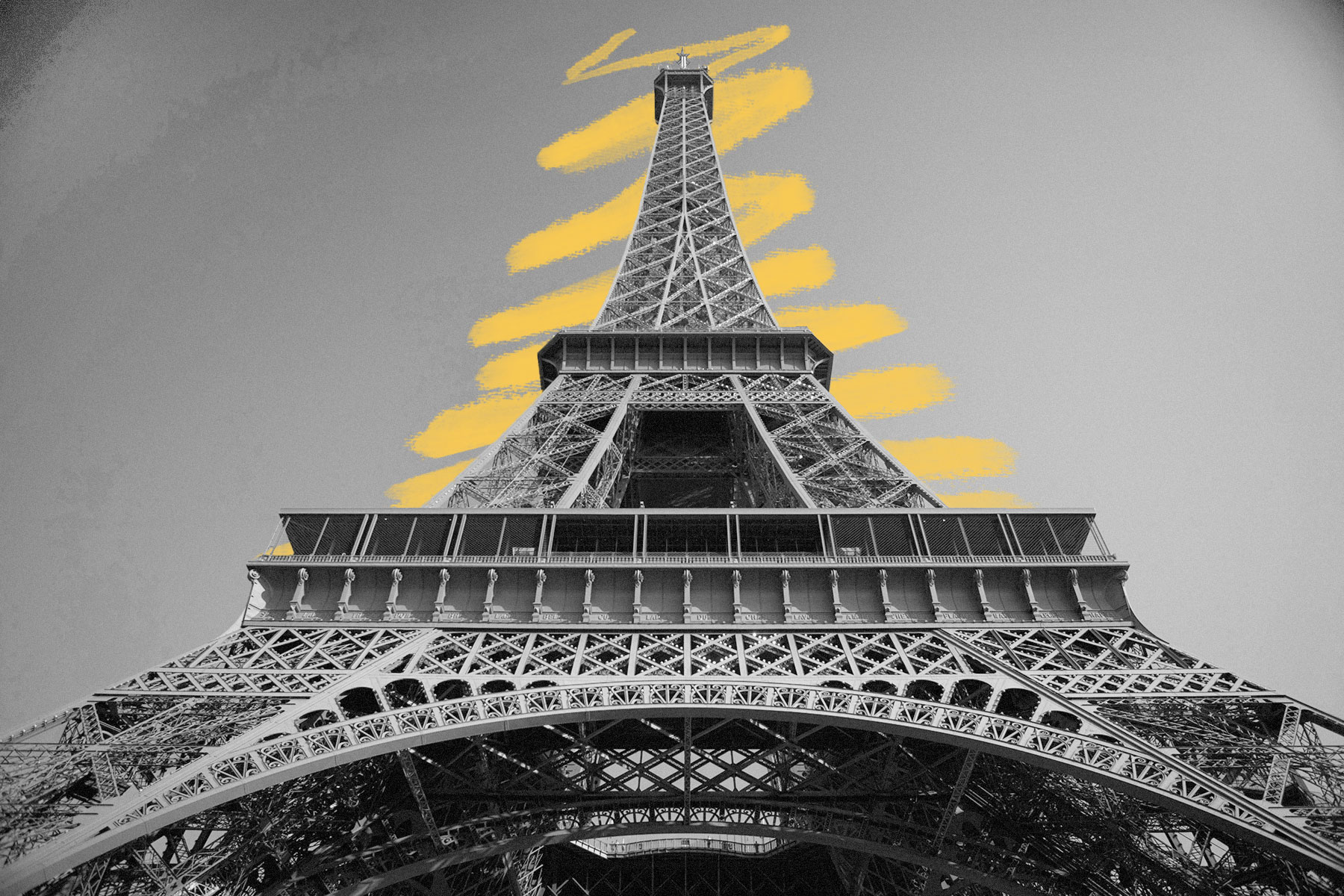
Victor Lustig is among the most skilled con artists in history. The notorious scammer even went so far as to convince someone to buy the Eiffel Tower for scrap — not once, but on two separate occasions. Lustig was born in Austria-Hungary in 1890, and spent the first several decades of his life swindling people for modest sums of money. In 1925, he took his conning to a whole new level, as he arrived in Paris with eyes set on the Eiffel Tower. Lustig assumed the identity of a French government official and even created fake stationery with a government emblem. He then invited several scrap metal dealers to the Hôtel de Crillon, where he announced that the Eiffel Tower was too expensive to repair and would instead be sold for scrap to the highest bidder.

Lustig’s story convinced a man named André Poisson to pay 70,000 francs (upwards of $250,000 today) for the scrap. The con artist then fled to Austria with the money, and Poisson was so embarrassed that he never contacted the police. In the ensuing weeks, Lustig kept a close eye on Parisian newspapers and realized that his scheme was never reported, so he decided to attempt the scam once more. While he successfully convinced another buyer to close the deal, suspicions grew and police were finally alerted. By the time law enforcement attempted to capture Lustig, however, he had fled to America, where he continued conning people. He was ultimately captured by U.S. federal officials in 1935, and sentenced to 20 years in Alcatraz prison.

George Washington had reddish hair.

  • George Washington
George Washington
Library of Congress/ Unsplash
Author Bennett Kleinman
January 18, 2024

Love it?

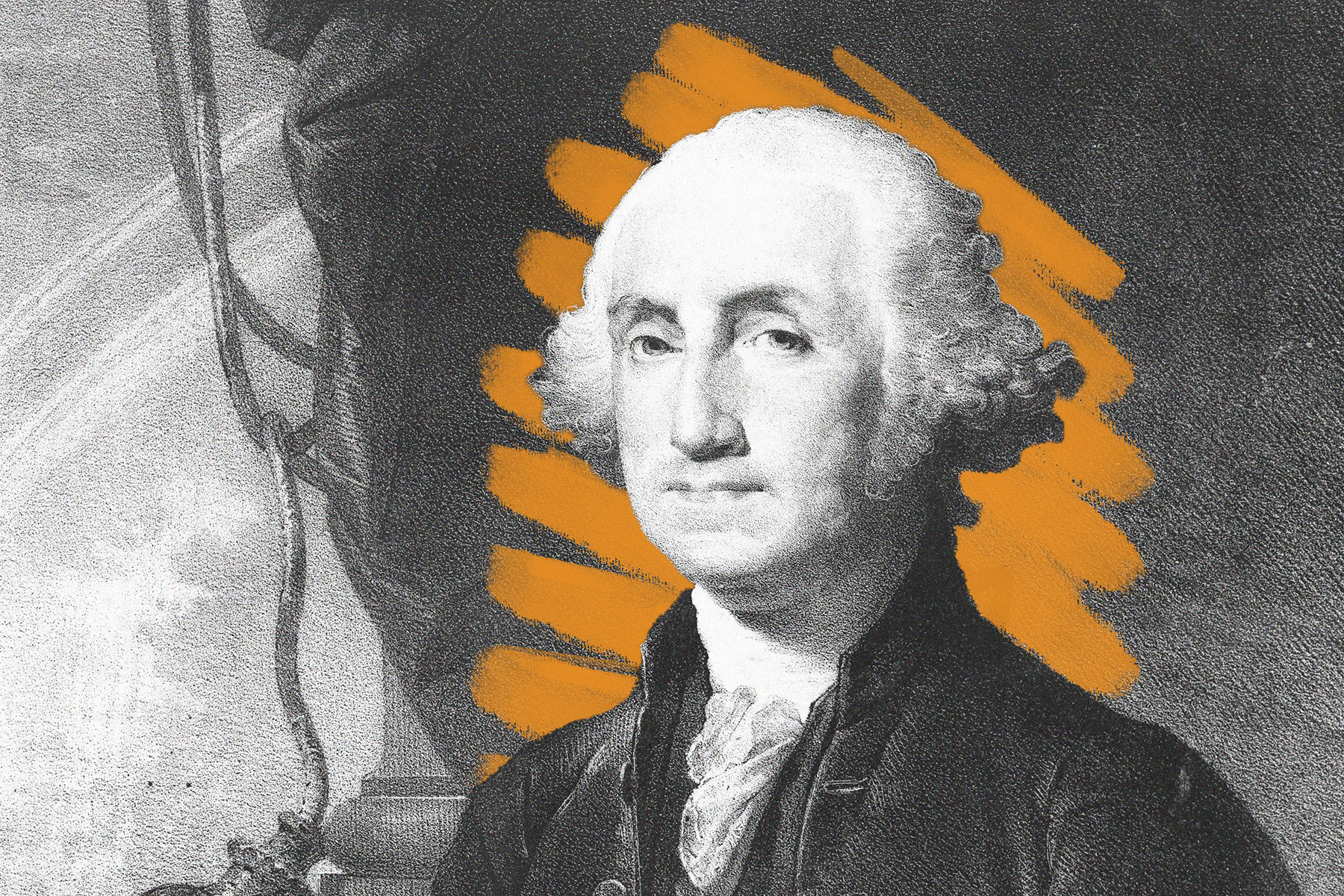
Despite all the familiar portraits depicting George Washington with white hair, America’s first President was closer to a natural redhead than many people realize. Though physical evidence is sparse, biographers have noted that the founding father boasted a reddish-brown mane. These darker locks can be seen in portraits of Washington as a young man, including paintings by artists Jean Leon Gerome Ferris and John C. McRae. There’s also a locket at Washington’s Mount Vernon estate containing a lock of reddish hair that was presented to Treasury Secretary Oliver Wolcott Jr. in 1797.

Another misconception about Washington’s hair is that he wore a white wig, which was a common style choice at the time. But Washington was blessed with a full head of hair as he aged, which he powdered to look like the popular wigs of the time (his natural hair color eventually faded from reddish-brown to gray). The white color was favored by military men, and Washington often kept his hair at shoulder length and would tie it behind his head in a ponytail or with a ribbon. He would then fluff out the sides to give the appearance of a wig, and grease the hair with pomade to add firmness to his fluffy curls. Lastly, Washington sprinkled a fine white powder over his scalp for color, and often bunched his ponytail into a silk bag to prevent the powder from dusting onto his back and shoulders. 

George Washington didn’t know that dinosaurs existed.

  • Washington with generals
Washington with generals
Photo credit: Keith Lance/ iStock
Author Darren Orf
June 2, 2023

Love it?

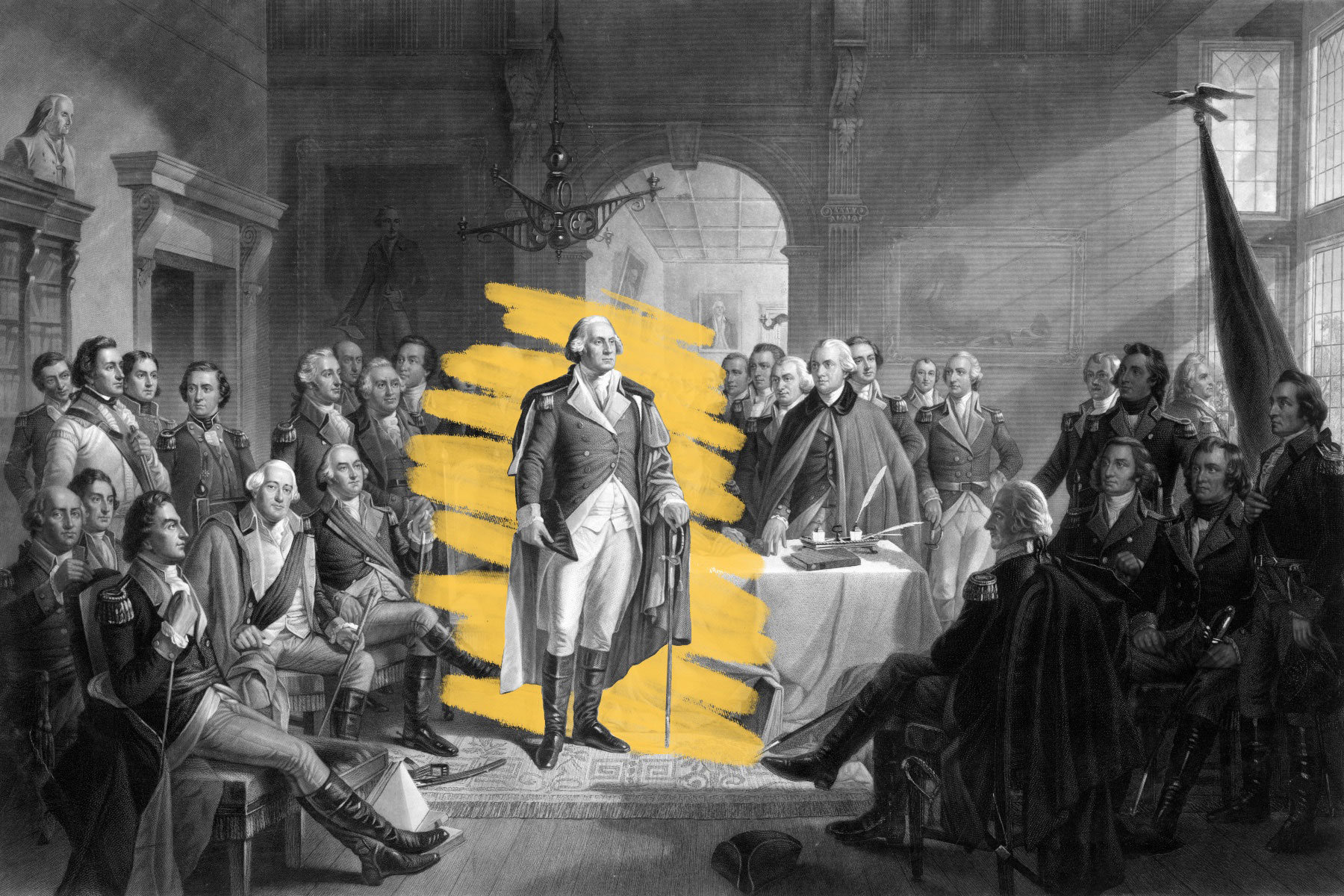
Did George Washington know about dinosaurs? Most likely, no. Today, the existence of dinosaurs may seem like an immutable fact, but our knowledge of these ancient creatures is a relatively modern development. In fact, the very concept of dinosaurs is so recent that many of the founders of the United States lived most if not all of their lives without knowing that dinos existed. English naturalist Robert Plot described the very first fossilized evidence of dinosaurs, what we now know to be the femur of a megalosaurus, in 1677. But with no concept of dinosaurs in the mid-17th century, Plot theorized that the bone must have belonged to some ancient forgotten race of giant humans. 

It’s likely that George Washington died in 1799 believing that such giant humans existed in the distant past. It wasn’t until the 1820s that geologists began to reexamine this theory and proposed that the mysterious bones belonged to an ancient reptile rather than a mammal. Even then, it took until 1842 for English paleontologist Richard Owen to offer up the word “dinosaur,” based on the Greek words for “terrible lizard,” to describe the ancient beasts (not entirely accurate, but close enough). This etymological creation arrived a full decade after Charles Carroll, the longest-surviving signer of the Declaration of Independence, died at the age of 95. The story of the dinosaurs is long and ancient, but our knowledge of them certainly isn’t.  

Teddy Roosevelt’s son snuck the family’s first Christmas tree into the White House.

  • National Christmas Tree
National Christmas Tree
Jon Bilous/ Alamy Stock Photo
Author Anne T. Donahue
December 13, 2023

Love it?

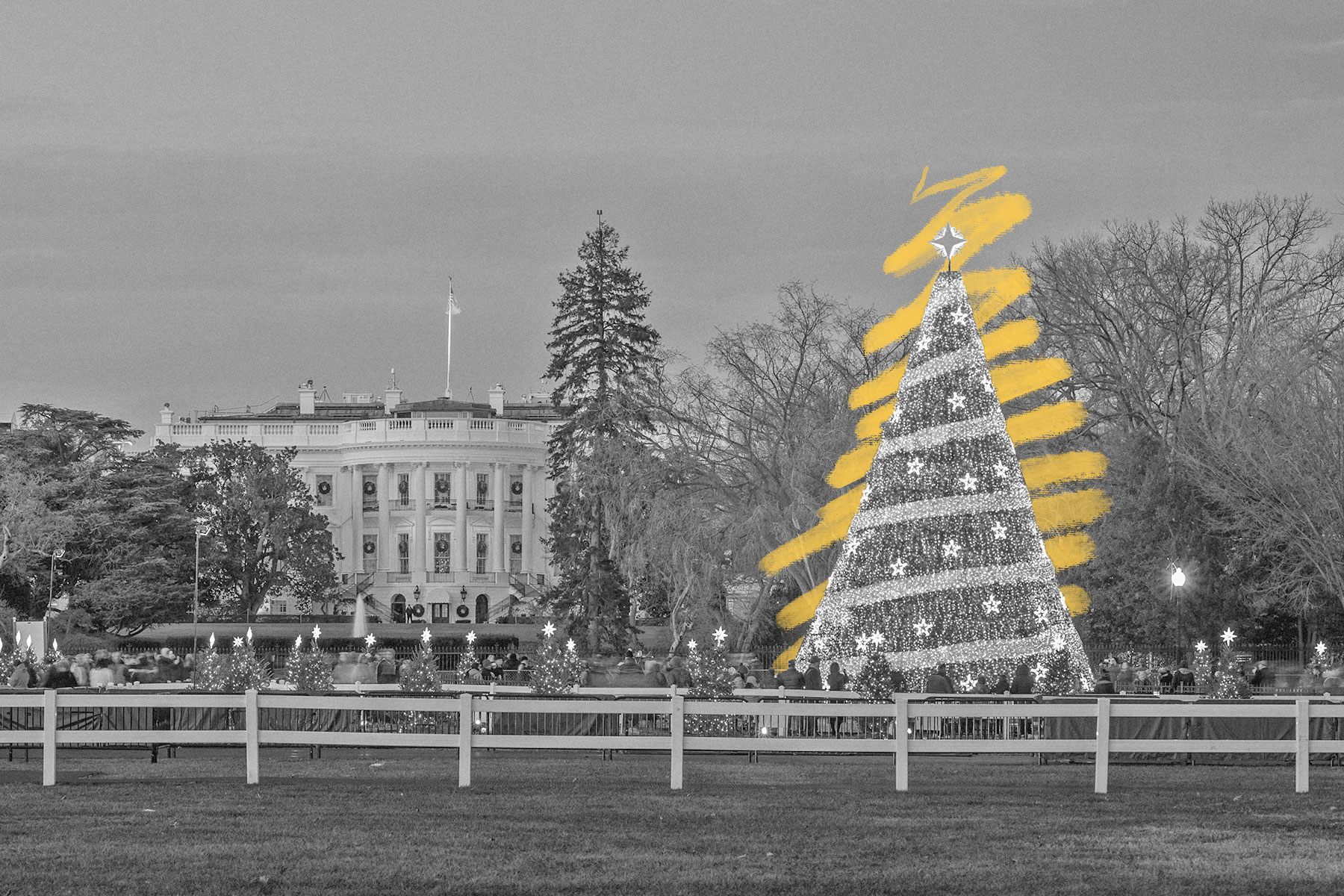
In 1901, early on in Theodore Roosevelt’s presidency, putting a Christmas tree in the home was still a relatively new trend in the United States — Benjamin Harrison was the first President to put up a tree in the White House only 12 years before, in 1889. Roosevelt had no such plans, but his wishes were thwarted when his 8-year-old son Archie secretly “rigged up” a tree in a large closet with the help of one of the White House carpenters. Archie adorned the tree with lights and presents for his family (and pets), thus beginning a new Roosevelt family tradition.

According to a common myth, President Roosevelt had gone so far as to ban Christmas trees in the White House because he was a staunch conservationist. Some reports at the time claimed Roosevelt was so dedicated to preserving America’s forests, he saw cutting down trees for the holidays as a contributor to deforestation. In 1901, The Baltimore Sun reported what is likely the actual reason that President Roosevelt and his family would not have a Christmas tree: because they’d never had one before. This isn’t altogether surprising: The Christmas tree was a German tradition that was popularized by Queen Victoria and her German husband Prince Albert in 1848. By the early 20th century, the holiday tradition was on the rise, but trimming a tree wasn’t yet a given in the United States.

It’s a tradition in Sweden to watch Donald Duck cartoons on Christmas Eve.

  • Donald Duck cartoon
Donald Duck cartoon
Universal Images Group North America LLC/ Alamy Stock Photo
Author Michael Nordine
December 13, 2023

Love it?

Disney devotees may be familiar with the 1958 Donald Duck Christmas special From All of Us to All of You, but they probably haven’t seen it as many times as the average Swede. The special first aired in Sweden at 3 p.m. on December 24, 1959, and celebrating Christmas Eve with the temperamental waterfowl quickly became one of the country’s signature holiday traditions. Known in Sweden as Kalle Anka och hans vänner önskar God Jul (which translates to Donald Duck and His Friends Wish You a Merry Christmas), the special airs on SVT1, the main public television channel, and is presented by a host playing Walt Disney. It’s also slightly different each year, as a contractual obligation requires SVT1 to include a snippet from the Mouse House’s latest film.

If you’re wondering how Kalle Anka became so popular in the first place, it’s partially explained by the fact that Sweden had only two TV channels at the time, and Christmas was the only time Swedes could get a dose of Disney. Traditions have a way of sticking, and Kalle Anka is frequently the most-watched program of the year — 40% of the country tunes in during an average year, and in 1997 more than half the population did. They also tend to do so sans distractions: In 2016, cellphone data usage dropped by 28% while the show was on.

“Jingle Bells” wasn’t written for Christmas.

  • “Jingle Bells” sheet music
"Jingle Bells" sheet music
Brasil2/ iStock
Author Nicole Villeneuve
December 7, 2023

Love it?

“Jingle Bells” is one of the most recognizable songs in American history, and the jaunty tune is as much a part of the Christmas season as twinkling lights and shiny ornaments. Take a closer look at the lyrics, though, and an interesting detail emerges: The song doesn’t mention the holiday at all. That’s because “Jingle Bells” wasn’t actually written for Christmas.

Even with its undeniable ubiquity, “Jingle Bells” has a rather murky history. We know that in 1857, the song’s composer, James Pierpont, copyrighted the tune under the title “One Horse Open Sleigh” while living in Savannah, Georgia. But various theories about the song’s meaning have surfaced over the years: One suggests it was simply written in the style of other popular sleighing songs at the time; another says the song was written for Thanksgiving. A plaque in Pierpont’s childhood hometown of Medford, Massachusetts, even claims “Jingle Bells” was composed in a local tavern, years before its copyright date. (Research into the latter two claims has concluded that neither origin story is likely.) 

“Jingle Bells” features no direct mention of any holiday, nor even the month of December, but the song nonetheless became a Christmas staple following its release. In December 1943, Bing Crosby and the Andrews Sisters released a record featuring renditions of “Jingle Bells” and “Santa Claus Is Comin’ to Town,” cementing the song’s status as an inescapable Christmas classic.

Indigo was once used as currency in colonial America.

  • Indigofera flower bloom
Indigofera flower bloom
My-ma-le-wow/ Shutterstock
Author Anne T. Donahue
December 20, 2023

Love it?

Indigo dye was once so valuable it was known as “blue gold.” In colonial South Carolina, the prized dye was even used as a bartering tool for trade and a form of currency to buy goods and services. The rich blue color was in high demand in the royal courts of Europe, particularly in Britain, and in the mid-1700s, indigo exports helped make South Carolina the wealthiest colony in America.

Native to West Africa and other warm weather regions, indigo was first used to dye textiles around 6,000 years ago in Peru, and in West Africa it became a cultural cornerstone in the region, representing fertility, wealth, and abundance. The dye is extracted by fermenting the indigo leaves, which eventually creates a blue paste that’s formed into cakes and left to dry. The process is delicate, time-consuming, and was considered a valuable skill passed down through generations. As such, enslaved West Africans became integral to indigo production in America.

The plant took root in South Carolina in the 1740s, when plantation owners began experimenting with indigofera seeds brought to the colony through the transatlantic slave trade. It thrived in the balmy summer climate, and, due to the forced labor of enslaved people, indigo quickly became the colony’s second-largest cash crop, after rice. The indigo trade dominated the South Carolina economy from the 1740s until the 1790s, when the newly independent United States lost its biggest market after breaking with the British Empire. At the crop’s peak in 1775, roughly 1.1 million pounds of dye were exported to England, valued at more than $40 million today.

Teddy Roosevelt was the first sitting President to make a diplomatic trip abroad.

  • Panama Canal, 1906
Panama Canal, 1906
Everett Collection Historical/ Alamy Stock Photo
Author Adam Levine
November 21, 2023

Love it?

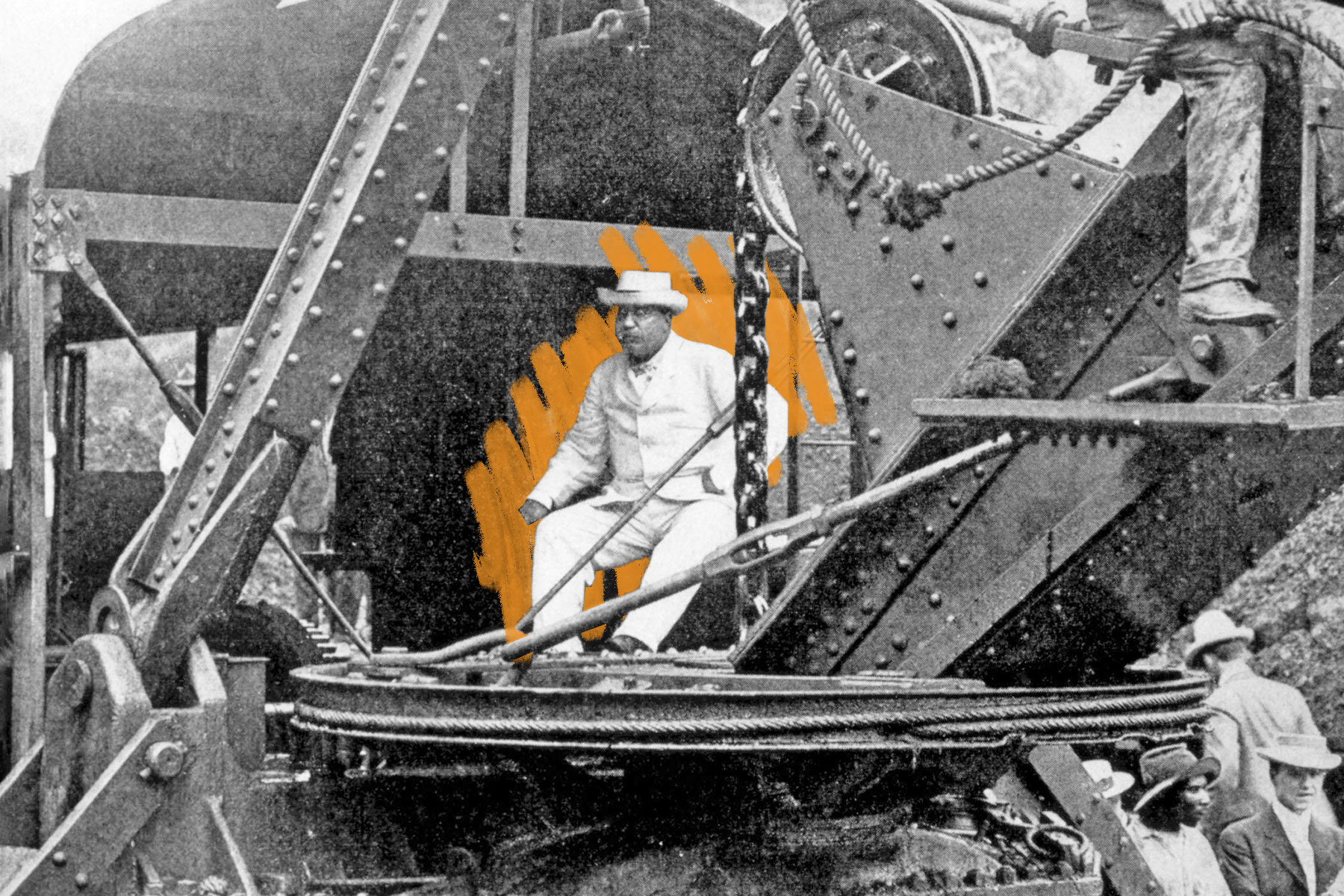
In 1904, the United States began its construction of the Panama Canal in the newly established Republic of Panama. The goal was to create a water passage between the Atlantic and Pacific oceans, thus revolutionizing global trade by creating a shortcut through Central America. At the time, the canal was one of the largest and most ambitious construction projects the U.S. had ever undertaken. In 1906, two years into construction, President Theodore Roosevelt sailed to Panama to inspect the building site and check in on the project’s progress — a journey that made Roosevelt the first sitting U.S. President to make a diplomatic trip outside the country. 

Roosevelt received a royal welcome during his history-making visit to Panama; his arrival in Panama City was greeted with a parade featuring marching bands and police escorts on horseback. At the construction site, Panama’s first president, Manuel Amador Guerrero, gave a welcome address to Roosevelt; the two leaders then posed together in front of a cathedral. Later, Roosevelt was photographed at the controls of a large steam shovel, a lasting commemoration of the historic trip. After leaving Panama, Roosevelt paid a brief visit to Puerto Rico before returning home to the United States. All told, the diplomatic tour lasted 17 days, and set a new precedent for how the U.S. President engaged in foreign affairs.

The shortest war in history lasted 38 minutes.

  • Anglo-Zanzibar War
Anglo-Zanzibar War
CPA Media Pte Ltd/ Alamy Stock Photo
Author Bennett Kleinman
November 15, 2023

Love it?

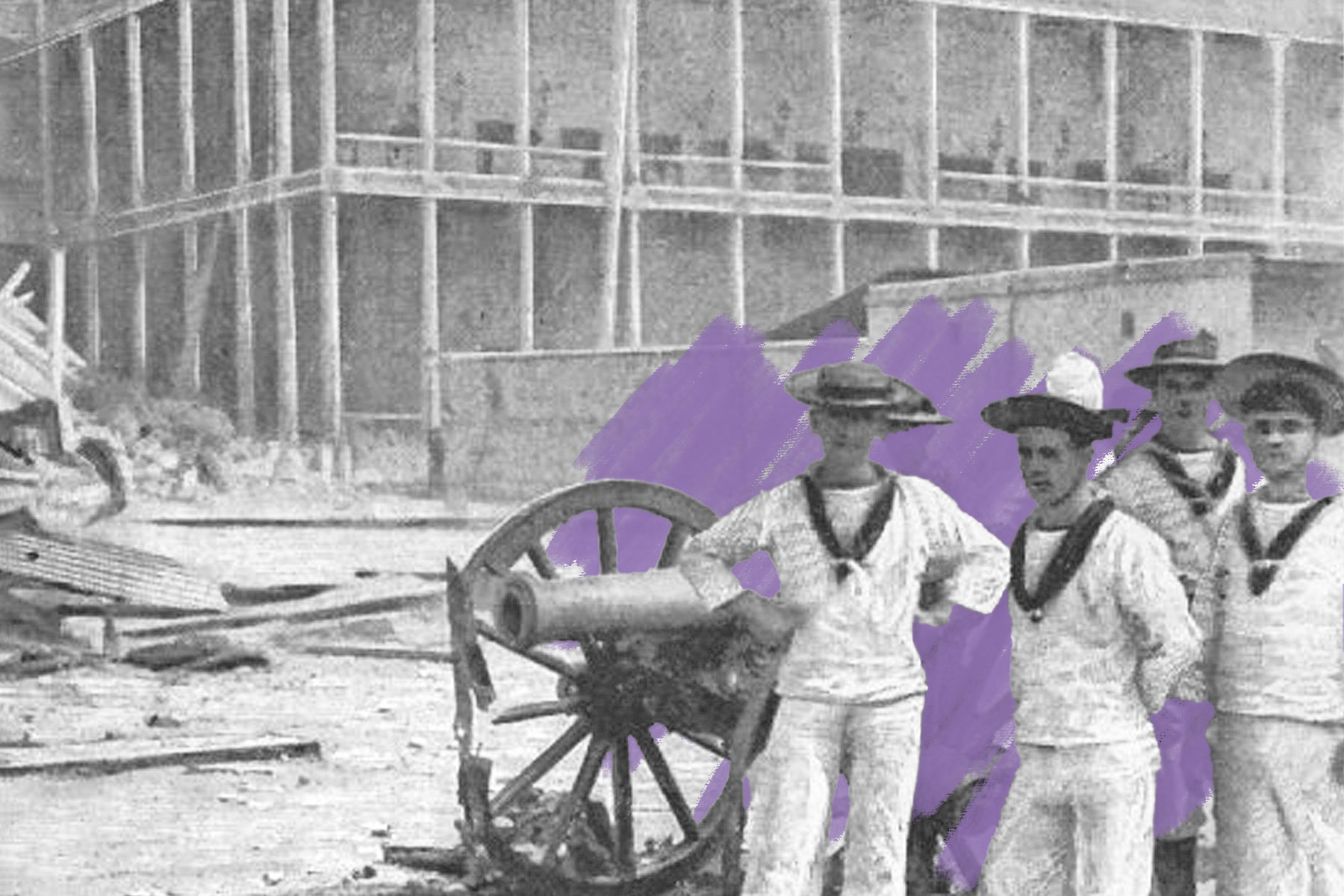
While many wars are waged for years, the Anglo-Zanzibar War lasted a mere 38 minutes, making it the shortest war in recorded history. The conflict occurred on August 27, 1896, between the United Kingdom and the Sultanate of Zanzibar. Tensions began in 1890, when the Heligoland-Zanzibar Treaty granted the British a sphere of influence over the East African island of Zanzibar. Three years later, Britain installed Sultan Hamad bin Thuwaini to protect British interests in the region. However, Hamad died in 1896, and was succeeded by his cousin, Khalid bin Barghash, without British approval. Khalid became sultan on August 25, 1896, but was ordered to stand down by British diplomat Basil Cave. Rather than concede, Khalid amassed around 3,000 soldiers to defend the palace using all available artillery. Britain issued an ultimatum to Khalid, demanding that he leave the palace by 9 a.m. on August 27, and when that time passed, war broke out.

The war was over almost as soon as it began, as three British warships — the HMS Racoon, Thrush, and Sparrow — fired on the palace, destroying the majority of Khalid’s artillery within two minutes. Still, the bombardment continued for 38 minutes before stopping, during which Khalid escaped and was eventually smuggled into modern-day Tanzania. The British reclaimed the palace and installed a new sultan; in 1916, British forces captured Khalid in East Africa and he was exiled to the island of Saint Helena.