

Indigo was once used as currency in colonial America.

  • Indigofera flower bloom
Indigofera flower bloom
My-ma-le-wow/ Shutterstock
Author Anne T. Donahue

December 20, 2023

Love it?

Indigo dye was once so valuable it was known as “blue gold.” In colonial South Carolina, the prized dye was even used as a bartering tool for trade and a form of currency to buy goods and services. The rich blue color was in high demand in the royal courts of Europe, particularly in Britain, and in the mid-1700s, indigo exports helped make South Carolina the wealthiest colony in America.

Native to West Africa and other warm weather regions, indigo was first used to dye textiles around 6,000 years ago in Peru, and in West Africa it became a cultural cornerstone in the region, representing fertility, wealth, and abundance. The dye is extracted by fermenting the indigo leaves, which eventually creates a blue paste that’s formed into cakes and left to dry. The process is delicate, time-consuming, and was considered a valuable skill passed down through generations. As such, enslaved West Africans became integral to indigo production in America.

The plant took root in South Carolina in the 1740s, when plantation owners began experimenting with indigofera seeds brought to the colony through the transatlantic slave trade. It thrived in the balmy summer climate, and, due to the forced labor of enslaved people, indigo quickly became the colony’s second-largest cash crop, after rice. The indigo trade dominated the South Carolina economy from the 1740s until the 1790s, when the newly independent United States lost its biggest market after breaking with the British Empire. At the crop’s peak in 1775, roughly 1.1 million pounds of dye were exported to England, valued at more than $40 million today.

Teddy Roosevelt was the first sitting President to make a diplomatic trip abroad.

  • Panama Canal, 1906
Panama Canal, 1906
Everett Collection Historical/ Alamy Stock Photo
Author Adam Levine

November 21, 2023

Love it?

In 1904, the United States began its construction of the Panama Canal in the newly established Republic of Panama. The goal was to create a water passage between the Atlantic and Pacific oceans, thus revolutionizing global trade by creating a shortcut through Central America. At the time, the canal was one of the largest and most ambitious construction projects the U.S. had ever undertaken. In 1906, two years into construction, President Theodore Roosevelt sailed to Panama to inspect the building site and check in on the project’s progress — a journey that made Roosevelt the first sitting U.S. President to make a diplomatic trip outside the country. 

Roosevelt received a royal welcome during his history-making visit to Panama; his arrival in Panama City was greeted with a parade featuring marching bands and police escorts on horseback. At the construction site, Panama’s first president, Manuel Amador Guerrero, gave a welcome address to Roosevelt; the two leaders then posed together in front of a cathedral. Later, Roosevelt was photographed at the controls of a large steam shovel, a lasting commemoration of the historic trip. After leaving Panama, Roosevelt paid a brief visit to Puerto Rico before returning home to the United States. All told, the diplomatic tour lasted 17 days, and set a new precedent for how the U.S. President engaged in foreign affairs.

The shortest war in history lasted 38 minutes.

  • Anglo-Zanzibar War
Anglo-Zanzibar War
CPA Media Pte Ltd/ Alamy Stock Photo
Author Bennett Kleinman

November 15, 2023

Love it?

While many wars are waged for years, the Anglo-Zanzibar War lasted a mere 38 minutes, making it the shortest war in recorded history. The conflict occurred on August 27, 1896, between the United Kingdom and the Sultanate of Zanzibar. Tensions began in 1890, when the Heligoland-Zanzibar Treaty granted the British a sphere of influence over the East African island of Zanzibar. Three years later, Britain installed Sultan Hamad bin Thuwaini to protect British interests in the region. However, Hamad died in 1896, and was succeeded by his cousin, Khalid bin Barghash, without British approval. Khalid became sultan on August 25, 1896, but was ordered to stand down by British diplomat Basil Cave. Rather than concede, Khalid amassed around 3,000 soldiers to defend the palace using all available artillery. Britain issued an ultimatum to Khalid, demanding that he leave the palace by 9 a.m. on August 27, and when that time passed, war broke out.

The war was over almost as soon as it began, as three British warships — the HMS Racoon, Thrush, and Sparrow — fired on the palace, destroying the majority of Khalid’s artillery within two minutes. Still, the bombardment continued for 38 minutes before stopping, during which Khalid escaped and was eventually smuggled into modern-day Tanzania. The British reclaimed the palace and installed a new sultan; in 1916, British forces captured Khalid in East Africa and he was exiled to the island of Saint Helena.

In 1939, FDR moved Thanksgiving up a week.

  • FDR on Thanksgiving
FDR on Thanksgiving
Everett Collection Historical/ Alamy Stock Photo
Author Nicole Villeneuve

November 15, 2023

Love it?

For a brief time in American history, part of the country celebrated “Franksgiving.” In 1939, President Franklin D. Roosevelt attempted to boost the economy by moving Thanksgiving up a week, making extra time for holiday shopping. FDR claimed the move was made at the request of big retailers, and many stores rejoiced at the change. But other institutions fought against it: Smaller retailers, colleges, football officials, the press, and even some turkey sellers protested the date change. Americans had celebrated Thanksgiving on the last Thursday in November since 1863, following the tradition started by Abraham Lincoln. Thanksgiving wasn’t a fixed date, however, and it was up to each president to choose when to observe the holiday. In 1939, the last Thursday of the month was November 30, and FDR chose to hold Thanksgiving on November 23 instead. 

The decision, announced in August 1939, was met with mixed reactions, primarily following party lines. Republican governors wanted to stick with tradition and dubbed the new date “Franksgiving,” while Democrats followed the president. The result was two Thanksgivings that year: Twenty-three states and the District of Columbia celebrated the new date, while 22 states stuck with November 30. Three states — Colorado, Mississippi, and Texas — celebrated both. The earlier date stuck for another two years, even as questions lingered about whether the extended shopping season actually helped retailers. In June 1941, Roosevelt announced without fanfare that Thanksgiving would be held on  the fourth (rather than last) Thursday of November, where it has remained ever since. 

Captain Morgan was a real person.

  • Captain Henry Morgan
Captain Henry Morgan
duncan1890/ iStock
Author Kevin McCaffrey

November 8, 2023

Love it?

The Captain Morgan rum brand is named after a real person: the legendary Welsh privateer and buccaneer Captain Henry Morgan, who terrorized Spanish ships in the 17th century. Morgan was born in Wales around 1635, but his famous swashbuckling adventures took place in the Caribbean, where he was sent to fight the Spanish. Privateers were kind of legal pirates: They worked as representatives of a government, raiding rival nations on their sponsoring nation’s behalf, while keeping some of the fortune for themselves. Morgan was part of a group known as the “Brethren of the Coast” — real-life pirates of the Caribbean — and his exploits gained him both wealth and lasting fame. 

Captain Morgan led many raids against Spanish colonies, most famously in 1671, when he took 1,000 men and captured Panama City. While his previous raids had been during wartime, the Panama City attack came after a peace treaty was signed between England and Spain, meaning Morgan was acting illegally as a pirate. He was returned to England to stand trial, but the English people, who had heard of his exploits, treated him more like a hero than a criminal, and he was even knighted by King Charles II. When he returned to Jamaica, he left the pirate world behind and became lieutenant-governor of the colony; upon his death at age 53, he was given a state funeral in Port Royal with ships firing guns in salute. Centuries later, in 1944, when the Seagram company set up a rum distillery in Jamaica, they named it after the larger-than-life local buccaneer. 

Trick-or-treating dates back to medieval times.

  • Child in ghost costume
Child in ghost costume
Anastassiya Bezhekeneva/ Shutterstock
Author Sarah Anne Lloyd

October 24, 2023

Love it?

Halloween has its roots in an ancient Celtic festival called Samhain, which was celebrated around October 31, when the veil between earthly humans and the supernatural world was believed to thin. Celts believed this connection with the otherworld meant the dead could return, but dangerous spirits could, too. They wore costumes to protect themselves from malevolent forces that crossed over, so they could blend in with spirits, monsters, fairies, and demons, and thus escape harm.

When Christianity spread to the British Isles, people began to reframe pagan traditions. Between the fifth and 11th centuries, November 1 was observed as a celebration of saints and martyrs, dubbed All Saints’ Day, and the following day, All Souls’ Day, commemorated the dead. Celebrations, which involved large bonfires and costumes, looked a lot like Samhain. During these festivals — collectively known as “Hallowtide” — less-fortunate people would go “souling” door to door, reciting rhymes and asking the wealthy for pastries called “soul cakes” in exchange for prayers for their loved ones

References to this kind of practice date back to the 14th century, and while the tradition died out in Protestant areas, it survived in Catholic communities. In Ireland and Scotland during the 18th and 19th centuries, children went “guising” — they’d dress up in costumes and perform tricks, such as singing songs or telling jokes, in exchange for treats. When Irish and Scottish people immigrated to North America, they brought those traditions with them. The term “trick or treat” originated in the 1920s in the Canadian provinces of Saskatchewan and Alberta, and eventually made its way to the United States by the end of the decade.

Theodore Roosevelt had at least 40 pets at the White House.

  • Roosevelt on horseback
Roosevelt on horseback
Stocktrek Images, Inc./ Alamy Stock Photo
Author Bennett Kleinman

October 16, 2023

Love it?

Pets have been a fixture of the First Family since the first U.S. President, George Washington, who had eight horses and more than a dozen dogs. But of all of America’s Presidents, no one had more pets than Theodore Roosevelt. Throughout his time in office from 1901 to 1909, America’s 26th President cared for approximately 40 animals, including 11 horses, five guinea pigs, a badger, a hyena, and flying squirrels, to name just a few. Many of the pets belonged to Teddy’s children, such as a bear named Jonathan Edwards, a “dancing” Pekingese dog, and a snake named Emily Spinach, christened such by Roosevelt’s daughter Alice “because it was as green as spinach and as thin as [her] Aunt Emily.”

While no other POTUS tops Roosevelt in terms of the sheer number of pets, there have been many other fascinating creatures that called the White House home before and after his time in office. One of the odder presidential “pets” was the family of white mice that Andrew Johnson befriended during his impeachment proceedings, as he remained secluded in the White House bedroom playing with the rodents. During World War I, Woodrow Wilson added a flock of sheep to the White House to graze on the lawn in order to save on the cost of labor. And in 1926, a constituent from Mississippi sent a live raccoon to the White House for the Coolidge family’s Thanksgiving dinner. Calvin Coolidge, however, adopted the creature as his pet and named it Rebecca.

World War I helped popularize candy bars.

  • Soldier unwraps chocolate
Soldier unwraps chocolate
Pictures Now/ Alamy Stock Photo
Author Adam Levine

August 30, 2023

Love it?

Today’s grocery stores are stocked with a seemingly endless variety of candy bars. This modern-day menagerie of chocolate treats can trace its origins back to World War I, when an increased demand for chocolate rations created a veritable candy bar boom. Chocolate bars were seen as an ideal source of sustenance for soldiers fighting abroad: They provided quick calories, were easy to transport across long distances, and catered to the sweet tooth many American GIs had developed overseas when they began to sample European sweets. In response to this sudden demand, the U.S. government began soliciting donations of 20-pound blocks of chocolate from American candymakers, which were then cut, individually wrapped, and distributed to GIs abroad. 

By the end of World War I, American soldiers’ love of chocolate bars had spread to become a nationwide sensation. In the 1920s, veterans and civilians alike eagerly sought out candy bars, particularly after Prohibition left them looking for pleasurable alternatives to alcohol. Candymakers across the country began developing different kinds of products. To stand out in a crowded market, these companies would experiment with a variety of ingredients, ranging from nougat to dehydrated vegetables. They also started giving their products catchy names designed to grab people’s attention: The Charleston Chew, introduced in 1925, was named after the Charleston dance craze that was sweeping the nation at the time, and in 1921, Baby Ruth bars benefited from their association with baseball superstar Babe Ruth, though they were actually named after the late daughter of former President Grover Cleveland. The Lindy Bar, meanwhile, was named after famed aviator Charles Lindbergh, and there were also tasty treats named for Dick Tracy, Little Orphan Annie, and Betsy Ross. By the end of the 1920s, more than 40,000 different candy bars were being produced in the United States. 

Macy’s was founded before the fall of the Ottoman Empire.

  • Macy’s store sign
Macy's store sign
Airam Dato-on/ Pexels
Author Bennett Kleinman

August 30, 2023

Love it?

The Ottoman Empire, which ruled over Anatolia (largely comprised of the Asian portion of modern-day Turkey) for six centuries, conjures up images of an ancient kingdom. Yet the Ottomans’ existence is far from age-old history, and there are even people alive today who were born before the empire’s dissolution. There are also many modern companies — including Macy’s, which was established in 1858 — that were founded well before the Ottoman Empire fell in 1922, shortly after World War I.

The Ottoman Empire was founded by Osman I in 1299, and reached its peak during the mid-16th century. The empire began to decline shortly thereafter, as the rest of Europe expanded its power and influence during the Renaissance era and throughout the Industrial Revolution. What remained of the once-vast Ottoman Empire fought and lost alongside the Central Powers in World War I, weakening its standing even further. Macy’s, meanwhile, began when businessman Rowland Hussey Macy opened four small stores between 1843 and 1855. Though those initial stores flopped, business boomed after Macy opened a dry goods store called R.H. Macy & Co. in 1858 at the corner of 14th Street and Sixth Avenue in New York City. The store was later renamed Macy’s and blossomed into a local sensation, upgrading to a Herald Square location in 1902 that was the world’s largest department store at the time.

Abraham Lincoln stored important documents in his top hat.

  • President Abraham Lincoln
President Abraham Lincoln
North Wind Picture Archives / Alamy Stock Photo
Author Kevin McCaffrey

August 30, 2023

Love it?

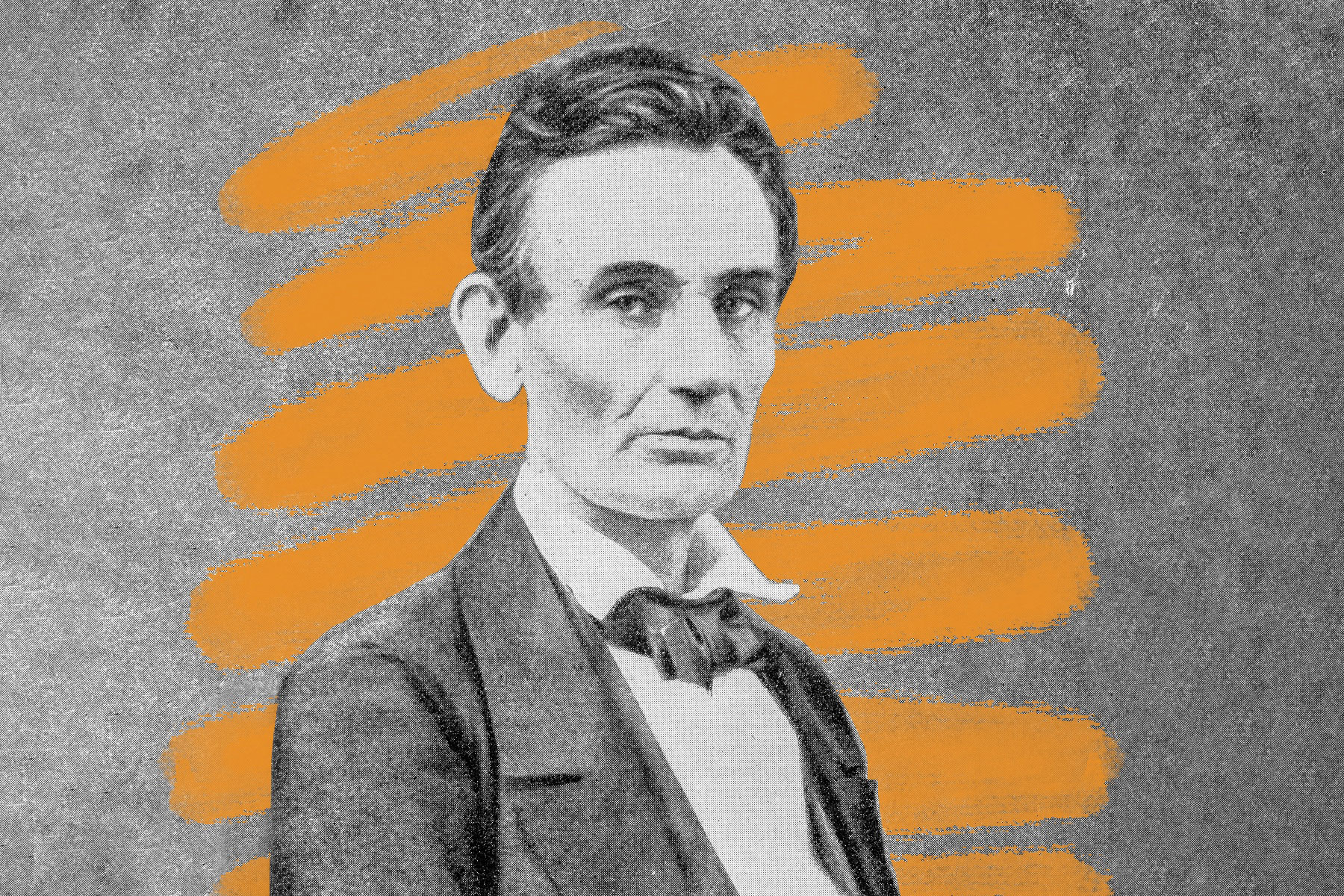
Abraham Lincoln was America’s tallest president at 6 feet, 4 inches, and he chose a signature accessory that made him appear even more imposing: a large, silk stovepipe hat. The hat was also a practical choice, giving Lincoln ample storage space for important documents right on top of his head.

In a scene in Steven Spielberg’s film Lincoln, Lincoln (played by Daniel Day-Lewis) speaks at a post office dedication, where he pulls his speech from his hat and returns it there when he’s finished speaking. Though the crowd laughs when the president says, dryly, “That’s my speech,” this isn’t just a Hollywood moment. Lincoln kept not only speeches in his hat, but also official government documents and personal letters. It is even said that he would dramatically throw papers from his hat in front of generals while making a point.

Lincoln himself confirmed this practice in writing, even blaming his hat for a delay in correspondence. In an 1850 letter to politician Richard S. Thomas, he wrote, “I am ashamed of not sooner answering your letter… my only apologies are, first, that I have been very busy in the U.S. court; and second, that when I received the letter I put it in my old hat, and buying a new one the next day, the old one was set aside, and so, the letter lost sight of for a time.”