


Rural Americans didn’t get mail at home until the late 19th century.

  • Rural Free Delivery carrier
Rural Free Delivery carrier
Credit: Len Collection/ Alamy Stock Photo
Author Timothy Ott

February 26, 2025

Love it?

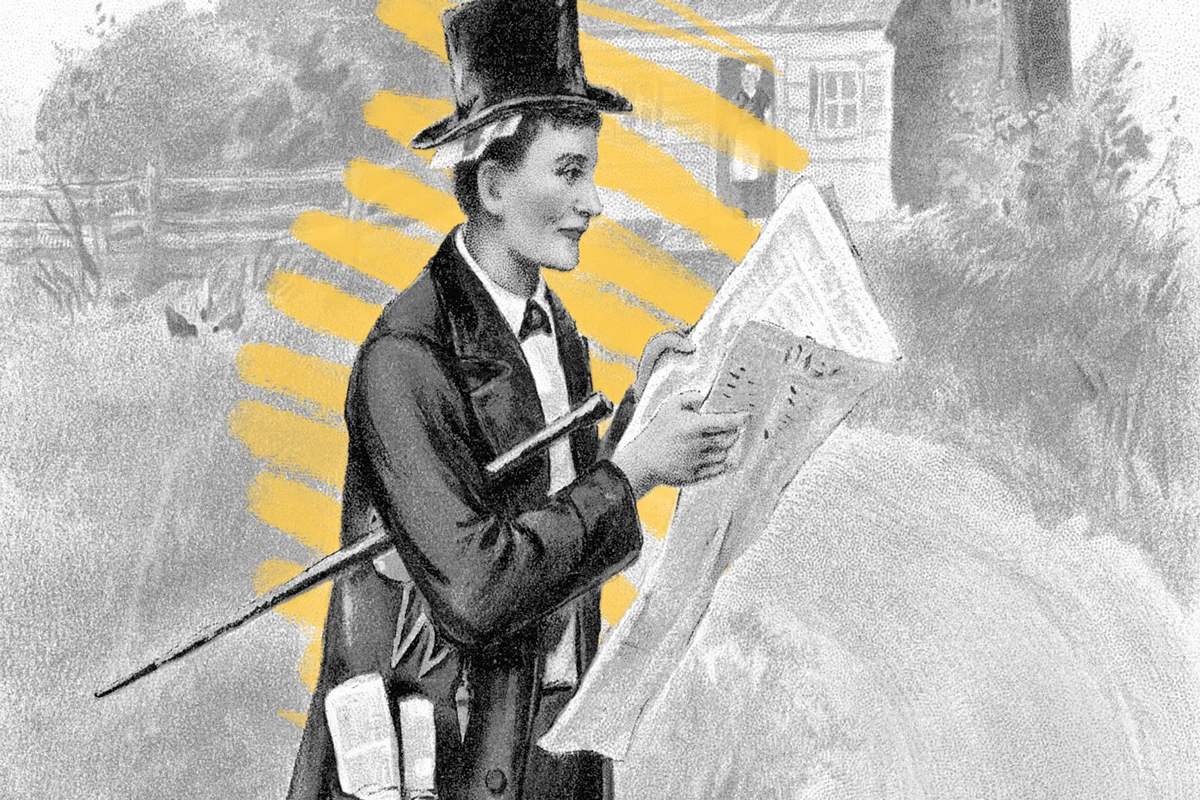
While residents of the biggest cities in the U.S. enjoyed the luxury of free mail delivery to their homes beginning in 1863, it was more than three decades before rural dwellers could depend on regular mail access that didn’t involve an inconvenient trek to the nearest town. Initial pushes to expand delivery service came from department store magnate John Wanamaker, who served as postmaster general in the early 1890s, and Georgia politician Tom Watson, who initiated a bill to fund the expansion in 1893. Finally, new postmaster general William L. Wilson agreed to launch an experimental rural free delivery (RFD) service in three West Virginia towns in 1896.

There were a few challenges that stood in the way of rural mail delivery, including the crude roads that made traveling between towns a harrowing experience in winter. What’s more, rural carriers, who were paid less than their urban counterparts, were expected to provide their own transportation. But as it turned out, Americans outside of busy urban centers were strongly yearning not only for mail delivery, but also for the connection to the world at large that carriers relayed via newspapers and basic social interaction. Thousands of residents of previously isolated areas rounded up the signatures needed to petition for RFD service, and rebuilt their local roads and bridges to ensure safer passageways. Following steady expansion of delivery routes into the next century, Americans of all but the most impossible-to-reach locales could rejoice when RFD was designated a permanent service effective July 1, 1902.

George Washington’s dentures were made from, among other things, hippo tusks.

  • George Washington’s dentures
George Washington's dentures
Credit: Maurice Savage/ Alamy Stock Photo
Author Timothy Ott

February 26, 2025

Love it?

When forming a mental picture of George Washington, many of us likely flip through the brain rolodex to recall a portrait of the founding father staring back at viewers in a stately manner or calmly seated before the Continental Congress. However, these cool-as-a-cucumber depictions marked a stark contrast to reality, as Washington was often in pain from the tooth problems he endured for most of his adult years.

Whether due to childhood neglect, poor diet, or genetics, Washington had his first tooth pulled at age 24 and spent the rest of his life trying to play catch-up with fastidious attention to oral health. It wound up being a losing battle, as he was saving his pulled teeth for use in dentures by his early 50s. While real human teeth were a prize component of dentures, Washington accepted sets that included animal teeth as well as lead-tin, copper, and silver alloys — though notably not wood, as is often erroneously reported. By the time of his inauguration in 1789, the first U.S. president was wearing a customized set of dentures, built by New York dentist John Greenwood, that featured hippopotamus ivory and an array of gold wire springs and brass screws to hold its human teeth in place.

Unfortunately, the access to cutting-edge dental technology didn’t translate to an improved quality of life for Washington, who dashed off a series of letters to his dentist in later years that complained of the discomfort and bulging caused by his dentures. Still, the general seemed to realize there was little that could be done in this longtime war of attrition within his mouth, and when his final real tooth needed to be pulled in 1796, he gifted it to Dr. Greenwood.

There were once three popes at the same time.

  • Three popes
Three popes
Credit: history_docu_photo (left), Bildagentur-online (middle), GL Archive (right)/ Alamy Stock Photo
Author Michael Nordine

February 26, 2025

Love it?

You’ve heard of The Young Pope and you’ve heard of The Two Popes, but did you know there were once three popes at the same time? The history of the papacy stretches back some 2,000 years and is full of oddities, few of which were more contentious than the Western Schism. It had its roots in the Avignon Papacy, a period that lasted from 1309 to 1376 and saw seven popes reside in Avignon rather than Rome. (Now a French prefecture, Avignon was then part of the Kingdom of Arles, which itself was part of the Holy Roman Empire.) Pope Gregory XI ended this period when he returned to Rome on January 17, 1377. After his death the following year, Romans rioted to bring about the election of a Roman pope.

Urban VI won, but proved so hostile to his cardinals that most of them regretted their decision and retreated to Anagni, Italy, to elect one of their own, Clement VII, as the antipope later that year. They declared Urban VI illegitimate because his election took place under duress. Clement VII resided in Avignon, with the two sides at a stalemate until the 1409 Council of Pisa elected a third pope, Alexander V, who was quickly succeeded by John XXII following his untimely — and, according to some, conspiratorial, death the following year. Yet another council followed, this one taking place in Constance, Germany, from 1414 to 1418, ending the conflict for good. The Pisan and Avignon popes were deposed, the Roman pope agreed to resign, and Martin V was elected the one true pope.

The “L.A. Times” spoiled the winners of the 12th Academy Awards.

  • Vivien Leigh at 12th Academy Awards
Vivien Leigh at 12th Academy Awards
Credit: Album/ Alamy Stock Photo
Author Michael Nordine

February 20, 2025

Love it?

The internet may have made spoilers more common, but it certainly didn’t invent them. Back in 1940, for instance, the Los Angeles Times accidentally revealed the winners of the 12th Academy Awards by publishing them before the end of the event on February 29, 1940. At the time, the Academy of Motion Picture Arts and Sciences gave certain newspapers the list of winners prior to the event on the condition that they not publish them until after the ceremony concluded. As the 8:45 p.m. edition of the L.A. Times came out before that happened, the news spread that Gone With the Wind had won Best Picture before it was officially announced.

The film won seven other Oscars that night, including Best Director for Victor Fleming, Best Actress for Vivien Leigh, and Best Supporting Actress for Hattie McDaniel, making her the first Black person to win an Academy Award. Other big winners that night included Robert Donat, who was named Best Actor for his performance in Goodbye, Mr. Chips, and Thomas Mitchell, whose turn in Stagecoach earned him the Best Supporting Actor statuette. The Wizard of Oz, also directed by Fleming in one of the most notable years a director has ever had, won two Oscars: Best Original Score and Best Original Song for “Over the Rainbow.” Following the early reveal, the academy stopped giving out the winners early and started the sealed-envelope tradition that continues to this day.

A Catholic nun was the first U.S. woman to earn a Ph.D. in computer science.

  • Catholic nun in church
Catholic nun in church
Credit: AnnaStills/ Shutterstock
Author Sarah Anne Lloyd

February 20, 2025

Love it?

Although computer science goes back to the 19th century, the academic field really came into its own in the early 1960s. The first United States graduates with advanced computer science degrees emerged in the middle of that decade, and the first two Ph.D. candidates graduated on the same day (from different schools) on June 7, 1965. One of the graduates was not only the first U.S. woman to earn a Ph.D. in the field, but also a nun: Sister Mary Kenneth Keller, who earned her degree from the University of Wisconsin-Madison. (The other candidate was Irving Tang of Washington University in St. Louis.)

Keller was born Evelyn Keller, and her name was changed to Mary Kenneth after she took her vows with the Sisters of Charity of the Blessed Virgin Mary (BVM) in 1933 at age 19. She was assigned to teach elementary and high school for the next 29 years, so she earned her academic degrees slowly so as not to interfere with her duties. She graduated from DePaul University with a bachelor’s degree in mathematical sciences in 1943 and a master’s in mathematics in 1952.

Keller was working as a high school math teacher in Chicago when she took her first computer workshop in 1961. “I just went out to look at a computer one day,” she told religious publication The Witness, “and I never came back.” By delegating mundane tasks to computers, Keller said, people could “aspire to higher levels of thinking.” After graduation, she founded the computer science department at Clarke University, a college founded by the BVM in Dubuque, Iowa. She also taught adult computer classes on the side, including tutoring the famed architect Buckminster Fuller, and helped develop educational modules for BASIC programming.

Irving Berlin and Disney helped shape Eisenhower’s “I Like Ike” campaign.

  • Irving Berlin, Eisenhower rehearse campaign song
Irving Berlin, Eisenhower rehearse campaign song
Credit: Bettmann via Getty Images
Author Timothy Ott

February 20, 2025

Love it?

Being the supreme commander of a victorious army is usually enough to make one a popular presidential candidate, but it can’t hurt to have the geniuses behind some of the world’s most beloved songs and films as prominent supporters. One such talent was Irving Berlin, who captured the widespread public approval for a Dwight D. Eisenhower presidency with his jaunty ditty “They Like Ike” in the 1950 musical Call Me Madam. In early 1952, with the NATO general still formally sitting out the race, Berlin unveiled a rewritten version of his show tune, titled “I Like Ike,” as part of a successful effort to push Eisenhower into the ring.

With Illinois Governor Adlai Stevenson emerging as the Democratic nominee, Eisenhower’s team sought an advantage by developing the first-ever presidential campaign TV commercials. One series of ads, created by crack advertising executive Rosser Reeves, featured the Republican candidate genially answering policy questions posed by people on the street. But the Eisenhower camp had an even stronger card to play, and they reached out to the Walt Disney Company for assistance in early autumn. 

The result was a pair of 20-second and minute-long animated commercials that featured people happily marching along to another “I Like Ike” jingle (this one not written by Berlin). Although Stevenson responded with his own series of sing-along and animated ads, the governor admittedly was no fan of this form of self-promotion, and he was never able to overcome the popularity deficit that allowed Eisenhower to cruise to an easy win in November 1952.

John Wilkes Booth’s brother saved the life of Abraham Lincoln’s son.

  • President Lincoln and family
President Lincoln and family
Stocktrek Images, Inc/ Alamy Stock Photo
Author Michael Nordine

December 7, 2023

Love it?

John Wilkes Booth will forever be infamous for assassinating the man widely regarded as the greatest president in American history, but not all Lincoln-Booth relations were strained. A year or two before Honest Abe’s death, in fact, Edwin Booth — the older brother of John and a prominent actor — saved the life of Lincoln’s son Robert Todd Lincoln, who was then in his early 20s. (The precise date is unknown, but the event is believed to have taken place in either 1863 or 1864.)

The younger Lincoln found himself on a crowded train platform in Jersey City, New Jersey, and was accidentally pushed off the platform as a train departed. “In this situation the train began to move, and by the motion I was twisted off my feet, and had dropped somewhat, with feet downward, into the open space, and was personally helpless,” Robert Todd Lincoln later wrote of the event that put him in the path of the oncoming train. It was then that Booth grabbed him by the coat collar, saving him. Booth was well known enough as an actor for Lincoln to recognize his rescuer and even thank him by name. In April 1865, the day after his brother assassinated Lincoln, Edwin vowed never to return to the stage — a short-lived promise, as he gave an acclaimed performance in the title role of Hamlet the following year.

In colonial America, lobster was an undesirable food fed to prisoners.

  • Lobster watercolor, 1600s
Lobster watercolor, 1600s
Credit: Penta Springs Limited/ Alamy Stock Photo
Author Nicole Villeneuve

February 20, 2025

Love it?

Lobster has long been considered a culinary delicacy, but in colonial America it was seen as the cockroach of the sea. When European settlers arrived in North America in the 17th century, New England’s shoreline was littered with the clawed crustaceans. In fact, lobsters were so prevalent, they were used by Indigenous inhabitants as fishing bait or fertilizer. To the colonists, they served as a simple and abundant source of protein. Though eating lobster was useful in times of food scarcity — such as in 1623, when Plymouth Colony Governor William Bradford lamented that the settlers’ best meal was a lobster or a piece of fish — it wasn’t exactly desirable. The seafood was mostly fed to those with little say in their diets, such as prisoners housed near the coast and indentured servants working off their contracts.

Some stories about lobster’s pauper past — such as that prisoners were punished by being fed lobster every day — have most likely been exaggerated over time. Rules were reportedly put in place to prevent inmates from receiving regular servings, while servants were said to write lobster limits into their contracts. But it’s certainly true that for nearly two centuries, lobster was anything but a luxury. Its reputation didn’t really begin to change until the 19th century, when improved transportation allowed fresh lobster to reach inland diners — many of whom, by the late 1800s, enjoyed vacationing in New England and saw the seafood as a rare treat. As demand grew, so did prices, and with better cooking techniques in the 20th century, lobster transformed from a lowly sea pest to a food fit for a king.

A full-scale replica of the Parthenon was built in Nashville.

  • Parthenon in Nashville
Parthenon in Nashville
Credit: vincentwalkerphotos/ Shutterstock
Author Bennett Kleinman

December 7, 2023

Love it?

The Parthenon — an ancient Greek temple built in Athens, Greece, between 447 and 432 BCE — is one of the most famous landmarks in the world. But many people don’t realize that a full-scale replica was built far across the world in Nashville, Tennessee, to celebrate the state’s Centennial Exposition in 1897. Nashville had earned the nickname “the Athens of the South” due to its commitment to culture and higher education, and opted to honor the moniker by recreating one of ancient Greece’s most famous landmarks.

At the time, the Parthenon in Greece had fallen into disrepair, and organizers in Tennessee aimed to replicate the building as it looked in its heyday. Crews laid the first stone in 1895, and worked for two years to construct the many pillars and other features of the 65-foot-tall temple. While the exterior of the final product was an exact replica, the building’s interior featured a different layout than its Greek counterpart, and was used to display the many paintings and sculptures that were acquired for the exposition.

Initially, Nashville’s Parthenon was built using temporary materials and the plan was for it to be destroyed after the event. However, it was beloved by locals, so the city decided to rebuild the landmark with permanent materials. The structure reopened in 1931, though it still lacked an important original feature: the 42-foot-tall statue of the goddess Athena, for whom the original Parthenon was dedicated. Nashville commissioned work on the statue in 1982 and it was unveiled in 1990. In 2002, the statue was gilded and painted, adding the final touches to the replica.

Model T Fords were all black because the paint dried faster.

  • Ford Model T, circa 1914
Ford Model T, circa 1914
Credit: Glasshouse Images/ Alamy Stock Photo
Author Sarah Anne Lloyd

February 12, 2025

Love it?

Picture a classic Ford Model T and you’ll likely envision not just its distinctive shape, but also its black color. The earliest Model Ts, which rolled out in 1908, actually came in several tones, including bright red. But founder Henry Ford soon developed a preference for the simple dark shade. According to his autobiography, Ford announced in 1909 that in the future, “any customer can have a car painted any color that he wants, so long as it is black.” His reason, however, had little to do with aesthetics. At the beginning of 1913, a single car took around 14 hours of labor to make. By October that same year, that figure dropped to 90 minutes, thanks to Ford’s groundbreaking moving assembly line. In 1914, 1,000 Model Ts were coming off the line every day, and there wasn’t enough space for multiple coats of paint and primer to dry on that many cars at the same time.

There’s a commonly held belief that Ford only produced black cars because black paint dried faster. That’s true to some extent, but the time-saving benefit was due to the kind of paint the company used, which was only available in dark colors. In 1914, Ford switched to oven-baked paint, which cured in 400-degree heat within an hour instead of air-drying, which required up to 24 hours. The oven-baked colors contained Gilsonite, a special kind of asphalt, which limited the color palette to black and very dark hues. Black was the cheapest to make and the most durable, and painting all the cars one color streamlined the process, too.

Model Ts were available only in black between 1914 and 1925. In 1926, colors started appearing in the Model T lineup once again after Ford overhauled its car designs and started using pyroxylin lacquer, a nitrocellulose-based coating.