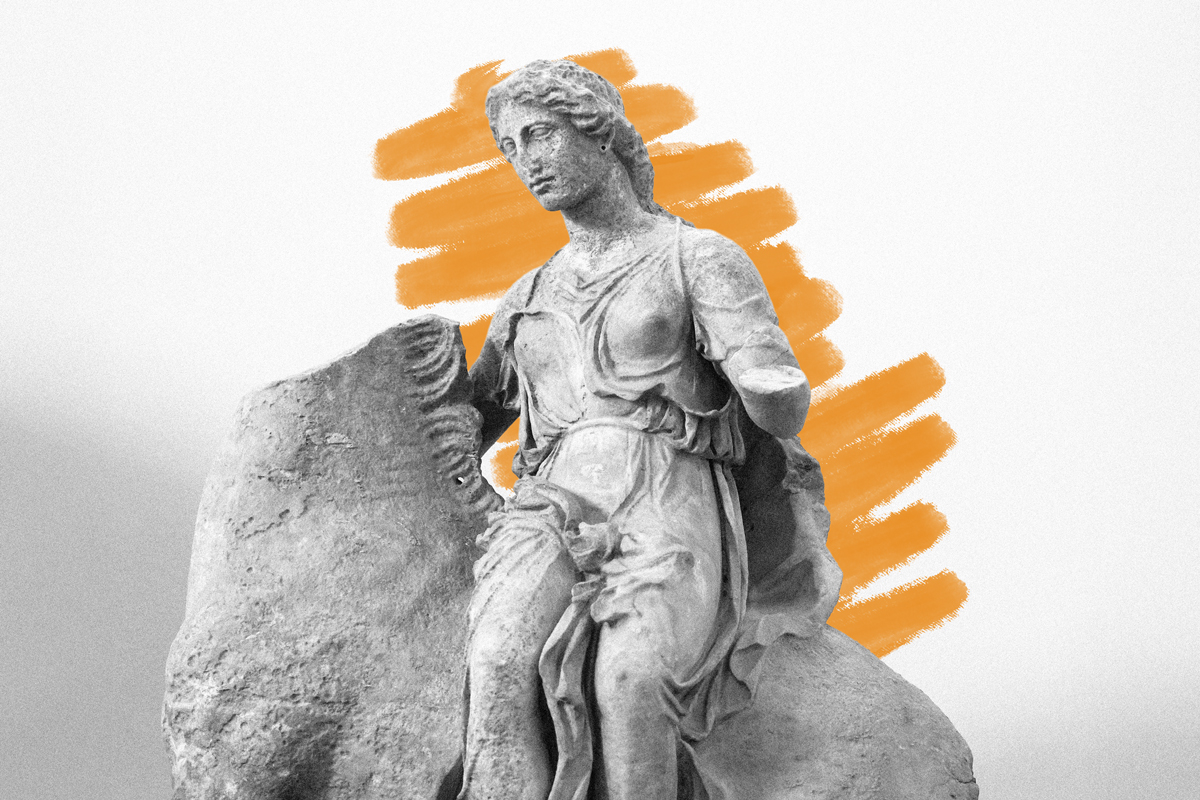


Ancient Persians reportedly debated big decisions twice: once drunk and once sober.

  • Ancient Persian carving
Ancient Persian carving
Credit: Ekaterina Khudina/ Shutterstock
Author Sarah Anne Lloyd

January 2, 2024

Love it?

Lavish, ritualized banquets were prevalent in the Achaemenid Empire, also known as the First Persian Empire, a dynasty of ancient Persia (modern-day Iran) that ruled from 550 to 330 BCE. Wine was a key part of these events, poured from ornate silver and gold vessels, likely by highly knowledgeable sommeliers. According to the Greek historian Herodotus, who lived during the time period, wine’s role in civic life went beyond simple indulgence. He claimed that ancient Persians debated each decision twice: once drunk and once sober, and not necessarily in that order. 

“It is their custom to deliberate about the gravest matters when they are drunk,” Herodotus wrote in his texts on Greco-Persian conflicts. “If, being sober, they still approve it, they act on it, but if not, they drop it. And if they have deliberated about a matter when sober, they decide upon it when they are drunk.” Notably, Herodotus is the only source claiming this custom exists, and modern historians are torn on the veracity of the passage. Some consider it to be accurate, noting that, for a Greek writer, Herodotus is surprisingly impartial toward Persians. Others believe it to be an exaggeration that paints ancient Persian kings as reckless and irrational — although a moderate amount of wine could have been a part of any decision-making process.

Whether drunk discussion and sober editing were standard procedure or not, the Achaemenid Empire was wildly successful for nearly two centuries. It is one of history’s largest empires, reaching parts of Europe’s Balkan Peninsula as well as modern-day India and Egypt, and was known for its intricate architecture, prized art, and culturally diverse citizenry.

It rained heavily on Earth for a million years.

  • Dinosaurs in the Triassic Period
Dinosaurs in the Triassic Period
Credit: Mohamad Haghani/ Alamy Stock Photo
Author Michael Nordine

April 9, 2025

Love it?

If you think Seattle in November is rainy, try living through the Carnian Pluvial Episode. Taking place some 232 million years ago, during the Triassic Period, it was a time of intense rainfall that lasted between 1 million and 2 million years. The prolonged, world-altering event was first discovered by geologists in the 1970s and ’80s. While studying ancient carbonate rocks in such far-flung locations as the Eastern Alps and the United Kingdom, they came across evidence of a deposit known as siliciclastic sedimentation that suggested unusually wet conditions. When it rains, it pours.

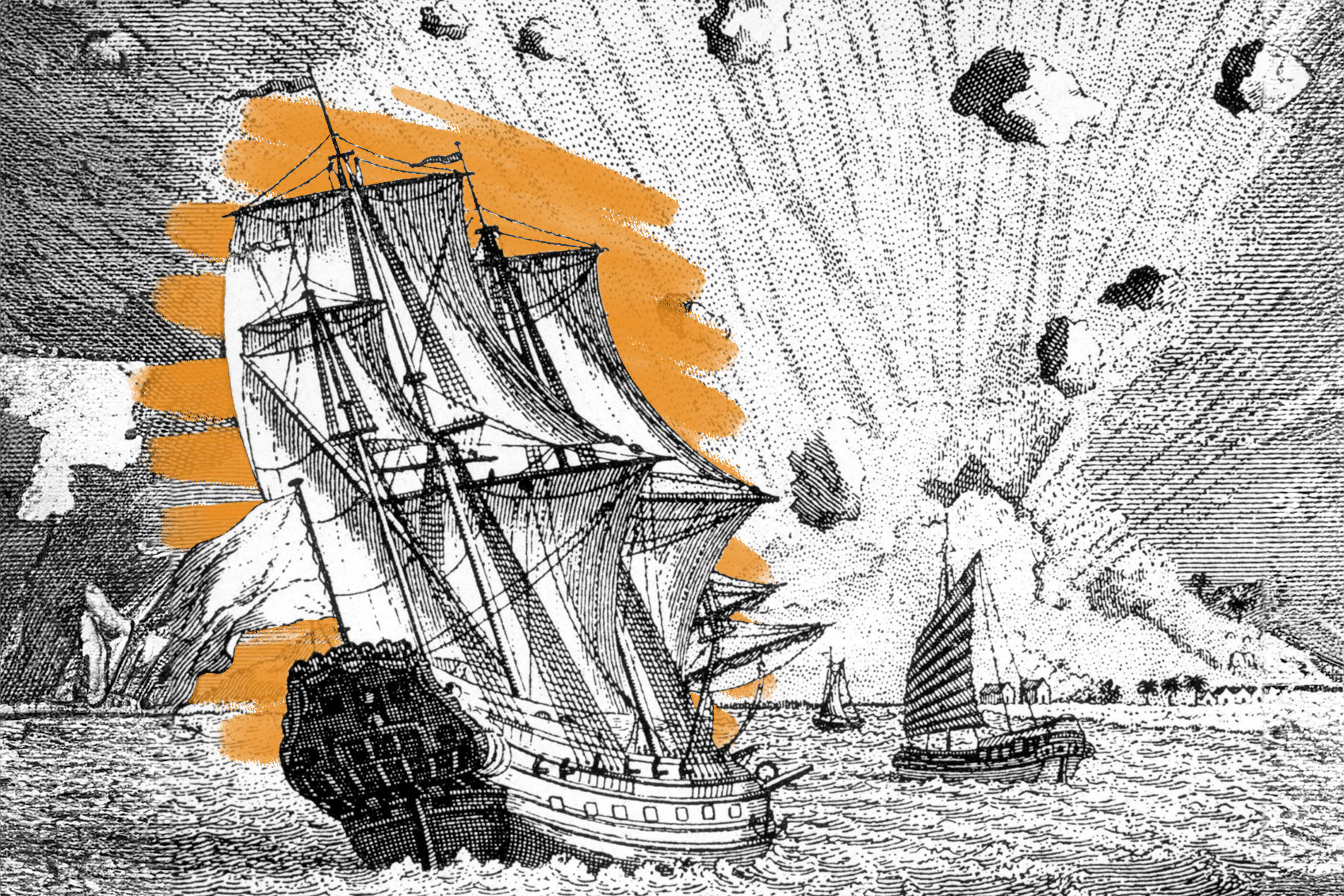
This period was preceded by an era of arid weather and coincided with the rise of the dinosaurs; the lush conditions that resulted helped the dinos thrive for another 150 million years or so. The Carnian Pluvial Episode wasn’t without its downsides, however. It appears to have been triggered by a series of massive volcanic eruptions that led to acid rain and an influx in greenhouse gases, which eventually brought about rapid climate change and mass extinctions.

The world’s largest underground city housed more than 20,000 people.

  • Derinkuyu underground city
Derinkuyu underground city
Credit: Todor Stoyanov/ Alamy Stock Photo
Author Darren Orf

January 2, 2024

Love it?

Building an 18-level underground city may sound like the project of an advanced future society, but the world’s largest underground metropolis was actually constructed around 1200 BCE. The ancient subterranean city of Elengubu, now called Derinkuyu, lies in the semi-arid region of Cappadocia in modern-day Turkey. Tourists can meander tunnels and walk among subterranean rooms, stables, schools, wineries, and even a chapel — all underground. At its peak, during Islamic raids on the Byzantine Empire in the seventh century, Derinkuyu housed up to 20,000 people. 

While the origin of the site remains a mystery, experts theorize that the Hittites, a superpower of the Bronze Age, likely built the first few levels while under attack from the Phrygians, who expanded the project when they moved into Central Anatolia after the Hittites’ collapse. Although the Phrygians were skilled architects, the surrounding landscape also aided in this ambitious construction effort. Due to the area’s semi-arid nature, Cappadocia’s soil is easily malleable and its rock easily moldable. Three volcanoes — Mount Erciyes, Mount Hasan, and Mount Melendiz — formed the region millions of years ago, and the pyroclastic material found in the area could be carved with simple tools and little effort. Today, for 60 Turkish lira (about $2), visitors can once again descend into this subterranean world and experience life underground.

The “sacred chickens” of ancient Rome made predictions about the future.

  • Roman politician with a sacred chicken
Roman politician with a sacred chicken
Credit: history_docu_photo/ Alamy Stock Photo
Author Sarah Anne Lloyd

April 9, 2025

Love it?

One of the oldest religious practices in ancient Rome was augury, or reading signs from the gods through the behavior of birds, the idea being that the birds were deliberate divine messengers. Augurs, or bird divination experts, would sometimes draw diagrams on the ground to help them interpret behavior from owls, woodpeckers, crows, and other wild birds. 

These avian messages, called auspices, were taken extremely seriously, but wild birds weren’t always around to deliver them — so eventually, ancient Roman priests started keeping “sacred chickens” that they could call upon at any time. These fortunetelling chickens were especially prized for military decisions, and would be consulted before any major moves to make sure the gods approved.

When their services were required, the chickens would be released from their cages and fed so that augurs could interpret their eating patterns. Broadly, a chicken refusing to eat was a very bad sign, while a chicken gobbling up its food while stomping its feet was a very good one.

The most notable cautionary tale about not heeding the fowls’ warnings came in 249 BCE. According to the ancient scholar Cicero, one Roman consul commanding a fleet of ships dismissed some bad omens before going into battle. When he was told the chickens wouldn’t eat, he ordered them thrown overboard, commenting, “Let them drink.” He was soundly defeated, and later recalled by the Roman Senate.

Bathrooms didn’t exist until the 19th century.

  • Chamber pot beneath bed
Chamber pot beneath bed
Credit: Pez Photography/ Alamy Stock Photo
Author Anne T. Donahue

January 3, 2024

Love it?

As difficult as it is to imagine, access to a full bathroom wasn’t a household norm until well into the 19th century. Though the flush toilet was invented in England in 1596, the general public still used chamber pots and outhouses for centuries after, as most houses didn’t have indoor plumbing. It wasn’t until the end of the 1800s — after inventor Alexander Cumming improved toilet design with the S-bend, which trapped smells — that toilets became common in homes, especially in upper-class households, and even then they were initially kept separate from the bathtub and sink, in a room referred to as the “water closet.” Noting the lack of sanitation caused by pipes and traps running from room to room, health care professionals began urging architects to streamline their plumbing into a single location. Architects relented, and the “bathroom” was born.

By the late 1800s, most upper-class homes in the United States and the U.K. were outfitted with a tub, toilet, and sink, and middle-class homes followed soon after. In the wake of the First World War, bathrooms became increasingly common in working-class households, but still weren’t universal in the United States until the middle of the 20th century. Advances in plumbing led to the mass-production of the affordable, two-piece toilets still used today, and made the bathroom a household staple.

The British once sent a spy to China to steal secrets about tea.

  • Botanist Robert Fortune
Botanist Robert Fortune
Credit: Heritage Images/ Hulton Archive via Getty Images
Author Michael Nordine

April 6, 2025

Love it?

What one historian called the “greatest single act of corporate espionage in history” wasn’t in search of stock market tips or a coveted algorithm. It was about tea, which by 1800 was the most popular drink among the British — something of a problem for the empire, as all tea was produced in China at the time. And so the English did something at once sinister and cunning: They sent a botanist to steal tea seeds and bring them to India, a British colony at the time. The thief in question was Robert Fortune, who was recruited by the East India Trading Company for the job.

This leafy skulduggery inspired the aforementioned historian Sarah Rose to write For All the Tea in China: How England Stole the World’s Favorite Drink and Changed History. The book details how Fortune not only came into possession of precious seeds but also learned the tools of the trade: how tea leaves were cultivated, dried, processed, and manufactured. The plan succeeded, with India overtaking China as the world’s largest tea producer within Fortune’s lifetime. China eventually reclaimed that title, but it took more than a century, and India remains the second-largest today.

The U.S. once banned sliced bread.

  • Old bread slicer
Old bread slicer
Credit: Heinz Jacobi/ Alamy Stock Photo
Author Bennett Kleinman

January 2, 2024

Love it?

Sliced bread was first sold commercially in 1928 and quickly grew into a culinary sensation — until its rise came to an abrupt halt when it was briefly banned 15 years later. On January 18, 1943, amid World War II, U.S. Secretary of Agriculture Claude R. Wickard announced a ban on selling sliced bread in an effort to conserve wartime resources. The government hoped this ban would preserve the country’s supply of alloyed steel (used to build slicing machines) and wax paper (used to both wrap sliced bread, which required thicker wrapping than unsliced loaves, and protect military equipment from the elements). It was a common practice to ask Americans back home to ration goods in the name of the war effort, but the ban on sliced bread was met with furious and immediate backlash.

U.S. housewives in particular were dismayed over the ban. One woman named Sue Forrester wrote to The New York Times, “I should like to let you know how important sliced bread is to the morale and saneness of a household.” While hotels and restaurants were given a 60-day grace period to prepare, bakeries weren’t so lucky, and saw sales decline up to 10% while facing sizable fines for defying the ban. Given the ration’s widespread unpopularity, many government bureaucrats played dumb and refused to admit being involved, pointing fingers at others instead. Wickard finally rescinded the ban on sliced bread on March 8, 1943, claiming, “The savings are not as much as we expected,” while conveniently neglecting to acknowledge any public outcry.

The oldest D-Day soldier was a president’s son.

  • Roosevelt Jr. in uniform
Roosevelt Jr. in uniform
Alpha Stock/ Alamy Stock Photo
Author Michael Nordine

December 19, 2023

Love it?

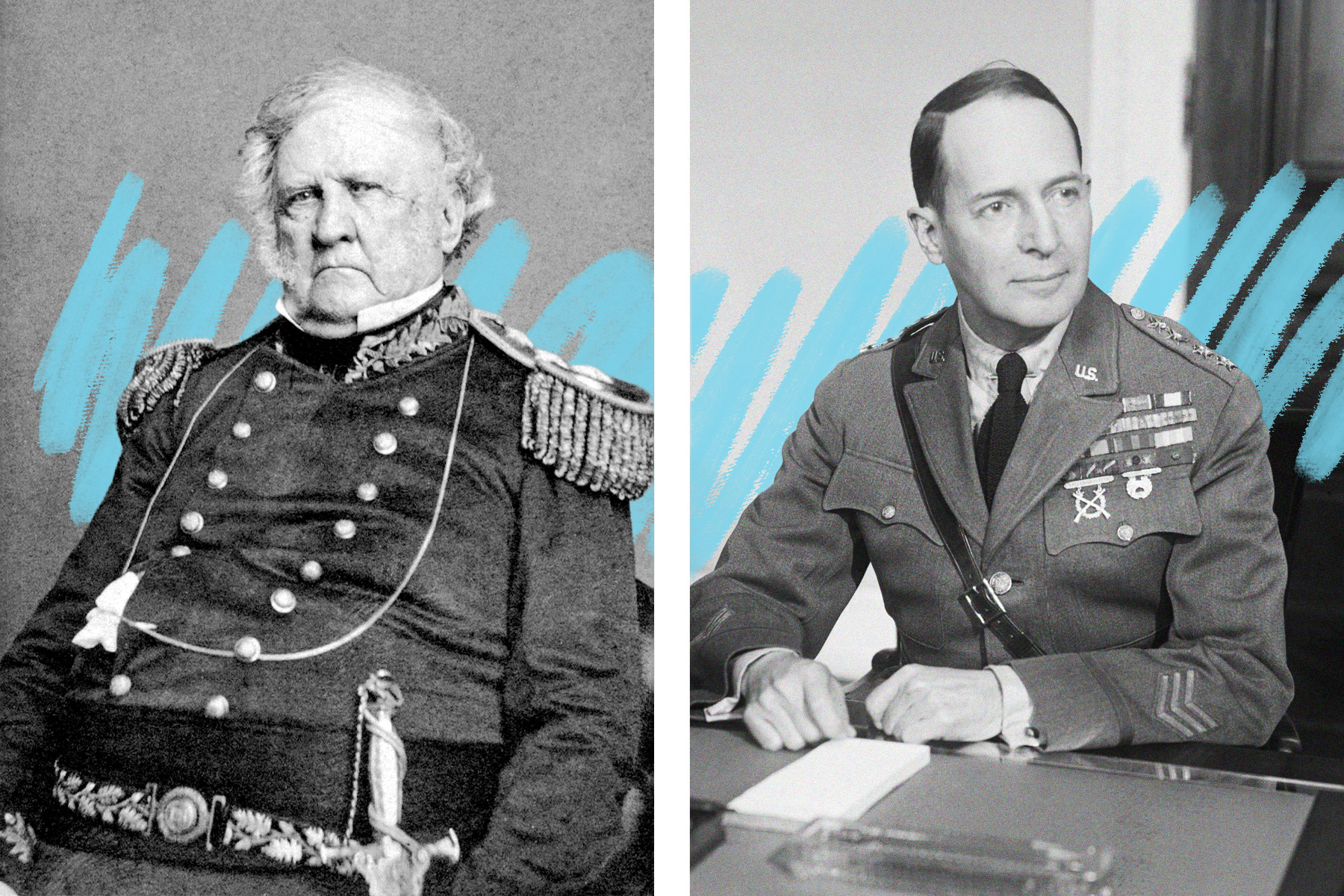
More than 130,000 Allied troops landed at Normandy as part of D-Day, but only one of them was the son of a former U.S. president: Theodore Roosevelt Jr., who also held the distinction of being the oldest soldier to deploy. He was born on September 13, 1887, making the brigadier general 56 years old when he asked to land with the first wave. After two verbal requests were denied, Roosevelt submitted a written petition, in which he wrote, “I personally know both officers and men of these advance units and believe that it will steady them to know that I am with them.”

High command finally relented, and Roosevelt landed on Utah Beach equipped with his walking cane and service pistol on June 6, 1944. Later, soldiers from his unit indeed credited his “calm and humorous demeanor” with helping them push through. Roosevelt was already a decorated veteran at this point, having served with distinction in World War I, but his military career was cut short when he suffered a fatal heart attack barely a month after D-Day. General George Patton hailed him as one of the bravest men he ever knew, and Roosevelt received a posthumous Medal of Honor on September 21, 1944. His son Quentin Roosevelt II stormed Omaha Beach on D-Day, making them the only father-son duo to take part in the Normandy landings.

The first toy advertised on TV was Mr. Potato Head.

  • Mr. Potato Head
Mr. Potato Head
Robert Linder/ Unsplash
Author Bennett Kleinman

January 2, 2024

Love it?

While toy commercials are ubiquitous today, they were virtually unheard of before April 30, 1952. That day, a television ad for Mr. Potato Head aired for the first time. George Lerner created an early version of the toy tuber in 1949, and sold the rights to Hassenfeld Brothers (which became Hasbro) three years later. The original package contained 30 plastic accessories, including facial features, hands, and feet, which could be affixed to any real potato or similar vegetable. What transformed the toy into a major success, however, was the innovative TV advertising campaign that soon followed.

The inaugural Mr. Potato Head commercial was the first of its kind to advertise directly to children rather than their parents, revolutionizing the marketing industry. The ad featured a cartoon mascot talking to kids about how to play with Mr. Potato Head and all the fun they could have. More than a million kits were sold in the first year, and the Mr. Potato Head line soon expanded to include a Mrs. Potato Head, Brother Spud, Sister Yam, and many additional parts. When new government regulations in the 1960s forced the company to pivot away from the sharp accessories necessary to puncture real potatoes, Hasbro began selling a plastic potato body with premade holes.

Image Ad

George Washington wrote reviews of early American inns.

  • Portrait of George Washington, 1846
Portrait of George Washington, 1846
Credit: American portraiture/ Alamy Stock Photo
Author Michael Nordine

April 5, 2025

Love it?

When he wasn’t busy winning the Revolutionary War and not telling lies, George Washington had a thoroughly modern pastime: reviewing American inns. The founding father penned a series of these assessments early in his presidency, a time when he swore not to accept invitations to stay in his fellow Americans’ private residences while traveling. This was not because he didn’t enjoy home-cooked meals, but because he didn’t want to “incommode any private family,” as he wrote in a 1791 letter, and also to avoid any appearance of political favoritism. This necessitated patronizing inns during two major trips — one to New England and one to the South — as he got the lay of the land and greeted citizens, who he hoped would think of him as a man of the people.

Most of these accommodations, according to his extensive writings, were hardly five-star experiences. One he described as “not a good House” situated near an “intolerable” road, while at another “the entertainment was not very inviting.” Conditions were especially dire in the rural South, where, Washington wrote, he failed to find “a single house which has anythg. of an elegant appearance.” He fared better in Boston, where he noted a widow kept a “very decent & good House” and found that Delaware’s Buck Tavern was “a better house than the appearances indicate.”