

The first known photograph took at least eight hours to capture.

  • Reproduction of the world’s oldest photograph
Reproduction of the world's oldest photograph
Credit: dpa picture alliance archive/ Alamy Stock Photo
Author Sarah Anne Lloyd

May 27, 2025

Love it?

In the 1820s, French inventor Nicéphore Niépce was experimenting with using light to create and copy lithographs, and found success with bitumen of Judea, a kind of photosensitive asphalt. After spreading a mixture of the asphalt and lavender oil on a pewter plate and exposing it to sunlight, he found that the parts exposed to light would harden, and the parts that were in shadow would wash away easily.

Niépiece decided to expose one of his plates to a camera obscura — a device that projects real-time (but impermanent) images onto a surface. Using this method, he captured the scene outside his second-story window in 1826. Titled “View From the Window at Le Gras,” it’s now considered the first known photograph.

But because this photographic method, which he called heliography, relied on asphalt hardening, it took a really long time to capture. The exact exposure time of the first known photograph is lost to history, but experts estimate eight hours on the low end. If you ask the University of Texas Harry Ransom Center, the current stewards of the heliograph, it likely took several days

The first practical photograph, the daguerreotype, which was exposed onto plates of silver, came along more than a decade later in the late 1830s. It was popular in portraiture and a significant improvement on the heliograph, although it still required its subjects to sit for the better part of a minute, so people had to hold very still. 

The Apollo 11 astronauts signed autographs as life insurance policies.

  • Apollo 11 astronauts
Apollo 11 astronauts
Allstar Picture Library Ltd/ Alamy Stock Photo
Author Bennett Kleinman

January 30, 2024

Love it?

The Apollo 11 mission was a dangerous endeavor that put the crew’s lives at risk, a fact not lost on astronauts Neil Armstrong, Buzz Aldrin, and Michael Collins. Aware of the risks ahead, the crew of the historic moon mission signed autographs as a way to provide for their families in case of disaster. At the time, standard life insurance policies were extremely expensive for interstellar missions, and would not have adequately supported the astronauts’ families. So, lacking any traditional protection, the astronauts cleverly realized that there was a market out there for signatures from American heroes such as themselves.

The three men entered quarantine roughly a month ahead of the July 1969 mission to the moon. During their free time, they signed hundreds of autographs known as “covers” — signed envelopes postmarked with important dates, such as the date of the moon landing itself. The covers were delivered to the astronauts’ families, who held onto them in the event that tragedy struck. Thankfully, the Apollo 11 crew returned unharmed, so these “insurance policies” weren’t sold. The crews of Apollo 12 through 16 continued this tradition until 1972, though all of those crafts also returned safely. In the 1990s, covers from the Apollo 11 mission began appearing in memorabilia auctions and commanded incredible value, some selling for tens of thousands of dollars.

Ben Franklin wrote essays for his brother’s newspaper as a widow named “Silence Dogood.”

  • Ben Franklin in his brother’s print shop
Ben Franklin in his brother's print shop
Credit: ClassicStock/ Alamy Stock Photo
Author Michael Nordine

May 27, 2025

Love it?

Among all the Founding Fathers, Benjamin Franklin had the most interesting extracurricular activities. Before he studied electricity or invented bifocals, America’s first postmaster general had a habit of writing essays for his brother’s Boston newspaper under the pseudonym “Silence Dogood.” The 16-year-old posed as a widow because the writing he submitted under his own name was rejected by the New-England Courant, which his older brother James published. Silence had much to say about a variety of subjects, with her commentary touching on such subjects as religion and politics, and she was an instant hit with the weekly paper’s readers — she even received marriage proposals.

Fourteen of these essays were published beginning in 1722, but all good things must come to an end. After slipping Silence’s correspondence under the Courant’s door for several months, Franklin eventually revealed his true identity. His brother was none too pleased with this deception, having warned the younger Franklin against growing too vain in the wake of the essays’ warm reception, and the fallout played a part in Franklin’s departure for Philadelphia — the city where he lived for the rest of his life.

The “D” in D-Day doesn’t really stand for anything.

  • U.S. troops on Omaha Beach
U.S. troops on Omaha Beach
Credit: CBW/ Alamy Stock Photo
Author Kerry Hinton

May 7, 2024

Love it?

On June 6, 1944, the largest land, sea, and air invasion in the history of the world took place on the beaches of Normandy, France. It was the first phase of Operation Overlord, an Allied plan to land hundreds of thousands of troops into French enemy territory, then move east and liberate the rest of Nazi-occupied Western Europe. The planners of the operation gave it a simple name: D-Day. But what exactly does the “D” stand for? 

The simplest and most widely cited explanation is that the “D” in D-Day stands for “day,” essentially a code indicating a date to be determined (or concealed from enemy forces). “It simply signifies the day that the invasion will launch and puts all the timetables into play,” Keith Huxen, a historian at the National WWII Museum, told TIME magazine in 2019. Military history also supports this theory. In the field, the U.S. Army began substituting the letters “D” and “H” for “day” and “hour” as early as World War I. The days and hours leading up to or following an operation, meanwhile, were often noted with plus and minus signs, such as “H-2” or “D+3.”

Not everyone has agreed with this interpretation, however. In his book The Facts on File Encyclopedia of Word and Phrase Origins, author Robert Hendrickson wrote that “the French maintain the ‘D’ means ‘disembarkation,’ still others say ‘debarkation,’ and the more poetic insist D-Day is short for ‘day of decision.’” Dwight D. Eisenhower, who served as supreme commander of the Allied forces in Europe during Operation Overlord, added to the confusion with his explanation. War Slang author Paul Dickson noted that in 1964, Eisenhower instructed his executive assistant to answer a letter he received about the meaning of D-Day by stating “that any amphibious operation has a ‘departed date’; therefore the shortened term ‘D-Day’ is used.” In fact, there were multiple “D-Days” during World War II, and other single-letter designations were used as well, such as M-Day for “mobilization.”

Was the Leaning Tower of Pisa Ever Straight?

  • The leaning tower of Pisa
The leaning tower of Pisa
dra-photos/ iStock
Author Bennett Kleinman

January 30, 2024

Love it?

Italy’s Leaning Tower of Pisa lived up to its name right from the start, as it began to tilt early on in the construction process. The foundations were laid on August 9, 1173, but work came to a halt as builders reached the fourth floor in 1178. This was in part because the iconic landmark began leaning slightly atop the muddy soil — which was too soft to begin with and settled unevenly under the tower’s weight — and in part due to an ongoing war between Pisa and nearby city-states. When construction recommenced in 1272, the tower was tipped at a roughly 0.2-degree angle, though the soft ground had compacted enough that work could continue. In order to compensate for the lean, new floors were built with one side taller than the other, thus giving the tower a unique curve, though the structure continued to slowly tilt even further.

Construction of the tower’s bell chamber began in 1360, by which time the tower was tilting at a 1.6-degree angle. The Leaning Tower of Pisa was officially completed in 1372, though it took several centuries for its seven giant bells to be installed. Centuries later those bells were stilled, as experts feared that their repeated movement was contributing to the tower’s increasing tilt. By 1990, the tower leaned 5.5 degrees to the side, necessitating the installation of counterweights. While the Leaning Tower of Pisa was originally designed to stand nearly 197 feet tall, it now only reaches a height of 186 feet at its highest point, and 183 feet at its lowest.

The U.S. used potatoes to attack a submarine during World War II.

  • USS O’Bannon in 1942
USS O'Bannon in 1942
Credit: Smudge Whisker/ Alamy Stock Photo
Author Michael Nordine

May 27, 2025

Love it?

Starchy vegetables aren’t usually top of mind when thinking of weapons of war, but potatoes played a vital role in a World War II battle — and not by feeding soldiers. Everyone’s favorite tuber took a break from being boiled, mashed, and stuck in a stew on April 5, 1943, when the crew of the USS O’Bannon was alarmed to see a Japanese submarine approaching. According to U.S. Navy Commander Donald J. MacDonald — who wrote that, prior to the incident, “the sea was calm; there was no moon; the night was very dark; the sky was overcast and there were intermittent squalls” — the vessel was first spotted at a distance of 7,000 yards traveling at a speed of 10 or 11 knots.

After initially engaging with depth charges and 20 mm guns, the O’Bannon was eventually close enough to its target for sailors to begin throwing objects at it — including, for lack of a better option, potatoes recovered from their deck lockers. One version of the story suggests the Japanese soldiers on the deck of the submarine, believing the spuds were actually hand grenades, panicked by throwing them both overboard and back at their attackers. Their efforts were for naught: The submarine sank and the Americans were victorious. Because the potatoes used were from Maine, the Maine Potato Growers Association presented the O’Bannon with a plaque “for their ingenuity in using our now proud potato” to sink an enemy vessel. The plaque remained on the ship until it was decommissioned in 1970.

Egyptian pharaohs had to prove they were fit to lead.

  • Pharaoh Ramses II
Pharaoh Ramses II
Perseomed/ iStock
Author Darren Orf

January 22, 2024

Love it?

Egyptian pharaohs were seen by their subjects as gods — but sometimes, those “gods” had to prove their worth. This occurred at a jubilee-style celebration meant to reaffirm an aging ruler’s kingship, known as the Heb-Sed or Sed festival. The tradition dates back to the first dynasty of ancient Egypt, around 3000 BCE, and usually took place in the 30th year of a pharaoh’s reign (and every three years after that). The event was filled with sacrifices, crownings, and other lavish displays; the Heb-Sed of Amenhotep III, for instance, featured the construction of temples and colossal sculptures all along the Nile valley. But the main event was a footrace run by the pharaoh — dressed in a kilt with an attached animal tail — to demonstrate their physical fitness. 

According to Egyptologists, ancient Egyptians likely related the health of their ruler to the overall health and virility of the kingdom. If a pharaoh couldn’t complete the race, it signaled that it was time to make way for a younger, healthier leader. Of course, thousands of years before modern medicine, 30 years was a long lifespan, and only a small percentage of pharaohs lived long enough to celebrate a Heb-Sed. Not all of them passed the test: Although a simple footrace may seem like a relatively easy method for reaffirming your reign, pharaohs were not nearly as svelte or athletic as hieroglyphics and ancient carvings would have us believe. Many kings and queens were plagued with various maladies caused by inbreeding, as well as obesity: A pharaoh’s diet, often filled with beer, wine, bread, and honey, contained an awful lot of sugar.

The first American alarm clock could ring only at 4 a.m.

  • Antique clock, circa 1900
Antique clock, circa 1900
Credit: DEA / G. NIMATALLAH/ De Agostini via Getty Images
Author Sarah Anne Lloyd

May 22, 2025

Love it?

In 1787, clockmaker Levi Hutchins of Concord, New Hampshire, invented what may have been the world’s first working mechanical alarm clock, and was certainly the first in the United States. But despite Hutchins’ long career building and selling timepieces, this alarm clock wasn’t something he actually patented or sold. He just wanted to wake up at 4 a.m., and felt out of sorts if he slept any later. So he took the assembly from one of his clocks and added a small gear that would trigger a bell at that precise time. 

According to The People’s Almanac, Hutchins said just having the idea for an alarm clock was the hard part, and “it was simplicity itself to arrange for the bell to sound at the predetermined hour.” Because the alarm was built directly into the mechanism of the clock, it wasn’t adjustable or snoozable — useful only for someone who wanted to wake at that exact wee hour of the morning every day. Notably, Hutchins did not live alone at the time — he shared a home with his brother Abel, and married just a couple of years later — so hopefully he kept the volume at a reasonable level, at least.

The Salem witch trials weren’t actually finished until recently.

  • Elizabeth Johnson Jr. witch trial
Elizabeth Johnson Jr. witch trial
Pictorial Press Ltd/ Alamy Stock Photo
Author Rachel Gresh

January 18, 2024

Love it?

In the woods of Salem, Massachusetts, there is a summit called Gallows Hill, where the darkest days of the town’s history occurred. Here, nearly 20 people lost their lives by execution after being accused of witchcraft during the infamous Salem witch hunts of 1692 and 1693. One of the accused, a 22-year-old woman named Elizabeth Johnson Jr., was pardoned from execution but not cleared of charges until 2022, leaving her name sullied for more than three centuries.

Toward the end of the witch-hunting frenzy, the governor began sparing the accused from execution, including Johnson. In 1711, colonial Massachusetts lawmakers passed an act that reversed the witchcraft convictions of 22 individuals, but Johnson’s name wasn’t among them. She petitioned to have hers added, and it is unclear why she was left out. Legislation clearing additional names continued to trickle in over the decades, as recently as 1957 and 2001, but Johnson was never listed. Finally, in 2021, students at North Andover Middle School (in the town adjacent to Salem) learned about the matter in class and urged their teacher to take action. The teacher alerted state Senator Diana DiZoglio, who sponsored an amendment to clear Johnson’s name. On May 26, 2022, 329 years after she was wrongly accused, Elizabeth Johnson Jr. was finally exonerated, making her the last known person convicted of witchcraft in Salem to be cleared of the charges. 

Thomas Jefferson and John Adams stole a piece of Shakespeare’s chair.

  • Shakespeare’s wooden armchair
Shakespeare's wooden armchair
Credit: Andreas von Einsiedel/ Alamy Stock Photo
Author Sarah Anne Lloyd

May 22, 2025

Love it?

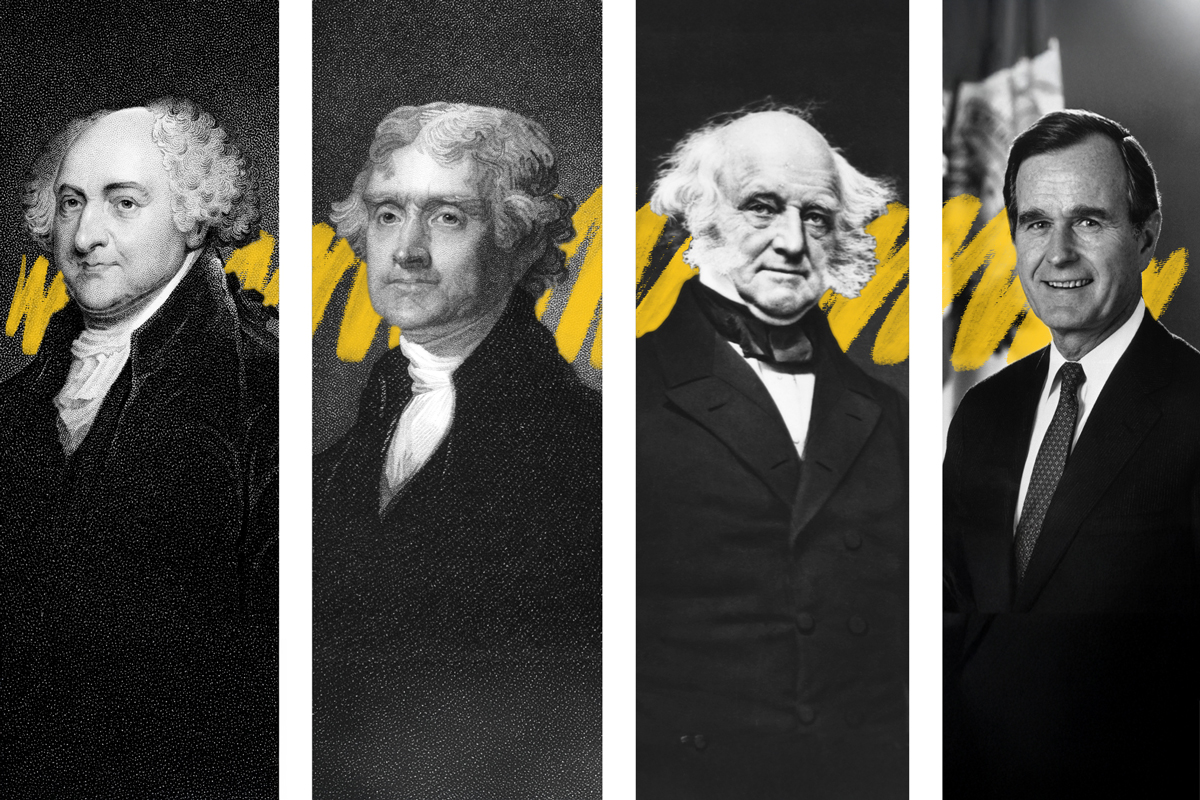
In April 1786, Thomas Jefferson and John Adams, who were close friends despite their political differences, took a horse and carriage on a weeklong tour of England. Both were great admirers of William Shakespeare, and one of their first stops was the Bard’s hometown of Stratford-upon-Avon. According to Abigail Adams, Jefferson was so moved that he kissed the ground of the house where Shakespeare was born — although he also complained about the entrance fees, and Adams called the house “small and mean.”

Among the many relics at the house was Shakespeare’s own chair, where the poet and playwright supposedly sat and wrote his great works. When the founding fathers left, they sliced off a piece of the chair to take home as a souvenir. (A chip of Shakespeare’s chair — which may or may not be the one that Jefferson and Adams shaved — is currently on display at Monticello.)

In their defense, this was a fairly normal thing to do at the time. As Adams wrote in his diary, “We cutt [sic] off a Chip according to the Custom.” Before the ubiquity of gift shops and commemorative snow globes, tourists would scavenge for whatever souvenirs they could find, often pilfering little bits of significant objects or buildings. In fact, Jefferson’s own gravestone had to be removed and replaced because too many visitors wanted to take a piece home.