



Alexander the Great was a student of Aristotle.

  • HF_FOD_alexander-aristotle_13994b
Alexander and Aristotle
Credit: World History Archive/ Alamy Stock Photo
Author Bennett Kleinman

March 20, 2024

Love it?

Around 343 BCE, King Philip II of Macedon called upon the prolific Greek philosopher Aristotle to tutor his 13-year-old son, Alexander III, who later became known as the brilliant military tactician Alexander the Great. Philip II hired Aristotle in hopes of molding his young heir into a well-educated and cultured leader, fearing that military prowess alone wouldn’t be enough to command respect from his subordinates. He trusted Aristotle in part because the philosopher’s father, Nicomachus, once acted as the court physician for a previous Macedonian king. As payment for tutoring his son, Philip II promised to rebuild Aristotle’s hometown of Stagira, which the king had captured and razed years earlier.

With everything in place, Aristotle and Alexander set out to study at the Nymphaeum (shrine of the Nymphs) in the remote village of Mieza, where they spent roughly three years together. Though few specifics are known about Aristotle’s exact teachings, it’s believed that he schooled the future ruler in many subjects, such as medicine, poetry, rhetoric, geometry, and even botany. (In fact, Alexander’s future army included several botanists whose job it was to collect samples and study the new lands they conquered.) In 340 BCE, Philip II recalled Alexander back home, and the boy’s time with Aristotle came to an end. Alexander went on to assume the Macedonian throne in 336 BCE, while Aristotle returned to Athens and established a new public school known as the Lyceum.

September was originally the seventh month of the year.

  • Antique calendar showing September
Antique calendar showing September
Credit: belterz/ iStock via Getty Images Plus
Author Sarah Anne Lloyd

August 27, 2025

Love it?

Septuplets are seven siblings born at the same time; a septennium is a period of seven years; and September is the… ninth month of the year. What gives? As you may expect, “sept” is a prefix with Latin roots that means “seven,” and it didn’t end up at the beginning of the word “September” by accident.

The month of September was originally part of the Roman republican calendar, which was used in ancient Rome for hundreds of years before the debut of the Julian calendar in 46 BCE. At first, the Roman republican calendar included just 10 months. The last six months all corresponded to their Latin numbers, which is how not just September but also October (meaning “eighth”), November (“ninth”), and December (“tenth”) all got their names. (The fifth month, Quintilis, and the sixth month, Sextilis, were later renamed after Roman rulers.)

January and February joined the calendar later as the first and last month, respectively, but nobody changed September’s name, despite it quite literally meaning “seventh” for the Latin speakers in ancient Rome. The name stuck even after February shifted to second in order in 452 BCE, meaning that September has been the ninth month for much longer than it was ever the seventh month of the year.

A woman oversaw the construction of the Brooklyn Bridge.

  • Emily Warren Roebling
Emily Warren Roebling
Credit: GL Archive/ Alamy Stock Photo
Author Sarah Anne Lloyd

February 27, 2024

Love it?

The Brooklyn Bridge was an incredible feat of engineering for its day, but it was a nightmare to build. It took from 1869 to 1883 to complete — a whopping 14 years — and the project was mired by political corruption. At least 20 workers died during construction, including John Augustus Roebling, the bridge’s chief engineer. His son Washington Roebling, who helped his father design the bridge, took over the project. But after spending 12 hours inside a compressed chamber while working underwater, Roebling developed decompression sickness, better known as “the bends,” severely and permanently affecting his health. On paper, he continued overseeing the project until the finish line, but in reality it was his wife, Emily Warren Roebling, who got the job done.

Emily started out as a liaison between the bridge crew and her husband, but she had a good mind for engineering, and soon grew proficient in all aspects of the construction, so much so that some assumed she had fully taken over. She also had a sharp political mind, and was able to manage the complicated web of interests associated with the bridge — even convincing the mayor of Brooklyn, who was considering replacing the chief engineer, to keep her husband on. Though she served as the de facto head of the project, she had to keep the extent of her involvement hidden, fearing her husband would be replaced if people knew he wasn’t in full control. 

Washington Roebling, meanwhile, was too ill to manage the day-to-day work. He watched the progress through a telescope from a bedroom in Brooklyn Heights, but he stopped visiting the construction site. Emily later wrote in a letter to her son that her husband was “for years dead to all interest” in the project. When the bridge was finally completed, Emily rode in the first carriage to cross the impressive span, carrying a rooster for good luck. She was well aware of the magnitude of her accomplishment. “I have more brains, common sense and know-how generally than have any two engineers, civil or uncivil,” she wrote in the same letter, “and but for me the Brooklyn Bridge would never have had the name Roebling in any way connected with it!”

There was a secret Catholic society called the Order of the Pug.

  • Order of Pug initiation
Order of Pug initiation
Credit: Photo 12/ Alamy Stock Photo
Author Kristina Wright

April 3, 2024

Love it?

The rise of Freemasonry in Europe during the 18th century sparked tensions within the Catholic Church, which regarded the secretive nature and political influence of the fraternal order with suspicion. In 1738, in response to this unease, Pope Clement XII issued a decree prohibiting Roman Catholics from participating in secret societies, including Freemasonry — a ban that continues to this day. In defiance of this papal prohibition, a Catholic leader (whose identity remains unknown, although many suspect it was Archbishop Clemens August of Bavaria) established a para-Masonic secret society called the Order of the Pug, drawing its name from the breed’s qualities of loyalty, trustworthiness, and steadfastness. The group attempted to reconcile elements of both Freemasonry and Catholicism, instituting their own initiation rituals, oaths of loyalty, and hierarchical framework. Diverging from Masonic tradition, however, the Order of the Pug welcomed women as members and allowed them to assume positions of authority.

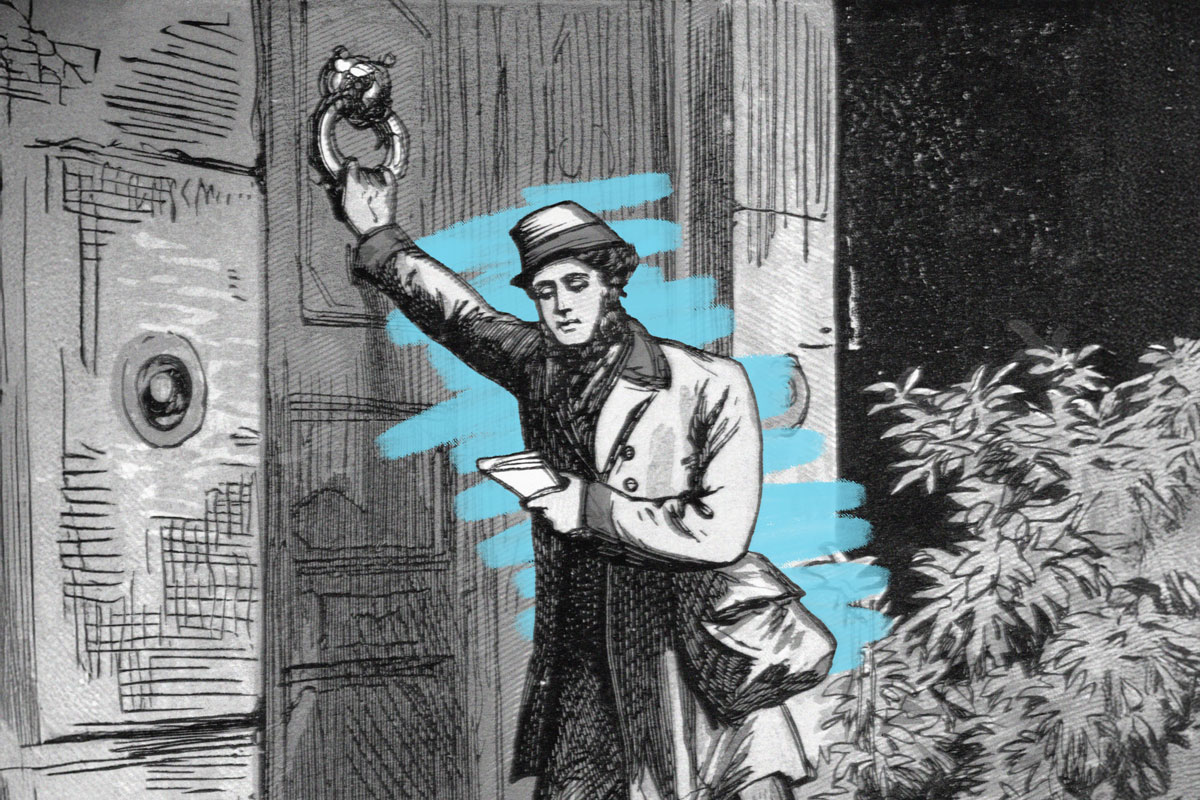
Echoing its canine namesake, members of the order were known as “Mops,” the German word for “pug,” and each lodge had a male and female lodge master and mistress who alternated serving as Grand Pug every six months. Prospective members were expected to mimic dogs by scratching at the door to gain entry, and new initiates were adorned with brass collars, blindfolded, and led around the room on all fours while fellow members barked at them. Initiates were also expected to demonstrate their dedication to the order by kissing a pug statue’s posterior. But the clandestine group’s existence was short-lived, thanks to Catholic abbot Gabriel-Louis-Calabre Pérau, who exposed the Pugs and their rituals in his 1745 French work L’Ordre des francs-maçons trahi et le secret des Mopses révélé, or The order of the Freemasons betrayed and the secret of the pugs revealed. Despite its brief tenure, the Order of the Pug remains a curious footnote in the history of secret societies.

A solar eclipse helped prove Einstein’s theory of general relativity.

  • Moon during solar eclipse
Moon during solar eclipse
Credit: jo Crebbin/ Shutterstock
Author Rachel Gresh

March 26, 2024

Love it?

Decades before Albert Einstein became a pop culture phenomenon by sticking out his tongue on his 72nd birthday, he was an emerging theoretical physicist on the brink of a major revelation: that massive objects cause space-time to curve, resulting in gravity. Einstein’s theory of general relativity, published in 1915, introduced the groundbreaking idea that gravity is not a force but a curved field created by the presence of mass. The problem was proving it. Einstein claimed the theory could be tested by measuring the position of stars near the sun, which would appear to shift slightly as gravity from the sun bent the path of light. This type of experiment was difficult to perform in the early 20th century, but a perfect opportunity soon presented itself: the total solar eclipse on May 29, 1919. 

Britain’s Royal Astronomical Society sent two expeditions to test Einstein’s theory during the eclipse. A group led by British physicist Arthur Eddington was based on the island of Príncipe off the coast of West Africa, and a second team went to Sobral, Brazil. The total eclipse allowed scientists to get a better view of the stars closest to the sun as the moon blocked nearly all the light from the sun. If Einstein was correct, the light produced by the stars would bend due to the sun’s gravity. 

During the eclipse, the scientists were amazed as the stars seemed displaced from their usual locations because their light traveled to Earth on a curved plane around the sun. The light was deflected by around 1.7 arc seconds, just as Einstein had predicted, proving the physicist’s idea that gravity isn’t a force but a geometric distortion of space-time. Thanks to the experiment, the Royal Astronomical Society officially recognized Einstein’s theory of general relativity on November 6, 1919, roughly four years after its publication.

Ancient Romans threw walnuts during weddings.

  • Wedding in ancient Rome
Wedding in ancient Rome
Credit: Florilegius/ Alamy Stock Photo
Author Sarah Anne Lloyd

April 3, 2024

Love it?

The most important part of an ancient Roman wedding was the domum deductio, when the bride traveled from her family’s home to the home of her new husband, often after a staged kidnapping. The procession was public and frequently included an entourage — sometimes friends and family, sometimes random people — and, even in high-class weddings, the journey was accompanied by some extremely bawdy songs. During the domum deductio, it was customary to throw nuts, particularly walnuts. Walnuts were considered sacred at weddings, both as a fertility symbol and because the sound they made as they hit the ground was believed to be a good omen. It’s also possible that throwing nuts, which Roman children played with, symbolized the groom giving up childish things — similarly, the bride gave away her dolls the night before the wedding.

According to historians, nuts also may have been thrown by the groom after the bride reached his house, possibly as an offering to the god Jupiter, who was associated with sacred oaths such as weddings. Additionally, the Roman scholar Servius wrote that some people believed the sound of nuts clattering and children scrambling after them could drown out the sound of the marriage being consummated. It’s also possible that the Roman tradition of scattering walnuts grew from an ancient Greek tradition, in which the bride and groom had fruits and nuts poured on their heads during their nuptials.

Basque has no known linguistic relatives.

  • Basque children’s book
Basque children's book
Credit: Andia/ Alamy Stock Photo
Author Rachel Gresh

March 26, 2024

Love it?

As seen in Pablo Picasso’s famous painting “Guernica,” the destruction of the Basque region (especially the city of Guernica) during the Spanish Civil War was devastating. The conflict nearly led to the extinction of the region’s unique ancient language, Euskara (commonly called Basque), after Spanish dictator Francisco Franco banned the local tongue. However, after Franco’s death in 1975, Basque Country was granted its (limited) autonomy, and its language experienced a resurgence. There are at least six Basque dialects today, but most speakers use a modern dialect developed in the 1960s. Euskara is spoken by 35% of the Basque population and remains one of Europe’s most mysterious languages. 

Euskara is a “language isolate,” meaning it has no linguistic relatives and is unlike any other spoken language that exists today. Some linguists support the Vasconic substrate hypothesis, which proposes that Basque is the only surviving version of an ancient family of Vasconic languages — but other linguists reject this. Most experts agree that Euskara likely developed during the Neolithic period (late Stone Age) by farmers who were geographically isolated from the rest of Europe by the Pyrenees mountain range in northeastern Spain and southwestern France. Its popularity diminished following the arrival of the Romans and Indo-European languages (namely the Romance languages) around the second century BCE.

Today, the mystery continues. A recent discovery of a 2,100-year-old inscribed amulet from Navarre in northeastern Spain (where the Basque language originated) features a Vasconic language that might be related to Euskara. The first word of the inscription, “sorioneku” or “sorioneke,” is very similar to the modern Basque word “zorioneko,” meaning “good fortune,” leading experts to believe this amulet might reveal more information about the enigmatic Basque language.

People hated shopping carts when they were invented in 1937.

  • Woman shopping in grocery store with cart
Woman shopping in grocery store with cart
Credit: Heritage Images/ Hulton Archive via Getty Images
Author Nicole Villeneuve

August 22, 2025

Love it?

During the Great Depression in the 1930s, most Americans were just trying to get by, and few had the luxury of coming home from the grocery store with extra items. But that didn’t stop an Oklahoma grocer from coming up with the idea of a shopping cart, an invention that started out almost as disdained as it was practical.

The man behind the idea was Sylvan N. Goldman, owner of the Humpty Dumpty grocery chain. Interested in increasing his sales, he often paid close attention to how people shopped. One thing stood out: Customers would stop shopping once their handheld baskets got too heavy. Goldman started thinking: What if there were a way for shoppers to carry more with less effort? As an experiment, he took a folding chair, added wheels to the legs, and placed a basket on the seat. He then attached a platform between the chair’s supports to hold a second basket, creating a two-tiered cart that shoppers could push.

When he rolled out these new grocery carts in 1937, he expected a runaway hit, but the reaction wasn’t exactly enthusiastic. Women, already used to pushing strollers, weren’t eager to push another one at the store. Men, on the other hand, preferred not to push something stroller-like at all. To get people on board, Goldman got creative. He hired store greeters to hand shoppers a cart, and even paid actors to walk around shopping with them. Slowly, the idea caught on, and once it did, there was no going back.

Ancient people slept on pillows made of stone.

  • Egyptian headrest
Egyptian headrest
Credit: Penta Springs Limited/ Alamy Stock Photo
Author Kerry Hinton

March 26, 2024

Love it?

Choosing a pillow in the 21st century is no simple task. The options can seem overwhelming. Memory foam, down, feathers — the list goes on. There are even customized pillows that sell for around $5,000. But long before humans had their pick of soft, comfortable pillows, many ancient cultures developed early versions that barely resemble the cushy supports we use today. 

The earliest pillows can be traced to Mesopotamia — the region known as the “cradle of civilization,” centered in modern-day Iraq — around 7000 BCE. These curved stone bolsters served a practical purpose: keeping bugs and vermin out of the mouths, eyes, and noses of the wealthy. Ancient Egyptians improved on the formula some 5,000 years later with the elevated headrest. Made of wood or stone, the Egyptian headrest consisted of a base and stem attached to a cradle to raise the user’s head. Most Egyptian headrests consisted of a flat, rectangular base with a straight shaft and curved neckpiece, and the user’s head was meant to mimic the sun rising in the horizon. The Egyptians also added a spiritual element to pillow use, often placing them in the tombs of the deceased; Pharaoh Tutankhamun was laid to rest with no fewer than eight ancient pillows in his tomb. Ancient Egyptians believed that protecting the head was essential even in the afterlife. Headrests were also thought to dispel demons, and many were adorned with images of Egyptian gods such as Bes and Taweret, believed to banish evil from the dark night in both life and death. 

In 1788, Austria accidentally fought itself in war.

  • Battle during the Austro-Turkish War
Battle during the Austro-Turkish War
Credit: De Luan/ Alamy Stock Photo
Author Michael Nordine

August 13, 2025

Love it?

As you might imagine, the Austro-Turkish Wars took place between what are now Austria and Turkey. This being between the 16th and 18th centuries, however, the official belligerents were the Habsburg monarchy and the Ottoman Empire. Perhaps the most (in)famous skirmish of that conflict didn’t involve both sides, though. What’s been called “history’s worst friendly fire incident” was officially known as the Battle of Karánsebes and took place in present-day Romania on the night of September 21, 1788. As the Austrian army consisted not only of Austrians but also of soldiers from modern-day Germany, Czech Republic, Poland, Serbia, and Croatia, communication wasn’t always smooth — especially when alcohol was involved.

Such was the case on this fateful night, during which different groups of Austrian soldiers were on opposite sides of the Timiş River. When fistfights and eventually gunfire broke out on one side of the river over a drunken dispute, troops in Karánsebes proper believed their foes had arrived and began shouting, “Turks! Turks!” The inebriated soldiers then ran toward their comrades to assist them but were mistaken for Turks, leading to further miscommunication and friendly fire. When the Turks did arrive two days later, they took Karánsebes with little resistance.