


Turkeys were named after the wrong country.

  • Wild turkey, 19th century
Wild turkey, 19th century
Credit: BBM/ Alamy Stock Photo
Author Bess Lovejoy

November 20, 2025

Love it?

Turkeys — the quintessential American bird — owe their name to a centuries-old case of mistaken identity. When Spanish explorers arrived in Mexico in the 1500s, they encountered a plump, impressively feathered bird that the Aztecs had long domesticated and called huexolotl. The Spaniards brought these birds back to Europe, where they quickly became a hit on farms and dinner tables.

So why do we call them “turkeys”? Possibly because Europeans had already encountered a somewhat similar bird, the African guinea fowl, which reached Europe earlier via trade routes controlled by the Ottoman Empire of the Turks. Because of that connection, guinea fowl were known as “Turkey cocks” or “Turkey hens.” So when the new, American bird arrived in Europe, people may have assumed it came from the same place and gave it the same name. However, some sources say the bird’s name arose simply because at the time, the Ottoman Empire was at its peak, and Europeans were apt to designate all new imports as “Turkish.” 

Either way, the misnomer stuck. But while English speakers called the bird a “turkey,” in other languages the geolinguistic confusion multiplied. The French dubbed it coq d’Inde — “rooster of India” — thinking it came from the Indies. In Portuguese it became a peru, in Malay a “Dutch chicken,” and in Turkish, tellingly, a hindi, meaning “from India.” Everyone, it seems, thought the bird came from somewhere else. But when your Thanksgiving feast is served up, the people you actually want to thank aren’t the Turks; they’re the Aztecs.

The U.S. had a lost state called Franklin.

  • Map of U.S. state Franklin
Map of U.S. state Franklin
Credit: North Wind Picture Archives/ Alamy Stock Photo
Author Sarah Anne Lloyd

November 13, 2025

Love it?

After the American Revolutionary War, the 13 colonies once under British rule became the first 13 U.S. states. But the actual borders of the fledgling country weren’t set in stone. European settlers had started to drift westward past Appalachia, and the Continental Congress was divided on how to handle the expansion. It was amid this postwar confusion that the state of Franklin was born, located on Overhill Cherokee land between the Appalachian Mountains and the Mississippi River.

The four-county region, which is now part of Tennessee, was originally part of North Carolina before the state ceded the land to Congress. The settlers who lived there worried the land would be sold off to Spain or France to pay off war debt, so North Carolina tried to retract its decision. Rather than wait to see how that shook out, the settlers formed their own state, originally called “Frankland” but later changed to “Franklin,” and petitioned to have it included in the union. That effort failed, so the people of Franklin took a big leap.

On August 23, 1784, Franklin declared independent statehood; its residents wrote their own constitution, appointed a president, and negotiated treaties with Indigenous peoples. The state even instituted its own currency-free barter system — but its economy was so weak that it was forced to approach Spain for aid. With no federal recognition and facing financial instability, Franklin officially rejoined North Carolina in 1789.

Dodo meat was considered disgusting by the people who ate it.

  • Dodo bird from G. Edwards “A Natural History of Uncommon Birds”
Dodo bird from G. Edwards "A Natural History of Uncommon Birds"
Credit: World History Archive/ Alamy Stock Photo
Author Michael Nordine

November 11, 2025

Love it?

Dodos have long been synonymous with extinction for centuries, but they weren’t hunted because they were tasty. The small, flightless birds, which evolved on Mauritius without any natural predators and were unafraid of humans as a result, departed this mortal coil more than 300 years ago due to a combination of factors including deforestation, destruction of their nests by invasive species, and hunting. The Dutch soldiers who first encountered the humble dodo sometime around 1600 were not kind to this strange bird. After killing them en masse, the Dutch didn’t even enjoy the resulting meal.

The stew the soldiers made from dodo meat was described as “offensive and of no nourishment,” according to BBC science writer Helen Pilcher, due to the fact that it was tough and oily. The creatures themselves, meanwhile, were referred to as walchvögel, meaning “repulsive bird.” That didn’t stop the Dutch from killing and eating the birds to extinction less than a century after arriving on Mauritius, however. Dodos have had a reputation for stupidity and haplessness ever since, though in recent years some scientists have challenged those notions and suggested that the dodo got a bad rap.

Abraham Lincoln was the first historical figure to appear on a U.S. coin.

  • Lincoln 1 cent coin, 1909
Lincoln 1 cent coin, 1909
Credit: Q-Images/ Alamy Stock Photo
Author Michael Nordine

November 11, 2025

Love it?

As one of the most revered presidents in American history, Abraham Lincoln has been honored in countless ways. That includes the penny, which was the first U.S. coin to feature a historical figure of any kind. The Lincoln penny was first issued in 1909 to honor what would have been the president’s 100th birthday. The original 1-cent piece, which was made of pure copper and introduced in the 1790s, featured a female figure symbolizing liberty and was nearly 50% larger than its modern counterpart. The size shrank in 1856 when the composition changed to 88% copper and 12% nickel; this was also when the flying eagle design was introduced.

Today’s pennies are made of copper and zinc and still feature Honest Abe, though there have been several variations. Due to a copper shortage during World War II, pennies were briefly made of zinc-coated steel. Then, in 2009, Lincoln’s bicentennial was celebrated with four new variants of the penny marking different eras of his life on the reverse side: his birth and early childhood in Kentucky, his formative years in Indiana, his professional life in Illinois, and finally his presidency. However, the U.S. Treasury announced its plan to end production of the penny in 2025, citing the high cost of production: One penny costs more than 3 cents to make.

Coffee was all the rage in London before Brits switched to tea.

  • Street coffee stall, London, 1861
Street coffee stall, London, 1861
Credit: World History Archive/ Alamy Stock Photo
Author Sarah Anne Lloyd

November 13, 2025

Love it?

There are few things more enmeshed in British identity than tea, but when the beverage first arrived in Europe in the 17th century, it was far from the drink of choice. Coffee arrived around the same time, and the Brits couldn’t get enough of it. By the turn of the 18th century, England had a coffeehouse boom that rivaled that of 1990s America.

Brits loved coffee so much that it began to supplant even ale as the preferred social drink. What is widely considered to be London’s first coffee shop opened in 1652 near the Royal Exchange, where it became popular with merchants. By 1663, London had 83 coffeehouses, and they spread to other cities quickly. As the Enlightenment era started, people would gather around long tables to discuss intellectual ideas such as politics, news, science, and literature, helped along by rich, stimulating brews. At least two periodicals rose out of this coffeehouse culture, The Tatler (founded in 1709) and The Spectator (founded in 1711). But what happened to the beloved British coffee shop? 

In the late 17th century and early 18th century, the British East India Company began importing tea directly from China, and tea began to overtake coffee in popularity — a shift that was later helped along by the Haitian Revolution. Coffee had grown so popular in Europe that imperialist nations started cultivating crops in their colonies overseas. Enslaved people in modern-day Haiti, which was then controlled by France, produced more than half the world’s coffee until the revolution, which led to the nation’s independence in 1804. Britain tried expanding its coffee cultivation in India and modern-day Sri Lanka, but the crop was largely wiped out by the fungus Hemileia vastatrix, aka coffee leaf rust. Because that fungus requires coffee plants to survive, other crops were unaffected — so the British companies running those farms switched to tea. By the 1820s, most of the British public had, too.

Noon used to be around 3 p.m.

  • Woman holding clock
Woman holding clock
Credit: Brand X Pictures/ Stockbyte via Getty Images
Author Sarah Anne Lloyd

November 7, 2025

Love it?

“Noon” and “midnight” are tidy designations of time, both marking the point when an analog clock starts another 12-hour cycle. But the word “noon” took a little bit of a journey around the clock before arriving at its current location.

The root of the word “noon” is the Latin nonus, meaning “ninth,” which became nōn in Old English and Middle English. The word marked the ninth hour after sunrise. This made “noon” a bit of a moving target, but a 6 a.m. sunrise, for instance, would put noon around 3 p.m.

It may have been fasting monks that caused noon to shift earlier in the day. The ninth hour is significant in Christian liturgy as time set aside for prayer, known as nones, and it was particularly important in early monastic traditions. Because monks were often required to fast until then, one prevailing theory as to why the ninth-hour prayer started drifting earlier is that people were getting hungry. The Roman Catholic canonical hour of nones remained at 3 p.m., but by the 14th century, “noon” referred to a new time of day, when the sun was highest in the sky.

A foot is 12 inches because it was based on the actual length of a human foot.

  • Giant foot of Emperor Constantine
Giant foot of Emperor Constantine
Credit: Giorgio G/ Alamy Stock Photo
Author Michael Nordine

November 6, 2025

Love it?

Americans aren’t fans of the metric system, but they’re not the only folks to eschew decimal-based measurement. The reason a foot is 12 inches, in fact, dates all the way back to ancient Rome, where it was based on the length of a male foot. And this practice wasn’t specific to Rome; many ancient civilizations used feet and other body parts as measurements. 

Friends, Romans, and countrymen initially divided a foot into 16 smaller units of measurement, but later split it into 12 unciae — a word meaning “12th part,” from which we derive the terms “inch” and “ounce.” Measurements weren’t standardized and could vary, but the average foot (as a unit of measurement) in ancient Rome was 11.64 inches. This was slightly larger than the average foot (as a body part) of a Roman man, which was around 10.5 inches. An 11.64-inch human foot would be a size 12. 

Though it’s been said that the measurement is actually based on King Henry I’s foot, which was exactly 12 inches, the concept predates him. That said, Henry did introduce new standards for some measurements, including a yard, which was determined to be the distance from the end of his nose to the end of the thumb of his outstretched hand: about 3 feet. 

Of course, the duodecimal system, which predates the Romans by centuries, is based on the number 12 and shows up in modern timekeeping as well: The number of seconds in a minute (60), minutes in an hour (60), and hours in a day (24) are all divisible by 12. This may have further inspired the Romans to measure a foot as 12 inches. It’s also why there are 12 signs in the Chinese zodiac, which is itself rooted in the fact that Jupiter takes 12 years to complete its orbit around the sun.

It costs more than a penny to make a penny.

  • Manufacturing pennies
Manufacturing pennies
Credit: Kristoffer Tripplaar/ Alamy Stock Photo
Author Nicole Villeneuve

November 17, 2025

Love it?

The humble penny might not seem like much, but producing one actually costs more than it’s worth. According to the U.S. Mint, making a single penny cost 3.69 cents in 2025 — about 3 cents for production and the rest for administrative costs and distribution. This helps explain why the U.S. ended production of the penny on November 12, 2025. While the billions of 1-cent coins still in circulation will remain legal tender, no new ones will be minted, marking the end of the penny’s 232-year run. 

Of course, the penny didn’t always cost more than its value to make. Though tracking production costs all the way back to the coin’s debut in 1793 is difficult, we do know it cost less than a cent to make a penny as recently as 2005, when production amounted to 0.97 cents per coin. The next year, the cost went up to 1.23 cents, and has remained above face value ever since.

The penny has changed over time to cut costs. In 1857, rising copper prices led to a reduction in its size, and in 1982, the coin became mostly zinc with a thin copper coating. But rising material costs aren’t the only reason pennies are so expensive to make. Most pennies distributed by the U.S. Mint are given out as change in cash transactions but then never reused, creating an endless demand for replacements. This cycle, one The New York Times called a “perpetual penny paradox,” results in two-thirds of the billions of pennies minted each year — 3.2 billion were minted in 2024 alone — vanishing from circulation after reaching consumers. 

The penny isn’t the only coin that costs more to produce than its face value: In 2024, making a nickel cost 13.78 cents, but far fewer of them are made than pennies. The decision to discontinue the penny was debated for decades. People against the change argued that the low-denomination coin still supported lower-income families and charities, while those who wanted the penny gone saw it as a financial and environmental burden on the country. As of 2025, there were estimated to be 300 billion 1-cent coins in existence in the U.S. — or more than 800 pennies per person.

The Battle of Waterloo didn’t take place in Waterloo.

  • Napoleon Bonaparte’s army
Napoleon Bonaparte's army
Credit: TonyBaggett/ iStock
Author Timothy Ott

May 29, 2024

Love it?

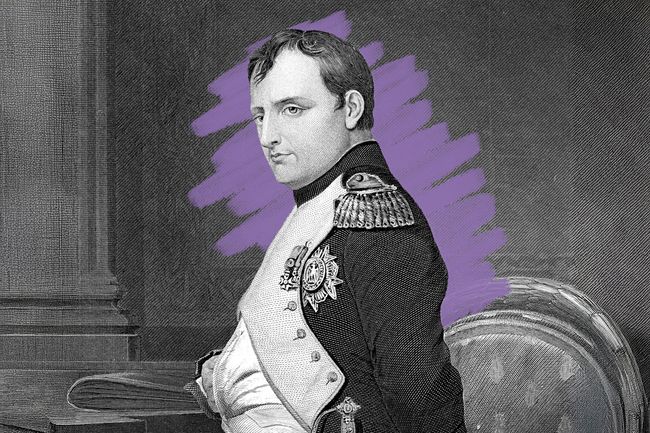
One of the most famous military engagements in history, the 1815 Battle of Waterloo brought a decisive end to Napoleon Bonaparte’s quest for power. It also sparked a common phrase, “to meet your Waterloo,” which signifies the moment an unfortunate soul realizes their dream is over. Yet the locale for which the skirmish is named, now a town in central Belgium, saw no sign of the bloodshed that broke out that fateful June day. The fighting primarily took place some 3 miles south, between the villages of Braine-l’Alleud and Plancenoit, where the combined forces led by Britain’s Duke of Wellington and Prussia’s Gebhard von Blücher drove the remains of Napoleon’s army from the area.

Although the significance of the battle became apparent when Napoleon abdicated a few days later, it took some time for a consensus name to emerge in the aftermath. The defeated French called it the Battle of Mont Saint-Jean, after the Braine-l’Alleud hill that had seen the day’s fiercest clashes. The Prussians favored Battle of La Belle Alliance, for the nearby farmhouse where Blücher and Wellington allegedly met to celebrate their triumph. But the ultimate namesake turned out to be the picturesque town that had hosted the duke the night before the fighting, and from where he sent the report of his crowning achievement the following day. It’s true that history is written by the victors, and in this case, the name Waterloo may have contributed to the battle’s enduring legacy. After all, “meeting your Braine-l’Alleud” doesn’t quite have the same ring to it.

Cleopatra and Mark Antony started their own drinking club.

  • Cleopatra with Marc Anthony, first century BCE
Cleopatra with Marc Anthony, first century BCE
Credit: De Luan/ Alamy Stock Photo
Author Sarah Anne Lloyd

November 6, 2025

Love it?

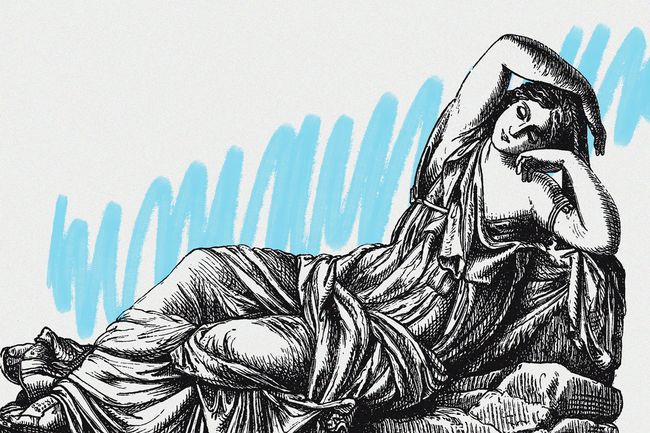
Because Cleopatra’s life and legacy is mired by propaganda that painted her as cunning and improper, it can be difficult to separate fact from fiction in tales of the Egyptian queen and her storied relationship with Roman politician Mark Antony. But while some accounts of their extravagance were exaggerated, these two ancient leaders undoubtedly liked to party. One winter, they formed a drinking society called the Inimitable Livers, which convened nightly for debauchery — although historians are divided on whether that debauchery was in service of the Greek god Dionysus or just for fun. 

Social activities of the Inimitable Livers, in addition to drinking, included feasting, hunting, and playing dice. According to the Greek historian Plutarch, who wrote one of the more sympathetic accounts of Cleopatra’s life in his biography of Antony, the drinking group was also partial to games and pranks. Plutarch described Antony and Cleopatra disguising themselves in servants’ clothing and taking to the streets of Alexandria, Egypt, to poke fun at ordinary people. He also noted that they would take plenty of abuse in return, even when people figured out who they actually were.

After Antony lost the decisive Battle of Actium against Julius Caesar’s heir Octavian, the couple dissolved the Inimitable Livers and formed the Society of Partners in Death, which also may have been associated with Dionysus. Plutarch wrote that this club, despite its more somber name, feasted just as extravagantly.