


What Did Victorian Ladies Actually Carry in Their Purses?

  • Portrait of a woman, 1850s
Portrait of a woman, 1850s
Credit: Heritage Image Partnership Ltd/ Alamy Stock Photo
Author Kristina Wright

December 23, 2025

Love it?

Victorian-era England was a time of rapid industrial change but also strict social rules and customs — especially for women. Middle- and upper-class women were expected to appear modest and composed at all times, and even the smallest details of their appearance were carefully considered.

In an era when women had limited legal and financial rights, a purse represented a form of independence. In 1853, American suffragist Susan B. Anthony wrote in her diary, “Woman must have a purse of her own.” Also known as a reticule, this small handbag was one of the few personal belongings a Victorian woman kept close and carried herself. Though small, it held the necessities of daily life — items that allowed her to move through public spaces with confidence, propriety, and a degree of self-reliance. 

So, what exactly would you find inside these important pouches? Let’s take a peek.

Credit: Heritage Images/ Hulton Archive via Getty Images 

A Purse of Her Own

Victorian women’s fashion was famously elaborate and layered, built around corsets, petticoats, crinolines, and later, bustles. These dramatic silhouettes left little room for practicality. Pockets were rare or difficult to reach, and tie-on pockets, which were popular in the 17th and 18th centuries, disappeared as styles shifted. Yet as women’s lives increasingly extended beyond the home — encompassing shopping, visiting, traveling, and attending lectures or concerts — ladies needed a way to carry personal items.

By the early 19th century, the reticule had become the solution. Usually a small, soft bag gathered with a drawstring, it was carried on the wrist or held delicately in the hand. Though satirized in magazines as the “ridicule” because of its tiny size, the purse endured. It fit Victorian ideals of femininity, but more importantly, it provided a private space in a society that closely regulated women’s behavior — earning it the more positive nickname of “indispensable.”

The classic pouchlike reticule was often made of silk, satin, velvet, or fine cotton, embellished with embroidery, beadwork, or tassels. Many women made their own, turning each purse into a showcase of needlework. Later, metal mesh and intricately beaded purses became fashionable, especially for evening wear. These were prized for their shimmer and craftsmanship rather than their capacity. Some beaded purses featured astonishing density, with hundreds of beads per square inch.

In general, Victorian purses were far smaller than modern handbags. Their size was deliberate, signaling refinement and suggesting that the woman carrying it was not burdened by physical labor. 

You may also like

Why Are Presidential Terms Four Years?

  • FDR campaigns for reelection, 1940
FDR campaigns for reelection, 1940
Credit: Bettmann Archive via Getty Images
Author Tony Dunnell

December 19, 2025

Love it?

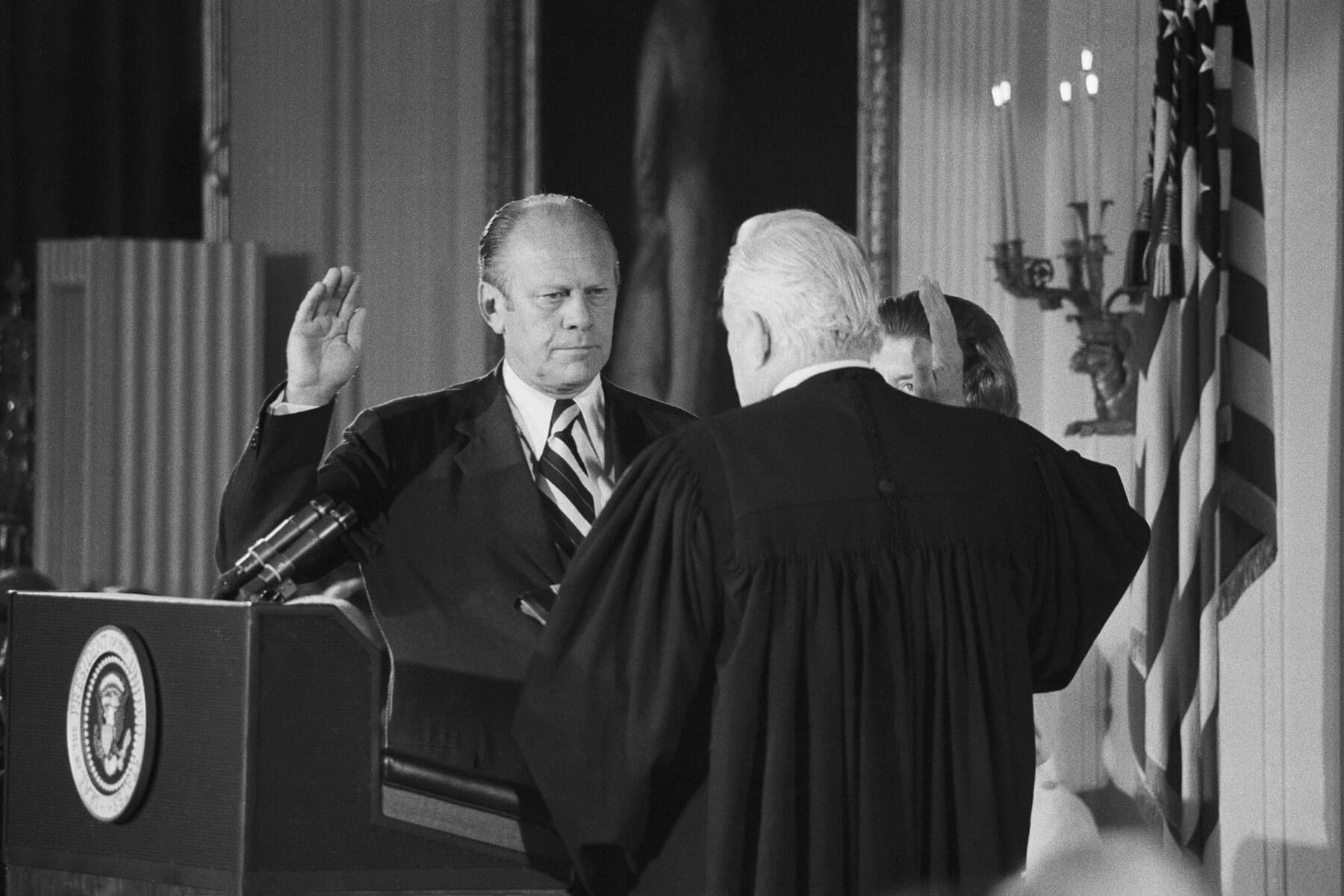
Every four years, Americans go to the polls to elect the U.S. president. It’s a familiar process — the campaigning, the debates, the Election Day drama — and an equally familiar four-year schedule. But why four years, and not three, or five, or 15? To find the answer, we need to go back to a sweltering Philadelphia summer in 1787, when 55 men argued, compromised, and at some points despaired over creating an executive office that wouldn’t lead to that most unwanted and troublesome of things: a new king. 

Here’s a look at how, and why, a four-year presidential term was chosen — a story that reveals much about the concerns of the Founding Fathers and their deep-rooted desire to avoid monarchy, mob rule, or concentrated power, and instead strike a balance that would best serve their fledgling nation. 

Credit: Hulton Archive/ Archive Photos via Getty Images 

7-Year Terms Were Initially Approved 

When the 55 delegates gathered at the Constitutional Convention in May 1787, they had no real blueprint for an elected executive. The Western world at the time was dominated by monarchies, such as those in England, France, Spain, and Prussia, and the handful of republics that existed offered dubious models. The Dutch Republic, for example, was on the verge of collapse, and the Polish-Lithuanian Commonwealth, with its system of elective kings, was already entering a period of protracted political decline. 

The Founding Fathers, therefore, were staring at a rather blank slate — and so the debate began. James Wilson of Pennsylvania proposed a three-year term for the president, assuming reelection would be possible. Charles Pinckney of South Carolina countered with seven years. Others supported a single seven-year term with no opportunity for reelection, in order to avoid creating what North Carolina’s Hugh Williamson called an “elective king” who would “spare no pains to keep himself in for life, and will then lay a train for the succession of his children.” 

On June 1, after much discussion, the exhausted committee voted for seven-year terms, with five states in favor, four against, and one divided. But not everyone was convinced, and the debate continued — especially regarding whether the president should be eligible for reelection. Some argued that the possibility of reelection was a motivating factor that would promote good presidential habits, while others saw it as creating dangerously long terms that could make a president too powerful. It eventually became clear that the delegates needed to find a better option. 

You may also like

Why Do Shirts Have Collars? 

  • Ad for menswear, 19th century
Ad for menswear, 19th century
Credit: Heritage Images/ Hulton Archive via Getty Images
Author Tony Dunnell

December 18, 2025

Love it?

As we go about our daily lives, we tend to take the existence of many simple things for granted, rarely considering how or why they came to be. Take, for example, the humble shirt collar. Most of us own a shirt with a collar, along with other tops — such as the ubiquitous T-shirt — that have no collar at all. So, why do some shirts have collars? What purpose do they serve and when did they first appear? To answer these questions, we need to take a journey across five centuries, starting with the medieval clergy.

Credit: Photo 12/ Universal Images Group via Getty Images 

Clerical Collars

Before the 15th century, there were no shirt collars at all — shirts were simple undergarments with open, round, or scoop necklines, and long sleeves made of linen or hemp. Collars first appeared in the Western world sometime during the mid-to-late 15th century as simple standing bands of fabric around the neckline. And it wasn’t the nobility who introduced the style, but rather men of faith. Members of the clergy often wore stiff tunics with high necks. Adding a collar to the shirt worn beneath the scratchy tunic helped prevent the tunic’s stiff neck from aggravating the skin. 

Among the clergy, these collars became the only visible part of the shirt — a small yet distinct strip of fabric emerging from the neckline. While they likely originated for purely practical reasons, the distinctive collars became symbols of humility and purity — although it wasn’t until the 19th century that Scottish Reverend Donald McLeod invented and popularized the clerical collar (informally known as a dog collar) worn by ministers today. 

You may also like

The Rise and Fall of the ‘Farmers’ Almanac’

  • “Poor Richard’s Almanac,” 1733
“Poor Richard’s Almanac,” 1733
Credit: Colin Waters/ Alamy Stock Photo
Author Kristina Wright

December 18, 2025

Love it?

For more than two centuries, the Farmers’ Almanac was a familiar presence in American homes — tucked beside seed catalogs, wedged between cookbooks, pinned on barn walls, or kept in workshop drawers. Its pages offered long-range weather predictions, planting calendars, sunrise and moon-phase charts, home remedies, and practical advice. For generations, it influenced how people prepared for the seasons and understood the cycles of the natural world.

The Farmers’ Almanac regularly included weather lore, folk sayings, planting guidelines, and proverbs — a blend of traditions that resonated with a mostly rural, agrarian readership. Many of the proverbs are sayings Americans still recognize today, such as “A stitch in time saves nine.” Others have much older European or colonial origins, and the almanac played a role in keeping them alive and circulating.

But the long tradition of the Farmers’ Almanac will end with the publication’s 2026 edition. The publishers announced the closure in late 2025, citing rising costs, dwindling print readership, and the reality that digital tools now offer immediate forecasts and guidance once found only in annual books. As the Farmers’ Almanac closes its doors, let’s take a look at the rise and fall of this former household staple.

Credit: Photo 12/ Universal Images Group via Getty Images 

A Tradition Older Than America

Almanacs are far older than the United States. Their roots go back to ancient societies that tracked celestial events to guide planting and seasonal work. With the invention of the printing press, the earliest known printed almanacs emerged in Europe — the first appeared in 1457 — and by the late 15th century, such publications commonly included calendars, astronomical data, tide tables, and practical seasonal guidance. 

In colonial North America, the tradition of almanac‑making began in the 17th century. The first U.S. almanac was printed by William Pierce in 1639, offering calendars, weather guidance, and seasonal advice for the New England region. By the 18th century, dozens of almanacs circulated across the colonies. Perhaps the most famous was Poor Richard’s Almanack, first published by Benjamin Franklin in 1732.

Despite the many almanacs that sprang up, only a handful endured into the modern era. At the center of that legacy are two long‑running American institutions: The Old Farmer’s Almanac and the Farmers’ Almanac, which carried forward the tradition of annual almanacs centuries after their 15th‑century predecessors across the pond.

You may also like

How the Calendar Got So Complicated

  • Roman calendar carved in marble
Roman calendar carved in marble
Credit: Bettmann Archive via Getty Images
Author Paul Chang

December 18, 2025

Love it?

The modern calendar can seem confusingly arbitrary, with uneven months, leap years, and even missing days in history. But despite its strange inconsistencies, the calendar we use today is the result of a long quest to design the perfect time measurement system. Here’s a look at how we ended up here. 

Credit: DEA / A. DAGLI ORTI/ De Agostini via Getty Images 

The Roman Calendar: New Months and Seasonal Chaos

Our uneven months — ranging from 28 to 31 days long — have their roots in the Roman calendar, which changed several times over the Roman Republic’s existence from 509 BCE to 27 BCE. Based on the lunar cycles, the early Roman calendar originally had 10 months instead of 12 — six 30-day months, and four 31-day months, for a total of 304 days annually. The year began in March, ended in December, and was followed by an unnamed and uncounted gap during the winter months before the solar year would start again in spring. 

According to Roman tradition, in an attempt to eliminate this unaccounted-for winter gap and sync the calendar with the lunar year, the legendary King Numa Pompilius added January and February to the calendar around 713 BCE, bringing the number of months to 12. Since the Romans believed odd numbers were auspicious and even numbers were unlucky, Numa wanted years and months to have an odd number of days. (For some reason, an even number of months was fine.)  To achieve this, he deducted one day from each of the 30-day months, so they had 29 days. 

However, because the newly established year consisted of 355 days (based on 12 lunar cycles), it was mathematically inescapable that one month would have an even number of days. It was thus decided that February, the month dedicated to the infernal gods, would be the “unlucky” month with 28 days.

Though Numa’s reforms brought the Roman calendar closer in line with the lunar year, it was approximately 10.25 days short of the solar year, causing it to fall out of sync with the seasons over time. To address this, the Romans observed an extra month called Mercedonius every two or three years. However, Mercedonius was practiced inconsistently, resulting in seasonal confusion, and was subject to manipulation as politicians would extend or shorten the month in order to prolong or cut short political terms.

You may also like

Why Do Clocks Move Clockwise?

  • Woman checks her watch, 1936
Woman checks her watch, 1936
Credit: Fox Photos/ Hulton Archive via Getty Images
Author Kristina Wright

December 18, 2025

Love it?

If you grew up with an analog clock on the wall, you might remember learning that the “little hand” marked the hour and the “big hand” showed the minutes. And you probably never questioned why the hands moved in a particular direction — they simply turned “clockwise.”

But the familiar movement of a clock’s hands is a human invention influenced by geography and centuries of history. To understand why clocks move the direction they do, we have to look back to a time before clockmakers designed the gears and pendulums of our analog clocks — back to when people first started watching and recording the sun’s slow, predictable arc across the sky.

Credit: Comstock Images/ Stockbyte via Getty Images 

The Sun Set the Standard

Long before mechanical clocks existed, people measured time by watching shadows. The earliest timekeeping tools — such as a simple vertical stick called a gnomon — were used in places such as ancient Egypt and Mesopotamia to track the sun’s movement.

In the Northern Hemisphere, the sun rises in the east, arcs across the southern sky, and sets in the west. As the sun moves, the shadow cast by a gnomon shifts in a predictable path: facing west in the morning, north around noon, and east in the evening.

However, the direction of movement depends on the type of sundial. On a horizontal sundial, the kind most familiar in Europe, the shadow moves in the same direction as the hands on a modern clock. On vertical, south-facing sundials, or at different latitudes, the shadow can move in the opposite direction, and its path changes slightly with the seasons. In the Southern Hemisphere, where the sun arcs across the northern sky, many sundials naturally produce what we would call a “counterclockwise” motion.

But mechanical clocks were first developed in regions where horizontal dials were common, and shadows created a consistent pattern as the sun moved east to west. This visual rhythm became the template for future timekeeping. When early European clockmakers began building mechanical clocks, they chose to replicate the familiar motion of the sundial shadow. That choice fixed the direction that became known as “clockwise.”

You may also like

The Heart-Pounding History of the Blue Angels

  • Blue Angels fly by
Blue Angels fly by
Credit: Steve Ringman/ San Francisco Chronicle via Getty Images
Author Timothy Ott

December 18, 2025

Love it?

Not many of the entertainment forms that arrived in the aftermath of World War II have managed to retain a hold on subsequent generations of audiences. But the Blue Angels, the naval flight demonstration team known for impressive aerial maneuvers, have been a hit since they first zoomed into existence in 1946. 

These signature blue-and-gold jets continue to provide the sort of heart-pounding spectacle that makes even the most jaded teenager look up from their screen. Here’s a look at how this iconic group of aerial wizards came to be, and some of its notable touchstones over the years.

Photo credit: Image courtesy of the Naval History and Heritage Command

Promoting Naval Aviation

After World War II, naval aviation was no longer commanding headlines for its wartime missions, and the program was facing the possibility of major budget cuts. This gave Navy Commander LeRoy “Roy” Simpler an idea: He reasoned that exhibitions of flying prowess could provide a morale boost and promotional benefits for the division. The idea found support in the Navy ranks, and Lieutenant Commander Roy “Butch” Voris was chosen to lead the initial five-man team of aviators.

For aircraft, Voris went with the Grumman F6F-5 Hellcat, which had to be reconfigured with the removal of armament and the addition of tail weight to provide proper counterbalance. The pilots then began practicing their flight maneuvers over a stretch of swampland near Jacksonville, Florida. The remote area was chosen, according to Voris, because “if anything happened, just the alligators would know.”

You may also like

The Best Historical Movies of 2025

  • Scene from the film “Hamnet”
Scene from the film “Hamnet”
Credit: Entertainment Pictures/ Alamy Stock Photo
Author Michael Nordine

December 11, 2025

Love it?

Nothing brings history alive quite like movies, which have the power to shape our understanding of the past as no other medium can. Some of this year’s best movies were works of historical fiction that both depicted actual events from the past and also speculated on others that might have occurred, using varying degrees of creative license to offer new takes on timeless subjects. Here’s a rundown of 2025’s most compelling historical cinema, offering fresh perspectives on the famous and forgotten events of yesteryear. 

Credit: BFA/ Alamy Stock Photo 

Hamnet

Though based on a work of fiction, Hamnet is about one of history’s most celebrated figures: William Shakespeare, whose son Hamnet is the namesake of Maggie O’Farrell’s widely acclaimed novel. Hamnet Shakespeare died at the tender age of 11, leading to centuries of speculation as to what effect that tragedy had on his father’s work — especially his magnum opus Hamlet, the title of which is far from a coincidence in this powerful film by Oscar-winning Nomadland director Chloé Zhao. A pair of devastating performances by Paul Mescal as the Bard and Jessie Buckley as his wife Anne (nicknamed Agnes) will get most of the attention throughout awards season, but young Jacobi Jupe is nothing short of princely as Hamnet himself.

You may also like

The Most Popular Christmas Presents 100 Years Ago

  • Chanel No. 5 perfume
Chanel No. 5 perfume
Credit: Camera Press Ltd/ Alamy Stock Photo
Author Tony Dunnell

December 11, 2025

Love it?

The 1920s brought a newfound prosperity to many U.S. families, and gift-giving — especially at Christmas — entered a new era. Innovative manufacturing techniques, along with mass production, made toys more affordable and diverse than ever. Radio broadcasting, meanwhile, brought advertising into the home, while in the streets Santa Claus was increasingly being used to push Christmas products. And with women having recently won the right to vote — and embracing shorter skirts and bobbed hair — a freer way of life was taking shape. 

The Roaring ’20s were, for many, a decade of possibilities, something we can see reflected in the popular Christmas gifts of the era. Here are six coveted items you would have been likely to see on Christmas lists across America a hundred years ago.

Credit: Dana B. Merrill/ Conde Nast Collection via Getty Images  

Wristwatches

The perception of wristwatches, which were previously considered feminine and unmanly, changed completely after World War I. During the war, officers discovered that watches worn on the wrist were far more practical than pocket watches, and wristwatches quickly became a key piece of combat equipment. When soldiers returned home after the war, they took their watches with them, popularizing the idea that the accessory was not only practical, but could also be a part of masculine fashion. With both affordable models and luxury brands soon coming to market, wristwatches became the perfect gift for the 1920s man. 

You may also like

The Origins of 6 Classic Holiday Foods

  • Christmas stollen
Christmas stollen
Credit: Natalia Greeske/ Alamy Stock Photo
Author Bess Lovejoy

December 10, 2025

Love it?

As December rolls around and we partake of sugary breads and creamy drinks (not to mention the occasional cake shaped like a log), it’s easy to forget that many of those seasonal staples trace back centuries. From ancient energy bars for Roman soldiers to medieval courtly treats, the holiday table holds more history than you might realize. So the next time you unwrap a fruitcake or raise a glass of eggnog, remember that you’re tasting more than just sugar and spice — you’re sampling centuries of culture, commerce, faith, and festive invention.

Credit: ullstein bild Dtl./ ullstein bild via Getty Images

Gingerbread 

Though versions of spiced bread date back to ancient Egypt and Greece, the gingerbread we know today — crisp, spiced, and often decorated — took shape in medieval Europe, after global trade made spices such as ginger and cinnamon newly accessible. By the 15th and 16th centuries, German gingerbread makers were pressing dough into elaborate molds, painting the results, and selling them as luxury goods. (At the time, Germany even had guilds of gingerbread makers.) 

Gingerbread houses, meanwhile, may owe their existence to the fairy tale “Hansel and Gretel.” Right around the 1812 publication of the Grimms’ tale, Germans began building decorative houses made of gingerbread and other candy — although historians debate which came first, the houses or the story. (The latter might have capitalized on the popularity of the former.) In either case, gingerbread houses were a tradition that German immigrants later brought to the U.S.

You may also like