


Life in 1950s America, By the Numbers

  • 1950s family home
1950s family home
H. Armstrong Roberts/ClassicStock/ Archive Photos via Getty Images
Author Rachel Gresh

January 4, 2024

Love it?

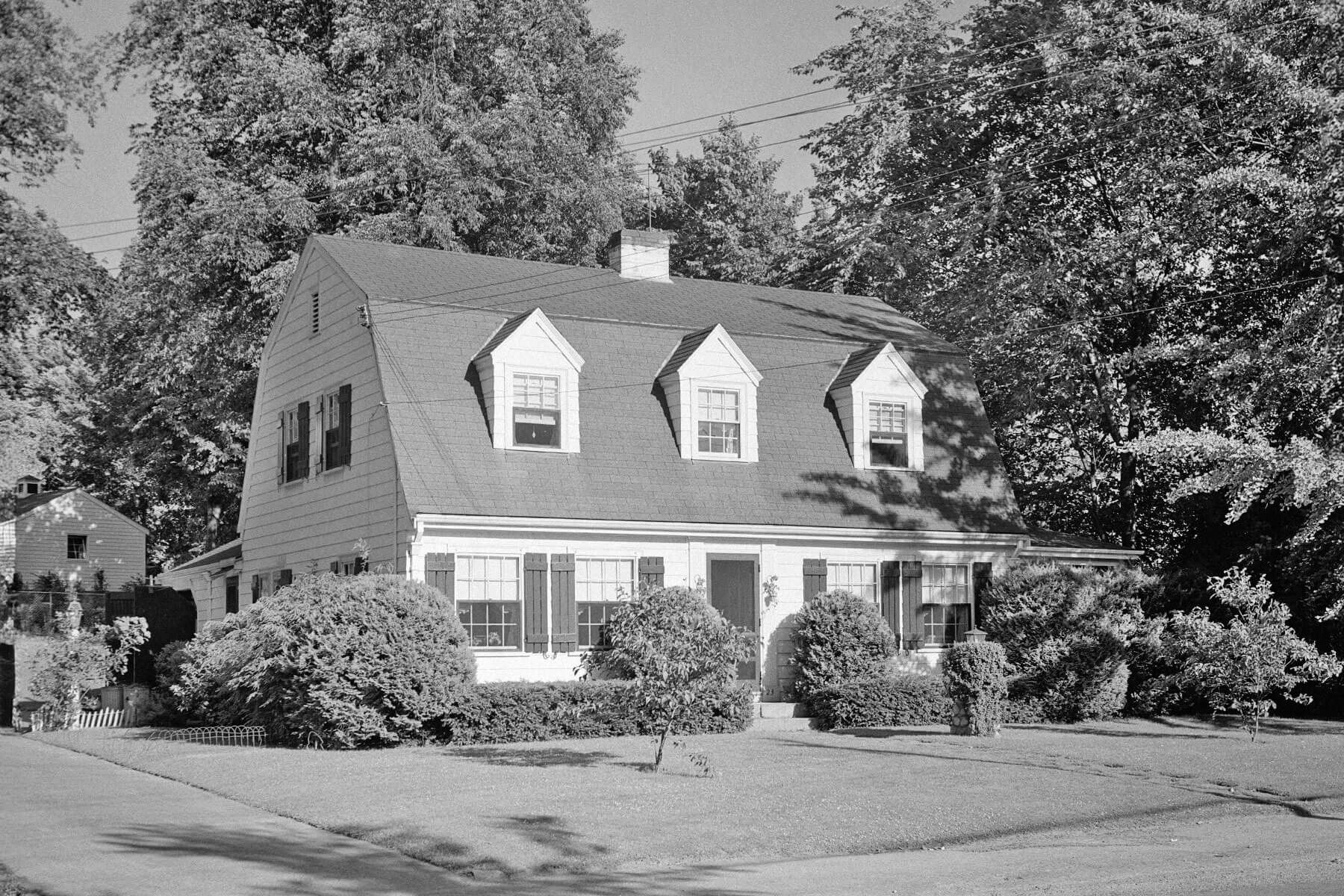
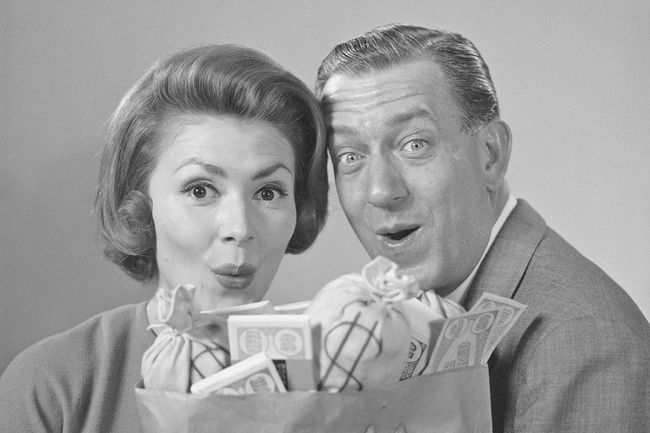
Elvis was on the radio, The Ed Sullivan Show was on the TV, and scores of people were hightailing it to the suburbs — this was 1950s America. It was a young nation, with 31% of its 151 million residents under age 18, and it was on the brink of change. Birth rates continued to rise at unprecedented levels, giving way to a new generation of “baby boomers.” The “nuclear family” (describing married couples with kids at home) was ingrained in the culture; more than half of all people (68% of men and 66% of women) were married. By the time the ’60s rolled around, many of these cultural norms would be upended, but this generation left a lasting mark on American society. Here is a snapshot of family life in the 1950s, by the numbers.

Photo credit: Mark Goebel Photo Gallery/ Archive Photos via Getty Images

Around 4 Million Babies Were Born Every Year

Post-World War II America saw a rapid increase in birth rates lasting from 1946 through 1964. It became known as the “baby boom,” and the 1950s were smack dab in the middle of it. During the ’50s, around 4 million babies were born every year in America, a sharp increase from the previous average, around 2.7 million births annually between 1910 and 1945. By the end of the boom, around 77 million babies had been born. This influx of births was due to many positive aspects of the postwar era, including low unemployment rates, a burgeoning economy, low interest rates, and a strengthened middle class. 

You may also like

Where Did All the Egg Cream Sodas Go?

  • Egg cream soda
Egg cream soda
Michael Kraus/ Shutterstock
Author Nicole Villeneuve

January 3, 2024

Love it?

Egg cream sodas were once the effervescent star of New York’s soda fountain scene. Today, the drink is little more than a nostalgic novelty, served up occasionally at old school spots and retro-themed bars intent on keeping the classic alive. So what happened to this once-beloved treat?

At the beginning of the 20th century, soda fountains were a common sight and popular meeting place in New York City. The name described both the equipment — a tap that dispensed carbonated soda water — and the business, which often meant a place that served food along with the bubbly drinks. When they first gained popularity in the mid-1800s, soda fountain machines were primarily used in drug stores. Pharmacists mixed seltzer, seen then as a medicinal drink, with potent or bitter-tasting drugs to make them more palatable. 

In the early 1900s, the fountains and the “soda jerks” who worked them moved on from serving just prescription drinks to a more tempting variety of sweets. As fountains proliferated in candy stores, ice cream parlors, luncheonettes, and department stores, carbonated water was mixed with fruit syrup, used to make ice cream floats, and featured as one of just three ingredients in an iconic New York City drink from the era: the egg cream soda.

Photo credit: Denver Post via Getty Images

Contrary to its name, an egg cream contained neither eggs nor cream. (No one is exactly sure where the name came from, though there are certainly lots of theories.) The soda was a mixture of chilled whole milk, seltzer water, and chocolate syrup (preferably Fox’s U-Bet Chocolate Syrup), whipped together to create a creamy, frothy, fizzy drink. It was one of the best-known drinks in the city at the time, but exactly how and when it made its way to New York soda fountains is the subject of competing theories. One of the most popular stories suggests that Louis Auster first whipped it up at his Lower East Side candy store around 1890. Auster made his own chocolate syrup and never revealed his recipe. Another theory involves the Ukrainian-born Yiddish theater star Boris Tomashevsky. It’s said that, while in New York in the 1880s, he may have asked a soda jerk to make a drink he had enjoyed in Paris — a “chocolat et creme.” Yet another story, detailed in New York Magazine in 1971, claims the egg cream wasn’t actually invented until the 1920s, and was the property of the uncle of sociologist Daniel Bell — Uncle Hymie’s recipe, however, did involve an egg.

You may also like

5 Essential Films About World War II

  • “The Best Years of Our Lives”
“The Best Years of Our Lives”
Bettmann via Getty Images
Author Michael Nordine

January 3, 2024

Love it?

Few events have been depicted on screen as many times and in as many ways as World War II, which is remarkable given how many stories are left to tell. Eighty years’ worth of movies have deepened our understanding of the 20th century’s defining conflict, and there’s little reason to suspect that filmmakers will stop anytime soon. If you’ve seen all the usual suspects — your Saving Private Ryans, your Casablancas — and want to explore beyond the frontlines, here are five essential movies about World War II.

Photo credit: IanDagnall Computing/ Alamy Stock Photo

To Be or Not to Be (1942)

With good reason, we rarely associate war with comedy — World War II least of all. The ability to make a charming, lighthearted picture about such a world-altering event as it was happening is part of the “Lubitsch Touch” that made German-born director Ernst Lubitsch one of the most acclaimed filmmakers of his or any other era. (Billy Wilder,  who directed such acclaimed movies as Double Indemnity, Some Like It Hot, and Sunset Boulevard, had a sign taped to his office wall asking, “How would Lubitsch do it?”)

To Be or Not to Be takes place in Nazi-occupied Warsaw, where a troupe of actors find themselves entangled in a scheme to track down a German spy. Whatever you think of their production of Hamlet, there’s no doubting their ability to trick the Nazis with their performances — or make you laugh at some truly dark jokes. The film was added to the National Film Registry by the Library of Congress in 1996 and remains one of Lubitsch’s most acclaimed works, no small feat considering he also directed Ninotchka, The Shop Around the Corner, and Heaven Can Wait.

You may also like

5 Little-Known Facts About the Berlin Wall

  • Peering over the Berlin Wall
Peering over the Berlin Wall
Bettmann via Getty Images
Author Anne T. Donahue

December 21, 2023

Love it?

As tensions rose between the Soviet Union and the West after World War II, Soviet Prime Minister Nikita Khrushchev sought to end the wave of emigration out of the USSR-controlled East Germany. The number of fleeing East Germans was staggering: Between 1949 and 1961, roughly 2.5 million people fled the state, a loss that threatened to upend the East German economy. Finally, after upwards of 65,000 citizens migrated to West Berlin between June and August 1961, East German leaders pushed for Moscow to close the border, and construction of the Berlin Wall began the night of August 12, 1961. 

The boundary started off as a barricaded barbed wire between East and West Berlin, and the effects were swift and merciless. Within two weeks, the border to the west was completely sealed — crossing was forbidden, and the wall was guarded by officers permitted to shoot attempted escapees on sight. For the next two decades, the now-infamous barrier served as a symbol of the political and ideological divide of the Cold War. Here are five interesting facts about this notorious structure.

Photo credit: Express Newspapers/ Hulton Archive via Getty Images

The Name “Checkpoint Charlie” Came From the NATO Phonetic Alphabet

Berlin was divided into four sectors following the Second World War. The Soviet Union controlled the eastern part of the city, while France, the United States, and Britain controlled three sectors in the west. There were three major checkpoints along the Berlin Wall, which monitored the border crossings of foreigners, diplomats, and military officials: Checkpoint Alpha, Checkpoint Bravo, and the most famous, Checkpoint Charlie. The names of all three checkpoints originated with the NATO phonetic alphabet, representing the letters “A,” “B,” and “C.” Checkpoint Charlie was located in the heart of Berlin, and marked the divide between the Soviet and American zones. It became a symbol of the Cold War divisions, and is now a historical site and memorial in Berlin.

You may also like

The History of Calendars, in 7 Facts

  • The Gregorian calendar
The Gregorian calendar
PHAS/ Universal Images Group via Getty Images
Author Anne T. Donahue

December 21, 2023

Love it?

The humble calendar of one of civilization’s oldest staples. The earliest means of measuring days and weeks dates back 10,000 years, and timekeeping techniques adopted by the ancient Babylonians, Egyptians, and Romans slowly evolved into the calendar we use today. Yet the emphasis here is on “slowly.” The evolution from charting moon phases to separating seasons to measuring fiscal years was one of controversy and chaos across centuries. Still, humans never stopped working to perfect how we mark the passage of time. Here’s a brief look at the fascinating history of calendars, just in time to start a new one.

Photo credit: Buyenlarge/ Archive Photos via Getty Images

The First Known Calendar Is From Prehistoric Scotland

In 2013, British archaeologists discovered what they consider the world’s oldest calendar, dating back to around 8000 BCE. The prehistoric calendar, located at Warren Field in Scotland, consists of 12 pits believed to have contained wooden posts representing months of the year. Positioned to chart lunar phrases, the pits are aligned with the southeast horizon and were likely used by hunter-gatherer societies to track seasons. The site precedes Stonehenge by several thousand years.

You may also like

A Tiny History of Dollhouses

  • Playing with a dollhouse
Playing with a dollhouse
G-Stock Studio/ Shutterstock
Author Nicole Villeneuve

December 20, 2023

Love it?

The concept of miniature dwellings traces back to ancient civilizations, when Egyptians placed small clay replicas of their houses and belongings in and around burials. These models were intended to provide the comforts of home to the deceased in the afterlife. Although the tiny dwellings we know as dollhouses today are quite different from these ancient versions, their history also includes purposes other than play. Over the last 500 years, dollhouses have evolved from elaborate displays for adults, to useful household teaching tools, to enduring objects of imagination and aspiration for children. 

Photo credit: Milan Tesar/ Shutterstock

Early Origins

The earliest known dollhouses were made in the 16th century, primarily in Germany, and later in Holland and England. Known as a “dockenhaus” (miniature house), “cabinet house,” or “baby house” (because of the size, not the intended audience), these handcrafted items were not initially made for children to play with — they served as display cases for wealthy adults to fill with miniature furniture, fabrics, and artwork that reflected their own taste and lifestyle. 

One of the earliest recorded examples of a dollhouse is the Munich Baby House. Commissioned by Albert V, the Duke of Bavaria, in the 1550s, the piece was made by skilled artisans in the shape of a royal residence (instead of a wooden cabinet like the dominant style that soon followed). Though the Munich Baby House was lost in a fire in the 1600s, Albert V had the object detailed in an inventory of his household goods. Historians believe that the Munich Baby House was likely made for the duke’s entertainment, but some suggest it may have been built as a gift for his daughter, which would make it an early example of a dollhouse for children.

You may also like

7 Things You Would Find on a City Street 100 Years Ago

  • Model T Fords at beach
Model T Fords at beach
Minnesota Historical Society/ Corbis Historical via Getty Images
Author Tony Dunnell

December 20, 2023

Love it?

If we could travel back 100 years and land on a typical city street, we’d probably be mightily discombobulated. Some things would seem familiar: the buzz of the urban environment, people walking this way and that, and buildings with facades that could well still exist today. But looking around, we’d soon realize that we weren’t in Kansas anymore — or if we were, it would be Kansas City in the 1920s. 

A century ago, America was going through a monumental change. For the first time in U.S. history, more people were living in urban areas than in rural areas. The cities were booming, and for many middle-class Americans, the 1920s were a decade of unprecedented prosperity. People were earning more and spending more, advertising had reached new levels of sophistication, and the automobile was changing the way we live. 

So, before you step into that time machine, you’d better brace yourself. Here are seven things you’d find in a city street a century ago, back in the dizzying days of the Roaring ’20s. 

Photo credit: DEA / BIBLIOTECA AMBROSIANA/ De Agostini via Getty Images

Incandescent Street Lights

Before the development of practical light bulbs, street lights typically used piped coal gas, oil, or kerosene as fuel. The first electric streetlights were installed in Paris in 1878, but these used unwieldy and harsh arc lamps. Then came inventors such as Joseph Swan in the U.K. and Thomas Edison in the U.S., both of whom patented revolutionary incandescent light bulbs in 1880. Incandescent street lamps became the norm in many cities throughout the world, and the 1920s saw a wave of patents filed for innovative new street lighting. These electric lights, however, were often placed where they were needed rather than lining a whole street. So, 100 years ago, a city street at night would not have been as brightly lit as it is today, and pedestrians would often find themselves walking from one pool of yellowish light to the next. 

You may also like

6 Surprising Etiquette Rules From the Past

  • Formally dressed couple
Formally dressed couple
H. Armstrong Roberts/ClassicStock/ Archive Photos via Getty Images
Author Kristina Wright

December 20, 2023

Love it?

The concept of etiquette dates back to Europe during the medieval era, when rules and social conventions first gained prominence. During the Renaissance, expectations of behavior at royal and noble courts were outlined in courtesy books, or books of manners. In the 19th century, etiquette manuals continued to flourish in Europe and the United States, guiding behavior for ladies and gentlemen in both social and professional settings. By the early 20th century, these guidebooks were increasingly popular with both wealthy and middle-class women in the U.S., and author Emily Post became the definitive expert with the publication of her first book of etiquette in 1922.

Today, the rules of behavior observed by previous generations might seem old-fashioned and strange, and certainly there are some social conventions better left in the past, as they reflect the inequality and biases of bygone eras. But etiquette itself isn’t inherently outdated. While specific customs may evolve, the underlying principles of courtesy, respect, and consideration for others remain as relevant today as they were a century or two ago. With that in mind, here are some of the most unusual and surprising etiquette rules from decades past.

You may also like

5 of the Best History Documentaries Ever

  • Camera recording
Camera recording
Daniel Tadevosyan/ Shutterstock
Author Mark DeJoy

December 14, 2023

Love it?

A good documentary can make for one of the more edifying experiences available to moviegoers. A great documentary makes for one of the more edifying experiences available, period — it shows us something we didn’t already know, or gives us a better understanding of something we thought we knew. But what makes a documentary qualify as one of the best of all time? “Best” is admittedly a subjective word, but for our purposes here, we’ll define it not just as a film that illuminates a particularly substantial topic to enduring effect, but a film that has consensus regard. The following documentaries are works that show up on a multitude of best-of lists, from industry polls to culture magazines, and more.

Photo credit: TCD/Prod.DB/ Alamy Stock Photo

Shoah (1985)

When Shoah was released in 1985, Roger Ebert called it “one of the noblest films ever made,” and its regard hasn’t slipped since. Director Claude Lanzmann spent 12 years interviewing survivors of concentration camps at Auschwitz, Treblinka, Chelmno, Sobibor, and Belzec, as well as former German SS officers and the Polish townspeople who lived in the surrounding areas. Lanzmann famously eschewed archival footage, comprising the entirety of the nine-hour film with interviews intercut with location footage. It’s a powerful, ponderous approach that grounds Shoah in the humanity of the aftermath of the Holocaust, versus dusty newsreels, which risk feeling detached. It is not an easy topic to take in, but as Ebert concluded, “Claude Lanzmann celebrates the priceless gift that sets man apart from animals and makes us human, and gives us hope: the ability for one generation to tell the next what it has learned.”

You may also like

The Best History Movies of 2023

  • “Napoleon” film, 2023
“Napoleon” film, 2023
Credit: TCD/Prod.DB/ Alamy Stock Photo
Author Kristina Wright

December 14, 2023

Love it?

Since the beginning of cinema, historical movies have been popular for their ability to transport audiences to bygone eras. These films serve as a cinematic journey into the past, reflecting our enduring fascination with history and its influence on modern culture. The most popular historical films of 2023 offer a new look at events that shaped our world, from the Manhattan Project to the Battle of Waterloo. Here, then, is a glimpse at some of the most memorable and powerful historical movies of the year.

Photo credit: FlixPix / Alamy Stock Photo

Oppenheimer

Written and directed by Christopher Nolan, Oppenheimer traces the life of  J. Robert Oppenheimer, the American theoretical physicist called the “father of the atomic bomb” for his role in the development of nuclear weapons for the U.S. government’s Manhattan Project. With a three-hour running time, the historical drama features an all-star cast that includes Cillian Murphy as Oppenheimer; Matt Damon as Leslie Groves, the head of the Manhattan Project; Robert Downey Jr. as Lewis Strauss, a U.S. Atomic Energy Commission member; Emily Blunt as Kitty, Oppenheimer’s wife; and Florence Pugh as psychiatrist and communist Jean Tatlock, Oppenheimer’s lover.

Inspired by the 2005 biography American Prometheus, and a collection of Oppenheimer’s speeches, Nolan wanted to explore how Oppenheimer grappled with the implications of his work. Nolan, best known for a string of moody, cerebral blockbusters including the Dark Knight trilogy, Interstellar, Tenet, and the World War II epic Dunkirk, has crafted another hit with Oppenheimer. With an 8.4/10 rating on IMDb, Oppenheimer has almost hit the $1 billion mark in global box-office sales, and Variety hailed the film as an “across-the-board contender” for Oscar wins.

You may also like