


The Most Successful Ad Campaigns of All Time

  • Dove soap bar
Dove soap bar
Akshay Bandre/ Unsplash
Author Anne T. Donahue

January 25, 2024

Love it?

In a world inundated with ads, it’s rare for one to become an indelible part of the cultural landscape. As modern advertising evolved from its 17th-century print origins, it grew into an art form that entrenched itself in popular culture and changed the relationship between company and consumer. Yet amid the sea of print ads, commercials, and social media campaigns that have launched over the years, a few outliers have managed to stand out from the crowd, lodging themselves in the collective consciousness and successfully changing the conversation. These five iconic ads are generally considered among the most successful ad campaigns of all time.

Photo credit: Nelson Ndongala/ Unsplash

Nike: “Just Do It”

In 1988, the advertising agency Wieden+Kennedy debuted the “Just Do It” campaign, and catapulted Nike into the realm of cultural iconicism. Written by agency co-founder Dan Wieden, the slogan debuted in a TV spot for what was then a relatively small sportswear company. The empowering catchphrase was intentionally open-ended, and sought to capitalize on the decade’s enthusiasm for self-determinization and personal achievement. The idea for those three little words has a darker origin, however. The phrase was adapted from the last words uttered by convicted killer Gary Gilmore, who, shortly before his execution by firing squad, said, “Let’s do it.” Wieden and his collaborators swapped out a word, and the rest is history.

You may also like

The Story of the Harlem Renaissance, in 6 Facts

  • Marcus Garvey in Harlem
Marcus Garvey in Harlem
Michael Ochs Archives via Getty Images
Author Nicole Villeneuve

January 25, 2024

Love it?

Throughout the 1920s, New York City’s Harlem neighborhood served as the vibrant headquarters of a transformative period in African American art, literature, music, and social justice leadership. This movement, known as the Harlem Renaissance, was a catalyst for celebrating African American culture and heritage, giving the Black community newfound ownership of their experiences and pride in how their stories were told. It also sought to challenge racial stereotypes and forge social and political equality, planting ideas that would be meaningful for years to come. Here, told in six facts about the movement, is the story of the Harlem Renaissance.

Photo credit: Bettmann via Getty Images

It Started With the Great Migration

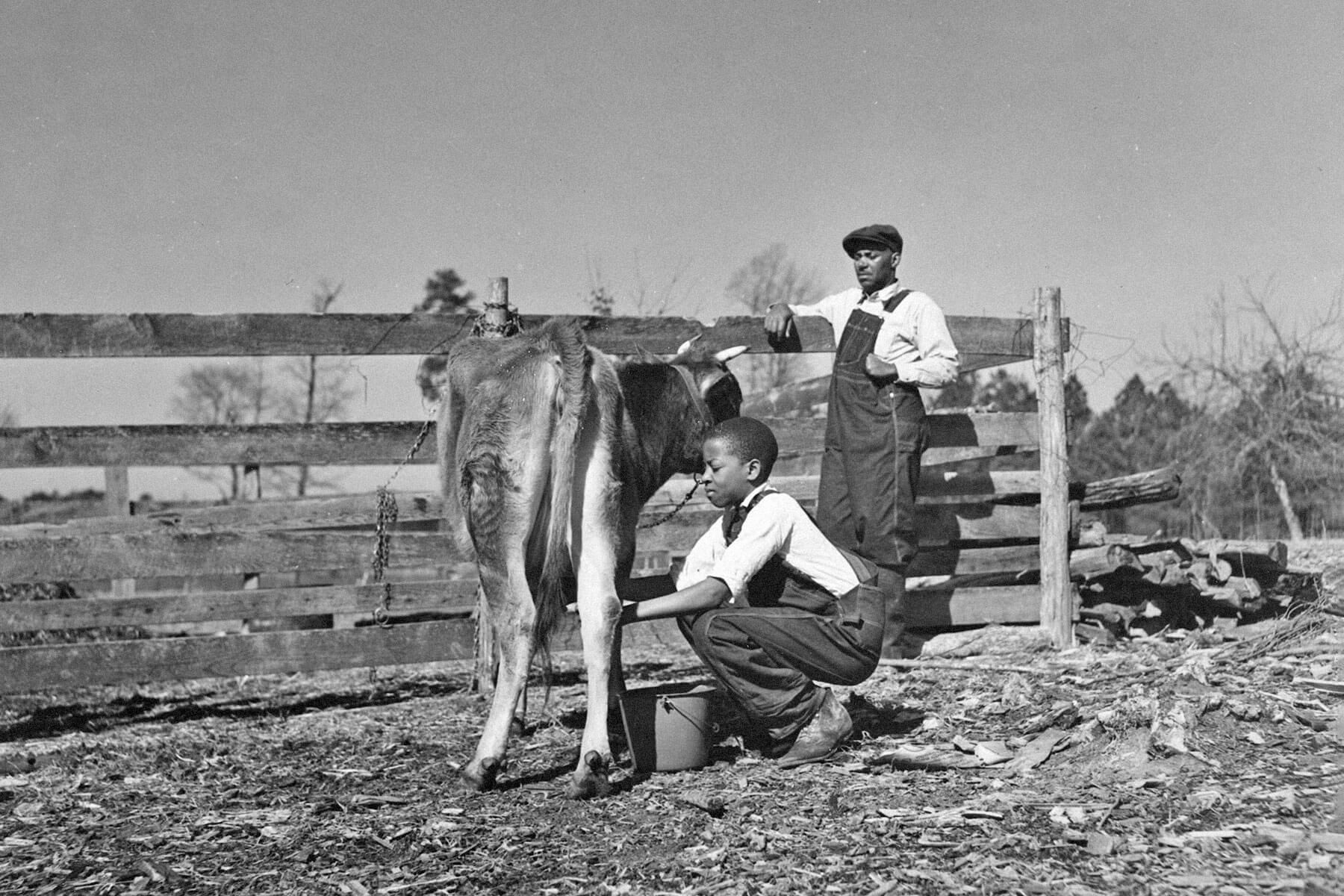
From the 1910s until the 1970s, approximately 6 million Black Americans made their way from the Southern U.S. to Northern, Midwestern, and Western states, fleeing racial discrimination and economic hardships, and seeking better work and education opportunities. Known as the Great Migration, this mass movement transformed the country’s demographic landscape and was a major impetus for the Harlem Renaissance. By the 1920s, some 200,000 newcomers had made the New York City neighborhood of Harlem home; at just 3 square miles in size, the neighborhood had the largest concentration of Black people in the world, with people from all backgrounds, including artists, laborers, scholars, and writers. By the early ’20s, a vibrant cultural community was blossoming in this small corner of Upper Manhattan. 

You may also like

What Was the War of 1812?

  • Military ships at sea
Military ships at sea
Bettmann via Getty Images
Author Mark DeJoy

January 18, 2024

Love it?

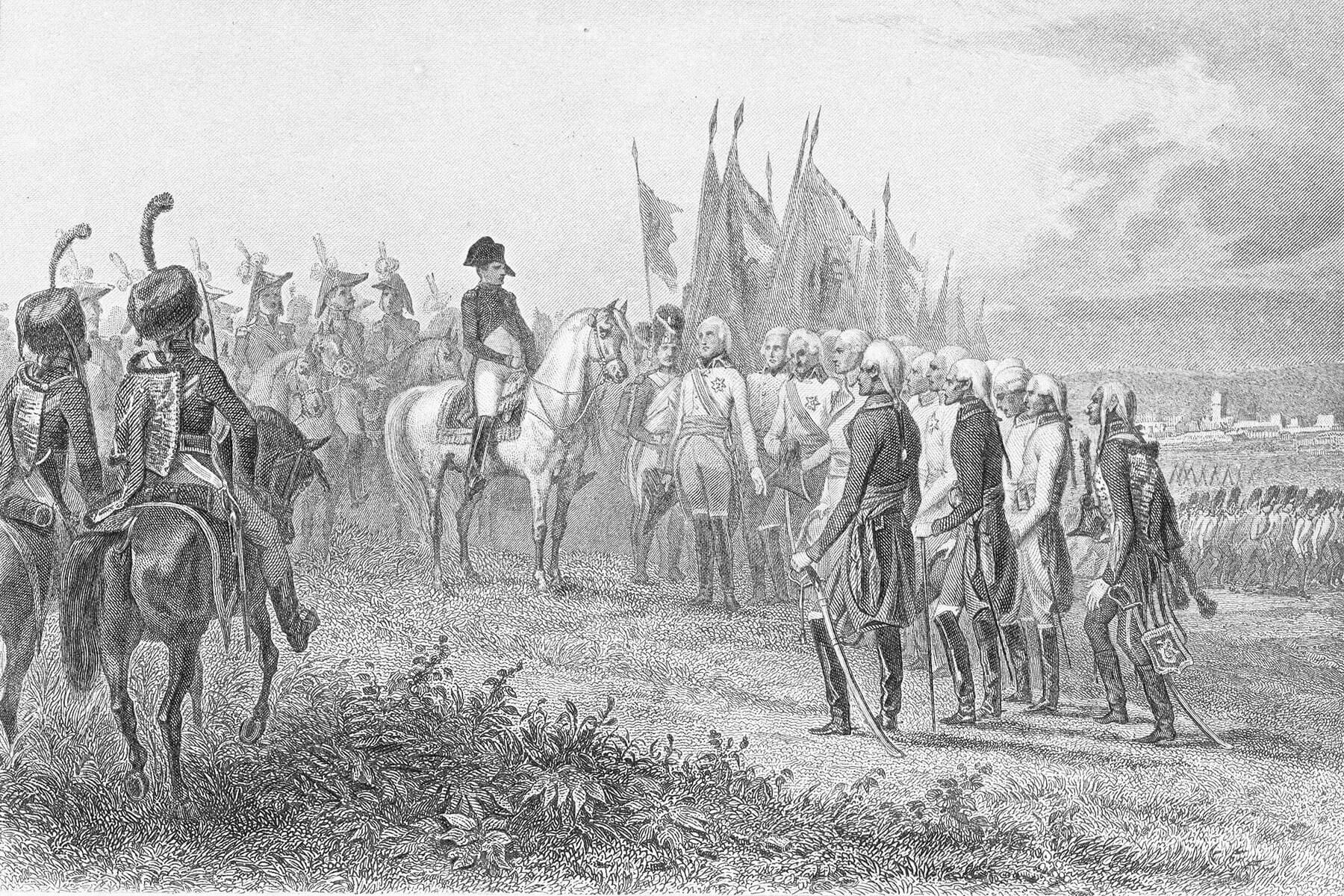
The Korean War is nicknamed “the Forgotten War,” but the War of 1812 — fought between the United States and Great Britain just a few decades after America won its independence — certainly rivals it in terms of its lack of place in the collective national memory. Maybe it’s because the war took place two centuries ago; maybe it’s the placement between two major American wars that largely overshadow it (the Revolutionary War and Civil War). Maybe it’s the relatively nondescript name. Whatever the reason, asking the average American for details about the War of 1812 is likely to be met with a shrug. Let’s make some sense of this obscure yet formative conflict.

You may also like

5 Key Moments in the History of Rock ’n’ Roll

  • The Beatles
The Beatles
John Downing/ Hulton Archive via Getty Images
Author Tony Dunnell

January 18, 2024

Love it?

It’s hard to say precisely when rock ’n’ roll began, though the genre has its roots in African American music such as jazz, rhythm and blues, boogie-woogie, and gospel, as well as country music. Ask a room full of music historians what the first rock ’n’ roll record was and you’ll likely receive a number of different answers. Was it Sister Rosetta Tharpe’s “Strange Things Happening Every Day” in 1944? Or perhaps “Rocket 88,” first recorded in Memphis by Jackie Brenston & His Delta Cats in 1951? Or Bill Haley & His Comets’ 1955 single “Rock Around the Clock?” It’s hard to say for sure. 

What we do know is that rock ’n’ roll became a defined mainstream genre during the 1950s, when the sound and the image coalesced around one man: Elvis Presley. Elvis took rock music to new and giddy heights, bringing about a seismic shift in popular culture — and causing deep concern among certain sections of society that considered rock the “devil’s music.” Once unleashed, however, there was no going back: Rock ’n’ roll was here to stay. Here are some of the most defining moments in the history of the genre, from the King himself to the rise of MTV.
Photo credit: Michael Ochs Archives via Getty Images

Elvis on Ed Sullivan 

On September 9, 1956, Elvis Presley made his first appearance on The Ed Sullivan Show. At this point, Elvis had already put out a number of successful singles, and his debut album, Elvis Presley, released in March 1956, was the first rock ’n’ roll album to make it to the top of the charts. Elvis had yet to cement his status as the “King of Rock ’n’ Roll,” but his first performance on Ed Sullivan can be seen as his coronation. He performed a number of songs — including “Don’t Be Cruel,” “Hound Dog,” and “Love Me Tender” — in front of screaming audience members at the studio and watching from home. Despite ongoing fears that his hip-shaking gyrations would corrupt the nation’s youth, viewers were given full head-to-toe shots of the 21-year-old singer’s performance. The show was a massive success, as 60 million people — 82.6% of the entire television audience at the time — tuned in to watch the then-21-year-old perform. 

You may also like

5 of the Strangest Days in History

  • Conceptual image of time
Conceptual image of time
DKosig/ iStock
Author Sarah Anne Lloyd

January 18, 2024

Love it?

There have been 91,310 days in the last 250 years, but only a few of them stand out as singularly odd. Unexplained phenomena, surprising coincidences, and, in some cases, a strange quiet, don’t happen every day — especially on a massive scale.

From the day an entire region thought the apocalypse was coming, to the day apparently nothing of note happened at all, some days really stand out.. Next time you’re having an eerie day, put it in perspective with these five dates. 

Photo credit: duncan1890/ iStock

May 19, 1780: New England’s Dark Day

This Friday in May started out like any other, with the sun rising and bringing daylight with it. But if you happened to be in the northeastern United States or small parts of southeastern Canada, the sky was yellow by midmorning and completely darkened by noon. This would be disorienting at best even today, but in the 18th century, without the benefit of modern science to explain what happened, it was even more harrowing. 

People left work and school and flooded into churches and taverns. Some believed it was the second coming of Christ. Others decided to stay put; one state legislator famously said, in response to his colleagues calling for adjournment, “The day of judgment is either approaching, or it is not. If it is not, there is no cause for an adjournment; if it is, I choose to be found doing my duty. I wish therefore that candles may be brought.”

The moon came out around midnight that night, much to the relief of those who thought it was judgment day. Nobody knew what caused the darkness at the time, but the likely culprit, based on reports from the period and physical evidence on older trees, was wildfire smoke blowing in from Canada.

You may also like

Photos of New York City Through the Decades

  • Manhattan skyline, 1940s
Manhattan skyline, 1940s
Hulton Archive via Getty Images
Author Mark DeJoy

January 18, 2024

Love it?

The first known inhabitants of what is now New York City were the Lenape (aka Delaware), an Indigenous people native to the northeastern U.S. Their villages were groupings of round-shaped wigwams constructed from bark, some of which were large enough to function as communal housing. The name “Manhattan” comes from the Lenape “Manahatta,” their word for a hilly, forested area, which roughly translates to “the place for gathering wood to make bows.” But when Dutch colonists acquired the land around New York Harbor in 1626, they named it New Amsterdam.

Photo credit: Hulton Archive via Getty Images

1600s and 1700s

The Dutch constructed modest red tile-roofed brick and stone buildings, warehouses to support the fur trade, a church, and thatch-roofed wooden homes, in the style of a small European village. They also built a series of walls bordering the settlement in order to protect it against attacks — the street that was originally adjacent to one of the walls is known today as Wall Street.

You may also like

Vintage Photos of 1960s Air Travel

  • Airport passenger entry
Airport passenger entry
Harvey Meston/ Archive Photos via Getty Images
Author Anne T. Donahue

January 12, 2024

Love it?

The 1960s marked an exciting new era in air travel. The inclusion of jet engines on commercial planes led to the emergence of larger, faster vessels such as the Boeing 707, and made flying a more affordable and accessible way to travel. It was also a luxury experience: The golden age of air travel cultivated an in-flight atmosphere akin to a cocktail party as guests dined, drank, and smoked en route to their destination.

These glamorous flights were a far cry from the buslike airplanes of the 21st century. Aircraft interiors in the 1960s were more roomy and colorful, and boasted a cultivated aesthetic that applied to everything from flight attendants’ uniforms to dining utensils. Between 1958 and 1972, almost half of all Americans had taken to the friendly skies. Here’s a glimpse of what they would have experienced.

Photo credit: HUM Images/ Universal Images Group via Getty Images

Airports Were Bright, Spacious, and a Testament to Midcentury Design

In the middle of the 20th century, airport guests were treated to state-of-the-art architecture. Features such as floating staircases, designer seats, and minimalist accents made terminals warm and comfortable; bars and lounges were bright and capacious. Today, some travelers can still live like it’s the 1960s: In 2019, JFK Airport in New York City opened the TWA Hotel, an homage to the airport’s original TWA terminal. The refurbished terminal was updated to accommodate overnight guests and diners; the retro space incorporates design elements from the terminal’s original rooms and lounges.

You may also like

5 Facts About the Golden Age of Radio

  • Tuning a radio
Tuning a radio
Unsplash+ via Getty Images
Author Mark DeJoy

January 12, 2024

Love it?

It’s easy to take for granted today, but the emergence of broadcast radio was a seismic shift in early 20th-century culture. Born out of ship-to-shore wireless telegraph communication at the turn of the 20th century, broadcast radio represented an entirely new pastime by the time it began to mature in the 1920s. The golden age of radio was the period from the 1920s to the 1950s when the medium was at its absolute peak in both program variety and popularity. Radio grew massively during this era: In 1922, Variety reported that the number of radio sets in use had reached 1 million. By 1947, a C.E. Hooper survey estimated that 82% of Americans were radio listeners. 

In addition to the music, news, and sports programming that present-day listeners are familiar with, radio during this period included scripted dramas, action-adventure series such as The Lone Ranger, science fiction shows such as Flash Gordon, soap operas, comedies, and live reads of movie scripts. Major film stars including Orson Welles got their start in radio (Welles became a household name in the wake of the infamous panic sparked by his 1938 broadcast of The War of the Worlds), and correspondents such as Edward R. Murrow established the standard for broadcast journalism. President Franklin D. Roosevelt used the medium to regularly give informal talks, referred to as fireside chats, to Americans listening at home. But radio was also largely influenced by advertisers, who sometimes wielded control of programming right down to casting and the actual name of the program, resulting in some awkward-sounding show titles, such as The Fleischmann’s Yeast Hour. The golden age of radio was a combination of highbrow and lowbrow content, offering both enduring cultural touchstones and popular ephemera — much like the television that eclipsed it. Read on for five more facts from this influential era.

You may also like

Where Did the Peace Symbol Come From?

  • Nuclear disarmament protest
Nuclear disarmament protest
Keystone/ Hulton Archive via Getty Images
Author Nicole Villeneuve

January 12, 2024

Love it?

In 1958, amid growing fears of Cold War nuclear proliferation, thousands of people gathered in London’s Trafalgar Square on Good Friday. The protesters were there to embark on a 50-mile march to the Atomic Weapons Research Establishment in Aldermaston, a small village where England carried out weapons research, production, and testing. The demonstration was the work of the Direct Action Committee Against Nuclear War (DAC) and the newly formed Campaign for Nuclear Disarmament (CND), and it featured the debut of an image that became one of the most recognized protest symbols in the world: the peace symbol.

You may also like

The Rise of Plastic: A History of Credit Cards

  • Credit card for payment
Credit card for payment
Nattakorn_Maneerat/ Shutterstock
Author Anne T. Donahue

January 12, 2024

Love it?

When the credit card was introduced in 1950, the American public was already well acquainted with buying on credit, through personal loans and store credit accounts. But the introduction of the Diners Club card, the first modern charge card, made spending even more convenient: Customers could use their club cards at a variety of restaurants, and pay the balance at the end of the month. A cashless approach to consumption began.

By the end of the ’50s, most Americans had embraced the concept of buying now and paying later. In 1958, the Bank of America in California launched the BankAmericard, the first general-purpose credit card that could be used wherever it was accepted. It also introduced a key feature of modern credit cards: Unlike with the Diners Club card, customers could carry a balance into the following month, provided they paid the amount of interest accumulated. By 1966, the practice had become commonplace as more states licensed the BankAmericard, which was rebranded as Visa in 1970. Here are five fascinating facts about the history of credit cards.

Photo credit: Fairfax Media via Getty Images

Women Couldn’t Have Their Own Credit Cards Until 1974

As late as the mid-1970s, women were put through a demeaning gauntlet when applying for a credit card. Married women were only issued cards under their husband’s name, and single women needed a male family member to act as co-signer. Even if a woman was able to make payments on her sole income, she could still be denied credit, effectively crippling her financial prospects. In a major step toward gender equality, the Supreme Court ruled in 1971 that assigning more financial power to men than women simply on the basis of sex was unconstitutional, violating the Equal Protection Clause of the 14th Amendment. The case laid the groundwork for the Equal Credit Opportunity Act passed in 1974, which stated that people could not be denied credit based on gender, religion, or race.

You may also like