


What Ever Happened to the Milkman?

  • Milkman making a delivery
Milkman making a delivery
Credit: Bettmann via Getty Images
Author Nicole Villeneuve

May 8, 2024

Love it?

Grocery deliveries may be a modern convenience, but the service hearkens back to a bygone era when clinking glass bottles signaled the arrival of the milkman. The milkman (or milkwoman, though the job was usually held by men) is a cherished fixture of American history, as a prominent part of much of the 19th and 20th centuries. While milk remains a staple of the American diet, changes in consumerism and technology have made the once-ubiquitous milkman a relic of the past. 

Credit: Smith Collection/Gado/ Archive Photos via Getty Images

Cattle farming was a common means of sustenance in the early United States, beginning with the colonial era in the 16th century and continuing for the next few centuries. Many farming families produced milk, butter, and cheese for themselves and their local community. By the 19th century, the U.S. saw a rapid transformation due to industrialization and urbanization; people moved from rural areas to urban centers where better employment opportunities awaited. Owning a cow and making milk was much more impractical for these new city folk, but the demand for dairy remained.

The concept of the milkman emerged around the late 18th century. The earliest providers filled large metal barrels with fresh milk right from the cow, carrying them by horse-drawn cart to customers’ homes. Milk was ladled into whatever containers were available, including pitchers, jugs, or pails. This often meant that the milk was contaminated by debris — anything from hair to dirt to insects. The advent of the now-iconic glass milk bottles in the late 19th century was a major advancement for both the convenience and the hygiene of milk delivery. Early bottles often had glass lids held on with metal clamps and were embossed with the name of the dairy that used them. Glass bottles were replaced by single-use, wax-coated containers in the 20th century, but to this day, glass milk bottles remain a niche, nostalgic emblem of another time.

You may also like

What Life Was Really Like in Regency-Era England

  • Regency-era men and women
Regency-era men and women
Credit: Historical Images Archive/ Alamy Stock Photo
Author Rachel Gresh

May 7, 2024

Love it?

England’s Regency era was one of its most defining. During this time, Jane Austen published her first novels, bare-knuckle boxing was a favorite pastime, and young women carried around tiny portraits of the poet Lord Byron — the original teen heartthrob. The period, which spanned just nine years from 1811 to 1820, is named for its ruler, George Augustus Frederick, Prince of Wales (later King George IV), who was declared prince regent on February 5, 1811. The prince served as regent due to the illness of his father, George III (often referred to as the “Mad King”), before ascending to the throne in 1820 upon the king’s death.

The Regency era is undeniably popular in television and film, but contrary to what is portrayed in the hit Netflix series Bridgerton, life in England during this period went beyond the gossip of the “ton” (the British aristocracy), budding romances, and ornate ballroom parties. The period saw a flourishing of arts and literature and the start of the Industrial Revolution, all while being rocked by the Napoleonic Wars and the aftermath of American independence and the French Revolution. It was a time of great social strife, political changes, war, and technological advancements that permanently altered British society. Here is a snapshot of what life was like during the Regency era.

England Was Perpetually at War

Credit: Hulton Archive via Getty Images

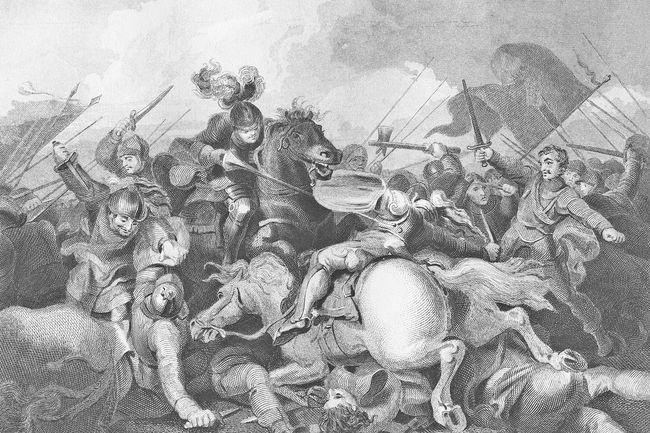
England was embroiled in two major conflicts during the prince regent’s rule. The Napoleonic Wars began in 1799, and although the Duke of Wellington’s Anglo-Allied army ended Napoleon’s reign in June 1815 at the Battle of Waterloo, the British government had spent nearly £1.7 billion on the war effort (roughly $230 billion today)  — an expense mainly shouldered by the British taxpayers. At the same time, England was at war with the newly independent United States yet again over maritime rights in the War of 1812. Along with taking a monetary toll on citizens, the war called many young men into battle. By the end of the Regency era, the British army grew to six times its previous size, to around 250,000 soldiers. 

You may also like

How Did People Wake Up on Time Before Alarm Clocks?

  • Man waking up to alarm
Man waking up to alarm
Credit: Bettmann via Getty Images
Author Nicole Villeneuve

May 7, 2024

Love it?

Timekeeping technology has come a long way from ancient Egyptian sundials, and with it, so has the ability to wake up at whatever precise time might be needed for work, school, or appointments — even if we often ignore a ringing alarm in favor of snoozing for just 10 more minutes. While the demands of modern society are certainly more rigid than they once were, people have long had various reasons to keep a tight schedule, and at times they had to rely on more than just the crow of the rooster or the chirping of birds at dawn to make sure they were up to meet the day.

The most basic way people woke up before the invention of alarms was strictly biological in nature. Long before the advent of mechanical clocks or artificial light, people lived in harmony with the natural rhythms of day and night. Two biological processes dictate this natural sleep-wake cycle: homeostasis and circadian rhythms. Homeostasis governs our body’s drive for sleep, which increases the longer we’re awake and dissipates once we fall asleep, eventually signaling when it’s time to wake up. Circadian rhythms, meanwhile, control alertness and drowsiness throughout the day, influenced by light (more alert) and darkness (sleepy time). 

Credit: ArtemisDiana/ iStock

This isn’t the only internal body process that served as a primal wake-up call before alarm clocks: Some people relied on their bladders. In biographer Stanley Vestal’s 1984 book about the life of 19th-century Lakota warrior White Bull, he noted, “Indian warriors could determine in advance their hour of rising by regulating the amount of water drunk before going to bed.” Of course, these bodily functions still exist as natural wake-up calls, but circadian rhythms often get disrupted by modern light sources such as screens, and given the strict nature of our 21st-century work schedules, one’s bladder might not be the most reliable alarm.
You may also like

Strange Parenting Etiquette From the Past

  • Baby cage outside window
Baby cage outside window
Credit: Fox Photos/ Hulton Archive via Getty Images
Author Nicole Villeneuve

May 2, 2024

Love it?

Being a parent has been a demanding job since the dawn of humanity. While modern-day parents have access to a plethora of parenting resources and tools across social media, blogs, and podcasts, well-meaning — if not entirely well-informed — figures have offered advice about child-rearing for centuries. 

Parenting advice became more widespread throughout the 19th and early 20th centuries, when perceptions about childhood began to shift toward the belief that children are entitled to dependence and innocence rather than hard work and responsibilities in their formative years. Most of the advice on taking care of infants and children was morally guided, versus scientifically, and as a result, such advice often sounds strange or even downright alarming by our contemporary standards.

From giving babies alcohol to smearing lard on their skin and denying snacks to older children, here is some of the strangest parenting etiquette from decades past.

A Spoonful of Opium Keeps the Tears Away 

Credit: The New York Historical Society/ Archive Photos via Getty Images

In an era before evidence-based medicine, parents often relied on dubious remedies to treat common childhood ailments. Substances such as Stickney and Poor’s Pure Paregoric syrup and Godfrey’s Cordial were commonly given to babies in the 19th century to relieve gas, soothe teething pain, and treat unexplained fussiness. The secret ingredients? Alcohol and opium. 

Mrs. Winslow’s Soothing Syrup was also a popular treatment at the time. The syrup was advertised as a method of pacifying young children, helping with dental hygiene, and alleviating constipation, and it was said to be suitable for babies as young as newborns. While the vibrant marketing featured cheerful imagery of happy babies and mothers, the syrup, a concoction that included morphine and alcohol, resulted in the loss of thousands of children until it was denounced by the American Medical Association in the early 1900s. 

These were far from the only bizarre remedies peddled before modern medicine. Many teething treatments contained mercury, even though administering them could result in “pink disease,” which caused discoloration of the skin, sensitivity to light, swelling of the hands and feet, and, in severe cases, neurological symptoms.
You may also like

10 Things You Probably Didn’t Know About Abraham Lincoln

  • President Abraham Lincoln
President Abraham Lincoln
Credit: Katherine Young/ Hulton Fine Art Collection via Getty Images
Author Tony Dunnell

May 2, 2024

Love it?

Abraham Lincoln is often called the greatest president in the history of the United States, or at least in the top three alongside George Washington and Franklin D. Roosevelt. Not only did he guide America through the Civil War and help bring about an end to slavery, but “Honest Abe” was also widely regarded as a good man (though his legacy may be more complicated than the broad strokes of history would suggest). His speeches, too — such as the brief but impactful Gettysburg Address — rank among the most important in American history. 

Incredibly, between 15,000 and 18,000 books have been written about the 16th president of the United States. That’s an awful lot of reading, so to save you some time, here are 10 things you probably never knew about Abraham Lincoln. 

Image Ad

Lincoln Wore a Size 14 Shoe

Credit: Haydn West – PA Images via Getty Images

Lincoln’s feet were the biggest in U.S. presidential history. He wore a size 14 shoe, which made finding adequate footwear something of a problem. As a result, he often suffered from sore feet. He found comfort in the hands of Issachar Zacharie, a controversial podiatrist and con artist who despite lying about having a medical degree, among other things, managed to become one of Lincoln’s closest confidants. 

You may also like

These Are the Oldest Recorded Recipes

  • Cuneiform tablet
Cuneiform tablet
Credit: Gorodenkoff/ Shutterstock
Author Mark DeJoy

May 1, 2024

Love it?

Determining the oldest recipe in history seems like it would be tricky right from the outset — anyone who’s ever asked an older relative for a recipe knows that often, the ingredients and instructions for a favorite meal have never even been written down. Yet historians do have a fairly clear answer for what the oldest known written culinary recipes are, and they date back more than 3,700 years. 

In 1911, Yale University purchased four clay tablets that had been unearthed from Mesopotamia, the ancient valley between the rivers Tigris and Euphrates (around modern-day Iraq). The tablets were inscribed in the cuneiform Akkadian language, and scholars estimate that three of them date back to around 1730 BCE. Since Akkadian is an extinct language, the actual content of the cuneiform was a mystery at the time the university acquired the tablets. It wasn’t until 1933 that any conclusions were made as to the contents of the script — and even then, the curator of the Yale Babylonian Collection misinterpreted the texts as recipes for medicinal remedies. 

You may also like

6 Strange Rules Ladies-in-Waiting Had To Follow

  • Queen Elizabeth’s ladies
Queen Elizabeth's ladies
Credit: Fine Art Photographic/ Corbis Historical via Getty Images
Author Kristina Wright

April 24, 2024

Love it?

Being born into royalty has always come with many unique privileges, including having a large number of servants and staff to cater to your every need and whim. One of the most trusted positions held in royal households has been that of the lady-in-waiting, or court lady, a title given to the companions of queens, princesses, and other female members of royal or noble lineage. While ladies-in-waiting may seem like relics of the past, they remain a fixture in many royal European courts, and being selected for the position is considered both a prestigious honor and a lifelong commitment. Upon her death in 2022, Queen Elizabeth II had several ladies-in-waiting, some of whom had served her for more than 60 years.

The origins of this royal role go back centuries, and the duties and expectations that come with it vary depending on the time period and the specific customs of the court. In the past, typical responsibilities included providing companionship, assisting with bathing and dressing, managing the wardrobe and jewelry, helping to navigate social situations, writing correspondence, overseeing servants, and running errands. Ladies-in-waiting have traditionally been chosen from noble and aristocratic families, and were selected based on their social standing, education, and suitability for the role.

Well educated and fluent in court etiquette, the ladies-in-waiting in European courts from the medieval era through the 19th century held a significant place in the royal entourage and played an indispensable role in supporting their mistresses across various aspects of their public and private lives. While there were many rules and expectations for royal ladies-in-waiting, here are a few of their more surprising responsibilities.

Credit: Hulton Archive/ Hulton Royals Collection via Getty Images

They Were Expected to Dedicate Their Lives to Their Mistress

While not a servant in the traditional sense, ladies-in-waiting were once expected to dedicate a considerable amount of time to their mistress’s needs, which sometimes meant giving up any personal life of their own. Queen Charlotte, the wife of King George III and queen of Great Britain and Ireland from 1761 until her death in 1818, had particularly rigid expectations for the court ladies who served her and her daughters. She did not allow outsiders into the palace and even forbade Fanny Burney, a senior lady-in-waiting who held the position of Keeper of the Robes, from maintaining or forming any relationships without the queen’s knowledge.

You may also like

The Year 1969, in 5 Facts

  • Nixon’s televised speech
Nixon’s televised speech
Credit: Bettmann via Getty Images
Author Tony Dunnell

April 24, 2024

Love it?

Back in 1969, the global population was a comfortable 3.6 billion — a long way from today’s 8.1 billion. In the United States, 202 million people (versus some 341 million today) were going about their business. Glue sticks had just been invented and Nutter Butter was first put on sale. “Michael” and “Lisa” were the most popular baby names, the movie Oliver! won Best Picture at the 41st Academy Awards, and the New York Mets provided one of baseball’s greatest upsets when they won the World Series four games to one against the Baltimore Orioles. 

That all sounds reasonably relaxing, but don’t let 1969 fool you — it was a transformative and tumultuous year in America. These five facts offer a snapshot of the final 12 months of the decade, from music to politics to a trip to the moon (but, alas, no aliens). 

Some 650 Million People Watched the Moon Landing

Credit: Bettmann via Getty Images

In July 1969, astronauts Neil Armstrong, Buzz Aldrin, and Michael Collins traveled to space on the first crewed mission to land on the moon. Back on Earth, meanwhile, an estimated 650 million people worldwide — about a fifth of the global population — were glued to their television sets to watch events unfold. The moon landing itself was broadcast live to the world on July 21 as the images were beamed back to Earth. Engineers at three tracking stations — one in the U.S. and two in Australia — busily converted the raw feed into a format compatible with terrestrial broadcasts, providing arguably the most historic TV broadcast in history. 

You may also like

What Did a House Cost During the Baby Boom?

  • 1950s housing development
1950s housing development
Credit: ClassicStock/ Archive Photos via Getty Images
Author Mark DeJoy

April 24, 2024

Love it?

The baby boom was a global increase in the number of births in the years following the end of World War II. In the United States, the time frame is generally defined as between 1946 and 1964, when around 76 million people were born. It coincided with a period of economic prosperity that also saw a boom in home ownership. Census data shows that 43.6% of Americans owned a home in 1940; by 1960, that number rose to 61.9%, an increase of more than 18%. We took a look at the average cost of a house during this boom time, using data from the U.S. Census Bureau and inflation calculations from the U.S. Department of Labor’s Consumer Price Index. 

The 1950s

Credit: H. Armstrong Roberts/ClassicStock/ Archive Photos via Getty Images

At the onset of the baby boom, the housing stock was still in a state of stagnation due to the wartime conservation of building materials. As a result, in 1947, 6 million households saw families sharing living space with extended relatives, and approximately 500,000 households were living in make-do spaces such as detached garages, trailers, or otherwise temporary housing. But a few key programs reshaped the housing market: the Servicemen’s Readjustment Act (better known as the GI Bill), Veterans Administration (VA) home loans, and the already-established Federal Housing Authority (FHA).

You may also like

5 Beverages People Don’t Drink Anymore

  • Case of TaB soda
Case of TaB soda
Credit: PhotoQuest/ Archive Photos via Getty Images
Author Mark DeJoy

April 17, 2024

Love it?

Vintage soft drinks are some of the most nostalgic pieces of cultural ephemera. These mundane everyday items seem to take on a certain mystique once they become unfamiliar relics of the past — there are even organizations dedicated to identifying and recording information about forgotten and discarded bottles. Here are five beverages that are in various stages of acquiring antique appeal, as their onetime popularity has significantly waned, or disappeared entirely.

Credit: Ellen Isaacs/ Alamy Stock Photo

Moxie 

Moxie was developed by physician Augustin Thompson in 1876 as a medicinal syrup. It was made from gentian root extract, an ingredient with a polarizing flavor that is commonly used in aperitifs such as Suze, Salers, and Avèze. Originally called “Moxie Nerve Food,” the strange-even-for-the-19th-century latter part of the name came from Thompson’s belief that the tonic “cured anything caused by nervous exhaustion. It restored nervous people who were tired out mentally or physically.” Between 1884 and 1885, Thompson trademarked the name “Moxie Nerve Food,” mixed the syrup with carbonated water, and bottled it as a soft drink. 

The drink was an immediate success, but just how much of a success is lost to history: Though Moxie is frequently referenced as having sold 5 million bottles in its first year, Thompson’s tendency to exaggerate numbers and make spurious claims (such as Moxie having “cured 200,000 drunks” in Lowell, Massachusetts) casts some doubt on the truth of that company data. But in the years after the Pure Food and Drug Act of 1906 required the company to shorten the name (as unfounded health claims in advertising were outlawed), Moxie became an indelible part of early-20th-century pop culture: Calvin Coolidge publicly called it his favorite drink, and observed his 1923 inauguration in Plymouth Notch, Vermont, with a bottle purchased from a nearby general store. The author E.B. White once wrote, “There is a certain serenity here that heals my spirit, and I can still buy Moxie in a tiny supermarket six miles away. Moxie contains gentian root, which is the path to the good life.” Legendary baseball player Ted Williams also endorsed the drink, and the word “moxie” itself became a slang word for vigor, boldness, and determination that has entered the dictionary.

Today, Moxie is obscure except in the New England region: As the birthplace of Thompson, the state of Maine has hosted a Moxie Day festival since 1984. The soda was also named Maine’s official state soft drink in 2005. 

You may also like