


Credit: Stefano Bianchetti/ Corbis Historical via Getty Images
Author Tony Dunnell
July 3, 2024
Love it?143
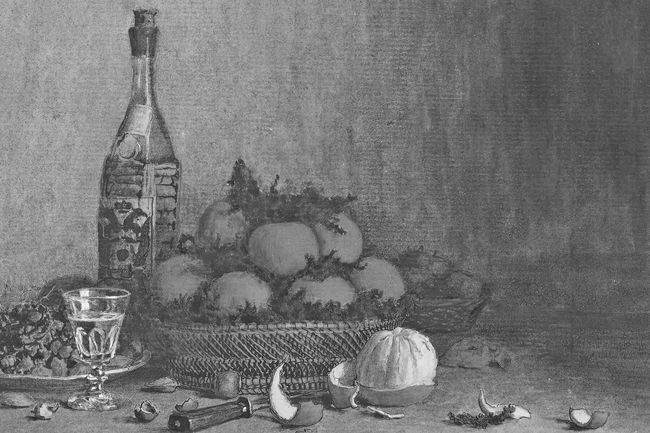
The mere mention of ancient Rome conjures up a multitude of powerful images: the assassination of Julius Caesar, legionaries marching in perfect unison, the alliance of Mark Antony and Cleopatra, gladiators fighting in the Colosseum. It was a time of power and conquest, of low scheming and high culture. It was also a time of feasting — something the Romans were known for, especially during Bacchanalia festivals, in which food and wine would flow with fervor. But what exactly did the Romans eat? Here are some of the most common foodstuffs that fed the hungry denizens of the Roman Empire.
Cereal grains, particularly wheat and oatmeal, were part of almost every meal in ancient Rome. These grains were typically used to make bread, biscuits, or porridge, and were eaten by the common folk, the upper crust, and soldiers in the Roman army. Roman porridge recipes survive to this day, including one in Cato the Elder’s De Agri Cultura, a treatise on agriculture written around 160 BCE, which happens to be the oldest remaining complete work of prose in Latin. The simple recipe, which isn’t dissimilar to modern counterparts, suggests soaking wheat in boiling water before adding milk to create a thick gruel — a staple dish that anyone in Rome could have prepared.
Seasonally available and locally sourced vegetables and beans were often served as accompaniments to Roman meals. Common vegetables included lettuce, cabbage, turnips, and leeks, while wealthier Romans could afford asparagus, mushrooms, and artichokes. Legumes such as broad beans, chickpeas, and lentils also played an important role in the Roman diet, providing substantial amounts of calories, protein, calcium, and iron to a diet that wasn’t nearly as meat-heavy as our diets today. A recent study found that Roman gladiators were mostly vegetarian, eating primarily wheat, barley, and beans.
As the empire expanded, the Romans discovered and embraced many varieties of fruits and nuts. The humble apple tree, for example, was introduced to many parts of the world after the Romans found it growing in Syria. They also cultivated pears, plums, apricots, and figs, as well as nuts — which were considered expensive treats — including chestnuts, walnuts, almonds, pistachios, and hazelnuts. Then, of course, there were grapes, which were eaten fresh, or — more importantly — turned into wine. The Romans loved to drink wine, which they diluted with a little water. Drinking wine neat was considered uncivilized, but not as uncouth as drinking beer, which was seen as simply barbaric.
The Romans did not typically drink milk, and doing so was largely frowned upon. They saw excessive milk drinking as evidence of barbarism, and even considered butter fit only for treating burns. (The Romans believed their ubiquitous olive oil to be far superior for cooking purposes.) They did, however, use goat and sheep milk to make cheese. Many farms produced cheese, and some wealthier homes had dedicated cheese kitchens. Roman soldiers were also familiar with the cheese-making process, including the use of rennet, and could produce the food while deployed abroad. The Roman author Pliny the Elder was indignant when considering the lack of cheese-making in what he saw as lesser civilizations, writing, “It is a remarkable circumstance, that the barbarous nations which subsist on milk have been for so many ages either ignorant of the merits of cheese, or else have totally disregarded it.”
Meat and fish were both considered luxuries in ancient Rome, and were primarily reserved for wealthier citizens. Pork was the most common meat, either cooked fresh (stewed or roasted) or turned into bacon. Fresh fish and seafood included tuna, eels, sea urchins, and other shellfish. During feasts, wealthy Romans sometimes ramped up their culinary creations to a whole different level. Dishes served at these extravagant events included pickled sow’s udders, stuffed dormice, bull’s testicles, and hares decorated with wings to resemble Pegasus.
Special mention has to go to one standout ingredient of ancient Roman cuisine: a fermented fish sauce called garum. Pliny the Elder described garum as “a choice liquor consisting of the guts of fish and the other parts that would otherwise be considered refuse.” Despite this unappetizing appraisal, he nonetheless called it an “exquisite liquid.” The Romans mass-produced garum in dedicated factories. Three common varieties were manufactured: a dark-colored condiment that was high in protein, a cooking sauce similar to Vietnamese fish sauces, and a milder version called muria. Roman diners sprinkled garum on all manner of savory dishes, providing a pungent umami to even the blandest of meals.
Sweet-toothed Romans, especially those with money to spend, could indulge in a variety of desserts. Baked goods such as honey cakes and fruit tarts were common, as were homemade sweets known as dulcia domestica, which included stuffed dates. One common dessert eaten throughout Roman society was libum, a type of honey cheesecake. Libum wasn’t only a tasty treat; it was traditionally made as an offering to the household gods, after which it could be enjoyed by all the family.
Much like fashion, the cyclical nature of baby names is influenced not only by cultural shifts, but also by historical events and popular media. For instance, in 1931, the name Bella was ranked No. 985 in the top 1,000 female names by the Social Security Administration, which uses Social Security card application data to determine the popularity of names, before falling off the list entirely for 69 years. We can’t be sure why the name made the list again in the year 2000, coming in at No. 749, but its rapid rise in popularity from there can be attributed to Bella Swan, the central character in Stephenie Meyer’s Twilight series, published between 2005 and 2008. Bella jumped in popularity to No. 122 in 2008, then to No. 58 the following year and No. 48 in 2010. The name remained on the list of the top 100 most popular female names through 2022, a trend bolstered by the film adaptations of the Twilight books.
While some popular names fade away only to come surging back many years later, others are perennial favorites decade after decade. Michael has been the No. 1 most popular male name for 44 of the past 100 years. On the female names list, Mary has taken the top spot 32 times and ranks as the overall most popular name of the past 100 years, despite falling as low as No. 135 over the years. The name James maintains the top spot for the most popular male name of the past century, though it has ranked as low as No. 19.
Old-fashioned names such as Harriet and Amos may make us think of our grandparents and a bygone era, but there is always a chance they’ll make a trendy comeback alongside more contemporary names such as Onyx, Anakin, and Nova (some of the top baby names in 2024). Here is a nostalgic look at eight vintage baby names that were once widely popular but have faded in use — at least for now.
Doris just squeaks onto the list of the 100 most popular names of the past 100 years at No. 98, despite the fact that it never cracked the top five in any year of the past century. Peaking at No. 6 in 1929, Doris didn’t even make the top 1,000 names in 2023. Doris Day, born Doris Kappelhoff in 1922, is arguably the most famous Doris of the past century. A popular singer and actress in the 1950s and ’60s, her wholesome girl-next-door image contrasted with the cultural shifts of the 1960s, which may account for the name’s decreasing popularity in the decades since.
Albert is an example of a male name that seems old-fashioned and outdated in the U.S., but is still going strong in the U.K. This might have something to do with the number of royals who have had the name — in the past 200 years, there have been 12 members of the British royal family named Albert. The popularity of Albert peaked in the U.S. in 1910, when it was the 14th most popular male name. It ranked at No. 590 in 2023 in the U.S., while in the U.K., Albert ranked 76th on the list of the top 100 names for boys in 2024.
Some old-fashioned names have never scored high on the popularity lists, but still consistently ranked in the top 50 or top 100 names for several decades. In a list of the top five female names in each year of the last century, Judith appears only once, as the fourth most popular name in 1940. Yet it was one of the top 50 most popular female names between 1936 and 1956. In overall rankings, Judith comes in at No. 62 in a list of the 100 top female names of the past century, but most of that popularity came in the first half of the century; the name hasn’t cracked the top 100 since the 1960s.
Credit: Lloyd Arnold/ Archive Photos via Getty Images
Ernest
The name Ernest has had a long and popular history in the U.S., peaking at No. 21 on the list of the 1,000 most popular male names in 1885. It stayed in the top 100 until 1957 before a slow but steady drop saw it falling off the top 1,000 list entirely by 2019. Despite the name’s literary connections, including Ernest Hemingway and Oscar Wilde’s The Importance of Being Earnest, the decline of Ernest might have been due to its association with the fictional character Ernest P. Worrell, played by actor Jim Varney. Varney’s bumbling slapstick humor in television commercials, a TV series, and several feature films made the character a household name — though not one that parents wanted to give their babies.
In 1920, Mildred was the sixth most popular female name in the United States, but by 1985 it wasn’t even in the top 1,000. Mildred Pierce, a 1941 novel by James M. Cain that was adapted for film in 1945, may have helped sustain the name’s popularity well into the 1950s before it began a steady downward trend. While this old-fashioned name doesn’t seem poised for a comeback, the diminutive Millie ranked as the 102nd most popular female name in 2023 — its highest rank ever, thanks to the popularity of British actress Millie Bobby Brown.
From 1900 to 1963, Ralph consistently remained on the list of the top 100 most popular male names, peaking at No. 21 in 1917. From there, it drifted further and further down the list before making its final appearance in 2018 at No. 950. The decline in the name’s popularity likely had something to do with the unfortunate fact that the word “ralph” became a U.S. slang term for vomit in the mid-1960s.
Despite being the 23rd most popular female name in 1900 and staying in the top 100 until 1930, the name Gertrude completely vanished from the top 1,000 names after 1965. The sharp decline of this old-fashioned name likely followed the same trajectory of Doris, falling out of favor as the cultural revolution swept the country, and names such as Lisa, Kimberly, and Michelle rose in popularity.
Credit: Heritage Images/ Hulton Fine Art Collection via Getty Images
Virgil
The name Virgil is best known as the English name of Publius Vergilius Maro, the influential first-century Roman poet who penned the epic Aeneid. While the name has never been high on the list of the most popular male names, it cracked the top 100 names five times in the early 1900s and stayed in the top 500 until the mid-1970s. Virgil made its final appearance on the list of the top 1,000 male names in 1991 at No. 861, and some trend-watchers suggest it’s due for a comeback.
Endlessly scrolling through Netflix without being able to decide what to watch is an all-too-common problem, but it’s easier to solve if you have a specific genre in mind. And while most of the history dramas streaming on the platform aren’t exactly historical themselves, as Netflix’s catalogue is known to skew toward newer films, that doesn’t mean they aren’t worth watching. Here are five of the best, which tell stories ranging from complex biographies to a single day in World War I.
Update: These movies were available for streaming on Netflix when this article was originally published. However, as Netflix’s library frequently changes, some titles may no longer be available. We suggest checking other streaming and rental platforms such as Amazon Prime, Hulu, or Apple TV for availability.
Even if you’ve read Erich Maria Remarque’s classic World War I novel or seen its prior two film adaptations, you might not be prepared for 2022’s All Quiet on the Western Front. The film follows a fresh-faced German soldier whose idealistic view of the conflict is immediately (and tragically) shattered by the realities of trench warfare in a losing battle. It was nominated for nine Academy Awards, including Best Picture, and the four it won (most notably Best International Feature) place it alongside Ingmar Bergman’s Fanny and Alexander, Ang Lee’s Crouching Tiger, Hidden Dragon, and Bong Joon-ho’s Parasite as one of the most-awarded foreign-language films in Oscars history.
If your knowledge of Wolfgang Amadeus Mozart is limited to his status as one of the most revered composers of all time, you’ll be mightily (and, most likely, pleasantly) surprised by the depiction in 1984’s Amadeus. While very much a musical prodigy, the film’s Mozart is also juvenile, fun-loving, and rather vulgar at times — a portrayal backed by a good amount of historical fact, as evidenced by the existence of a Wikipedia article titled “Mozart and scatology” and certain letters the composer wrote. That makes him the exact opposite of Antonio Salieri, whose resentment toward his younger, more talented peer sends both composers down a dark path in Miloš Forman’s classic drama. Amadeus marks the last time a single movie received two nominations for Best Actor, with F. Murray Abraham winning for his performance as Salieri. The film won seven other Oscars, including Best Picture and Best Director for Forman, who had previously won for One Flew Over the Cuckoo’s Nest.
Though best known for such movies as The Virgin Suicides and Lost in Translation, Sofia Coppola has a number of under-the-radar gems in her filmography. Among them is 2017’s The Beguiled, an adaptation of the Civil War novel of the same name starring Coppola’s longtime collaborator Kirsten Dunst alongside Nicole Kidman, Elle Fanning, and Colin Farrell. Set at a largely abandoned all-girls school in Virginia, it concerns a wounded Union soldier (Farrell) who gets reluctantly taken in by the headmistress (Kidman) as she decides whether to turn him over to the Confederacy. All three women are interested in him in one way or another, creating a moody, twisty dynamic that proves darkly entertaining throughout. Beguiling indeed.
“What if there were a murder mystery at West Point in which a young cadet by the name of Edgar Allan Poe plays a pivotal role?” This might not be a question you’ve asked yourself, but the answer can be found in 2022’s The Pale Blue Eye. The movie stars Christian Bale as a grief-stricken detective asked to come out of retirement to investigate said case, and Harry Melling as Poe, the latter all but unrecognizable from his time playing Dudley Dursley in the Harry Potter movies. If you’ve followed his post-Potter career, which includes scene-stealing turns in everything from The Ballad of Buster Scruggs to The Queen’s Gambit, you’ll be unsurprised to learn that Melling is once again great here. Those familiar with director Scott Cooper’s previous work (namely Crazy Heart and Hostiles) will be equally unsurprised by The Pale Blue Eye’s grimmer moments, but the film’s evocative air is what makes it so memorable.
All Quiet on the Western Front isn’t the only great World War I movie from the last few years. Released in 2019, Sam Mendes’ film 1917 was just as riveting. The American Beauty and Skyfall director worked with legendary cinematographer Roger Deakins to make the film appear as though it’s unfolding in just two continuous shots. There’s a reason for that feeling of urgency: Taking place in a single day near the end of the war, the plot follows two British soldiers tasked with delivering a message on foot in order to prevent 1,600 of their compatriots from walking into a trap.
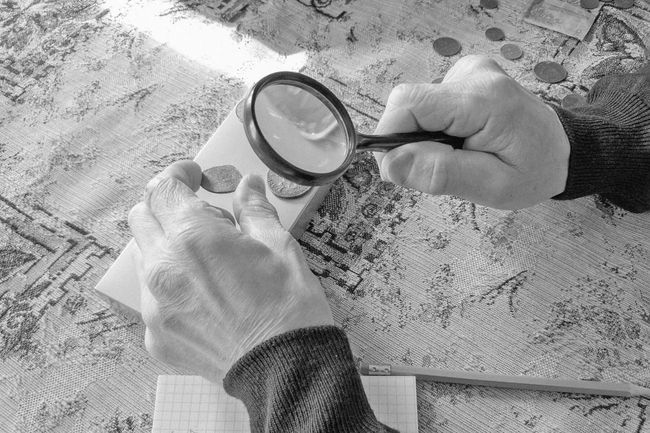
You’ve probably noticed that of the four coins that are in wide circulation in the United States today, two, the dime and the quarter, have a series of ridges on the edge. According to the U.S. Mint, this is technically referred to as a reeded edge. But is the reeded edge purely decorative, or does it serve a purpose? The answer goes all the way back to the 17th century, before the U.S. was even founded.
When the U.S. Mint opened in Philadelphia in 1793, the coins it produced were made of copper, silver, and gold, in accordance with the Coinage Act of 1792. Because coins of this era were made of precious metal, they were vulnerable to a practice known as clipping, which involved cutting off a small portion around the circumference of the coins. A skilled clipper would shave off enough from the coins to eventually amass a quantity of scrap metal worth cashing in, while also ensuring that the coins weren’t conspicuously reduced in size or weight, allowing the altered coins to still be spent.
Clipping had been common in 17th-century Europe, and it was so prevalent in England that by the end of that century, almost half of the silver content was absent from circulating English coins. This resulted in the metal composition of the coins being lower than their face value, a discrepancy that threatened to create a financial crisis throughout the continent, as well as in the European colonies. In order to combat the practice, England began minting coins with ridged edges; a smooth edge on any part of a coin would then be a telltale sign of clipping. When the United States was founded as an independent nation, the U.S. Mint followed suit by designing its higher denomination coins with reeded edges right from the beginning.
So that is the quick answer: Reeded edges were designed to prevent clipping. But in the U.S. today, coins are no longer made of silver or gold. As a result of the Coinage Act of 1965, almost all coins have been minted from a blend of copper and zinc. Clipping is no longer a problem, because the metal isn’t valuable enough on its own to warrant trying to harvest it (not to mention the risk of stiff penalty for defacing circulating coins). So why do coins still have reeded edges?
The answer to that has to do with how coins are made in the first place. The coins start as flat discs (referred to as “blanks”) cut from large sheets of metal. After undergoing a heat treatment to soften the metal, they are eventually loaded into a press room, where a die stamps the image onto the coin. The outer section of the die, called the collar, is what creates the reeding on the edge of the coin. When the composition of the coins changed after the Coinage Act of 1965, the U.S. Mint could either buy new master dies to eliminate reeding, or keep the equipment they already had. Since there was no detriment to continuing with reeded edges, there was no reason to take on the cost of replacing the equipment. While the master die was eventually replaced with today’s modern machinery, reeded edges remain as a sensory aid for those with visual impairments, as a way to distinguish between pennies versus dimes, and nickels versus quarters.
Credit: PhotoQuest/ Archive Photos via Getty Images
Author Tony Dunnell
June 24, 2024
Love it?132
On June 7, 1929, the Italian dictator Benito Mussolini signed a treaty that established the independent state of Vatican City. With this act, the Holy See — the government of the Catholic Church, led by the pope — finally had an official home. The Vatican had existed since the ancient Roman Republic, and had served as the capital of the Papal States, but it was only in 1929 that its geographic and political boundaries were defined.
With the creation of Vatican City, a true geographical oddity was born. The most famous fact about the Vatican is likely its status as the world’s smallest fully independent nation-state. No country in the world comes close to matching the Vatican’s minuscule population, which stands at less than 800 people, nor its tiny size, with an area of just 121 acres (49 hectares) — about one-eighth the size of New York City’s Central Park. Yet within this small space sit some of the world’s most spectacular religious and cultural sites, including St. Peter’s Basilica, the Sistine Chapel, the Vatican Apostolic Library, and the extensive Vatican Museums. Here are some more fascinating facts about the Vatican, from the elite soldiers who guard the pope to a papal telescope in an unlikely locale.
The Vatican Is Protected by One of the World’s Oldest Military Units
The Pontifical Swiss Guard has protected the pope since 1506. Consisting of between 110 to 125 soldiers, it is often considered one of the smallest armies in the world. It is also one of the oldest military units in continuous operation, originating with the Swiss mercenaries recruited by former popes during the Italian Wars (1494 to 1559). Today, members of the Swiss Guard are some of the most famous and recognizable residents of the Vatican. In their distinct dress uniforms of blue, red, orange, and yellow, and often wielding halberds, they are an impressive sight. But they are not simply ceremonial. The Swiss Guard is an elite military corps, and competition for inclusion among their ranks is fierce. New recruits must be unmarried Roman Catholic males with Swiss citizenship aged between 19 and 30 years old — and they must be both capable and willing to protect the pope with their lives.
The Pope Has a Hidden Escape Route Through the Vatican
The Vatican is connected to the Castel Sant’Angelo in Parco Adriano, Rome, by what looks like a walled fortification. Inside the wall, however, is an elevated passageway that stretches for about half a mile. Known as the Passetto di Borgo, it has served as the pope’s hidden escape route for hundreds of years (the current structure dates back to 1277). On at least two occasions, it has helped save the leader’s life. In 1494, Pope Alexander VI used the Passetto to escape to safety during the invasion of Charles VIII of France. Not long after, in 1527, Pope Clement VII fled through the passageway during the Sack of Rome, when forces of the Holy Roman Emperor Charles V rampaged through the city. The Swiss Guard fought bravely — and was ultimately massacred — while buying enough time for Pope Clement to escape to the safety of Castel Sant’Angelo.
Advertisement
Advertisement
Credit: Culture Club/ Hulton Fine Art Collection via Getty Images
The Vatican Museums Stretch for More Than 4 Miles
The Vatican is home to an immense museum complex called the Musei Vaticani. Founded in the 16th century by Pope Julius II, the public museums have amassed a huge array of artifacts over the centuries, collected by subsequent popes. Taken in its entirety, the complex consists of 26 museums whose combined halls and galleries stretch for around 4.3 miles and contain some 70,000 exhibits. Arguably the most famous of all the priceless masterpieces is the Sistine Chapel, with its ceiling and altar wall decorated by Michelangelo. The chapel is the last room visited on a tour of the museum complex.
Credit: Print Collector/ Hulton Fine Art Collection via Getty Images
The Vatican Has a Zero Birth Rate
It’s hard to imagine a country having a birth rate of zero, but then the Vatican isn’t a regular country. First, there are very few women in the Vatican. Figures released in 2011 revealed that there were only 32 female citizens among the Vatican’s population, compared to 540 men (and one of the women was a nun). Further contributing to the zero birth rate is the fact that the Vatican has no hospital, meaning that births take place outside the city-state. Gaining citizenship, therefore, is not dependent upon being born in the Vatican, but is instead granted by the papal powers that be.
The Vatican Owns an Observatory in Tucson, Arizona
Religion and astronomy haven’t always been easy bedfellows (just ask Galileo), but the Vatican is nonetheless home to one of the oldest astronomical institutes in the world. Pope Leo XIII formally founded the Specola Vaticana (Vatican Observatory) in 1891, then located on a hillside behind the dome of St. Peter’s Basilica. But as Rome grew, increased smog and sky glow forced the Vatican to move its observatory just outside the city. By 1961, however, light pollution again hindered the functionality of the observatory. The Vatican therefore took a major step and opened a second research center in Tucson, Arizona. To this day, the Vatican Advanced Technology Telescope remains operational atop Mount Graham outside Tucson.
Credit: National Archives/ Hulton Archive via Getty Images
Author Bennett Kleinman
June 20, 2024
Love it?317
Photographs allow us to witness history with our very own eyes, immortalizing brief moments in time that are worth preserving — be it a mother struggling during the Great Depression or a handshake between Elvis Presley and Richard Nixon. Each image has a story behind it that helps explain why those moments maintain their appeal all these decades later. Here are some of the most famous photographs in recent history, and why they matter.
Credit: GraphicaArtis/ Archive Photos via Getty Images
“Migrant Mother” (1936)
In March 1936, photographer Dorothea Lange captured what many consider to be the most recognizable photo from the Great Depression. The image, titled “Migrant Mother, Nipomo, California,” features a 32-year-old farmworker and mother of seven who was later identified as Florence Owens Thompson. The photograph depicts Thompson with a forlorn look on her face as she gazes past the camera. Three of her children are also present in the photo: an infant in her lap, and two older children burying their faces in Thompson’s shoulders. When the photo was first published, however, her identity remained anonymous.
At the time, Lange was working for the Farm Security Administration, a federal agency meant to help farm workers who were displaced during the Dust Bowl. In 1960, Lange recalled how she came across a woman huddled underneath a tent inside a camp of migrant pea pickers, and chose to approach her, “as if drawn by a magnet.” The woman — Thompson — told Lange that her family had been surviving on frozen veggies and dead birds, but it was only decades later that more information was finally uncovered.
In 1978, a reporter at the Modesto Bee tracked down Thompson and confirmed she was the subject of “Migrant Mother.” With her identity revealed, Thompson admitted that she viewed the photograph as something of a curse, as she never received royalties for the use of her likeness. It also became clear that Thompson wasn’t your typical Dust Bowl refugee as initially thought, but rather a woman of Native American heritage who was displaced from tribal Cherokee lands in Oklahoma. She also noted that the camp she set up in the migrant community was only temporary, as she was just waiting there while the family car was being fixed nearby. Toward the end of Thompson’s life, people sent donations to her family to help cover the cost of the matriarch’s medical bills, and many wrote letters saying how much the image of Thompson inspired them. These gestures allowed the family to reconsider the legacy of the photograph, which they began to view with a sense of pride.
Joe Rosenthal was a photographer for the Associated Press during World War II whose legacy was defined by the Pulitzer Prize-winning photo “Raising the Flag on Iwo Jima.” Rosenthal captured the iconic event on February 23, 1945, on the small Japanese island of Iwo Jima, roughly 750 miles south of Tokyo in the Pacific Ocean. The picture depicts six men triumphantly raising an American flag, and commemorates an important military victory — though there’s a good deal more to the story.
The island of Iwo Jima was a strategic stronghold occupied by the Japanese. On February 19, three U.S. Marine divisions landed on Iwo Jima and began a harrowing multiday battle with Japanese forces. On February 23, Americans took control of Mount Suribachi, a geographic landmark on the southern end of the island. In celebration of their conquest, troops raised up an American flag, though not the flag seen in the famous image. It was actually a smaller flag, captured by Sergeant Louis R. Lowery in a lesser-known photograph.
Hours later, troops were ordered to replace the first flag with a larger American flag that could be seen more easily from a far distance. This caught the attention of Rosenthal, who heard the plan from a nearby radioman. Rosenthal brought his camera to the mountain, where he photographed six men (five Marines and one Navy Corpsman) raising the larger flag in what has since become an iconic image. Tragically, it took another month for American forces to take the entire island of Iwo Jima, during which three of those men were killed: Sergeant Michael Strank, Corporal Harlon Block, and Private First Class Franklin Sousley. The three others who survived the battle, and the war, were Corporals Harold Keller, Harold Schultz, and 22-year-old Ira Hayes, a soldier of Pima Indian descent who went on to meet President Harry Truman at the White House.
The photograph “Guerrillero Heroico” (“Heroic Guerrilla Fighter”) depicts Argentine revolutionary Che Guevara, whose likeness has grown into a symbol used by counterculture groups around the world. The original image was taken by photographer Alberto Korda on March 5, 1960, depicting Guevara gazing stoically off into the distance. While the image may seem posed, it was actually captured by a stroke of luck in a mere matter of seconds.
Guevara became a popular figure throughout Cuba during the 1950s, playing a pivotal role in overthrowing the government alongside Fidel Castro. Shortly after the rebels rose to power, a ship named La Coubre exploded in Havana Harbor on March 4, 1960, killing as many as 100 local workers who were unloading ammunition. Guevara, Castro, and others attended the state funeral the next day, as did Korda, who was working for the Revolución newspaper at the time. While standing by the podium with his eyes focused on Castro, the photographer noticed that Guevara had emerged directly above him. He quickly grabbed his Leica camera and snapped two photos in rapid succession, before Guevara stepped back. He returned home to develop the photos, and cropped the original to remove another man off to the side as well as the fronds of a palm tree.
Korda described Guevara’s look in the photo as having “impressive force in his expression, given the anger concentrated in his gaze after so many deaths.” Oddly, the paper passed on publishing the photo until one year later, using it in an advertisement for an upcoming lecture delivered by the revolutionary. The image didn’t become popular until 1967, the year of Guevara’s execution. At the memorial service, a giant print of the photo was hung up by the Ministry of the Interior. A stylized version of the portrait was later used during the 1968 Paris student riots, and it became a popular symbol co-opted by various groups around the world. The image eventually took on a life of its own, and people began to lose sight of its original meaning, especially after the photo was used by major corporations such as Nike and Taco Bell in various ad campaigns.
In the year 1970, two of the most recognizable men in the world met face to face for the first time: Elvis Presley and Richard Nixon. The unlikely meeting took place on December 21, 1970, within the Oval Office, resulting in a now-legendary photo of the pair shaking hands. This image and others were taken by Nixon’s personal photographer, Oliver F. Atkins, who chronicled the impromptu and secret encounter that day.
While on a red-eye flight earlier that morning, Presley wrote a lengthy letter to President Nixon on American Airlines stationary. The rock star shared his concerns about the growing drug culture in America, and expressed an interest in becoming a “Federal Agent at Large” so he could help tackle the issue. He ended the letter by saying that he hoped to meet Nixon and “say hello if you’re not too busy.” Upon landing, he asked his limo driver to head straight to the White House, where he handed the letter to security agents at the gate. Initially, Nixon’s staffers assumed that it was just a prank. But after learning that it was indeed Elvis himself who wished to meet the President, they quickly organized an official, impromptu meeting to take place later that day.
At 11:45 a.m., “the King of Rock ’n’ Roll” returned to the White House wearing a purple velvet suit, caped cloak, gilded belt buckle, and amber-tinted sunglasses. He was immediately brought into the Oval Office, where Nixon was waiting, and thus began a 35-minute meeting where the duo discussed communism, the Beatles, Las Vegas, and even Presley’s family photos. While there, the musician requested an official badge from the Bureau of Narcotics and Dangerous Drugs in hopes of legitimizing his personal crusade against drug culture. Nixon obliged, and Presley was so overwhelmed with joy that he went in for a hug before the Secret Service could stop him. The pair agreed that the meeting should be kept a secret, as neither side was sure how their supporters would react. It wasn’t until January 1972 that word of this strange event finally broke, though nothing practical ever really came of it.
Associated Press photographer Jeff Widener spent the spring of 1989 in Beijing, China, covering the Tiananmen Square protests. On June 5, he captured an image that’s considered one of the most powerful acts of defiance in the face of authoritarian rule. His photo, titled “Tank Man,” shows an anonymous man in black pants and a white shirt standing in front of a line of tanks, refusing to let them continue patrolling the square.
The story behind the photograph begins months earlier, on April 15, after the death of Hu Yaobang, the former general secretary of the Chinese Communist Party who had been forced to resign two years earlier. Hu had attempted to push the country toward democratization, an effort that resonated with many Chinese youth. However, the larger government was far less open to such reforms. After Hu’s death, around 100,000 students descended on Beijing’s Tiananmen Square to continue pushing for his reforms and to protest the corrupt Chinese Communist Party that remained in power. A rally on May 19 drew 1.2 million people to the square, though it was only a matter of time before the government cracked down on the protests. This led to a horrible massacre on June 4, when military forces opened fire on demonstrators and killed hundreds of people, or possibly thousands. By the following day, the military had taken control of the square, and tanks and troops patrolled the streets once more.
On June 5, an anonymous lone man stepped into the middle of Chang’an Avenue on the edge of Tiananmen Square while a line of tanks approached him. The striking scene caught the eye of reporters and photographers who were staying at the nearby Beijing Hotel, and many turned their cameras toward the event from the balcony. Widener captured the most recognizable single image of the scene, which shows the man standing in front of four tanks, preventing their forward progress. Other, more zoomed-out photos show the true enormity of the situation, as there were dozens more tanks all in a line heading directly toward this single protester. After halting the parade of tanks, the man climbed on top of one, spoke to someone inside, and then climbed back down to prevent the tanks from continuing on. After several tense moments, two mysterious men emerged and dragged the protester away. Today, nobody truly knows the identity of “Tank Man” or what happened to him. Some say he was arrested and executed, while others claim he simply vanished off the grid — though certainly not from memory, thanks to Widener’s famous photograph.
Credit: PHAS/ Universal Images Group via Getty Image
Author Tony Dunnell
June 19, 2024
Love it?142
Alongside their eternal nemeses cats, dogs are the most popular pets in the world. They have been humans’ most faithful friends for at least 12,000 years, hunting with us, protecting us, and accompanying us in our everyday lives. In fact, dogs were the first domesticated animals, predating chickens, cows, goats, pigs, sheep, and even agriculture itself. By the medieval era, they were firmly embedded in homes across the world. They could be found walking alongside peasant poachers as they went out to hunt, or curled up at the feet of the greatest kings and queens of Europe.
These pets, of course, had names. And thanks to a 15th-century British manuscript titled “The Names of All Manner of Hounds,” we have a fascinating insight into what canines were called in the Middle Ages. The unique manuscript, recently examined in an academic paper by researcher David Scott-Macnab, contains a list of 1,065 names given to hunting dogs during the period. It’s a treasure trove of mutt monikers, some of which truly deserve to come back into fashion (others, perhaps, not quite so much). Here are some of the funniest names on the list.
Some of the best medieval dog names are those that reflect classic canine characteristics. As we all know, dogs possess a phenomenal sense of smell, as much as 100,000 times more sensitive than ours. Medieval dog owners were well aware of this canine trait, hence some wonderful olfactory-based names, including Goodynowze and Nosewise. Thanks to their superior noses, dogs are also good at finding things, so we also have the names Fynder and Fyndewell. Other sobriquets include Swifte for the agile canine, Wellyfedde and Plodder for the more languid dogs, and Letego for the dog who likes a game of tug-of-war.
Credit: Culture Club / Hulton Fine Art Collection via Getty Images
Advertisement
Advertisement
Brayneles
Some dogs, it’s true, aren’t the smartest of creatures. Medieval dog owners recognized this, and sometimes bestowed names on their pets that called into question their intellectual capacities. These unflattering appellations include Brayneles, Litillwitte, Symple, Careles, and Helpeles. They were all thoroughly good dogs, for sure, but perhaps not the brightest.
Credit: Print Collector/ Hulton Archive via Getty Images
Filthe
Our medieval ancestors didn’t stop at questioning the intelligence of their dogs. They also besmirched their canine companions with unflattering names that left little to the imagination. Filthe was one such name, alongside Lewde, Oribull, Synfull, Dredefull, Vagrawnte, Wrecche, and Badde. Hopefully these designations all came from a place of love, and the dogs didn’t resent their owners for saddling them with the less-than-lovely names.
Advertisement
Advertisement
Credit: Culture Club/ Hulton Archive via Getty Images
Joliboye
Medieval dog names weren’t all defamatory — many were very positive. For the ever-amiable hound there are names such as Joliboye, Mery, Happy, and Cherefull. For dogs that can brighten even the gloomiest of days, we have Careaway and Havegoodday. Then there’s Pretiboy for all the good-looking pups out there, or Blameles for the dog that can do no wrong. Arguably the most superlative name on the list is Beste-of-all.
Credit: PHAS/ Universal Images Group via Getty Images
Radissche
Dog owners in the Middle Ages were quite fond of naming their pets after foodstuffs. Fish-based names include Salmon and Halibutte, alongside other ingredients such as Mustarde, Garlik, Sage, and Rasyne. Consumables also appear among the most popular names for male and female dogs today. In 2023, the names Oreo, Ginger, Honey, Pepper, and Whiskey were all popular. Incidentally, only two names on the medieval-era list also frequently appear on modern lists of popular dog names: Belle and Ranger.
Advertisement
Advertisement
Credit: Heritage Images/ Hulton Fine Art Collection via Getty Images
Tullymully
Many of the monikers listed in “The Names of All Manner of Hounds” don’t make much sense — at least to the modern ear — but nonetheless have a delightful ring to them. Who wouldn’t want a dog called Tullymully or Rowte-owte? And then there’s Dasyberde, Honyball, and Tynker. Of course, not everyone is quite as imaginative. Undoubtedly the least creative name on the list is Nameles, which shows a true lack of dog-naming effort.
Websites such as Reddit, Quora, and JustAnswer have ushered in what TheNew Yorker recently called the “age of peak advice.” But people have long had a fondness for the old-fashioned advice column. The anonymity of the forum allows answer-seekers to sidestep embarrassment and participate in a virtual confessional. The advice column gained popularity in the U.S. in the late 1890s, catering mainly to women with a focus on social interactions, matters of the heart, and childcare. Marie Manning’s 1889 “Advice to the Lovelorn” column in the New York Evening Journal set the standard, incorporating the tone of conduct books for young women, which were popular in Britain in the 18th century, into its responses.
The majority of advice columns were written by women, but the publishing apparatus was controlled by men, leading to questions and replies that often reflected the sexist views of a patriarchal society. Countless columns reinforced the need for women to assume traditional gender roles such as marriage, homemaking, and child-rearing, while topics such as sexual orientation and adultery were rarely viewed with empathy or nuance.
During the 19th and 20th centuries, women known by the pen names Dorothy Dix, Abigail Van Buren (of “Dear Abby” fame), and Ann Landers (Van Buren’s twin sister!) became the most well-known and trusted advice-givers in America. Of course, social attitudes and customs have changed significantly over the decades, as has our understanding of science, and thus some of the advice that writers doled out seems pretty strange today. Here are five questionable tips from advice columns of yesteryear.
Although modern medicine has identified some of the root causes (pun intended) of baldness, the science behind hair loss was much more nebulous in the mid-20th century. Letter writer “B.C.D.” asked in a 1959 issue of The London Weekly Magazine why more men than women seemed to go bald. The response was a little thin: “The hair of men more commonly falls off than that of women as they become bald from the greater excitement which their pursuits occasion.” Tell that to professional football player Mack Hollins.
In an 1862 issue of The London Journal, readers were presented with a letter from “Harriet,” who was looking to find a way to “pass the dull evenings in the country.” The column dissuaded Harriet from pursuing activities such as books and music, which may have bored her, especially since she seemed cheerless. The suggestion? Science! According to the columnist, chemistry was “very popular with ladies who find time hanging heavily on their hands.” Was this response documenting an actual trend or making an inside joke that citizens of the 21st century don’t get? We may never know.
Advertisement
Advertisement
Credit: Camerique/ Archive Photos via Getty Images
Simply Ignore Your Husband
This particular piece of advice might not get the support of modern couples counselors. In a 1943 edition of The Winnipeg Evening Tribune, advice columnist Virginia Vane counseled “Mrs. S,” a happily married woman whose husband had more interest in the morning paper than connecting with her. Mrs. S explained that despite removing the curlers from her hair and “wearing a dress plus a good morning smile,” Mr. S remained unfazed and neglectful. Vane suggested a tit-for-tat response. “It might be wise to try ignoring him,” she wrote. “He’ll always read at breakfast so why don’t you ask him for the other half and read yourself. You’ll no doubt feel better.”
In the October 12, 1895 edition of Isle of Man Times, the “Advice to Wives” column prescribed nine rules for women, reinforcing the attitude that they should be selfless providers of childcare, cleaning, and meals. Like many advice columns from this era, it suggested that women were expected to put their husbands first, even at the risk of health and general happiness. “Don’t mope and cry because you are ill, and don’t get any fun; the man goes out to get all the fun, and your laugh comes in when he gets home again and tells you about it — some of it,” it stated. “As for being ill, women should never be ill.”
Advertisement
Advertisement
7 Things That Are Much Cheaper Now Than They Used To Be
Despite what feels like the constantly rising costs of modern life, the prices of some essential commodities such as gas and eggs have actually remained relatively stable compared to dollar values and wages in the past. Other items, meanwhile, have actually become much cheaper over time, even when accounting for inflation. Innovations in technology, increased competition, and improvements in manufacturing and logistics are most often the reason for these surprising price drops. Here are seven everyday items that are much cheaper now than they were in decades past.
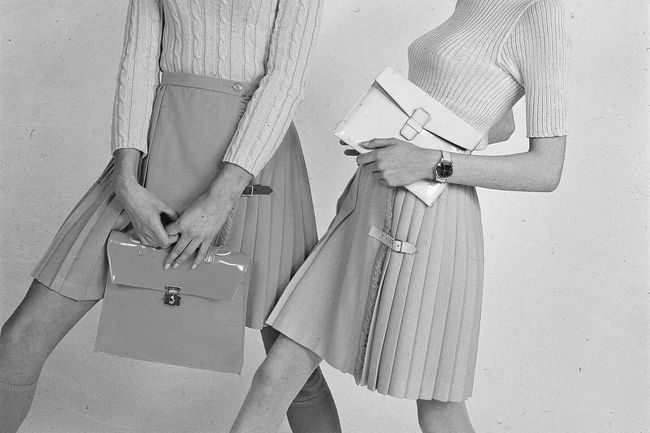
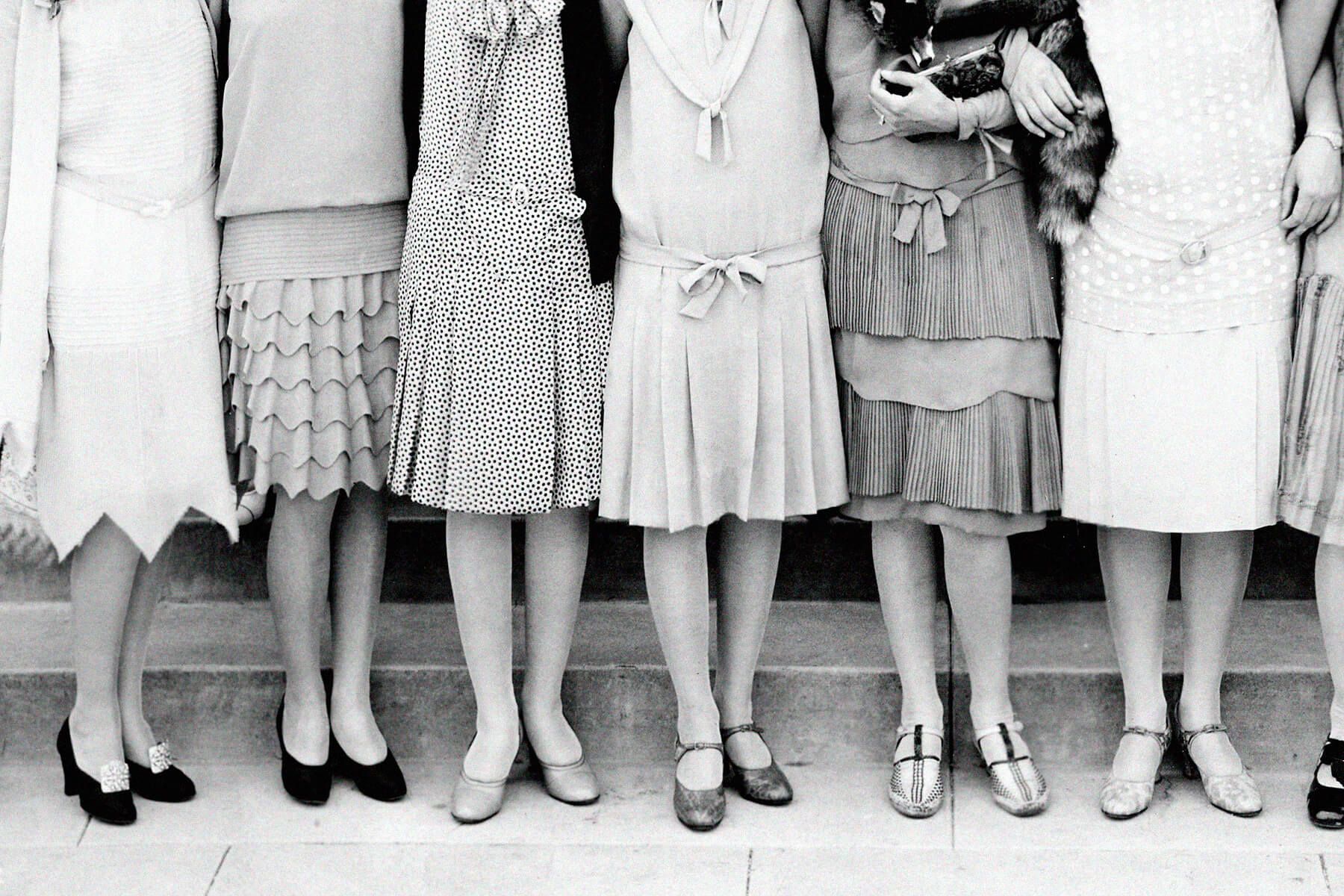
In the mid-20th century, the average American family spent about 10% to 12% of their household income on clothing. Today, that figure has dropped to around 3%. It’s not because people are buying less: The average person buys about 70 new apparel items a year, compared to approximately 25 items per person in 1960. So why are people spending so much less?
Starting in the 1970s and into the 1990s, most U.S. clothing production moved overseas, where labor costs are lower and production output is higher. Those savings were passed onto consumers, and as fast-fashion brands proliferated, Americans had more options at lower prices than ever before. According to data from the U.S. Bureau of Labor Statistics, on average, a woman’s dress cost $50 in 1960. Adjusted for inflation, that’s about $530 today — not unheard of, but far above prices at the most popular clothing retailers today.
Bananas have been a staple fruit in the American diet for decades, and while they’re one of the cheapest and most popular fruits in the supermarket now, they started out as a luxury item. Bananas first became available in the U.S. following the Civil War. At the time, they sold for about 10 cents a piece — that’s about $3 per banana today.
The price of the tropical fruit has hovered between 50 and 60 cents per pound for the last 20 years — a significant drop from its early cost. Most bananas sold in American stores are imported from faraway places including Guatemala and Honduras and require cooling containers for shipping. Despite these barriers, labor costs remain low, and banana importers sell only one variety, the Cavendish, meaning the fruit can be harvested in abundant volumes and ripen at the same time. That helps keep production and shipping efficient, and the cost to consumers low.
Advertisement
Advertisement
Credit: Camerique/ Archive Photos via Getty Images
Televisions
It’s no surprise that as technology improves and becomes more efficient, prices come down. But one consumer electronics category stands out from the rest for its drastic price cuts: televisions (even as they get bigger and bigger). When RCA debuted its first color TV set in 1954, the 15-inch screen came with a $1,000 price tag. According to the U.S. Bureau of Labor Statistics’ inflation calculator, that would be more than $11,600 today. By comparison, a 65-inch, high-definition smart TV might set you back less than $500 today, and while that’s neither the high nor low end of the current television market, it’s a good indicator that TVs are much more affordable than they used to be.
There are several reasons for the major price cuts over the years, including increased competition and advancements in manufacturing (especially the process of cutting several screens out of a larger sheet of “mother glass”). But there’s another factor keeping TV prices low: Consumers’ viewing data is being collected and sold to advertisers. This “post-purchase monetization” often results in targeted ads on smart TVs, and while it may offer affordable TV prices and accurate targeted viewing recommendations, the feature can be disabled for a more anonymous viewing experience.
It may feel like airfare has surged in recent years due to increased fuel prices and airport taxes, yet airline tickets — fees included — have actually become much more affordable over time. Commercial air travel used to be a luxurious experience available only to the wealthy. It wasn’t until President Jimmy Carter signed the Airline Deregulation Act in 1978 that competition opened up, flight paths and schedules increased, and airline prices began to come down. In 1941, an average flight from Los Angeles to Boston would have cost more than $5,000 in today’s money (and taken an excruciating 15 hours); now, a nonstop, one-way flight from Los Angeles to Boston commonly costs around $300 and takes about six hours. And an average domestic round-trip airfare is about $400 in the U.S.
Advertisement
Advertisement
Credit: Camerique/ Archive Photos via Getty Images
Washing Machines
Household appliances have seen many technological advancements over the years, and while high-end luxury products are still out of reach for the average consumer, other appliances have become much more affordable over the years. The price of washing machines, an invaluable addition to modern life, has changed significantly from the 1950s to today. In 1959, a Kenmore washer was advertised in Sears’ “Wish Book” Christmas catalog for $209.95. (The matching dryer was listed at $169.95.) Today, that amount inflates to more than $2,200 — a $1,600 difference from a basic $500 to $600 top-loading Kenmore machine today. That’s a happy trend, lest we have to wash our increased amount of clothing by hand.
Although it may not feel like the case to modern parents, toys are cheaper — and more plentiful — today than in decades past. The U.S. Bureau of Labor Statistics shows significant deflation on toys over the past 30 years, a trend primarily resulting from increased reliance on inexpensive overseas production and more competition both from toy brands and from major retailers. Considering today’s popular toys, from Squishmallows to STEM gadgets to LEGO sets, prices average out at about $50. That is not too different from the $25 Cabbage Patch Kids of the 1980s (about $70 today), or the $8 Rock'em Sock'em Robots of the 1960s (about $80 today), but the current cost of similar toys is much less than those inflated costs. Today, you can get a modern Rock'em Sock'em set for under $30, or a standard Barbie doll for about $12 — much less than an average Barbie from the 1994 JC Penney catalog, which, at $15, would cost more than $30 today.
Once considered a precious metal more valuable than gold, aluminum became drastically cheaper in the late 19th century. Although it’s the most abundant metal in the Earth’s crust, it wasn’t always easy to extract from its ore. After the Hall-Héroult smelting process was developed in 1886 by two different scientists — Charles Martin Hall in Ohio and Paul-Louis-Toussaint Héroult in France — it became easier to isolate aluminum, which revolutionized its production.
In 1884, when the element was still rare and expensive, the United States used 6 pounds of it atop the Washington Monument. At the time, aluminum cost about $17 a pound — that would be more than $500 per pound today. Within a few short years, thanks to Hall and Héroult’s new process, the price of aluminum plummeted; today, the metal is worth about $1.15 a pound, and is most commonly used in everyday aluminum cans.
Credit: Stock Montage/ Archive Photos via Getty Images
Author Mark DeJoy
June 17, 2024
Love it?68
While Marco Polo is best known in modern popular culture as the namesake for a children’s swimming pool game, the Venetian explorer was a crucial figure in world history in the years leading up to the Renaissance. His popular book, commonly called The Travels of Marco Polo — though it was originally titled Livre des Merveilles du Monde (Book of the Marvels of the World) or Devisement du Monde (Description of the World) — was a lavish description of his journey through Central Asia and China in the late 13th century.
Polo’s travelogue was much more than an account of the paths he took across the globe; he also described the people and environments he encountered along the way. By doing so, he introduced his European audience to Asian cultures that were previously unknown to them, and planted the seeds of the modern era’s global perspective. But the book was also filled with exaggerations, supposed run-ins with mythical creatures, and supernatural events. Those aspects, combined with a dearth of historical records to corroborate some of Polo’s more tangible claims, have led some scholars to doubt that he ever made it to China at all. Let’s make some sense of this famed explorer and his influential book.
Marco Polo came from a family of Venetian merchants, though historians disagree on whether they actually attained the level of wealth and status commonly attributed to them. Around 1260, his father Niccolò and uncle Maffeo set out on a long journey of their own through the Mongol Empire, which at the time encompassed modern-day Mongolia as well as China under the rule of Kublai Khan, who founded China’s Yuan dynasty. The journey ended in Shangdu, also known as Xanadu (modern-day Inner Mongolia), the summer palace of the emperor. Niccolò and Maffeo were granted an audience with the emperor, and upon their departure, Kublai Khan instructed them to return to Shangdu with 100 priests and oil from the Church of the Holy Sepulchre in Jerusalem. They arrived back in Venice around 1269, and set out on the return trip to Shangdu two years later, this time with Marco joining them — but with only two of the requested 100 priests. Marco was around 17 or 18 years old at the time.
Over the next three years, the Polos traveled by land back to Shangdu. The route took them through the historic cities of Acre, Baghdad, Hormuz, Kashgar, Karakorum, and Khan Bhalik in modern-day Israel, Iraq, Iran, and China. Along the way, the two priests abandoned the journey, so with the exception of the requested holy oil, the trio arrived at the emperor’s court empty-handed. Perhaps because of this debt, the Polos spent the next 17 years under the employ of Kublai Khan, though it’s unclear whether they remained for the entire duration purely by choice. During that time, Marco was sent throughout Central Asia by Kublai Khan, and given a stamped metal passport to identify him as a special envoy to the emperor.
Advertisement
Advertisement
Credit: Culture Club/ Hulton Archive via Getty Images
A Prisoner’s Account
When Polo returned to Venice, war had broken out with the Republic of Genoa. After joining the war effort, he was captured by Genoans during a naval battle and imprisoned. It was in the Genoese prison where he met the writer Rustichello of Pisa, to whom he dictated the stories that would comprise The Travels of Marco Polo.
The book recounted the approximately 23 years that Polo spent traveling to Kublai Khan’s court, throughout Asia as special envoy, and back to Venice. He described the customs of the ruling family, including their funeral traditions, the common homes he encountered across the empire (lightweight, felt-covered huts), and the typical Mongol diet of horse meat and milk. The book also discusses marriage customs and religion, conventions of war, the justice system, and, perhaps most famously, the paper money used by the empire, which was novel at the time. Contrary to popular belief, though, Polo was not responsible for introducing pasta to Italy, as the dish appeared in Europe before his return from Asia. However, he did reintroduce forgotten spices, such as ginger.
There were also plenty of exaggerations in Polo’s account. He claimed that Kublai Khan’s hunting outfit contained a team of 20,000 dog handlers and 10,000 falconers, and described new year celebrations with a parade of 5,000 elephants and more than 100,000 white horses given to the emperor as gifts. He even told of encounters with sorcery-wielding wizards, weather-controlling astrologers, feasts that included levitating wine glasses, and evil spirits haunting the Gobi Desert — claims that are products of a superstitious era.
When The Travels of Marco Polo was published around 1300, most Europeans knew very little about other civilizations. Similarly, the Mongol Empire in modern-day China thought of itself as chung-kuo, or the center of the world. Polo’s book was enormously popular, and printed in multiple languages, including French, Italian, and Latin. But most readers at the time took the account as fiction — the book was sometimes known as Il Milione, a moniker with an unclear origin that some suggest meant “the million lies.”
Eventually, however, Polo’s descriptions began to be used as a cultural bridge between the East and West, and helped inspire Europe’s Age of Exploration. Christopher Columbus brought a copy with him during his expeditions more than a century later. And some of the book’s seemingly outlandish claims have since been revealed not as lies but rather as mischaracterizations, such as Polo’s recounting of a unicorn sighting, which was likely actually a rhinoceros, an animal he wouldn’t have been familiar with.
To this day, Polo remains something of a historical enigma. No original manuscript of his book exists, though even an original artifact would constitute secondhand information, since the book was dictated by Polo to Rustichello. Marco Polo scholar and philologist Eugenio Burgio has been working with a team to reverse-engineer the various existing translations of the book into an English-language text as close to the original version as possible, with an intended publication date later in 2024. Until then, what we have are translations of translations of an oral account, which brings to mind another children’s game: telephone.
Advertisement
Advertisement
Another History Pick for You
Today in History
Get a daily dose of history’s most fascinating headlines — straight from Britannica’s editors.