


How Did the Romans Represent Zero?

  • The number zero
The number zero
Credit: Alessandro Pintus/ Shutterstock
Author Kristina Wright

November 27, 2024

Love it?

The origins of zero as a mathematical symbol — and concept — are fascinating. As early as 5,000 years ago in ancient Mesopotamia, Sumerian scribes used a slanted double wedge between cuneiform symbols to denote the absence of a number. In the third century BCE, the Babylonians developed a numerical system based on values of 60 and used a symbol of two small wedges to differentiate between tenths, hundredths, and thousandths. Around the fourth century CE, the Maya independently developed their own symbol to represent zero on their calendar. But each of these early systems only recognized the symbolic zero as a placeholder, not as a unique number with its own properties and value.

It was around the fifth century CE that mathematicians in India first formalized the use of zero as both a placeholder and a number with intrinsic value, using a small dot to signify zero. This innovation spread through Islamic scholars, who refined the concept and integrated it into advanced calculations and algebra. It wasn’t until the 12th century that this zero reached Europe, transforming mathematics by making complex calculations possible. Given this was several decades after the fall of the Roman Empire, it begs the question: What did the Romans do without zero?

Credit: Scrap4vec/ Shutterstock

The Roman Numeral System Didn’t Have Zero

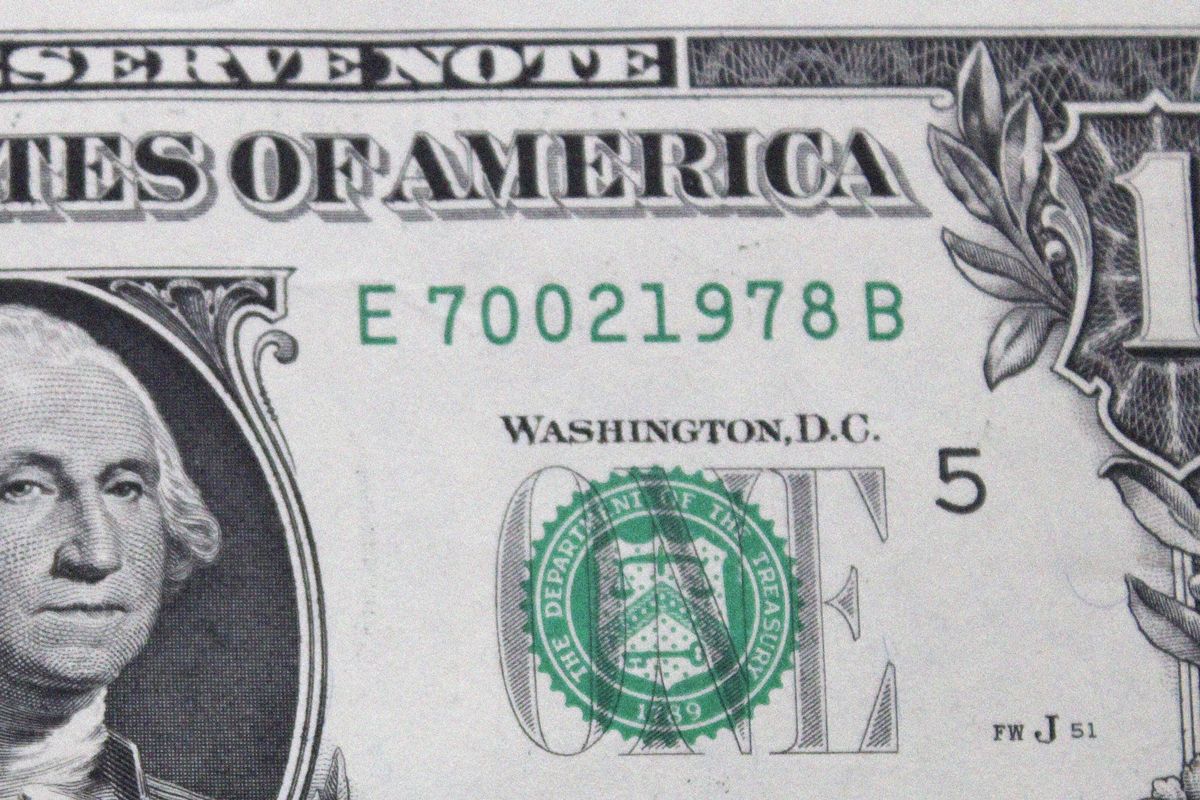
In contrast to other ancient cultures, the Romans — whose numerical system was constructed quite differently — had no mathematical symbol for zero. Roman numerals relied on seven specific symbols for values: I (1), V (5), X (10), L (50), C (100), D (500), and M (1,000), which were stacked next to each other to represent all other numbers, usually through addition. For example, XII represents 12 (10 + 1 + 1). Subtraction was used as well, though it wasn’t common until the Middle Ages. This was done by placing a smaller numeral before a larger one; for example, IX represents 9 (10 – 1). Simple arithmetic such as addition and subtraction was done on a counting board known as an abacus, and the value of “none” could be represented on the tool by an empty row.
The Romans did not have a symbol for zero in mathematical computations because they didn’t need it — but they did need a way to denote the absence of a quantity, such as in record-keeping. In these cases, the Latin words nulla or nihil, meaning “none” or “nothing,” served as linguistic placeholders and were abbreviated using N. These words, however, had no mathematical function; they were simply an expression of emptiness rather than part of the formal numerical system. This convention shows that Romans recognized the practical need to denote “nothing” even while they lacked the abstract mathematical understanding of zero as its own number.

You may also like

6 Famous Pulitzer Prize-Winning Photos From History

  • “Burst of Joy” photograph
“Burst of Joy” photograph
Credit: AP Photo/Sal Veder/ Columbia Daily Tribune
Author Nicole Villeneuve

November 27, 2024

Love it?

The word “Pulitzer” immediately conjures prestige, integrity, and excellence — and that’s precisely the point. The Pulitzer Prize was established in 1917 as the brainchild of newspaper publisher Joseph Pulitzer, who sought to recognize outstanding works in various categories of journalism. Today, 23 awards are given out each year across not only journalism but also literature, music, drama, and more. 

The Pulitzer Prize for photography was first awarded in 1942. In the winning entry, Detroit News photographer Milton Brooks captured an altercation between striking Ford Motor Company workers and someone attempting to cross the picket line. The image is visceral and captures a pivotal moment in labor history, and it met the Pulitzer rules of having been published in print (today the criteria also includes online publication). There is no other strict criteria to choose recipients of the prize. The juried process is instead a highly subjective one that often prioritizes  moments of national or global importance — images that on their own tell compelling stories and stir emotions. Here are the stories of six famous photographs that have been awarded a Pulitzer Prize.

Credit: Bettmann via Getty Images

“The Rescue of Jessica McClure” by Scott Shaw

On October 16, 1987, after a harrowing 58-hour rescue mission, 18-month-old Jessica McClure was successfully rescued from an abandoned water well in Midland, Texas. The toddler, known affectionately as “Baby Jessica” by the millions who anxiously watched the ordeal unfold on live television, had fallen 22 feet deep into an 8-inch-wide opening while playing in her aunt’s backyard. Local emergency workers, drilling experts, and volunteers labored around the clock; when Jessica finally emerged, bruised and dirty but awake, America breathed a collective sigh of relief. Of the many photographers on site, Scott Shaw, staff photographer for the Odessa American newspaper, snapped an unforgettable photo of Baby Jessica wrapped in bandages and surrounded by her rescue team as they rushed her to an ambulance. The story — and the front-page image — became a powerful symbol of collective effort and resilience, and in 1988, Shaw’s photo won a Pulitzer Prize.

You may also like

All the U.S. Presidents, in Order of How Long They Served

  • The Oval Office
The Oval Office
Credit: The Washington Post via Getty Images
Author Kristina Wright

November 26, 2024

Love it?

The length of a U.S. president’s term can vary widely; many have served for two full terms while others’ time in office was cut short by circumstance or tragedy. From the shortest term of just one month, held by William Henry Harrison, to Franklin D. Roosevelt’s unprecedented 12 years in office, each presidency reflects the challenges of its era. This list of how long every U.S. president spent in office offers a unique view of the continuity and change in American leadership.

Credit: National Archives/ Hulton Archive via Getty Images

More Than Two Terms

Only one U.S. president has ever served for more than two full terms. Franklin D. Roosevelt’s unique tenure was driven by the extraordinary challenges of his time. Elected initially in 1932, Roosevelt led the country through the Great Depression, implementing the ambitious economic and social reforms known as the New Deal to address widespread poverty and unemployment. He ran for reelection in 1936 and won in a landslide victory as the public continued to support his efforts to address the economic crisis. In 1940, with World War II looming, he successfully ran for a third term. He was reelected yet again in 1944 with the country at war, though he died less than three months after being inaugurated for his fourth term. The 22nd Amendment was ratified in 1951, limiting future presidents to two terms, effectively preventing any future leader from serving as long as FDR did.

– Franklin D. Roosevelt: 12 years, 1 month (4,422 days)

You may also like

7 of the Most Popular Catholic Saints, and Their Stories

  • Prayer candles and crucifix
Prayer candles and crucifix
Credit: GeorgePeters/ E+ via Getty Images
Author Timothy Ott

November 21, 2024

Love it?

According to the United States Conference of Catholic Bishops, “Saints are persons in heaven… who lived heroically virtuous lives, offered their life for others, or were martyred for the faith, and who are worthy of imitation.” By that definition, anyone formally recognized as a saint, which nowadays takes place via the papal process of canonization, is deserving of praise. Yet some of the 10,000-plus saints acknowledged by the Catholic Church are clearly held in higher regard than others, whether due to the inspiring stories of their lives or because of the specific causes they embody in prayer.

As faith is a personal matter for each individual, so is the preference of which saints call the loudest from their place in the annals of human history. That said, here’s a look at the lives and deeds of seven of the most popular servants of God, saints who are frequently venerated, prayed to, and honored with institutions and landmarks that bear their name. 

Credit: Photo Josse/Leemage/ Corbis Historical via Getty Images

Mary, Mother of Jesus

Other than the prophecy pointing to her arrival in Isaiah 7:14 of the Bible’s Old Testament, the records of the Virgin Mary’s existence are solely found in the New Testament books of Matthew, Mark, Luke, and the Acts of the Apostles, and many details of her life story are unknown. 

According to the Bible, Mary was likely born during the reign of Herod the Great (king of Judaea from 37 BCE to 4 BCE) and lived in Nazareth with her carpenter husband, Joseph, as well as her sons Joseph, James, Jude, and Simon and an untold number of daughters. The New Testament recounts how Mary received the archangel Gabriel to learn of God’s plan for the Immaculate Conception, that she was the only one to witness the birth and death of Jesus, and that she was present when a new faith emerged among her son’s followers. 

Despite the limited information about her, Mary is perhaps the most venerated saint in the Catholic Church due to her standing as the mother of Jesus. As a result, she is the recipient of numerous feasts and devotions created in her honor.

You may also like

6 Secrets of the Freemasons

  • Apron with Masonic iconography
Apron with Masonic iconography
Credit: Heritage Images/ Hulton Archive via Getty Images
Author Timothy Ott

November 21, 2024

Love it?

One of the oldest fraternal organizations in the world, Freemasonry officially dates back to the formation of the first Grand Lodge in England in 1717, although its true beginnings may stretch back hundreds or thousands of years before that point. Formerly an extension of the stonemason guilds in Europe, the organization is now filled with (mostly) men of all faiths, backgrounds, and professions, who gather for the shared love of camaraderie and charitable efforts intended to uplift their communities.

That’s the official party line, at least, but the Freemasons also have a long history of stoking suspicion due to their clandestine ways. While they openly publicize their existence online and even offer tours of their lodges, they also close off access to their ceremonies and retain many of the rituals that have traditionally been shrouded in mystery. As a result, the Freemasons have historically been accused of all manner of nefarious activity, from assassination attempts to satanic worship, and the group has been formally condemned by the Catholic Church.

It can be hard to definitively determine what’s true or overblown when it comes to an organization that keeps a tight lid on its activities. But enough details have leaked out over the years for the nonindoctrinated to get a glimpse at what goes on behind the curtain of this secretive society.

Credit: Universal History Archive/ Universal Images Group via Getty Images

Initiation Ceremonies Can Be Unnerving

Those who are interested in the cloak-and-dagger aspects of Freemasonry are rarely disappointed when learning of the initiation rites for newcomers. According to author Pat Morgan’s The Secrets of the Freemasons, traditionally, a candidate is ordered to roll up a pant leg and open their shirt before being blindfolded and led by a cable tow into a lodge. The candidate then feels a dagger placed to their chest as they’re asked a series of questions, and they’re warned that they’ll have their throat cut if they divulge any secrets of the brotherhood (or sisterhood — female freemasons, who are largely limited to their own groups, undergo similar rites). 

As these rituals are solely for candidates for the first degree of Freemasonry, the Entered Apprentice, there are different ceremonies — and warnings — for those awaiting entry to the next two degrees, Fellow Craft and Master Mason. (Beyond these three basic degrees, the total number of degrees differ according to the specific sect of Freemasonry. For example, members of the Scottish Rite can reach a maximum of 33 degrees.) However, Morgan stresses that punishments were never literally carried out and are no longer part of the official oaths.

You may also like

Were John Smith and Pocahontas Really in Love?

  • Disney’s “Pocahontas,” 1995
Disney’s "Pocahontas," 1995
Credit: Album/ Alamy Stock Photo
Author Timothy Ott

November 21, 2024

Love it?

Certain origin stories have embedded themselves in the American foundational canon despite — or maybe because of — the degree to which the truth was embellished or outright fabricated. The anecdote of George Washington chopping down a cherry tree was invented by biographer Mason Locke Weems. The midnight ride of Paul Revere to warn of approaching Redcoats was exaggerated by poet Henry Wadsworth Longfellow. And the cross-cultural relationship between Pocahontas and Captain John Smith, originally documented with minimal romantic elements by the latter, has been twisted and reformulated enough times that most people have little idea of the true nature of their connection.

Of course, getting to the truth of 400-year-old events is always a little dicey, particularly when the relevant details have largely been passed down by just one person. But that hasn’t stopped historians from drawing conclusions from the available evidence, and we’ll take up the task here to determine whether Smith and Pocahontas were actually engaged in a romance, and why this unlikely love story has endured through the ages.

Credit: Print Collector/ Hulton Archive via Getty Images

Pocahontas Was an Intermediary Between the Settlers and Her People

First, the agreed-upon facts: Smith arrived in current-day Virginia with the rest of the English settlers at Jamestown in the spring of 1607. Toward the end of the year, the 27-year-old captain was captured by a group of Powhatan people, a confederacy of more than 30 Algonquian-speaking tribes. However, Chief Powhatan, also known as Wahunsenaca, ultimately released Smith to foster trade relations between the Indigenous peoples and the European settlers.

At some point around this time, Smith became acquainted with one of Chief Powhatan’s daughters, a girl of about 11 years old named Amonute, also known by her nickname, Pocahontas. Despite her young age, the smart and spirited girl served as a liaison between the two groups, and Smith recorded her presence at Jamestown in various manuscripts and letters.

Their paths diverged in 1609, when relations deteriorated between the settlers and Indigenous peoples, and Pocahontas was forbidden from visiting the settlement. That fall, Smith returned to London after being injured by an exploding keg of gunpowder.

In 1613, Pocahontas was taken captive by another English captain, Samuel Argall. It’s unknown whether the events that followed were forced upon her or in any way voluntary, but she went on to convert to Christianity, taking the name Rebecca at her baptism, and she married tobacco farmer John Rolfe, with whom she had a son.

In 1616, Pocahontas had a brief reunion with Smith during a visit to England with her husband and a Powhatans delegation. She died from an unspecified illness shortly before her planned return to Virginia.

You may also like

Why Are They Called ‘Soap Operas’? 

  • “Days of Our Lives” cast
"Days of Our Lives" cast
Credit: Getty Images/ Hulton Archive via Getty Images
Author Kristina Wright

November 21, 2024

Love it?

If you grew up anytime between the 1950s and 1990s, you may have had a family member who tuned in every afternoon to watch their favorite TV soap operas. Or maybe you had your own favorite show that you watched during summer break or sick days from school. These daytime dramas, airing Monday through Friday, were fixtures in many households, providing homemakers, stay-at-home parents, and even kids home from school with a daily escape into the lives of familiar characters. For more than seven decades, soap operas have held a unique place in popular culture, with their tales of romance, betrayal, family feuds, timely topics, and farfetched plot twists. Here’s a look back at the origins of this nostalgic television genre, and the reason these long-running TV serials came to be known as “soap” operas.

Credit: Pictures Now/ Alamy Stock Photo

Soap Operas Started on the Radio

Soap operas trace their roots to the early days of radio in the 1920s. At the time, they were simply called “serial dramas” or “radio dramas” because of their recurring nature. Originally airing in the evenings, the first radio dramas included a variety of genres to entertain families. Once advertisers recognized the potential of the medium to sell their household products, radio dramas made the switch to daytime and a largely female audience. The storytelling format was structured so that listeners, who were primarily homemakers, could easily follow ongoing storylines while they did their household chores, even if they missed an occasional episode.

One of the earliest soap opera precursors was Clara, Lu ‘n’ Em, which debuted in the evenings on NBC’s Chicago radio affiliate, WGN, in June 1930. The series had begun as a sorority sketch created by three friends at Northwestern University and centered on three Midwestern housewives who shared a duplex. The show was picked up by the NBC Blue radio network and gained a national audience before going on to become the first network daytime serial when it shifted to a matinee time slot in 1932.

In October 1930, WGN debuted the radio serial Painted Dreams, which is credited as being the first daytime soap opera for radio. Created by radio actress Irna Phillips, whose considerable contributions to the medium earned her the nickname “the mother of the soap opera,” Painted Dreams featured a character named Mother Moynihan, who doled out old-fashioned advice to the two young women who lived with her. Phillips not only wrote the scripts for the series, but also played the part of Sue Morton, an orphaned young woman who lived with the widowed matriarch along with Moynihan’s daughter Irene.

You may also like

The Best Gifts for the History Buff in Your Life

  • FEATURE_HF_Gift Guide History Buff
History-related gifts
History Facts
Author Bennett Kleinman

November 19, 2024

Love it?

Holiday shopping isn’t easy, but if you know any history buffs, we’re here to help. Whether your loved one is passionate about American history, ancient civilizations, global exploration, or historic architecture, we’ve compiled a list of gifts that we hope will be the highlight of their holiday season.

Got a friend who can’t stop thinking about the Roman Empire? Consider a rare relic for them to display on their desk. Looking for a pastime with a focus on past events? Try these games and puzzles that are both fun and educational. Here’s a look at the 10 best gifts for the history buff in your life.

Credit: Image Courtesy of Etsy

Genuine Roman Coin

It’s not every day you can acquire a museum-worthy piece at an affordable price, but that’s exactly the case with these genuine Roman coins available on Etsy. Dating back to the fourth century CE, these coins were minted during the tail end of the ancient empire. This was a time when the Roman government shifted from minting silver currency to bronze, as the latter material was far more plentiful. Each piece has been inspected by professionals to ensure authenticity, and is presented in a stylish glass-and-leather display case with a placard denoting pertinent information. You can also choose coins depicting the likenesses of specific Roman emperors, including Constantine the Great (306 to 337 CE), Constantine II (337 to 340 CE), Constans (337 to 350 CE), or Constantius II (337 to 361 CE).

Etsy, $49.99

You may also like

Watch These Thanksgiving Specials of Your Favorite Old Shows

  • “A Charlie Brown Thanksgiving,” 1973
“A Charlie Brown Thanksgiving,” 1973
Credit: Allstar Picture Library Limited/ Alamy Stock Photo
Author Kristina Wright

November 14, 2024

Love it?

Want to add a little nostalgia to your Thanksgiving celebration? Try revisiting these beloved Thanksgiving specials that perfectly capture the joy and chaos of the holiday. These Thanksgiving-themed episodes celebrate family and friendship, bringing a mix of laughs, heartwarming moments, and plenty of hilariously relatable family drama. From awkward dinners and family squabbles to unexpected guests — and, of course, the occasional kitchen disaster — these episodes remain timeless no matter how many years go by.

Credit: Silver Screen Collection/ Moviepix via Getty Images

That Girl 

“Thanksgiving Comes But Once a Year, Hopefully,” Season 2, Episode 11 (1967)

In this Thanksgiving episode from the feminist TV classic That Girl, Ann (Marlo Thomas) and her boyfriend Donald (Ted Bessell) want to spend Thanksgiving together, but their respective parents have other ideas. Ann ends up hosting dinner at her apartment and trying to honor each family’s traditions — with comically frustrating results.

Watch on Peacock

You may also like

Did Pilgrims Really Wear Buckled Hats?

  • Pilgrims walking down path
Pilgrims walking down path
Credit: GL Archive/ Alamy Stock Photo
Author Nicole Villeneuve

November 14, 2024

Love it?

When the Pilgrims began their 66-day journey aboard the Mayflower in 1620, they weren’t wearing the buckled hats and black suits and dresses they’re known for today. Sailing from Plymouth, England, to their settlement near Cape Cod, Massachusetts, the Saints, as they called themselves (the term “Pilgrim” didn’t originate until the early 1800s), actually wore clothing more tailored to their arduous voyage. 

Common men’s garments included wool stockings, billowy knee-length pants known as breeches, and close-fitting jackets known as doublets. Women, meanwhile, wore waistcoats, long skirts known as petticoats, and a linen hair covering called a coif. Clothing was mostly made from durable wool and linen and was often layered to protect against the cold New England winter climate. 

Both men and women wore leather latchet shoes, and both, though primarily the men, also wore tall, wide-brimmed hats with a flat top — a particularly identifiable piece of the Pilgrim wardrobe that has become practically synonymous with colonial America. The truth is, however, that neither the shoes nor hats featured the overstated buckles we associate with Pilgrim attire. Shoes were fastened with a leather strap or laces, and hats were generally unadorned. 

Credit: DEA / A. DAGLI ORTI/ De Agostini via Getty Images

As for the dark-colored clothing, Pilgrims did wear black occasionally, especially on Sundays, but it was not part of the daily uniform. In fact, black dye was expensive and difficult to obtain and use, so dark clothing was primarily reserved for upper classes or very special occasions, such as portrait sittings. The 1651 painting of Plymouth Colony Governor Edward Winslow is believed to be the only portrait of a Pilgrim made from life; in it, he wears a black doublet and white collar and cuffs, feeding into the misconception that this is how Pilgrims usually dressed. In reality, it was a formal outfit for a rare event. Pilgrims actually wore quite colorful clothing in their daily lives. According to documents such as personal wills and cargo inventories from the Mayflower, everyday clothing was made in colors such as red, blue, purple, and green, all derived from plant-based dyes that were much more attainable to many families. 

You may also like